Can You Reuse Fence Post Footings in Florida?
That old concrete footing may look solid, but its appearance doesn't tell you whether it can support a new fence. Before you reuse fence post footings Florida homeowners often inherit, check the concrete, soil, post location, and planned fence design.
The short answer is yes, sometimes. A sound footing in the correct location can reduce demolition and cleanup. However, Florida's wet soil, strong storms, corrosion, and changing property conditions make an on-site inspection necessary. Start by checking the footing itself, then confirm local requirements before installing anything.
Can You Reuse Fence Post Footings Florida Homeowners Already Have?
You may be able to reuse an old footing when it meets several conditions:
- The concrete has no major cracks, crumbling edges, or loose sections.
- The footing hasn't shifted, tilted, or settled.
- The new post will sit in the same location and align with the fence line.
- The footing is large and deep enough for the replacement fence.
- The surrounding soil remains firm and drains properly.
- The new fence won't place significantly more stress on the footing.
A footing that supported a short chain-link fence may not support a tall privacy fence. Solid wood and vinyl panels catch more wind than open fencing. Large gates also place extra movement and weight on their posts.
The old post is a separate concern. Wood can decay inside the concrete, while metal can rust at or below the soil line. In some cases, the concrete remains intact while the post has lost most of its strength. Reusing the footing may still be possible, but the damaged post must come out and the new post must connect to a sound base.
A concrete footing can look stable above ground while the surrounding soil has loosened beneath it.
A contractor deciding whether to reuse fence post footings Florida homes still have should inspect more than the visible top. The decision depends on the entire load path, including the post, concrete, soil, fasteners, and fence panels.
Why Florida Conditions Matter
Florida weather creates problems that aren't always obvious during a quick visual check. Southwest Florida properties also vary widely. A dry, well-drained lot in Cape Coral may have different conditions from a low-lying or coastal property in Collier or Charlotte County.
Water and soil can weaken the base
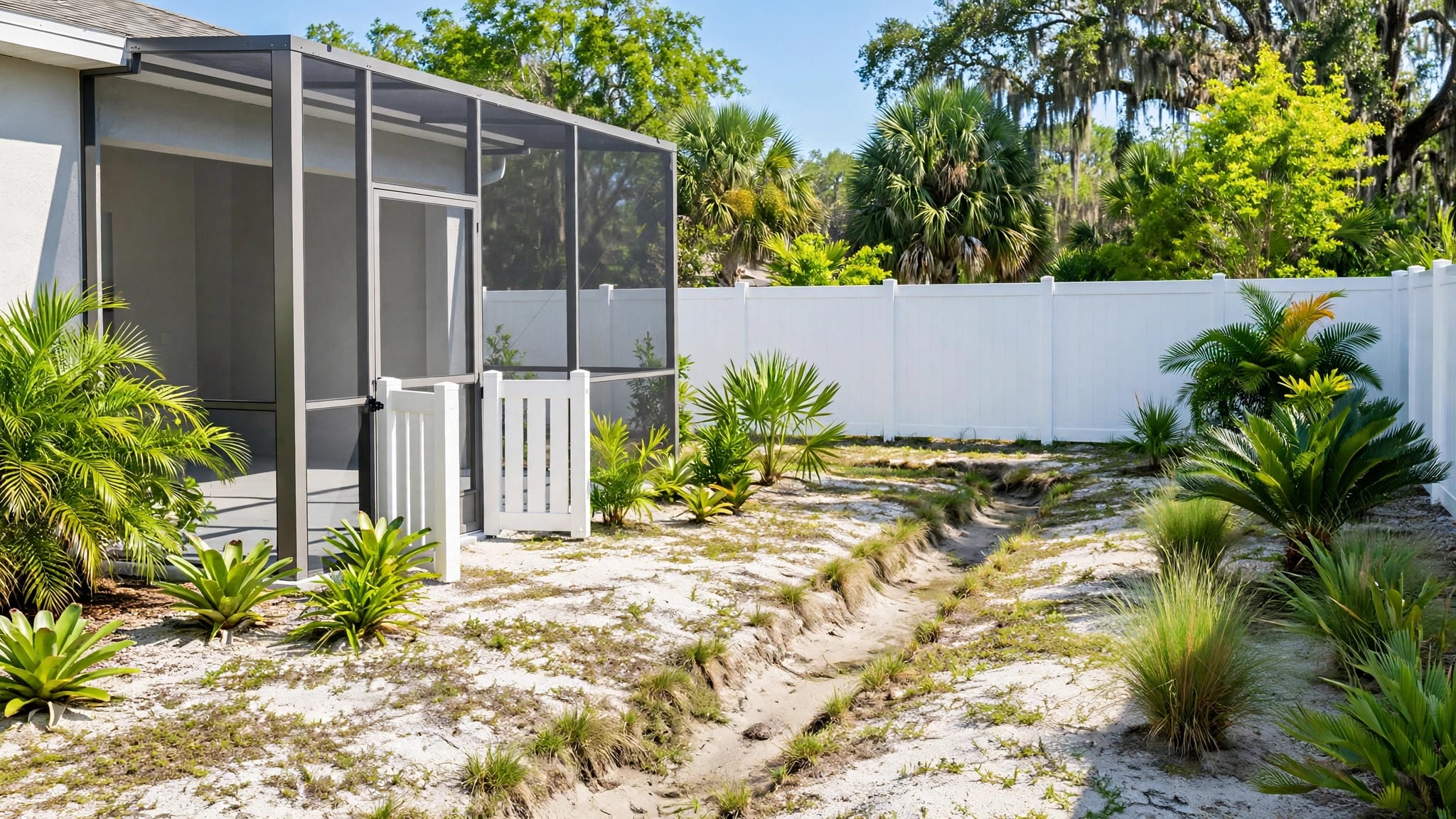
Many Southwest Florida lots have sandy soil. Sand can drain well, but it can also shift around an old footing after heavy rain, irrigation, flooding, or repeated storm conditions. Properties with a high water table may keep soil damp around the concrete for long periods.
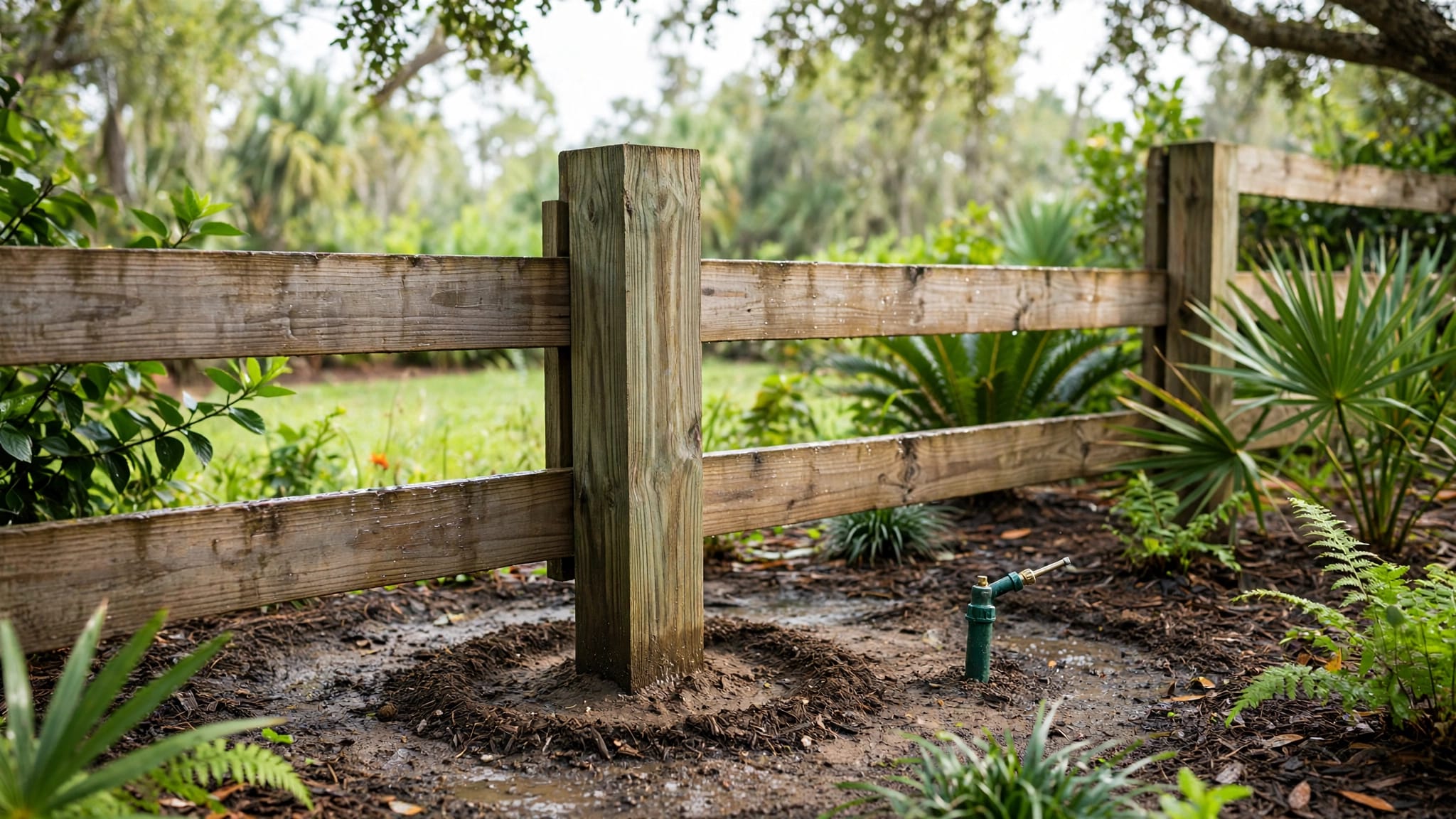
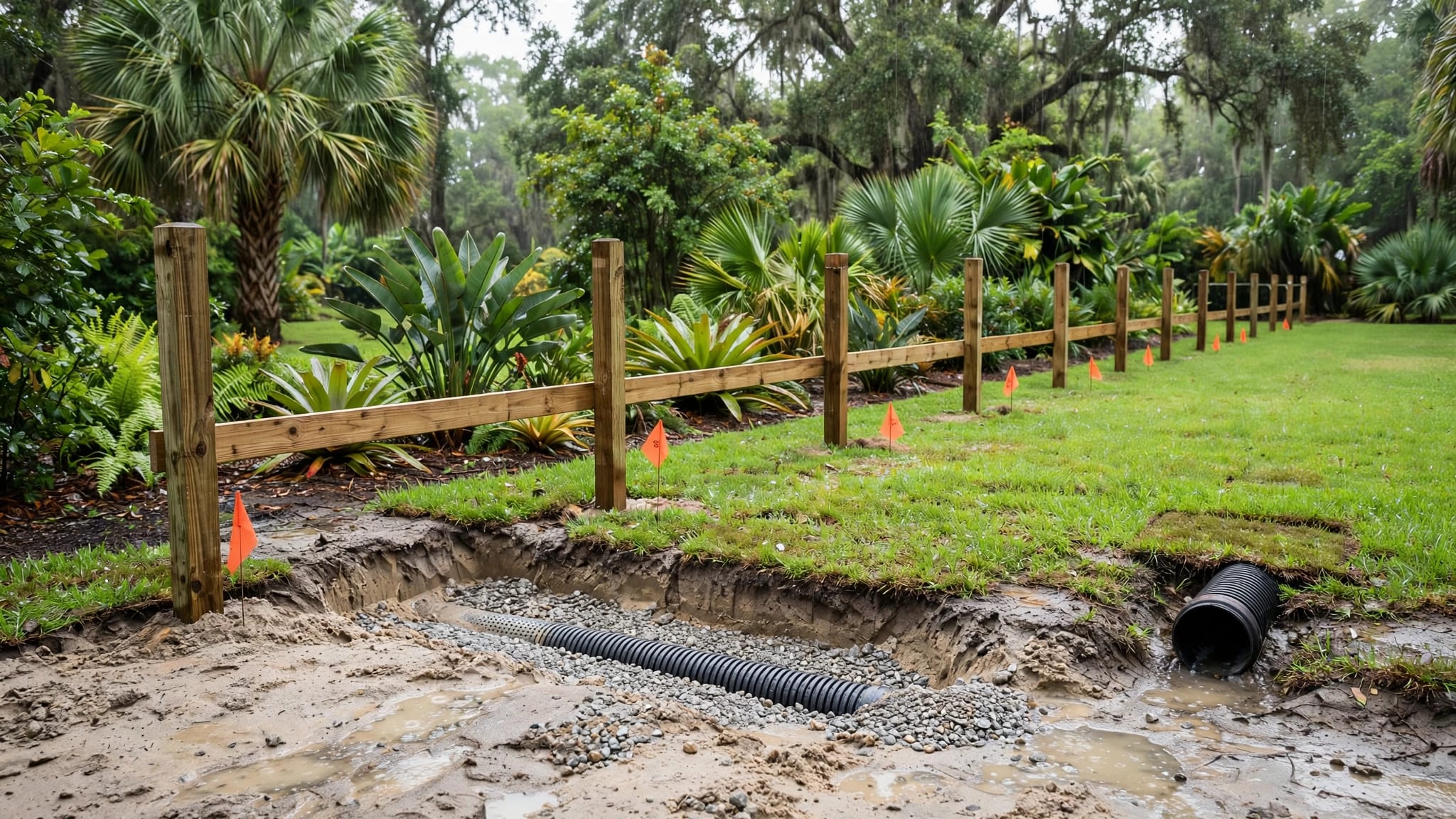
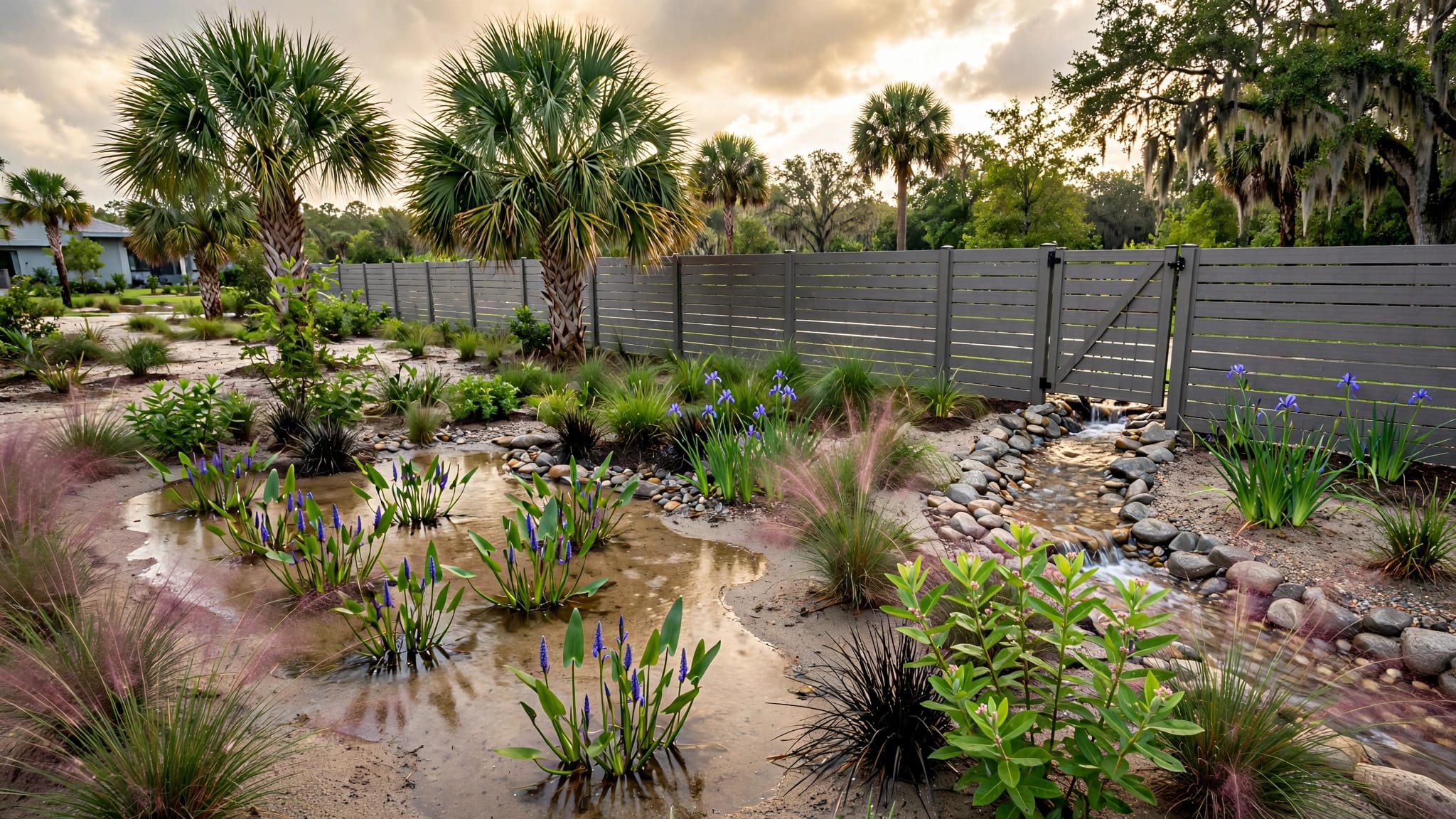
Standing water near a post is a warning sign. So is soil that pulls away from the concrete or feels loose when probed near the footing. Drainage changes can also affect an otherwise usable base. New landscaping, pool work, grading, or a nearby driveway may have altered how water moves across the property.
Concrete itself can crack after years of movement. Small surface marks may not prevent reuse, but wide cracks, missing pieces, exposed reinforcement, or crumbling concrete deserve professional attention.
Wind and corrosion add stress
A fence footing must resist the forces transferred through the post and panels. During a tropical storm or hurricane, a solid privacy section can act as a broad wind surface. A footing that worked for an older, lighter fence may not meet the needs of a taller or heavier replacement.
Coastal air, salt, fertilizer, and irrigation water can speed up corrosion on steel posts, brackets, and fasteners. Vinyl won't rust, but its posts and supporting hardware still rely on a stable footing. Wood posts can absorb moisture where they meet the concrete, especially when water collects around the base.
For these reasons, a decision to reuse fence post footings in Florida should consider the fence's exposure and design, not only the age of the concrete.
How to Inspect an Existing Fence Footing
A careful inspection can reveal whether reuse is practical. Homeowners can document visible conditions, but digging around an old footing may expose utilities or unstable soil. Use caution and contact Sunshine 811 before any new excavation.
Check the following areas:
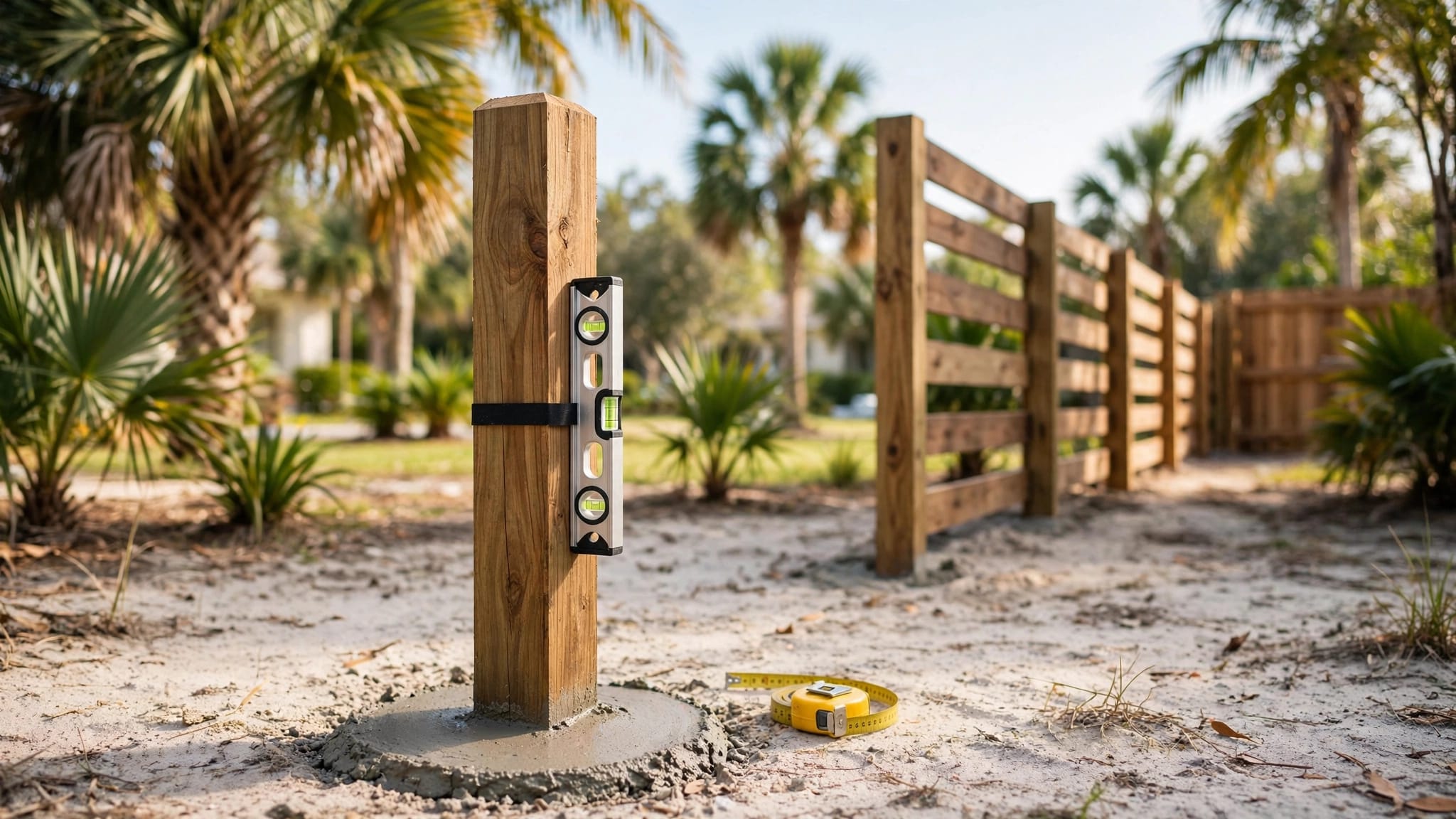
- Look for movement. Hold a level against the post or remaining concrete and check whether the base leans. A tilted footing may have settled or shifted. Reusing it without correcting the problem can leave the new fence out of line.
- Examine the concrete. Look for deep cracks, crumbling corners, hollow-sounding areas, exposed steel, and sections that move when touched. Surface discoloration alone doesn't prove structural damage, but loose concrete does.
- Check the post condition. Inspect the point where the post enters the concrete and soil. Rust at the base, soft wood, insect damage, and splitting can indicate hidden deterioration. Never assume a post is sound because its upper section looks clean.
- Confirm spacing and alignment. Measure the distance between existing footings and compare it with the planned fence layout. Modern panels, gates, and posts may require different spacing. A footing that sits several inches off the intended line can create problems along the entire run.
- Assess drainage and soil. Check for standing water, erosion, washed-out soil, roots, and loose sand around the base. If water remains near the footing after ordinary rain, the drainage issue needs attention before construction.
- Identify the footing's actual size. The visible concrete may show only the top. A contractor may need to expose part of the footing to evaluate its width, depth, shape, and connection to the post. Don't remove large amounts of soil next to an unstable fence without proper support.
The inspection should also include gates and corner posts. These locations often receive more stress than straight sections because they handle movement, latch force, and changes in fence direction.
Match the Footing to the New Fence
Reuse works best when the new project closely matches the old one. Similar post locations, panel heights, materials, and gate arrangements make the comparison easier. Even then, the footing must pass inspection.
A taller fence changes the wind load. A solid privacy panel changes it again. A gate may need a stronger or differently sized post than the neighboring sections because it moves every time someone opens or closes it.
Material also affects the evaluation:
- Chain-link fencing usually leaves more open area for wind, but its posts and fittings can still corrode or loosen.
- Wood fencing adds weight and may suffer from post rot where the wood meets damp concrete or soil.
- Vinyl fencing is lightweight compared with some materials, yet broad panels can catch strong wind.
- Aluminum and metal fencing may reduce panel weight, but post connections and corrosion still matter.
A homeowner asking whether to reuse fence post footings Florida contractors encounter should compare the old fence with the replacement design. Reusing a base for the same type and height of fence may be reasonable. Reusing it for a larger privacy fence or new gate system requires a closer structural review.
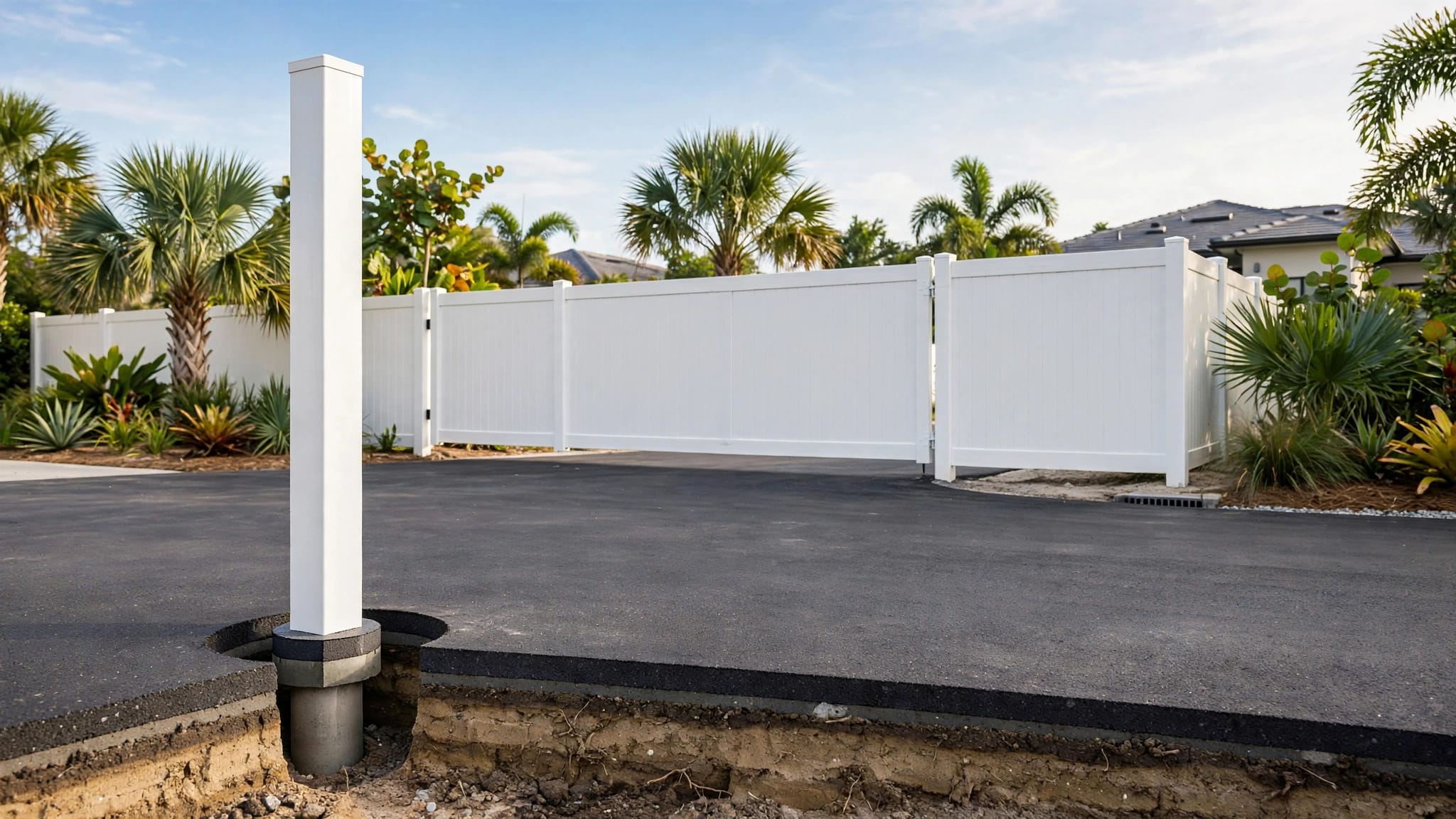
The post must also fit the footing. If the old concrete surrounds a deteriorated post, a crew may need to remove the post, enlarge the opening, or remove the footing altogether. Cutting away concrete without a plan can weaken the base and damage the new post.
When Removing the Old Footing Is the Better Choice
Removal is often the better option when the footing has moved, cracked badly, or lost contact with stable soil. It also makes sense when the new fence line has changed. Installing a fence beside an old base may create narrow gaps, uneven sections, or conflicts with gates and property features.
Consider replacement when:
- The old post is rotten, badly rusted, or difficult to remove safely.
- The footing has settled or leans away from the fence line.
- Concrete is crumbling or fractured through its main section.
- The new fence is taller, heavier, or more enclosed.
- The existing base is too close to a property boundary, utility, drainage feature, or structure.
- A gate will occupy the location and needs a stronger support system.
- Several neighboring footings show the same signs of failure.
Removing concrete takes labor, and buried debris can make the work slower than expected. Still, a new footing gives the installer a clean starting point and makes it easier to establish proper post depth, spacing, and alignment.
Permits, Property Lines, and Local Florida Rules
Florida fence requirements can vary by municipality, county, fence height, location, material, and project scope. A repair that replaces one damaged post may receive different treatment from a project that rebuilds most of the fence or moves the line.
Before reusing a footing, check with the building or zoning office that governs the property. Confirm whether the work needs a permit, whether the fence meets height and visibility rules, and whether special requirements apply near easements, drainage areas, corner lots, pools, or water.
A change in location can create a boundary problem even when the new fence looks similar. If you're replacing a large section or changing the layout, review these Florida fence repair permits before work begins.
You should also verify the property line before placing posts in old holes. A previous fence may have been installed incorrectly, or a survey marker may no longer be visible. When the line is uncertain, a licensed surveyor can provide a more reliable answer than measuring from a neighbor's fence.
Choosing Between Reuse, Reinforcement, and Removal
There are three practical outcomes after inspection. The footing may be sound enough to reuse, it may need modification, or it may need complete removal.
Reuse is most suitable when the base is stable, correctly positioned, and compatible with the new fence. The installer still needs to secure the new post and verify that the footing remains plumb during construction.
Reinforcement or modification may work when the footing is generally sound but the opening, alignment, or post connection needs adjustment. This option depends on the concrete's condition and the requirements of the replacement fence. Adding material around a damaged base doesn't automatically restore its strength.
Removal and replacement is the safer choice when the base has shifted, deteriorated, or cannot support the new design. It also provides a cleaner solution when the fence line, gate locations, or property conditions have changed.
A professional evaluation can prevent two expensive mistakes: paying to remove usable concrete, or building a new fence on a base that fails later. For damaged sections, professional fence repair services can help determine whether the existing posts and footings are worth saving.
Conclusion
You can sometimes reuse fence post footings Florida homeowners already have, but concrete that looks intact isn't enough. The footing must be stable, properly aligned, compatible with the new fence, and surrounded by soil that can support it.
Florida's rain, sandy soil, high water tables, coastal exposure, and storm winds make a careful inspection especially important. When the fence design changes or the footing shows movement, cracks, rot, rust, or drainage problems, replacement is usually the more dependable path. A local fence contractor can compare reuse and removal after checking the actual conditions on your property.