Attaching a Fence to Your House in Florida
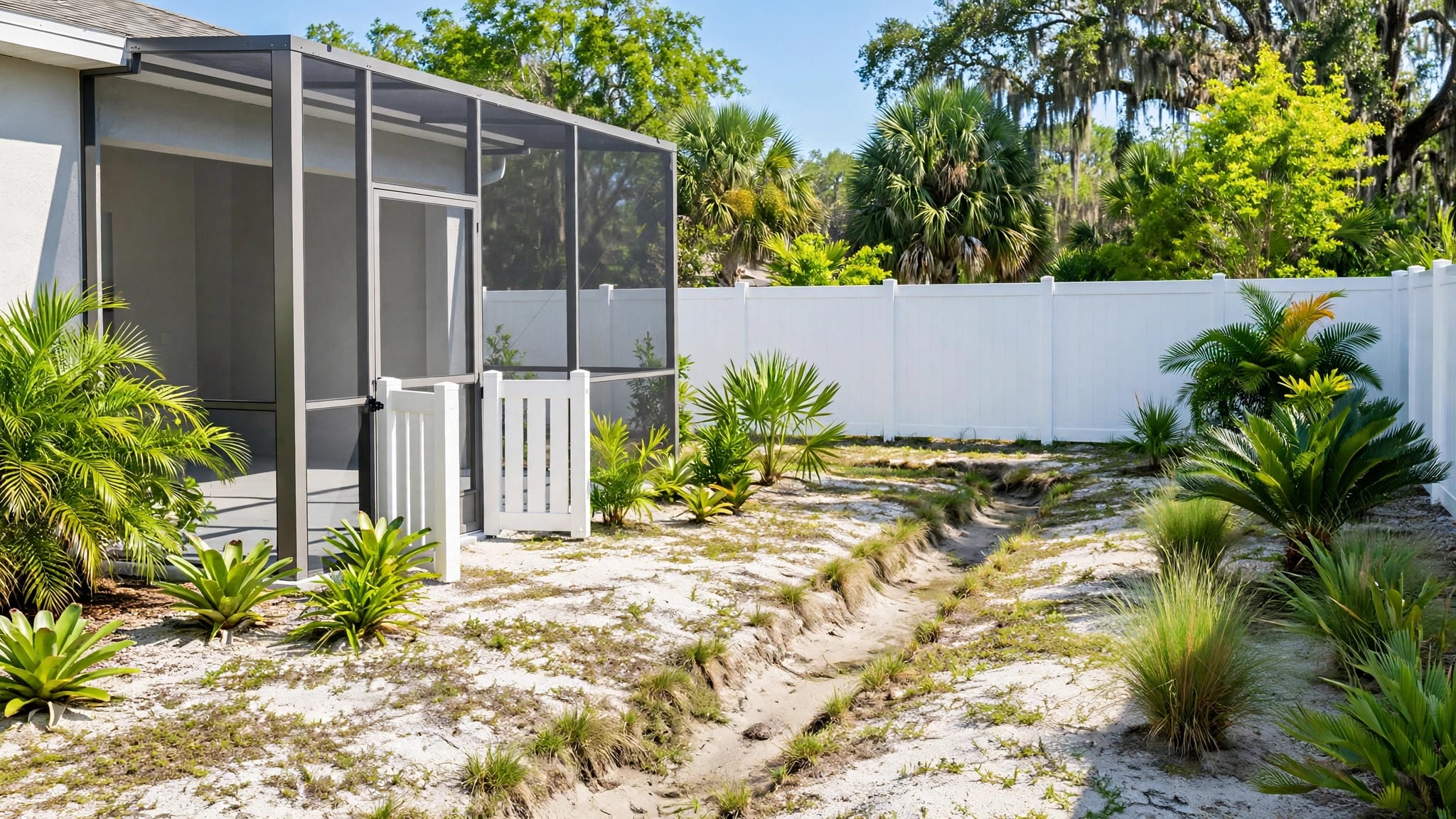
When a fence ends at your house, the problem often shows up later, after rain, heat, or one strong storm. A fence attached to your house may look neat from the street, but a bad connection can lead to leaks, cracks, and code trouble.
Florida homes deal with wind, moisture, pests, and salt air. That makes the connection point more important than many homeowners expect. The safe plan starts with one question, should the fence touch the house at all, or should it stop at its own post?
Why the house is a risky fence anchor
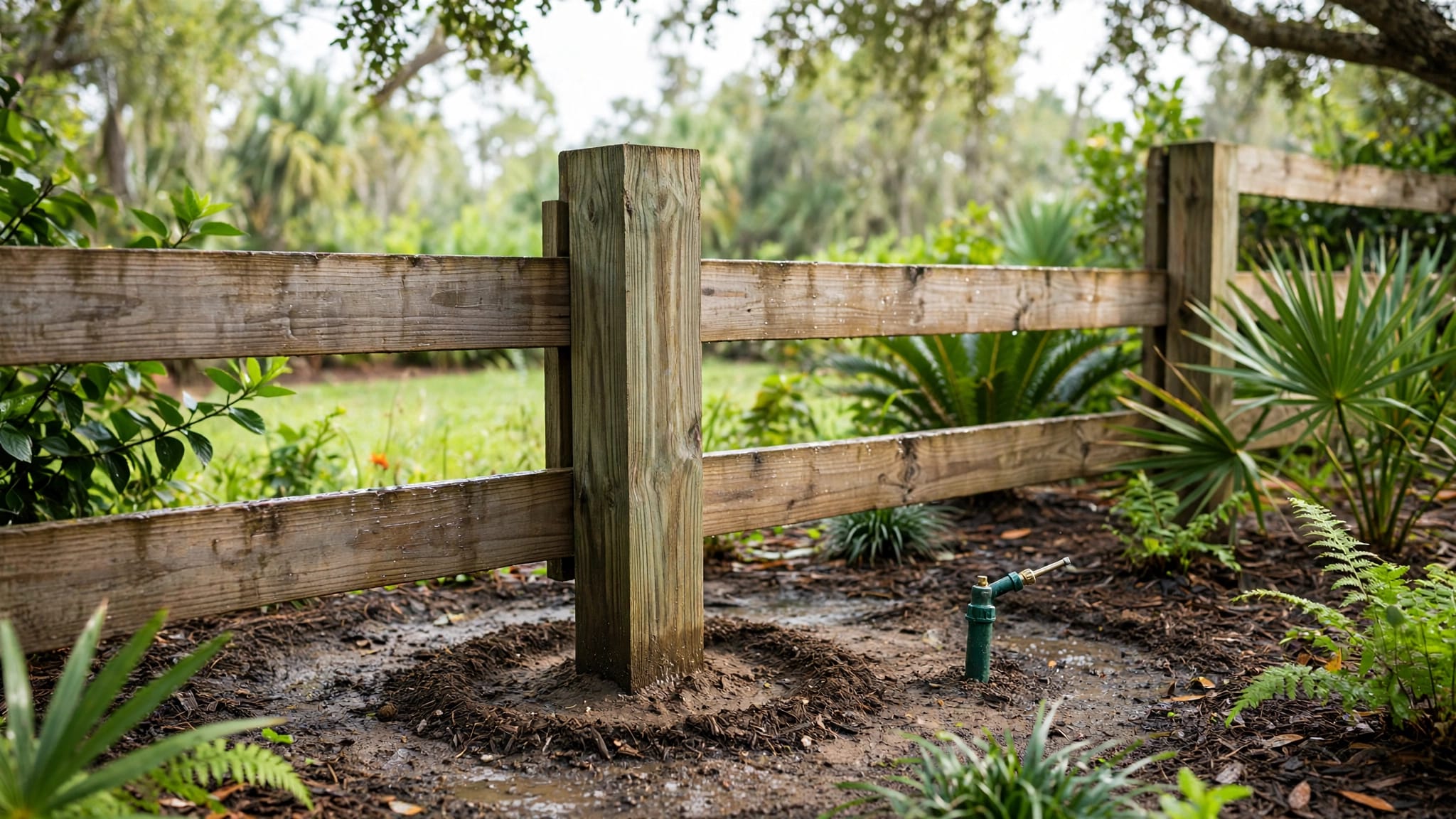
A house wall is built to shed water and support the home, not to act like a fence post. When you fasten a fence to siding, stucco, trim, soffit, or fascia, every hole becomes a place where water can get in. Over time, that can lead to rot, rust, stains, and insect entry.
Wind makes the issue worse. A fence moves in gusts, and that movement transfers stress to the wall. In Southwest Florida, where strong storms are part of life, that load matters even more. If the home shifts a little, the fence connection can loosen or crack.
The problem is not only structural. A bad attachment can block drainage paths, trap moisture against the wall, or leave ugly patchwork if the fence is removed later. Once that happens, the house may need repair work that costs more than the fence itself.
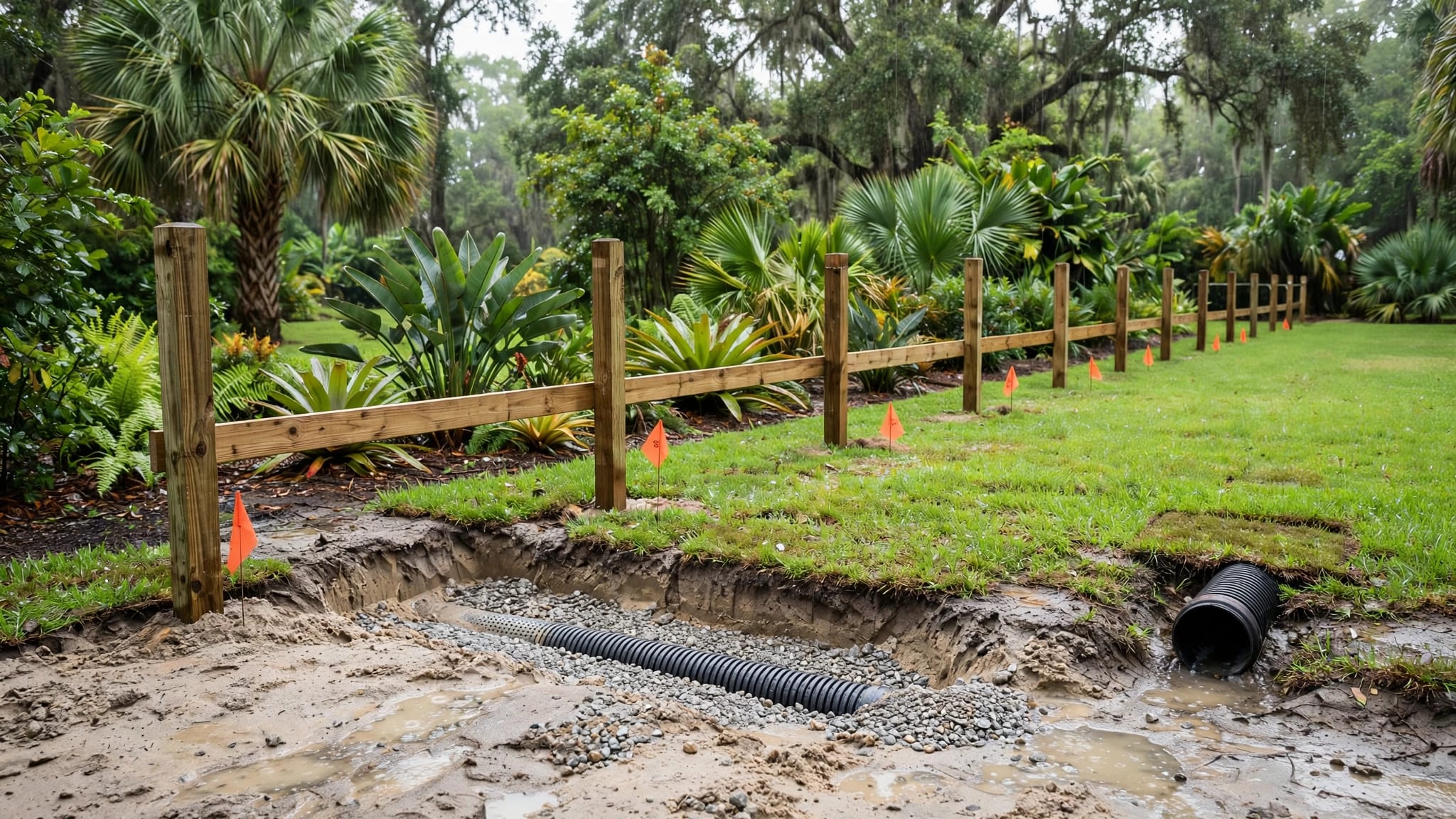
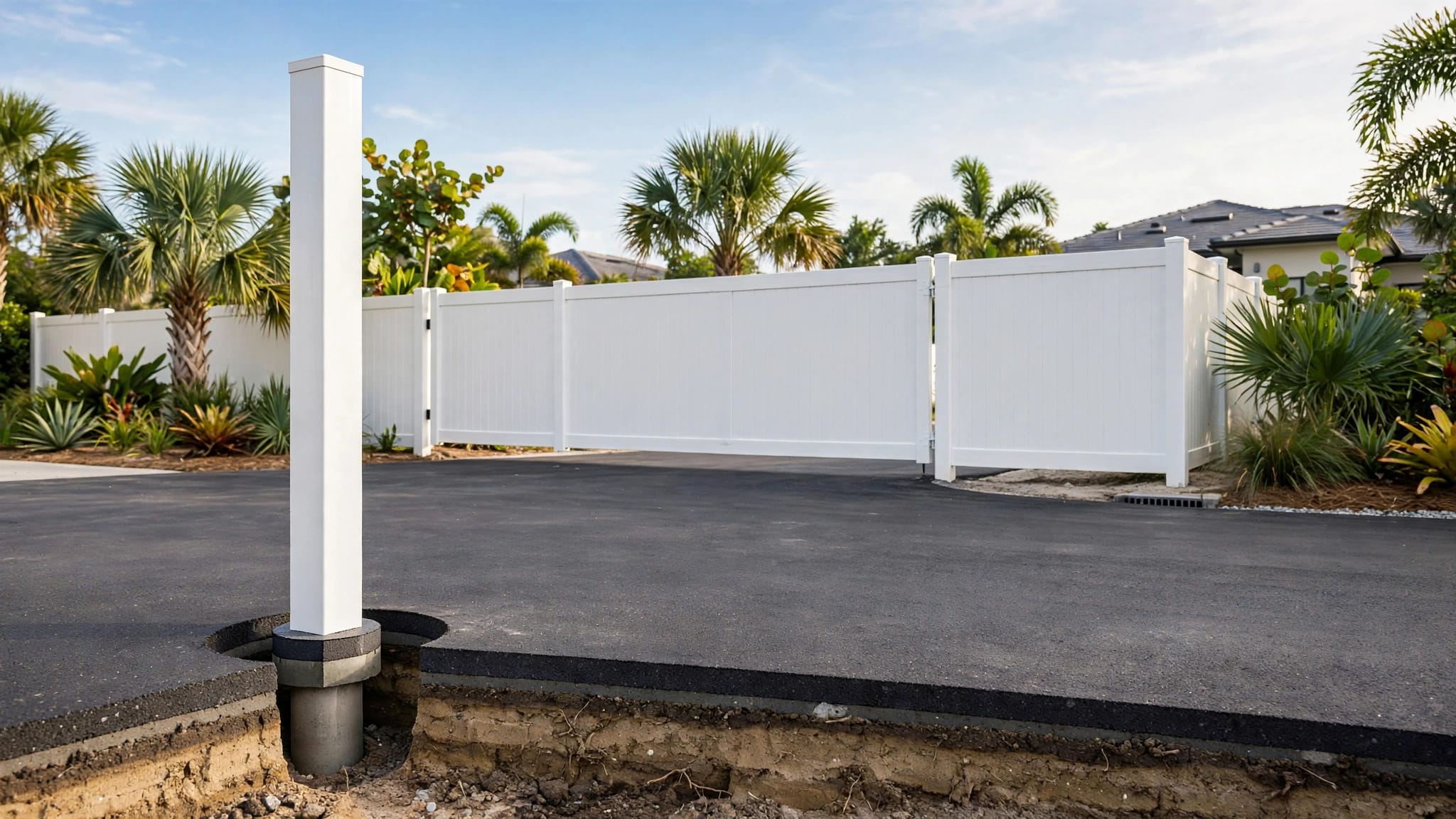
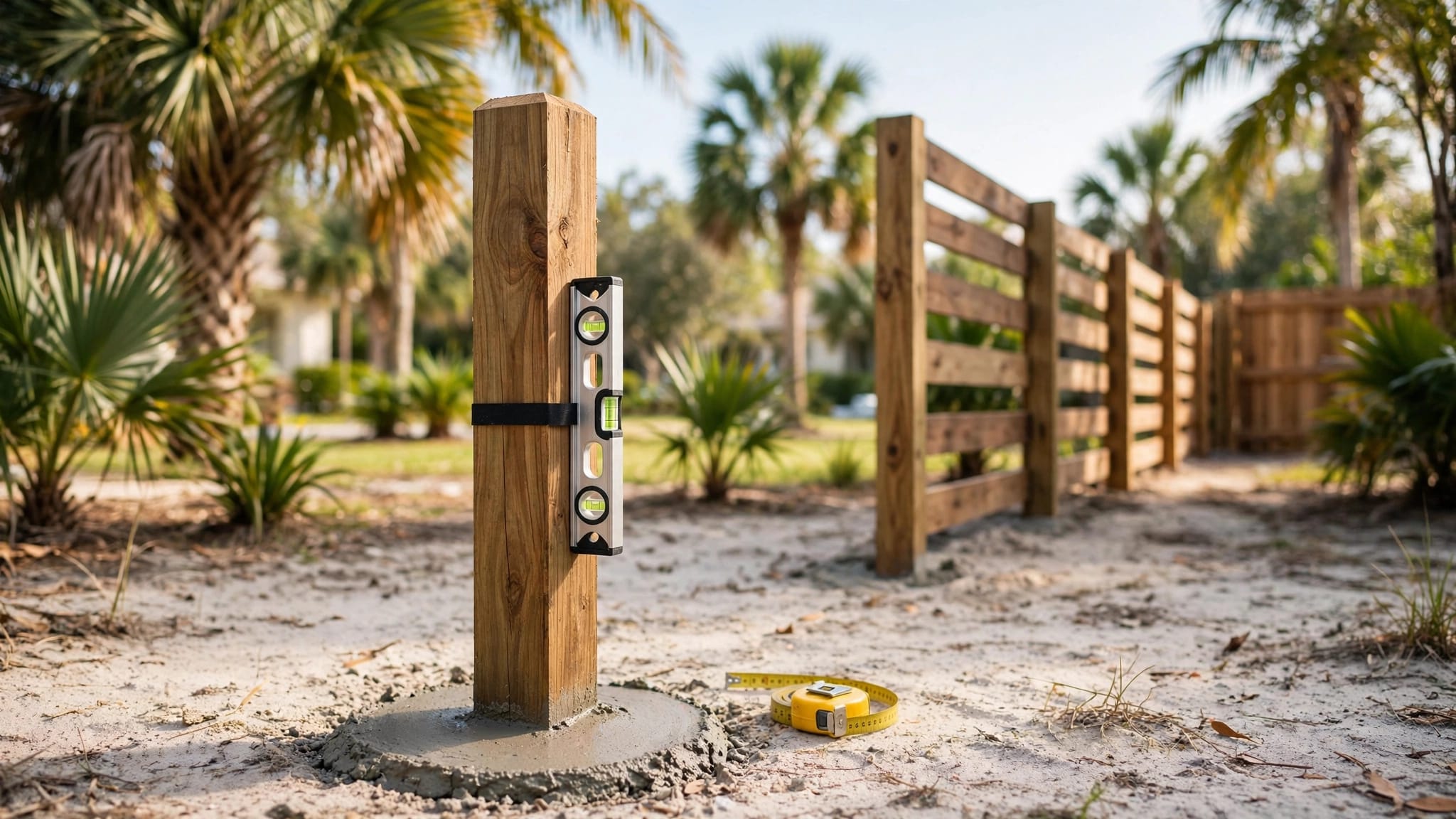
A separate terminal post is often safer because it lets the fence carry its own weight. The house stays out of the load path, and repairs are easier later. That setup also gives the installer a cleaner end point for gates, corners, and height changes.
A fence can look solid on day one and still fail at the wall after the first hard storm. In Florida, that kind of failure usually starts with a small shortcut.
If the fence needs holes through siding, stucco, or trim, stop and rethink the plan.
When an attachment may work, and when a terminal post is better
Some projects can tie into a home or hard surface, but only when the structure can take the load. That usually means sound masonry, a reinforced column, or another engineered point that was meant to handle exterior force. Even then, the details should match the wall, the fence style, and the local wind-load rules.
A direct tie into finish materials is usually the wrong move. Vinyl siding, wood trim, soffit panels, thin stucco over weak backing, and decorative cladding are not good load points. If the fence pulls on those parts, the connection can crack or leak fast.
The choice is easier when you compare the situations side by side.
| Situation | Better choice | Why |
|---|---|---|
| Siding, stucco, trim, or soffit only | Separate terminal post | Finish materials can crack, leak, or loosen |
| Sound masonry wall or reinforced column | Possible with proper design | The structure may carry the load if approved |
| End of a long fence run near the house | Separate terminal post | It keeps movement off the home |
| Fence meeting a patio or slab edge | Depends on the surface and anchors | The attachment must match the base material |
The table makes one thing clear. A house connection is not the default choice, and it is rarely the cheapest safe choice in the long run.
If the project also meets concrete or a hard patio surface, the same caution applies. The best practices for concrete slab fence mounting are worth reviewing before anyone drills a hole. Concrete can be strong, but only when the slab and anchors match the job.
A fence should never force the house to act like a hidden post. If the wall was not built for that load, a separate terminal post is the cleaner answer.
Florida permits, HOA rules, and property lines
Florida does not have one state rule that forces a fence to connect to the house. Local city and county codes control most of the details, and HOA rules can be stricter still. That means a fence that works in one neighborhood may fail approval in the next one.
Height is usually the first limit people hit. In many areas, side and rear yard fences are limited to 6 feet, while front yard fences are often limited to 4 feet. Corners and driveway openings can trigger sight-triangle rules, so low visibility near the street matters as much as fence height.
Pool fences bring another layer of rules. A pool barrier usually has to be at least 4 feet high, and the gate often needs to be self-closing and self-latching with the latch placed high enough to keep little hands from reaching it. If the fence begins at the house, those safety rules still apply.
Before any work starts, check these items:
- City or county permit needs
- HOA design approval
- Property line location
- Utility locate marks
- Pool barrier rules, if you have a pool
- Corner sight-line limits
If your project is in Cape Coral, the fence installation process from quote to completion helps show how permits and inspections fit into the schedule. That planning step matters because delays often come from paperwork, not the fence work itself.
Most residential fences also need the finished side facing out, and sharp add-ons like barbed wire are not part of a normal home fence in typical neighborhoods. The property line still matters most. Your fence and its footings need to stay on your side, so a survey or clear markers can save a costly mistake.
Details that keep water, pests, and storm damage out
A good fence connection protects the house as much as the fence. That starts with the right fasteners, because cheap screws rust fast in Florida air. Hot-dipped galvanized or stainless hardware is a better fit for coastal conditions, especially in Lee, Charlotte, Collier, and nearby counties.
The installer should also think about the weather barrier. Stucco cracks, sealant lines, and trim joints can all become weak points if someone drills through them without a plan. If the fence must meet a wall, the attachment needs proper sealing and a clear path for water to drain away.
Pest control matters too. Tiny gaps near wall penetrations can invite ants, roaches, and even rodents. Once pests find an opening, the fence line can hide it from view, so the damage gets missed longer.
A separate post still wins when the wall feels questionable. If the home wall is soft, cracked, or already patched in several places, don't make it carry a fence. If the fence line needs to change direction near a door, window, hose bib, or AC line, a stand-alone post is easier to set and easier to service later.
Before the crew starts, the yard should be ready. Clear access around the line, move outdoor items, and mark anything fragile near the work area. The yard preparation checklist for fence installation day is a simple way to avoid delays when the job begins.
Most importantly, the fence should be built for the wind it will see. That means the layout, post size, and hardware need to match Florida wind-load requirements. A fence that stands on its own is easier to maintain, and it puts less stress on the home when storms roll through.
What to ask before the first post goes in
A homeowner does not need to be a fence builder to spot a weak plan. A few direct questions can reveal whether the design respects the house, the code, and the weather. The answers should be plain and specific.
Start with the attachment point. Ask what part of the wall, if any, will carry the load. If the answer is vague, the plan probably is too. Ask how the installer will keep water out, what fasteners will be used, and whether the wall material can handle the connection.
Then ask about the permit path. A solid contractor should know when the city, county, or HOA needs to review the design. If the fence is near a pool, ask how the gate will close and latch. If the fence meets a corner or driveway, ask how sight lines will stay open.
Here are a few good questions to use:
- What part of the structure will the fence connect to?
- Will a terminal post be safer at the end of the run?
- How will the wall be sealed against water intrusion?
- What permit or HOA approval is needed before work starts?
- How will the fence meet local wind-load requirements?
If the project feels rushed, slow it down. A fence that depends on the house should never be built on guesswork. The plan needs to protect the wall first, then hold the fence in place.
Conclusion
A fence attached to your house can save space, but it can also create water, structure, pest, and permit problems if the details are sloppy. In Florida, that risk is higher because wind and moisture never take a break.
A separate terminal post is often the safer choice when the wall only has siding, stucco, trim, or soffit. If attachment might work, it should be treated like a structural detail, with the right hardware, sealing, and local approval.
Before you build, check the city or county rules, HOA guidelines, property line, and any pool barrier requirements. A little caution now can save you from patching leaks later.