Does Homeowners Insurance Cover Fence Damage in Florida
A fence in Florida deals with a lot, strong wind, heavy rain, tree limbs, salt air, and long storm seasons. So when panels crack or posts lean after a storm, most homeowners ask the same thing: will insurance help pay for it?
The short answer is sometimes . Homeowners insurance may cover fence damage, but it usually depends on the cause of loss , your policy terms, and your deductible. With many fence damage insurance Florida claims, the event that caused the damage matters more than the fence material itself.
How homeowners insurance usually handles fence damage
In many standard homeowners policies, a fence falls under Coverage B, Other Structures . That part of the policy often covers structures that sit on your property but aren't part of the main house, such as fences, sheds, and detached garages.
That sounds simple, but the next step matters most. Insurance often pays only when the damage comes from a covered peril. In plain terms, that means a sudden event your policy covers, not slow decline over time.
This quick guide helps show the difference:
| Scenario | Often Covered? |
|---|---|
| Windstorm or hurricane wind damage | Often yes, subject to policy terms |
| Healthy tree falls during a storm | Often yes |
| Fire or vandalism | Often yes |
| Floodwater or storm surge | Usually no |
| Rot, rust, or age-related failure | Usually no |
| Termites or poor upkeep | Usually no |
For many homeowners, the fence limit is only a share of the home's insured value, often around 10% . You also have to pay your deductible first. So even if the loss is covered, the claim may not make sense for a smaller repair.
A fence attached to a structure can add another wrinkle. In some cases, an attached section may be handled differently than a fully detached perimeter fence. That's one reason policy wording matters.
In Florida, fence claims often come down to two things: what caused the damage, and what your policy excludes.
Because policies vary, it's smart to read the declarations page, the exclusions section, and any wind or hurricane language tied to your home.
Florida claims often turn on wind, trees, and water
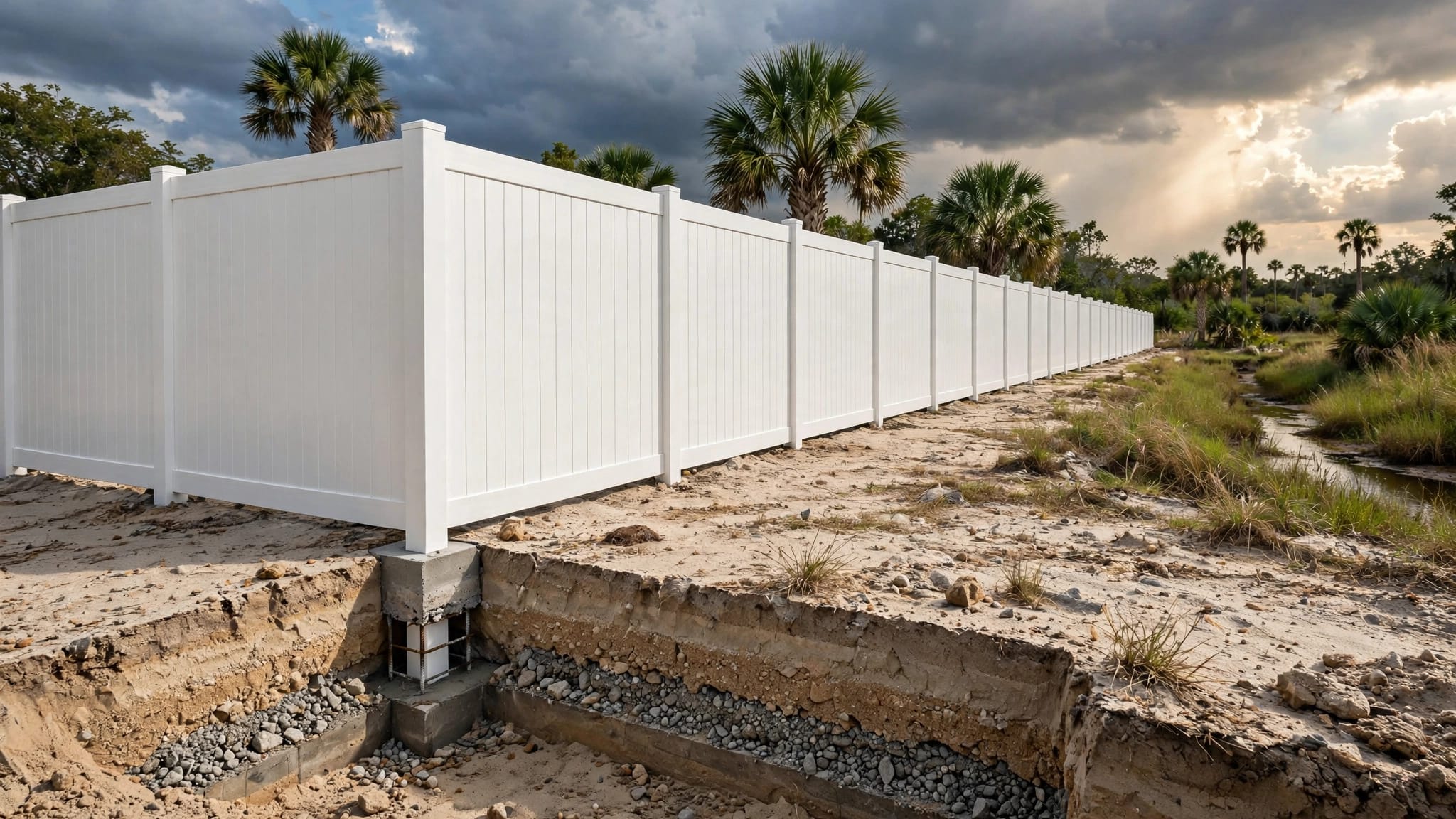
Florida homeowners face storm risks that many other states don't. Hurricane season brings strong gusts, flying debris, and saturated soil that can loosen posts before a fence ever snaps. As a result, wind damage is one of the most common reasons people file fence claims.
If a storm blows down a well-maintained fence, coverage is often more likely than if the fence was already failing. Insurers may look at age, condition, and prior wear. A weak post or rotted panel can hurt a claim, even after a major storm.
Fallen trees are another common case. If a healthy tree crashes onto your fence during a storm, coverage may apply under the other structures part of the policy. On the other hand, if the tree was dead, diseased, or clearly neglected, the insurer may argue the damage was preventable.
Then there's flooding , which creates the most confusion. Standard homeowners insurance usually does not cover flood damage. That includes rising water, storm surge, and overflow from external flood events. In coastal and low-lying parts of Southwest Florida, that distinction matters a lot. A fence knocked over by wind may be treated very differently from one pushed down by floodwater.
Florida's insurance updates going into 2026 have focused more on roofs and claim handling than on fence rules. So the basic fence question remains the same: was it a covered event, or was it excluded?
HOA neighborhoods can complicate things, too. If the HOA owns the fence, the HOA's policy may come first. If you own it, your policy may apply instead. Before filing, confirm who is responsible for that section of fencing.
What to do after fence damage in Florida
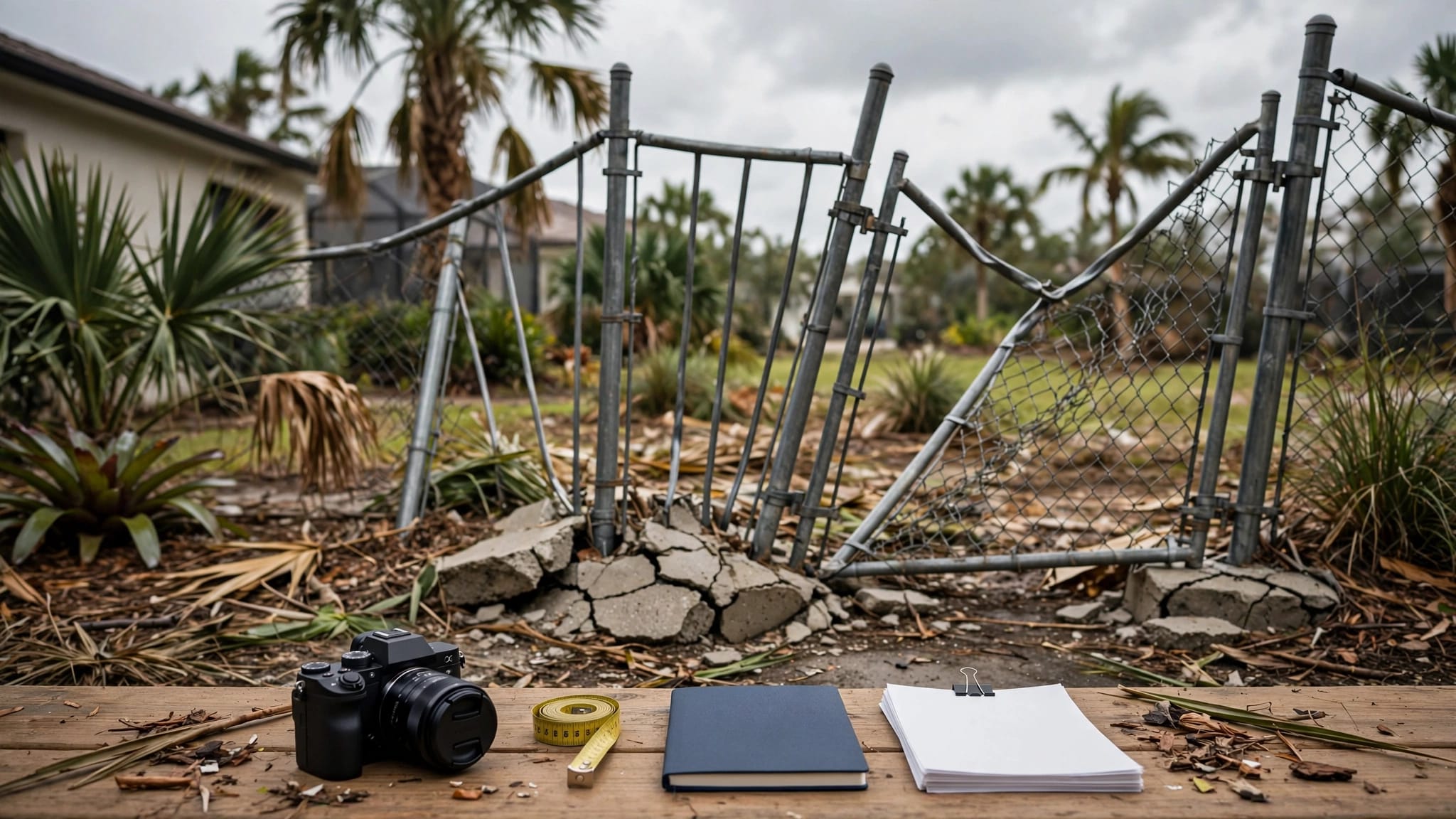
Start with photos. Take wide shots of the whole fence, then close-ups of broken panels, bent rails, loose posts, and any nearby tree or debris. Good photos help show both the damage and the likely cause.
Next, prevent more loss if you can do so safely. For example, you might brace a loose gate, remove a hanging panel, or rope off a dangerous section. Keep receipts for temporary materials because your insurer may ask for them.
Then call your carrier and ask direct questions. Ask whether the fence falls under other structures, what deductible applies, and whether the loss appears covered based on the reported cause. Also ask how the fence is valued. Some policies may settle losses differently, which can affect the payout.
After that, get a contractor's estimate. A clear repair quote helps you compare the likely claim payment with your deductible and out-of-pocket cost. If you need a local assessment, professional fence repair in SWFL can help document the damage and outline repair options.
In some cases, filing a claim isn't the best move. If the repair cost is close to your deductible, paying directly may be simpler. Still, don't guess. A quick policy review can save time and stress.
Keep damaged materials until the insurer says otherwise, unless leaving them creates a safety risk. Finally, save every email, receipt, and note from calls with the adjuster.
Final thoughts
So, does homeowners insurance cover fence damage in Florida? It can , but only when the cause of damage and the policy line up. Wind and fallen trees are often treated differently from floodwater, age, rust, or neglect. Before making repair plans, check your policy, confirm ownership, and talk with your insurer so you know where you stand.