Best Fences for Blocking Road Noise in Southwest Florida
Can a fence really quiet a busy street? The right noise blocking fences can soften road hum, truck rumble, and the steady whoosh of traffic. They won't make a loud road disappear, but they can take the edge off enough to make your yard feel calmer.
That matters in Southwest Florida, where roads, heat, wind, and heavy rain all test a fence. The best results come from solid construction, fewer gaps, enough height where rules allow, and materials that hold up in this climate. If you expect silence, you'll be disappointed. If you want a real drop in noise, the right fence can help a lot.
What makes a fence better at blocking road noise?
A fence works by breaking the direct path between the road and your yard. Sound still moves around it, but a solid barrier forces it to lose energy along the way. That is why open designs do little on their own, even if they look strong.
The biggest factors are simple:
- Solid panels help more than open pickets because sound has fewer paths through.
- Small gaps matter at the bottom, between boards, and around gates.
- More height helps if local code or HOA rules allow it.
- Heavier materials usually perform better than light, airy ones.
- Landscaping or a berm adds another layer , which helps break up sound before it reaches the fence.
A fence can soften traffic noise. It won't turn a busy street into a library.
Southwest Florida adds another layer of reality. Sun can warp weak materials. Wind can push on tall solid fences. Sandy soil can shift posts if the base is poor. So the best solution is not just about sound, it is also about durability.
Fence materials that make the most sense for road noise
The right material depends on how much noise you hear, how much maintenance you want, and how your yard faces the street. Here is a quick comparison before getting into the details.
| Material | Noise Reduction | SWFL Durability | Maintenance | Best Use Case |
|---|---|---|---|---|
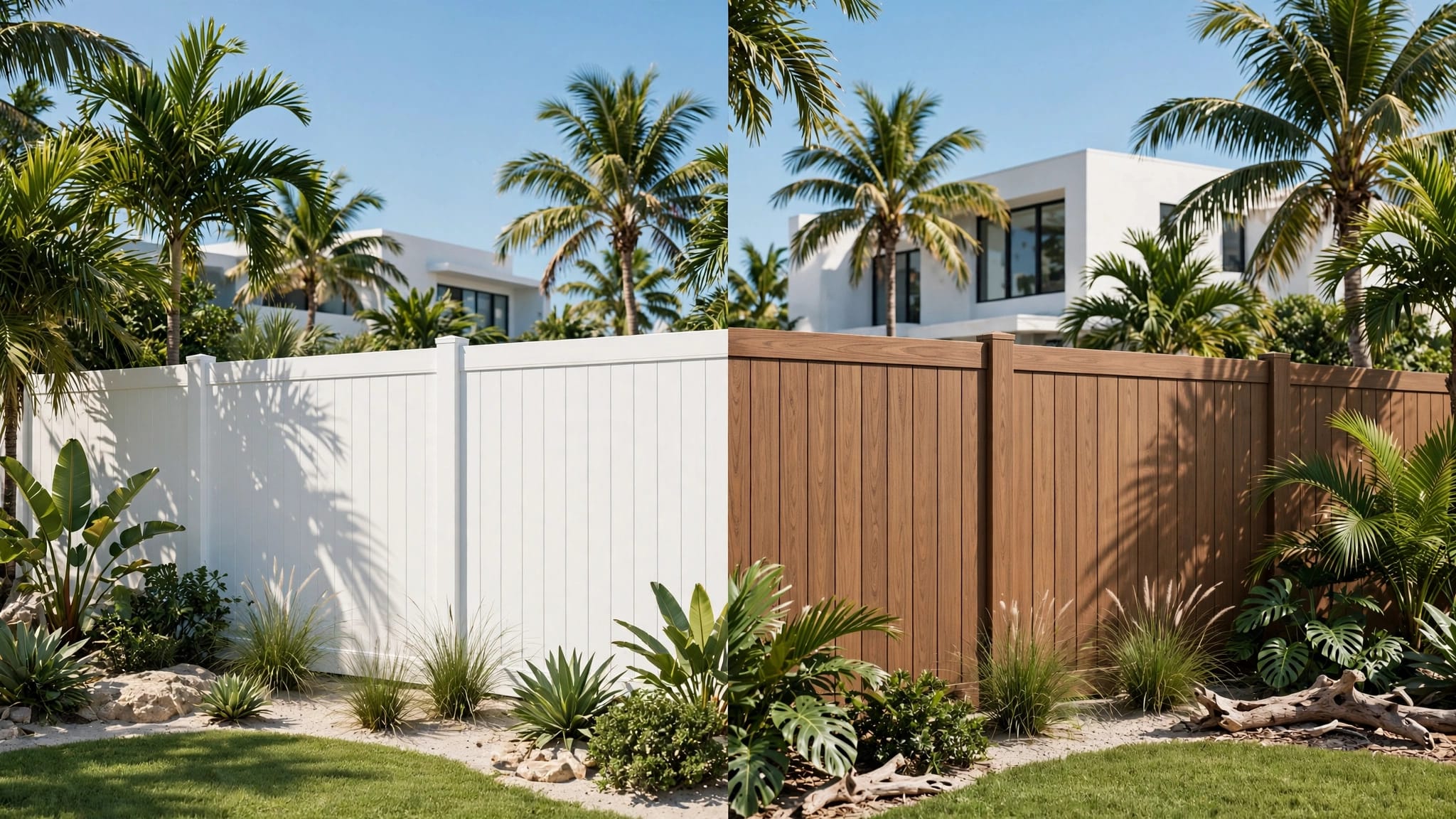
| Vinyl privacy fence | Good | Very good | Low | Homeowners who want a clean look and less upkeep |
| Wood privacy fence | Good to very good | Fair to good | High | Yards where a natural look matters more than maintenance |
| Chain link with slats | Fair | Very good | Low | Budget-conscious projects and pet areas |
| Aluminum or decorative metal | Low | Excellent | Low | Front yards, curb appeal, and open visibility |
The pattern is clear. Denser, more continuous fences usually do better. Open styles can still help when paired with plants or other barriers, but they are not the main answer.
Vinyl privacy fences
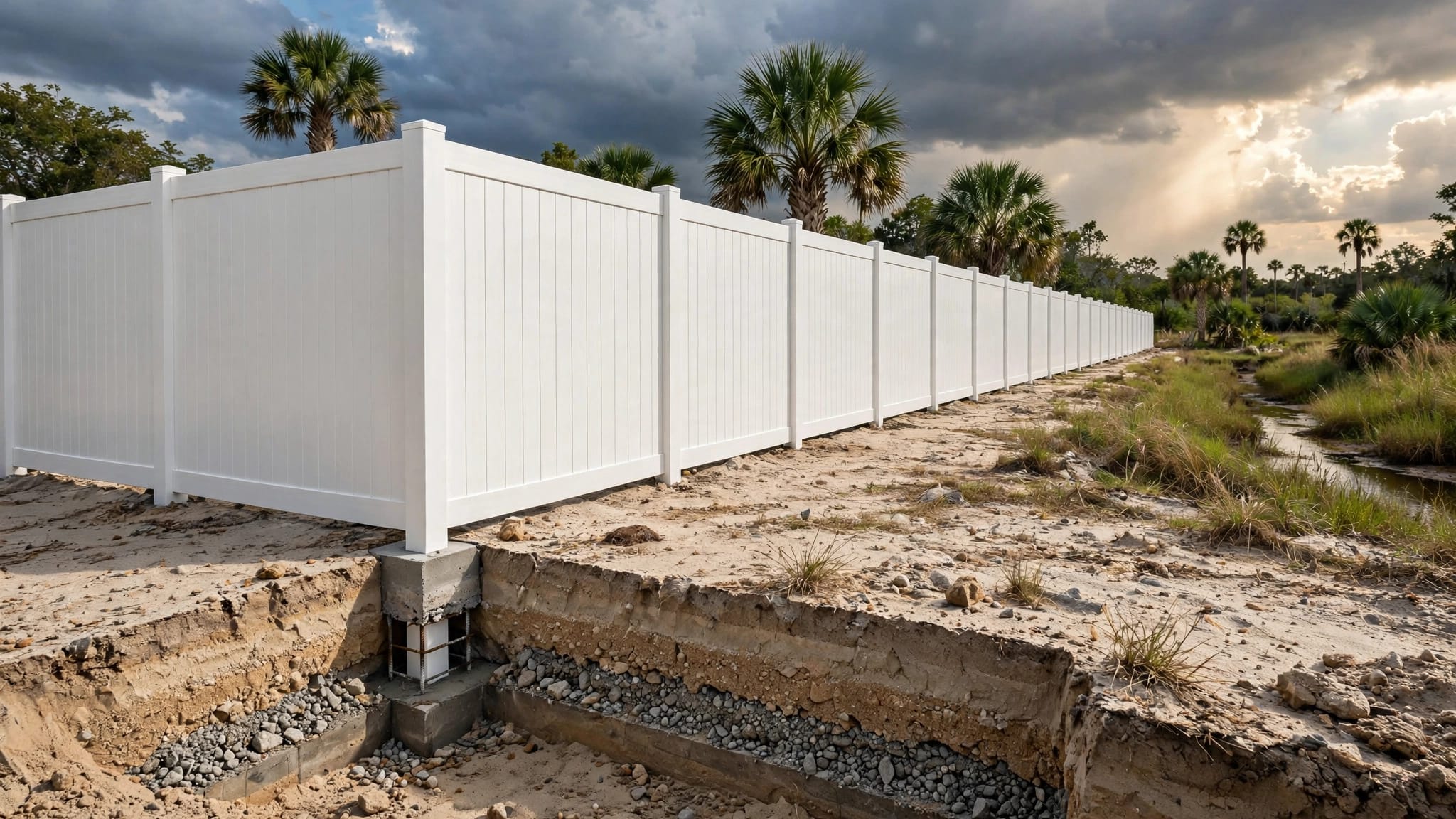
Vinyl is one of the strongest choices for homeowners who want a cleaner, lower-maintenance barrier. A solid vinyl privacy fence blocks both views and a fair amount of sound, especially when the panels fit tightly and the bottom stays close to the ground.
In Southwest Florida, vinyl has a real advantage because it does not rot or attract termites the way wood can. It also cleans up well after dust, pollen, and salt spray. That said, not all vinyl fences are equal. A lighter system can flex more in high wind, and a fence with loose joints or gaps will lose noise control fast.
If you want privacy and easier care, breathable vinyl privacy fences for Florida yards are worth comparing. For road noise, though, tighter panels usually work better than more open styles.
Vinyl works well for families who back up to a busy neighborhood road and want a neat look with low upkeep. It is a strong middle ground, as long as the install is solid.
Wood privacy fences
Wood can be a good sound blocker because it has real mass and can be built with tight, solid surfaces. A well-built wood fence, especially one with overlapping boards or tongue-and-groove panels, can do a nice job of cutting traffic noise.
The tradeoff is upkeep. Southwest Florida weather is hard on wood. Humidity, rain, sun, and termites can all shorten its life if it is not treated and maintained. You will likely need regular sealing, staining, or painting. Boards can also warp or gap over time, and those small openings reduce noise control.
Still, wood has one thing many homeowners love, it feels warm and custom. If your home style leans traditional, wood can fit the yard better than vinyl. It also gives you more options for height, trim, and board style.
Wood makes the most sense when you want decent noise reduction and you are willing to stay on top of maintenance. It is less convenient than vinyl, but it can look great when cared for well.
Chain link with slats
Chain link is not a top choice for road noise on its own. Sound passes through it too easily. Even so, it still has a place in Southwest Florida because it is durable, wind-friendly, and budget-conscious.
When you add privacy slats or similar inserts, chain link gets better. It still won't match a solid privacy fence, but it can soften the view of traffic and reduce some of the harshness. It also pairs well with shrubs or other plantings, which helps break up sound a bit more.
The big advantage is strength with low upkeep. Chain link handles wet weather and wind well, and it does not rot. The downside is simple, it remains an open system unless you add extras. For that reason, it is better for homeowners who care about pets, security, or cost more than sound control.
If road noise is your main concern, chain link should be a backup plan, not the first pick.
Aluminum and other metal fences
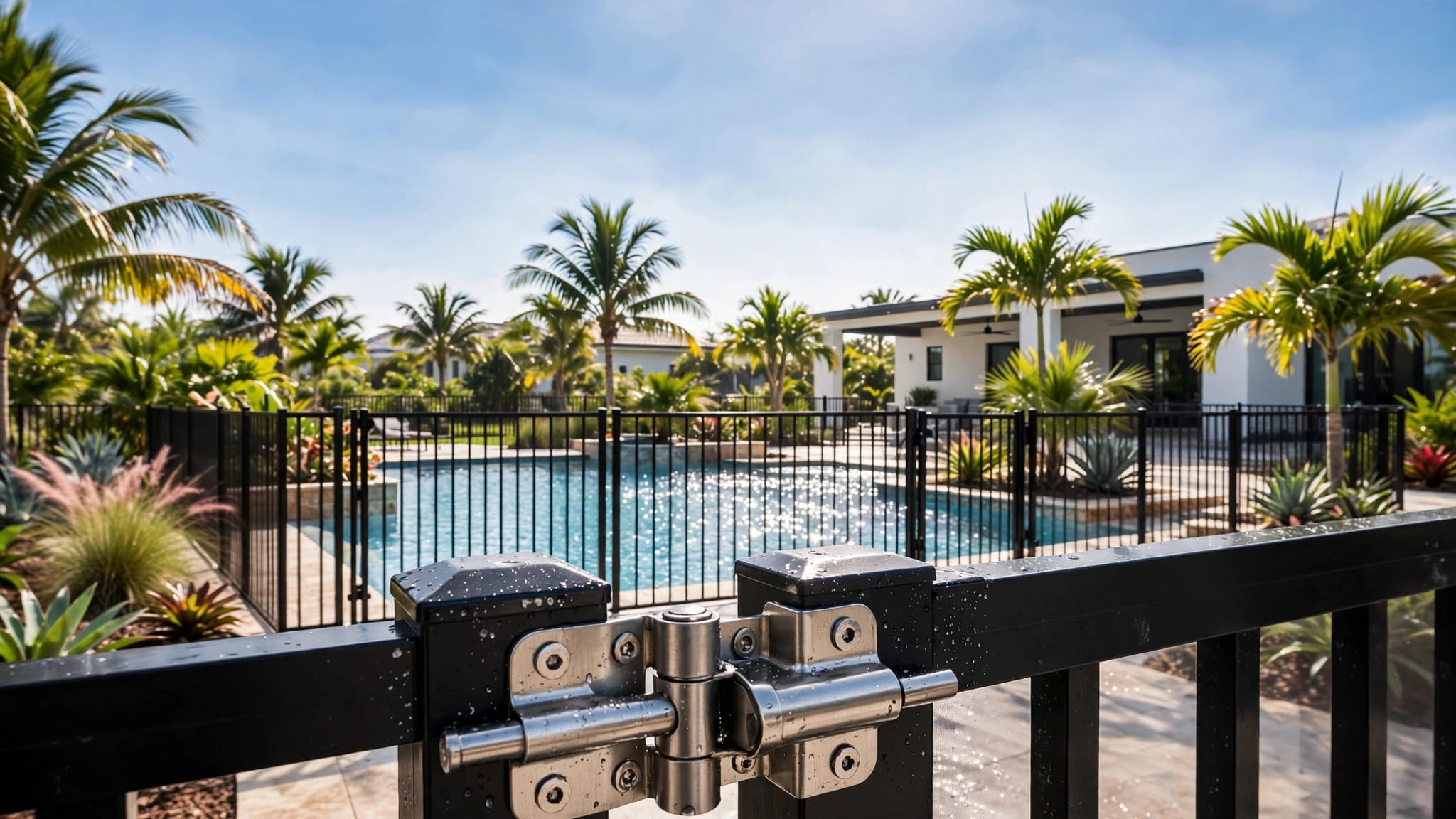
Decorative aluminum and many metal fence styles are excellent for curb appeal and long-term durability. They resist rust well when coated properly, and they fit coastal and humid conditions better than many materials. For front yards and areas where visibility matters, they are a smart choice.
For noise, though, open metal fencing does very little. The gaps let sound through. That makes aluminum a poor standalone answer for a loud road. It can still have a place when combined with screening plants or when used away from the noisiest side of the property.
A lot of homeowners like aluminum because it looks polished and lasts a long time. That is fair. Just keep in mind that it is a style-first fence, not a sound barrier.
How to get better noise reduction without overbuilding
Fence material matters, but placement and installation matter just as much. A fence with a gap under the bottom rail or loose sections at the gate will leak sound. So will a short fence that ends below nearby sight lines.
A good layout usually starts with the fence itself, then adds support around it. Dense shrubs, hedges, or a berm in front of the fence can help break up sound before it reaches your seating area. You do not need a full wall of plants. Even a layered edge can help soften the road's edge.
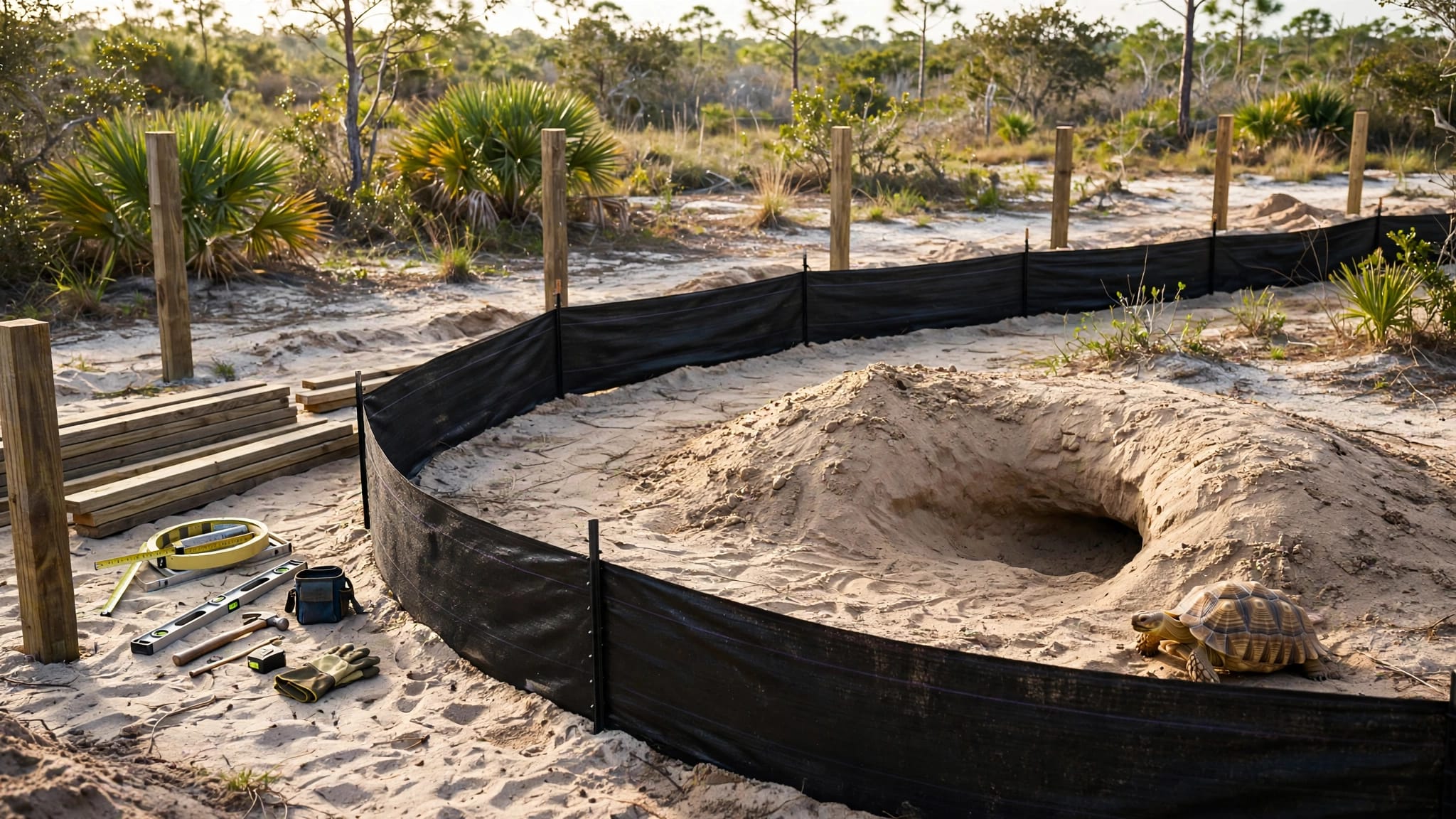
Ground conditions matter in Southwest Florida too. Soft soil, slopes, and drainage changes can affect how close the fence sits to the ground. If you have a tricky yard, SWFL yard prep tips for smooth fencing are worth reviewing before posts go in. That kind of prep helps keep gaps small and panels steady.
Installation quality is part of noise control. Posts need the right depth. Gates need strong frames. Solid sections need proper spacing so they stay tight over time. If you are comparing contractors, fence contractor tips for Southwest Florida homeowners can help you ask the right questions before you choose a crew.
Which fence fits your yard and budget?
The best choice depends on how much noise you hear and what else you want the fence to do.
If your backyard backs up to a busy road and you want the strongest practical noise reduction, a solid vinyl privacy fence is often the best mix of performance and upkeep. It is clean, durable, and easier to live with than wood.
If you want a more natural look and do not mind regular care, wood privacy fencing can perform well. It is a strong pick for homeowners who value appearance and are fine with maintenance.
If the budget is tight, chain link with slats can help more than plain chain link, especially when you add shrubs or a berm. It is not the quietest option, but it can be a useful middle step.
If your priority is style, security, or open visibility, aluminum and metal fencing work well in Southwest Florida. They are just not the best answer for noise on their own.
That is the key point. The fence that blocks road noise best is usually the one that is solid, tall enough, and built to stay tight in local weather. Everything else is a compromise.
Conclusion
Road noise is tough to beat, especially in a place with busy streets and strong weather like Southwest Florida. The best results come from solid construction, minimal gaps, enough height, and materials that match the climate .
Vinyl and wood usually offer the strongest noise reduction. Chain link and aluminum can still have a place, but they work better as part of a layered plan with landscaping or berms. If you choose well and install it right, the difference is often enough to make your yard feel more private and more peaceful.