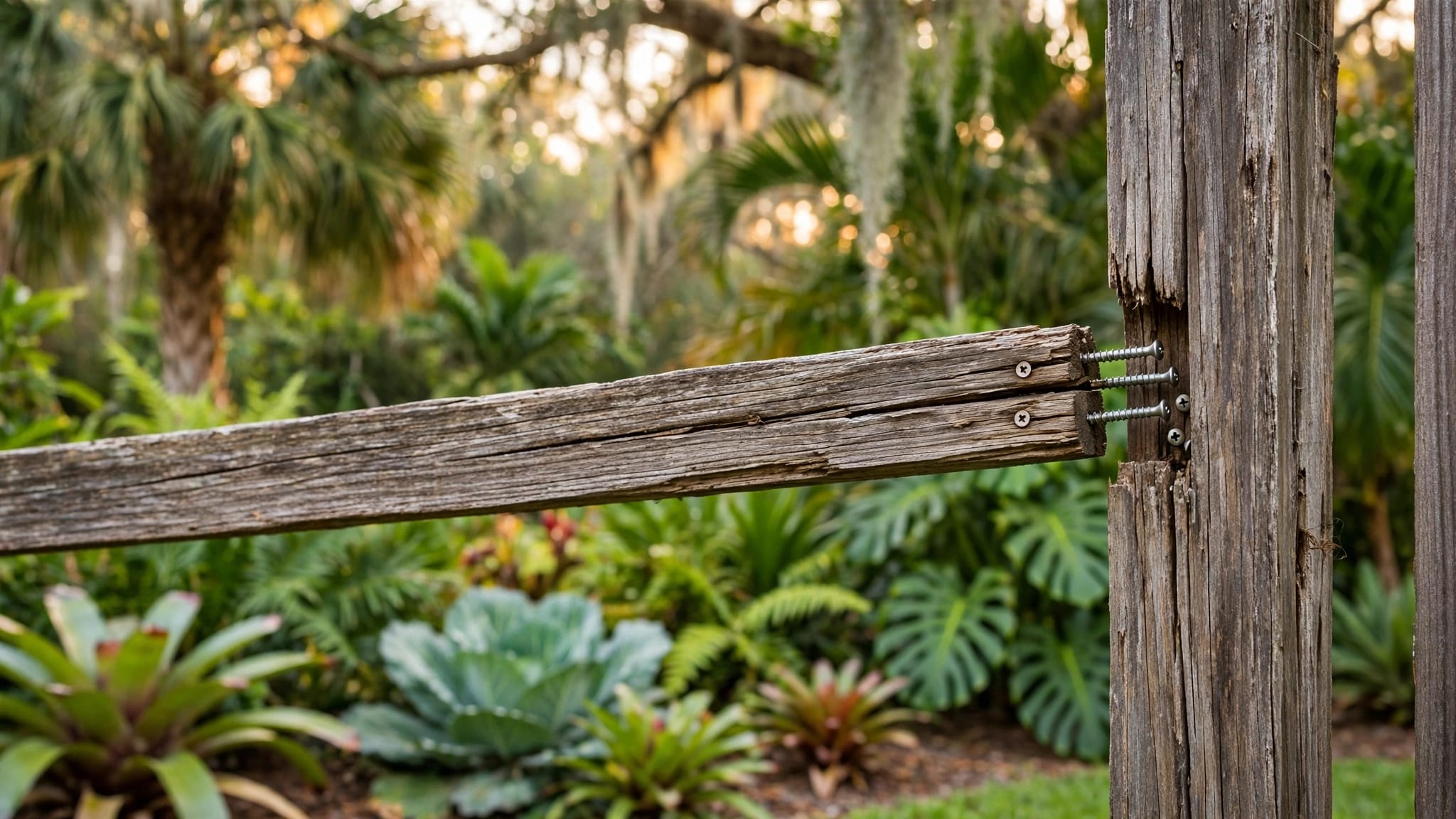
Florida Fence Rules Near Retention Ponds: What to Check
A backyard pond can make a fence project feel simple until you discover it is part of the neighborhood's drainage system. A fence that looks fine on a survey can still block mowing equipment, cover a drainage swale, or sit inside an easement.
Florida fence rules for retention ponds and stormwater lots do not come from one universal statewide standard. Your property records, local code, stormwater permit, and community documents often matter more than the fence style you choose.
Before setting posts, find out who owns the pond, who maintains it, and where they need access.
Florida fence rules are not one statewide pond standard
Florida does not have one blanket law that tells every property owner how close a fence may sit to every retention pond. Rules change based on the pond's purpose, location, ownership, and approved drainage plan.
A small private pond on a large residential parcel raises different issues than a stormwater facility behind a subdivision. In many communities, the pond is part of an engineered system that stores runoff and releases water through pipes, control structures, swales, or outfalls.
State agencies set some broad expectations
The Florida Department of Transportation's Drainage Manual addresses ponds on FDOT projects. It states that pond fencing requires a documented need for restricted access and a design variation approved by the State Roadway Design Engineer.
That manual does not regulate every private yard. However, it reflects a common principle: fencing cannot interfere with the function, appearance, inspection, or maintenance of a stormwater facility.
Local records usually control the project
Your city or county building department may regulate fence height, setbacks, gates, pool safety, and permits. Yet the recorded plat, drainage easement, development order, or stormwater permit may impose tighter limits near the pond.
Read those documents before treating a backyard boundary as fully private.
Start by identifying the type of pond
"Retention pond" is a common label, but not every pond works the same way. A retention facility usually holds water so it can soak into the ground. A detention pond stores runoff temporarily, then releases it at a controlled rate.
Some Southwest Florida neighborhoods also have dry basins, roadside ditches, swales, drainage canals, lakes, and stormwater tracts. Each can carry different access and maintenance requirements.
A private residential pond may allow more flexibility
A pond entirely within one owner's property can still have restrictions. For example, a county permit or drainage easement may cover the outfall structure or a swale that directs water to the pond.
Still, an owner often has more control over fencing if no shared maintenance entity, recorded access right, or HOA rule applies. The survey and title documents should confirm that assumption.
Community ponds are usually shared infrastructure
A pond behind several homes may look like a backyard amenity, but it may belong to an HOA, condominium association, community development district, developer successor, or local government.
A "stormwater lot" can also be a separate parcel dedicated to drainage. Adjacent homeowners may have a view of it without owning any portion of it.
In that setting, a rear fence often needs approval even when it follows the apparent property line. The association or permit holder may need vehicle access along the pond bank and access to pipes, inlets, or control structures.
A pond-side fence can be acceptable while a fence across the maintenance route is not. The property line alone does not settle the question.
Who can approve or restrict a pond-side fence?
Several parties may have a say in the same fence project. Their authority comes from different documents, so verbal permission from one person may not protect you later.
For practical purposes, start with the most restrictive recorded requirement. Then confirm local rules and association approval.
The local building department handles code compliance
In Cape Coral, Fort Myers, Naples, Punta Gorda, Sarasota, Bradenton, and other Southwest Florida communities, local departments set their own fence permit and zoning processes.
Ask whether your address has:
- A fence permit requirement, height limit, setback, or visibility rule.
- A drainage easement, utility easement, right-of-way, or stormwater tract near the proposed fence.
- A site-specific development condition that affects fencing.
- A requirement for a gate, removable panel, or access opening.
The building department may not interpret private HOA rules or title rights. However, it can explain the local code that applies to your lot.
The permit holder has a maintenance obligation
The stormwater permit holder may be an HOA, developer, city, county, commercial owner, or other responsible entity. That party must maintain the facility to approved water-quality and water-quantity standards.
As a result, the permit holder may restrict a fence that blocks inspection or repair work. A landscaper may need to mow the bank. A contractor may need to bring in excavation equipment after a storm. An outlet structure may need emergency repair.
Drainage easements create the biggest fence risk
A drainage easement gives another party defined rights over part of a property. It does not always prevent every fence. However, it can give the easement holder the right to remove an obstruction when drainage or maintenance work requires access.
The recorded plat and title documents define the easement's location and terms. Never guess its width from the grass line, pond edge, or neighboring fences.
Fences cannot obstruct pipes, swales, or ditches
Many Florida stormwater codes treat an obstruction in a drainage easement as a problem when it interferes with pipes, swales, ditches, or access. A solid privacy fence can also trap debris against a flow path during heavy rain.
Brevard County's stormwater criteria offer a useful example of how detailed these rules can become. They state that fences cannot interfere with drainage pipes, swales, or ditches within drainage easements. The same criteria call for a driveable, stabilized access easement at least 12 feet wide to a pond control structure in many cases.
Your local rule may differ. The point is that stormwater access is often measured for trucks and equipment, not foot traffic.
Easement removal costs can fall on the homeowner
If you install a fence inside an easement without written approval, the maintenance entity may need to remove part of it later. The documents may place restoration costs on the property owner.
That can turn a modest fence job into an expensive repair. It can also leave the yard open after storm season or during a long maintenance project.
Ask for written confirmation if a proposed fence enters any recorded drainage or utility easement.
Maintenance access matters as much as setback distance
Property owners often focus on how many feet separate the fence and water. Access is just as important. A pond contractor may need a route around the perimeter, an entry gate wide enough for equipment, and clear access to the control structure.
A narrow strip behind homes may be the only way to reach the pond's far bank.
Maintenance berms need room to work
Some jurisdictions require an unobstructed maintenance berm around a pond. Orange County regulations, for example, require sufficient space for an unobstructed berm around certain open drainage facilities.
Other Florida codes call for a 10-foot stabilized maintenance berm or a dedicated access easement. Largo has used a 20-foot drainage easement measured from the top of bank for retention-area maintenance in certain situations.
Those examples are not automatic standards for Lee, Collier, Charlotte, Sarasota, Manatee, Hendry, or DeSoto counties. They show why a contractor cannot select a setback by habit.
Gates must match the actual access need
Where fencing around a pond is allowed, a gate can be part of the approval. Some Florida municipal standards call for locked gates and openings wide enough for maintenance vehicles.
A pedestrian latch gate may be useless to a mower, skid steer, or vacuum truck. If the permit holder requests a double gate, gate width, lock type, or removable panel, put that requirement on the fence plan before work begins.
How a fence can affect drainage performance
A fence does not need to touch the pond to create a drainage problem. Posts, panels, and grading changes can affect how water moves across the yard.
Florida's intense rainfall makes small blockages more serious. Leaves, pine straw, and lawn clippings can gather against a low fence line. Water may then pool on one side instead of reaching a swale or inlet.
Preserve overland flow routes
Many lots drain through shallow swales along side or rear property lines. A fence that crosses the swale may need a gap, raised bottom rail, graded opening, or another approved detail.
Do not fill a swale to create a level fence line. Do not install solid material where the approved site plan relies on water passing through. A fence professional can set posts to follow grade without changing the drainage path.
Avoid damaging buried drainage components
Stormwater pipes, catch basins, cleanouts, and irrigation lines may run near pond edges. Driving a post without locating utilities and reviewing plans can crack a pipe or make future repairs harder.
Call 811 before excavation. Then compare utility markings with the survey, drainage plan, and proposed fence layout. Private lines and stormwater features may not appear through standard utility locating, so the site plan still matters.
HOA rules can be stricter than local fence codes
An HOA approval is separate from a city or county permit. The association may regulate fence material, color, height, placement, gate design, and the way a rear fence meets a shared pond tract.
Many governing documents require approval before any exterior change. Some prohibit fences along water views. Others allow aluminum fencing but not vinyl privacy panels at pond boundaries.
Review the documents, not only the neighborhood pattern
A neighbor's fence is not proof that yours will be approved. It may have been installed under earlier rules, with a variance, or without authorization.
Request the declaration, architectural guidelines, plat, and any pond maintenance agreement. Look for phrases such as "drainage easement," "lake maintenance," "stormwater management area," "tract," "access," and "architectural review."
A board's written approval helps, but it cannot cancel recorded easement rights held by a government, utility, or permit holder.
Get conditions in writing
Association approval may come with conditions. The board could require an access gate, a certain material, placement inside the property line, or homeowner responsibility for removal during maintenance.
Keep the approval with your survey and fence contract. If the board changes managers or volunteers, clear written records reduce later disagreements.
Choosing fence materials near a retention pond
Material selection should fit the rules and the site. It also affects drainage, visibility, maintenance access, and the appearance of a shared water feature.
A solid fence offers privacy. Yet it may be inappropriate if the HOA requires an open view or if wind and runoff move through the area. Aluminum fencing often provides a more open boundary along a pond, while chain link may meet functional requirements for restricted-access sites.
Open styles can preserve views and access
Aluminum fence panels are common along community ponds because they define a boundary without creating a solid wall. They can also make it easier to spot debris, standing water, or a damaged bank.
Chain link may be required where a facility needs security or where a local design standard calls for it. Vinyl and composite fencing can work on private residential lots, provided the placement does not obstruct drainage or maintenance.
Build for Southwest Florida weather
Salt air, humidity, wind, and saturated soil affect every fence choice near water. Galvanized or coated hardware, corrosion-resistant fasteners, and properly set posts matter.
A fence should follow the finished grade rather than force the grade to fit the fence. For residential fencing options in Southwest Florida, property owners can compare materials that match both the yard and the community's requirements.
A practical checklist before fence installation
A little document review can prevent a fence relocation after installation. Start the process before ordering materials, because association review and local permits can take time.
Use this sequence to confirm the project:
- Order or locate a current survey that shows lot lines, easements, ponds, swales, and drainage features.
- Check the recorded plat and title documents for pond tracts, maintenance rights, and drainage easement language.
- Contact the local building department to ask about permit, zoning, height, setback, and drainage requirements for your address.
- Submit plans to the HOA or governing association if the property is subject to architectural review.
- Identify the stormwater permit holder and request written guidance if the fence is near a pond, access berm, outlet, or dedicated stormwater lot.
- Mark the proposed line on site before installation, then confirm gates and access routes with the approving party.
- Call 811 and review drainage plans before post holes are dug.
A professional installer needs the same information. Share surveys, HOA approvals, site plans, and written restrictions before the layout appointment.
When a fence plan needs to change
A change in placement does not mean the project has failed. Often, moving the fence a few feet inside the lot line, adding a double gate, or selecting a more open style resolves the problem.
Do not treat a drainage restriction as an invitation to build first and sort it out later. Stormwater facilities protect neighboring homes and roads during severe rain.
Common solutions that may receive approval
A permit holder or HOA may accept a fence outside the easement with a clear equipment route behind it. Another option is a gate aligned with the maintenance path.
Some communities allow a removable section when crews need periodic access. Others require a fence to stop at a defined point rather than wrap around the pond edge.
The correct solution depends on the approved drainage plan. Written approval should describe the location, material, gate arrangement, and any removal responsibility.
Stop work if the site does not match the plans
Field conditions can reveal a swale, structure, or utility feature that was not obvious on a basic survey. If the proposed line conflicts with the site plan, pause before setting posts.
A revised layout costs less than removing completed panels and repairing disturbed ground. Clear communication between the homeowner, installer, association, and maintenance entity protects the property and the drainage system.
A careful fence plan protects your property
The best approach to Florida fence rules near retention ponds is document-first, not post-first. Confirm ownership, easements, local code, HOA approval, and stormwater access before committing to a layout.
A well-placed fence can provide privacy or security without blocking the system that carries water away from your home. Written approval and a current survey are the strongest starting points for a pond-side fence project.
This article provides general information, not legal or engineering advice. For a site-specific decision, confirm requirements with your local building department, HOA or governing documents, water management district, and the relevant stormwater permit holder.