Stop Fence Panel Rattling in Southwest Florida Wind
A rattling fence can turn every windy afternoon into a nuisance. More importantly, fence panel rattling often points to a loose connection that can worsen during a summer thunderstorm or hurricane.
Southwest Florida fences face repeated gusts, saturated soil, salt air, and intense sun. A small amount of movement may be normal, but panels shouldn't bang against posts, rails, or gate hardware.
Start by finding the exact point where the movement begins.
Diagnose Fence Panel Rattling Before Tightening Anything
Don't assume the noisy panel is the problem. Wind can transfer vibration through rails, posts, and gates, so inspect the entire section during a calm, dry period.
Find the contact point
Push the panel gently in both directions while watching each joint. A panel that moves inside its post channel needs a different repair than a rail that clicks against a bracket.
Use this quick inspection order:
- Check whether the post itself moves at ground level or leans after heavy rain.
- Hold the panel steady and test the rail connections separately.
- Look for missing screws, cracked vinyl brackets, loose caps, or rust stains around fasteners.
- Open and close nearby gates, then shake them lightly to check hinges, latches, and posts.
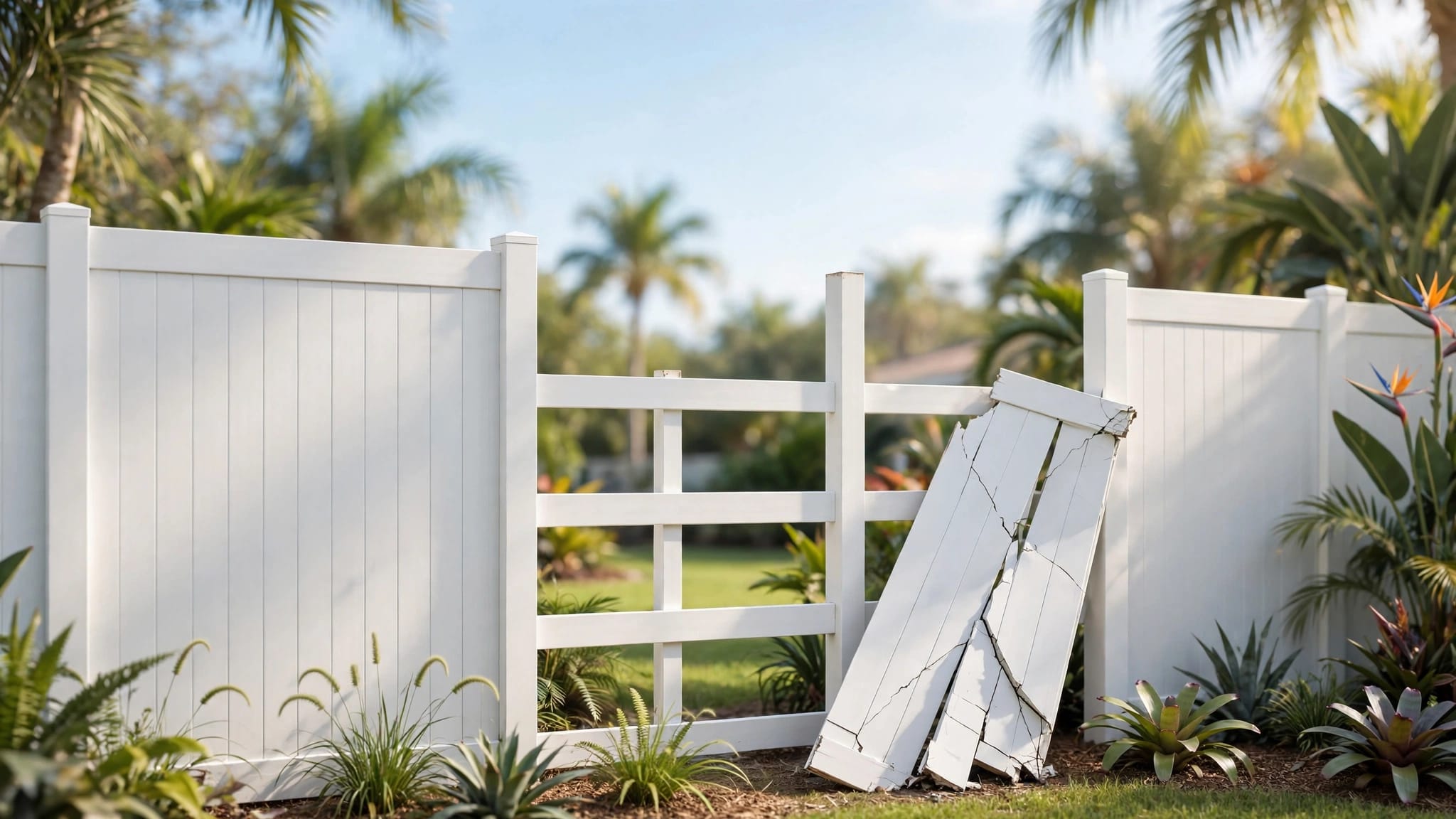
- Look for storm damage, including split wood, bent aluminum, cracked vinyl, washed-out soil, or a shifted concrete footing.
Mark the loose area with painter's tape. That simple step prevents you from tightening the wrong hardware once the wind dies down.
Stop Panel-to-Post Movement at the Source
Panel-to-post noise happens when a fence section has too much side-to-side play in its channel, brackets, or fasteners. Vinyl privacy fences can rattle when rails loosen in their routed post holes. Wood and aluminum sections often make noise when brackets pull away from the post.
Tighten the connection without pinching the panel
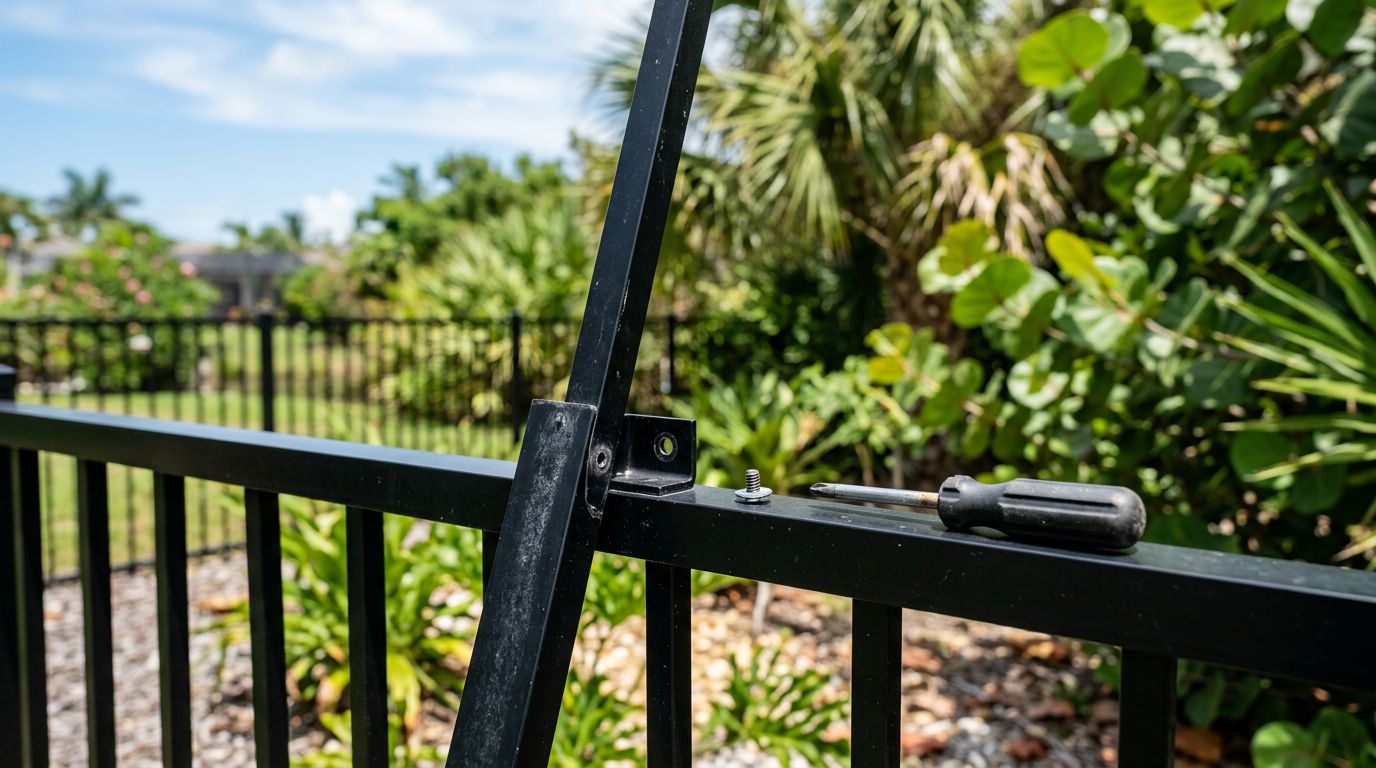
First, tighten accessible screws and bolts. Replace stripped, bent, or rusted pieces instead of forcing them to hold. If a bracket has cracked or a rail has pulled free, replace that component with a matching part rated for the fence system.
Use stainless steel, hot-dip galvanized, or ACQ-compatible coated fasteners where the material calls for them. Standard interior screws can rust quickly in Florida's moisture and salt air, then lose their grip.
Don't pack every joint with wood shims, caulk, or foam. Panels need the manufacturer's specified clearance for normal expansion and drainage. The goal is to remove slamming and excessive movement, not make the fence rigid enough to crack under heat or wind pressure.
If the post rocks in the soil, hardware won't solve the issue. It may need a reset or a new footing. Recurring movement is often a sign that it is time for professional fence repair services.
Fix Panel-to-Rail Noise and Gate Rattles Separately
A rail connection can look secure from several feet away yet knock loudly when gusts hit the fence broadside. Gates add another layer of moving hardware, so treat them as their own repair.
Secure loose rails and pickets
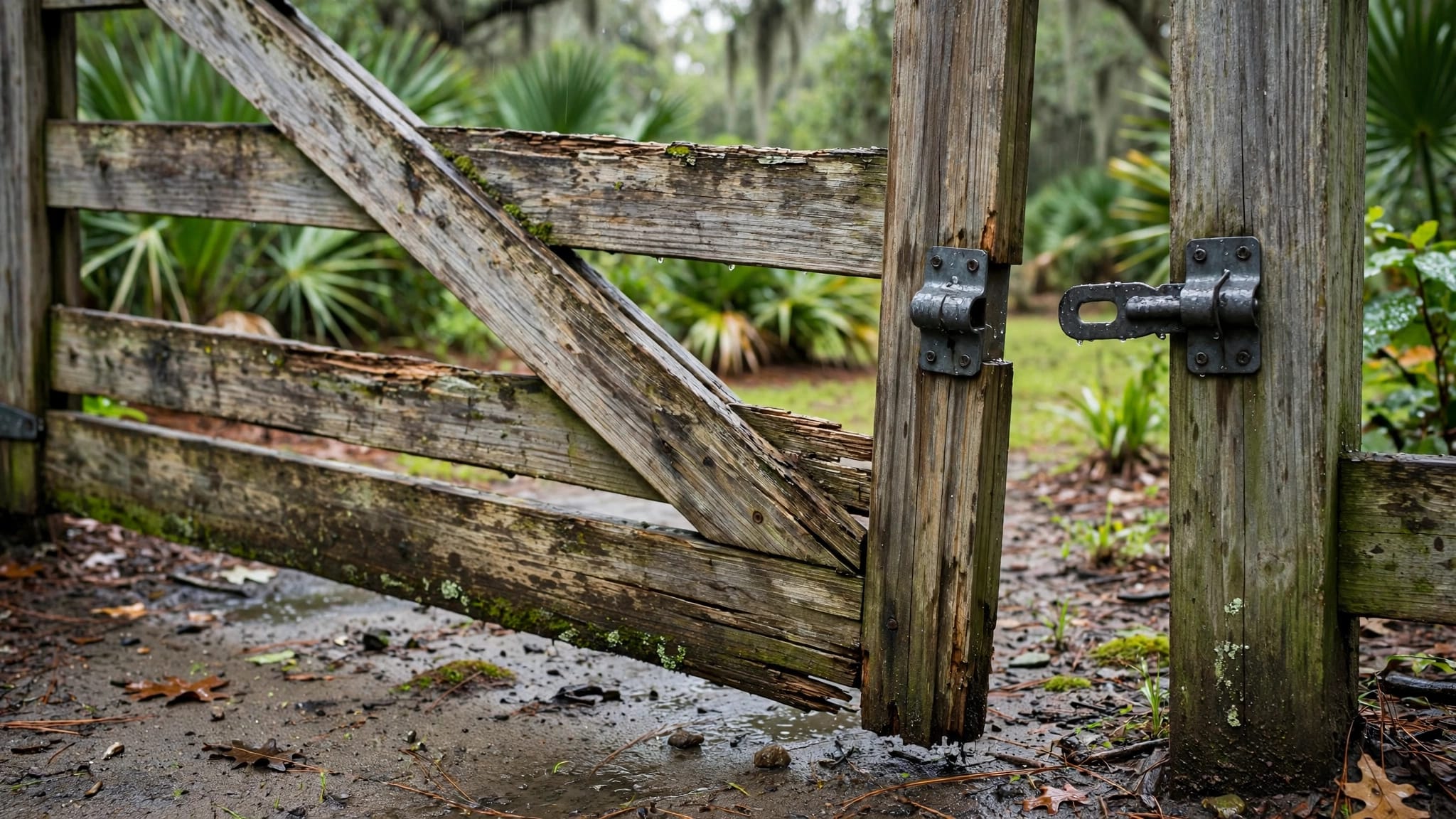
For wood fencing, inspect rails for split ends, popped nails, and screws that no longer bite into solid material. Replace damaged rails before adding new fasteners. Driving longer screws into rotten wood only delays a larger repair.
On vinyl fences, check rail ends, internal reinforcement, and locking tabs. Cracked rails can vibrate and spread the damage with each windy day. Aluminum systems may need a loose picket, rail connector, or cap replaced.
Keep panels aligned and allow proper clearance at the rail connection. A rail shouldn't grind against metal hardware or strike the post each time the wind changes direction.
Correct gate-related noise at the hinges and latch
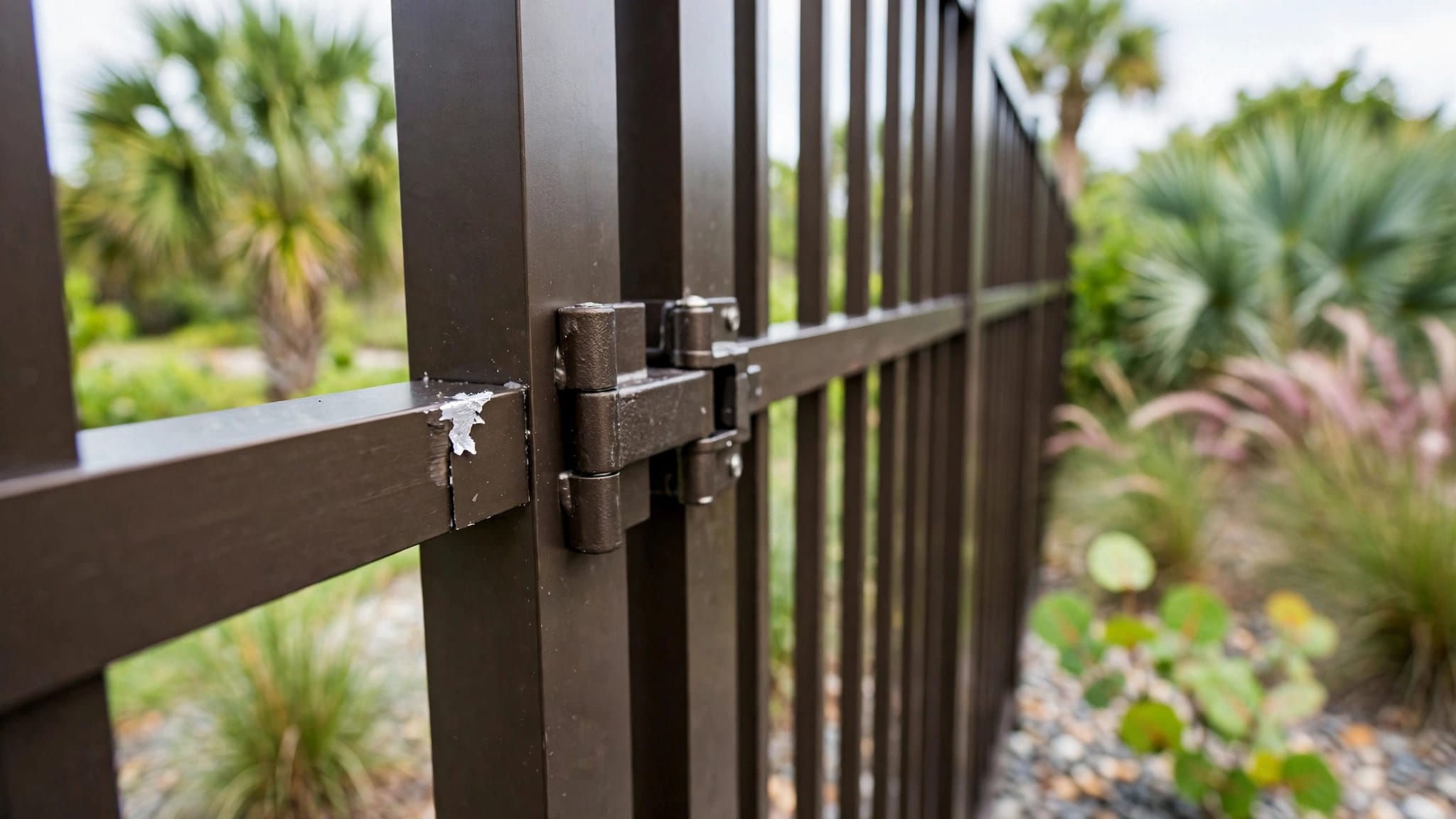
A gate that rattles may have loose hinges, a worn latch, or a sagging frame. Tighten hinge fasteners at both the gate and hinge post. Then confirm that the latch catches firmly without forcing the gate upward or sideways.
Lubricate hinges only after checking their condition. Lubricant can quiet metal-on-metal contact, but it can't correct a loose post or twisted gate frame.
A gate that drags, sags, or rattles in moderate wind can put extra strain on its hinge post during stronger storms.
Maintain appropriate clearance below the gate and around the latch side. If pavers, roots, or shifted soil make the gate rub, correct that interference before adjusting the hardware.
Choose Hardware That Handles Coastal Conditions
Hardware is often the smallest part of a fence repair, yet it carries much of the load. In coastal and inland Southwest Florida, corrosion can turn a tight connection into a loose, noisy one.
Replace mismatched or corroded fasteners
Match replacement screws, brackets, hinges, and rail connectors to the fence material and manufacturer when possible. Vinyl components need hardware that won't stain or crack the surrounding material. Pressure-treated lumber needs compatible fasteners. Aluminum systems need connectors designed for that profile.
Avoid mixing random screws, nails, and brackets from different projects. A mismatched fastener may sit proud of the surface, catch a panel, or create a new rattle.
After repairs, check clearances around rails, gates, property lines, drainage areas, and easements. In Collier County, fences near septic systems require at least five feet of separation under the county's application guidance. Placement rules can also affect a repair that changes a fence's footprint.
Inspect After Storms and Check Rules Before Structural Work
Early September is part of the climatological peak of hurricane season, and Southwest Florida storms can bring sharp wind gusts, lightning, and heavy rain. Inspect the fence after severe weather, but wait until conditions are safe.
Don't climb on a damaged fence, work near downed lines, or attempt a hurried repair while a severe weather watch or warning is active. Secure pets and keep people away from leaning sections until you can assess the damage safely.
For a shifted post, fallen panel, or damaged gate frame, document the condition with photos before moving anything. A detailed post-storm fence inspection and repair guide can help you spot damage that isn't obvious from the street.
Verify permits and HOA approval for structural changes
Replacing a screw usually differs from resetting posts, changing fence height, relocating a gate, or rebuilding a full section. Check current requirements with your city or county before structural work begins.
Lee County requires fence applications to show property lines, easements, buildings, and proposed fence placement. Collier County may require additional review for fences in drainage easements. HOA approval can be separate from local permitting, so review your community rules before ordering materials.
A Quiet Fence Starts With Stable Connections
Fence panel rattling rarely goes away on its own. Tight hardware, sound rails, stable posts, and correct clearance stop small movements before they become storm-season repairs.
Listen for the exact contact point, use corrosion-resistant hardware, and address any shifting post or sagging gate promptly. A fence that stays quiet in everyday wind is usually better prepared for the next hard gust.