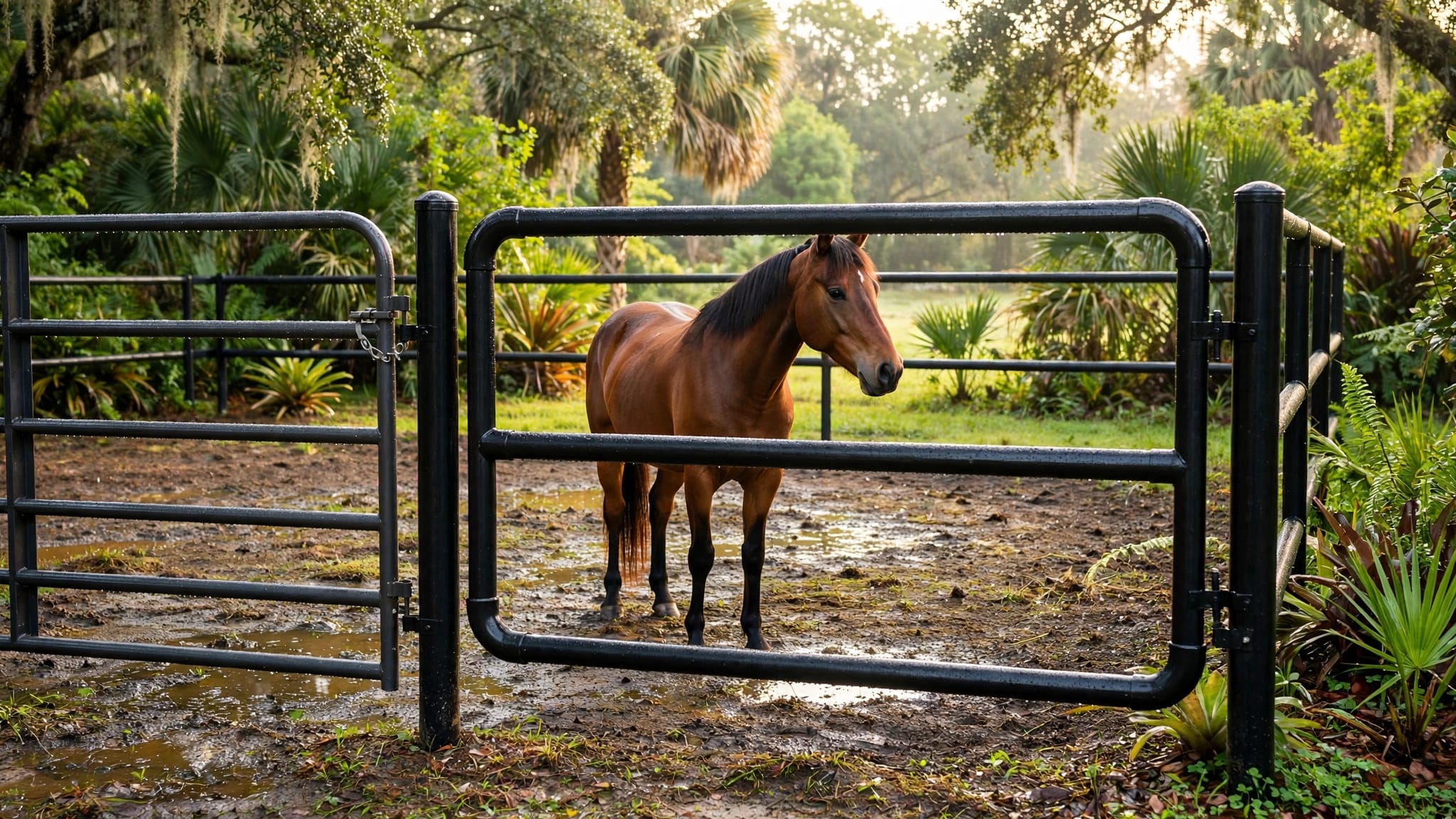
Installing a Fence Through Pavers in Southwest Florida
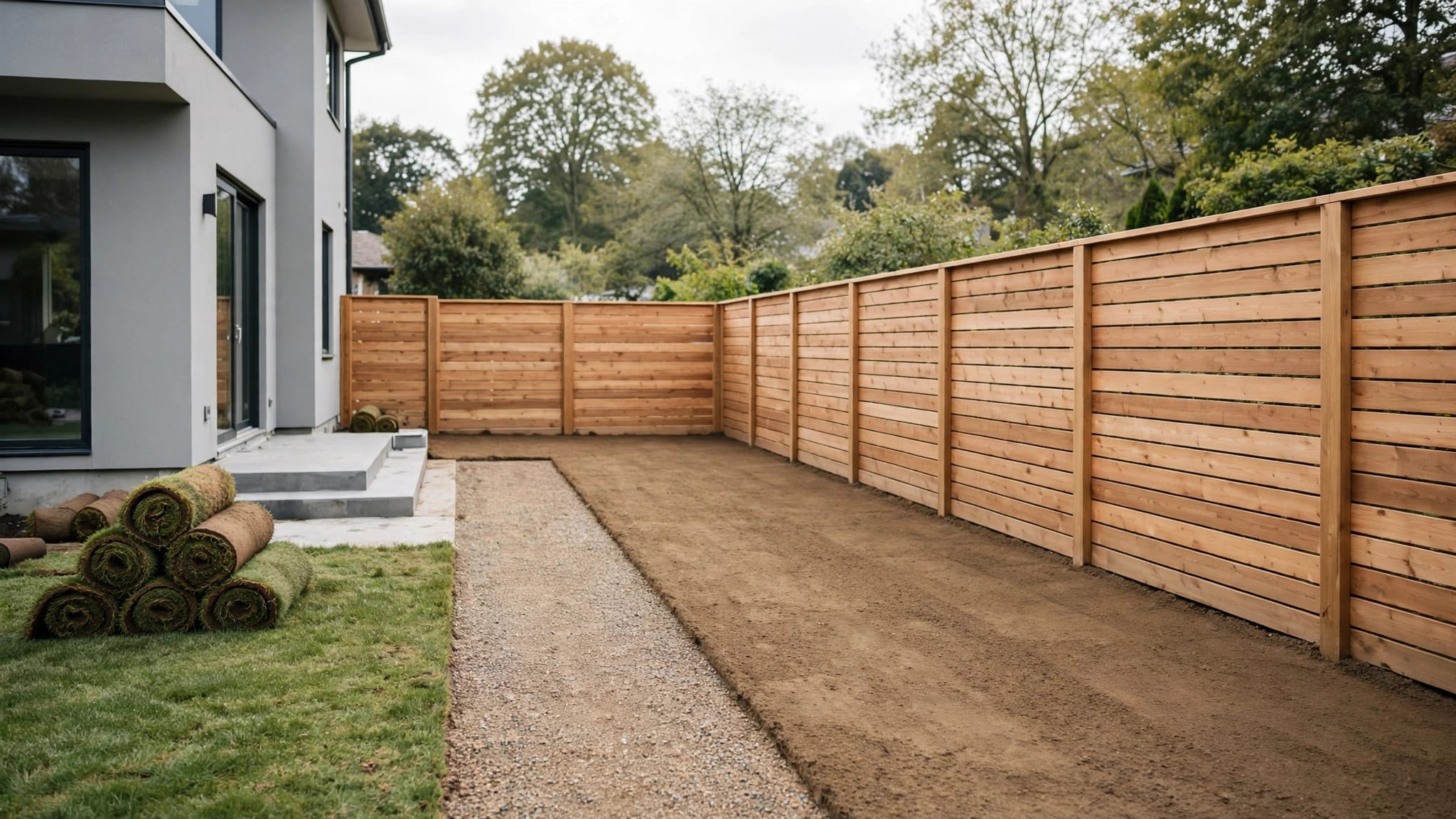
A new fence can add privacy and security without sacrificing a finished patio or pool deck. However, installing a fence through pavers takes more planning than setting posts in an open lawn.
Pavers are a surface system, not a structural foundation. The fence still needs stable post support, protected utilities, correct drainage, and a layout that meets local rules.
A careful plan keeps a small opening for a fence post from becoming cracked pavers, standing water, or a failed inspection.
Start With the Surface Below the Pavers
A paver patio may sit on compacted base material, a concrete deck, a driveway slab, or a combination of surfaces. Each condition calls for a different post-installation method.
Never assume that a paver patio can carry fence loads simply because it feels solid underfoot. Wind pushes against fence panels and transfers force directly to posts, footings, brackets, and fasteners.
Pavers are not fence footings
Most fence posts need a real foundation below the paver surface. That often means carefully removing pavers at each post location, excavating through the base, setting the post or footing, then cutting and reinstalling pavers around it.
For some aluminum or metal systems, a surface-mounted post base may work when it fastens to an approved concrete substrate. The post, anchors, slab thickness, fence height, and manufacturer instructions all matter.
A contractor should not anchor a tall privacy fence to loose pavers or to a thin patio overlay. Those surfaces can shift, crack, or pull apart under wind pressure.
Do not cut structural concrete without confirmation
Many Southwest Florida homes have pavers installed over a lanai slab, pool deck, or concrete patio. Some slabs are structural, and others contain reinforcement, plumbing, electrical conduit, or post-tension cables.
Don't core-drill or cut a structural slab until the appropriate professional confirms that the work is safe. Damage below the surface can be expensive and difficult to repair.
For layouts that cross a concrete patio, review options for fence installation on concrete slabs before selecting a post system. The right approach depends on what supports the pavers, not only on their appearance.
Verify Rules Before You Mark Post Locations
A fence location can look obvious and still violate a setback, utility easement, drainage easement, right-of-way, or pool-barrier requirement. Confirm the layout before ordering materials or lifting the first paver.
Permit, height, setback, wind-load, property-line, and drainage rules vary by city and county. Cape Coral, Fort Myers, unincorporated Lee County, Charlotte County, Sarasota County, Collier County, and Manatee County do not all apply the same standards.
Check permits, height, and wind-load requirements
A new fence, a replacement fence with changed dimensions, and a pool enclosure can each trigger different reviews. Local officials may also request manufacturer specifications, site plans, engineering, or wind-load information for a particular fence style.
Cape Coral's January 2026 residential fence guidance requires a site plan and a Burrowing Owl/Gopher Tortoise affidavit for a standard new residential fence permit. Pool barriers follow a separate process, so don't treat a backyard privacy fence and a pool barrier as the same project.
In unincorporated Lee County, residential fences near street setback areas may face lower height limits. County rules also include visibility requirements, secondary-street conditions, and open-mesh restrictions near waterways. A canal-front lot needs more review than a typical interior lot.
Use a current Cape Coral fence permit checklist if your home is in the city. Elsewhere, contact the city or county building department and zoning staff for the rules that apply to your parcel.
Find the true property line and recorded easements
A neighbor's existing fence is not proof of the boundary. Neither is the edge of a paver patio, landscaping bed, sidewalk, or driveway.
Review your survey, plat, title documents, and recorded easements before finalizing the fence line. If the boundary is uncertain, hire a licensed surveyor to mark it. A few inches can matter when a fence runs beside a neighbor's patio or along a narrow side yard.
Keep posts out of recorded utility and drainage easements unless the local jurisdiction and utility provider approve the installation. Utilities may need future access, and a post footing can obstruct repairs.
A fence can sit inside your lot and still conflict with a drainage or utility easement. Property ownership alone does not remove that restriction.
Protect Drainage, Pool Decks, and Irrigation
Southwest Florida rain can expose a poor fence layout in one afternoon. Water must keep moving away from the house, across the patio as designed, and toward the intended swale, drain, or collection area.
Fence posts should not create a low dam across a paver surface. A solid bottom board, landscape edging, or overly thick mortar repair can trap runoff where it needs to pass.
Preserve the patio's slope and drainage paths
Before work begins, identify the slope of the pavers and every drain, scupper, swale, channel, and downspout outlet nearby. Photograph the area too, especially if the patio connects to a pool deck or screened enclosure.
When a post passes through pavers, the repair around it needs a clean joint that allows normal movement and drainage. Avoid filling every gap with rigid material. Pavers expand and settle slightly over time, while a concrete post footing remains fixed.
If a fence line meets a drainage swale, don't raise the grade with concrete spoils or paver base. That can send water toward the home or onto an adjoining property.
Treat a pool deck as a finished surface
Pool decks deserve extra care because chipped pavers, dust, and uncovered holes can become safety problems. Cover the pool when cutting nearby, contain debris, and keep tools away from coping and exposed finishes.
A fence that forms part of a pool barrier also needs compliant gates and hardware. Gate swing direction, self-closing action, latch placement, fence openings, and barrier height may all affect inspection.
Homeowners changing a fence during a pool renovation should plan for a safe temporary enclosure. Review pool construction fence protection before removing any section that helps secure the pool area.
Irrigation is another common hazard. Locate sprinkler heads, valves, drip lines, landscape lighting, and low-voltage wiring before excavation. Then cap, reroute, or protect them instead of hoping the auger misses them.
Choose Fence Materials That Handle Florida Conditions
The best material depends on privacy needs, wind exposure, maintenance preferences, HOA requirements, and the mounting method. A fence through a paver patio needs compatible posts, hardware, and anchors as much as attractive panels.
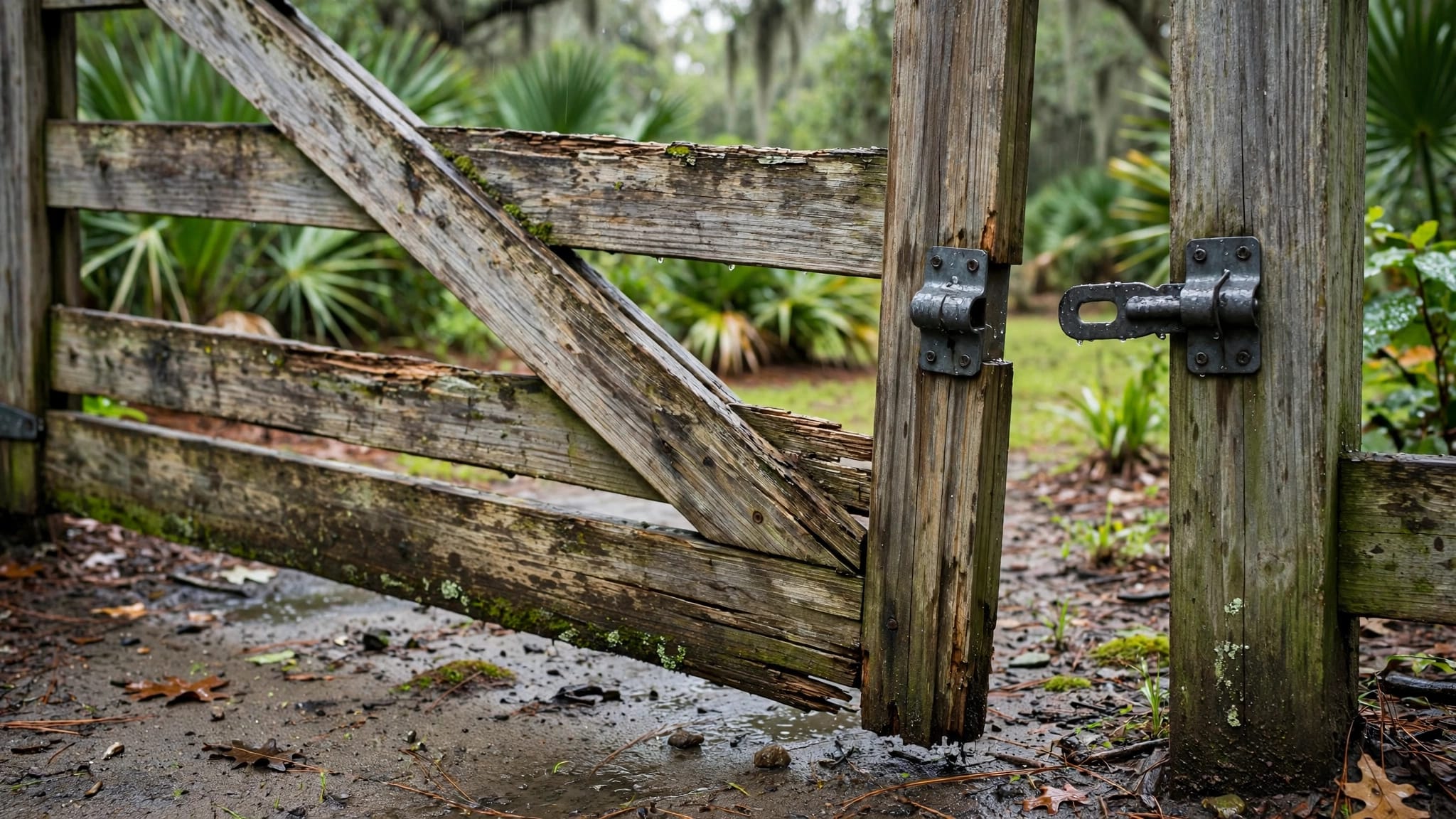
Salt air, humidity, heat, and heavy rain punish unprotected steel fasteners. Coastal homes and canal properties need added attention because corrosion may appear faster there.
Match the fence style to the mounting method
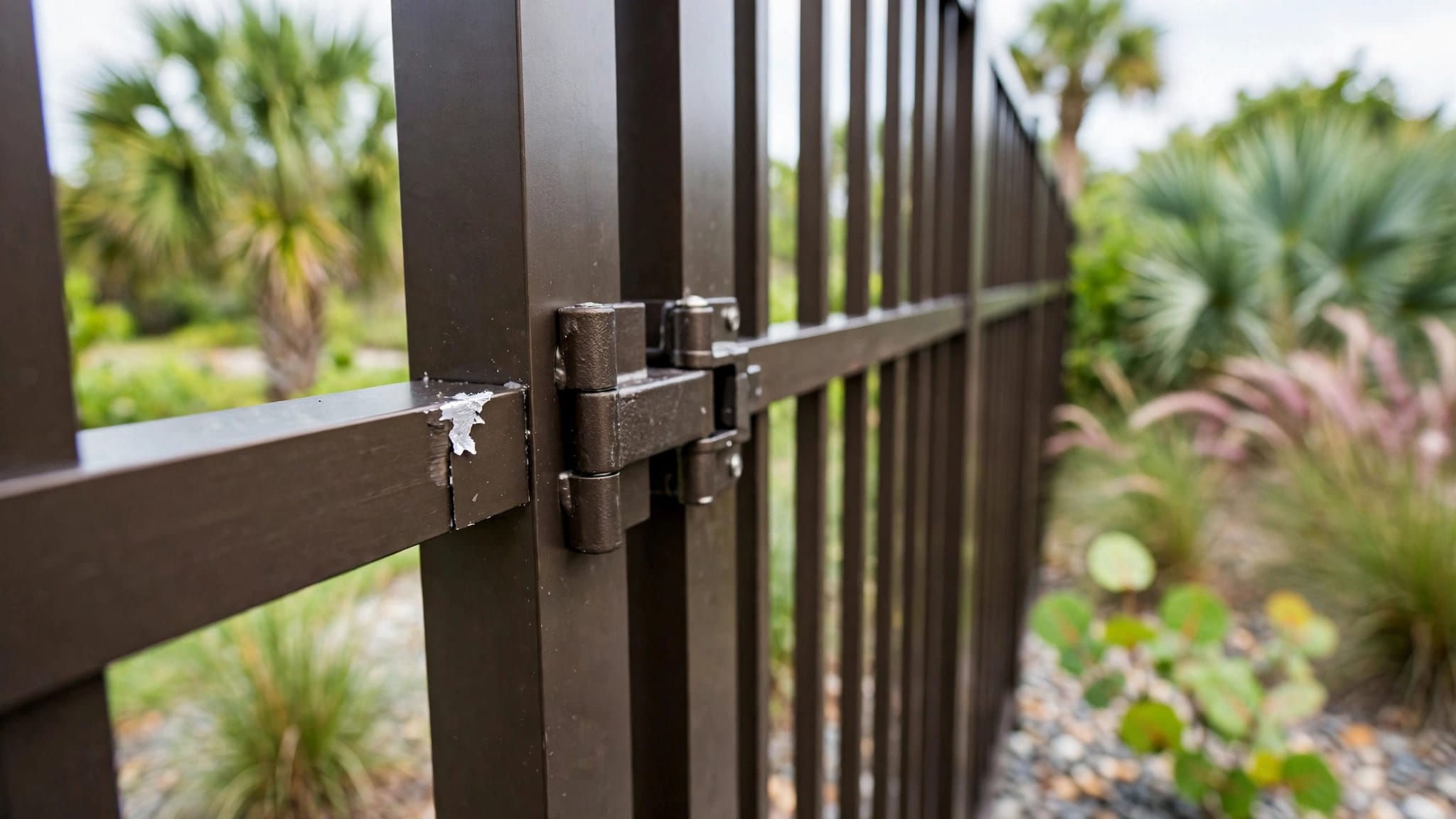
Aluminum fencing often suits pool decks and patios because it keeps sightlines open and can work with surface-mounted posts when the supporting concrete meets the system requirements. It is also common where local rules require open fencing near water.
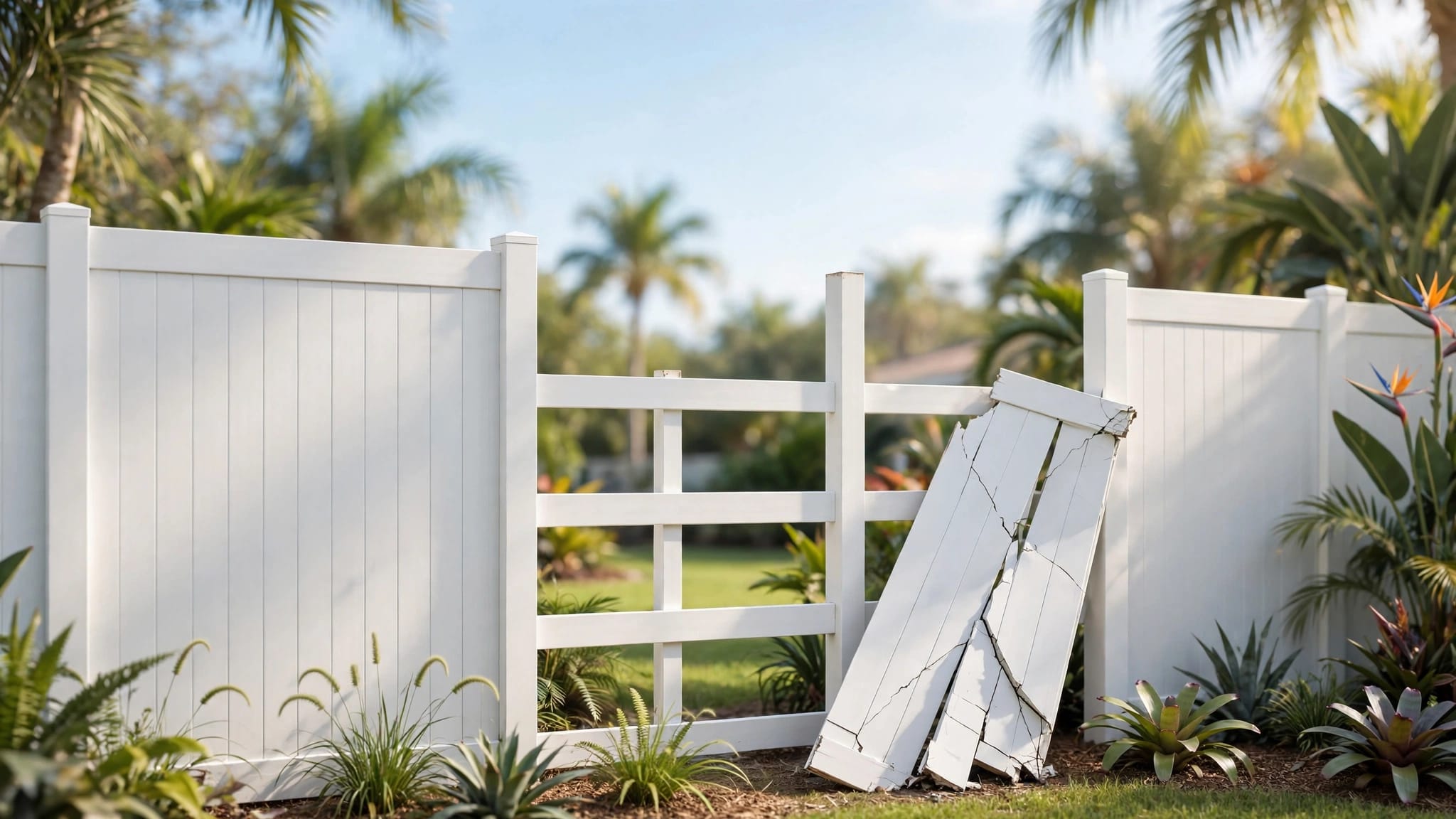
Vinyl provides privacy and low-maintenance color, but solid panels catch more wind. Posts and footings must resist that force, especially along open lots, waterfronts, and corners exposed to storm gusts.
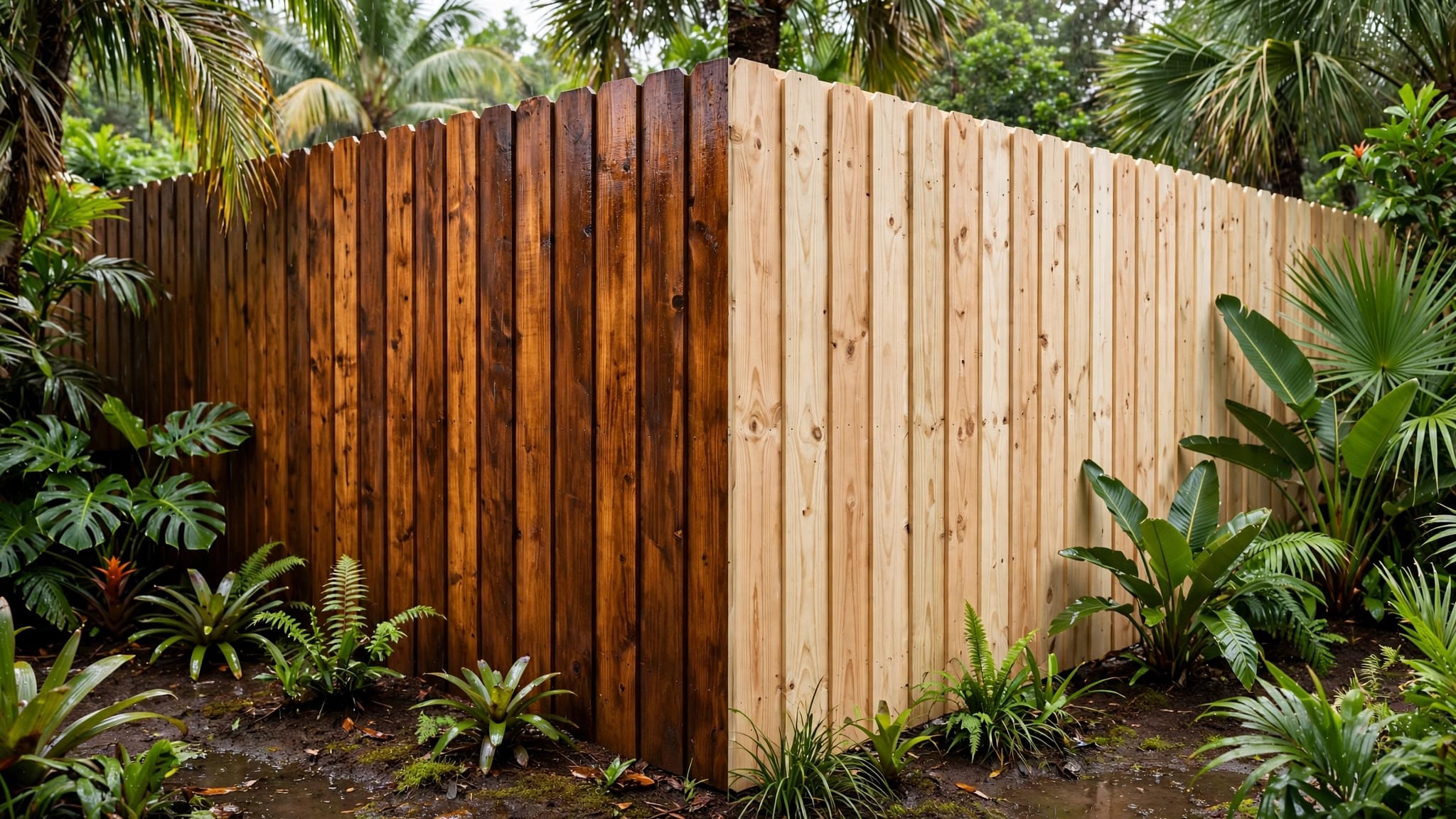
Wood fencing can give a warm, private look, although it needs regular inspection in Florida's moisture. Chain link is practical for side yards and pet enclosures, but HOA rules may limit its use or visibility.
Composite fencing can offer a clean finished appearance with less upkeep than wood. Still, every product has its own post spacing, reinforcement, footing, and fastening requirements.
Use corrosion-resistant connections
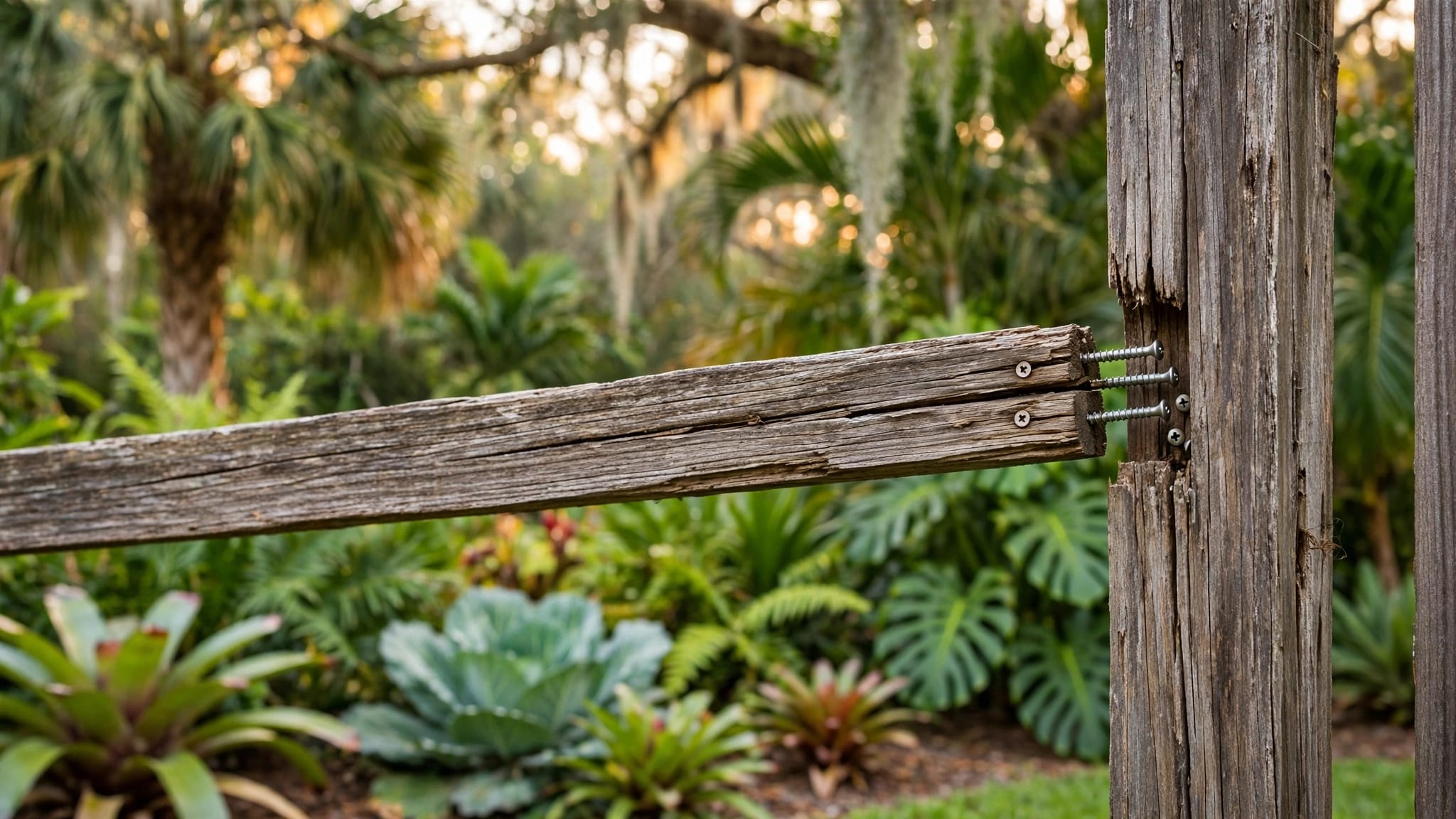
Choose exterior-rated hardware that suits the fence material and exposure. Hot-dip galvanized fasteners, powder-coated aluminum components, and stainless steel hardware may each fit certain applications.
Mixing incompatible metals can cause galvanic corrosion, especially in damp or salty conditions. Hinges, latches, post bases, screws, and anchors should work together as one system.
Ask for manufacturer specifications for the selected fence and gate hardware. Then confirm whether local review requires product approvals or wind-load documentation for your project.
How to Install a Fence Through Pavers Safely
The installation sequence matters. Rushing to drill holes before the fence line, utility locations, and drainage path are confirmed creates avoidable damage.
A professional installer adapts the process to the patio construction and fence system. However, the basic order below shows what a careful project should include.
Mark, locate, and remove pavers cleanly
First, mark the finished fence line using the verified property boundary, approved site plan, gate locations, and required setbacks. Confirm that each post clears drains, irrigation, electrical equipment, pool coping, and existing structures.
Next, contact the local utility-locating service before any digging. Private lines such as pool equipment wiring, landscape lighting, irrigation, and propane lines may need separate locating.
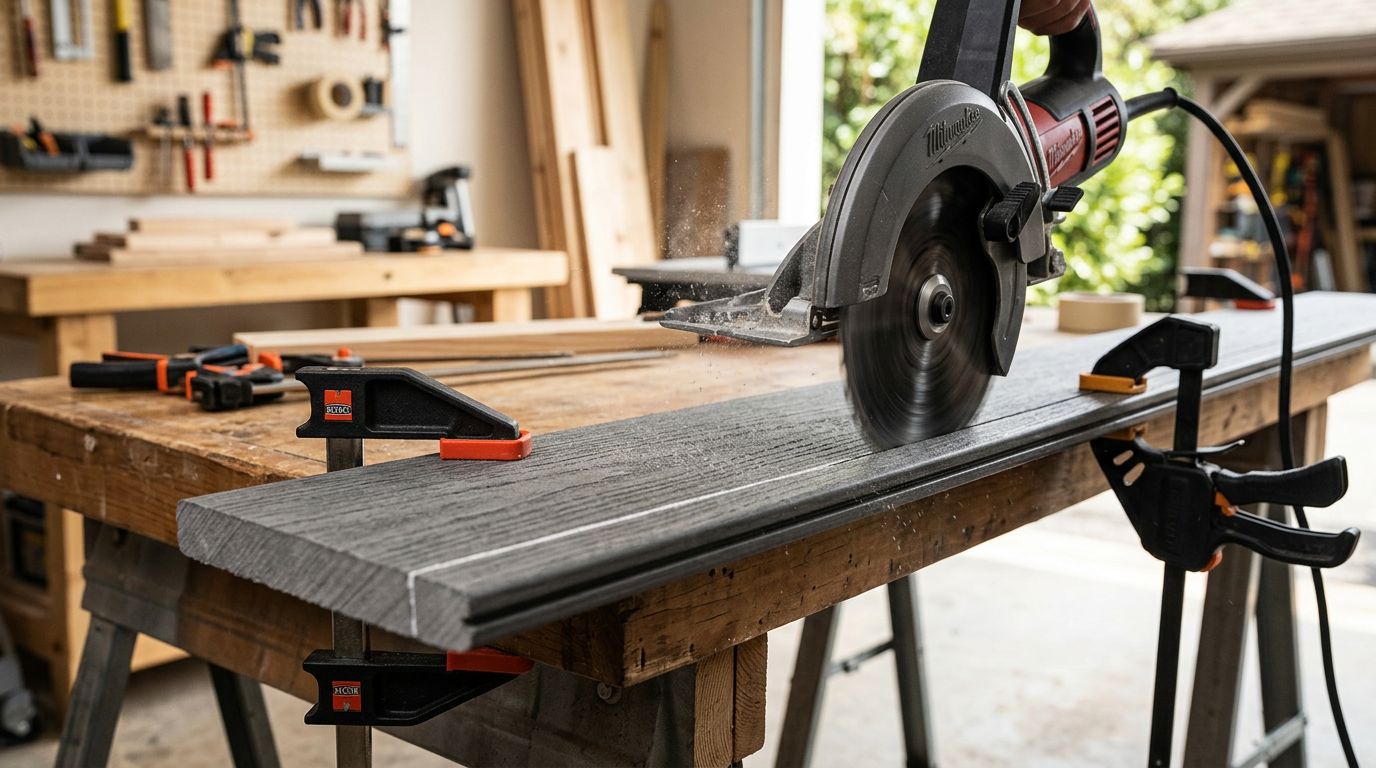
Lift whole pavers whenever possible instead of cutting small fragments around a planned post. Number or photograph removed pieces so patterns return to the correct order. If a cut is necessary, use the right saw and protect nearby pool finishes, windows, and landscaping from dust.
Build the post foundation below the surface
Excavate the required footing location through the paver base. The footing depth, diameter, reinforcement, and concrete mix should match the fence design, soil condition, manufacturer instructions, and local requirements.
Set posts plumb and align them with a string line before placing concrete. Check gate-post spacing twice because a minor error can cause binding, sagging, or a latch that won't engage.
Keep fresh concrete below the finished paver elevation where the patio needs room for bedding material and a proper paver repair. Do not allow wet concrete to stain the surrounding surface.
Let concrete cure before loading the fence
Fresh concrete can hold a post upright, but it has not reached its working strength. Don't hang heavy panels, gates, or tensioned fence fabric until the concrete has cured for the period required by the mix supplier, fence manufacturer, and project specifications.
This pause matters most for wide gates and solid privacy panels. Early loading can move the post out of plumb and crack the surrounding paver repair.
After curing, rebuild the paver base, reset the pavers, and make precise cuts around posts. Leave a neat joint that accommodates movement. Finally, install rails, panels, caps, gates, latches, and any pool-barrier hardware.
The strongest fence installation protects both systems: the post foundation carries fence loads, while the paver surface retains its slope, pattern, and drainage function.
Inspect the Finished Fence Before Final Sign-Off
Walk the entire fence line after installation. Look for rocking posts, loose anchors, uneven panel spacing, chipped pavers, low spots, and damaged irrigation heads.
Operate every gate several times. It should swing freely, close reliably, and latch without dragging across the pavers. Pool gates need special attention because self-closing and self-latching features cannot be an afterthought.
Check runoff after the first significant rain. Water should not pond at posts, flow toward the home, or wash paver base from the repaired areas.
Also keep your permit documents, product specifications, survey, and final approval records. They can help with future repairs, pool work, property sales, and HOA questions.
A Fence That Respects the Patio and the Property
Installing a fence through pavers is successful when the finished fence looks intentional and the patio still performs as it should. Stable post foundations, protected utilities, proper drainage, and corrosion-resistant hardware are the details that make that possible.
Local approval comes before construction, especially near pools, canals, easements, and streets. Confirm every site-specific rule, then allow the concrete to cure before placing real stress on the fence.
A well-planned installation protects your pavers, pool area, and property lines while giving your home the privacy or security you wanted.