How to Install a Fence in Fill Dirt in Southwest Florida
Installing a fence in fill dirt can look like a routine project, but loose or recently placed soil changes how every post handles wind. A successful fence fill dirt project starts with utility locating, a confirmed property line, proper compaction, and a footing plan suited to the yard.
Southwest Florida adds other concerns, including heavy rain, high groundwater, drainage swales, canals, seawalls, and hurricane-force wind. Follow these steps before ordering materials or digging the first hole.
How fence fill dirt changes the installation plan
Fill dirt may contain sand, shell, clay, rocks, or construction debris. It may also settle after placement, especially when rain saturates the ground. A post installed in uncompacted fill can lean even when the fence looks straight on installation day.
Check for settlement and unstable soil
Walk the proposed fence line after rain. Soft spots, standing water, tire ruts, and areas that move underfoot deserve extra attention. Soil beside a driveway may be firm while the yard near a swale remains loose and wet.
Recent fill should be compacted in layers rather than placed as one deep, loose mound. A contractor may recommend removing unsuitable material, adding clean fill, or using compacted crushed stone around selected posts. The right method depends on the fence type, soil, groundwater, and drainage pattern.
Never assume that concrete fixes every soil problem. If water enters a hole faster than the crew can prepare it, the footing may contain loose soil or washout material. That can reduce stability.
Confirm the finished grade
Measure the planned fence against the finished yard elevation, not only the current ground surface. Fill dirt can change the height at the bottom of panels, the clearance beneath gates, and the relationship between the fence and neighboring yards.
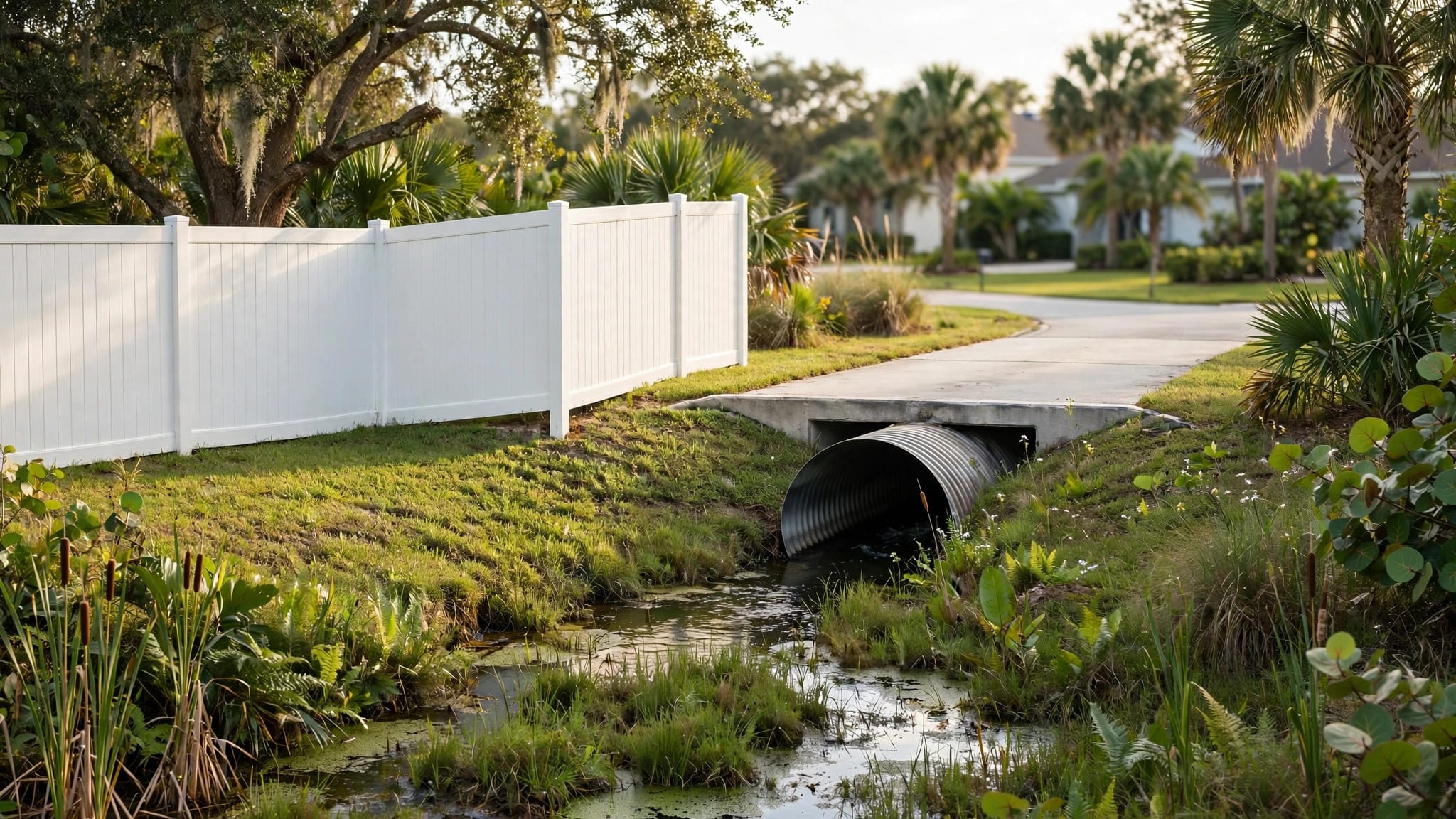
A fence should not block a drainage swale or create a dam during a heavy storm. Keep access available around culverts, retention areas, seawalls, and drainage easements. If the property borders a canal, check whether the rear fence must remain open or provide access for maintenance.
Confirm utilities, boundaries, and permits
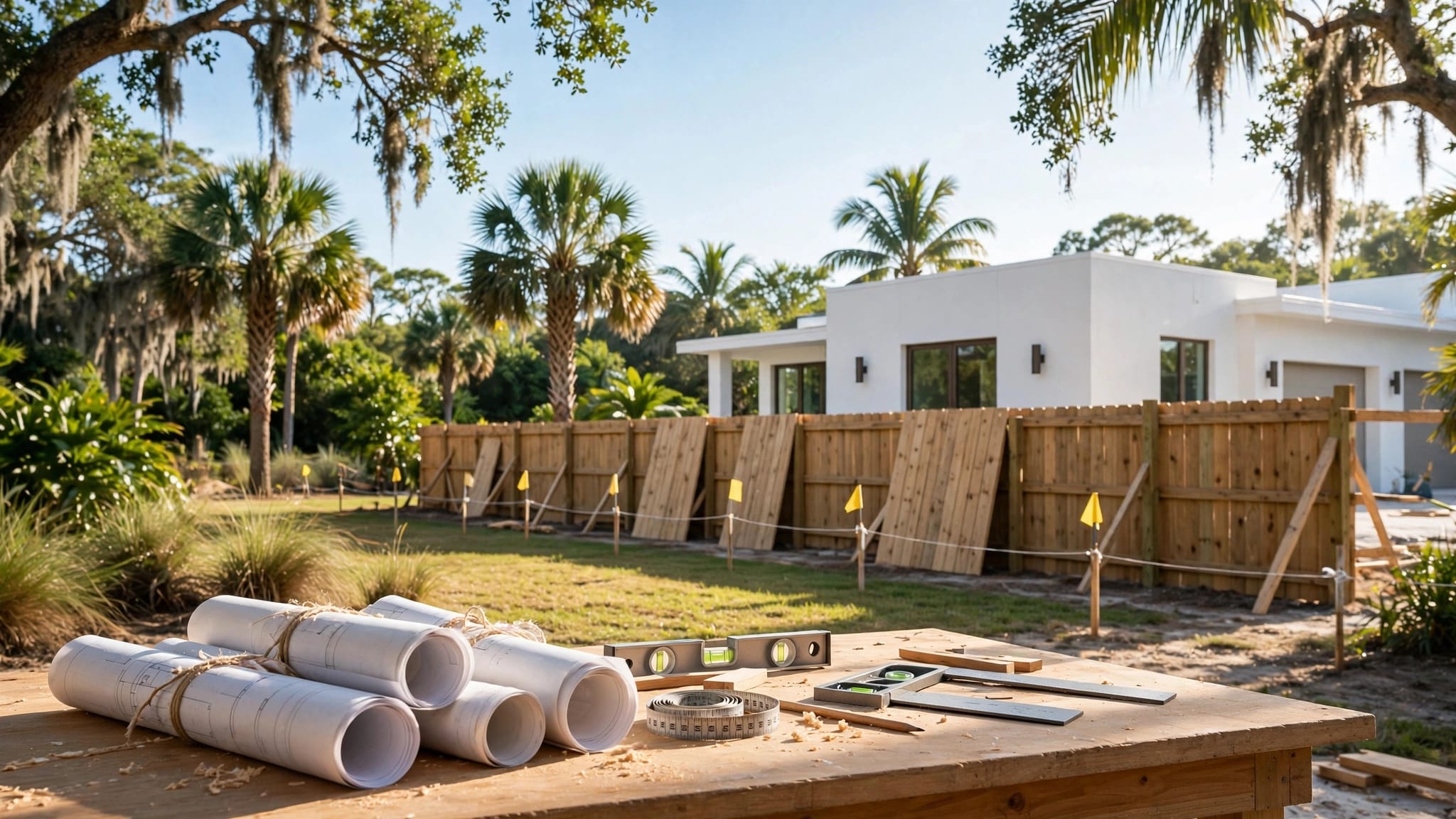
A straight string line does not prove that the line is on your property. Before marking post locations, review a current survey, recorded easements, HOA documents, and any site plans from earlier construction.
A survey becomes especially useful near a corner, driveway, canal, utility easement, or narrow side yard. Moving a fence several inches after materials arrive can affect the number of panels, gate locations, and permit drawings.
Call 811 before digging
Florida's Sunshine 811 service coordinates underground utility marking. Call two full business days, but no more than five days, before excavation . Marking utilities is separate from obtaining a fence permit.
811 may not identify private irrigation lines, low-voltage lighting, pool equipment wiring, or other homeowner-installed services. Locate sprinkler valves and review irrigation records before the crew begins. Shallow irrigation pipes often run close to property lines in Southwest Florida yards.
If a marked utility conflicts with the fence, stop and revise the layout. Do not move a marked line or assume that a few inches of clearance is sufficient.
Check the exact local requirements
Rules vary among Cape Coral, Fort Myers, Lee County, Collier County, Charlotte County, Sarasota County, DeSoto County, and Hendry County. HOA approval is a separate requirement, even when the city or county approves the fence.
Cape Coral requires a permit for all fence construction and replacement. Its application materials can require a site plan showing property lines, dimensions, setbacks, easements, and buildings, along with fence materials, height, gates, and latches. Published residential rules also restrict placing a fence in front of the forward-most part of the primary structure.
Waterfront Cape Coral lots require special attention. In the rear 20 feet of properties abutting waterways, published rules require open mesh above three feet in height. An ordinance summary also lists a 10-foot rear setback along an alley. Confirm the current rule for your address before relying on any general guideline.
Collier County treats a fence as a principal use requiring a building permit. A fence may be placed on a property line only after obtaining the county permit, with the finished side facing the neighbor or street. Height requirements depend on zoning and property type.
A local contractor familiar with Southwest Florida fence installation can help identify the documents and approvals that apply to your property. The building department remains the final authority.
Prepare the fill dirt before setting posts
Good preparation makes the difference between a fence that stays aligned and one that develops leaning posts after the first wet season. Mark the line with stakes and string, then verify every corner against the approved plan.
Compact and shape the fence line
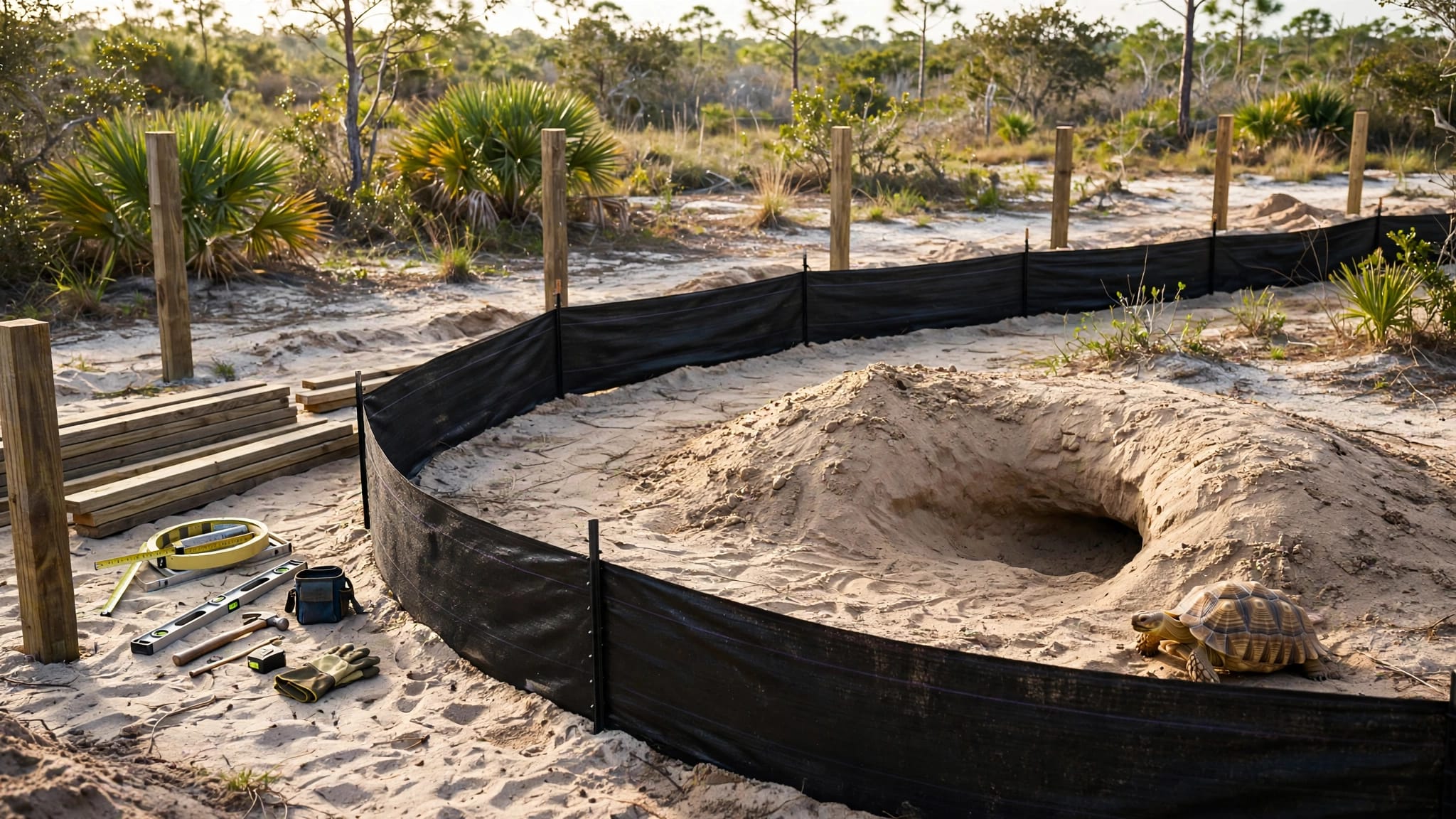
Remove grass, roots, loose debris, and unsuitable fill around each post location. If the yard was recently raised, ask how the fill was placed and compacted. A contractor may need to compact the fence corridor before excavation.
Shape the finished grade so stormwater can move past the fence. Do not pile soil against wood posts or bury vinyl panels beyond their intended height. Where the fence crosses a slope, plan stepped or raked sections before installation.
Keep equipment away from fragile seawalls, pool decks, underground tanks, and drainage structures. Heavy machinery can damage areas that appear stable but have thin cover over pipes or voids.
Inspect every hole before installation
A hole should have firm sides and a stable bottom. If the walls collapse, water fills the excavation, or loose soil mixes into the footing, pause and correct the condition before setting the post.
For many residential fence designs, installers may target at least 36 inches in sandy soil. Six-foot privacy panels, corners, and gates often need additional depth or reinforcement. This is a project guideline, not a universal Florida requirement. High groundwater, exposed corners, and local wind conditions can change the design.
Wear eye protection, gloves, and proper footwear. Keep people away from open holes, especially children and pets. Never enter an unstable excavation to clean it by hand.
Install the posts and fence sections carefully
Set corner, end, and gate posts first. They carry more load than intermediate posts, so their locations and footing designs deserve extra attention. Use the approved layout for post spacing rather than choosing spacing by eye.
Set posts plumb and at the planned depth
Place each post at the specified depth and check it in two directions with a level. Use the selected footing material according to the soil conditions and fence design. Concrete suits many installations, while some sites may call for compacted crushed stone placed in controlled layers.
If concrete is used, keep loose fill and standing water out of the footing. Brace the post until the material sets enough to hold alignment. Check the line again before attaching panels, because a small error at a corner can become a large gap several sections away.
Do not add extra soil around a post and call the hole finished. Loose backfill can settle and leave the post unsupported. Compact backfill in layers, using the method recommended for the selected footing.
Install rails, panels, and gates
Attach rails and panels only after the posts are stable. Use exterior-rated fasteners and hardware suited to the fence material and local exposure. Keep bottom clearances consistent, but leave enough room for drainage and normal yard maintenance.
Gates need special care because their weight and movement place stress on the adjacent posts. Confirm that the gate swings freely after final grading. Check latches, hinges, post plumb, panel alignment, and clearance before removing temporary braces.
A wood design can provide privacy, but its solid surface creates greater wind load than an open fence. See examples of wood fence installation in Cape Coral when comparing privacy layouts and post reinforcement.
Build for Southwest Florida wind and rain
Hurricane-resistant construction begins below grade. A tall privacy fence can act as a broad wind surface, while saturated fill dirt provides less dependable support than dense, well-compacted soil.
Reinforce the points that carry the most force
Corners, ends, gate posts, and long uninterrupted runs deserve a design review. Ask how the post depth, footing size, post spacing, rails, fasteners, and bracing work together.
A contractor should account for the height and openness of the chosen fence. There is no single statewide footing depth or wind-load specification that fits every Southwest Florida property. Open aluminum or chain-link designs may place different demands on posts than solid vinyl or wood panels.
Inspect posts and gates before hurricane season. Loose hinges, rattling panels, cracked concrete, and leaning posts can worsen during a storm. If a post has already shifted, repair it before adding new sections.
Control water around the fence
Standing water beside a post can weaken surrounding fill and accelerate corrosion or wood deterioration. Maintain the yard's drainage path and avoid directing roof or downspout discharge toward the fence line.
For waterfront or low-lying properties, ask whether the fence needs open sections, special access, or placement outside a drainage or maintenance easement. A fence should provide security without blocking the system that carries stormwater away from the home.
Choose materials that match the soil and exposure
Material selection affects wind load, maintenance, and the amount of support needed in fill dirt. Compare the fence's purpose with the site's conditions before choosing a style.
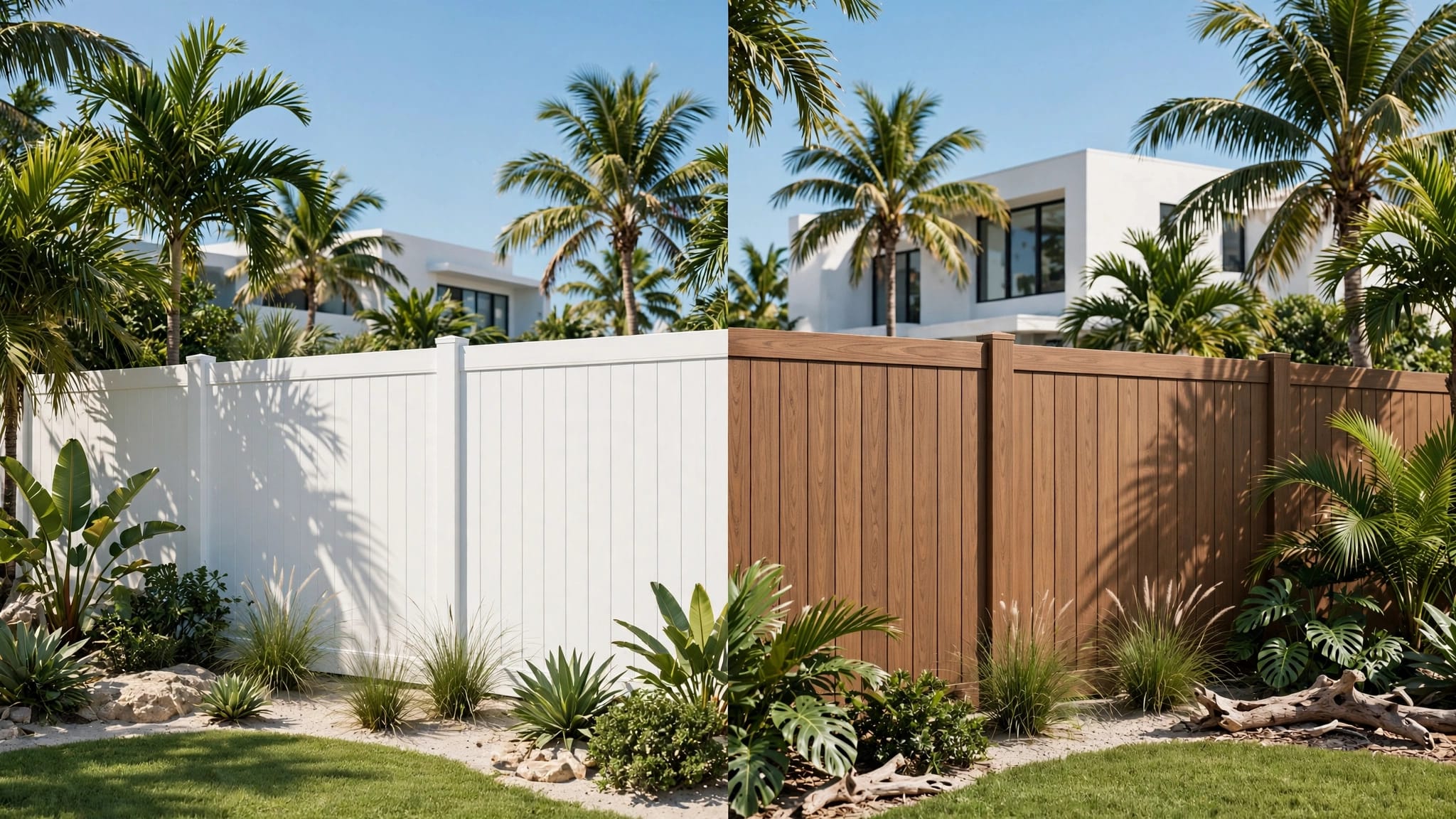
Vinyl works well for homeowners who want privacy and limited routine maintenance, but solid panels need careful post design in exposed yards. You can review vinyl fence installation in Cape Coral for common privacy configurations.
Aluminum offers an open profile that can reduce the solid wall effect while providing a finished appearance. It is often considered for coastal homes, pool areas, and yards where airflow matters. Review aluminum fence installation in Cape Coral when comparing open designs.
Chain link provides visibility and airflow, while wood offers privacy and a traditional appearance. Each material still needs properly aligned posts, durable connections, and a footing method suited to the fill.
Key Takeaways
- Confirm the property line, easements, drainage paths, HOA rules, and local permit requirements before ordering materials.
- Call Sunshine 811 two full business days before digging, and locate private irrigation and lighting lines separately.
- Compact recently placed fill and correct soft or wet areas before setting posts.
- Treat 36 inches as a possible project target for sandy soil, not a universal Florida code requirement.
- Reinforce corners, gate posts, and privacy sections because they carry concentrated wind loads.
- Keep swales, culverts, canals, retention areas, and seawall access clear.
- Inspect post alignment, gate operation, fasteners, and drainage after installation and after major storms.
FAQ about fence fill dirt projects
Can I install a fence directly in fill dirt?
Yes, but the fill must be stable enough to support the chosen fence. Recently placed or loose soil may need compaction, removal, or a different footing method. A site inspection is more reliable than judging the soil by appearance.
How deep should fence posts be in Southwest Florida?
There is no single depth that applies to every fence or jurisdiction. Many residential designs use a target of at least 36 inches in sandy soil, with deeper or stronger support for tall privacy panels, corners, gates, and exposed locations. High groundwater and unusual soil may change the plan.
Does calling 811 cover irrigation lines?
No. Sunshine 811 coordinates public utility marking, but private irrigation, pool, lighting, and other homeowner-installed lines may require separate identification. Review irrigation plans and locate visible valve boxes before excavation.
Should a contractor handle the installation?
A professional is a sensible choice when the lot contains fill dirt, drainage easements, canals, seawalls, private utilities, or high wind exposure. Ask who handles permits, inspections, surveys, utility coordination, and post-installation cleanup. A written scope should identify the fence material, height, gate locations, footing approach, and drainage responsibilities.
If settling or storm damage affects an existing fence, fence repair services in Cape Coral can address leaning posts, damaged panels, and loose connections.
Conclusion
A durable fence in Southwest Florida starts before excavation. Confirm the line, complete utility locating, check local approvals, compact the fill, protect drainage, and use a footing design that matches the soil and wind exposure.
When the yard includes unstable fill, high groundwater, or waterfront restrictions, professional planning can prevent rework. To discuss the right installation approach for your property, request a free fence estimate from a local contractor before materials are ordered.