How to Document Hurricane Fence Damage for Insurance
Hurricane fence damage can look obvious, but the cause and extent often require more than a quick look from the street. Leaning posts, cracked footings, bent rails, and loose gates may point to problems below the surface.
If your Southwest Florida property has storm damage, prioritize safety first. Then document the fence before moving debris or starting repairs. Your photos, notes, receipts, policy details, and contractor estimate can help your insurer review the loss, but they can't guarantee coverage or a specific payment.
Start With Safety Before Documenting Hurricane Fence Damage
A damaged fence can shift without warning. Strong wind, soaked soil, broken hardware, and fallen trees can leave sections unstable even when they appear secure.
Wait for Safe Conditions
Don't inspect a fence during an active storm, near downed power lines, or while lightning and severe wind remain a threat. Keep children and pets away from leaning sections, sharp wire, exposed fasteners, and fallen panels.
Walk the fence line from a safe distance in daylight. Avoid climbing, pulling on posts, or touching a gate that may have shifted. A post can look steady until movement at the footing causes the panel to fall.
If a section blocks a driveway, sidewalk, pool area, or access point, treat it as a safety concern. Use temporary barriers or keep people away until the area can be assessed safely.
Make Only Necessary Temporary Changes
Prevent additional damage when you can do so without putting yourself at risk. For example, you might brace a loose gate, rope off a dangerous section, or remove a hanging panel that could fall.
Take photos before making those changes whenever possible. Keep damaged materials until your insurer gives further direction, unless leaving them in place creates a hazard. Don't make a permanent repair before you understand your insurer's inspection requirements.
For local context, documenting hurricane fence damage for insurance starts with a safe inspection, clear photos, and records of temporary measures.
Create a Complete Photo Record
Good photos show both the size of the loss and the likely cause. A single close-up of a broken panel rarely tells the full story.
Photograph the Entire Fence Line
Begin with wide photos from several points around the property. Include corners, gates, adjoining structures, landscaping, and the relationship between damaged and undamaged sections.
Take pictures from both sides of the fence when you can do so legally and safely. Include a recognizable feature, such as a house corner, driveway, shed, or large tree, so the location is easy to identify later.
Capture the fence before cleanup. If another object struck it, photograph the object and the point of impact. A fallen branch, outdoor structure, vehicle, or section of debris may help explain how the damage occurred.
Keep the original files. Avoid editing, cropping, or adding filters to the originals. If your phone records the date and location, preserve that information with the file.
Take Close-Ups of Every Damaged Component
After taking wide shots, photograph individual problems. Include a few normal sections for comparison. Useful close-ups include:
- Posts that lean, split, snap, or pull out of the ground
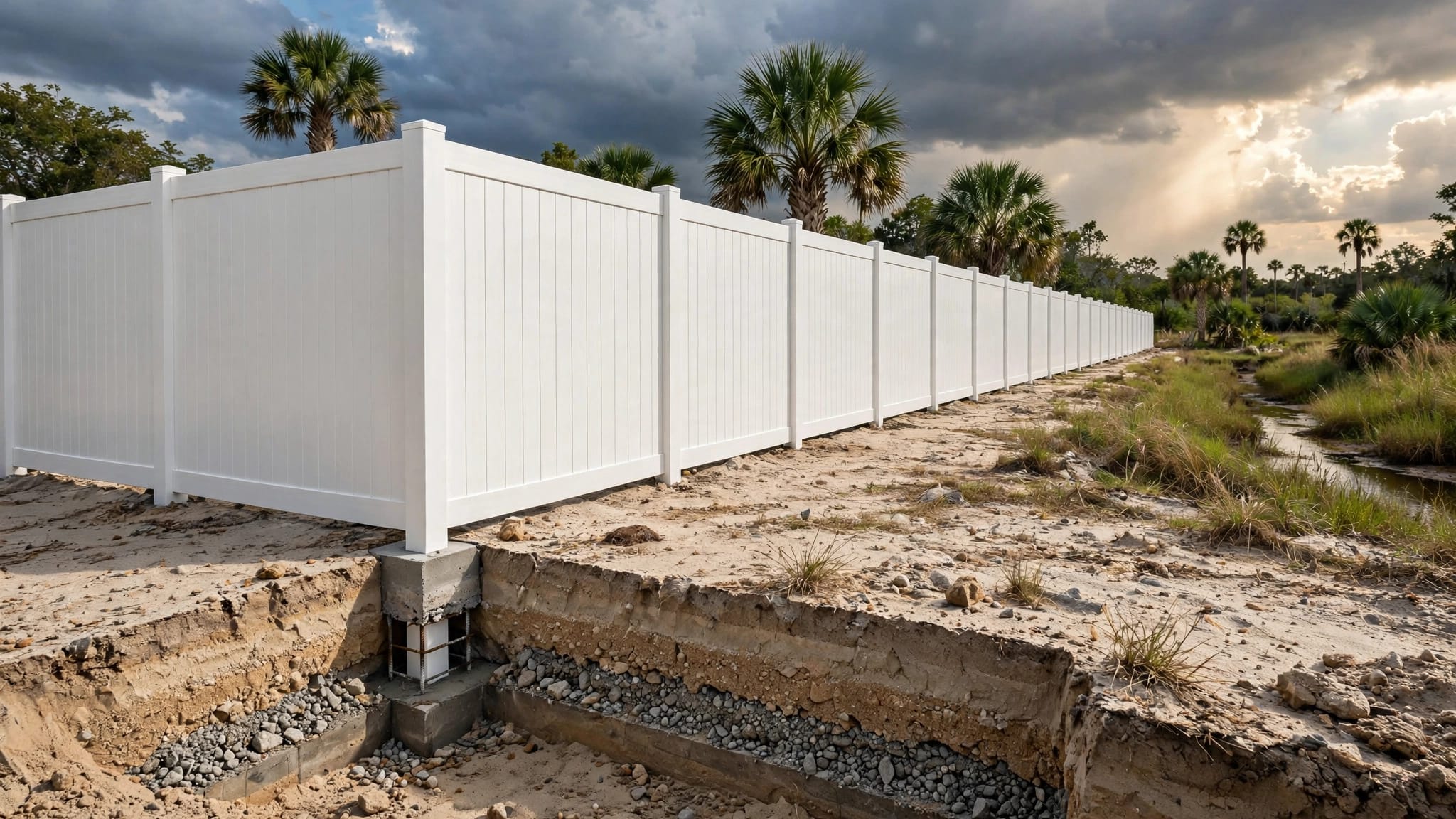
- Concrete footings that crack, shift, or become exposed
- Bent top rails, broken ties, loose brackets, and pulled fasteners
- Gates that sag, drag, twist, or no longer latch
- Cracked wood, displaced vinyl, damaged aluminum, or bent chain-link mesh
- Rust or corrosion around hardware and post bases
- Soil washout, standing water, and debris impact marks
Photograph the same damage from more than one angle. Place a ruler or familiar object nearby only when doing so is safe and doesn't disturb the scene.
Record the Storm and Possible Cause
Insurance reviews often focus on what caused the damage. Your notes should describe what you observed without presenting a guess as a fact.
Write Down Dates, Times, and Sequence
Record the date and approximate time you first noticed the damage. Note when the storm affected your area, if you know it, and describe the weather conditions you observed.
Write down which components appeared to fail first. For example, you may have noticed a gate leaning before discovering that a post had shifted. A neighbor may have seen a tree limb strike the fence. Include those details and identify who provided them.
Use plain descriptions:
- "The east gate was dragging after the storm."
- "A tree limb was resting against the northwest section."
- "The south posts were leaning toward the canal."
- "Water and loose soil were present around two footings."
Avoid declaring that wind, flooding, poor installation, age, or neglect caused the loss unless a qualified person or your policy review supports that conclusion.
Separate Wind, Impact, and Water Conditions
Southwest Florida storms can involve gusts, flying debris, heavy rain, saturated soil, and storm surge. Those conditions may affect how an insurer evaluates the loss.
Document signs that help distinguish them. Photograph displaced soil, water lines, debris paths, fallen trees, and impact points. Note whether the fence fell toward or away from a source of force, but leave the final cause determination to the insurer and qualified professionals.
Wind-related damage and flood damage may receive different treatment. Standard homeowners insurance usually doesn't cover flood damage, including rising water, storm surge, or overflow from external water events. Review your policy and ask your insurer how it defines the reported cause.
The Florida homeowners insurance and fence damage guidance also recommends asking about the applicable deductible, how the fence is valued, and whether it falls under other structures.
Organize Your Insurance Claim Evidence
A clean file makes it easier to answer questions later. Keep digital and paper records together, and use consistent names for photos and documents.
Build a Simple Claim Folder
Create one folder for the property and storm date. Add subfolders for photos, videos, notes, receipts, estimates, policy documents, and communication with the insurer.
Name files with the location and issue, such as south-gate-sagging
or northwest-post-footing-crack
. Keep an untouched copy of original photos, then make separate copies if you need to resize files for uploading.
Your evidence checklist should include:
- Photos and videos taken before cleanup
- A written timeline of when you found each problem
- Notes about nearby trees, debris, water, and soil conditions
- Your declarations page and relevant policy sections
- Receipts for tarps, temporary braces, barriers, and emergency cleanup
- Contractor estimates, inspection notes, permits, and invoices
- Emails, claim numbers, adjuster notes, and call dates
Keep receipts even when an expense seems small. Coverage for temporary work depends on your policy and the insurer's instructions, so ask before assuming reimbursement.
Confirm Ownership and Property Lines
Before filing, confirm that you own the damaged fence. In some neighborhoods, an HOA may own or maintain a perimeter fence. A shared fence may also raise questions about responsibility between adjoining property owners.
Photograph both sides when possible, and note whether the damage crosses a property line. Don't remove a shared section or authorize extensive work without clarifying who can approve it.
Ask your carrier where the fence falls under the policy. It may be treated as an "other structure," but the answer depends on the policy wording, exclusions, ownership, and cause of loss.
Get a Detailed Repair or Replacement Estimate
A contractor's written estimate gives the insurer a practical description of the work. It also helps you compare the expected cost with your deductible and out-of-pocket responsibility.
Ask for a Line-by-Line Scope
The estimate should identify the affected components and the proposed work. A useful scope may separate post removal, new post installation, concrete, rails, mesh, panels, hardware, gate work, disposal, and labor.
For chain-link fencing, the scope might distinguish damaged mesh from bent rails, broken ties, or posts that need resetting. For wood or vinyl fencing, it may identify individual panels, posts, rails, brackets, and gates.
Ask the contractor to state whether the existing structure appears repairable or whether replacement is more practical. The damage pattern matters. A stable frame with one damaged panel may need a focused repair, while multiple shifted posts can point to a larger rebuild.
For component-specific work, repairing storm-damaged chain-link fences may include replacing damaged links and securing posts. A professional inspection can also reveal damage that isn't visible from the street.
Compare the Estimate With Your Policy
A claim may not make financial sense if the expected repair cost is close to your deductible. However, don't decide based only on a quick guess. Ask your insurer how the deductible applies and whether the loss may be valued at replacement cost or another method stated in your policy.
Don't inflate the scope or combine unrelated maintenance with storm repairs. Separate pre-existing rust, rot, age-related wear, and storm-created damage in the estimate. Clear distinctions help prevent confusion during the review.
You can also ask whether the insurer wants an inspection before work begins. Save every estimate, even if you later choose to pay for the repair yourself.
Check Permits Before Structural Work
A few replacement slats or a damaged latch may be different from rebuilding a long section of fence. Structural changes can create local permit or HOA questions.
Know When the Work May Change
Ask your city or county about requirements before replacing many posts, changing the fence height, moving the fence line, changing materials, or rebuilding a large section. Reinstalling a fence in a different location may also involve easements, property lines, drainage areas, or utility access.
In Lee County, a fence application may need information about property lines, easements, buildings, and proposed placement. Requirements can vary by jurisdiction and project details.
Review when storm-damaged fence repairs need a permit before treating a large repair as ordinary maintenance.
Keep Permit and Approval Records
If a permit is required, save the application, approval, inspection records, and final documentation with your claim file. Check HOA rules separately because association approval and local permitting are different requirements.
Don't assume emergency storm conditions remove every approval requirement. Confirm current instructions with the relevant city, county, HOA, and insurer before work starts.
Key Takeaways for a Fence Damage Claim
Use this short checklist after conditions are safe:
- Photograph the full fence before moving debris.
- Take close-ups of posts, footings, rails, gates, hardware, and impact points.
- Record the storm date, discovery time, visible conditions, and failure sequence.
- Separate observations from assumptions about the cause.
- Save receipts for temporary safety work and cleanup.
- Keep damaged materials unless they create a safety risk or your insurer says otherwise.
- Confirm fence ownership and property-line responsibility.
- Ask about coverage, deductibles, valuation, inspections, and documentation requirements.
- Get a written estimate that separates repair work from unrelated maintenance.
- Check permit and HOA requirements before structural changes.
FAQ About Hurricane Fence Damage Claims
Should I repair the fence before contacting my insurer?
Contact your insurer as soon as practical and ask whether an inspection is required. Make only temporary safety measures when possible. Permanent repairs can remove evidence that the adjuster may need to review.
What if floodwater knocked down the fence?
Document water lines, standing water, soil movement, and the direction of the fallen fence. Then ask your insurer how the loss is classified. Wind, storm surge, rising water, and overflow may not receive the same treatment under a homeowners policy.
Do I need a contractor's estimate?
An estimate isn't automatically proof of coverage, but it can show the insurer what materials and labor the repair requires. Ask for a detailed scope and obtain the carrier's instructions before authorizing major work.
Can a warranty pay for hurricane damage?
Storm damage often falls under insurance or paid repair rather than a fence warranty. Review the warranty and policy separately, especially if the fence also shows a workmanship defect or pre-existing condition.
Conclusion
The strongest record of hurricane fence damage tells a clear story: what the fence looked like before cleanup, what changed during the storm, and what work is needed to make it safe again.
Start with safety, preserve the scene, organize your evidence, and verify every coverage, permit, and ownership question with the appropriate party. In Southwest Florida, careful documentation helps you discuss the damage with your insurer and a qualified fence contractor without promising an outcome the policy may not provide.