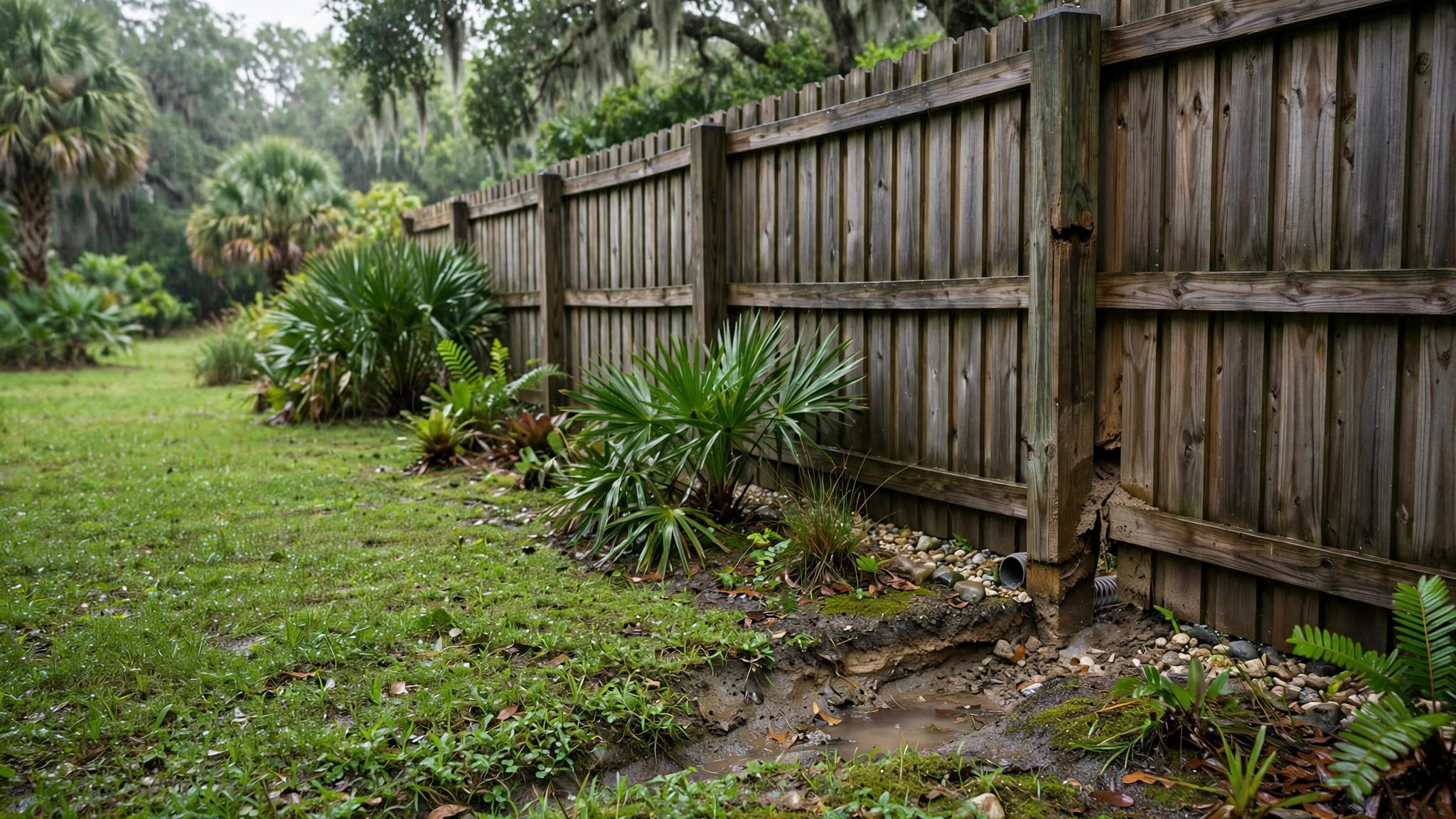
Why Wood Fence Posts Split Near Ground Level in Florida
Wood fence posts can split near ground level as moisture changes make wood swell and shrink. Damp soil, decay, and stress at the base can worsen that damage.
For Southwest Florida homeowners, wood fence posts splitting near the soil raises an important concern: whether the fence still has sound support . Some cracks are surface checking, while others accompany deterioration that calls for replacement.
Start by separating normal wood movement from signs that the post or footing is failing.
Key Takeaways
- Repeated wetting and drying can create lengthwise cracks, especially when exposed surfaces dry faster than the post's interior.
- A ground-level split doesn't automatically mean rot. Soft wood, leaning, and movement are stronger warning signs.
- Ground-contact-rated posts, suitable footings, and better water management help reduce avoidable damage.
- Replacing one damaged post can make sense when nearby components remain sound. Widespread deterioration requires a broader repair plan.
Why You See Wood Fence Posts Splitting Near the Ground
Uneven drying puts wood under stress
Wood absorbs moisture and releases it as conditions change. Most dimensional movement happens across the grain, rather than along the post's length.
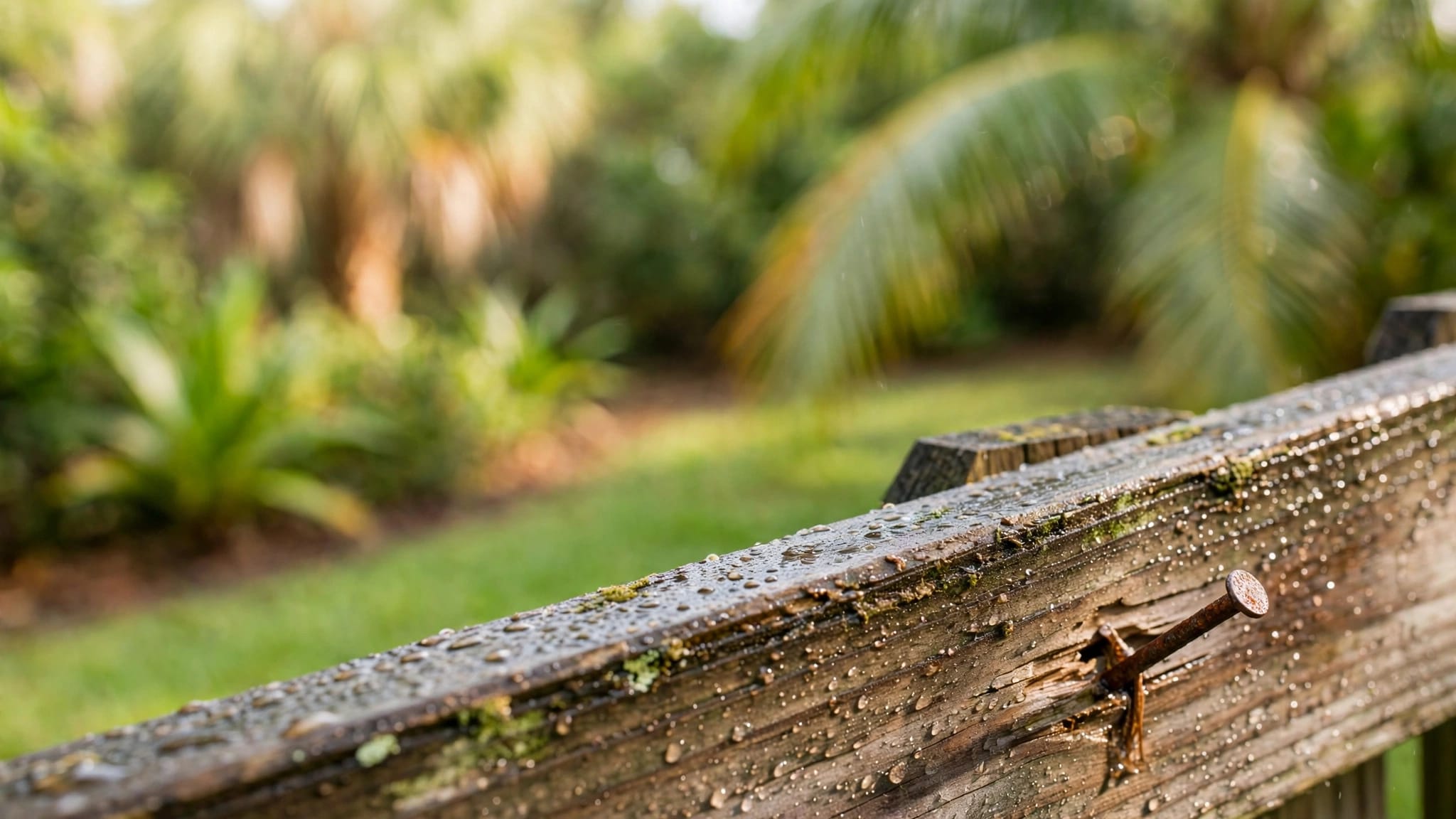
After a summer downpour, strong sun can dry exposed surfaces faster than the interior. As those surfaces shrink, stresses can produce lengthwise cracks called checks.
Pressure-treated posts can also develop checks as they dry after installation. Treatment protects against biological deterioration, but it doesn't stop wood from moving with moisture changes.
A visible check therefore needs context. Its position, depth, and effect on connections matter more than its appearance alone.
Ground level combines different exposures
The buried portion of a post can remain damp while the exposed section dries between storms. Sprinklers, dense vegetation, and wet mulch can extend that damp zone above the soil.
That transition creates uneven conditions within the same post. Meanwhile, wind pushing against fence panels places bending stress near the base.
Neither condition proves why a particular post cracked. However, together they explain why ground level deserves close attention when a split appears.
How Soil Contact and Decay Make Damage Worse
Persistent dampness limits drying
Soil contact exposes buried wood to moisture for long periods. Above ground, piled mulch or raised garden soil can keep an additional section of the post wet.
Southwest Florida's sandy soil may drain quickly, but drainage varies by property. Low spots, high groundwater, and repeated irrigation can leave individual posts damp much longer than neighboring ones.
Runoff can create a second problem by washing soil away from a footing. A post may then move even when the visible wood remains firm.
Clearing wet debris helps exposed wood dry. However, don't excavate around a footing or remove soil that supports it.
Decay changes the repair decision
Fungal decay weakens wood fibers. If deterioration develops around an existing split, the post can lose strength beyond what the visible opening suggests.
Dark staining or green surface growth alone doesn't establish rot. More concerning signs include soft areas, crumbling fibers, and movement at the base.
Our guidance on moisture damage in wood fences distinguishes appearance changes from symptoms that warrant repair.
A firm post with a surface check needs a different response than a soft post that rocks at ground level.
Material and Installation Factors That Affect Splitting
Buried posts need ground-contact protection
Pressure-treated wood rated for ground contact is the minimum for buried wood posts. An above-ground treatment rating doesn't provide the same protection for that exposure.
Even properly treated wood can check as it dries. Knots, grain patterns, and existing damage can also influence where cracks appear.
Post selection should therefore account for both exposure and structural duty. Gate posts carry repeated loads that differ from those on ordinary line posts.
Our shell rock post installation guidance covers ground-contact materials and support considerations for local conditions.
Footings and connections affect stress
A shallow or unstable footing allows movement that repeatedly loads the wood near grade. Shell rock can complicate excavation, while loose or eroded sand can reduce support around the base.
Footing dimensions and post size need to suit the fence height, wind exposure, and soil conditions. A single installation rule won't fit every Southwest Florida yard.
Fastener placement matters too. Driving large fasteners near an edge or into an existing crack can worsen splitting.
Use hardware compatible with treated lumber. Stainless steel or suitable hot-dip galvanized fasteners help resist corrosion, particularly near salt air.
Practical Ways to Reduce Future Damage
Keep unnecessary water away from posts
Redirect sprinkler heads that strike the fence daily. Also address downspouts or runoff that repeatedly wet the same post bases.
Keep mulch, leaves, and added soil away from exposed wood. Trim dense plants enough to allow airflow, without disturbing the footing or its supporting soil.
Where feasible, grade the surrounding surface so water drains away rather than collects against the post. Avoid changes that obstruct an existing drainage path.
These measures won't stop every check. They can reduce prolonged dampness and the additional deterioration that turns a cosmetic crack into a structural concern.
Protect exposed wood with a suitable finish
A compatible exterior wood sealer or stain slows water entry and helps moderate moisture changes. Apply it to sound wood that has dried enough for the chosen product.
Coating wet or deteriorated wood won't restore its strength. Likewise, filling a deep split doesn't establish that the post can safely carry its load.
Many Southwest Florida fences need renewed protection every 12 to 24 months , with exposed locations sometimes needing attention sooner.
Our advice on sealing before Florida's rainy season covers drying, preparation, and application. Follow the finish manufacturer's directions for timing and recoating rather than treating that interval as a fixed schedule.
How to Decide Whether a Split Post Needs Repair
Look for changes in support
When you notice wood fence posts splitting, inspect the base and the connected rails. Pay attention to whether the split passes through a fastener location or separates a loaded connection.
If the fence appears stable, light hand pressure may reveal unusual movement. Don't push against a leaning section or try to test a visibly failing post.
A post moving inside otherwise stationary concrete suggests a different problem than the entire footing shifting in the soil. Both deserve attention, but the repair must address the actual source of movement.
Our fence post repair options address loose supports, broken posts, and related gate problems.
Replace weakened wood and damaged connections
A stable surface check in firm wood may need moisture control and monitoring rather than immediate replacement. Take dated photos so you can recognize changes.
Replacement becomes more pressing when wood is soft, the post leans, or a split compromises a rail or hinge attachment. Restrict access around an unstable section until it can be repaired.
If deterioration extends into rails or pickets, replacing only the post leaves damaged components behind. Similarly, a new latch won't correct a gate whose hinge post is moving.
At Supreme Fence of SWFL, we provide wood fence repair and installation in Southwest Florida. A repair plan should address the post, connected components, and the conditions that contributed to failure.
Frequently Asked Questions About Split Fence Posts
Does every split mean the post is rotten?
No. Wood can develop checks during drying without fungal decay. A split alone doesn't establish that the post has lost useful strength.
Assess the surrounding wood and the fence's stability. Softness, crumbling material, or increasing movement makes the situation more concerning than a firm, unchanged surface crack. A contractor can assess deeper damage where the condition below grade isn't visible.
Will concrete stop a wood post from splitting?
Concrete doesn't prevent wood from expanding and shrinking. It also doesn't correct an unsuitable treatment rating or restore decayed wood.
A concrete footing supports the post, but its condition and surrounding drainage still matter. Pouring additional concrete around a weakened base can leave the underlying problem unresolved. The repair needs to address both the wood and its support.
Does one damaged post mean the whole fence needs replacement?
An isolated failure often allows a localized repair when adjacent posts, rails, and panels remain sound. The extent of damage matters more than the presence of one crack.
Several soft or leaning posts suggest a broader problem. Our comparison of wood fence repair versus replacement covers those warning signs.
Protect the Base Before Damage Spreads
Ground-level splits deserve attention because moisture exposure and structural loads meet in the same area. The strongest warning signs are soft wood and lost stability , rather than a crack alone.
Reduce unnecessary wetting and maintain protective finishes on sound wood. If a post moves, leans, or shows decay, repair the support and affected connections before the damage spreads.