How to Replace a Broken Vinyl Fence Rail in Florida
To replace a broken vinyl fence rail in Florida, match the existing fence system and address damaged supports first. A successful vinyl fence rail replacement also preserves room for heat expansion , which matters in Southwest Florida's sun.
One cracked rail doesn't always mean you need a new fence, but storm damage can extend beyond the visible break. Start by separating isolated rail damage from problems involving posts, connections, or the surrounding panel.
Inspect the Rail, Posts, and Surrounding Fence
Walk along both sides of the damaged section in daylight. Keep your distance from leaning panels, sharp fragments, and anything that appears unstable.
Photograph the damage before disturbing it, especially after a storm. Include the broken rail, both adjoining posts, the ground around their bases, and nearby gates. These views help show whether the break is isolated or part of a larger shift.
Look beyond the visible crack
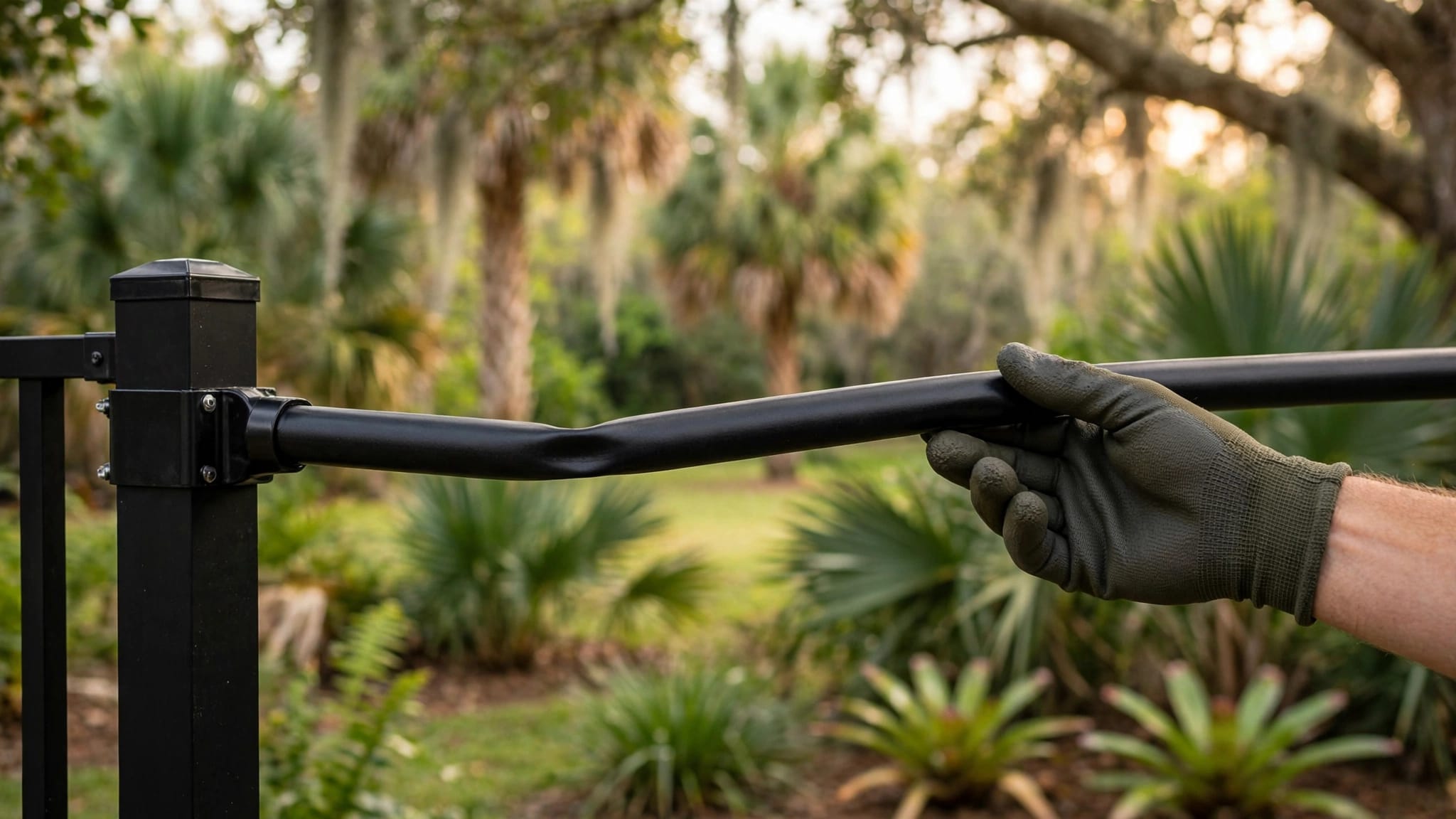
Examine the rail openings, brackets, and adjacent vinyl for splitting or distortion. A replacement rail needs sound attachment points.
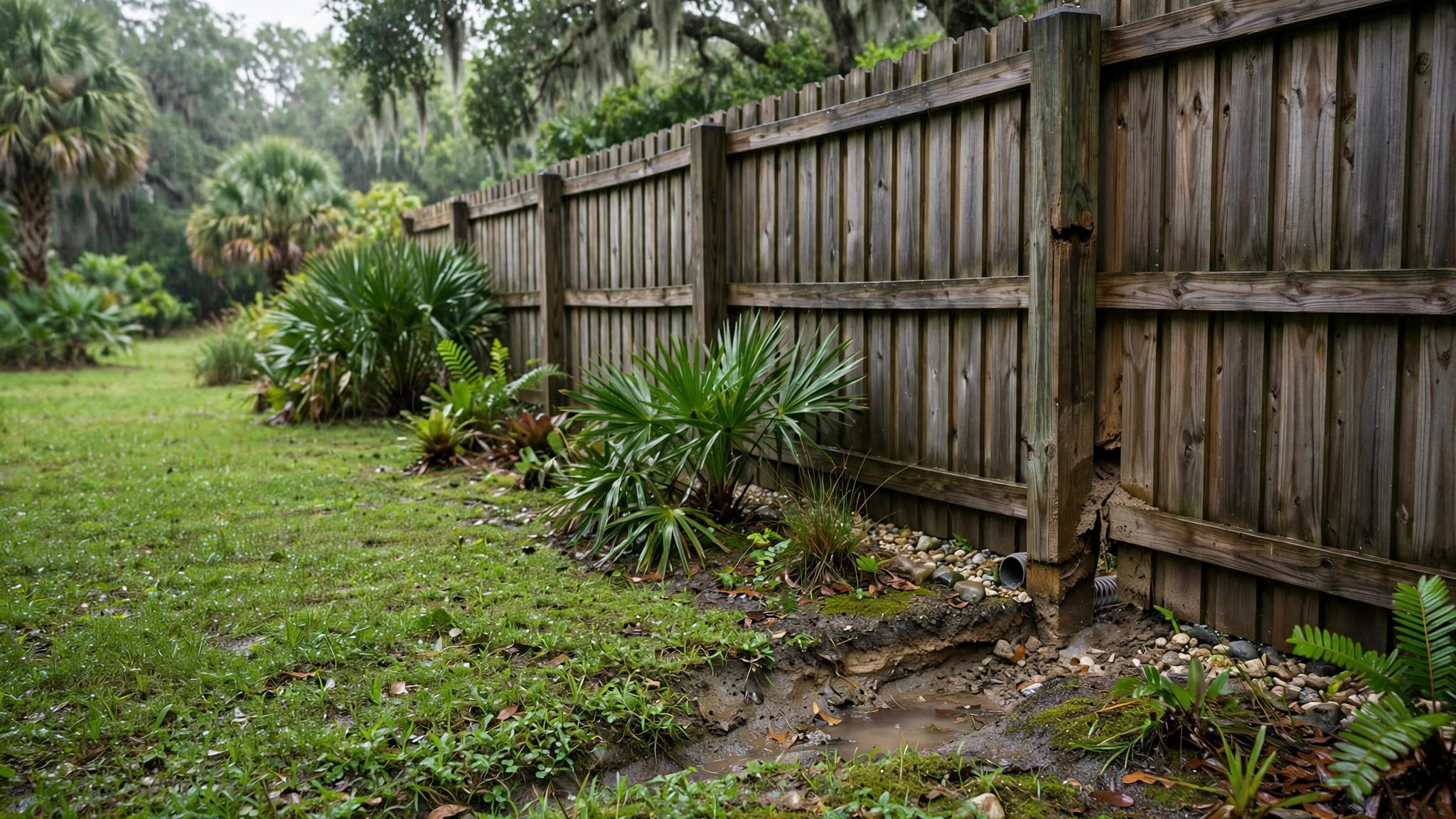
Also look for tilted posts, cracked concrete, soil washout, or gaps around the post base. Don't push against a leaning section to test its strength. A rail can break because its supports moved, so replacing that rail alone may leave the original problem unresolved.
Treat storm damage as a broader inspection
Hurricane winds and saturated soil can affect several parts of a fence at once. A dragging gate or displaced neighboring panel may reveal movement beyond the broken section.
Our guidance on post-hurricane fence inspections and repairs covers these less obvious warning signs. Where posts have shifted, the repair needs to address the support system as well as the damaged vinyl.
Decide Whether a Rail-Only Repair Makes Sense
A rail-only repair is most appropriate when the damage stays within one component and the surrounding fence remains sound. The cause of the break matters as much as its appearance.
Isolated damage favors a focused repair
A localized impact can damage one rail without affecting the entire fence run. If the adjoining posts remain upright and their connections are intact, a limited repair may be practical.
However, a clean-looking break doesn't establish that everything else is sound. Look at the neighboring pickets or privacy boards, too. Cracks near their ends or a distorted panel can expand the scope beyond one rail.
Repeated failures suggest a larger problem
Recurring rail pop-outs, widespread brittleness, and several leaning sections call for a broader assessment. Replacing individual pieces won't correct a fence run that has lost dependable support.
Older fences also deserve a system-wide look. If posts, gates, and connections show deterioration together, compare a broader replacement with another isolated repair. The goal is a dependable fence, rather than a succession of short-lived fixes.
Identify a Compatible Replacement Rail
Matching the existing system is the central purchasing decision. Vinyl fencing components aren't universally interchangeable, even when two fences look similar across the yard.
Original installation records, product labels, and leftover components can help identify the fence system. Clear photographs of intact neighboring sections also help distinguish how the original assembly fits together.
Identify the connection system
Some vinyl fences use routed posts, where rails enter openings in the posts. Others use brackets attached to the post faces. These arrangements retain rails differently, so a part intended for one system may not suit the other.
The replacement needs to work with the existing connection method and surrounding panel components. A rail that requires force to sit in place is a warning sign, rather than evidence of a secure fit.
Consider the whole panel assembly
A rail supports more than its own weight. It also works with the privacy boards or pickets and the adjoining posts.
Our explanation of vinyl fence panel compatibility covers why apparently similar components may not work together. Where an older system has several deteriorated parts, replacing a complete section may make more sense than combining mismatched components.
Don't assume a rail is compatible simply because it enters the post opening. The connection and panel assembly must function together.
Make the Work Area Safe Before Repair Begins
Restrict access to the damaged section before anyone handles it. Keep children and pets away from broken vinyl, exposed hardware, and openings along the property boundary.
If the fence surrounds a pool, maintain controlled access throughout the repair. Professional help is the safer choice when the barrier can't remain secure during the work. A temporary opening deserves the same attention as the broken rail itself.
Florida weather also affects working conditions. Plan outdoor work for a cooler part of the day, take shade breaks, and keep drinking water nearby. Gloves and eye protection help protect against sharp edges and loose fragments.
Stop outdoor work when thunder begins or gusts make loose panels difficult to control. Never approach fencing that touches a fallen or low-hanging electrical wire. Stay clear and contact the utility or emergency services.
Finally, avoid leaning materials against an already damaged panel. An unstable section shouldn't support replacement parts, debris, or anyone's body weight. Keep the access path clear so nobody has to step over fragments while moving around the fence.
Account for Florida Heat and Storm Exposure
Vinyl changes size as temperatures rise and fall. Southwest Florida's strong sun makes freedom of movement an important part of a successful repair.
Preserve the fence's ability to move
A replacement rail must remain properly retained while allowing the fence system's intended movement. Restrained expansion can push components out of alignment or contribute to bowing.
Pay attention to an existing pattern of afternoon distortion. If the fence looks straight in the morning but bows later, the problem may involve restricted movement. Replacing a visibly affected rail without addressing that restriction can leave the same problem behind.
Pavers, landscaping timbers, and accumulated debris can also interfere with movement near the bottom of a panel.
Inspect beyond the repaired section before storms
A new rail doesn't improve weakened posts or deteriorated neighboring connections. Before severe weather, look along the entire run for loose parts, damaged gates, and branches rubbing against panels.
Coastal exposure also makes metal hardware worth watching for corrosion. Rusted or weakened connections deserve attention alongside the vinyl components.
Our Florida hurricane-season fence preparation guidance covers the wider inspection. Complete repairs during safe weather rather than handling loose sections once strong winds arrive.
Assess the Finished Repair as a Complete Section
A completed vinyl fence rail replacement should leave the surrounding section aligned, supported, and free of obvious binding. Appearance alone doesn't establish that the repair is sound.
Look along the repaired section and compare it with neighboring panels. The rail shouldn't appear twisted, pull against a post, or leave privacy boards displaced. New cracking around an attachment point indicates an unresolved problem.
Also look at the fence base. Soil, mulch, stones, and landscaping shouldn't trap the panel or interfere with its intended movement.
For a nearby gate, normal operation matters too. Dragging or poor alignment may indicate that the support problems extend beyond the rail.
Revisit the section after a hot afternoon and after the next significant rain. Changes in alignment can reveal heat-related binding or post movement that wasn't obvious when the repair was completed.
Know When Professional Fence Repair Is Safer
Get professional help when a post leans, a footing is damaged, several rails have failed, or the surrounding vinyl is brittle. The same applies when sharp fragments or an unstable panel make handling unsafe.
A contractor can also assess discontinued systems and damage involving several connected components. These situations require more than finding a rail that appears to fit.
At Supreme Fence of SWFL, we provide fence repair in Cape Coral and surrounding Southwest Florida communities. Our repair assessment looks for underlying problems before focusing on the visibly damaged part.
When requesting help, photographs of the full section and both adjoining posts give a clearer picture than a close-up of the crack alone. Include any nearby gate problems or recent storm damage in your description.
Key Takeaways
- A rail-only repair makes sense when the adjoining posts, connections, and panel components remain sound.
- Match the replacement to the existing fence system rather than assuming similar-looking components are interchangeable.
- Florida heat requires freedom of movement, while storm damage calls for inspection beyond the visible break.
- Leaning posts, repeated failures, and widespread brittle vinyl deserve professional assessment before another individual part is replaced.
Frequently Asked Questions
Can one broken vinyl rail be replaced without replacing the fence?
Yes, isolated rail damage can often receive a focused repair. The surrounding posts, connections, and panel components must still provide dependable support.
Broader replacement becomes more reasonable when deterioration affects several components or repeated repairs fail to resolve the underlying problem.
Why does a vinyl fence rail keep coming out?
Repeated disengagement can involve damaged retaining components, shifting posts, incompatible parts, or restricted thermal movement. The visible rail may be only one part of the problem.
A recurring failure deserves an assessment of the entire section rather than another replacement based solely on the broken piece.
Does a bowed rail always need replacement?
No. Heat-related bowing can occur when the fence lacks room for movement. A recurring afternoon change in alignment deserves attention to the surrounding assembly.
Cracked vinyl, damaged connections, or permanent distortion still require a repair assessment. Bowing alone doesn't identify which component caused the problem.
Restore the Support Behind the Rail
A lasting repair depends on sound supports and compatible components . Replacing the visible break only works when the surrounding fence can hold the new rail properly and accommodate Florida heat.
Start with the posts and connections, then assess the damaged section as a whole. When instability or repeated failures complicate the repair, professional help can address the cause before another rail breaks.