Hurricane Fence Repair in Southwest Florida After Storm Damage
A fence can look fine from the street and still be on borrowed time after a hurricane. In Southwest Florida, wind, salt air, and saturated soil can turn a small shift into a full failure.
That is why hurricane fence repair starts with a careful check, not a quick glance. A loose gate, a cracked footing, or a rusted post base can tell a bigger story than the whole yard.
The right next move is simple, document the damage, secure the area, and decide whether repair or replacement makes more sense. Start with the fence itself.
Start with a safe inspection, not a quick guess
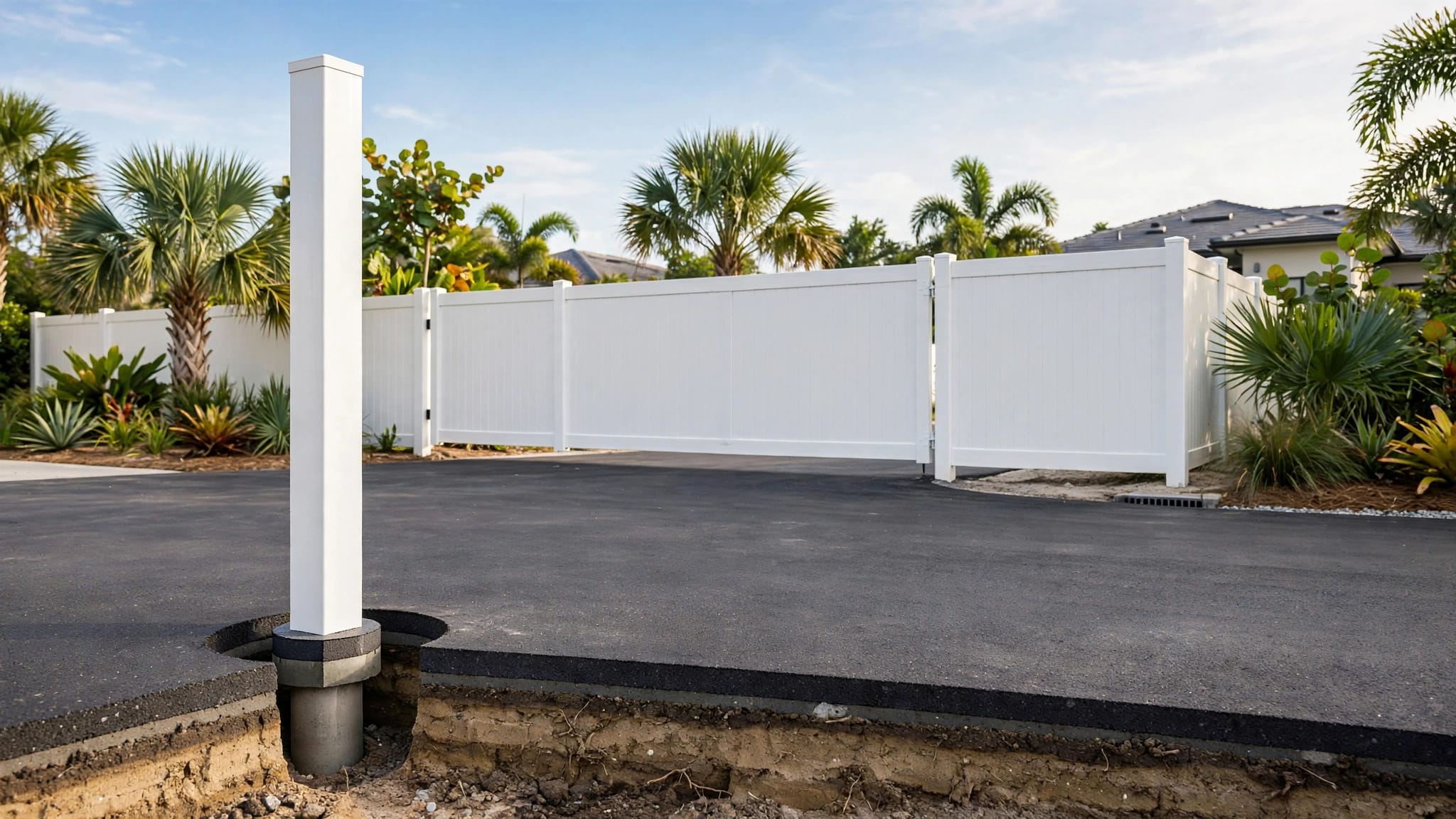
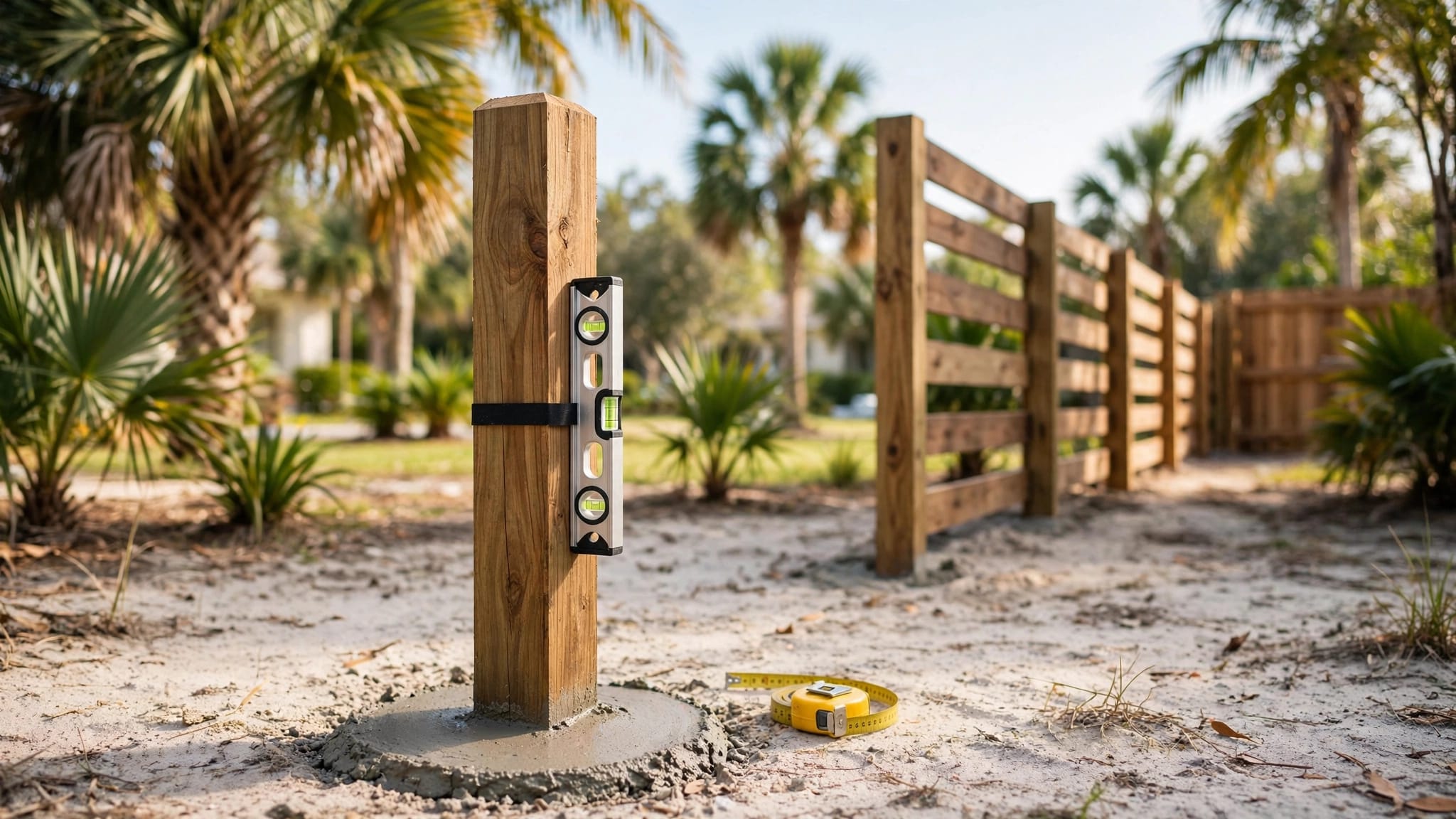
Walk the fence line in daylight, and keep some distance from leaning sections. A post can look steady until you touch it, then the whole panel gives way.
Focus on the points where storm damage usually starts:
- Check the base of every post for cracks, tilt, or soil washout.
- Look at hinges, latches, rails, and fasteners for rust or pulling.
- Inspect gates for dragging, sagging, or twisted frames.
- Watch for panels that bowed under wind, then failed at the connections.
Southwest Florida weather adds two extra problems. Salt air eats at metal hardware, and wet ground softens the footing around posts. A fence that looked solid before the storm may have been weakened for months.
If you find a section that is open to traffic, pets, or sharp edges, treat it as a safety issue first. When the frame still looks sound but the fence has moved at the posts, professional storm damage fence restoration is usually the safer path.
A fence can look damaged on the surface and still be unstable below it. If the base has shifted, the real problem is still there.
Emergency fixes that buy you time
Temporary fixes should protect people and property. They should not pretend the fence is repaired.
Start by closing off unsafe spots. Move kids and pets away from loose panels, and keep cars clear of sections that could fall in the wind.
Then handle only the fixes you can make safely. Use soft straps or rope to hold a gate shut if the latch failed. Remove a panel that is hanging loose only if it can come down without strain. Add a brace to a leaning section if the posts still hold and the footing is intact.
A few simple steps help in the first day or two:
- Tie or brace a gate so it does not swing into the opening.
- Mark damaged areas with cones, tape, or bright markers.
- Clear branches and debris that are pushing on the fence.
- Avoid digging around posts until you know where utility lines run.
If a repair needs new posts, concrete, or deep digging, call 811 first. Sandy soil can hide irrigation lines and other shallow runs. That matters even more after a storm, when the yard is already disturbed.
Temporary work should hold the line until a real fix starts. It should not mask a post that has moved at the footing or a rail that has split under load.
What insurance needs to see
Insurance claims move faster when the damage is clear. Good photos and notes often matter more than a long explanation.
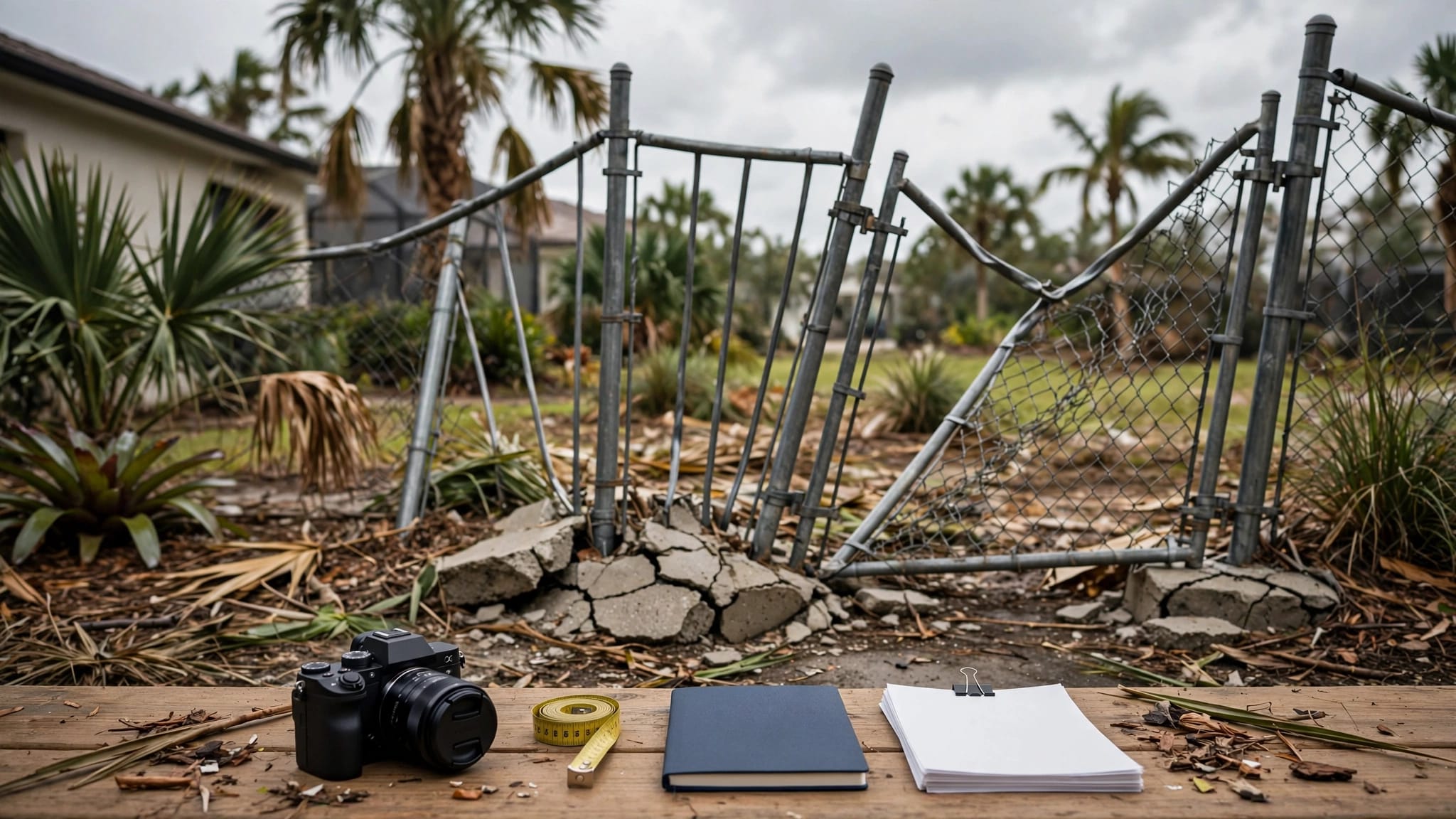
Take pictures before you move anything. Get wide shots of the whole fence line, then close-ups of the broken parts. Capture bent metal, cracked wood, loose brackets, rust, and displaced concrete. If wind knocked down another object that hit the fence, photograph that too.
Save the paper trail as you go. Keep receipts for tarps, temporary braces, and emergency cleanup. Write down the date, time, and the parts of the fence that failed first. If the storm caused damage on both sides of the property line, note that as well.
A short documentation list helps:
- Photos of the full fence and each damaged section
- Close-ups of broken hardware, posts, and footings
- Notes on the storm, the time you found the damage, and any temporary fixes
- Copies of estimates, permits, and repair invoices
- Receipts for materials used to secure the area
If you need help sorting out the order of insurance and disaster steps, Lee County's storm recovery Q&A explains how those pieces fit together. That can help when a claim, deductible question, or FEMA follow-up is part of the process.
The main goal is simple. Show what the fence looked like, what the storm changed, and what it takes to make it safe again.
Repair or replace after hurricane damage
Some fences need a few focused fixes. Others have too many weak points to save with patchwork.
Use the damage pattern, not the storm size, to guide the choice. A fence can take a serious hit and still be worth repairing if the posts are stable and the rest of the frame is sound.
| Damage pattern | Repair usually works when | Replacement usually makes more sense when |
|---|---|---|
| One bent panel or loose rail | The posts stay straight and the footing is firm | The same section keeps shifting after each wind event |
| Sagging gate | The hinges and post are still solid | The gate frame is twisted or the post has moved |
| Surface rust on hardware | Rust is limited to a few parts | Rust has spread into posts, fasteners, and connections |
| Leaning section after heavy rain | The post can be reset and the soil drains well | Multiple posts are loose in soft, wet ground |
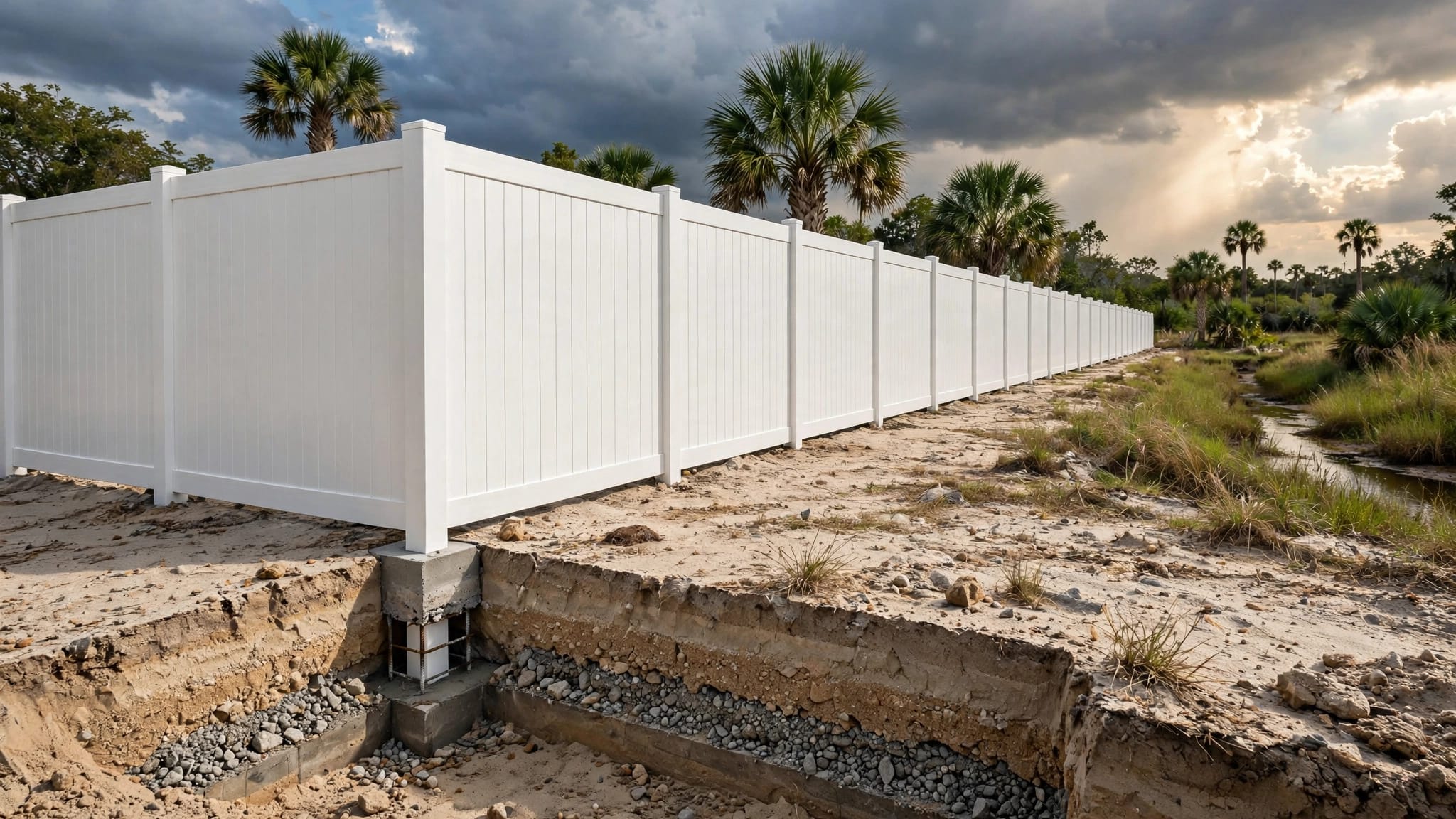
If you decide to rebuild, think about the next storm too. The Cape Coral fence wind rating guide explains why post depth, bracing, and panel style matter so much here. For yards that flood or stay wet after big storms, the best fences for flood-prone Southwest Florida yards page is a useful place to compare material choices.
A repair saves time and money when the damage is local. Replacement is the better call when the fence has repeated failures, widespread corrosion, or a weak layout that the next storm will find again.
Permits, materials, and contractor demand in Southwest Florida
After a hurricane, fence work gets busy fast. Good crews fill their calendars quickly, and bad ones often show up first.
That is why contractor choice matters. Look for a licensed, insured local company that gives you a written scope, clear pricing, and a real start date. If a bidder pressures you to sign on the spot, slow down. A rushed decision after a storm can cost more later.
For a practical way to compare companies, use the Southwest Florida fence contractor guide. It helps you ask better questions before work starts.
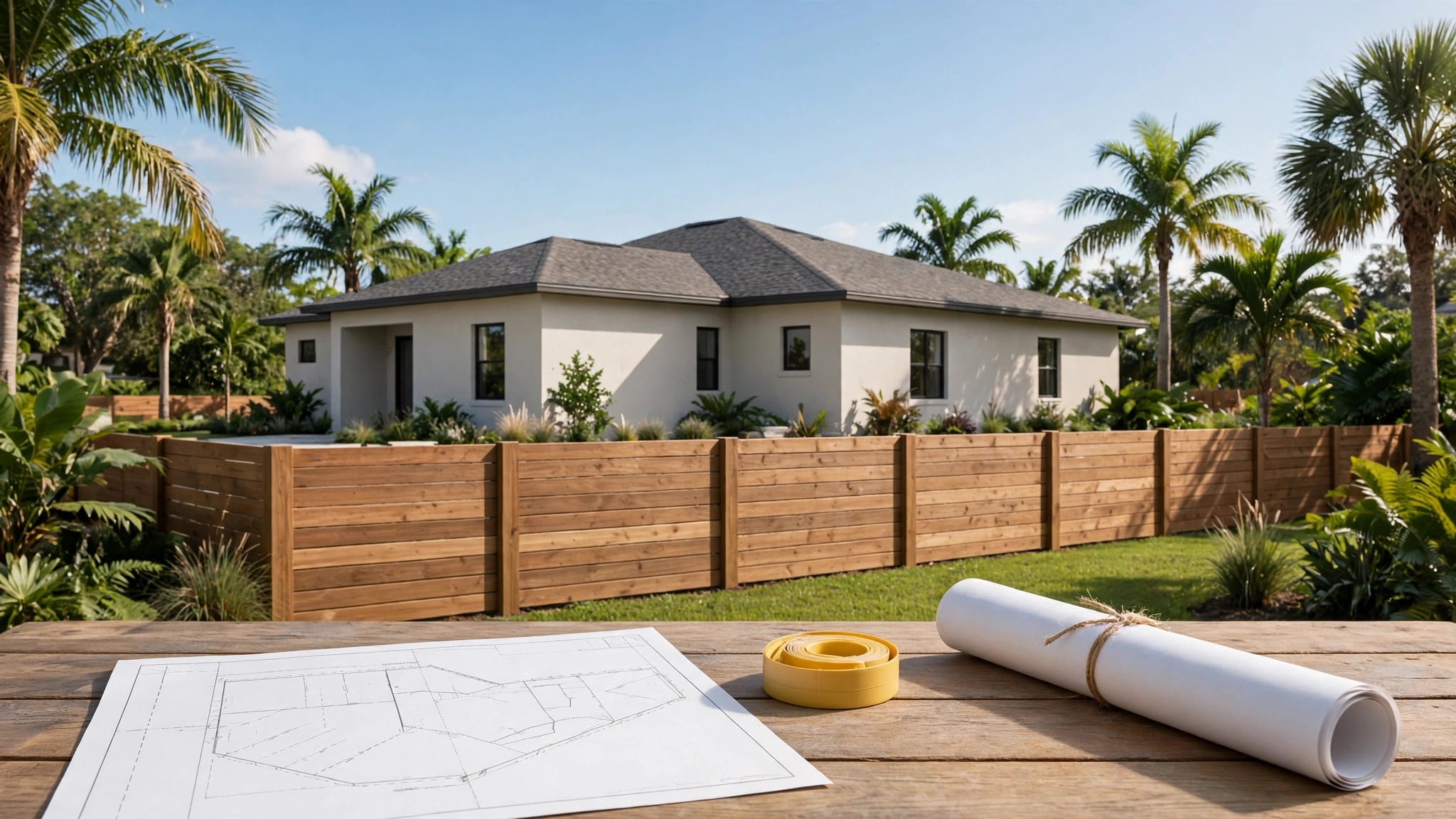
Permits matter too. In Lee County, emergency permitting procedures explain how storm damage projects are handled, and the residential fence guide outlines the county's basic fence rules. If the storm damage reaches beyond the fence and into other structures, FEMA substantial improvement guidance can also affect how the repair is documented.
Material choice matters just as much as the permit. Salt air wears down weak hardware, and wet soil can loosen posts fast. That is why stainless or hot-dip galvanized fasteners, proper post depth, and a design that handles wind well are worth paying for.
The right fix is not the quickest one. It is the one that still looks straight after the next hard rain.
Conclusion
A hurricane leaves more behind than broken boards or bent metal. It leaves hidden movement at the posts, rust in the hardware, and soft soil around the base.
The smartest hurricane fence repair starts with safety, then documentation, then a clear choice between repair and replacement. In Southwest Florida, that choice should always account for salt air, saturated ground, and strong wind .
If a fence keeps leaning, keeps rusting, or keeps coming apart at the same spot, it needs more than a patch. It needs the right fix for this climate.