Southwest Florida Fence Maintenance Schedule By Material
Salt, sun, humidity, and summer storms can age a fence faster than many homeowners expect. A smart southwest florida fence maintenance plan keeps small issues from turning into leaning posts, rusted hinges, or a gate that won't latch.
The catch is simple. Wood, vinyl, chain link, and aluminum don't fail the same way. In Southwest Florida, each material needs its own schedule, especially near the coast, along canals, or in yards with constant sprinkler overspray.
Why Southwest Florida fences need a tighter schedule
A fence in SWFL deals with four stressors at once, heat, UV, moisture, and wind. Salt air speeds up corrosion on screws, hinges, and chain-link fittings. Humidity feeds mildew and rot. Strong sun fades color and dries out wood. Then summer rain softens sandy soil around posts.
That mix changes how you maintain a fence. Inland homes can often clean less often. Beachside and canal homes usually need a monthly rinse to wash off salt. Gates also need more attention than panels because they move every day.
South-facing and west-facing runs usually fade first. Meanwhile, shady sections near hedges collect mildew faster. Sprinklers make things worse because constant overspray keeps the base wet, which encourages rust, rot, and algae growth.
In Southwest Florida, fence problems usually start at the posts, fasteners, and gates first.
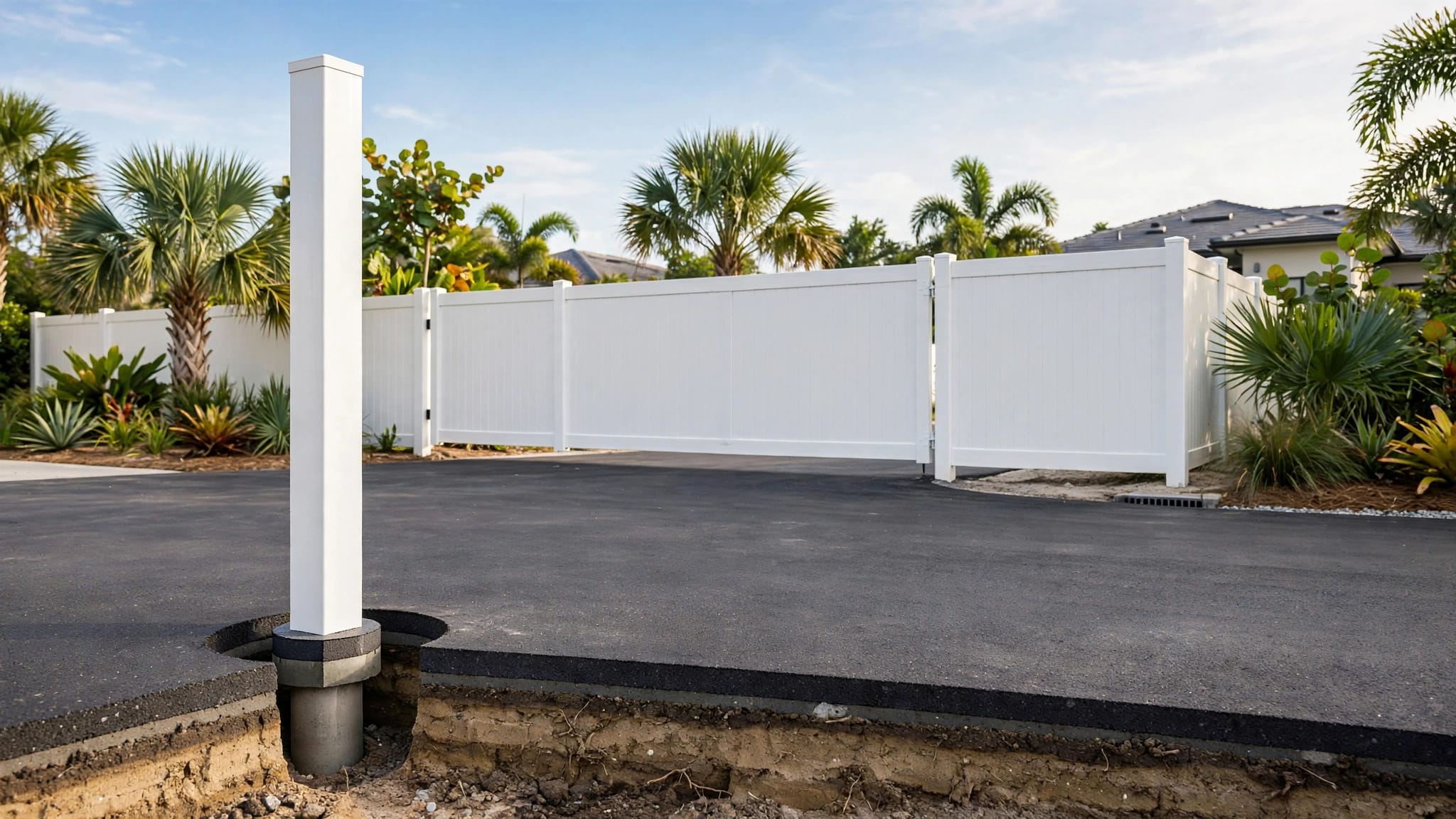
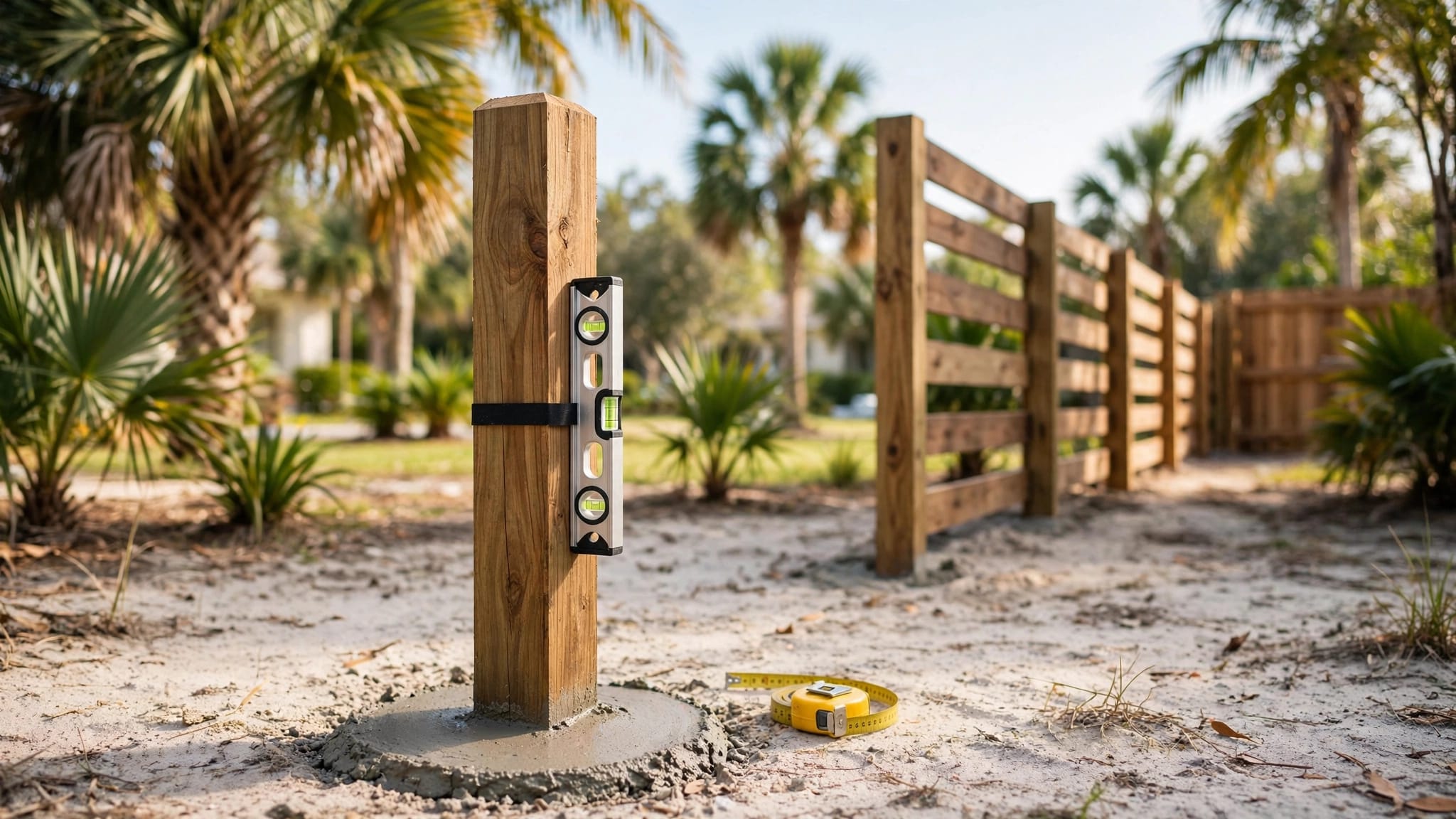
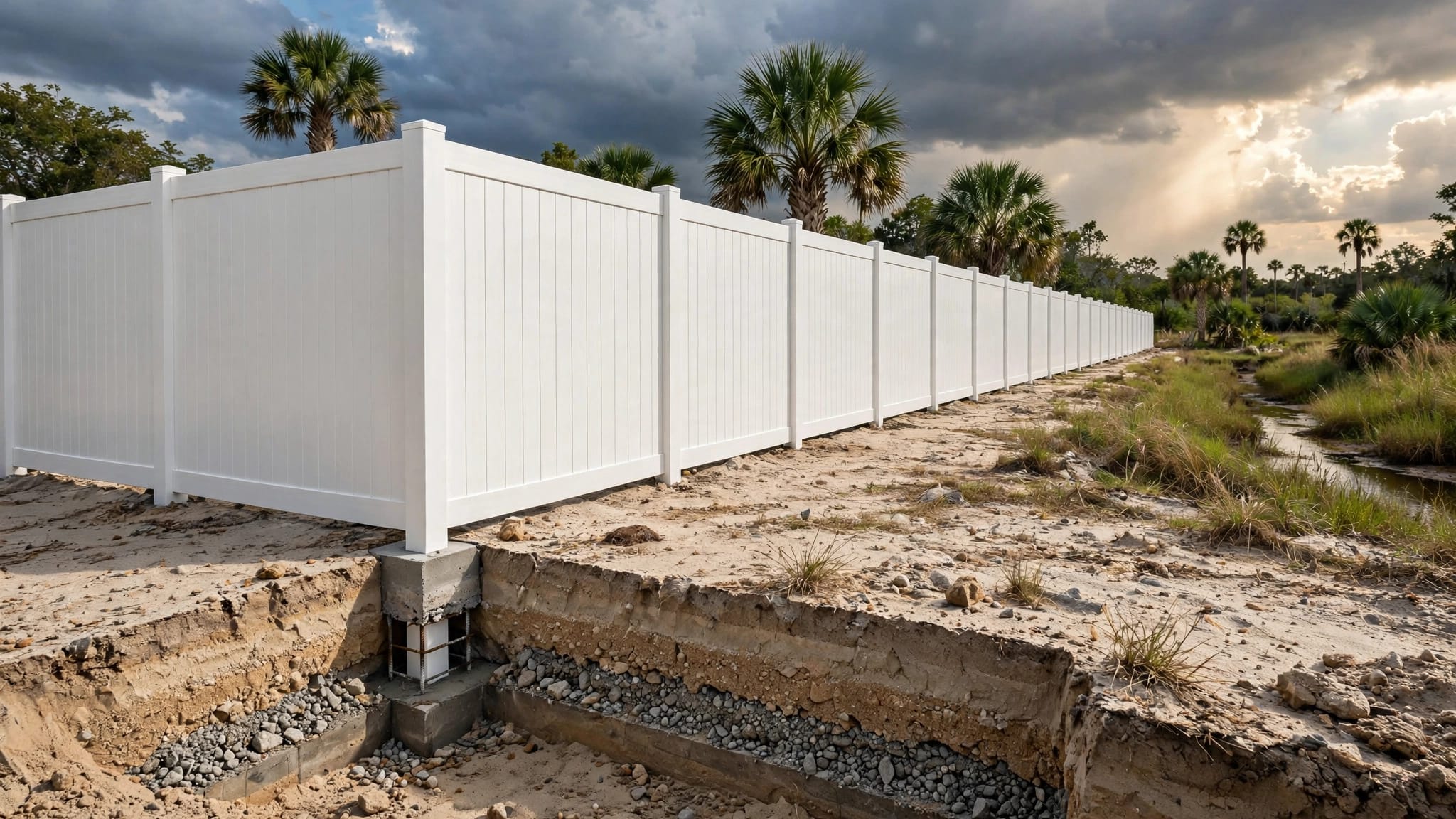
If your posts already wobble after heavy rain, it's worth reviewing fence footing options for sandy Southwest Florida soil before the lean spreads down the line.
A simple year-round fence maintenance schedule by material
This quick schedule fits most Southwest Florida homes.
| Material | Monthly | Every 3 months | Yearly or as needed | Main risks |
|---|---|---|---|---|
| Wood | Rinse dirt and salt, check board bottoms | Look for mildew, soft spots, loose nails, warp | Deep clean, re-seal or stain every 2 to 3 years | Rot, warping, fading, fastener pull-out |
| Vinyl | Wash with mild soap, inspect rails and posts | Check for cracks, chalking, mildew, loose brackets | Deep clean, replace brittle parts, confirm posts stay plumb | Fading, mildew, cracks, post shift |
| Chain link | Rinse, inspect ties and gate frame | Check rust, tension, fabric sag, latch wear | Touch up coating, replace rusted fittings | Rust, loose ties, gate drag |
| Aluminum | Rinse, especially near the coast | Check powder coat chips, screws, pickets, hinges | Clean thoroughly, touch up exposed metal | Corrosion at hardware, fading, loose fasteners |
The biggest takeaway is simple. Open-style fences need less wind prep, but metal parts still need rust checks. Solid privacy fences need more attention at posts, rails, and gates because they catch more pressure during storms.
A good monthly walk takes 10 minutes. Push each post near the top. Open every gate. Scan the fence line for soil washout, loose screws, cracks, and staining. If you want one easy rule, inspect monthly, clean quarterly, and do a deeper check before storm season.
Material-specific upkeep that prevents expensive repairs
Wood fences
Wood looks great, but it asks the most from you in this climate. Check the lower 6 inches first, because rot usually starts near grade. If a screwdriver sinks into the wood, that board or rail needs repair.
Wash wood gently. Skip aggressive pressure washing, because it can rough up the surface and force water into weak spots. Re-seal or stain every 2 to 3 years, sooner on full-sun sections. Also replace popped nails with exterior screws, since screws hold better during storm season. Keep mulch and soil off picket bottoms, or the boards stay wet and start to twist.
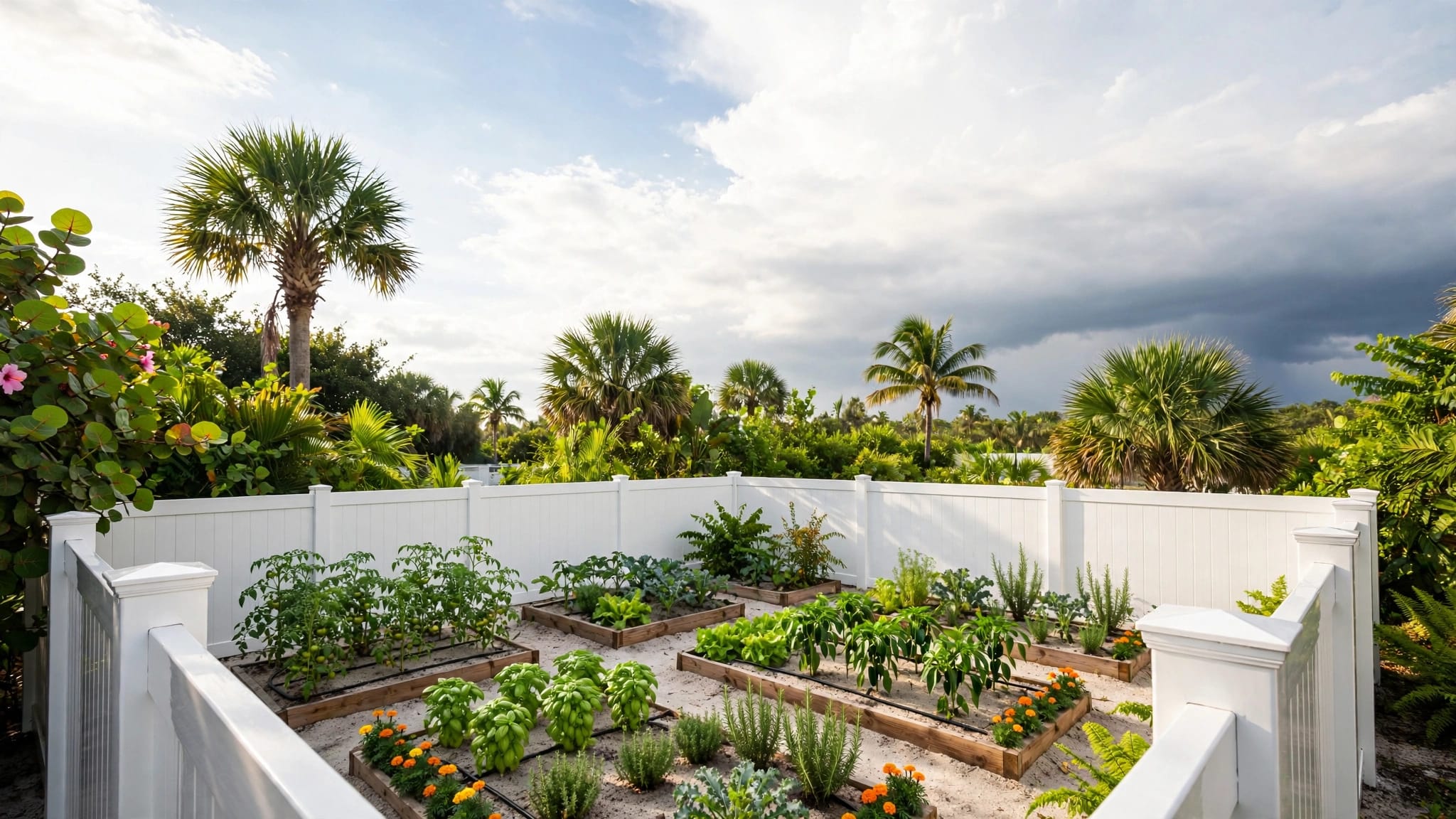
Vinyl fences
Vinyl handles moisture well, but SWFL sun and wind still test it. Look for hairline cracks near rails, gate openings, and bracket points. Those small cracks can spread after a windy week.
Clean vinyl with mild soap, water, and a soft brush. If mildew builds up on the shady side, trim plants back so air can move. Also check for post movement after hard rain. A straight panel can hide a loose post until the gate starts rubbing. On wide gates, watch the top rail and latch side for early sag.
Chain-link fences
Chain link is practical in coastal weather, but only if the metal stays protected. Check the bottom rail, ties, tension bands, and gate frame for orange rust marks. Once rust starts at a fitting, it rarely stops on its own.
Rinse salt off monthly if you live near open water. Then tighten loose ties and replace worn hardware early. Privacy slats and windscreens need extra care because they add wind load. Vinyl-coated chain link usually lasts longer near salt air than bare galvanized wire, but both still need regular checks.
Aluminum fences
Aluminum is one of the easier materials to maintain in Southwest Florida. Still, don't ignore chips in the powder coat or corrosion on mixed-metal hardware. Trouble often starts where screws, hinges, or latch parts meet the frame.
Wash the fence a few times a year, and more often near the coast. Then inspect pickets, weld points, and gate hinges. Rinse around pool decks too, because splashed chemicals can wear on hardware over time. A low-maintenance fence still needs eyes on it.
Don't skip gates, hardware, and storm prep
A fence can look fine until the gate tells the truth. When a gate drags, sags, or stops latching, the structure is already under stress. That's why gate alignment should be part of every maintenance check.
Use this short checklist before summer storms and again after any big weather event:
- Check hinge bolts and latch screws : Tighten anything loose before vibration makes the hole larger.
- Test gate swing and latch : The gate should close cleanly without lifting or pushing.
- Look for washed-out soil at posts : Sandy ground can loosen after repeated rain.
- Trim branches and vines : They trap moisture and can slam into panels during wind.
- Remove hanging decor, tarps, or shade cloth : Extra drag turns a fence into a sail.
- Inspect rust spots right away : Sand, prime, or replace the part before corrosion spreads.
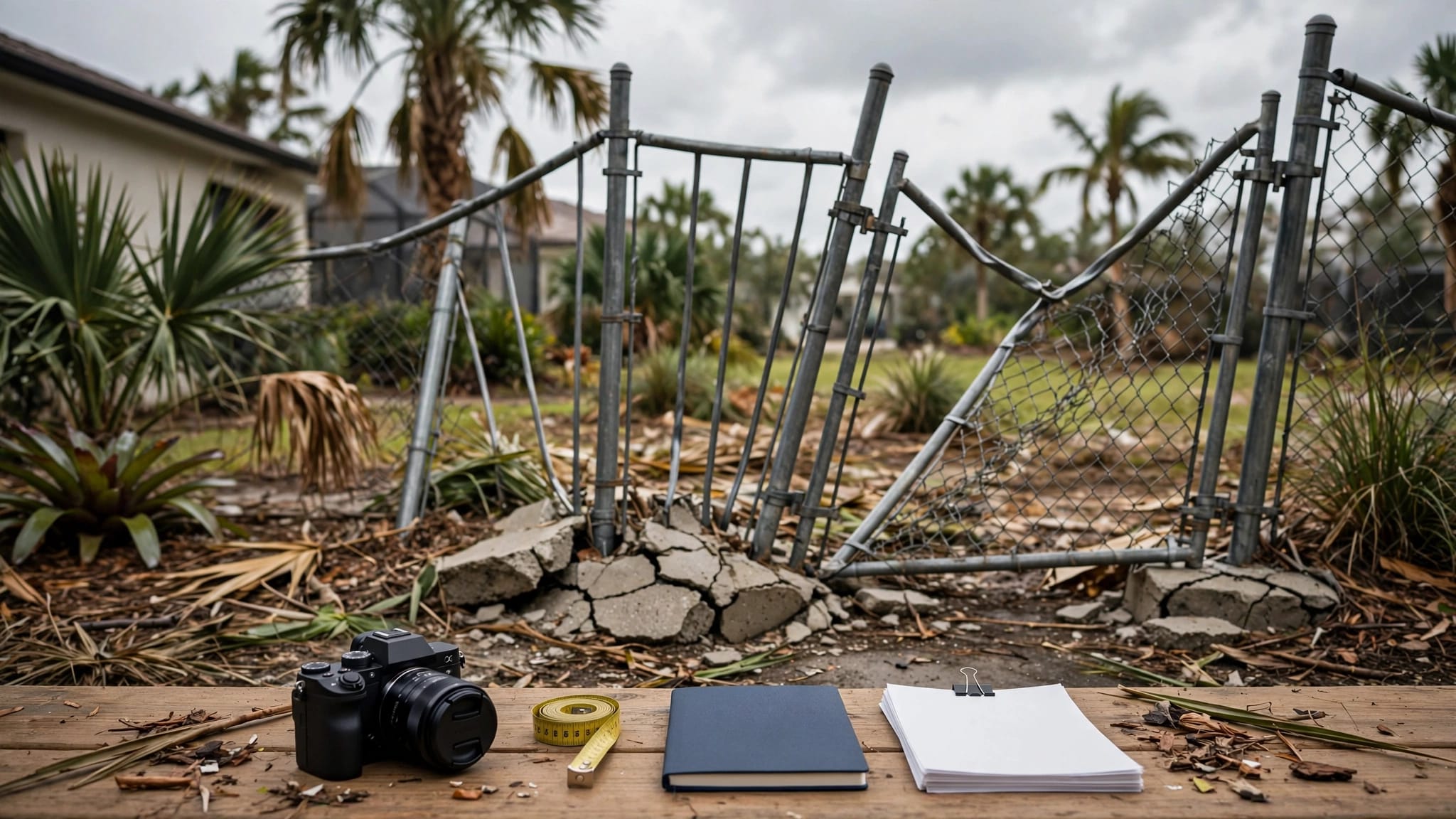
After a storm, don't force a crooked gate or push a leaning section back into place. Twisted hardware can hide bigger footing problems.
If your fence also serves as a pool barrier, self-closing hinges and latches need even closer attention. Review the current Cape Coral pool fence rules and gate basics if you notice a gate that won't close on its own. For full seasonal prep, keep this hurricane season fence prep checklist for Southwest Florida homes handy before the weather shifts.
Final thoughts
A good maintenance schedule isn't busywork. It's the reason your fence stays straight, safe, and easier to repair. Match the schedule to the material, step up care near salt air, and fix small hardware or post issues early. If a gate sags, rust keeps coming back, or a section starts leaning, it's time to schedule professional repair before the next storm tests everything.