Lakewood Ranch Fence Permit Guide for 2026 Homeowners
A fence project can stop before the first post goes in if the permit path is wrong. In Lakewood Ranch, the first question is usually not what style you want. It is which county handles your address, and what your HOA wants to see.
Some Lakewood Ranch homes fall under Manatee County, others under Sarasota County, and some parcels may sit under another local authority tied to the property. On top of that, HOA approval does not replace county or municipal permits.
The safest way to avoid delays is to confirm the right office, gather the right documents, and follow the steps in the right order.
Start with the right jurisdiction
Before you fill out any forms, confirm where your lot sits. That single detail shapes the rest of the process.
| Situation | What to verify first |
|---|---|
| Manatee County address | Manatee County Building Division |
| Sarasota County address | Sarasota County Building and Development Services |
| HOA community | ARC or design review approval |
| Near a flood zone or easement | Survey and flood map |
A lot in Lakewood Ranch can look the same from the street, yet follow different permit rules. That is why homeowners should never guess based on a neighbor's paperwork.
HOA approval can help with design, but it does not replace a county permit.
If your community has a design review board, handle that early. The Babcock Ranch fence permit process shows the same pattern many planned communities use, first neighborhood approval, then local permit approval.
What 2026 permit rules may mean for your fence
As of June 2026, Manatee County generally requires a fence permit for residential work unless an exemption applies. Sarasota County may handle fence rules differently, so homeowners on that side should confirm the current process before buying materials.
Florida's HB 803 may also affect some single-family fence jobs starting July 1, 2026. In plain language, some projects may qualify for a building-permit exemption if they stay under $7,500, sit outside FEMA flood zones, and meet the law's other limits. Even then, local review still matters.
| Project type | What usually applies in 2026 |
|---|---|
| Single-family fence under $7,500, outside a FEMA flood zone | May qualify for an exemption request |
| Fence in a FEMA A or V flood zone | Full permit usually applies |
| Pool barrier or safety fence | Full permit and code checks often apply |
| HOA community fence | HOA approval still applies either way |
The main point is simple. An exemption is not a free pass. It still needs the right local review, and HOA or zoning rules still apply.
For homeowners in Southwest Florida who like to compare rules across counties, the Lee County fence permit regulations show how much the process can change from one jurisdiction to another.
Documents that make the process easier
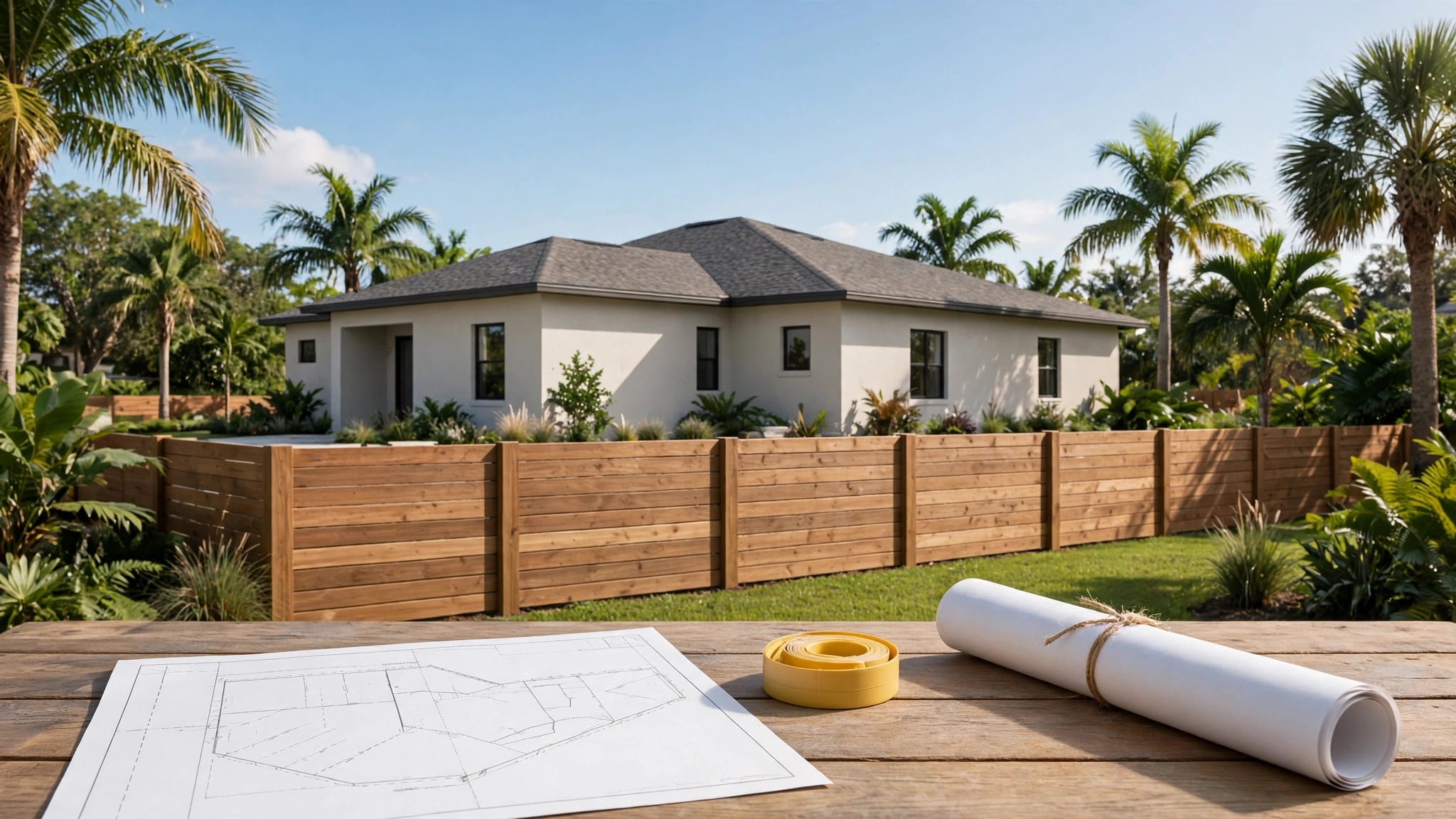
Good paperwork saves time. A clean submittal is faster to review than a pile of guesses and sketches.
Start with these items:
- Current survey or site plan , because it shows the property lines, house location, and fence line.
- Fence drawing or plan , with height, materials, style, and gate locations.
- HOA or ARC approval , if your community requires it before county filing.
- Contractor license and insurance details , if the contractor pulls the permit.
- Pool barrier notes , if the fence surrounds a pool or spa.
- Easement and setback details , if your lot has drainage, utility, or access areas.
A survey matters more than many homeowners expect. An old fence may not sit on the true line, and that can lead to a setback problem later.
If you plan to request an HB 803 exemption, keep the project cost clear. That figure may include materials, labor, posts, concrete, gates, and old fence removal.
How to file a Lakewood Ranch fence permit
The filing path gets easier when you treat it like a short checklist instead of a guessing game.
- Confirm your county and flood zone.
Check whether your address falls under Manatee County, Sarasota County, or another local authority. Then confirm whether the lot sits in a FEMA flood zone. - Get HOA approval first if your community requires it.
Many Lakewood Ranch neighborhoods want ARC review before the county looks at the plans. Do not skip this step. - Prepare a site plan and fence sketch.
Show the fence line, height, gate spots, nearby streets, and any easements. Keep it accurate to the survey. - Submit the permit or exemption request to the right office.
Manatee County homeowners often use the county's Accela portal or file in person. Sarasota County homeowners should follow Sarasota's current building process. - Answer correction requests quickly.
Small errors can slow the file. A missing dimension or unclear property line often sends the review back. - Keep the approval with the job.
After approval, save the permit and any exemption papers. You may need them for inspections or future records.
If you hire a fence company, ask one direct question: who pulls the permit? That answer should be clear before the first post is ordered.
Fence rules that catch homeowners off guard
Fence height is only part of the story. Placement matters just as much.
Rear and side yards often allow taller fences than front yards, but HOA rules can be tighter than county rules. Many communities also limit what the fence looks like, including color, spacing, and material.
Setbacks and easements create another common snag. A fence usually needs to stay inside the property line and away from utility or drainage areas. A neighbor's old fence does not prove the line is right.
Pool fences bring extra rules too. Gates often need to self-close and self-latch, and the enclosure may need to meet safety spacing requirements. That is one reason pool projects deserve close review before installation starts.
Materials matter as well. Vinyl, wood, aluminum, and metal are common choices, but each community may handle them differently. A style that looks fine next door may not pass ARC review in your subdivision.
Mistakes that slow approval
Most permit problems are small at the start and expensive later. Homeowners usually run into trouble when they rush the first step.
- Starting work before approval creates the biggest risk, because the county or HOA can stop the project.
- Assuming HOA approval is enough can leave you with a fence that passes design review but still lacks a permit.
- Using a rough sketch often causes corrections, since reviewers need real dimensions and locations.
- Forgetting gates or pool details can change the review, especially when safety rules apply.
- Ignoring the actual property line can lead to a fence that has to move after installation.
A fence contractor can help here, but homeowners should still ask to see the plan before filing. That simple check often catches errors early.
Conclusion
A Lakewood Ranch fence project goes smoother when you treat it as a paperwork job first and a build job second. Confirm the right county, get HOA approval where required, and use a survey that matches the real lot lines.
The rules can shift, especially in 2026, so current verification matters before you pour concrete or order materials. Check the latest requirements with the correct permitting office, then start the build with clear approval in hand.