Florida condo patio fences: Rules before you build
Searches for Florida condo patio fences often start with a simple question: can a unit owner add privacy or security without asking the association? In most communities, the answer depends less on the fence itself and more on the patio's legal status, the condominium documents, and the local building rules.
A patio may belong to your unit for your exclusive use while remaining a common element maintained by the association. Before ordering materials, confirm who controls the area and obtain written approval. These steps can prevent a denied application, permit delays, or the cost of removing an unapproved fence.
Florida condo patio fences: Start with the condominium documents
Florida has no single statewide fence design that every condominium must accept. Chapter 718, Florida's Condominium Act, provides the general legal framework, but the declaration, bylaws, articles, and association rules usually contain the restrictions that affect your project.
Read the documents for language about:
- Common elements and limited common elements
- Patios, balconies, courtyards, and screen enclosures
- Exterior or architectural modifications
- Privacy screens, fences, gates, and enclosures
- Prior written consent from the board
- Architectural review procedures
- Maintenance and repair responsibilities
The word limited can cause confusion. A limited common element is typically reserved for the use of one unit or a small group of units, but it may still be owned or maintained by the association. Exclusive use doesn't automatically give you the right to attach a fence, drill into a wall, or change the appearance of the building.
A declaration may prohibit alterations to common elements or exterior portions of the building without prior written approval. It may also require approval for exterior items that don't match the community's general architecture. That language can cover a patio fence even when the fence sits inside the area you use.
Look at the condominium plat and unit boundaries, too. They can help show whether the patio is part of the unit, a limited common element, or an association-controlled area. If the documents conflict or use unclear terms, ask a Florida condominium attorney for advice before submitting a design.
Why the board may require written approval
For most Florida condo patio fences, board approval is the first practical hurdle. A property manager may provide an application, but the board or an architectural committee usually reviews the proposed change under the association's governing documents.
The review may focus on the fence's:
- Height and overall proportions
- Material, finish, and color
- Location within the patio
- Visibility from neighboring units or common areas
- Effect on drainage, landscaping, and maintenance access
- Method of attachment to walls, slabs, railings, or screens
- Appearance compared with nearby patios
A board may approve the request, approve it with conditions, or deny it when the documents support that decision. For example, a community may allow a low decorative barrier but reject a six-foot privacy fence because it blocks views or changes the building's exterior appearance.
Ask the association to identify the exact rule or declaration provision used in its decision. A written explanation helps you determine whether the problem involves design, ownership, maintenance, or a separate permit requirement. It also gives you a clear way to revise the application instead of guessing what the board wants.
Don't rely on a verbal statement from a manager, board member, or neighbor. Get approval in writing before installation. Keep the signed approval, approved drawings, product information, and any conditions with your property records.
A patio can be for your private use and still require association permission for a fence because the structure affects a common element or the building exterior.
Local permits are separate from condo approval
Association approval doesn't replace a city or county permit. The two systems address different concerns.
The condo board reviews private community restrictions, appearance, maintenance, and use. The local building department reviews code compliance, placement, structural requirements, drainage, visibility, and other public regulations. You may need both approvals before work begins.
Rules vary across Southwest Florida. A project in Cape Coral may follow different procedures than one in Fort Myers, Sarasota, Naples, or an unincorporated area of Lee, Charlotte, Sarasota, or Collier County. The responsible jurisdiction depends on the property's exact location.
Published Florida fence guides show why owners shouldn't assume that a common height applies everywhere. For example, Orlando's guide lists four feet in front-yard areas and six feet in side, street-side, and rear-yard areas in applicable situations. Miami-Dade guidance uses similar figures in its residential fence information. Those numbers aren't automatic limits for a Southwest Florida condominium.
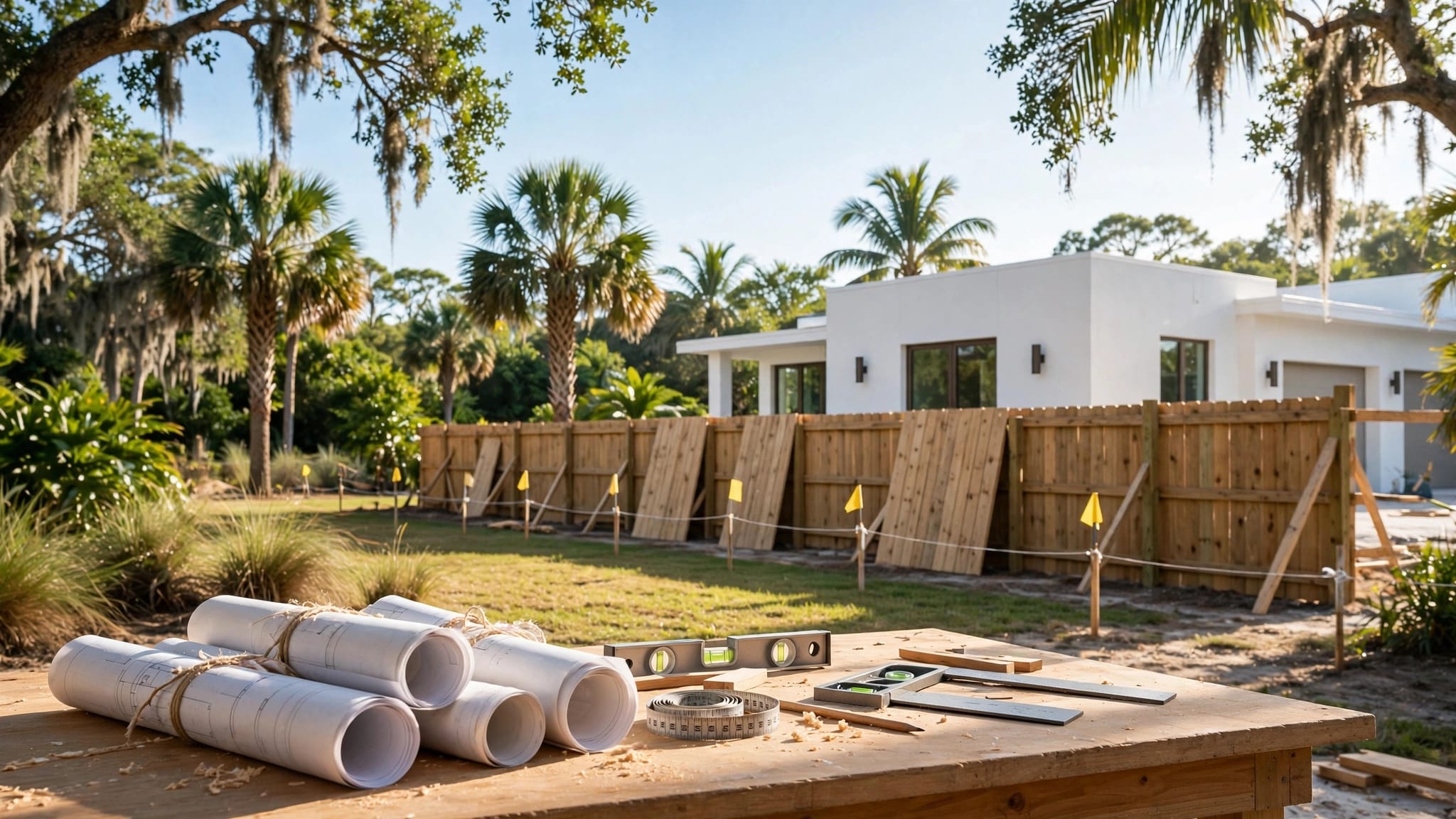
Your contractor or permit office may ask for a survey, site plan, fence elevations, product specifications, or details about gates and attachments. A fence that forms part of a swimming pool barrier has separate safety requirements. A fence near a sidewalk, roadway, drainage feature, utility easement, or corner visibility area may receive additional review.
For unusual installations, such as a tall enclosure or a fence attached to a building structure, an engineer may be requested. Review Florida fence permit requirements and engineer drawings before assuming a standard proposal will meet every local requirement.
Choosing a fence the association can accept
The best fence for a condo patio balances your purpose with the community's appearance standards. Privacy, pet control, child safety, and visual separation may require different designs.
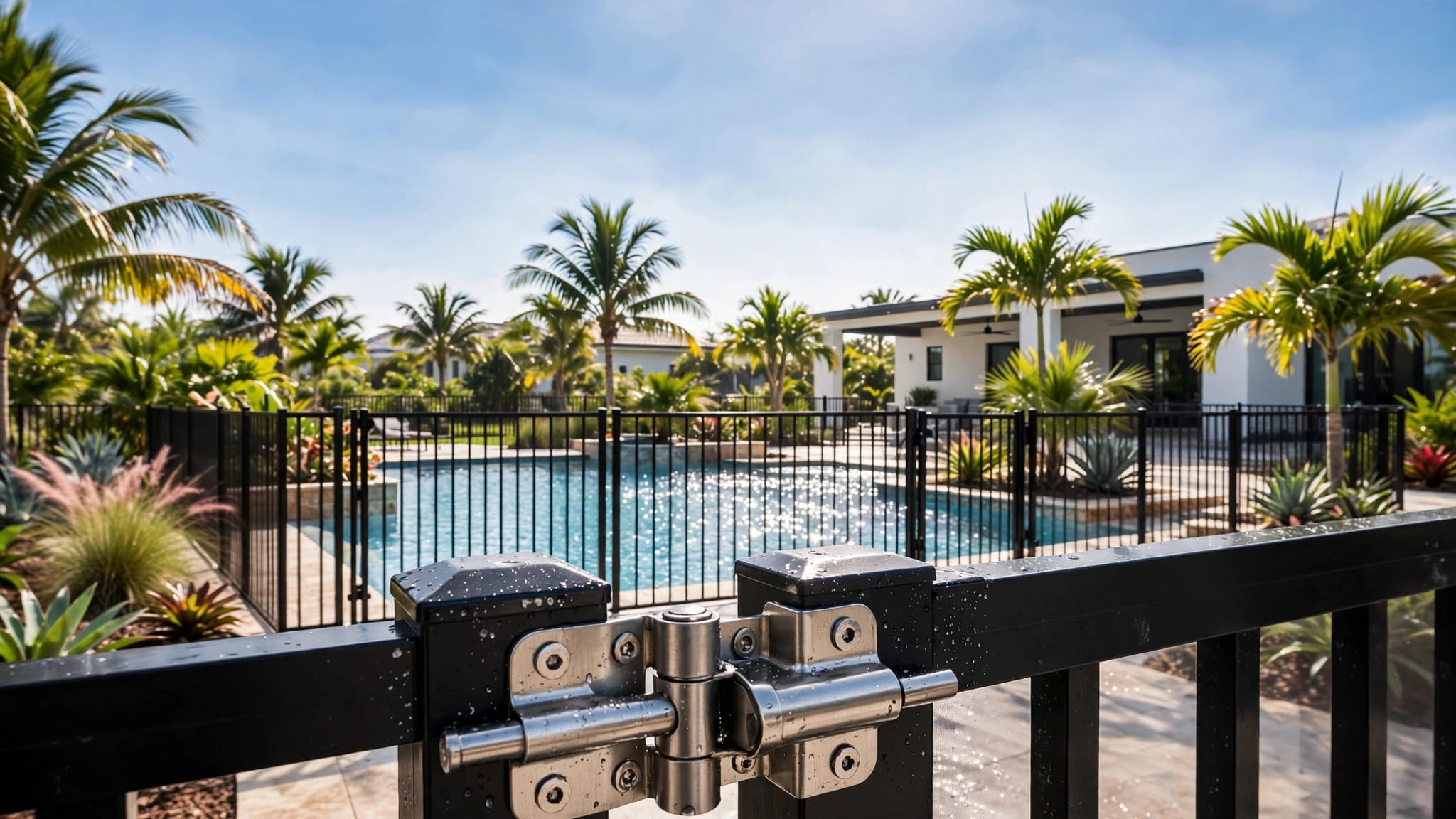
Open aluminum fencing often works well when a board wants to preserve sight lines. It can define a patio without creating a solid wall between neighboring areas. Black or bronze finishes may fit communities that already use dark metal railings, but the association's approved colors control.
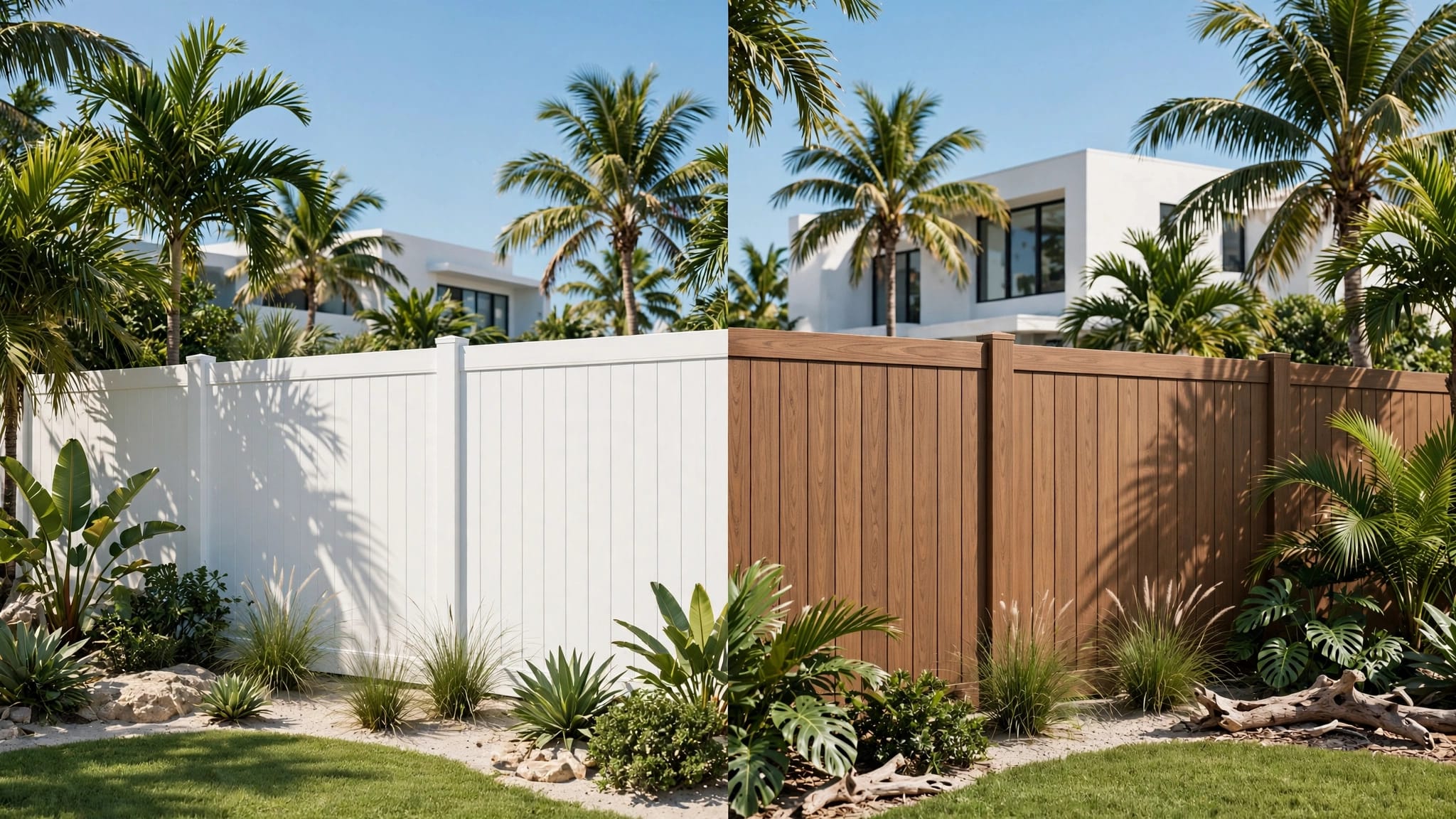
Vinyl can provide more privacy and a clean, uniform appearance. However, a solid panel may face stronger restrictions on balconies, small patios, or areas visible from shared walkways. Wood offers a warm appearance, but some associations limit it because of maintenance, staining, warping, or inconsistent aging in Florida's wet climate.
Chain-link may be practical for certain properties, yet many condominium communities restrict it for appearance reasons. A metal fence can offer a different balance of strength and visibility, but its finish, profile, and attachment method still need review.
Use the community's existing materials as a starting point. Matching nearby railings, gates, screens, or approved patio dividers can make the proposal easier to evaluate. Still, never assume that a neighboring fence is legal or properly approved. It may have received a one-time exception, predate current rules, or violate the documents without enforcement.
Review this Cape Coral fence material comparison when comparing privacy, maintenance, coastal exposure, and appearance. Then ask the contractor to adapt the material choice to the condo's written standards.
A practical approval process for unit owners
A careful application usually moves faster than an incomplete request. Follow this sequence:
- Confirm the area you control. Review the declaration, plat, unit plans, and maintenance chart. Ask the manager whether the patio is a unit area, limited common element, or association-maintained space.
- Request the current application. Find out which board or committee reviews exterior changes, when applications are due, and whether the community requires a specific contractor, insurance certificate, or owner consent form.
- Prepare a complete proposal. Include the fence material, color, height, post spacing, gate location, property plan, photographs, and a drawing showing the proposed placement. State whether the fence will attach to a wall, slab, railing, screen frame, or another structure.
- Submit before buying materials. A deposit or delivery doesn't create a right to install. Wait for written association approval and check whether the approval includes conditions, expiration dates, or restoration obligations.
- Verify permits and schedule installation. After the design clears the association process, confirm local permit requirements. Coordinate work hours, access, debris removal, landscaping protection, and final inspection with the manager.
During the review, ask who will maintain the fence after installation. The owner may become responsible for cleaning, painting, repairs, storm damage, and removal when the unit is sold. An approval letter should state those responsibilities when the governing documents allow the association to assign them.
For a professional quote, provide the contractor with the association's written specifications instead of asking for a generic patio fence. A local company can measure the area, identify access concerns, and prepare a proposal that matches the approved design.
If the board denies the fence or you already installed it
A denial doesn't always end the project. First, request the decision and the rule supporting it. Then ask whether a lower height, open design, different finish, revised location, or freestanding installation would resolve the concern.
If the issue is that the association controls the patio, ask whether it will consider a formal license, maintenance agreement, or association-approved standard design. The answer depends on the declaration and the board's authority, so avoid treating a neighbor's arrangement as a guaranteed option.
Owners who install first may face a removal demand, an enforcement action, or liability for damage to common property. An old fence isn't automatically grandfathered, especially if records don't show approval. Stop additional work and gather the documents if the association raises an objection.
A Florida condominium attorney can review the declaration and explain available dispute procedures under Chapter 718. This article provides general information, not legal advice, because the result can change with the documents, property layout, and local code.
Protect your project before installation
Florida condo patio fences require more planning than a typical backyard fence because three sets of rules may apply: condominium documents, Florida condominium law, and local building regulations. The patio's classification matters, and so do height, visibility, materials, attachment points, drainage, and maintenance duties.
Start with the declaration and plat. Get written board approval, confirm local permit requirements, and give the contractor the approved specifications. For Southwest Florida owners, Supreme Fence of SWFL is a family-owned, licensed and insured contractor based in Cape Coral, serving Lee, Charlotte, Sarasota, DeSoto, Hendry, and Collier counties. A fence that fits both the community rules and the local requirements is far easier to install, maintain, and keep.