Fence Contract Checklist for Southwest Florida Homes
A fence contract checklist can prevent expensive misunderstandings before materials arrive or posts go into the ground. In Southwest Florida, the written agreement should cover more than the fence style and total price.
Your property may fall under city, county, HOA, drainage, utility, or easement requirements. A Cape Coral lot can follow a different process than a home in Naples, Sarasota, or unincorporated Lee County. Use this guide with the Southwest Florida homeowner guide to choosing a fence contractor, then review every term before signing.
Why a written fence agreement matters
A fence contract gives both sides the same record of the job. It should answer practical questions before construction begins:
- Where will the fence go?
- What materials, height, and design will the contractor use?
- Who handles permits, HOA approval, and utility locations?
- What does the price include?
- When will the work start and finish?
- What happens if the plan changes?
Verbal promises can be forgotten, misunderstood, or interpreted differently after the project begins. A written contract gives you something concrete to review if the gate location changes, the price increases, or the work does not match the agreed design.
The agreement should identify the homeowner, contractor, property address, and date. It should also include the contractor's business name and contact information. If a salesperson prepares the estimate, confirm that the final contract comes from the same company that will perform the installation.
Ask for a complete proposal rather than a short note that says "install fence" for a lump sum. A clear scope protects your budget and gives the installer accurate instructions.
Fence contract checklist: define the job in writing
The scope of work is the heart of the fence contract checklist. Details that seem minor during a sales conversation can affect materials, labor, permits, and the finished appearance.
Your contract should identify:
- The fence material, such as vinyl, wood, chain link, aluminum, or steel.
- The fence height, lineal footage, color, finish, and style.
- The post size, post spacing, rails, pickets, panels, caps, and fasteners.
- The number of gates, their width, swing direction, latch type, and hardware.
- Any existing fence removal, hauling, disposal, grading, or cleanup.
- The planned fence line, including corners, returns, transitions, and end points.
- Special conditions near pools, canals, sidewalks, driveways, landscaping, or retaining walls.
- Whether the contractor will repair disturbed irrigation, sod, pavers, or other surfaces.
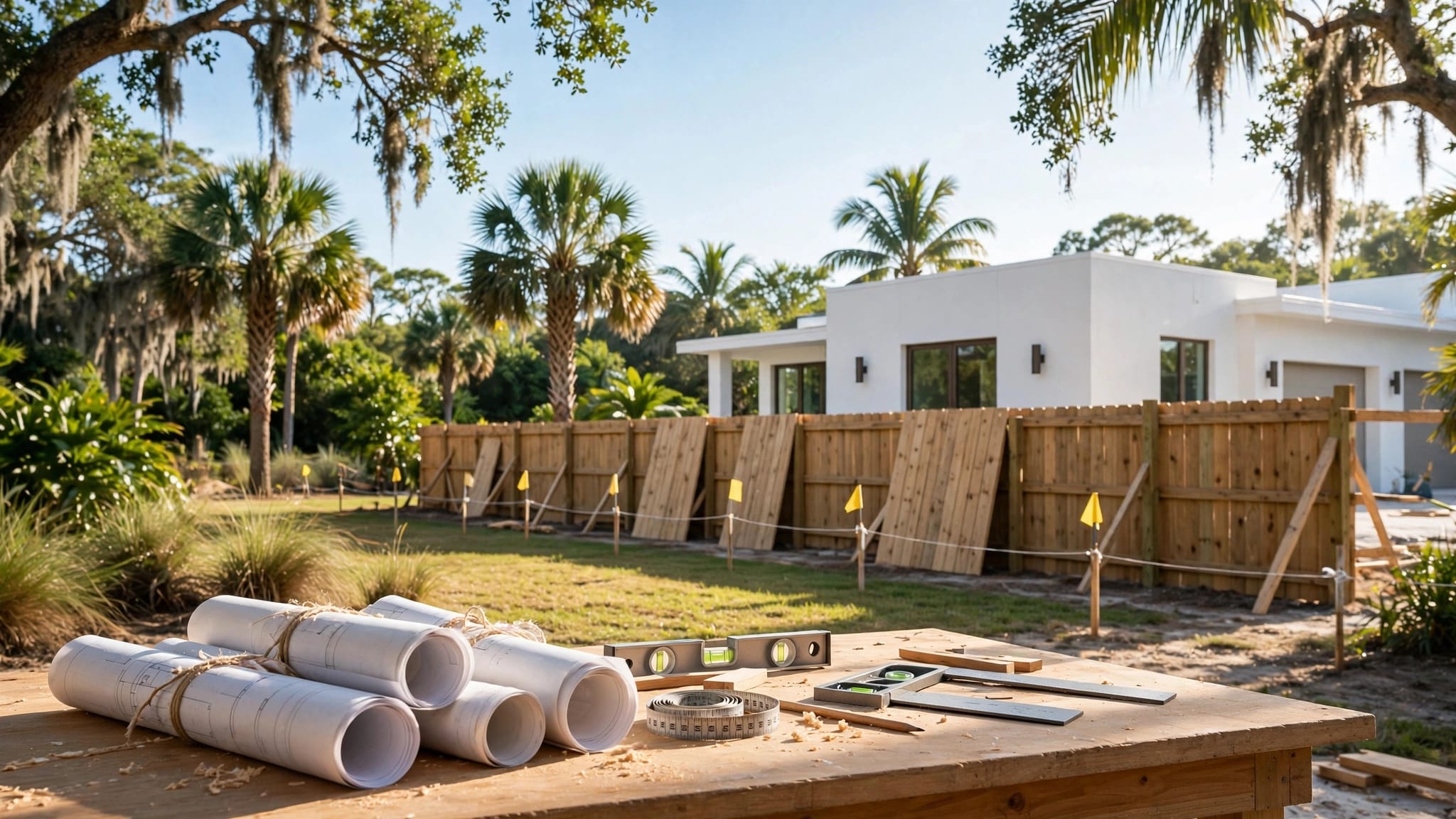
A sketch or site plan can remove confusion. It doesn't need to look like an architectural drawing, but it should show the house, property lines if known, gates, and unusual areas. Ask the contractor to mark any section that may change after a survey, approval, or site inspection.
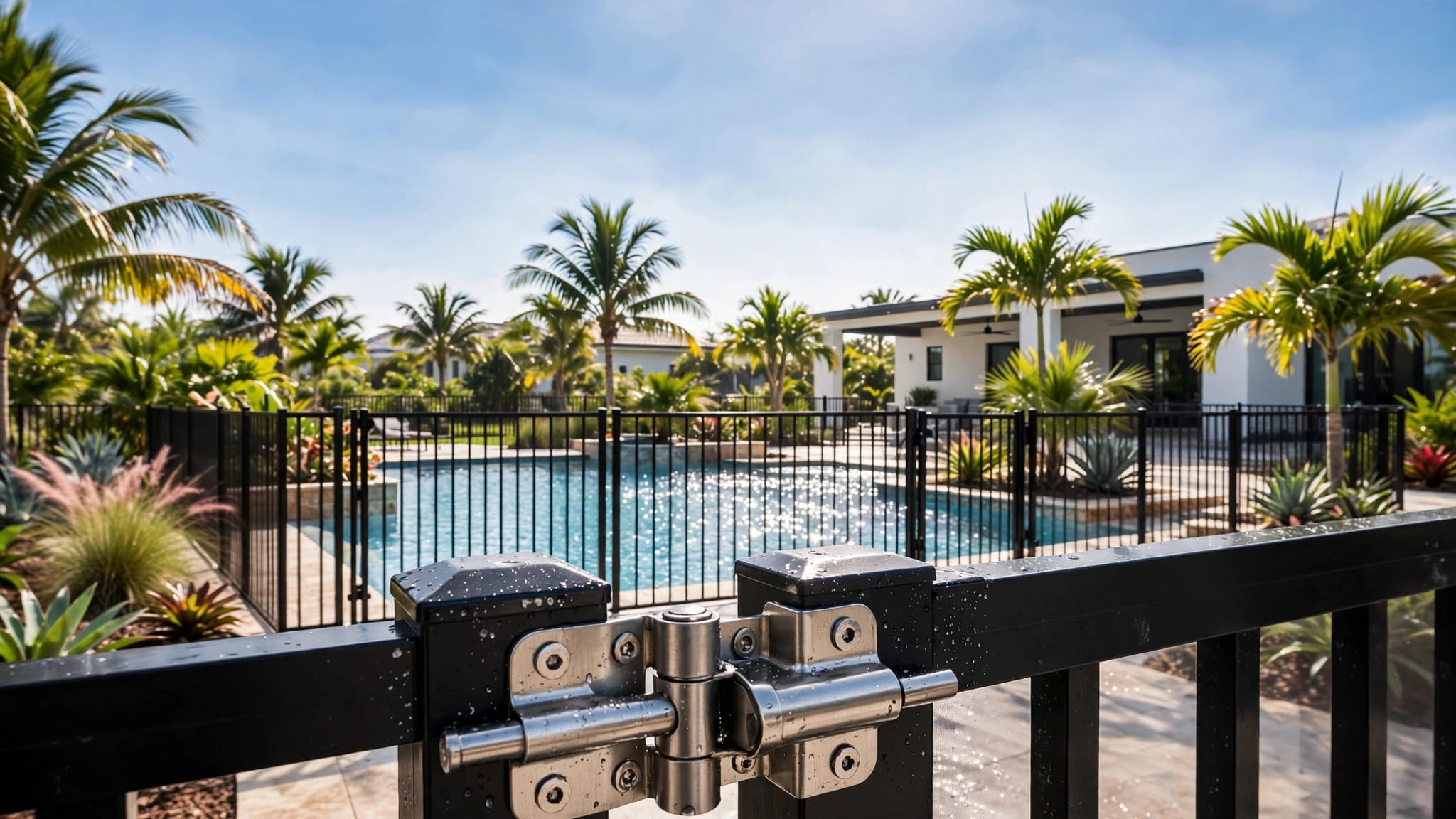
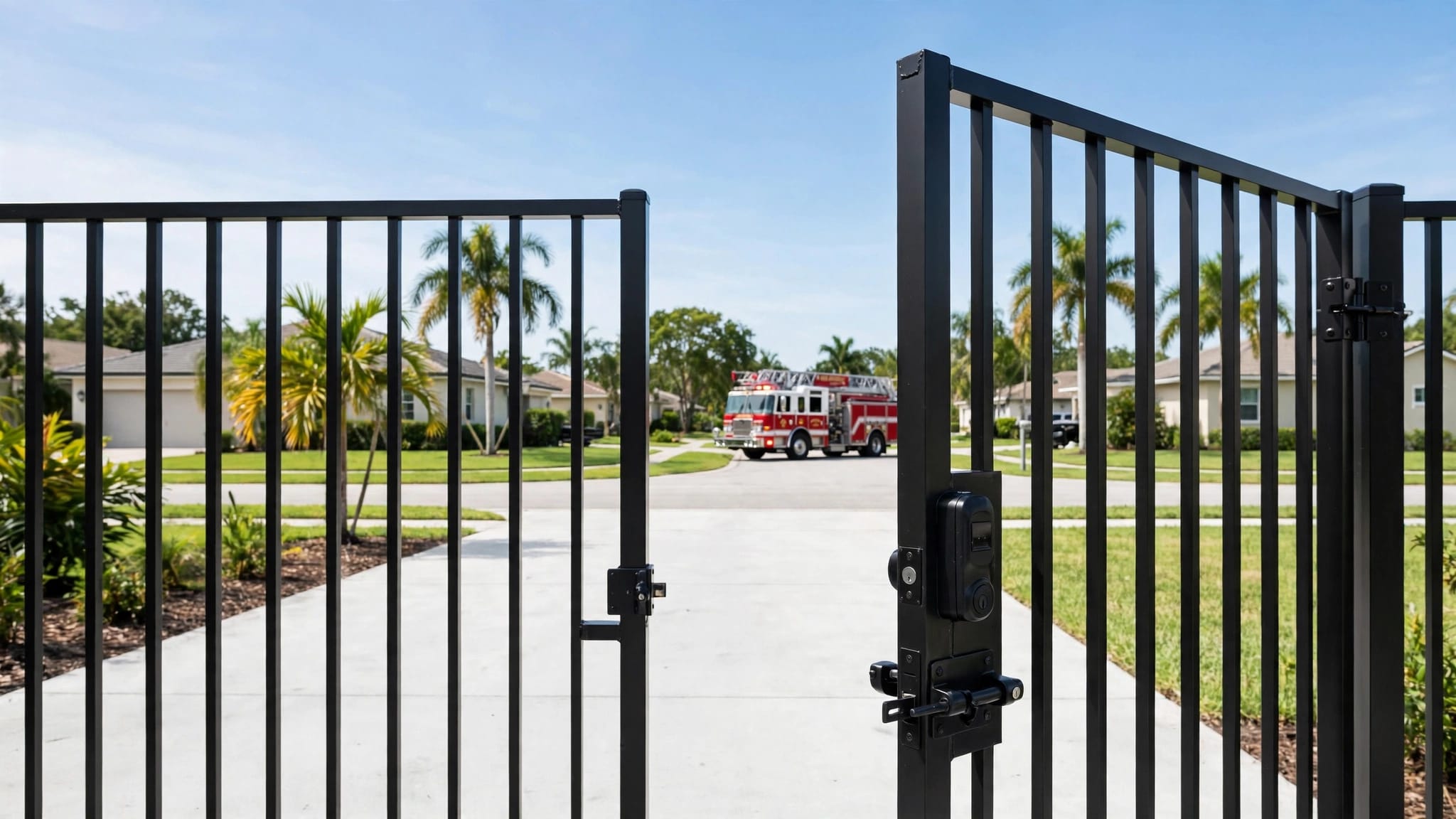
Gate details deserve extra attention. A contract that lists a "gate" without width or hardware leaves room for disagreement. Confirm whether the gate will include a drop rod, self-closing hinges, a lockable latch, or other features you need.
If you want a wood privacy fence, review the residential wood fence installation options and write the selected design into the agreement. Terms such as "standard wood fence" can mean different layouts, board spacing, and post treatments.
If a change affects the price, height, location, materials, or schedule, get a signed change order before the work continues.
Confirm property lines, permits, and local approvals
A contractor can build a straight fence in the wrong place. Property boundaries should never rely on a guess, an old fence, or a landscaping edge.
Before signing, ask how the fence line will be located. You may need a recent survey, a recorded plat, or other property information. The contract should state who is responsible for confirming the boundary and who pays for any required survey work.
Also check for easements. Drainage, utility, access, and canal areas can limit where a fence may go. A fence that blocks access or sits inside a utility easement may create problems later, even if the installation looks correct.
Permits and approvals vary across Southwest Florida. Confirm current requirements with all applicable parties:
- Your city or town building and zoning departments.
- The county, if the property is outside an incorporated municipality.
- Your HOA or condominium association.
- Utility providers and any agency responsible for drainage or canal access.
- The applicable authority for pool, corner-lot, visibility, or right-of-way rules.
Ask the contractor to state in writing who pulls the permit, who pays the fee, and who schedules required inspections. If the contractor provides a Florida license or registration number, verify the credential through the appropriate state or local authority. Request a current certificate of insurance from the insurance agent, not only a screenshot.
The contract should also explain what happens if an approval is denied or the proposed fence line must change. You don't want to discover those responsibilities after paying a nonrefundable deposit.
Review the price, payment terms, and schedule
A professional estimate should show the total project price and the work included in that number. It should identify sales tax, permit fees, demolition, disposal, delivery, gates, access charges, and other costs that apply.
Ask whether the price is fixed or based on an allowance. An allowance can change when you select a different material, hardware package, gate, or finish. The agreement should explain how those changes affect the final invoice.
Payment terms deserve the same attention. Look for:
- The deposit amount and the date it is due.
- Payment milestones tied to clear work stages.
- The amount due at completion.
- Accepted payment methods and any finance terms.
- The process for approved additions or substitutions.
- Any cancellation or refund conditions.
Avoid paying the full contract price before the work starts. A final payment should follow a walk-through, completion of agreed cleanup, and resolution of visible punch-list items. If the project involves a permit or inspection, ask whether the contract includes the steps needed to close that process.
Southwest Florida weather can affect outdoor work. Rain, lightning, high winds, saturated ground, and material delivery delays may change the schedule. The contract should provide an estimated start date, expected duration, and a reasonable process for weather or supply delays. It should also explain how either party receives schedule updates.
No contractor can promise that every installation will follow the original calendar. A useful agreement does state how delays are handled and prevents an open-ended schedule.
Check material specifications and warranty coverage
The fence material should be identified by more than a color name. Ask for the manufacturer, product line, thickness or grade when applicable, finish, and hardware type. Those details make it easier to compare estimates and resolve warranty questions.
Southwest Florida conditions can affect material choices. Strong sun, humidity, salt air near the coast, heavy rain, standing water, and lawn irrigation all deserve attention during planning. Ask how the selected posts, fasteners, hinges, and coatings fit the property.
Wood may need a maintenance plan, including expected staining, sealing, or repainting. Vinyl requires careful attention to product quality, post installation, and heat exposure. Aluminum and other metal fences need appropriate finishes and hardware for the location. Chain link estimates should identify the coating, mesh size, framework, and gate construction.
A warranty is only useful when the contract states what it covers. Confirm:
- The length of the workmanship warranty.
- The manufacturer's warranty for panels, boards, coating, or hardware.
- Whether labor is included in a manufacturer warranty claim.
- Exclusions for storms, impact, irrigation, animals, homeowner changes, or poor maintenance.
- The process for reporting a problem and requesting a repair.
Don't assume a material warranty covers installation. Those are often separate responsibilities. Keep the signed contract, final invoice, product information, permit records, and warranty documents together after the project ends.
Review the final contract before you sign
Read the agreement at home, not only on a phone screen in the driveway. Make sure the estimate, drawings, product selections, and promised extras match the final document.
Check that the contract includes a process for changes. A simple written change order should show the new work, added or reduced price, and schedule effect. Both parties should approve it before the contractor performs the changed work.
Clarify who owns leftover materials, who removes the old fence, and who repairs damage caused by hidden conditions. For example, buried concrete, unmarked irrigation, or an unexpected obstruction can affect labor. The contract should explain how the contractor will document and price that work.
Ask for lien-related documents when appropriate, including receipts or releases that show payment to involved parties. You can also ask what happens if you want to cancel before installation. Florida contract rules can vary, so consult a qualified attorney for legal advice about a specific agreement or dispute.
Before the crew arrives, save a copy of the signed contract and take dated photos of the yard, driveway, irrigation heads, landscaping, and existing fence. Those records help both sides identify pre-existing conditions.
Conclusion
A strong fence contract checklist covers the complete project, not only the material and price. Confirm the fence line, gates, approvals, utility concerns, payment schedule, weather terms, warranty, and cleanup responsibilities in writing.
Local requirements can change by municipality, county, HOA, and property type. Verify current rules before signing, then choose a contractor who answers questions clearly and documents the work. A careful contract gives your Southwest Florida fence a better start and gives you a clear record of what you paid for.