How to Fence Around a Backyard Shed in Florida
A backyard shed can make a Florida property more useful, but fencing around it takes careful planning. If you searched for "fence around shed Florida," you probably want privacy, safer storage, or a cleaner-looking yard without blocking the shed door.
Florida heat, heavy rain, termites, and high winds can expose weak planning quickly. Measure the site, confirm local rules, choose a suitable material, and leave enough room for maintenance before setting a single post.
Fence Around Shed Florida: Start With the Site Plan
Begin by locating the shed, property lines, gates, drainage paths, and any utility lines. A fence should improve the yard without trapping water against the shed or making repairs difficult.
Measure the shed's length and width, then mark the proposed fence line with stakes and string. Keep the layout simple when possible. Every corner adds a post, a footing, and another place where alignment can shift.
Leave a clear service area around the shed. You need space to open the doors fully, carry lawn equipment through the gate, clean the walls, inspect for termites, and repaint or repair the structure. Avoid placing the fence directly against the shed. The gap should match your access needs and local requirements rather than relying on a fixed shortcut.
Before digging, confirm whether the proposed line crosses an easement or sits near underground utilities. Pool equipment, electrical service, irrigation lines, septic components, and drainage features can affect the layout. A fence contractor can help identify site conflicts before installation begins.
Confirm Florida fence rules before construction
Setback, fence-height, permit, and placement rules vary by municipality, county, and HOA. Cape Coral requirements may differ from rules in Fort Myers, Sarasota, Port Charlotte, or another Southwest Florida community. Your property may also have deed restrictions that control materials, colors, gates, and visibility.
Contact the local building or zoning department before buying materials. Ask whether the project needs a permit, whether the shed changes the required setback, and whether corner-lot sight-distance rules apply. Your HOA may require written approval even when the city doesn't require a permit.
Property boundaries deserve the same care. A fence that crosses the line can create an expensive dispute. Florida property line rules for fences can help you understand when neighbor communication matters, but local officials and your survey documents control the project.
A fence can sit inside your property while still conflicting with an easement, drainage plan, or HOA restriction. Check all three before construction.
Choose a Fence Style That Fits the Shed
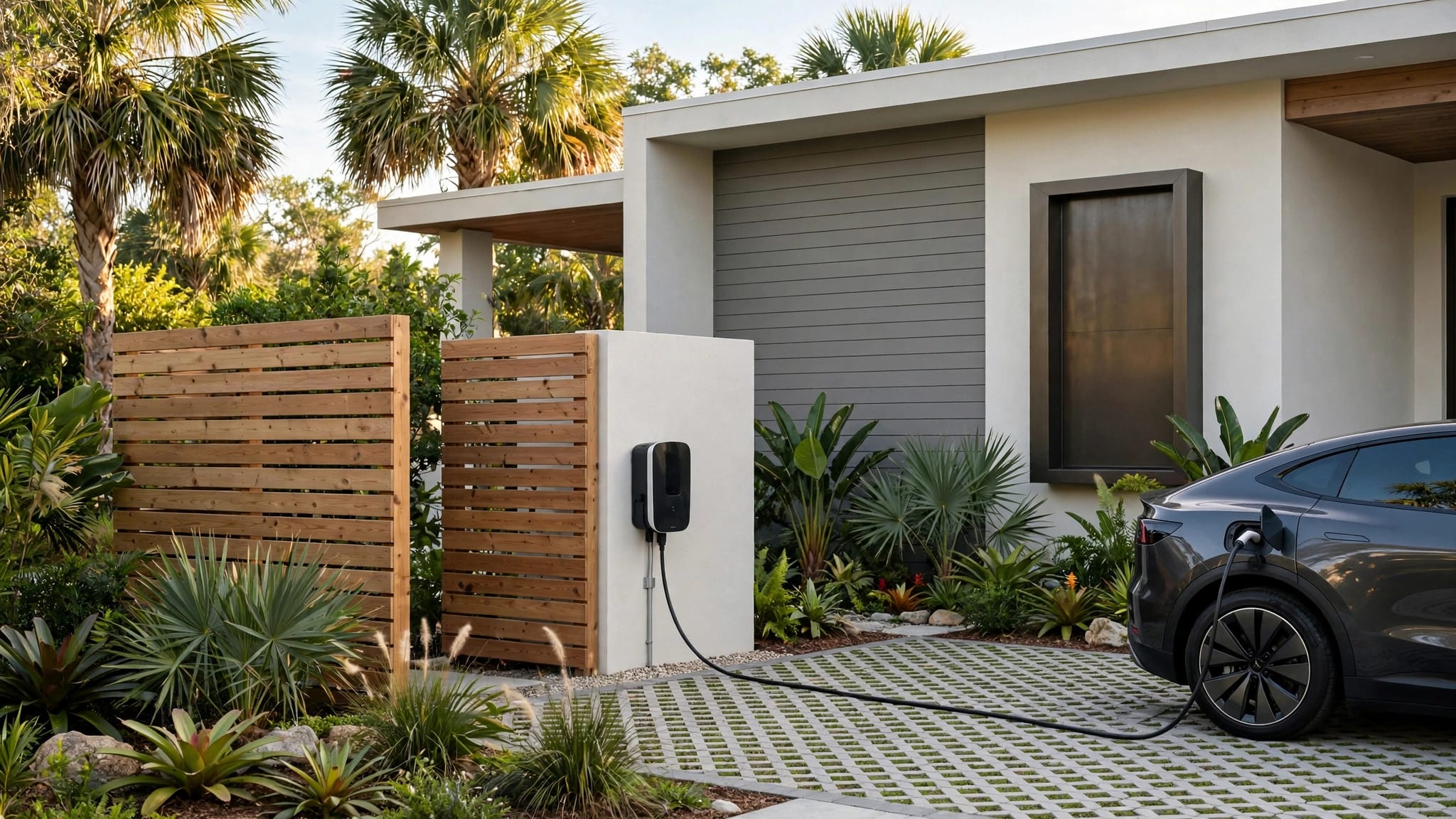
The right design depends on what you want the fence to do. A full privacy fence can hide tools, bins, and outdoor equipment. An open aluminum fence can define the area while preserving visibility and airflow. Chain link can create a practical barrier, while vinyl offers privacy with less routine painting.
Shed access should guide the gate location. Place the gate where you can move a mower, wheelbarrow, or replacement equipment without awkward turns. A narrow pedestrian gate may work for a small storage shed, but larger equipment needs a wider opening. Check the gate swing so it doesn't hit the shed, air-conditioning equipment, trees, or a walkway.
Consider the shed's roof overhang as well. Fence panels placed too close to the roofline can make gutter cleaning and wall repairs harder. If the fence runs near a window or vent, preserve access and avoid blocking needed airflow.
Material choice matters in Southwest Florida:
| Fence material | Good fit around a shed | Main planning concern |
|---|---|---|
| Vinyl | Privacy and low painting needs | Allow room for cleaning and inspect posts after storms |
| Aluminum | Open views and airflow | Provides less privacy for visible storage |
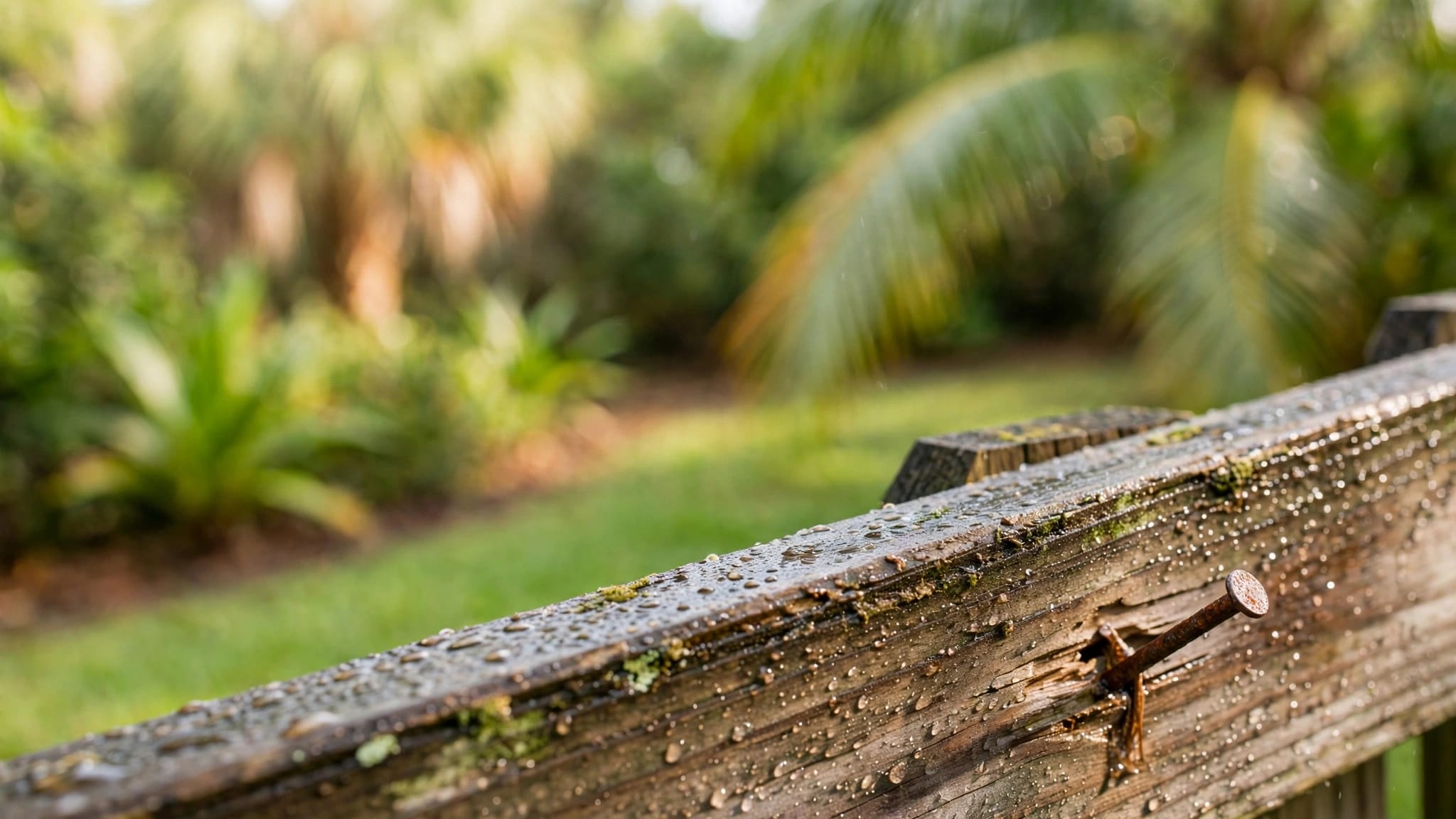
| Wood | Custom heights and traditional appearance | Needs regular inspection, sealing, and termite checks |
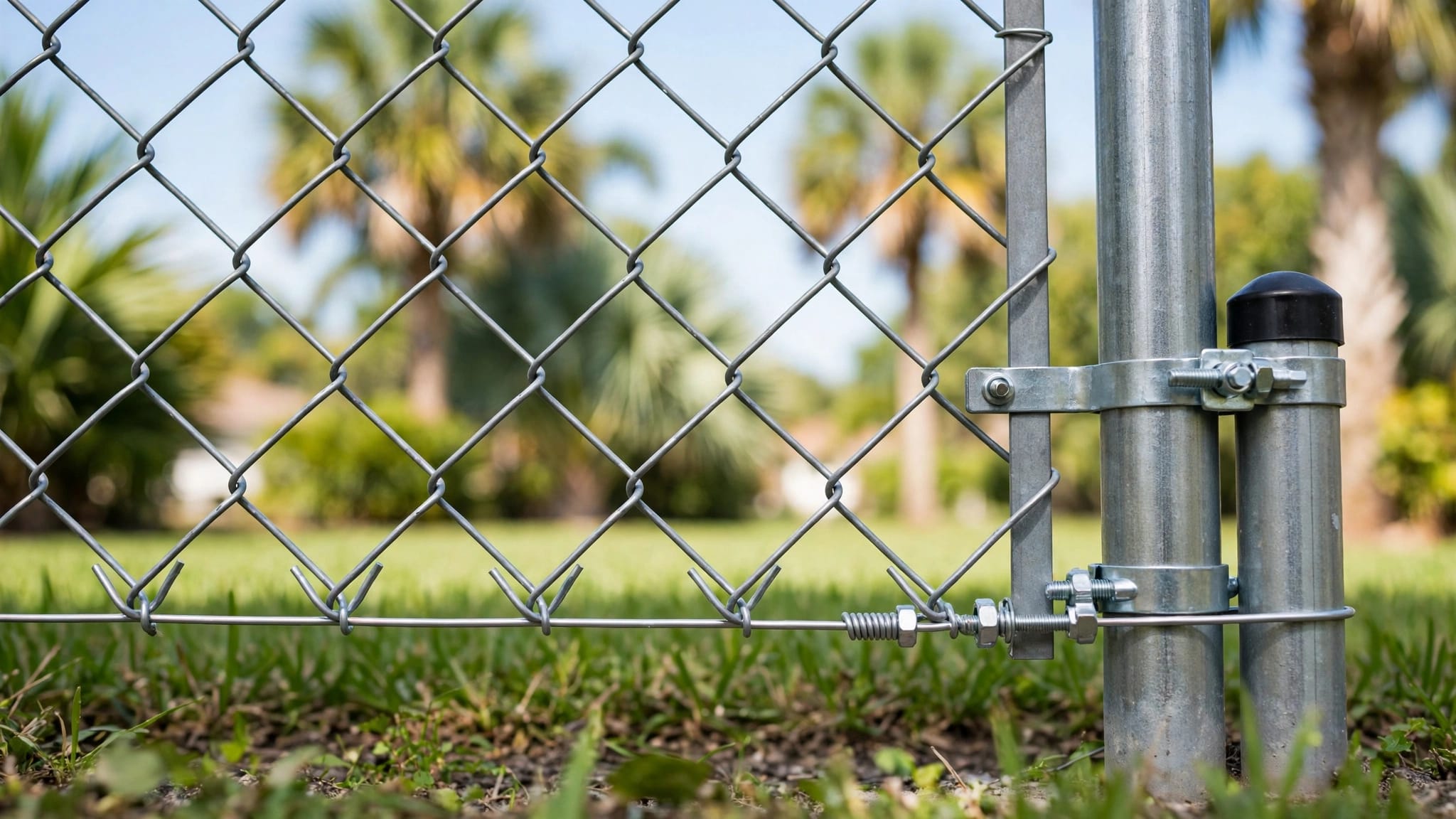
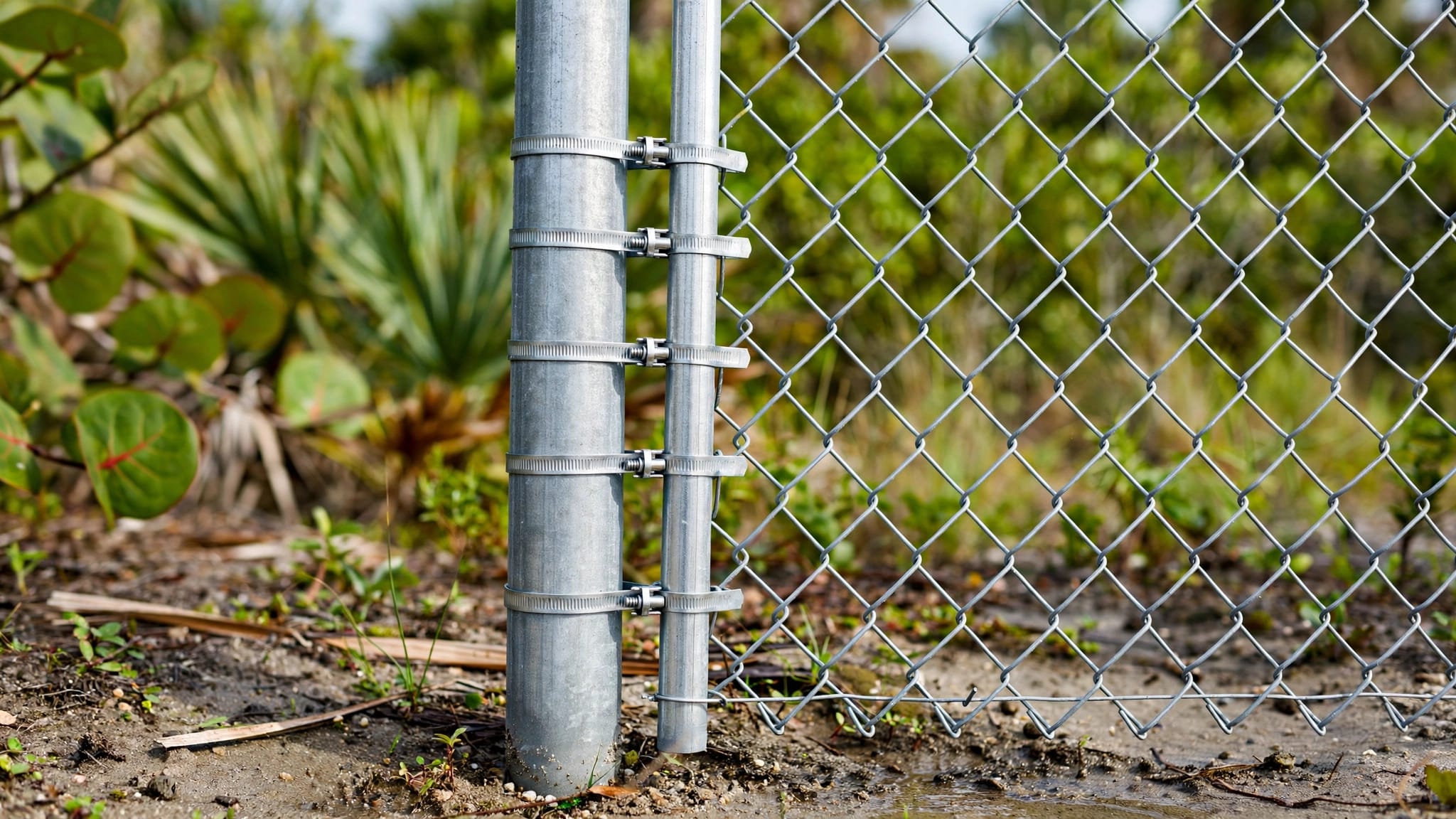
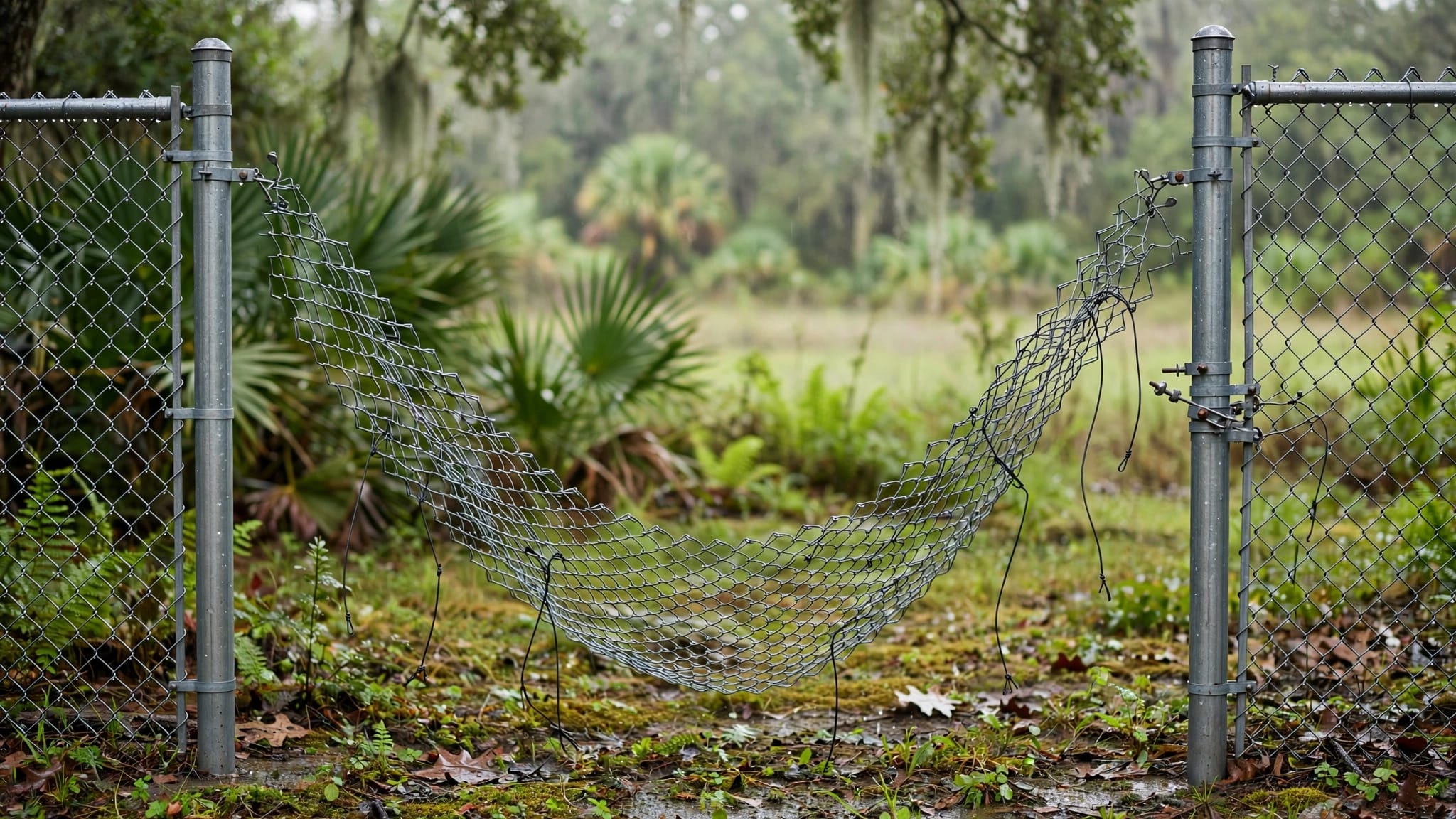
| Chain link | Practical enclosure and equipment access | Offers limited privacy unless paired with approved screening |
Salt air, standing water, and intense sun can shorten the life of poorly chosen materials. Homes near the Gulf or canals may need additional attention to corrosion-resistant hardware. Review this Cape Coral fence material comparison before selecting panels for your yard.
Don't attach the fence to the shed unless a qualified professional and the product specifications support that approach. Fence posts and shed walls move differently under wind and wet soil conditions. A separate fence line protects the shed's structure and makes future repairs easier.
How to Install a Fence Around a Shed
Once the design and approvals are settled, installation becomes easier to control. Mark each post location, gate opening, and corner before digging. Recheck the measurements against the shed doors and property line.
1. Prepare the ground
Clear weeds, loose debris, and branches from the fence path. Keep mature tree roots in mind, especially near established palms and large hardwoods. Never dig until you have addressed underground utility concerns.
Florida soil can hold water after heavy rain. Look for low spots and areas where roof runoff flows. If the fence line sits in a wet section, improve drainage without redirecting water toward a neighboring property or the shed foundation.
2. Set corner and gate posts first
Corners and gate posts control the rest of the fence. Set them carefully, then run string between them to establish a straight line. Check the string against the shed, walkways, and property markers before filling the holes.
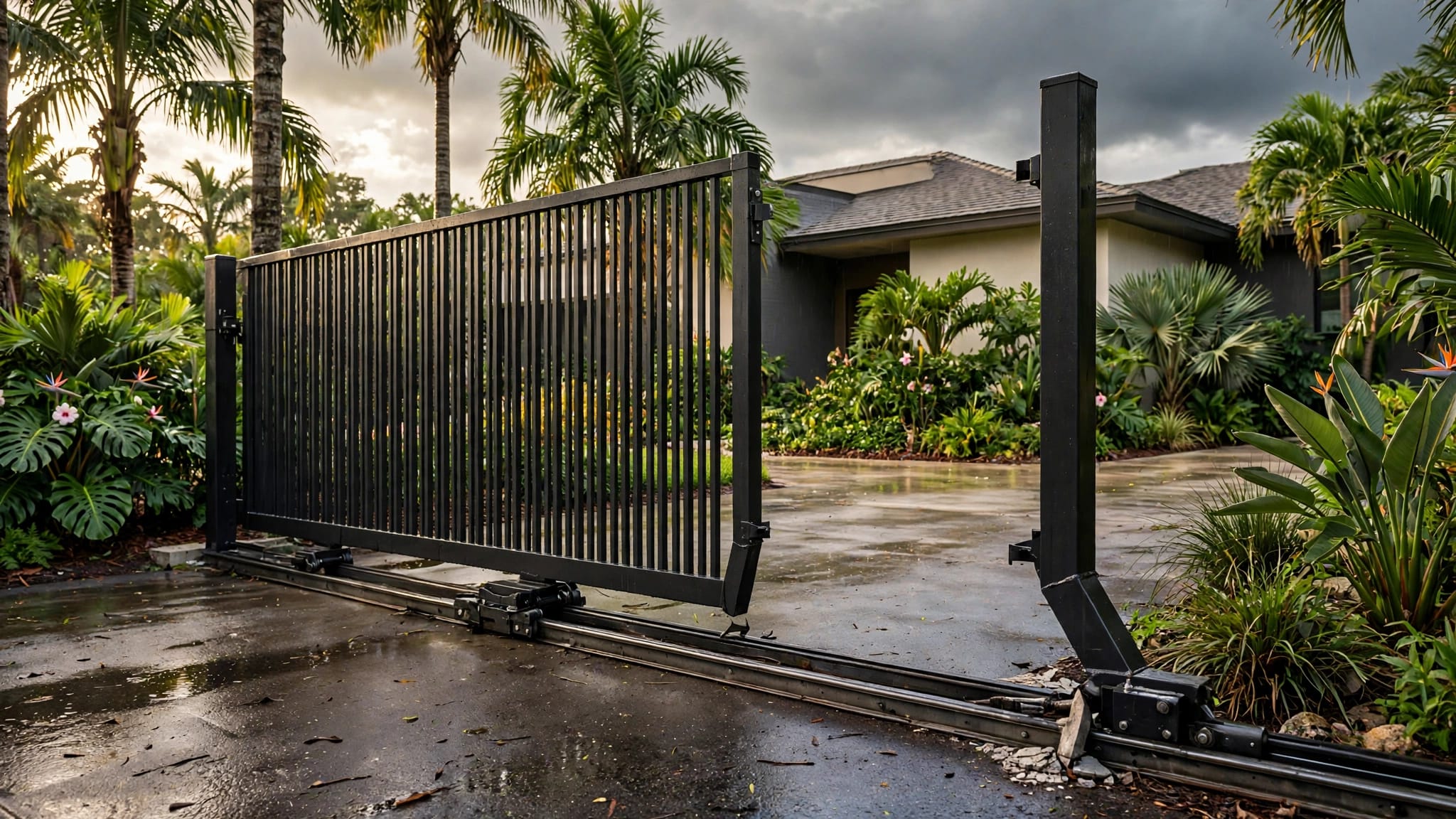
Gate posts carry more movement than standard line posts. Use the post size and footing method recommended for the gate and fence system. A sagging gate can quickly turn a convenient shed entrance into a daily frustration.
Concrete footings need time to cure according to the product instructions and site conditions. Keep rainwater out of fresh concrete, and don't hang a heavy gate before the posts have reached the required strength.
3. Install line posts and panels
Set line posts at the spacing required by the fence manufacturer and local conditions. Avoid choosing spacing only because it reduces material use. A long privacy panel creates more wind pressure than an open picket design, so the system needs proper posts, fasteners, and support.
Keep panels level while following the grade of the yard. A fence that follows a mild slope can look clean, but abrupt changes may leave gaps or force panels into the soil. Maintain enough clearance to prevent wet grass and mulch from staying against the material.
Use exterior-rated, corrosion-resistant hardware that matches the fence system. In coastal areas, ordinary fasteners can rust sooner than expected. Follow the manufacturer's installation requirements instead of mixing components that were never designed to work together.
4. Check the finished access
Open and close the gate several times. Push a mower or wheelbarrow through it if that's part of the shed's use. Confirm that the gate latch is reachable, the fence doesn't rub the shed, and the path remains usable after rain.
Walk the entire perimeter after installation. Look for sharp edges, loose caps, unstable posts, exposed concrete, and places where water pools. Trim vegetation away from the fence and keep stored materials from leaning against the panels.
Make the Enclosure Ready for Florida Weather
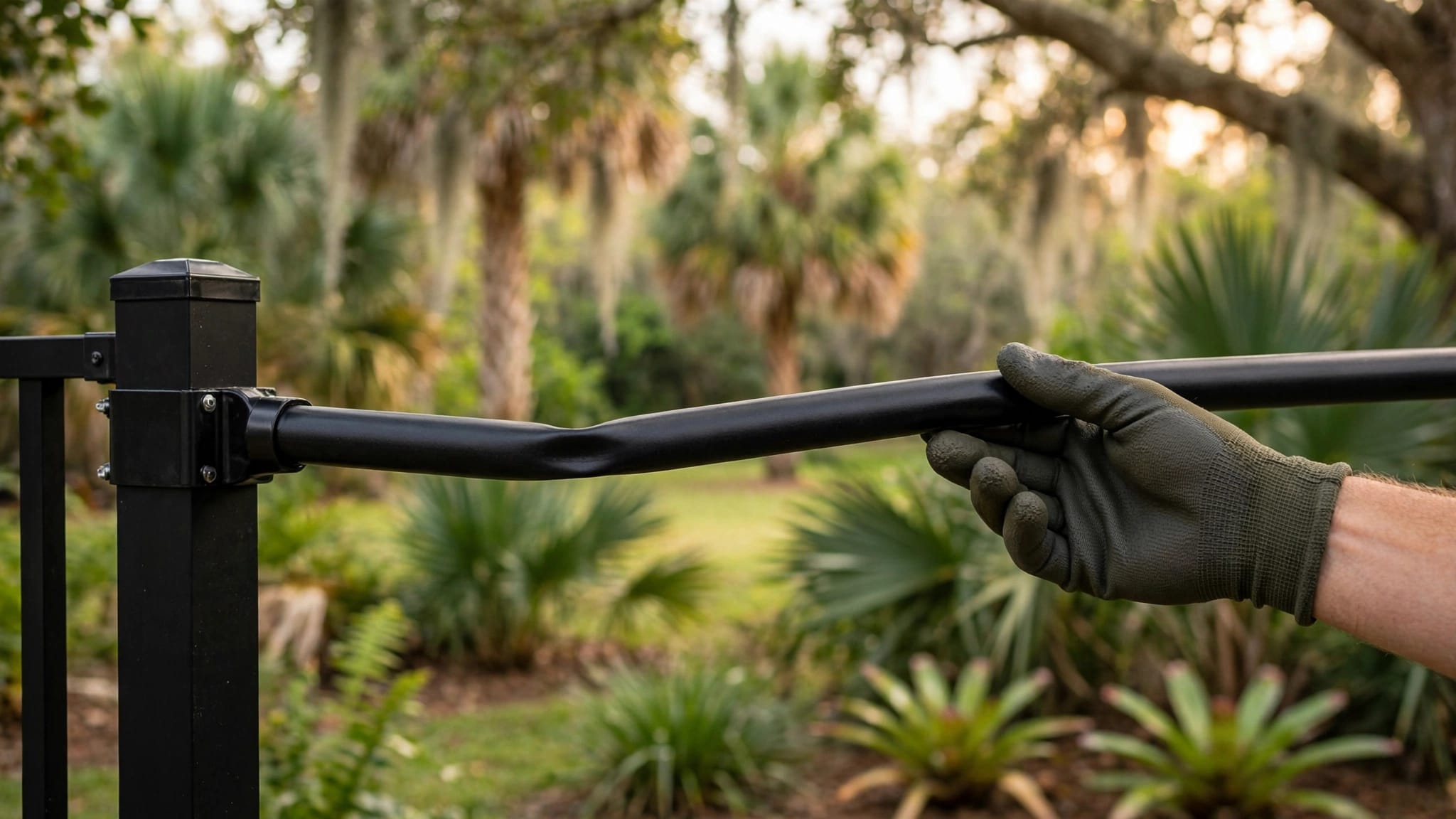
High winds deserve attention before the first storm. A solid privacy fence can catch more wind than an open design, especially when it sits beside a shed that already changes airflow. Use a complete system with compatible posts, rails, panels, fasteners, and gate hardware.
Don't rely on the shed to brace the fence. The fence needs its own posts and footings. Also, avoid placing loose items such as ladders, planters, or scrap boards in the narrow space between the structures. These objects can damage panels during a storm.
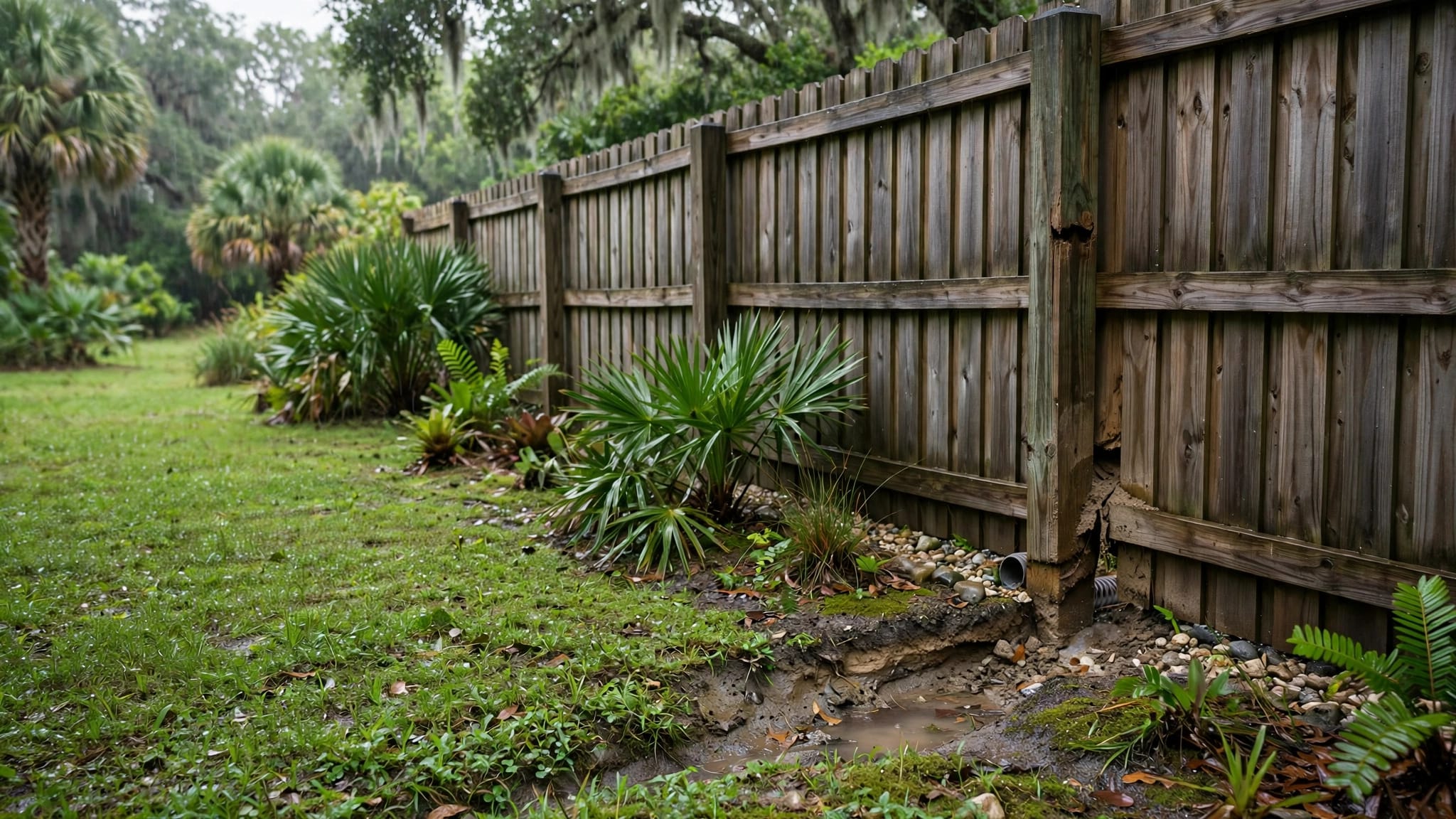
Heavy rain creates a different problem. Keep soil, mulch, and leaves from building up around posts. Standing moisture can weaken wood and contribute to corrosion around metal hardware. Clear roof runoff and inspect the fence after major storms.
Termites are a serious concern for wood fences and nearby wood structures. Keep the bottom of wood components away from persistent damp soil, repair damaged boards, and inspect the shed perimeter for mud tubes or soft wood. A pest professional should handle suspected termite activity.
Florida sun also affects finishes. Vinyl can become dirty or stained, wood can dry and weather, and painted metal can need periodic cleaning. Wash the fence with a suitable mild cleaner, rinse it well, and follow the material manufacturer's care instructions.
When to Hire a Florida Fence Contractor
DIY installation may fit a short, simple enclosure on level ground. A professional installation makes more sense when the property line is uncertain, the yard has drainage problems, the fence is near a pool, or the shed requires a wide equipment gate.
Professional help is also useful for sloped terrain, large privacy panels, coastal exposure, and high-wind areas. A contractor can check the layout, recommend compatible materials, coordinate permit questions, and install the gate so the enclosure remains functional.
Ask for a written estimate that identifies the fence material, height, gate size, removal work, site preparation, hardware, and any permit responsibilities. Confirm that the contractor is licensed and insured, then compare the plan rather than choosing from a bare price.
Conclusion
A well-planned fence around a backyard shed should protect access, support drainage, and hold up under Florida weather. Start with the property line and local rules, then choose a separate fence system with enough clearance for doors, inspections, and repairs.
For a fence around shed Florida homeowners can live with for years, the details matter more than the fastest installation. Proper spacing, strong gate posts, suitable hardware, and regular storm and termite inspections will keep the enclosure useful instead of turning it into another maintenance problem.