Should You Pull Your Own Fence Permit in Florida?
Pulling your own fence permit in Florida can save a fee, but it can also put every mistake on your shoulders. That matters here because fence rules are local, and what works in one city may fail in the next county over.
If your lot is simple and you're comfortable with surveys, forms, and follow-up inspections, DIY may work fine. If your yard has easements, HOA rules, corner-lot limits, or a pool, the risk climbs fast. The smarter choice depends on the property, the project, and how much hassle you want to own.
What pulling your own fence permit really means
When you pull the permit yourself, you become the applicant of record. In plain terms, that means the city or county deals with you, not a contractor, and you take responsibility for the permit packet, the layout, and the final result.
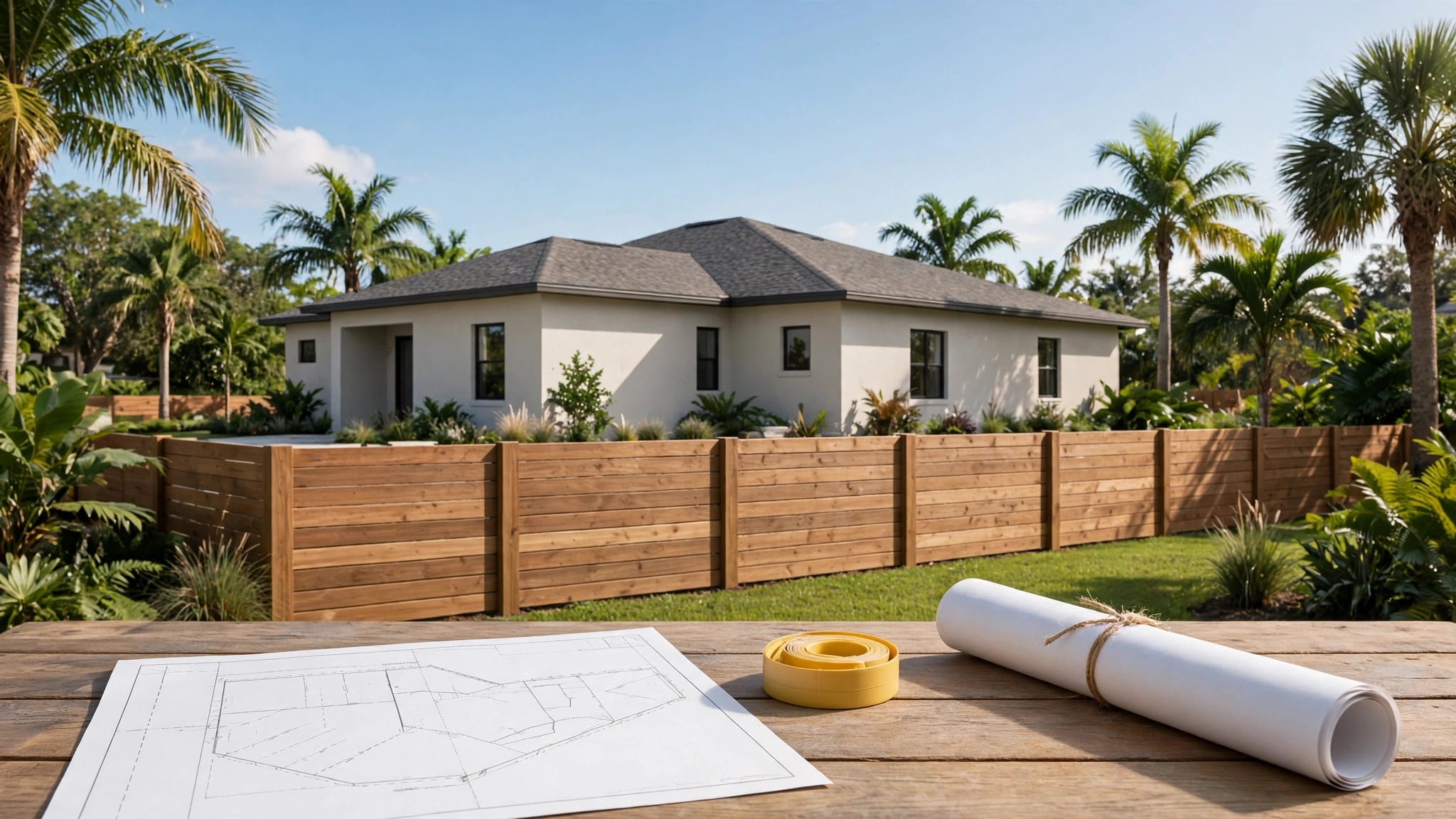
That responsibility can be manageable on a basic lot. It gets harder when the application needs a site plan, survey, fence height details, gate locations, or proof that the fence stays clear of utility easements. In Southwest Florida, those details matter a lot, because a fence that looks fine on paper can still get held up by placement or visibility rules.
For example, Lee County's Residential Fence Guide says a permit is required to install or replace a fence or wall. It also shows how local filing rules can be more detailed than homeowners expect.
If you live in Cape Coral, the Cape Coral fence permit checklist is a useful place to start. For unincorporated areas, Lee County fence permit rules are the better guide.
Where homeowners run into trouble
The biggest problems usually start before the first post goes in the ground. A fence can pass a permit review and still end up in the wrong spot if the survey is old, the pins are missing, or the property line was guessed instead of verified.
Setbacks and easements cause a lot of headaches. So do corner lots, canal lots, and front-yard fences, because visibility rules often change near streets and driveways. HOA approval is another separate layer. Even if the city allows the fence, the HOA may not like the style, height, or color.
Pool barriers are a special case. They often trigger separate safety rules and inspections, so they should never be treated like a standard backyard fence.
A permit approval does not settle a property line. It only says the paperwork matched the local review at that moment.
This is where many homeowners get stuck. They start with a fence idea, then discover they need a survey, a revised layout, or a different material. If you want to see how small filing errors turn into delays, take a look at these common Southwest Florida fence permit rejections.
The same issue can show up later. A fence that crosses an easement or blocks a required view can create problems when you sell the home, refinance, or file an insurance claim after storm damage. Paperwork that looked optional at the start can matter a lot later.
Pulling the permit yourself vs hiring a contractor
A licensed contractor does not erase your responsibility as a homeowner, but it usually shifts more of the permit burden away from you. That difference can save time, and sometimes it saves a project from becoming a long back-and-forth with the building department.
Here's a simple side-by-side view:
| Factor | Pulling your own permit | Hiring a licensed contractor |
|---|---|---|
| Paperwork | You gather forms, surveys, and site plans | The contractor usually handles the filing |
| Code compliance | You must check local rules and measurements | The contractor is expected to know the local code path |
| Inspections | You schedule and track them | The contractor often coordinates them |
| Property lines and easements | You confirm the fence location | The contractor still needs a correct survey, but can flag obvious issues |
| HOA approval | You handle the separate approval process | Many contractors can help you understand what the HOA needs |
| Selling or insurance later | You keep every record and receipt | A cleaner permit trail is often easier to show later |
The main advantage of DIY is control. You know exactly what was filed, and you may save some money up front. The downside is that every correction comes back to you, including setbacks, height mistakes, missing documents, and missed inspection windows.
Hiring a contractor usually costs more, but it can reduce the odds of a permit problem. That matters on tighter lots, with pools, or anywhere the fence touches a street-facing edge, drainage area, or easement.
Why Florida fence rules change by city and county
Florida does have a statewide building code, but fence permits are handled locally. That means the answer changes by municipality, county, lot type, and even neighborhood rules.
One city may allow a simple fence with a lighter review. Another may want a full permit, a survey, and a site plan. Some places treat front yards differently from backyards. Others add extra review for corner lots, historic districts, canal lots, or pool barriers. In other words, the permit question is local before it is anything else.
Local building departments also change forms and submittal steps over time. A rule that looked simple last year may now need a different application path. Even outside Southwest Florida, the process can vary a lot. The Orange County fence permit page is a good example of how application rules can differ from one county to another.
For Cape Coral homeowners, Cape Coral fence height rules can be just as important as the permit itself. Height, front-yard limits, and corner-lot visibility can change what you can build before you even pick a material.
The safest habit is simple. Check the local building department, then check your HOA, then check the survey. If any of those three disagree, stop and sort it out before you dig.
When it makes sense to handle it yourself
Pulling your own permit can make sense when the project is straightforward. A simple interior-lot fence, clear property lines, no easement issues, and a homeowner who's comfortable with paperwork can be a good fit for the owner-builder route.
It also works better when you have time to wait on reviews, respond to corrections, and schedule inspections. If you enjoy handling details and your local office is easy to work with, the DIY route may feel manageable.
A licensed fence contractor is usually the better move when the project has more moving parts. That includes corner lots, pool barriers, replacement fences, uncertain surveys, HOA-heavy neighborhoods, or any yard where a setback mistake would be expensive.
Insurance and resale are worth thinking about too. Buyers often want a clear paper trail. So do insurers after a loss. Missing permits can slow things down or raise questions that no homeowner wants to answer during a sale.
If you're in Southwest Florida and the fence sits near a line, a canal, or a street corner, the permit is only one part of the job. The layout, the survey, and the local code all have to line up.
Conclusion
You can pull your own fence permit in Florida, and in the right situation, it's a reasonable choice. The real question is whether you want to carry the full risk for code compliance, inspections, setbacks, easements, and HOA approval.
For simple projects, DIY can work. For anything close to a property line, corner lot, or pool area, a licensed contractor usually gives you a cleaner path with fewer surprises.
The best first step is the same either way, verify the current rules with your local building department before you start digging.