Arcadia Fence Permit Guide for 2026 Homeowners
A fence project can stall fast when the permit work is off by a little. In Arcadia, that means checking the rules before the first post goes in.
Arcadia is in DeSoto County, so fence permits usually run through the DeSoto County Building Division . The city code still controls fence height, placement, and design details, so both sides matter. As of May 2026, public materials do not show a major fence-rule change, but homeowners should still confirm the current requirements before they dig.
What Arcadia homeowners need to know before they file
Most residential fences need review before construction starts. Arcadia's land development code addresses fences, walls, berms, and hedges, and the county handles the permit process. That means your fence line, height, and location all matter, not just the material you pick.
For many homes, the starting point is simple. Front-yard fences are usually limited to about 4 feet. Backyard fences are usually allowed up to about 6 feet. Still, that can change with corner lots, pool barriers, easements, or other site conditions.
| Situation | What usually matters | What to confirm |
|---|---|---|
| Front-yard fence | Height and street visibility | Typical 4-foot limit and any setback rules |
| Backyard privacy fence | Height and property line distance | Typical 6-foot limit and exact fence location |
| Pool barrier | Safety hardware and inspection | Gate type, latch height, and pool code details |
| Corner lot | Traffic sight lines | Any visibility or corner clearance rule |
| Fence near easement | Utility access | Whether the fence stays out of the easement |
If your fence touches a boundary issue, the review gets more detailed. That is where many permit delays start.
A good survey saves more time than a cheap guess. Most fence problems begin with a bad line on paper.
How the Arcadia fence permit process usually works
The process is easier when you break it into small steps. It is more paperwork than mystery.
- Check your property survey first
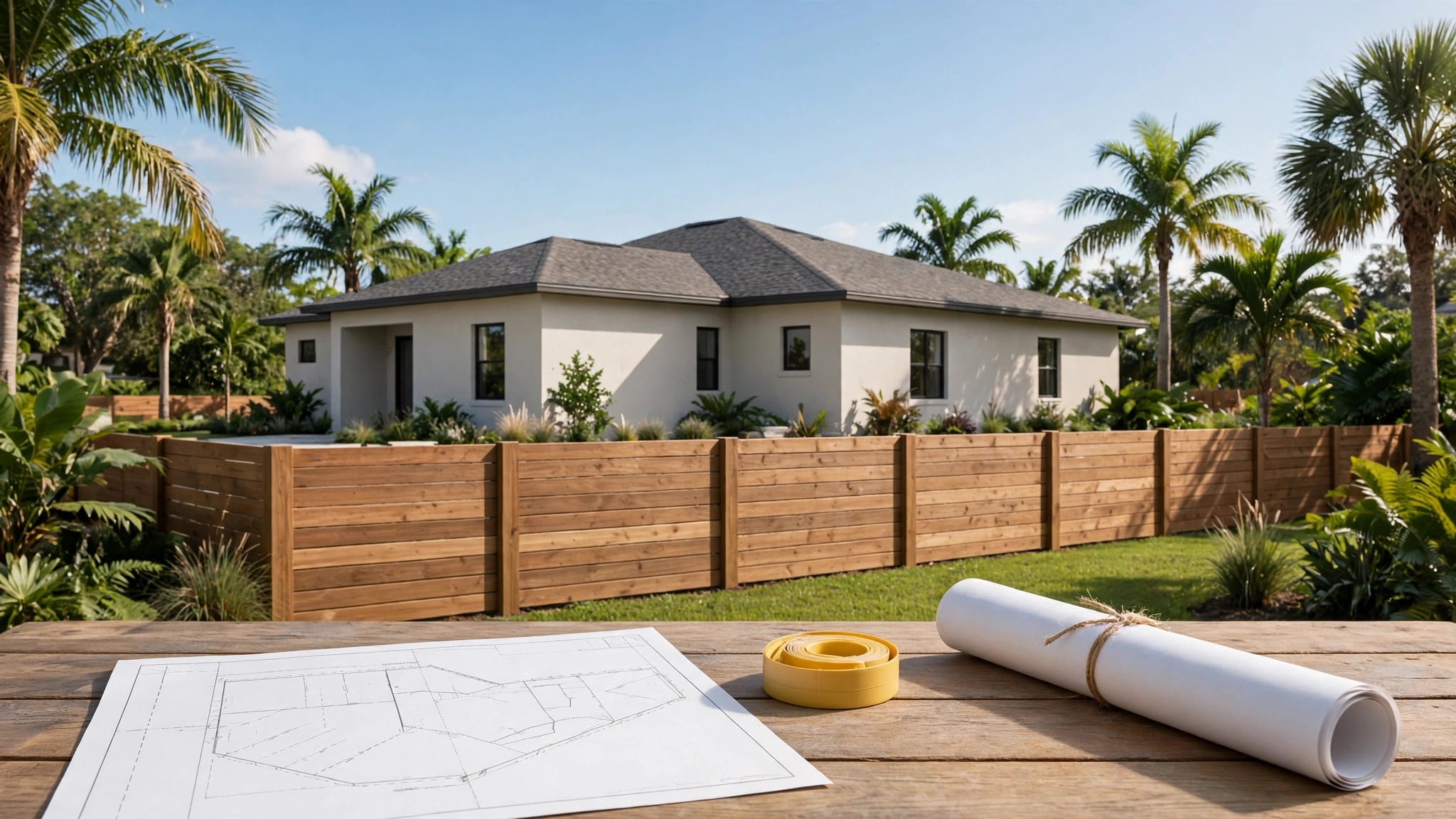
Use a current survey or plot plan. If you do not have one, get one before you draw the fence line. A fence that lands in the wrong place can turn into a costly fix. - Draw a simple site plan
Show the fence line, gates, height, materials, and nearby structures. If the fence wraps around a pool or crosses a side yard, mark that clearly. Clean drawings help reviewers move faster. - Submit the permit package to DeSoto County
The county's Building Division is the office that handles the permit. The office is at 201 E Oak Street, 2nd Floor, Suite 204, Arcadia, FL 34266. The phone number is 863-993-4811, and the email is building@desotobocc.com. - Wait for review and answer questions quickly
Review time can take a few days or a few weeks. It depends on workload and whether the plans need corrections. If staff asks for changes, send them back fast. - Pay the fee and wait for approval
Exact fee amounts were not listed in the public sources reviewed for 2026. Fees vary by fence type and project size, so confirm the amount before you file. - Schedule any required inspection after the fence is built
Do not start construction before approval. If your project needs an inspection, keep the permit and site plan handy.
The safest rule is simple, get approval first, then build.
Your Arcadia fence permit checklist
Before you submit anything, gather the basics. A complete packet is easier to approve.
- A current survey or plot plan
- A site drawing that shows the fence line
- Fence height, material, and gate details
- Property owner information
- Contractor license information, if you hired one
- Pool barrier notes, if the fence protects a pool
- Easement and setback notes
- Any HOA or deed restriction approval you need
If one of these pieces is missing, the file can stall. That delay usually costs more time than the document itself.
Common reasons fence permits get delayed
A lot of permit problems repeat across Southwest Florida, and Arcadia is no different. The same issues often show up in why fence permits get rejected in Southwest Florida.
The biggest slowdowns are usually practical, not dramatic:
- The fence line does not match the survey.
- The plan puts the fence in an easement or too close to a right-of-way.
- The height exceeds what the lot location allows.
- The site plan leaves out gates, materials, or pool details.
- The contractor information is incomplete.
- The homeowner starts work before approval.
A clean submittal is easier to approve than a rushed one. That is why the paper trail matters as much as the fence posts.
Why the contractor you hire matters
A fence contractor can either smooth the process or slow it down. The best ones know how local permits work, and they catch problems before the county does. If you want help picking the right installer, start with choosing a reliable fence contractor.
Ask direct questions before you sign anything. Who pulls the permit? Who checks the line? Who fixes the plan if the reviewer wants changes? A contractor who answers those questions clearly is usually easier to work with.
Price matters too, but the cheapest bid is not always the best one. When you compare estimates, ask what the quote includes, such as permit help, layout work, gates, inspection coordination, and cleanup. A low number can hide extra charges later. For a better breakdown, see comparing fence quotes.
A solid quote should make the job easier to follow, not harder to understand.
Getting the site ready after approval
Once the permit clears, get the yard ready before the crew arrives. That saves time and keeps the install close to the approved plan.
Move furniture, trim back heavy plants, and clear a path for materials. Mark sprinkler heads, decorative lighting, and anything else the crew should avoid. If your fence line runs near landscaping or a driveway, walk it with the contractor before the first hole is dug.
That is also a good time to review the practical prep steps in how to prepare your yard for fence installation day. A clean site makes the job smoother and keeps surprises down.
Final thoughts for Arcadia homeowners
A fence project goes better when the paperwork leads the way. In Arcadia, that means checking the survey, confirming the height rules, and filing a complete permit package before any work starts.
Fees and timelines can change, so confirm them with the DeSoto County Building Division before you buy materials or set a build date. If your lot has a corner, pool, easement, or HOA issue, give that part extra attention.
A fence that fits the code is easier to approve and easier to live with. The first hour spent checking details can save days later.
FAQ: Arcadia fence permits in 2026
Do I need a permit for a fence in Arcadia?
Most likely, yes. Arcadia fence work usually needs permit review through DeSoto County. Always confirm the current requirement before you start, especially if the fence is near a street, pool, or easement.
How tall can my fence be?
The typical starting point is 4 feet in the front yard and 6 feet in the backyard. That can change with lot type, corner visibility, pool barriers, or other local rules, so verify your exact property first.
How long does approval take, and how much does it cost?
Approval often takes a few days to a few weeks, depending on workload and corrections. Exact fees were not posted in the public sources reviewed for 2026, so ask the county before you submit.