St. James City Fence Permit Guide for 2026 Homeowners
A new fence seems simple until the permit question shows up. In St. James City, that question often depends on Lee County rules, your lot layout, and a few details that are easy to miss.
A backyard fence might pass with little trouble, while the same fence on a corner lot or near a flood zone may need review. If you're planning a project in 2026, start with the permit check before you pick up a shovel.
Who handles fence permits in St. James City?
St. James City homeowners usually deal with Lee County , not a separate city permit office. That matters because the right answer starts with the county, then moves to your HOA if you have one.
For a county-level reference, the Lee County fence permit requirements page is a useful place to compare the basics. Even so, your lot can change the answer fast.
A clean-looking fence on paper can still trigger review if the property sits near an easement, a flood area, or a shared access point. That is why homeowners should treat the permit question as part of the planning stage, not the last step.
If your neighborhood has an HOA, its rules can stack on top of county rules. You may need approval from both sides before work starts. In other words, a county okay does not automatically mean you are clear to build.
When a fence usually needs a permit in 2026
The easiest way to think about it is this, height and location matter as much as material. A simple residential fence under 6 feet may not need a permit in some cases, but special conditions can change that quickly.
Here is a practical way to sort the most common situations:
| Fence situation | Likely 2026 review status | What homeowners should do |
|---|---|---|
| Standard backyard fence, 6 feet or less, single-family lot | Often no permit, but confirm | Check the property line and ask before digging |
| Fence over 6 feet tall | Permit usually needed | Expect county review before installation |
| Pool or spa barrier | Permit usually needed | Confirm barrier rules before ordering materials |
| Corner lot, rear alley, or nearby easement | Extra review likely | Prepare a site plan with exact placement |
| Flood zone or floodway area | Extra review likely | Ask about flood-related limits early |
| Metal gate, powered gate, masonry, concrete, or block work | Permit may be needed | Verify design details before the job starts |
The table gives a general picture, not a final ruling. A fence can move from "maybe fine" to "needs review" because of one small detail. That is why a quick check saves more time than guessing.
A fence that looks ordinary can still need review if it crosses an easement, sits in a flood area, or includes a gate setup that changes the scope.
If your lot is near water, low ground, or shared access, pay even closer attention. St. James City homeowners often deal with those conditions, and they can change what the county wants to see.
Details that can change the answer fast
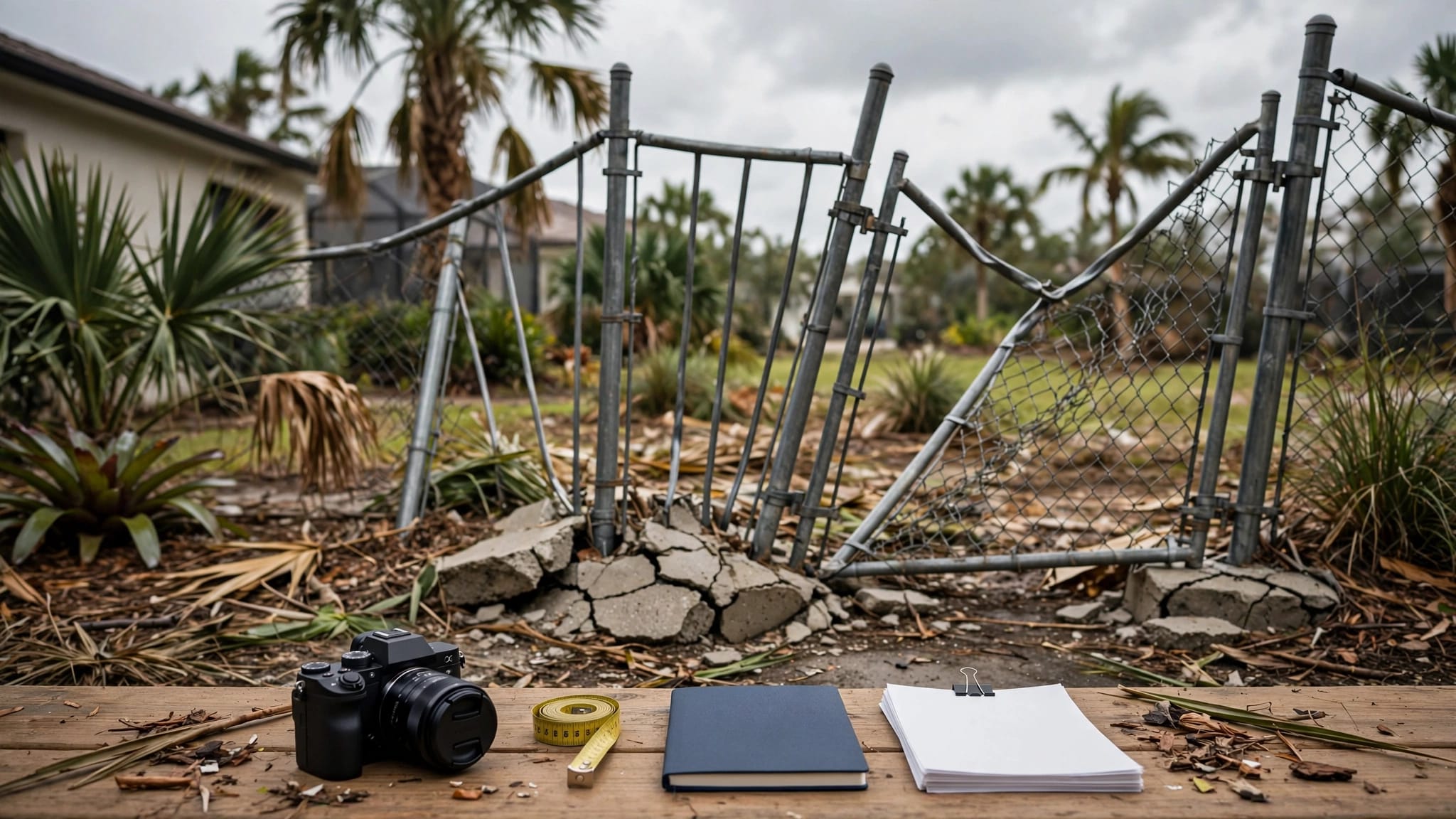
A survey is the best place to start. If you do not know where the property line sits, the fence plan can go off track before the first post hole gets dug.
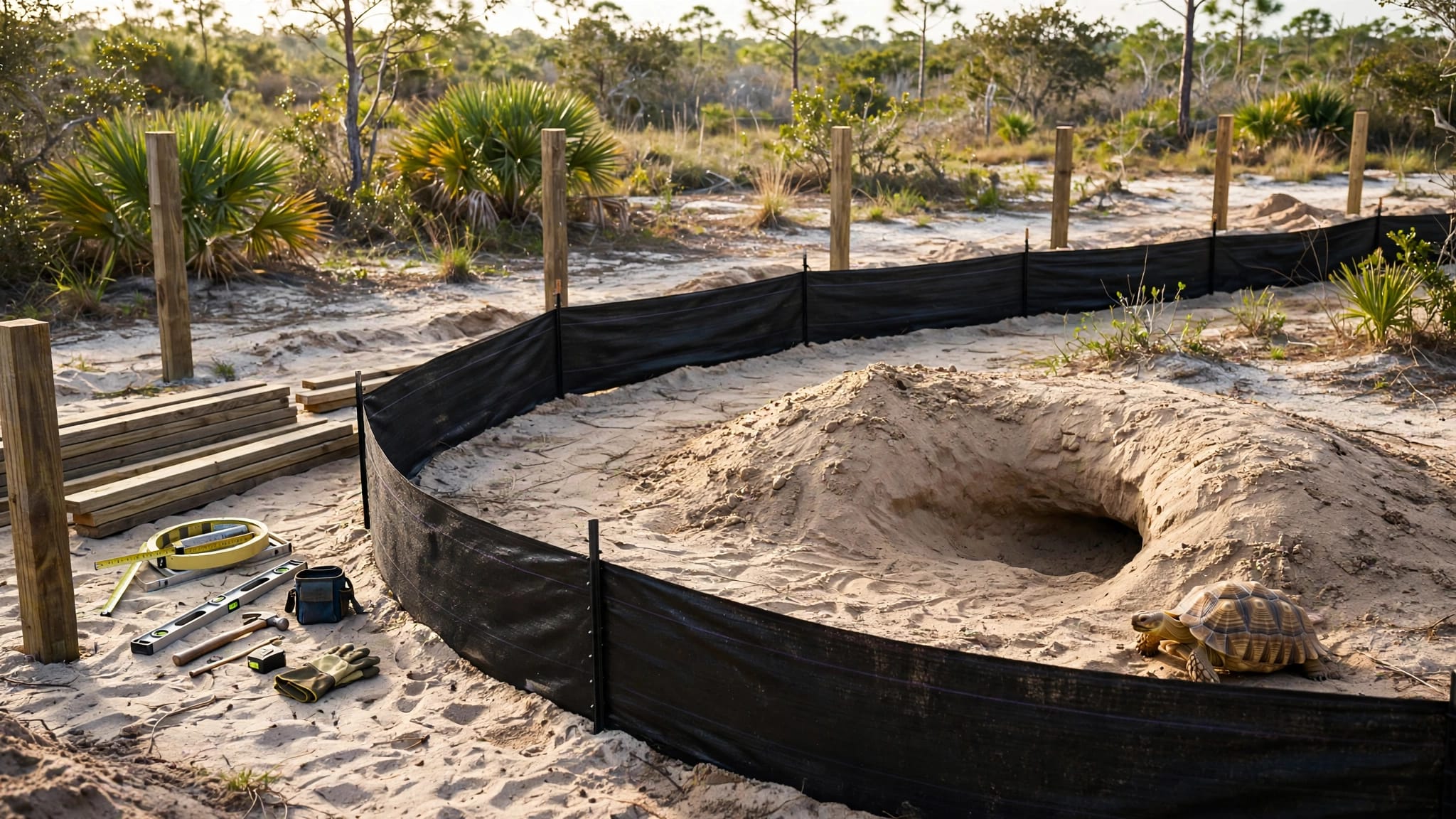
Easements matter too. Utility crews, drainage access, and rear lanes can all limit where a fence may go. A fence that sits in the wrong strip of land can create a headache later, even if the rest of the project looks fine.
Floodplain and floodway rules are another reason to slow down. A lot near water may need extra review, especially if the fence design affects drainage or access. Because local flood and coastal rules can change, homeowners should confirm current 2026 requirements with Lee County before building.
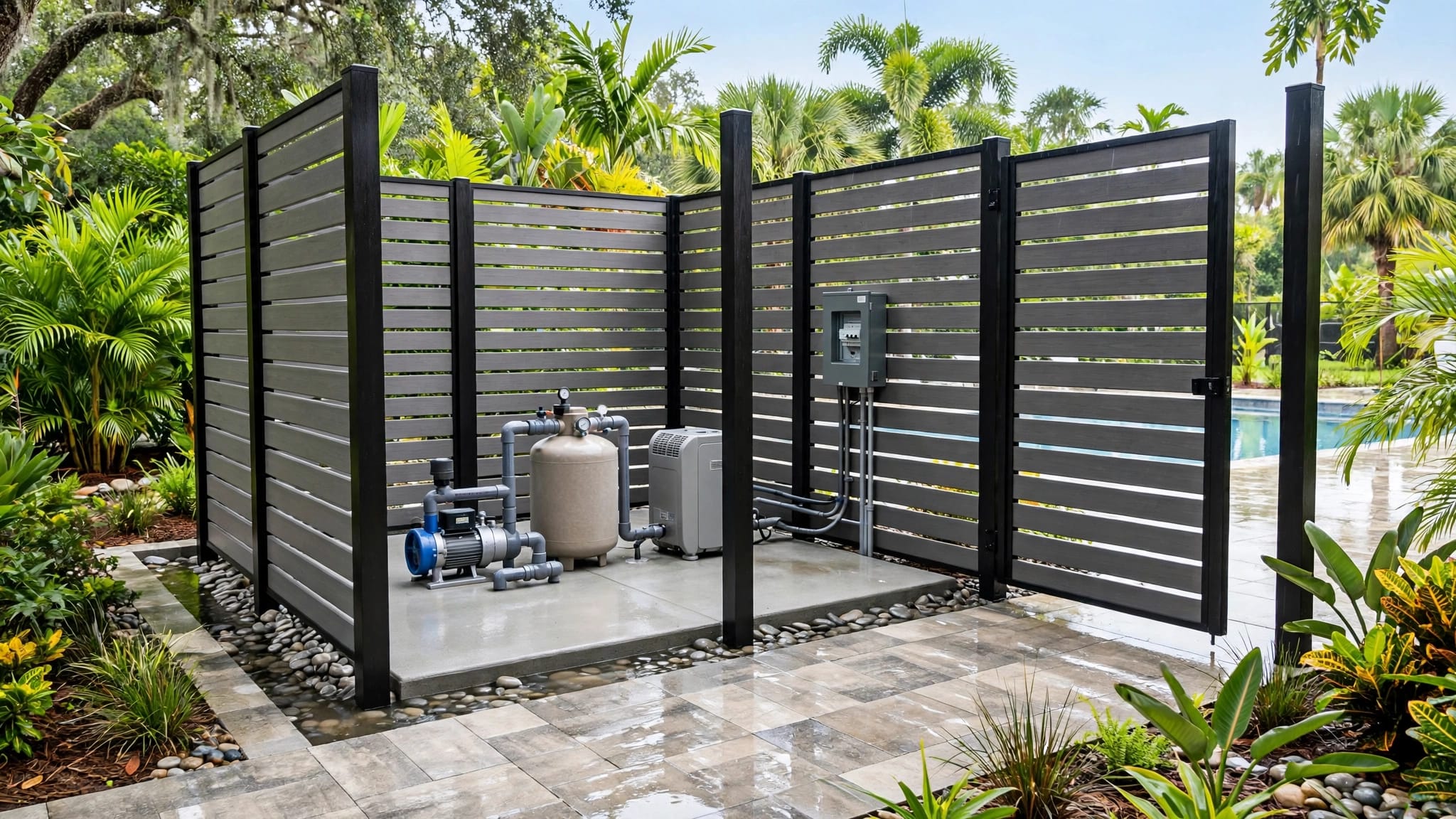
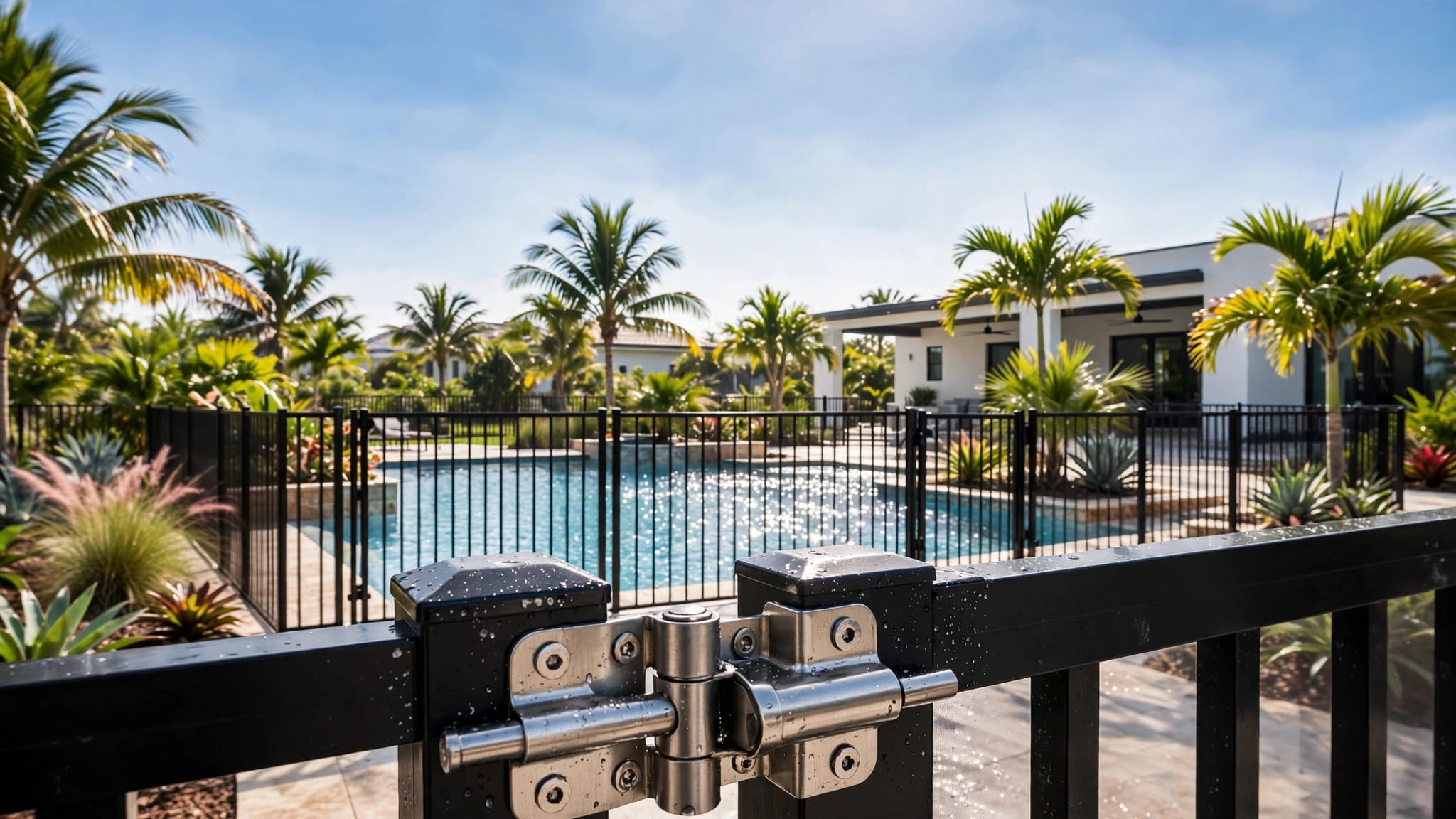
Pool and spa barriers need extra care as well. These fences are not just privacy lines, they also serve a safety purpose. That often means stricter review and more detail on the plan.
Corner lots and rear alleys can be tricky. Visibility, access, and setback rules may all come into play. The same is true for fences that connect to gates, masonry sections, or powered entry systems.
What to gather before you call the county
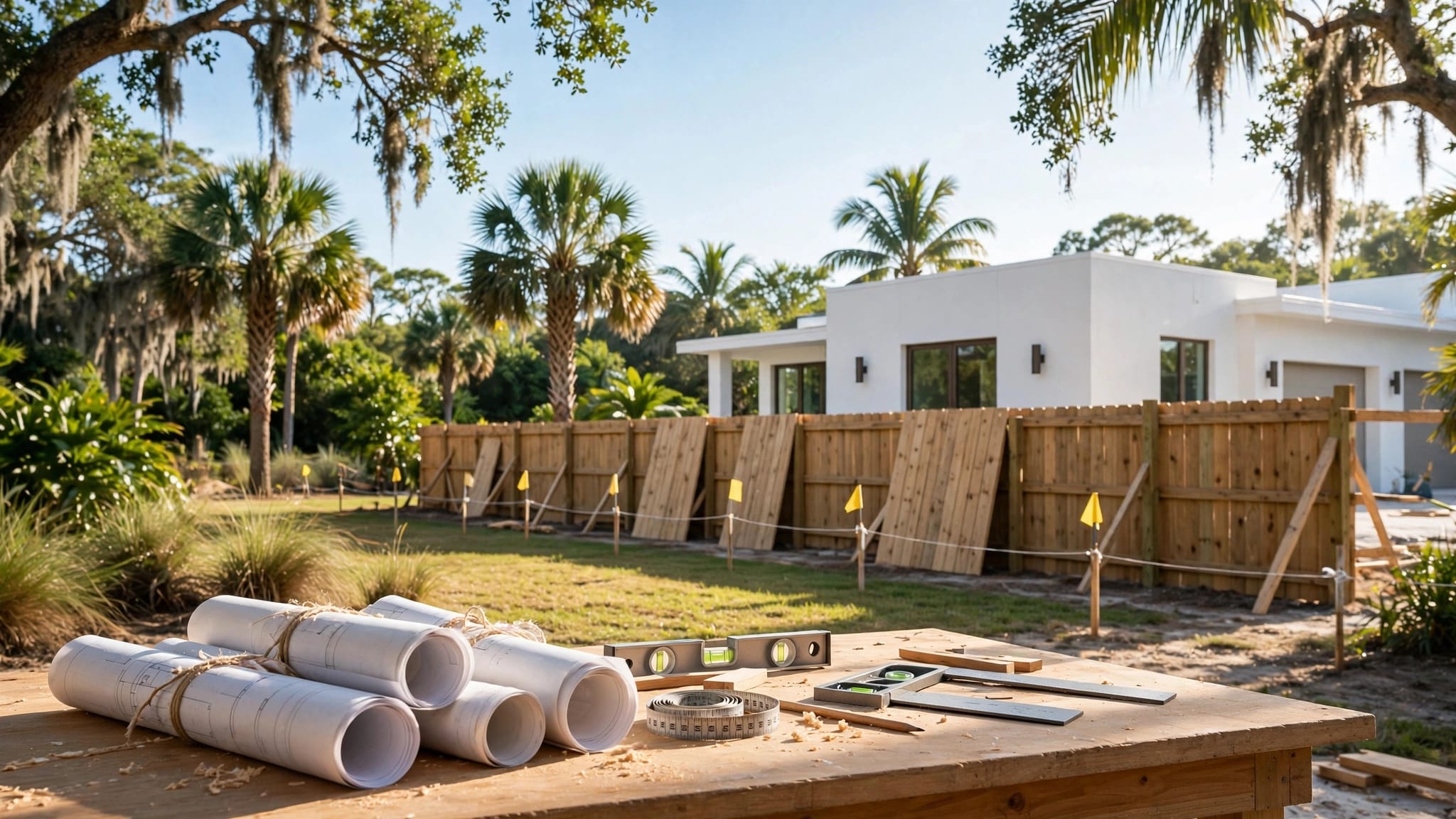
A little prep goes a long way. If you have the right papers and measurements ready, the permit conversation gets much easier.
- Find your property survey.
Use the most current copy you have. If the survey is old or missing, ask how to get a fresh one. - Mark the fence line on the survey.
Show the proposed path, gate locations, and fence height. Clear drawings cut down on back-and-forth. - Note any easements or drainage areas.
If utility lines, ditches, or access strips are nearby, highlight them right away. - Check HOA rules, if they apply.
HOA approval can take time, so handle it before installation day gets close. - Ask Lee County about the current 2026 process.
Confirm whether your project needs a permit, an exemption review, or another type of approval. - Keep the details simple and complete.
Material, height, location, and gate type are usually the first things staff want to know.
If you work with a fence contractor, ask them to walk through the same checklist with you. A good installer should want the survey, the height, and the lot details before giving a final plan.
Picking a fence that fits the lot and the rules
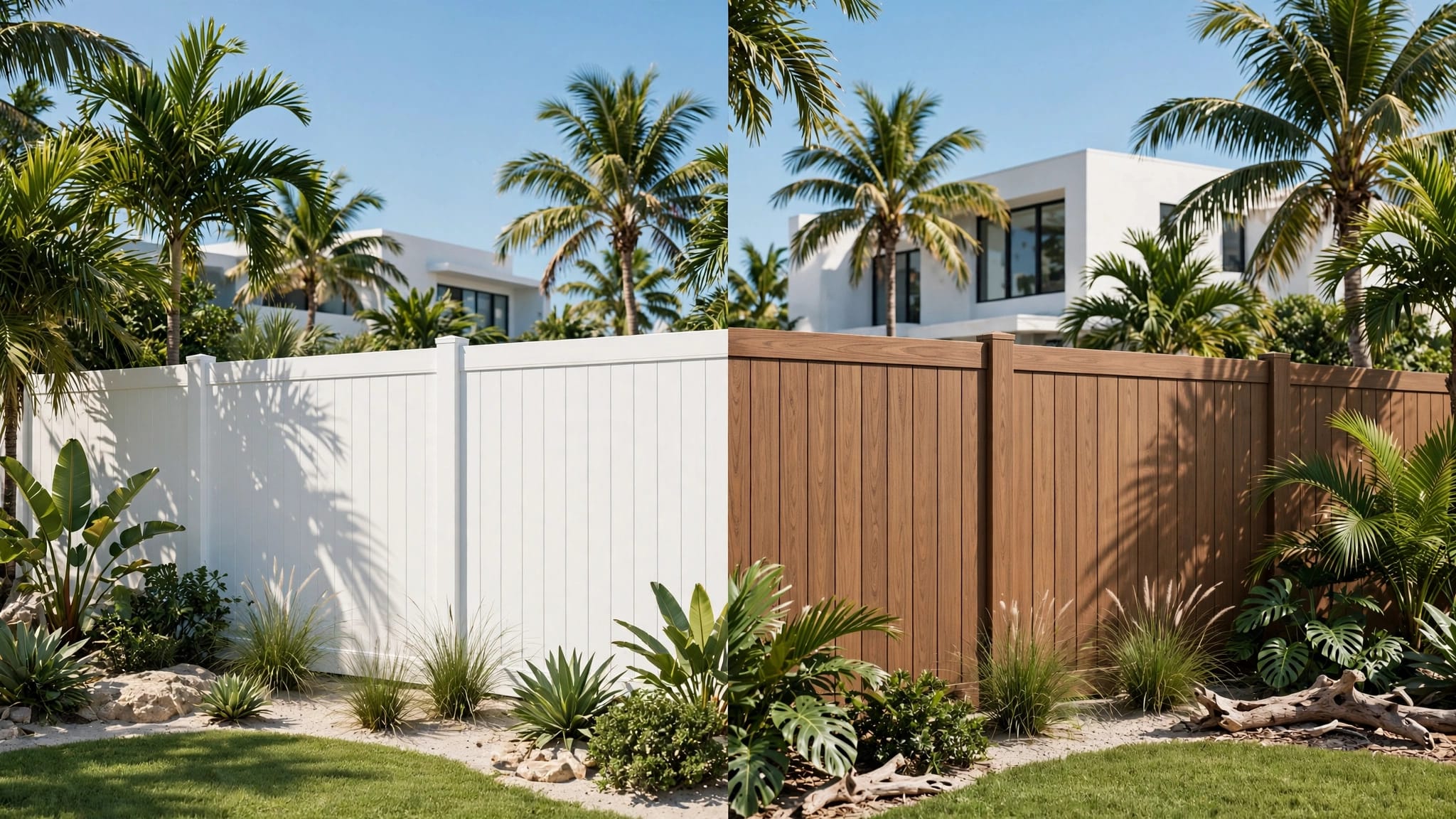
Most homeowners think first about style, and that makes sense. Vinyl, wood, chain link, aluminum, and metal all have a place in Southwest Florida. Still, the design has to work with the lot before it can work with the look of the home.
Material alone does not always decide the permit question. A fence's height, gate setup, and location often matter more. A basic privacy fence may be fine in one yard and flagged in another because the lot sits near an easement or flood area.
Metal gates and powered gates deserve special attention. So do masonry, concrete, and block sections. Those features can change the scope of the project and may push it into permit territory.
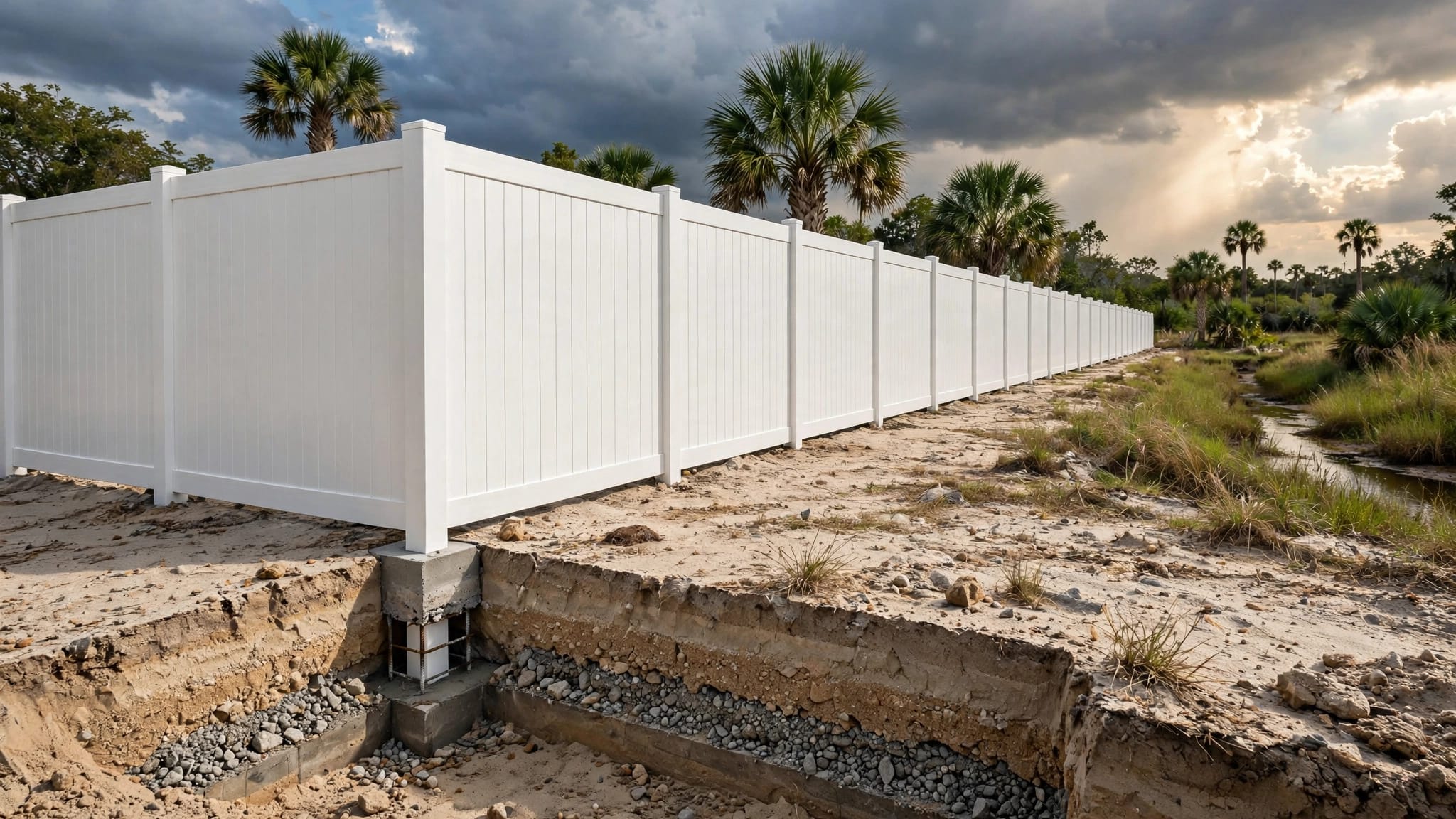
Coastal weather also deserves a seat at the table. Salt air, sun, and wind can wear on hardware faster than many homeowners expect. Because of that, it helps to choose materials and fasteners that fit local conditions, not just the catalog photo.
A contractor who works in Southwest Florida should talk through those details before the first post goes in. The right questions are simple: Where is the line? How tall is the fence? Does the lot have a flood concern? Is there a gate, a wall tie-in, or an HOA rule to check? Those answers shape the project long before the digging starts.
Final thoughts
A St. James City fence permit question starts with the lot, then moves to the design. Height, easements, flood areas, pools, and gates can all change the answer.
That is why the safest move in 2026 is to confirm current Lee County rules before you build. A few minutes of checking can save you from moving posts, changing plans, or waiting on a correction later.
If the fence is simple, the path may be straightforward. If the lot has extra conditions, treat the permit review as part of the job, not an obstacle to it.