Florida Historic District Fence Rules Explained
A fence that meets ordinary zoning rules can still be rejected in a Florida historic district. Local preservation boards often review the fence's height, materials, placement, visibility, and relationship to the historic home.
That means historic district fence rules involve more than choosing a style and applying for a building permit. Requirements vary by city, county, and individual historic district, so Southwest Florida homeowners should confirm current requirements before buying materials or scheduling installation.
Key Takeaways
- Historic districts commonly require a Certificate of Appropriateness, certificate of review, or similar approval before fence work begins.
- Rules often focus on front-yard placement, street visibility, height, materials, and compatibility with nearby historic buildings.
- Vinyl, plastic, chain-link, and unpainted wood may be restricted in some districts, but no single rule applies across Florida.
- A building permit and historic approval are separate requirements. You may need both.
- Always verify the current rules with your local historic preservation office and permitting department.
What historic district fence rules can control
Florida doesn't have one statewide fence standard for every historic neighborhood. Cities and counties write their own zoning and preservation regulations. A local historic district may also have design guidelines that are stricter than ordinary residential zoning.
The district's boundaries matter first. A property inside a locally designated district may follow different rules from a home a few blocks away. A city historic district can also have different requirements from a county-designated area, even when both are in the same region.
Historic review usually covers the parts of a fence that affect the public streetscape. Common review points include:
- Fence height and openness
- Distance from the front property line
- Setbacks from the building and sidewalk
- Visibility from public rights-of-way
- Materials, colors, posts, rails, and gates
- Removal of original fencing
- Compatibility with the home's architectural period
A preservation office may approve a simple repair through staff review. A new front fence, tall privacy fence, masonry wall, or removal of an original feature may require a board hearing.
Fort Myers provides a useful Southwest Florida example. Its historic preservation guidelines identify fencing as an important part of a property's historic character. Front and street-side fencing generally requires a certificate of review, while interior side and rear fencing under 6 feet may qualify for an exemption under the guidelines. The exemption still depends on current city requirements and the property's designation.
A rear-yard fence can have more flexibility than a front fence, but location alone doesn't guarantee approval.
The safest approach is to identify the property's exact jurisdiction and historic designation before discussing fence styles. A contractor can measure the yard, but only the local authority can confirm which approval path applies.
Materials and designs may face extra limits
Historic districts don't always ban modern fencing. They usually ask whether the proposed material and design fit the property's historic setting.
For example, Tampa's Hyde Park Historic District guidance calls for compatible style, texture, and exterior materials. It does not permit unpainted wood fences or chain-link fencing in the district. Ornamental iron may be appropriate when it fits the building's design. The guidance also says original fences should be maintained or restored with original materials and construction methods when possible.
Other cities use different standards. Orlando does not permit plastic or vinyl fences in historic districts. West Palm Beach allows wood and aluminum fencing when the design meets height and setback rules, but its historic preservation FAQ also restricts vinyl and generally limits chain-link unless landscaping screens it from view.
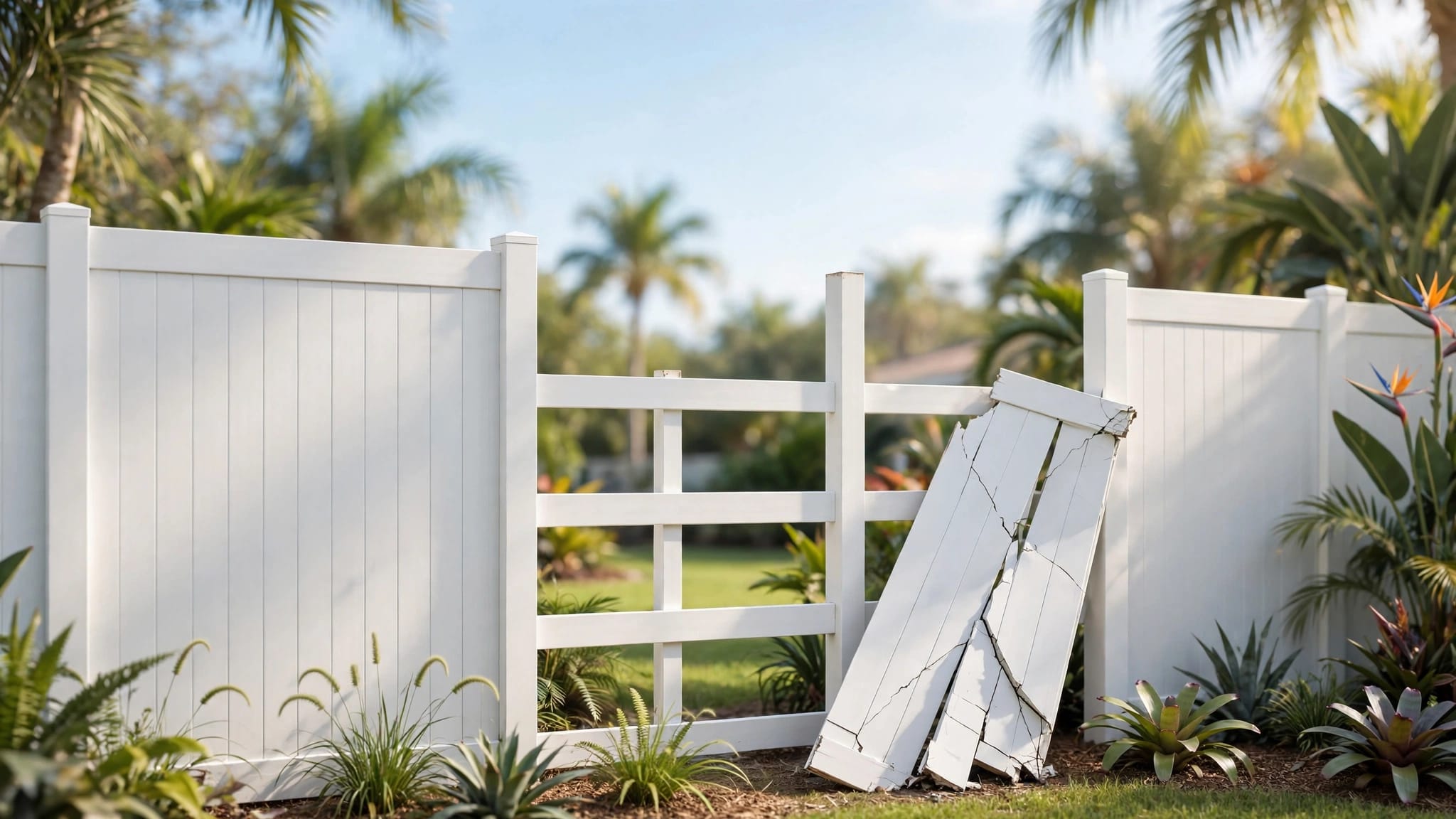
These examples show why online photos of an approved fence can be misleading. A black aluminum fence accepted in one district may not meet another district's standards. A vinyl privacy fence permitted by a city's general zoning code may still fail a historic review.
Material choice affects more than appearance. Historic reviewers may consider:
- Whether the fence is solid or see-through
- Whether the finish looks too modern
- Whether posts and gates match the fence
- Whether the fence hides architectural details
- Whether the proposed color fits the home
- Whether the material can withstand Florida weather
Wood picket fencing may work well for some older homes, but the district may specify picket spacing, rail placement, paint, or stain. Coral Gables, for example, has detailed standards for certain residential wood picket fences, including acceptable wood species, dimensions, height, and paint requirements. Historic reconstruction can receive different treatment when it recreates a documented original fence.
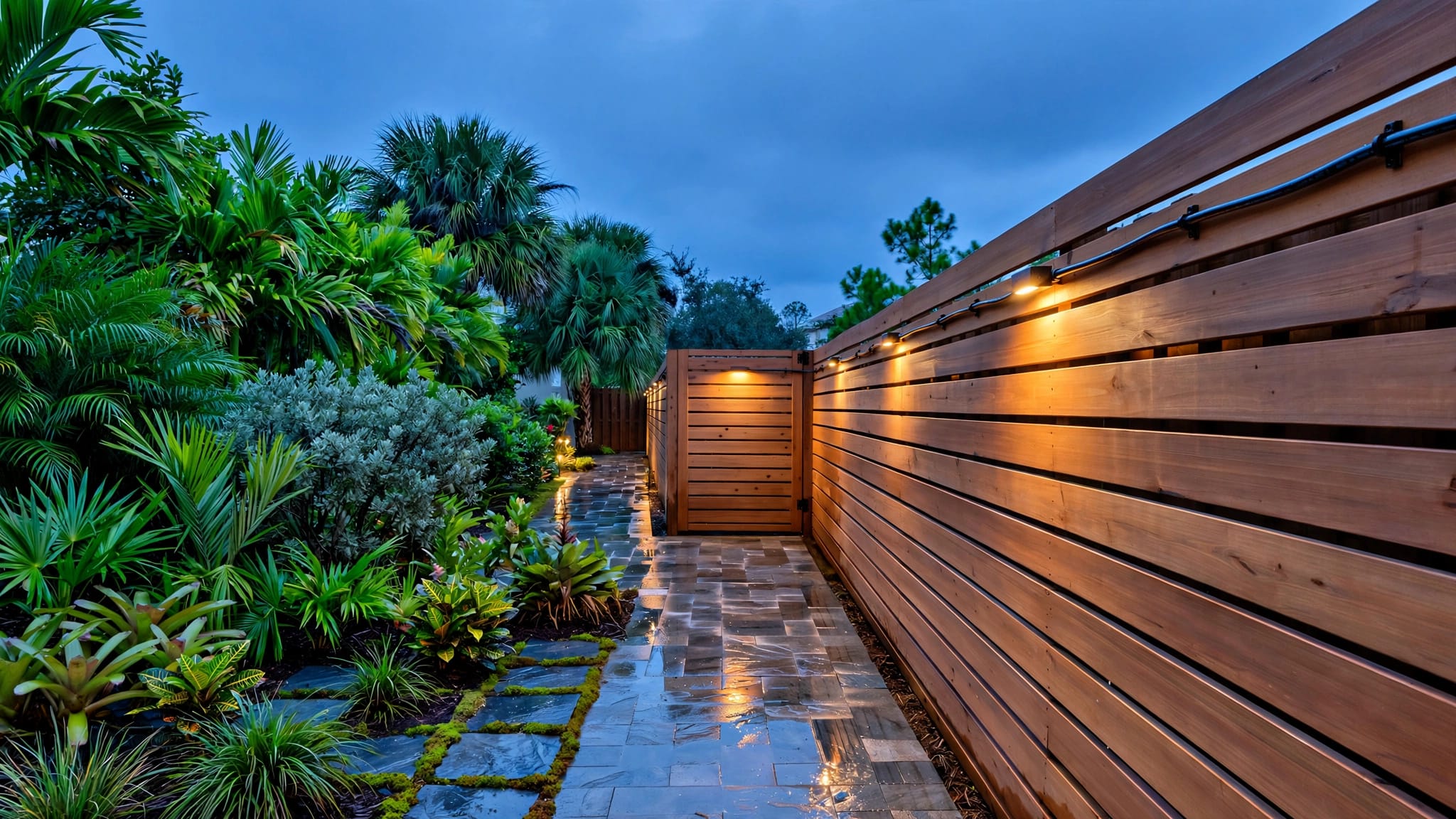
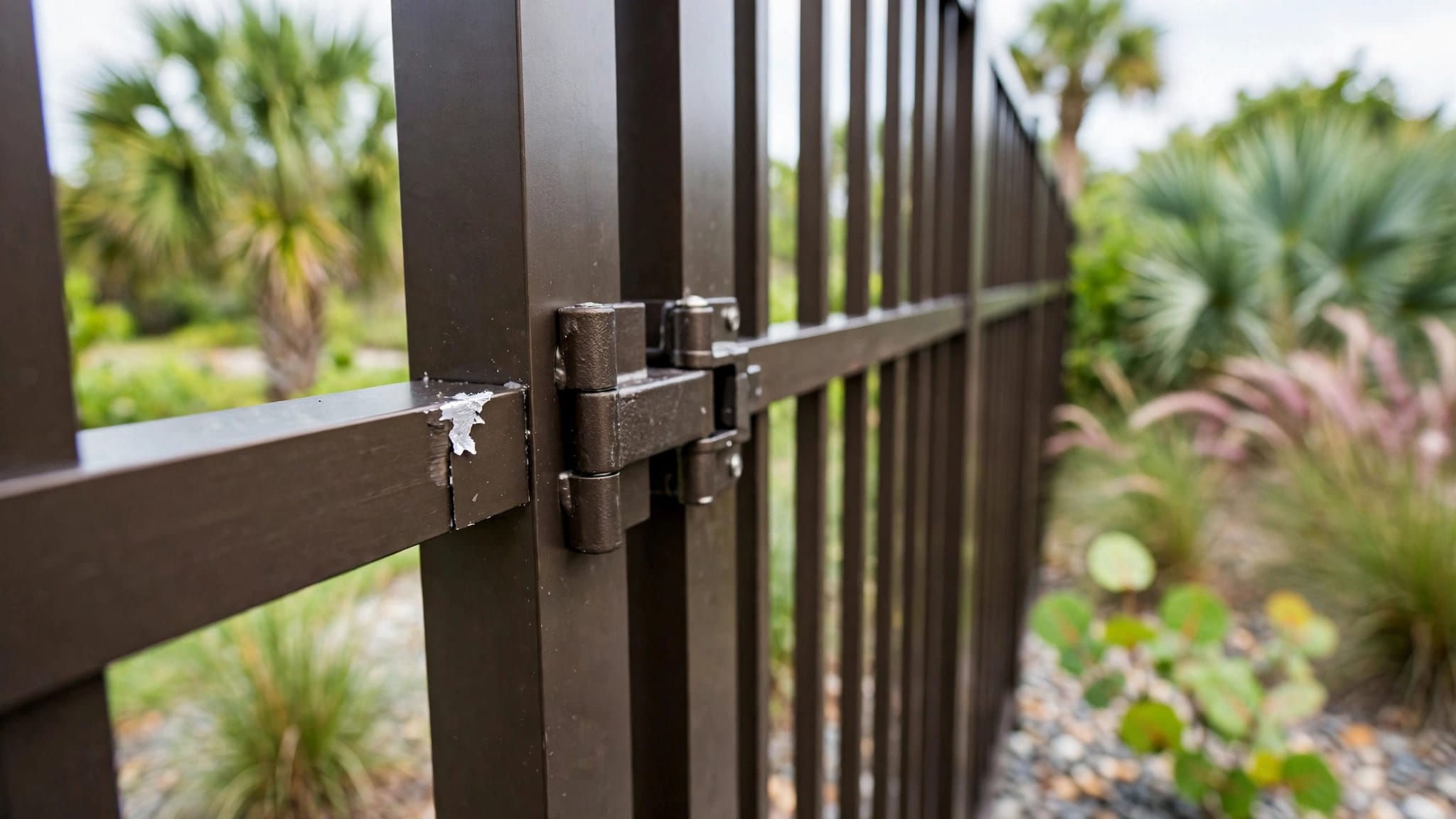
Aluminum and ornamental metal often suit historic properties because they provide an open appearance. However, a decorative style that looks appropriate on a Victorian home may feel wrong beside a mid-century building. The home's age, architecture, lot layout, and neighboring properties all matter.
Southwest Florida homeowners should check local rules
Historic preservation requirements differ across Southwest Florida. A homeowner in Fort Myers may follow a different process from someone in Sarasota, Cape Coral, or an unincorporated part of Lee County.
In Fort Myers, front and street-side fences in historic districts receive historic review. A fence that meets the city's guidelines and zoning code may receive administrative approval. A design that needs a variance or special permission may go before the Historic Preservation Commission.
Sarasota homeowners should first determine whether the property is inside the City of Sarasota or unincorporated Sarasota County. The city and county have separate departments, codes, and approval processes. A property in an HOA community may also require architectural approval. The Sarasota fence permit guide can help homeowners identify the correct first point of contact.
Fort Myers has a similar city-versus-county issue. A home inside city limits follows city rules, while a property in unincorporated Lee County follows county zoning and permitting requirements. The Fort Myers fence permit guide explains why the address must be checked before relying on a general fence rule.
Cape Coral, Charlotte County, Hendry County, DeSoto County, and Collier County may each impose their own requirements. A nearby historic property may also have special district guidelines that don't appear in a basic fence permit checklist.
Homeowners should verify these questions before selecting a product:
- Is the property inside a locally designated historic district?
- Is the home individually listed as a historic landmark?
- Does the district require a Certificate of Appropriateness or certificate of review?
- Which department handles the application?
- Does the fence need a building permit or zoning approval?
- Does an HOA or condominium association have separate rules?
- Are there easements, corner-lot visibility limits, drainage areas, or utility conflicts?
A county approval doesn't replace a city requirement. An HOA approval doesn't replace government approval. Each layer must be satisfied independently.
How to get approval before installing a fence
Start by contacting the local historic preservation office. Ask whether the property is designated, whether the proposed work requires review, and whether staff can approve the project administratively.
Next, contact the city's or county's permitting department. Confirm the required permit, site plan, setbacks, height limits, and inspection requirements. Historic approval and a building permit are different steps, so ask whether you need both.
A typical historic review application may request:
- A property survey or site plan
- Fence height and location measurements
- Photos of the home, yard, and nearby streetscape
- Fence elevations or a simple drawing
- Material, color, and finish information
- Manufacturer cut sheets for manufactured fencing
- Photos of existing fencing
- Historical photos, if the proposal restores an earlier feature
Miami's historic design guidance gives a detailed example of this type of submission. Its checklist can include a survey, plans no larger than 11 by 17 inches, photos of the main facade and sides, product information, and historic images when available.
For a basic repair, the office may approve the work without a public hearing. A new fence that follows the written guidelines may receive the same treatment. However, replacing an original fence with a different material, installing a solid privacy fence along the front, or requesting a height exception can require commission approval.
Don't order a custom fence until you know the design can pass review. Approval delays can become expensive when posts, panels, gates, or labor have already been purchased.
If the proposed height exceeds local limits, you may need a zoning variance in addition to historic approval. A Florida fence height variance guide explains why a variance doesn't automatically override HOA restrictions or other local requirements.
What to discuss with your fence contractor
Give the contractor the property address and mention the historic designation during the first conversation. An experienced local installer can help compare materials and prepare measurements, but the homeowner should still confirm requirements with the approving departments.
Ask for a design that shows the fence from the street. Historic reviewers need to understand how the fence will affect the sidewalk view, front facade, neighboring lots, and corner visibility. A drawing with only the backyard dimensions may not answer the questions that matter most.
Your contractor should also account for Florida installation conditions. Property lines, drainage swales, utility easements, landscaping, pool barriers, and uneven grades can change the final layout. A fence that looks compliant on paper may need a gate or panel adjustment after the yard is measured.
Supreme Fence of SWFL installs wood, vinyl, chain-link, metal, and aluminum fencing across Southwest Florida. The right material for a historic property depends on the district's rules, the home's architecture, and the approval documents, not only on cost or maintenance.
Keep copies of the approved plans, certificate, permit, and final inspection records. If you sell the home later, those documents can answer questions about whether the fence received the required approvals.
Conclusion
Florida historic district fence rules can affect the material, height, placement, color, and design of a new fence. They can also apply to repairs, replacements, additions, and the removal of original fencing.
The requirements vary by city, county, and individual historic district. Before you buy a fence or schedule installation, verify the current rules with your local historic preservation office and permitting department. Getting the approvals first protects your budget and helps your finished fence fit both the property and its historic neighborhood.