Villas Fence Permit Guide for 2026 Homeowners
A new fence can improve privacy, contain pets, and protect your yard, but a villas fence permit may be required before materials arrive or posts go into the ground. In 2026, most Villas properties fall under unincorporated Lee County rules, although nearby parcels may be inside Fort Myers or another municipal boundary.
The permit is only one part of the process. Your fence must also meet setback, height, easement, visibility, drainage, and community requirements. Use this guide to check the rules, prepare the right documents, and avoid delays before hiring a Southwest Florida fence contractor.
Key Takeaways
- Unincorporated Villas properties generally require a Lee County Residential Fence or Wall permit for new fences and replacements.
- Confirm your jurisdiction before applying because city rules can differ from Lee County requirements.
- Your site plan should show property lines, buildings, easements, streets, water, setbacks, and the proposed fence location.
- HOA approval may be required even when the county approves the permit.
- A licensed contractor can help identify property-line, drainage, wind, and permit problems before construction begins.
Do Villas Homeowners Need a Fence Permit in 2026?
For homes in unincorporated Lee County, a Residential Fence or Wall permit is required to install or replace a fence or wall. That rule generally applies to Villas properties outside municipal boundaries.
Replacing an old fence with a new one usually still requires a permit. The county may treat the project as a new enclosure, especially when posts, layout, height, or materials change. A repair may have a different requirement, but you should confirm before removing the existing structure.
Villas is a census-designated community near Fort Myers, so the mailing address alone doesn't determine the permitting authority. A property can have a Villas mailing address while falling under unincorporated Lee County rules. Another nearby property may sit within the City of Fort Myers and follow a different application process.
Before planning the fence, verify the parcel's jurisdiction through Lee County property records or your local building department. A contractor can also help confirm where the application belongs, but the property owner should still review the final permit information.
A permit helps the county check whether the proposed fence complies with zoning and construction requirements. It also creates an official record of the project. Building first and asking questions later can lead to correction notices, extra costs, or removal.
A fence permit doesn't give permission to build over an easement or property line. It only approves the work shown on the application.
Situations that usually require review
You should contact the proper building department before starting if you're:
- Installing a new perimeter fence
- Replacing most or all of an existing fence
- Changing fence height or location
- Adding a gate near a driveway or corner
- Building a wall instead of a typical fence
- Installing a pool barrier
- Fencing a waterfront lot or canal-side yard
- Working near a drainage, utility, or access easement
A pool fence has separate safety requirements. Don't assume approval for a standard yard fence covers a pool enclosure.
Confirm Your Jurisdiction Before Applying
The first step in any Villas fence permit project is confirming which government agency controls the property. Lee County handles permitting for unincorporated areas. The City of Fort Myers handles properties inside its city limits.
That distinction affects the application portal, fees, forms, inspections, zoning standards, and acceptable documents. It can also change rules for front yards, corner lots, visibility triangles, and fence height.
Look at your property tax record, survey, deed, or recent building permit. If the documents are unclear, contact the building department before ordering materials. You can also ask your fence contractor to check the parcel location during the estimate.
HOA approval is separate from county approval
Many Villas homeowners live in a deed-restricted community or neighborhood with an architectural review process. HOA rules may control:
- Approved fence materials
- Colors and finishes
- Maximum height
- Fence styles
- Gate designs
- Setbacks from sidewalks or roads
- Which side faces the street or neighbor
- Approved contractors
- Required applications and drawings
County approval doesn't override an HOA rule. Likewise, HOA approval doesn't replace a county permit.
Review your declaration, architectural guidelines, and current application form. Some associations require a plot plan, material sample, color photo, contractor information, and proof of insurance. Others may limit fences to certain sides of the property.
Ask the HOA for written approval before construction. Keep that approval with your permit records, especially if you plan to sell the home later.
If the fence sits near a shared boundary, discuss the layout and cost with the adjoining owner before work begins. Florida doesn't automatically require a neighbor to pay half of a residential fence. A written agreement is safer than a verbal promise. You can review these Florida shared fence laws before making arrangements.
What Lee County Requires for a Fence Application
Lee County's residential fence application requires a completed application and a site plan. The site plan must give reviewers enough information to understand the property and the proposed enclosure.
Prepare a drawing that shows:
- All property lines and dimensions
- Street names and adjoining roads
- Existing buildings and structures
- The proposed fence and gates
- Easements and encumbrances
- Bodies of water beside or near the property
- Setbacks from property lines and structures
- Existing fences that will remain
- The location of driveways, sidewalks, pools, and other relevant features
If water is within 25 feet of the project, the site plan should identify the mean high tide line or edge of water. It should also identify the water body, such as a lake, creek, canal, river, or gulf.
A recent survey is the most reliable way to locate property lines. A property appraiser map can help you understand the parcel, but it may not provide enough accuracy for fence construction. Never use a neighbor's fence as proof of the legal boundary.
Lee County also includes an easement or encumbrance disclosure requirement. Check your title documents and survey for utility, drainage, access, sidewalk, conservation, and canal-related easements.
Fence application checklist
Gather these items before submission:
- Completed residential fence or wall application
- Site plan with property lines and dimensions
- Proposed fence height and material
- Gate locations and widths
- Easement information
- Water-line information when applicable
- HOA approval, if required
- Contractor license and contact information
- Manufacturer specifications when requested
- Owner-builder documents, if you qualify and plan to apply yourself
The county's online system, eConnect, is used by contractors, design professionals, and agents to submit applications and supporting documents. Requirements can change, so check the current county instructions before uploading files.
Villas Fence Permit Rules for Height, Setbacks, and Location
The permit review focuses on more than the fence material. Placement often creates the biggest problem, particularly on corner lots, waterfront properties, and lots with easements.
Lee County requires fences and walls to remain entirely on the owner's property. The finished side must face the adjoining lot or abutting right-of-way. Your contractor should confirm the orientation before setting posts.
Front-yard rules can limit fence height and placement. Exact requirements depend on the zoning district, lot layout, road type, and fence design. A fence that works in a rear yard may not be allowed beside the front entrance or driveway.
Visibility is another concern. Fences near a street intersection or driveway may need to remain low or open so drivers can see pedestrians and approaching vehicles. A tall privacy panel at the corner can create a safety issue and fail zoning review.
Corner and double-frontage lots need extra attention. A property with two street frontages may have more than one front-yard area. Don't assume the side facing the driveway is automatically a side yard.
Waterfront and canal lots
Waterfront properties often have additional site constraints. A fence may need to remain open near the water, drainage access, or rear setback. The county may also need the edge of water or mean high tide line shown on the plan.
Canal banks can include access or maintenance areas. A fence that appears to sit inside your yard may interfere with public or private maintenance rights. Review the survey and easement documents before choosing a rear fence line.
Easements and drainage areas
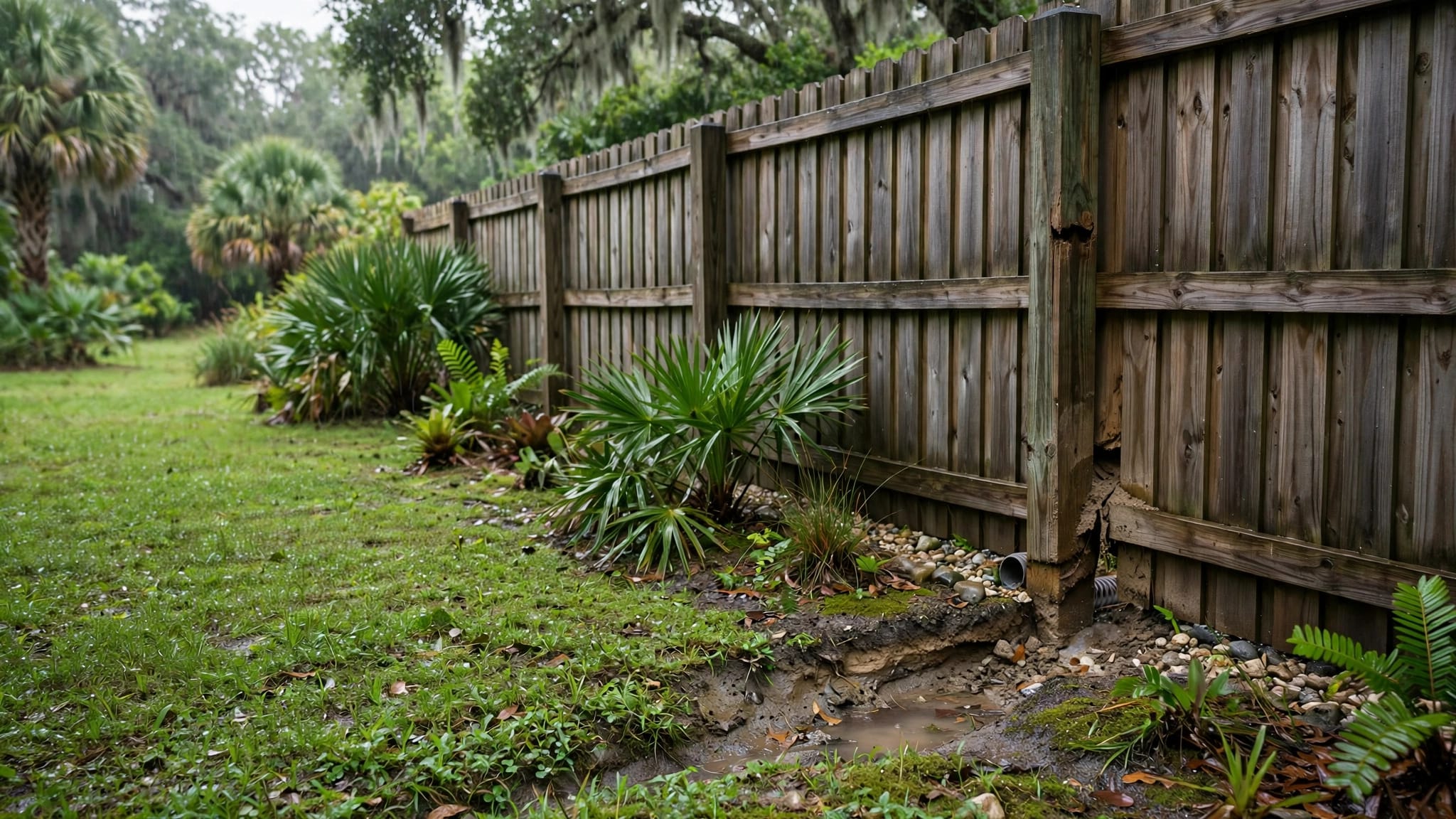
Utility and drainage easements can cross residential lots. An easement may allow workers to access underground lines, pipes, swales, or drainage facilities. A fence installed there may have to move if access is needed.
Cape Coral's 2026 residential guidance warns that a permitted fence in a public easement may have to be removed at the owner's expense for utility installation or maintenance. Lee County properties can face similar access concerns under their recorded easements.
Ask these questions before construction:
- Does the survey show a utility or drainage easement?
- Is the proposed fence inside or beside that area?
- Will a gate be needed for maintenance access?
- Does the HOA have a preferred setback?
- Will the fence block a swale, drain, or sidewalk?
A permit reviewer may identify some conflicts, but the owner remains responsible for understanding recorded property restrictions.
Choosing Fence Materials for a Villas Home
Southwest Florida's heat, humidity, salt air, heavy rain, and tropical weather affect material performance. Your choice should match the yard's purpose and the location of the fence.
Vinyl fencing works well when you want privacy and low routine maintenance. It doesn't require staining, and many styles provide a solid barrier for backyards. However, dark colors can absorb heat, and poor installation can cause panels or posts to move.
Aluminum fencing suits pool areas, waterfront lots, and front yards where you want an open view. It resists rust better than ordinary steel, but it doesn't provide full privacy. Check pool barrier requirements before selecting a rail spacing or gate design.
Wood gives you flexible styles and a traditional appearance. It can provide strong privacy at a lower initial material cost than some alternatives. Florida moisture, termites, sun, and rain mean wood needs regular inspection, sealing, staining, or painting.
Chain-link fencing is practical for pet containment and budget-conscious projects. Privacy slats can reduce visibility, although they also increase wind exposure. Galvanized and vinyl-coated options have different appearances and maintenance needs.
Composite fencing can provide a wood-style look with less staining. It usually costs more than basic wood, so compare the full installation price and manufacturer warranty.
You can compare Cape Coral fence materials before deciding. The right option depends on privacy, pool safety, pets, wind exposure, drainage, maintenance, and HOA rules.
Material questions to ask
Before approving the estimate, confirm:
- Is the material approved by the HOA?
- Does the design meet pool barrier rules, if applicable?
- Are posts set for local soil and wind conditions?
- Will the finish resist corrosion near saltwater?
- Does the gate include self-closing or self-latching hardware?
- What maintenance does the warranty require?
- Will the finished side face the neighbor or street?
- Are manufacturer specifications needed for the permit?
A low price can become expensive if the material, layout, or gate hardware fails review.
Permit Costs, Inspections, and Project Timing
Permit fees vary by jurisdiction and can change during the year. Lee County materials list plan review and zoning review charges, along with administration, technology, operational support, and other applicable fees. A 2026 fee schedule also lists separate inspection-related charges in some situations.
Ask for the current fee total before submitting. The amount can depend on the fence type, project value, required reviews, and whether the project includes a wall, screen enclosure, pool barrier, or other structure.
The permit process may include an application review followed by inspections after installation. Your contractor should identify which inspections apply and when to request them. Don't cover posts or concrete before any required inspection.
Permit timing depends on application quality and review volume. Missing site-plan information can create a correction cycle. HOA review can add another approval stage, so submit both applications early when possible.
A practical permit timeline
Use this order for a typical project:
- Confirm whether the property is in unincorporated Lee County.
- Review HOA rules and request architectural approval.
- Locate the survey, property lines, easements, and water features.
- Select a fence style, height, material, and gate layout.
- Have the contractor prepare the site plan and supporting documents.
- Submit through the appropriate county or city system.
- Respond to correction requests before purchasing materials.
- Schedule installation after approval.
- Complete required inspections.
- Keep the final permit and approval records with your home documents.
The permit record should match the installed fence. Changing the height, location, gates, or material after approval may require a revision.
Common Mistakes That Delay a Villas Fence Project
Many fence problems start before the first post is installed. A few minutes of planning can prevent a costly correction.
Assuming every Villas property follows the same rules
The community name doesn't establish the jurisdiction. Check the parcel first.
Measuring from the old fence
An existing fence may be in the wrong location. Measure from a survey or verified boundary, not from a structure that has already shifted.
Ignoring easements
Utility and drainage easements can limit construction even when the area looks like ordinary lawn. Review the title documents and site plan.
Treating HOA approval as a permit
These are separate approvals. Get both when required.
Choosing a tall fence for a corner lot
A high fence near a driveway or intersection can block sight lines. Confirm visibility requirements before ordering panels.
Forgetting gates
Gate placement affects access, setbacks, pool safety, and maintenance. Show every gate on the plan.
Using the wrong contractor license
Cape Coral's 2026 guidance limits who can apply for residential fence permits. Accepted categories include qualifying general, building, and residential contractors, certain specialty structure contractors, and eligible owner-builders. Unlicensed applicants may not apply unless they meet a stated exemption.
For unincorporated Lee County, verify the contractor's current Florida license and insurance. Ask who will pull the permit and whose name will appear on the application.
Building before approval
A fence can look finished and still fail inspection. If the county requires relocation, the homeowner may pay twice for labor and materials.
A Homeowner's Final Fence Permit Checklist
Use this checklist before authorizing work:
- I confirmed the property's jurisdiction.
- I checked the HOA's fence rules.
- I obtained a current survey or reliable boundary information.
- I located utility, drainage, access, and canal easements.
- I checked whether water is within 25 feet of the project.
- I selected a material and height that meet community and local rules.
- I showed every fence line and gate on the site plan.
- I confirmed corner-lot and driveway visibility requirements.
- I verified the contractor's license and insurance.
- I know who will submit the permit application.
- I received written HOA approval, if required.
- I understand the permit fee and inspection process.
- I will wait for approval before installation.
- I will keep the permit, inspection record, and final documents.
If you share a fence with a neighbor, add a written agreement covering the location, style, access, maintenance, and payment responsibility.
When to Hire a Southwest Florida Fence Contractor
A contractor is helpful when the project involves a corner lot, canal, pool, easement, unusual grade, shared boundary, or HOA review. Local experience can also help with material selection for heat, rain, salt air, and strong seasonal weather.
Ask for a written estimate that identifies the fence material, height, linear footage, gates, removal, disposal, permits, inspections, and site conditions. Confirm whether survey work, utility locating, HOA fees, or engineering costs are included.
A reliable contractor should explain the installation plan in plain language. They should also point out issues instead of promising that every design will pass without review.
For larger walls or structures over six feet, Lee County may require plans signed and sealed by a Florida-registered architect or engineer. Ask about that requirement before finalizing a tall design.
Your contractor should also explain how the fence will be installed around drainage areas and utility access. Posts, gates, and panels need enough clearance for the property to remain serviceable.
Conclusion
A Villas fence permit project starts with jurisdiction, not installation. Confirm whether Lee County or a city controls your property, review HOA rules, check the survey and easements, and prepare a complete site plan before applying.
The strongest way to avoid delays is to match the approved plan to the fence that gets built. With the right documents and a licensed Southwest Florida contractor, your new fence can improve the yard without creating a permit, boundary, or maintenance problem later.