Punta Gorda Isles Fence Permit Guide for 2026
A Punta Gorda Isles fence permit may involve more than choosing a material and marking the property line. Your address, fence location, height, water access, zoning district, and HOA or POA rules can all affect approval.
Punta Gorda Isles properties are generally associated with the City of Punta Gorda, but homeowners should confirm jurisdiction before applying. City requirements may differ from Charlotte County rules, and private community restrictions can add another layer of review. Use this guide to organize the project, then confirm current requirements with the proper local offices before construction begins.
Key Takeaways
- Confirm whether your property falls under the City of Punta Gorda or Charlotte County before filing.
- Review city zoning standards and Punta Gorda Isles HOA or POA rules before choosing a fence.
- Prepare a survey or scaled site plan that shows the fence, gates, setbacks, easements, and waterfront features.
- Ask about permit requirements, fees, inspections, and required documents before installation.
- Get written approval before work starts, especially for waterfront lots, corner lots, pool barriers, and shared property lines.
How the Punta Gorda Isles Fence Permit Process Starts
The first step is identifying the agency with authority over your property. A home inside Punta Gorda city limits follows City of Punta Gorda zoning and building procedures. A property outside the city follows Charlotte County requirements, even if it uses a Punta Gorda mailing address.
That distinction matters because local standards can differ. Charlotte County's residential fence permit materials include rules for height, setbacks, waterfront locations, finished sides, posts, and small equipment enclosures. The City of Punta Gorda publishes its own fence standards, including special requirements for properties in the SRO, or Special Residential Overlay District.
Punta Gorda Isles homeowners should also check their governing documents. An HOA or POA may regulate materials, colors, fence styles, visibility, waterfront access, and placement. Private approval doesn't replace a government permit, and a city permit doesn't override a community restriction.
Before ordering materials, verify these details:
- The property's city or county jurisdiction.
- The zoning district and any overlay district.
- Whether the lot borders a canal, seawall, public right-of-way, or easement.
- Whether the fence will enclose a pool or spa.
- Whether the HOA or POA requires an application or architectural approval.
- Whether the proposed fence crosses a shared boundary or affects a neighboring property.
A contractor can help organize the application, but the homeowner should still review the approved plan. Errors in the property line or fence location can create expensive corrections after installation.
A fence permit approval usually addresses public regulations. It does not prove that your proposed fence meets every HOA, POA, deed, easement, or survey requirement.
Punta Gorda Fence Height, Materials, and Waterfront Rules
Fence height depends on the governing jurisdiction and the location of the fence on the lot. Homeowners should avoid relying on a standard height rule found online because front yards, side yards, rear yards, corner lots, and overlay districts may follow different standards.
The City of Punta Gorda's published standards include detailed construction requirements for semi-solid wood fences six feet high or less. Posts must be chemically treated and measure at least 4 inches by 4 inches. Maximum post spacing is 8 feet on center. Posts set in concrete must extend at least 2 feet into the ground, while directly embedded posts must extend at least 3 feet.
The city also requires galvanized fasteners for panels attached to posts. Acceptable minimum fastener sizes listed in the standards include a 20d nail, a 3-inch by 1/4-inch lag bolt, or a 3-inch screw. Vinyl fencing must follow the manufacturer's installation specifications.
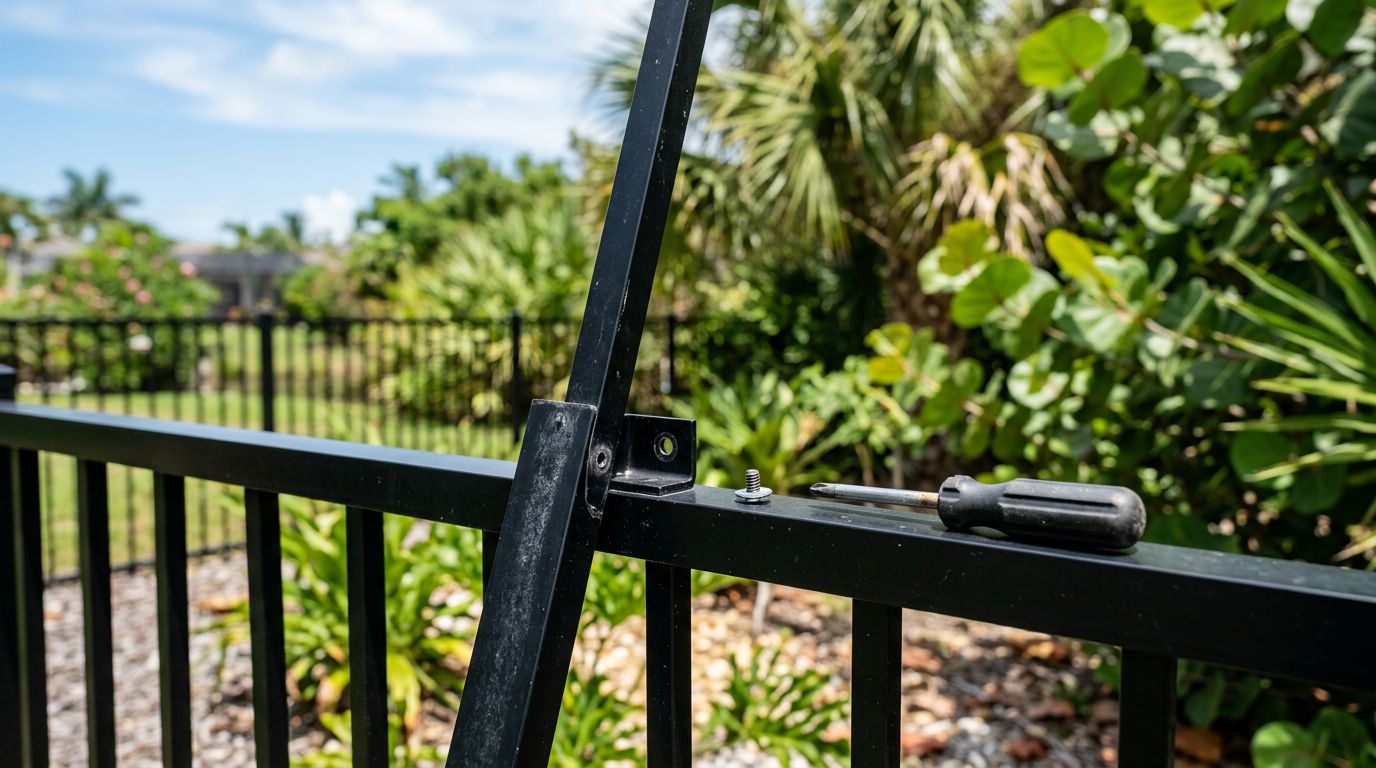
Properties in the SRO district have tighter restrictions. The city standards allow fences up to 4 feet high in side and rear yards of developed properties, but they don't allow fences in front yards. Permitted materials in those areas include vinyl-coated chain link, aluminum, vinyl, finished wood picket, and wrought iron picket. Structural supports must face inward, while the finished surface must face neighboring properties and public rights-of-way.
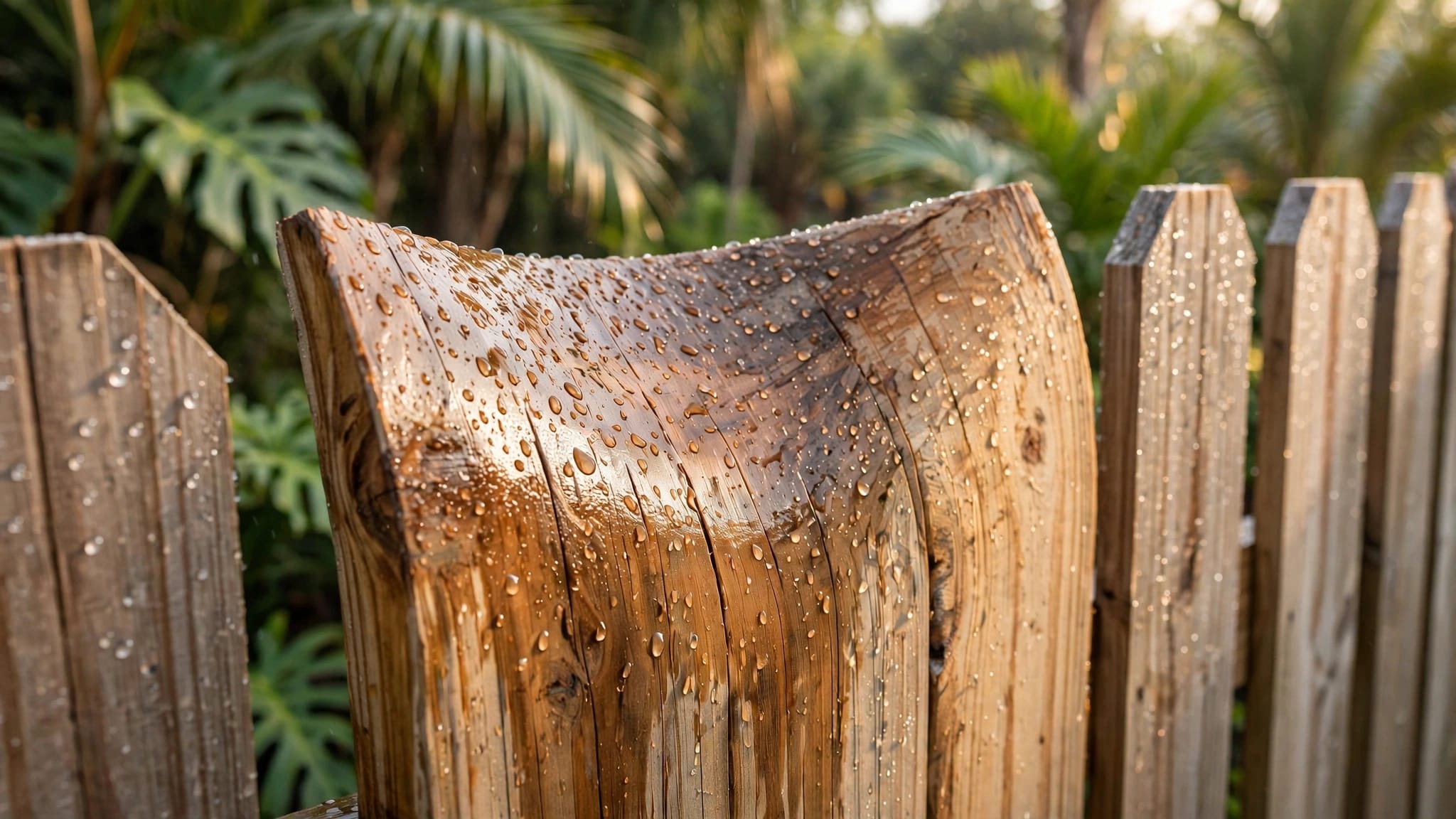
Wood fencing in the SRO district must use new decay-resistant or pressure-treated material. The finished fence must have a clear coat, stain, or paint and remain free of rotting, discolored, or missing boards.
Charlotte County's residential fence packet contains separate standards for county properties. It states that chain-link and wood fences must be 6 feet or less, measured from natural grade. Gates, columns, posts, and finials may exceed the maximum fence height by no more than 1 foot. Pergolas or arches connected to an entrance may reach up to 10 feet where permitted.
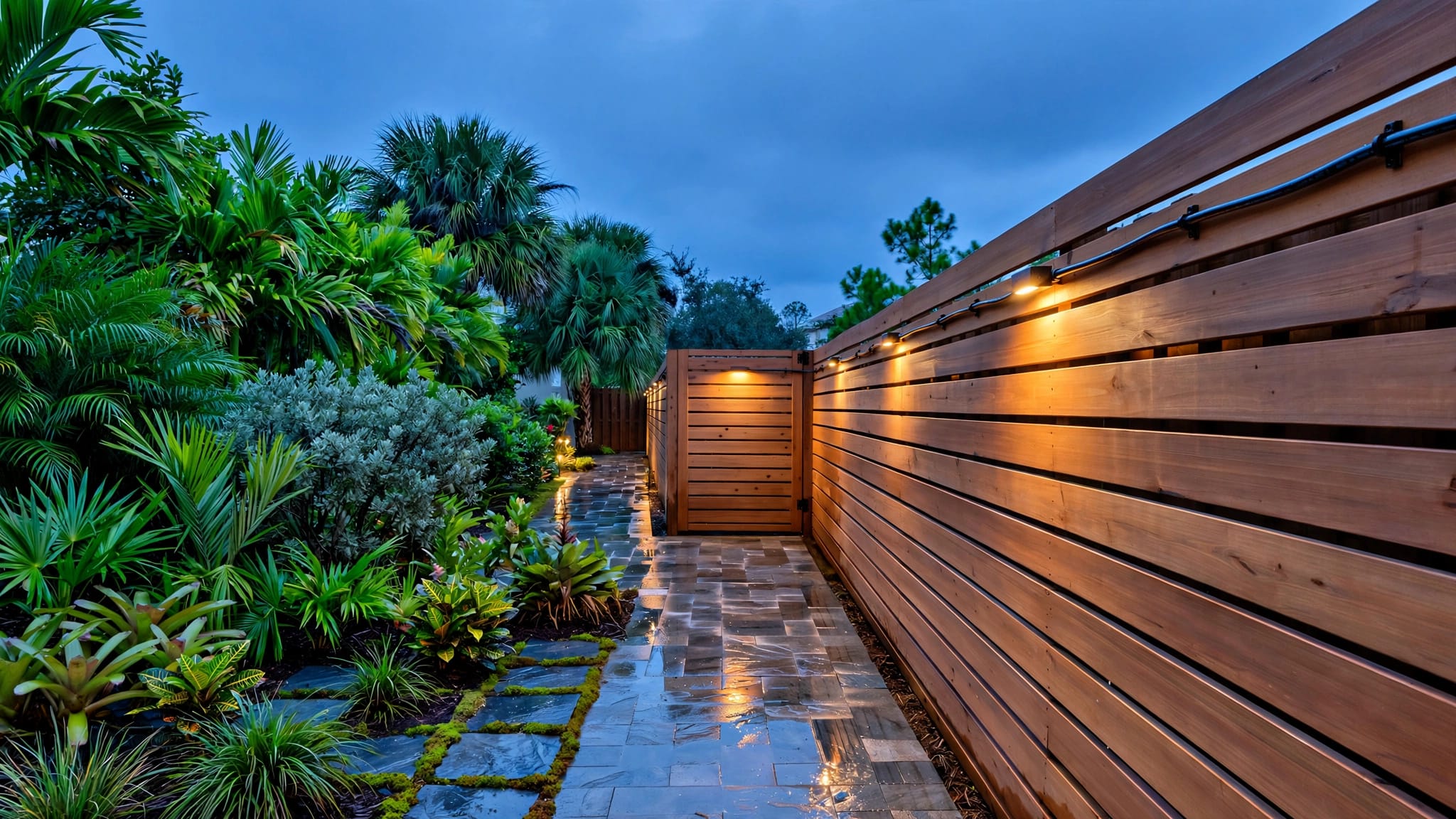
Waterfront lots need extra care. Charlotte County's packet states that a fence or wall over 4 feet high cannot be placed within 10 feet of the mean high-water line, seawall, or property line, whichever is more restrictive. Because Punta Gorda Isles includes canal-front properties, ask the applicable city or county office to confirm the current waterfront standard for your address.
Masonry fences are treated as walls under the Charlotte County packet and require a building permit. A city property may follow different procedures, so confirm before selecting concrete block, stucco, or another masonry design.
Documents and Fees for a 2026 Fence Application
A clean application gives the reviewing office enough information to evaluate the fence without guessing. Charlotte County's residential fence package lists several required items. The exact list for a City of Punta Gorda property may differ, so treat the following as a planning guide rather than a complete city checklist.
Typical documents may include:
- A completed permit application.
- A survey or scaled site plan showing the proposed fence location.
- Fence height, material, gate locations, and construction details.
- An accessory affidavit where required.
- Written owner consent for a rental property.
- An owner-builder disclosure statement when the owner applies as the builder.
- A Notice of Commencement when construction costs exceed $5,000, where required.
Charlotte County's packet calls for two copies of the site plan or survey in its application materials. It also distinguishes between in-person and online submissions, with signed and sealed plan requirements that can vary by filing method.
Fees can change during the year. The Charlotte County residential fence page currently lists a $30 zoning review fee. It also lists a building fee formula tied to ICC valuation for qualifying projects, plus a surcharge with a $4 minimum. City fees may use a different schedule.
For a broader comparison of regional filing costs, review these Southwest Florida fence permit fees for 2026. Then confirm the amount charged by the office handling your address before submitting payment.
A permit fee is only one part of the project budget. A survey, revised site plan, HOA application, engineering detail, or correction request may add time or cost. Ask for a written estimate that separates fence installation, permit handling, surveys, and other application expenses.
Step-by-Step Punta Gorda Isles Fence Permit Guide
The safest process begins before the first post hole. Follow these steps in order:
- Confirm jurisdiction. Check whether the property is inside Punta Gorda city limits or in unincorporated Charlotte County. Use the agency that controls the parcel, not the mailing address alone.
- Check private restrictions. Ask the HOA or POA for current fence rules, application forms, approved materials, and review timelines. Request written confirmation if the property borders a canal or shared access area.
- Review the property documents. Locate the boundary survey, easements, seawall information, and any recorded restrictions. Never assume a visible lawn edge is the legal property line.
- Choose a compliant design. Decide on height, material, gate placement, post style, and finish. For a waterfront lot, confirm how the authority measures setbacks from the seawall, mean high-water line, or property line.
- Prepare the site plan. Mark the home, lot lines, proposed fence, gates, pool equipment, sidewalks, driveways, easements, canals, seawalls, and nearby structures. A clear drawing helps identify conflicts before review.
- Submit the application. Include every required form, plan, signature, owner authorization, and fee. If a contractor handles filing, ask for a copy of the complete submission and the permit number.
- Wait for approval. Don't schedule installation solely because an application was submitted. Corrections may require a revised plan, material change, or fence relocation.
- Build to the approved plan. Keep posts, panels, and gates in the locations shown on the permit. Arrange required inspections before covering work or making changes.
If you install a fence first and address approval later, the authority may require changes, additional fees, or removal. Read about the risks of bypassing fence permits in Florida before deciding to proceed without confirmation.
Pre-Installation Checklist for Homeowners
Use this checklist during the planning visit with your contractor:
- Confirm city or county jurisdiction.
- Verify the current zoning district.
- Check HOA or POA fence requirements.
- Obtain the most recent boundary survey.
- Mark easements, seawalls, canals, utilities, and right-of-way areas.
- Confirm whether the fence is a pool barrier.
- Select a material and height allowed at the proposed location.
- Show gates and access points on the site plan.
- Keep finished surfaces facing outward where required.
- Confirm post placement and construction details.
- Ask about permit fees and inspection requirements.
- Save the approved plans and permit documents.
Charlotte County directs permit questions to Building Construction and Permits at 941.743.1201 or BuildingConstruction@CharlotteCountyFL.gov. Its published materials also direct homeowners to Zoning at 941.743.1964 for height and location restrictions by zoning district. For a property inside Punta Gorda city limits, contact the city office responsible for zoning and building approval.
Conclusion
A Punta Gorda Isles fence permit starts with jurisdiction, not material selection. Confirm the city or county authority, review HOA or POA rules, check waterfront and easement conditions, and submit a site plan that matches the proposed installation.
A licensed, insured local contractor can help with measurements, design details, and permit paperwork, but approval should come before construction. When the documents, fence location, and finished design all match, your project has a much better chance of moving forward without costly changes.