Best Fence Materials for Flood-Prone Southwest Florida Yards
In Southwest Florida, a fence has a harder job than most homeowners expect. It doesn't just mark a property line. It has to handle standing water, soft soil, salt-heavy air, and storm winds that can turn a weak fence into yard debris.
If your lot floods after summer rain or sits near surge-prone water, the best choices are usually aluminum, vinyl, or the right chain link system . Wood, composite, and masonry can still fit some properties, but they carry more tradeoffs in wet ground. That matters even more in 2026, as updated flood maps in Lee County are putting more homes into higher-risk zones.
What flood-prone yards demand from a fence
A flood-prone yard breaks fences in a few predictable ways. First, water softens the soil around posts. Then wind pushes on panels and gates. After that, salt air and humidity start working on fasteners, brackets, and finishes.
So when comparing options, don't focus only on how the fence looks on day one. Think about how it behaves after three days of rain, or after brackish water sits against it.
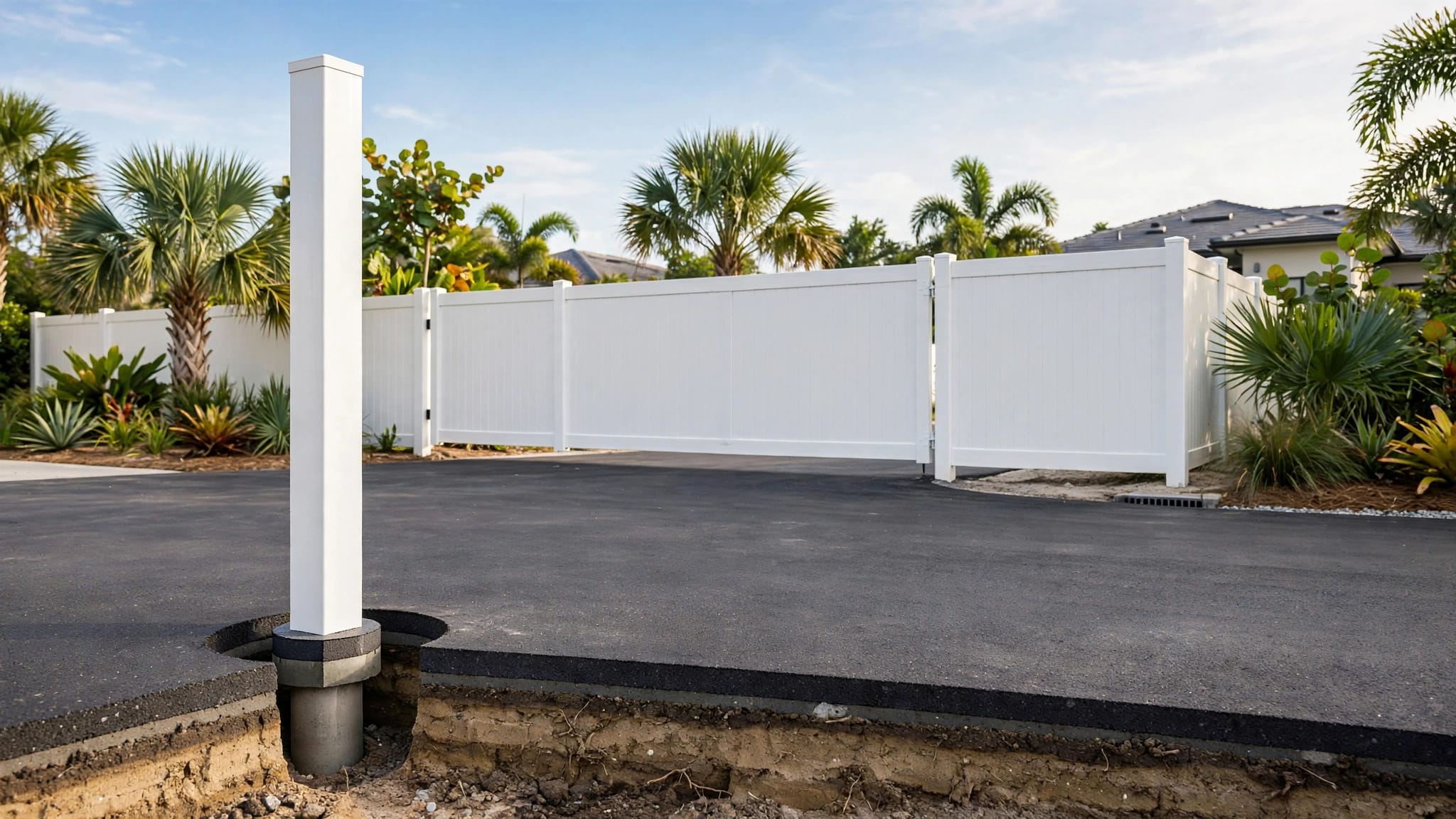
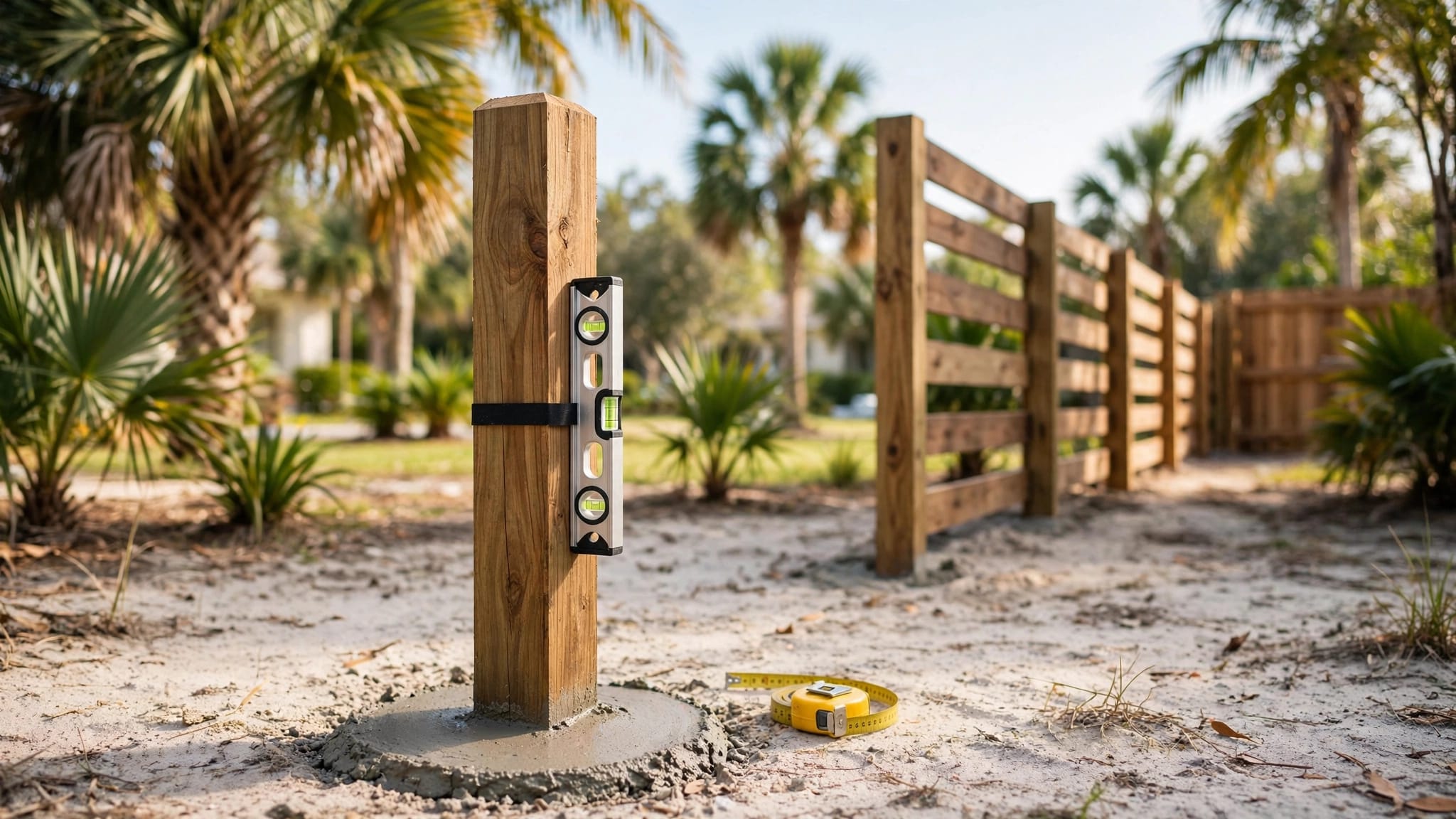
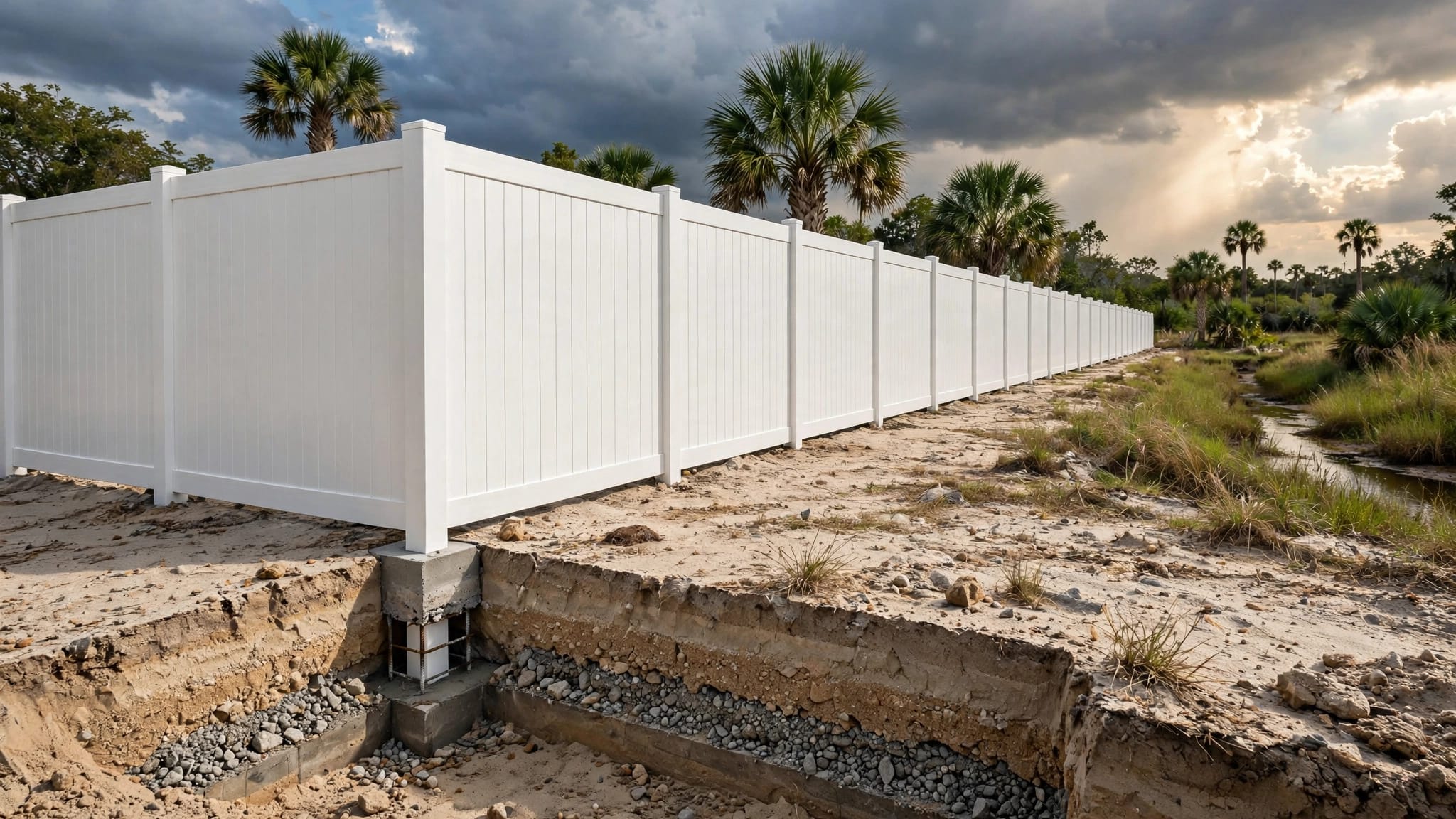
In a wet Southwest Florida yard, the post system matters as much as the fence material .
Open styles usually do better in storm-prone areas because wind can pass through them. In contrast, full privacy panels catch pressure like a sail. That's why aluminum pickets and open chain link often outlast solid fence runs in exposed yards.
Repairability matters too. Floods rarely damage every section evenly. One gate may rack, one post may lean, and one panel may twist. The easier it is to repair a section without rebuilding the whole run, the better.
Among the many fence materials florida homeowners see advertised, only a few make sense for yards that stay wet. The right answer depends on your flood exposure, how much privacy you want, and how close you are to canals, the Gulf, or salt-heavy air.
How common fence materials compare after flooding
This quick comparison helps narrow the field.
| Material | Standing water | Salt-air resistance | Wind performance | Maintenance | Flood repairability | | | --- | --- | --- | --- | --- | | Aluminum | Excellent | Excellent | Very good | Low | Good | | Vinyl/PVC | Excellent | Very good | Good to fair, depends on style | Low | Good | | Chain link | Good | Good with coated parts | Excellent | Low | Very good | | Pressure-treated wood | Poor to fair | Poor | Fair | High | Good, but frequent | | Composite | Good | Good | Fair to good | Low to medium | Fair | | Masonry/block | Fair | Good | Poor in shifting soil | Low | Poor |
Aluminum is often the safest long-term pick
For many coastal and canal-front homes, aluminum is the best all-around material. It doesn't rot, it won't rust like untreated steel, and open pickets lower wind load. Powder-coated aluminum also holds up well in humidity and salty air.
It costs more up front than chain link or basic wood. Still, the lifespan is usually strong enough to justify it. After flooding, repairs are often limited to a section, picket, or gate hardware rather than a full tear-out. If you want an open, durable option, these aluminum metal fencing ideas for SWFL yards show why metal styles stay popular here.
Vinyl works well, but the design matters
Vinyl or PVC handles standing water far better than wood. It won't rot, splinter, or attract termites the same way natural lumber can. Cleanup after flooding is also simple, usually just washing off mud and residue.
The catch is wind. A tall solid vinyl privacy fence can take a lot of force in a storm. Therefore, vinyl works best when posts are strong, spacing is correct, and the layout fits the exposure. In protected neighborhoods, it's a great low-upkeep choice. In wide-open lots, semi-private styles may be smarter than full panels. If privacy is high on your list, this guide to low-maintenance vinyl fences in Cape Coral is worth a read.
Chain link is underrated in wet yards
Chain link doesn't win many beauty contests, but it performs better than people think in flood-prone areas. It lets water and wind pass through, which reduces stress on posts. It also tends to be one of the easiest fence types to repair after a flood.
The weak spot is corrosion. Standard parts can wear faster near salt water, so coated fabric, galvanized framing, and better hardware matter. For budget-conscious homeowners, chain link often offers the best mix of cost, airflow, and storm performance. These chain link fencing benefits in Cape Coral explain why it still makes sense for many SWFL properties.
Pressure-treated wood gives privacy, but asks for more work
Wood looks warm and classic. It also repairs easily because damaged boards can be replaced one at a time. That's the good news.
The downside is long-term exposure. Saturated soil, humid air, termites, and repeated wet-dry cycles shorten its life fast. Even pressure-treated wood can swell, twist, rot near grade, and loosen around fasteners after flooding. Inland lots with less exposure can still do well with wood, but in low, wet, or salty areas, it usually becomes the highest-maintenance choice.
Composite sits in the middle
Composite fencing resists rot better than wood and needs less upkeep. It can be a solid choice for homeowners who want the look of wood without yearly staining.
However, composite panels are often heavier, and that weight puts more demand on posts in soft ground. Some products also hold heat and can be pricey. In flood-prone yards, composite is usually a middle-ground option, not the first choice.
Masonry sounds strong, but wet ground changes the picture
Concrete block or masonry walls look permanent, but saturated soil and surge can be hard on them. If the base shifts, cracking can be expensive to fix. Once a masonry wall fails, repair is rarely simple or cheap.
For that reason, masonry isn't usually the best answer for a residential yard that floods often, especially where drainage is poor or surge is possible.
Open designs, post depth, and hardware often decide the winner
Material matters, but installation details decide whether the fence survives. An aluminum fence with weak posts can fail before a well-built vinyl fence with good reinforcement. A wood fence with proper drainage may outlast a cheap chain link job with poor coatings.
Open designs usually beat solid panels in exposed areas. That's why picket aluminum and bare chain link often perform better during tropical weather. Solid privacy fences still have a place, especially for pools, pets, and close neighbors, but they need stronger framing and smarter placement.
Hardware deserves more attention too. Hinges, latches, screws, and brackets are often the first parts to corrode. In Southwest Florida, better coatings and corrosion-resistant hardware aren't extras, they're common sense. Gates also need extra support because they take the most movement.
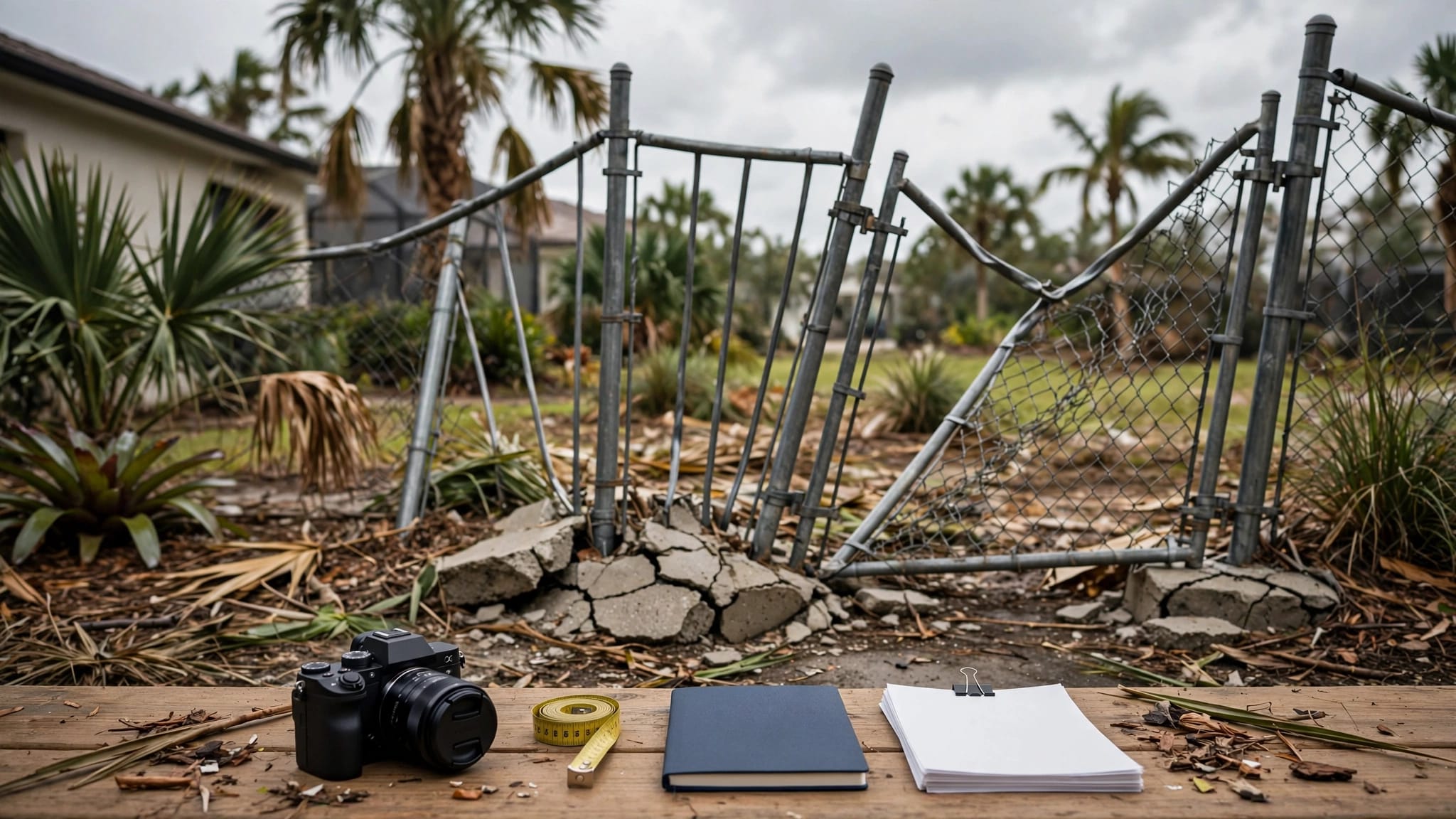
Finally, think past the install day. A fence should be easy to inspect before storm season and practical to repair after a flood. A simple hurricane fence prep checklist for Southwest Florida homes can help you spot soft posts, rusting hardware, and weak gates before the weather does it for you.
The best fence for a flood-prone yard isn't the one that looks strongest in a brochure. It's the one that stays straight, drains well, and bounces back after water recedes. For most Southwest Florida homes, aluminum leads , vinyl follows close behind, and chain link remains the practical value pick. Match the material to your flood risk first, then your privacy goals, and you'll end up with a fence that works in August, not just on install day.