Can You Fence a Backyard Pond in Florida?
Yes, you can install a fence around a backyard pond in Florida. The fence may need a local permit and, if you live in an HOA community, association approval.
Florida's residential swimming pool safety law doesn't create a separate statewide fence mandate for ornamental ponds. Local fence rules still matter , so the right design depends on your property's location and the pond's use.
When Does Florida Treat a Pond Like a Pool?
The distinction starts with how the water feature is intended to be used. Florida's Residential Swimming Pool Safety Act addresses residential swimming pools rather than ornamental ponds as a separate category.
Ornamental ponds and water gardens
A pond intended for fish, plants, or decoration isn't automatically subject to the state's residential pool barrier rules. You can still choose to fence it for safety, and ordinary local fence regulations may apply to the installation.
A pond fence can limit access for children and pets while leaving room to maintain the water feature. Its required height and placement, however, depend on the rules that apply to your property.
Water features intended for swimming
Florida's statutory definition of a residential swimming pool includes a residential structure intended for swimming or recreational bathing that contains water more than 24 inches deep. Both intended use and depth matter.
A decorative pond doesn't become a swimming pool solely because it exceeds that depth. On the other hand, a feature designed for bathing may fall under pool safety provisions even if its owner calls it a pond.
How Pool Barriers Differ From Pond Fences
For a new residential swimming pool, Florida law requires at least one listed safety feature for final inspection and a certificate of completion. An enclosure that meets the statute is one option; specified covers, alarms, or door and window devices are other options.
When a pool enclosure is the chosen safety feature, the statutory requirements include:
- A barrier at least 4 feet high on the outside, designed to restrict access by young children.
- A barrier around the pool perimeter, with conditions for using an existing yard fence or wall.
- Gates that open outward, away from the pool, and close and latch automatically.
Those are pool barrier requirements , not universal dimensions for an ornamental pond fence. If your yard also has a swimming pool, a new pond fence doesn't automatically qualify as its required barrier.
Local Fence Rules in Southwest Florida
Your city or county can regulate the fence even when the pond isn't a swimming pool. Location, height, nearby property lines, and waterfront conditions can all affect the plan.
Cape Coral residential fences
Cape Coral has a residential fence application path for a new fence that isn't a pool barrier. Its guideline calls for a site plan and a Burrowing Owl/Gopher Tortoise affidavit. Environmental review may also apply.
The city's general limits include a maximum height of 6 feet where a fence borders residential property. Waterfront fences within 20 feet of the rear property line must be more than 75% open. That waterfront rule isn't automatically a pond-specific rule.
Charlotte and Lee counties
Charlotte County's residential fence permit covers fences that don't protect a swimming pool. Height and location restrictions depend on the zoning district.
In unincorporated Lee County, a fence installation requires a permit. Our guide to Lee County fence permit rules covers that process. If your property sits inside a city, its rules may differ from those of the surrounding county.
HOA Approval Is Separate From a Permit
Your HOA's governing documents may require approval for a fence's material, color, height, location, or gate design. A city or county permit doesn't replace that approval, and an HOA approval doesn't replace a required permit.
Submit the proposed layout and request written approval before ordering materials. Florida Statutes Section 720.3035 limits HOA architectural review to authority in the declaration or authorized published guidelines. It also says an HOA cannot require a government building permit as a prerequisite to its review.
Plan for Safety, Drainage, and Maintenance
A useful pond fence should reduce access to the water without making the yard difficult to maintain. The layout matters as much as the material.
Leave access around the water
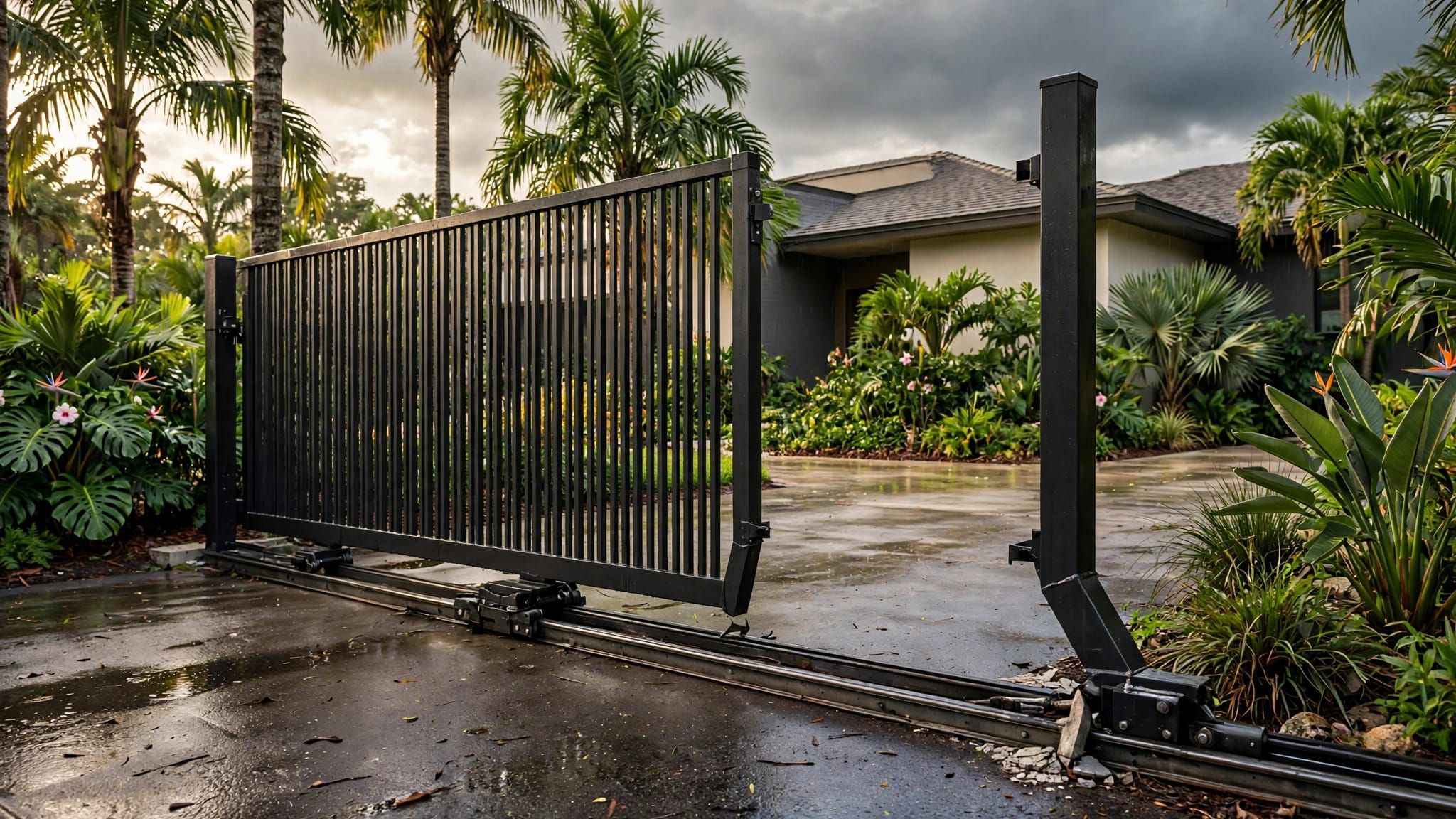
Place the fence far enough back to allow access for pond care and repairs. A gate wide enough for your equipment makes cleaning and maintenance easier. A self-closing, self-latching gate is a practical safety choice, even when pool barrier rules don't apply.
Keep furniture and other climbable objects away from the fence. Adult supervision remains important around water, since no fence can replace it.
Account for easements and drainage
A pond may sit near a drainage swale or within an area that needs maintenance access. A fence can be on your property and still interfere with an easement or drainage route.
A site plan should show the proposed fence line, gates, property boundaries, and relevant easements. Our guide to reading a property survey before fence installation explains where to find those details. Contact 811 before digging post holes to have participating underground utilities marked.
Choose a Material for a Wet Florida Yard
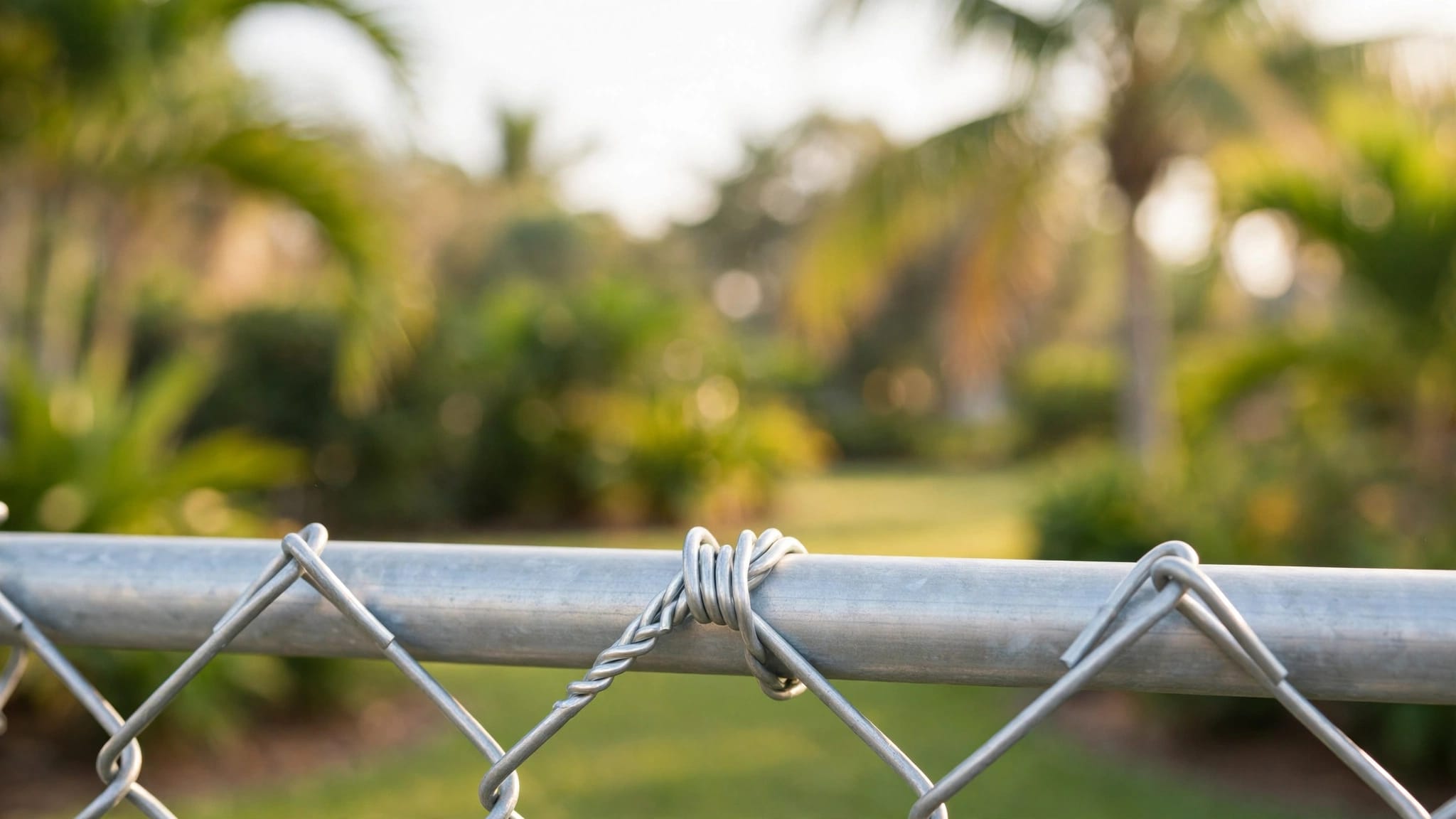
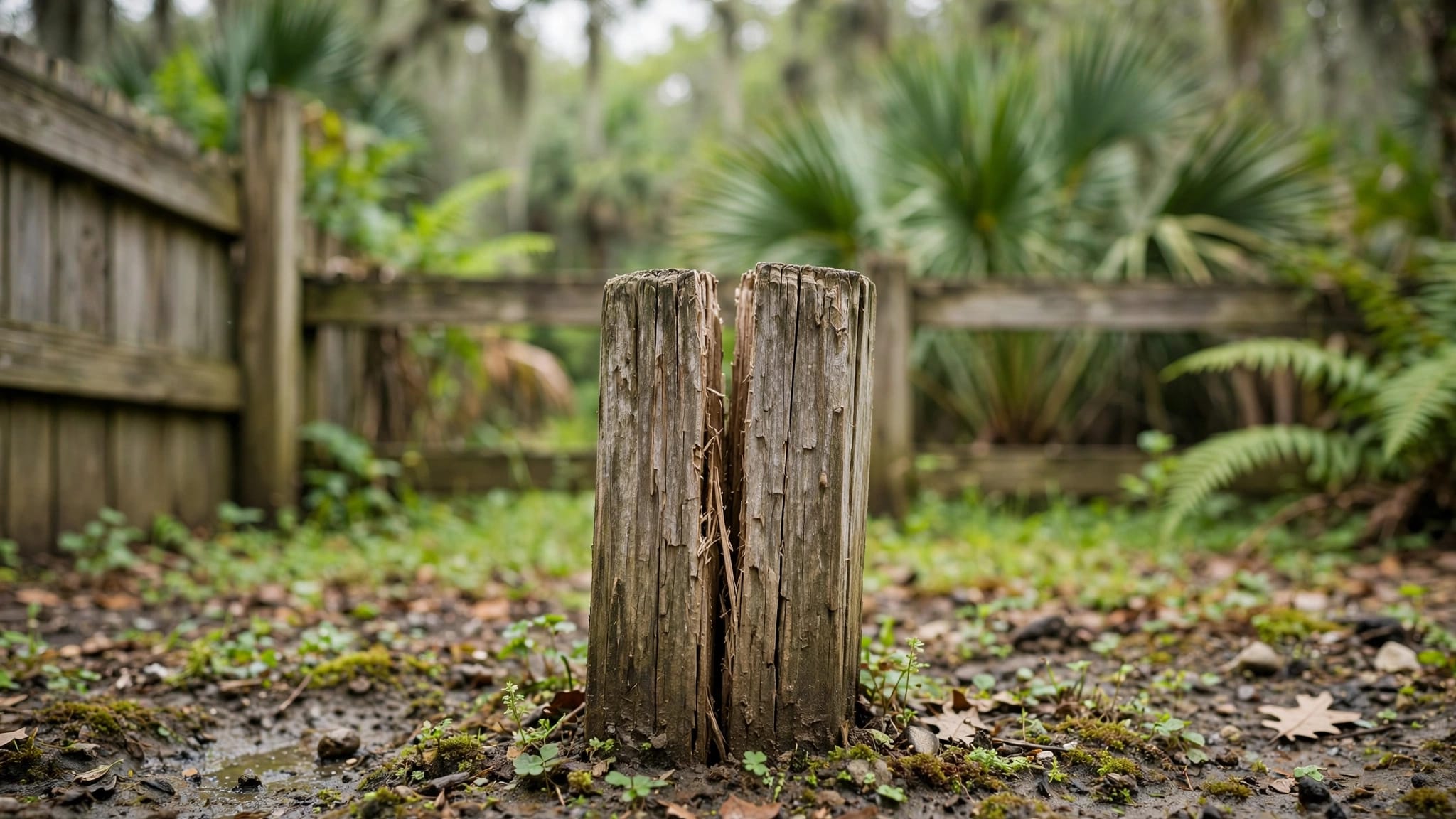
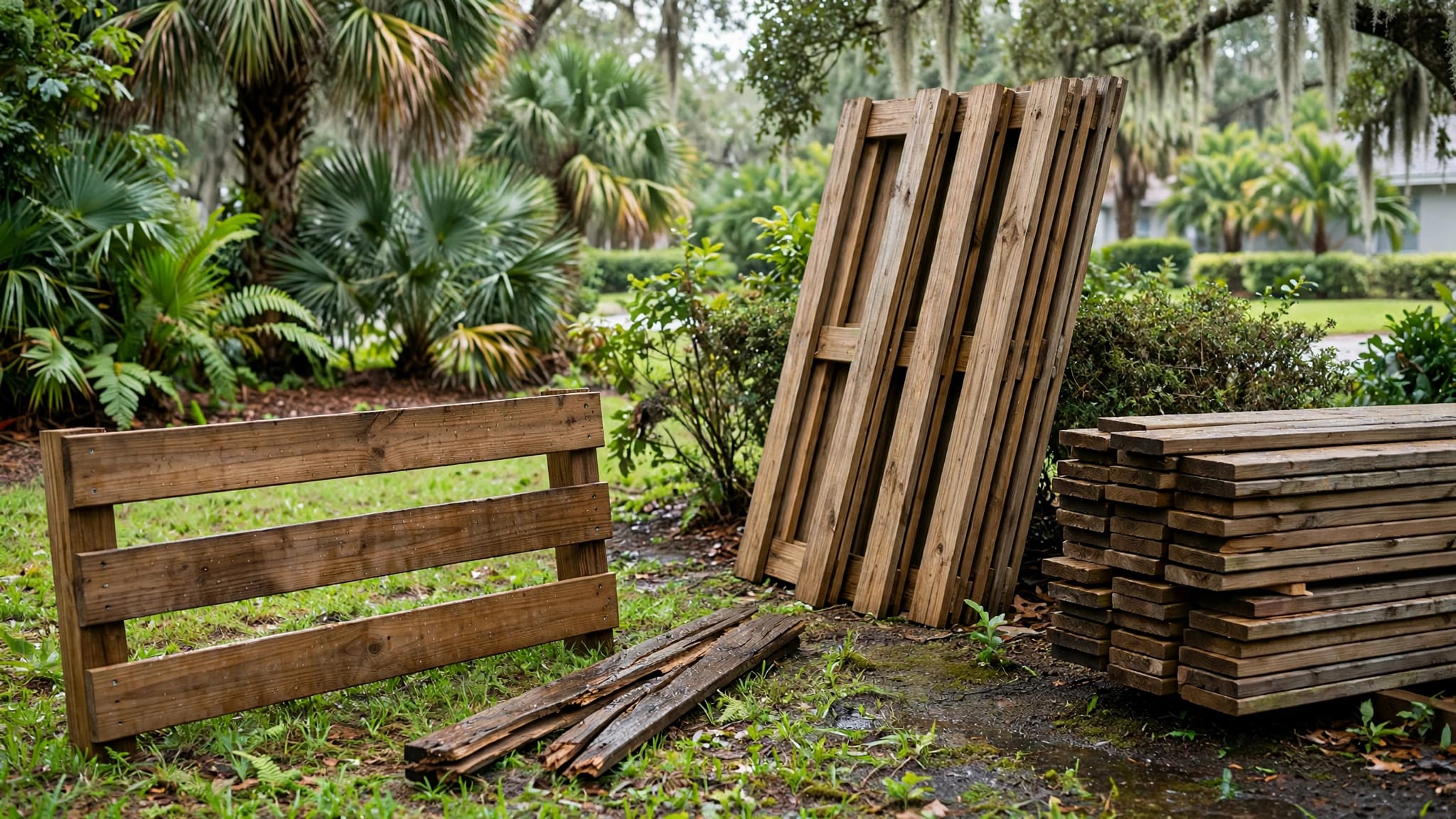
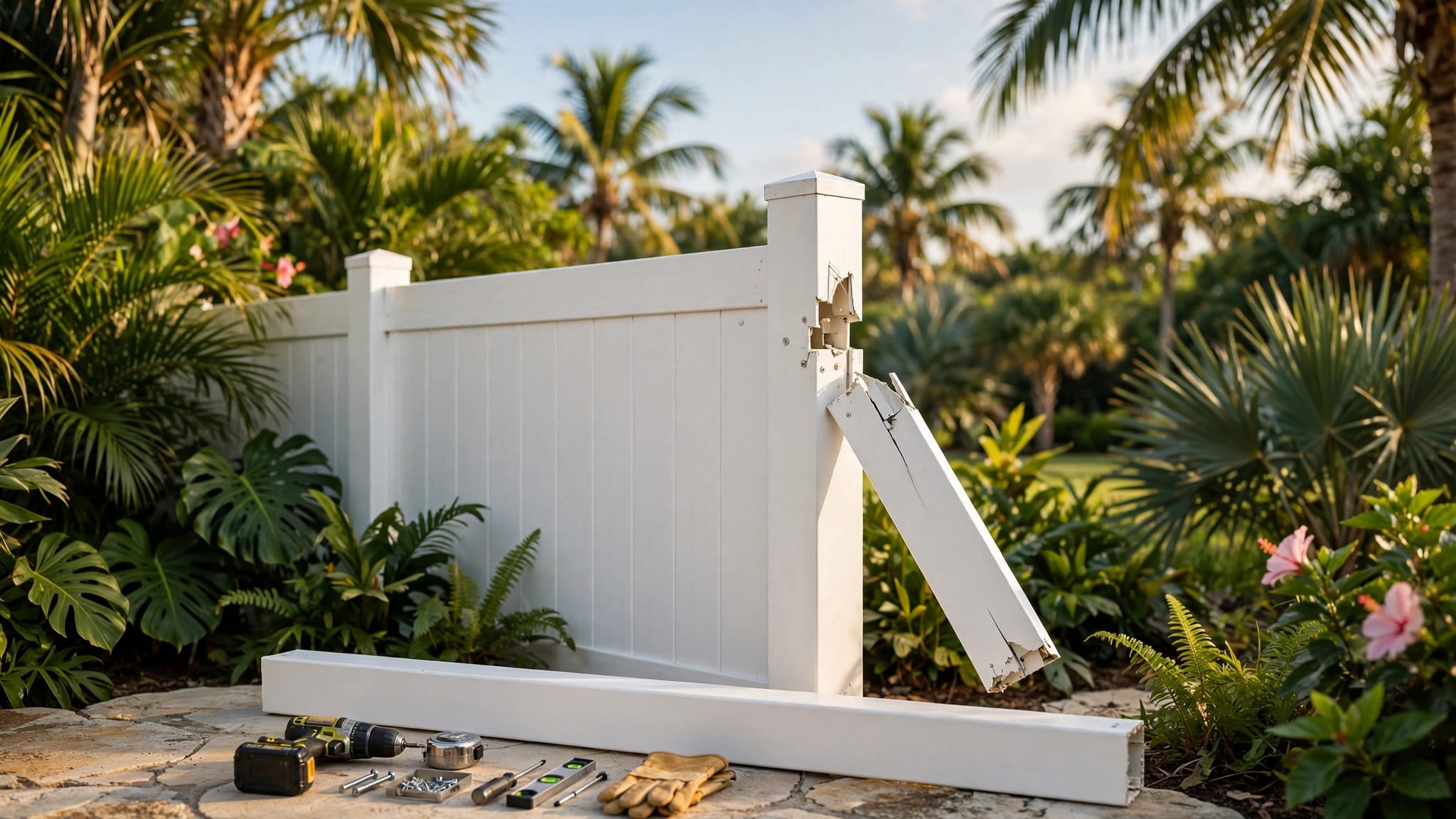
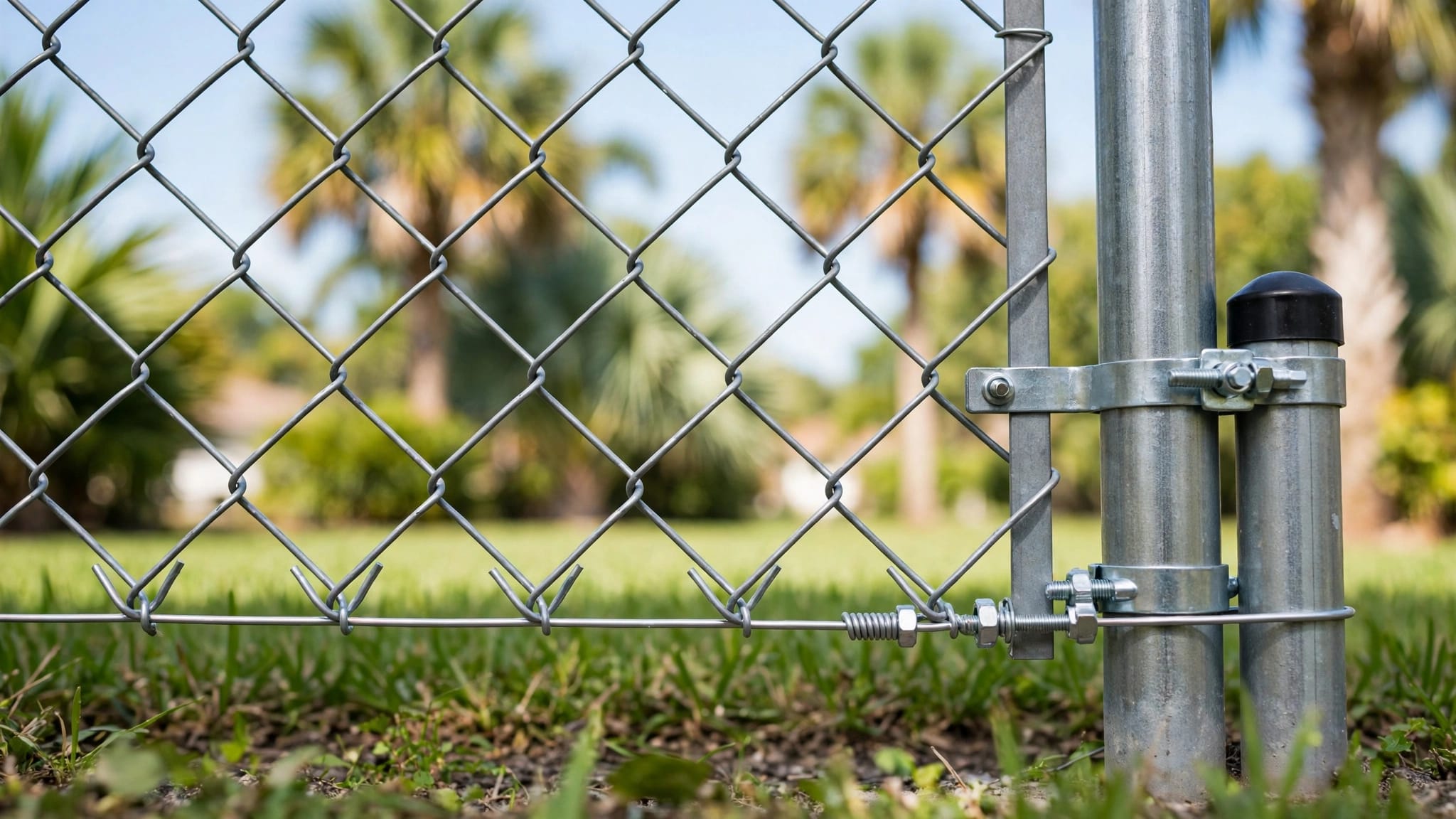
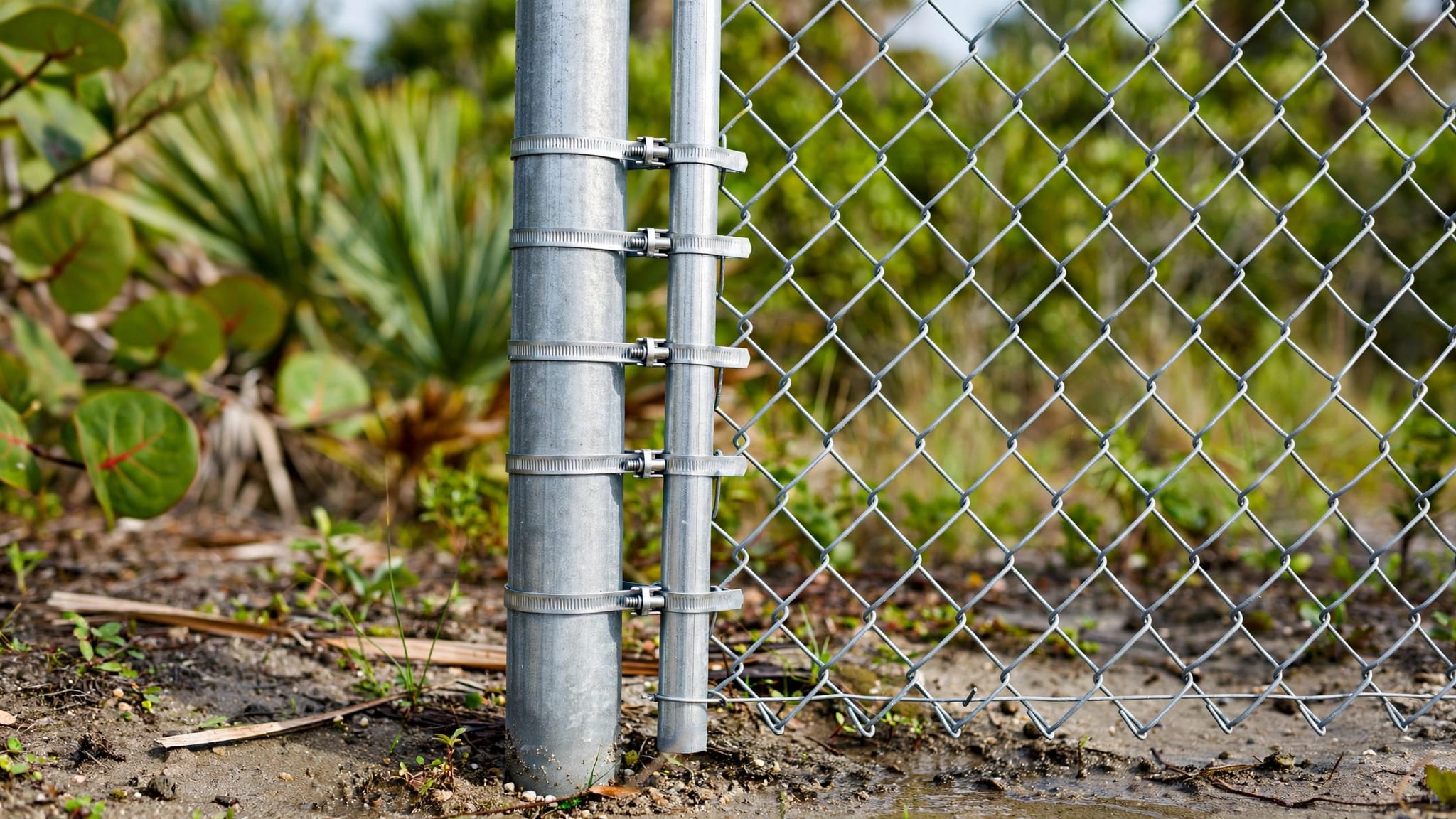
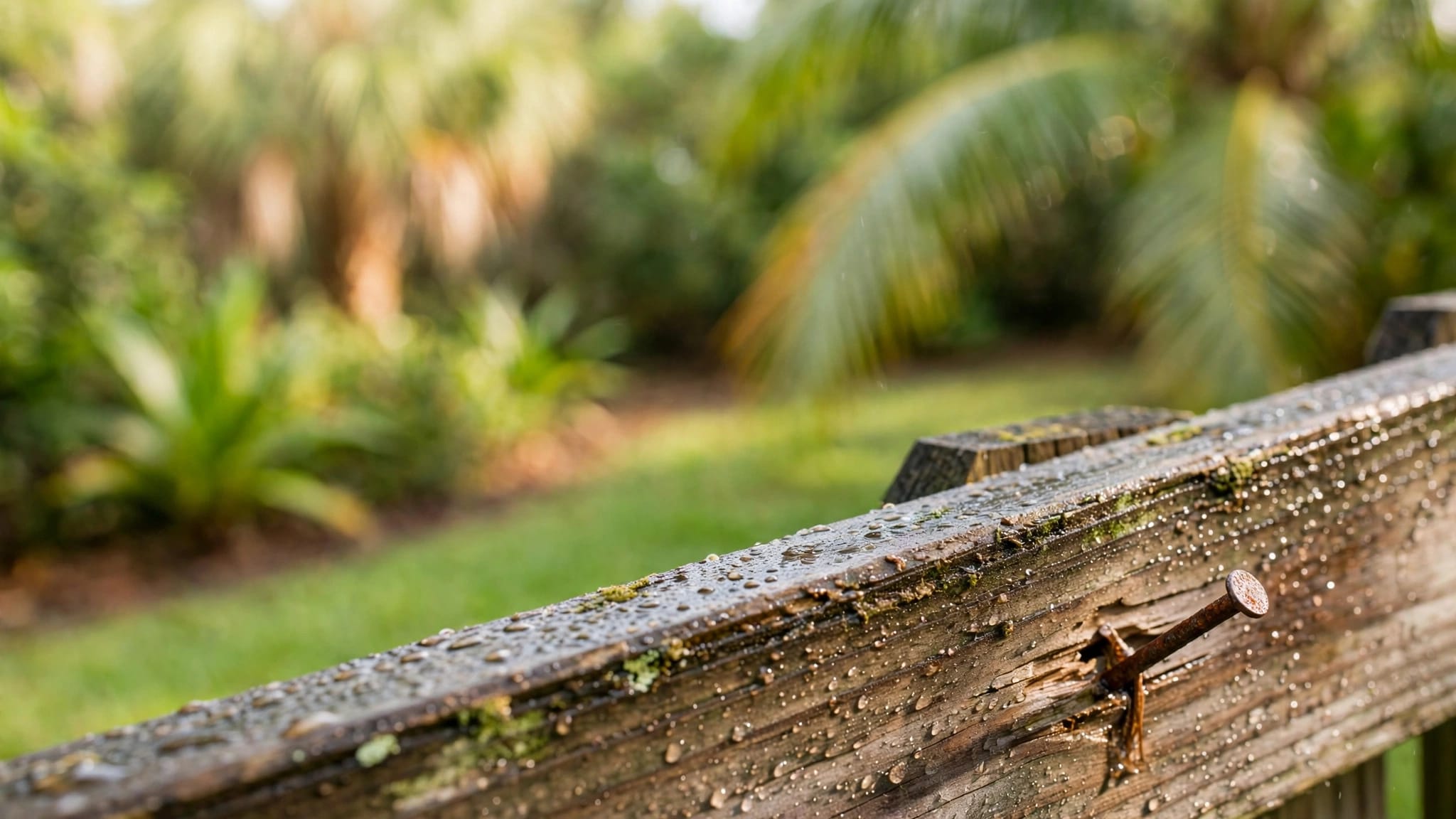
Aluminum and chain link provide an open view of the pond, while vinyl can offer more privacy. Wood offers a different appearance but needs attention in a damp yard. HOA design rules may narrow those choices.
For yards exposed to standing water, compare fence materials for flood-prone areas before settling on a design. Gate hardware and post placement matter too, especially where soil stays wet.
Choose the Right Fence for Your Pond
An ornamental pond can have a fence without automatically becoming subject to Florida's swimming pool barrier rules. The fence itself may still need local approval, and your HOA may have its own requirements.
At Supreme Fence of SWFL, we install vinyl, aluminum, chain-link, wood, metal, and composite fences. Contact us to discuss a pond fence layout for your Southwest Florida yard.