How to Replace Loose Fence Tie Wires in Florida
Loose fence tie wires can often be replaced when the chain-link mesh and supporting frame are still in good condition. The repair reconnects the mesh to its rail or post, but it won't correct a leaning post or damaged fabric.
In Southwest Florida, corrosion and storm strain can affect more than the loose tie you first notice. Start by looking at the whole section so you know what the repair needs to address.
Key Takeaways
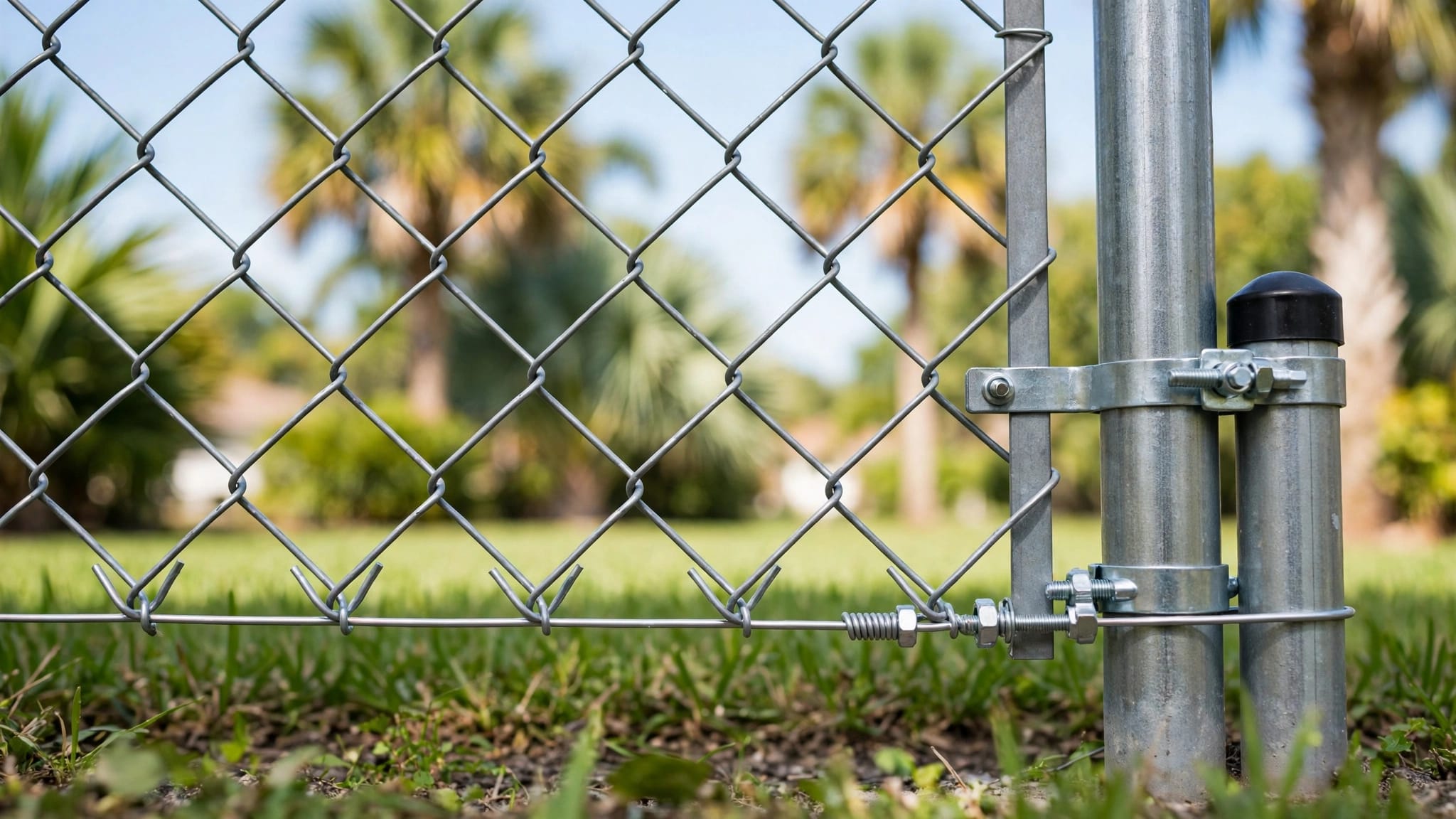
- Fence ties hold chain-link mesh against rails and line posts. A tension bar and bands secure the mesh at a terminal post.
- Choose compatible, corrosion-resistant replacement ties for Florida's humidity and salt exposure.
- If posts lean, rails bend, or the mesh remains distorted, the fence may need more than replacement ties.
Recognize Loose Fence Tie Wires
A loose tie can be easy to miss until the mesh starts moving. Walk along both sides of the fence in daylight, paying attention to places where the fabric no longer sits close to its supports.
Look for movement at rails and posts
A section that rattles in the wind or pulls away from the top rail may have an open or missing tie. Similarly, fabric that moves away from a line post may have lost an attachment there.
Look for wire ends sticking out, broken ties, and rust around the connection. A light touch can reveal local movement, but don't push on a section that looks unstable.
Notice changes in the mesh
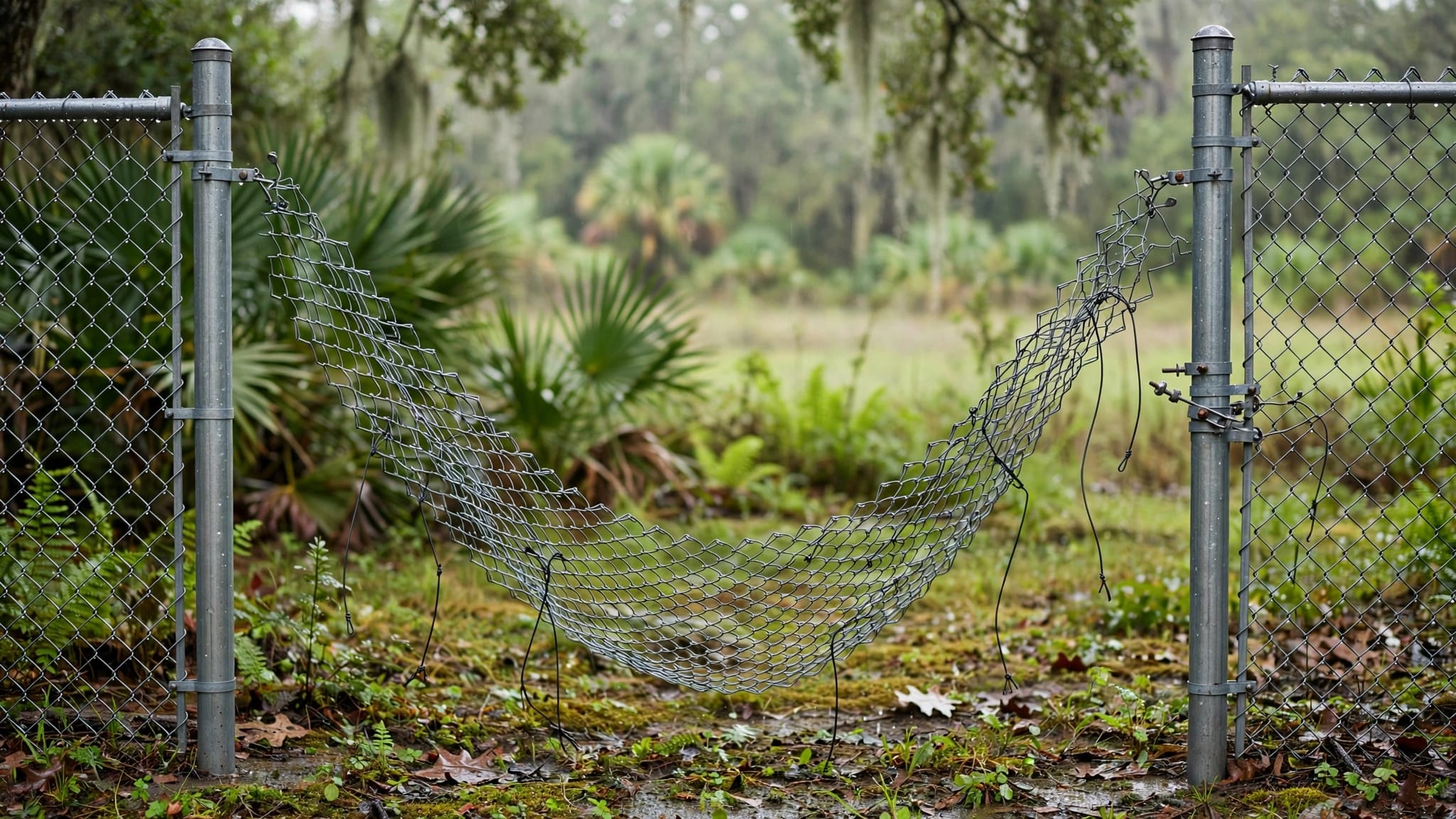
A small droop near a missing tie can point to an attachment problem. However, stretched diamond openings, sharp kinks, or a large bulge suggest the fabric itself has been deformed.
Branches, climbing, and repeated pressure from animals can all change the shape of the mesh. Our guide to sagging chain-link fence fabric covers other reasons a section may lose its shape.
Separate Tie Problems From Frame Damage
Before replacing hardware, look at the parts that support the fence. The repair needs a sound rail or post to hold the mesh in position.
Inspect the line posts and top rail
A line post sits along the fence run between terminal posts. Ties connect the mesh to that post and to the top rail. If the post moves at its base or the rail has a sharp bend, a replacement tie won't restore the frame.
Look for gaps in the soil around posts, rust at the base, and rail sections that no longer line up. After heavy rain, saturated ground can make a previously firm post less stable.
Examine the terminal connections
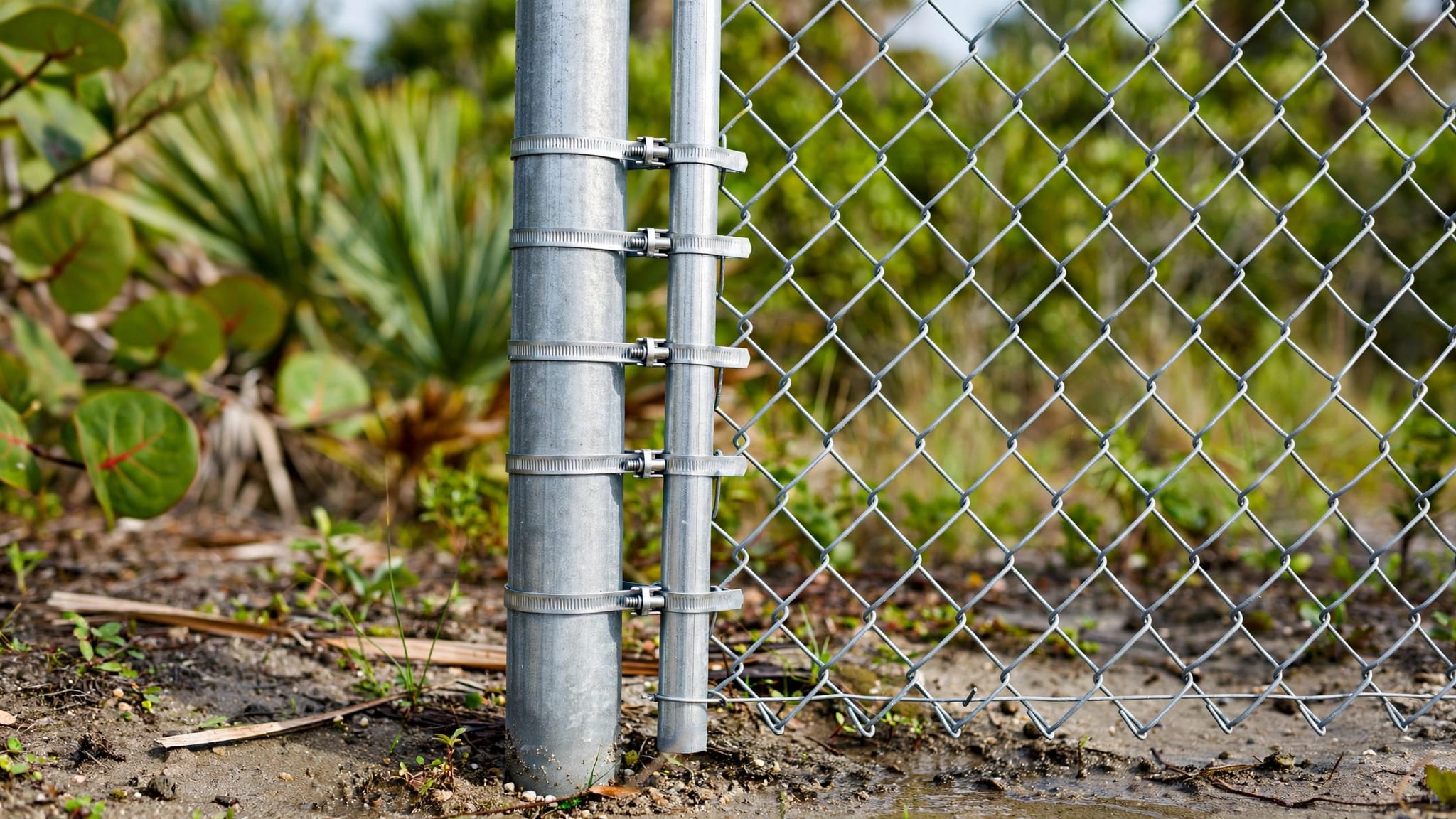
At the end of a chain-link run, a tension bar passes through the fabric and connects to the terminal post with tension bands. Those connections help maintain tension across the section.
If the bands have shifted or the fabric has pulled away at the end post, the trouble extends beyond an individual tie. Avoid trying to compensate by pulling harder at the middle of the fence.
Choose Replacement Ties for Florida Conditions
Replacement ties need to fit the fence system and hold the mesh securely against the existing rail or post. They also need a corrosion-resistant finish suited to the property's exposure.
Account for salt and moisture
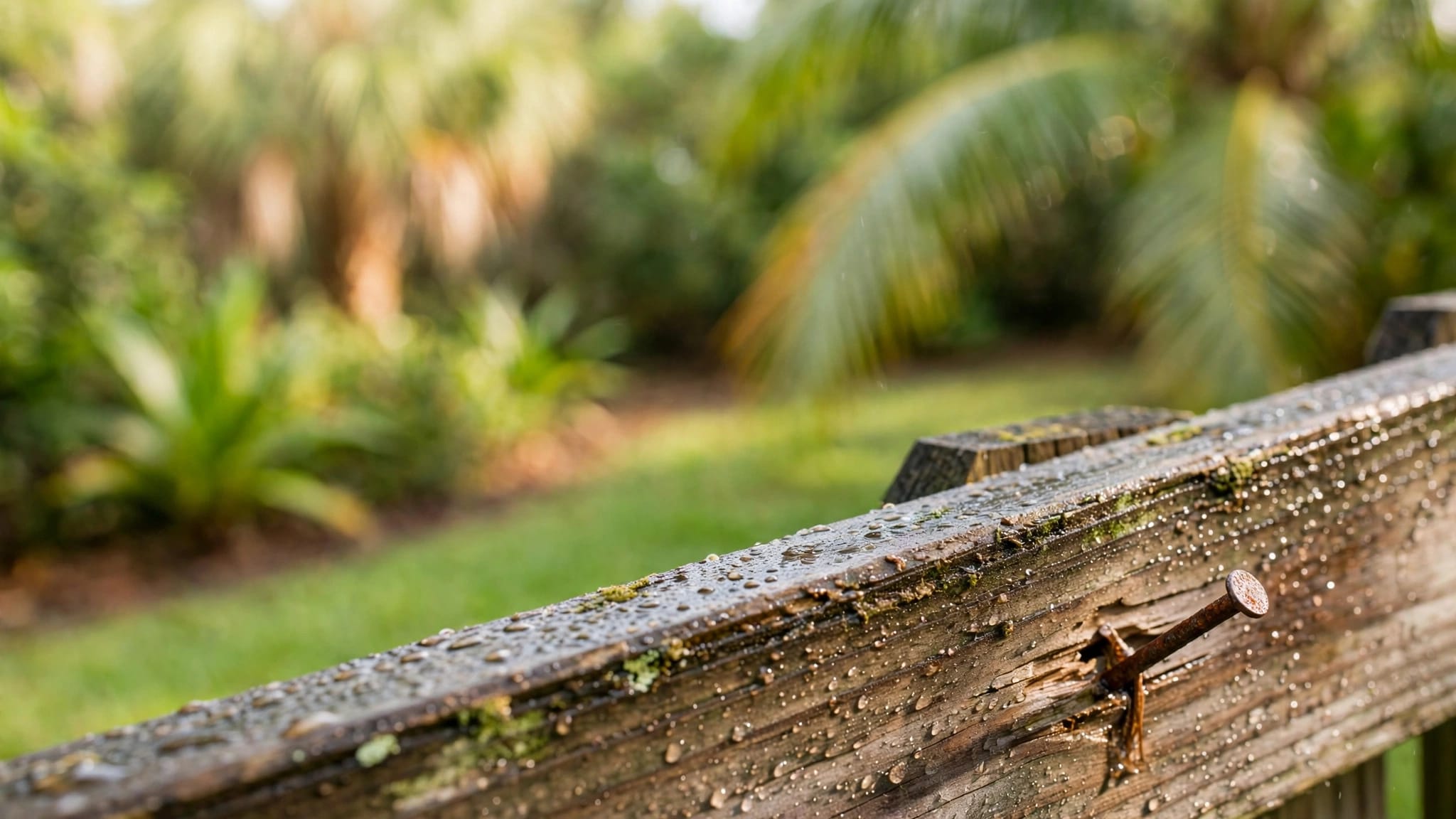
Humidity and frequent rain keep fence fittings exposed to moisture. Near the Gulf, bays, and canals, salt can add to that exposure. Small fittings may weaken before the larger mesh or rail shows obvious damage.
Look at nearby ties as well as the failed one. If several have rust stains, flaking surfaces, or damaged coatings, an isolated replacement may leave other weak connections in place.
Keep the hardware compatible
The replacement must work with the existing fence components. Mixed metals can encourage galvanic corrosion when moisture is present, especially in salty conditions.
A protective coating also matters. Damaged or scratched finishes can leave the underlying metal exposed, so handle new hardware carefully during the repair. Our discussion of chain-link fence lifespan in coastal climates explains how exposure affects the rest of the fence.
Prepare the Area Around the Repair
Choose a dry, safe time to assess the fence. Keep children and pets away from loose mesh and exposed wire ends, particularly if the fence is part of their enclosure.
Clear branches, vines, and other debris that obscure the section. Vegetation can hide failed connections, while a fallen branch can continue pressing against the fabric after a storm. If the branch is large or caught in a leaning section, leave it in place until the area can be handled safely.
Look at the fence on either side of the visible problem. A loose tie may be the only damage, but neighboring fittings can have similar corrosion or strain. Identify each affected connection before deciding how much of the section needs attention.
If the fence forms a pool barrier or contains pets, keep access controlled while the opening remains unsecured. Don't rely on damaged mesh to hold its normal position.
Restore the Mesh at Rails and Posts
The goal is to reconnect the fabric to a stable support without distorting its existing shape. Replacement ties should hold the mesh close to the rail or post and leave no exposed ends that could catch someone passing by.
Bring the fabric back to the rail
At the top of the fence, the mesh should sit against the rail rather than hang away from it. Replacement ties restore the connection where the original hardware has failed.
A local gap may close when the mesh returns to its normal position. If the upper edge still droops across a long section, look beyond the tie itself. The fabric may have lost tension at a terminal connection, or the rail may have shifted.
Reconnect the fabric at line posts
At a line post, the mesh should follow the post without a large gap. The post needs to remain upright and firm for that connection to hold.
Avoid forcing a bent section of fabric flat against a sound post. A concentrated bulge or kink may remain even after the tie is replaced. In that case, the fabric needs attention as well as the attachment.
Check the Repair Before Using the Fence
Once the damaged connections have been addressed, look along the fence line from each direction. The repaired mesh should sit close to its supports and follow the shape of the surrounding fabric.
Gently press the repaired area to see whether it moves away from the rail or post. Some movement in chain-link fabric is normal, but a connection that opens or leaves a noticeable gap needs further attention. Also look for sharp wire ends and any new distortion around the repair.
Check the nearby gate if the damaged section connects to one. It should swing and latch without dragging or pulling on the fence. A gate that has changed position may point to a shifted post rather than a problem with the new tie.
For a pet enclosure, walk the lower edge as well. A secure connection at the top doesn't address a separate opening near the ground.
Maintain Chain-Link Connections in Southwest Florida
A short inspection routine helps you find worn fittings before the mesh pulls away from its supports. Florida's damp weather makes the small connections worth watching, even when the fence looks sound from a distance.
Watch for early corrosion
Walk the fence line each month and look for missing ties, new rust, loose fabric, and changes around post bases. Pay extra attention to shaded areas and spots that stay wet after irrigation.
Near salt water, a gentle fresh-water rinse can help remove deposits from the mesh and fittings. Redirect persistent sprinkler spray where practical, and keep plants trimmed back so fittings can dry and remain visible.
Reduce unnecessary pressure
Keep stored materials and heavy vegetation off the fence. Privacy slats and windscreens also catch more wind than open mesh, so their loads affect the posts and connections as well as the fabric.
If ties repeatedly loosen in the same place, look for the pressure causing the movement. Replacing hardware without addressing that load can leave the fence vulnerable to another failure.
Inspect the Fence After Strong Winds
Wait until conditions are safe before walking the fence line after a storm. Stay away from downed power lines, hanging branches, and sections that lean or appear ready to fall.
Look at more than the obvious loose wire. Wind can bend a rail, shift a post, or press debris into the fabric. Heavy rain can also wash soil away from a footing or leave the ground soft around it.
Photograph significant damage before moving debris or making temporary repairs. If a post has shifted, a gate frame is twisted, or a section remains under pressure, keep people away and arrange for help. Our guide to hurricane fence repair in Southwest Florida covers additional warning signs after severe weather.
When to Call a Fence Contractor
A few failed ties on an otherwise sound fence can be a localized repair. Broader movement calls for a closer look, especially when the damage involves supports or the fabric's tension.
Call for help if a post rocks, a rail is sharply bent, a terminal connection has shifted, or the mesh stays misshapen after the attachment is restored. Widespread rust at post bases is another reason to assess the fence as a whole rather than replace fittings one by one.
At Supreme Fence of SWFL, we provide chain-link fence repair in Cape Coral, including work on damaged links and posts. We can assess the section and address damage that goes beyond loose ties.
Frequently Asked Questions
Can a loose tie cause a chain-link fence to sag?
Yes. A missing or open tie can allow fabric to pull away from its support. Sagging across a longer section can also involve lost fabric tension or shifted terminal hardware.
Should rusty ties be replaced?
Rusty ties that have weakened or lost their protective finish may need replacement. Inspect nearby fittings too, because the same moisture and salt exposure can affect several connections.
Can new ties straighten a leaning fence?
No. Ties attach the mesh to the frame; they don't stabilize a leaning post or straighten a bent rail. Those supporting components need attention first.
Keep the Whole Fence Secure
Replacing loose ties can restore a sound section of chain-link fence. The lasting repair depends on secure supports and mesh that hasn't been badly distorted.
Keep watching the connections after heavy weather and during routine yard checks. If the same section continues to move, the cause may extend beyond its tie wires.