Can You Put a Fence in a Drainage Easement?
Sometimes yes, but often only with restrictions and at the property owner's risk. If a drainage easement crosses your lot, the main issue is not the fence itself, it is whether the fence blocks stormwater flow or access for maintenance.
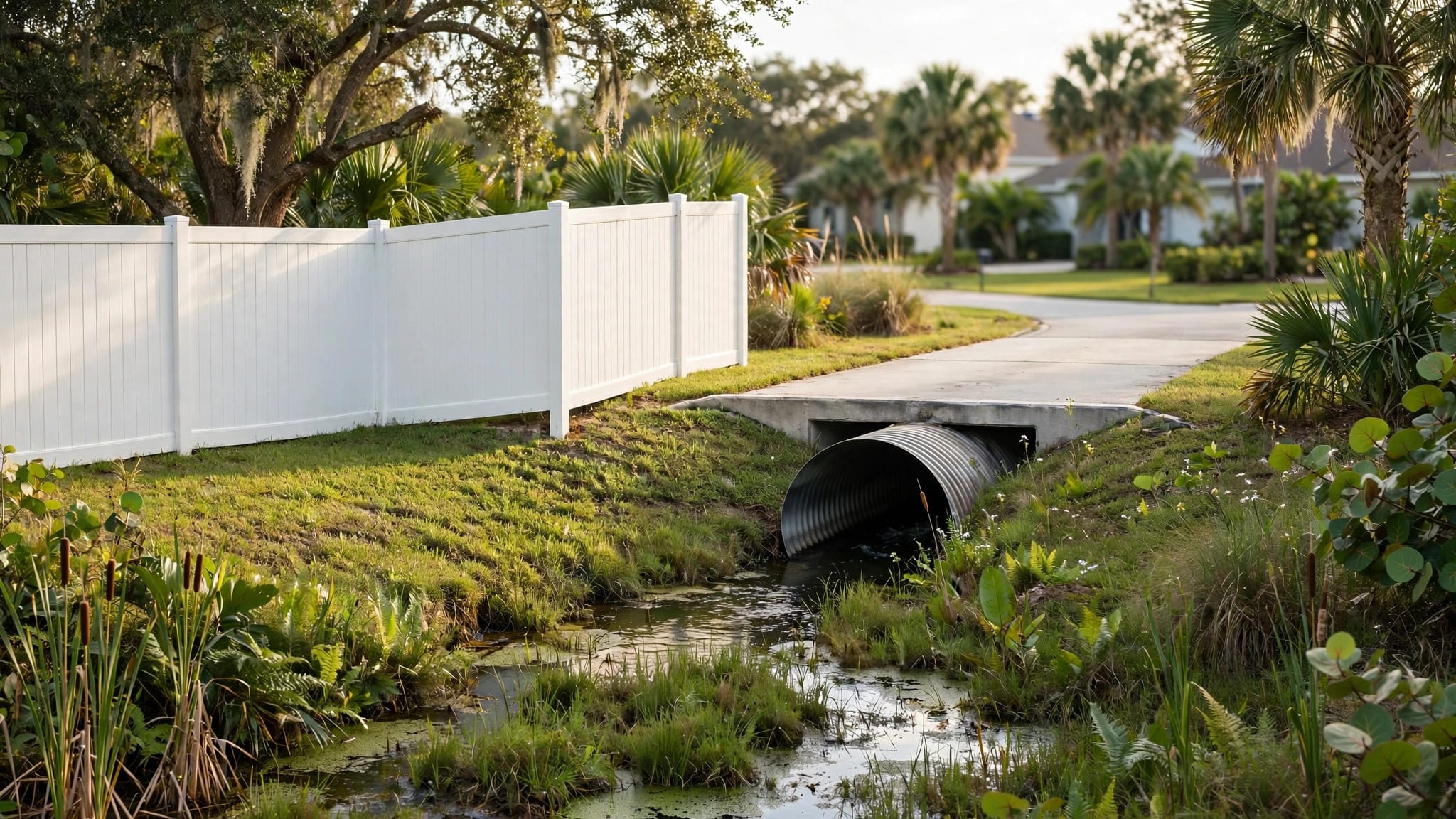
In Southwest Florida, that matters a lot. Swales, ditches, canals, and drainage corridors help move water after heavy rain. Before you set posts, check the survey, plat, deed, HOA rules, and local permit rules. The wrong placement can turn a simple project into a costly do-over.
Why a drainage easement matters
A drainage easement gives someone else the right to use part of your land for water control. That can include a county, city, utility company, or drainage district. The land may still belong to you, but you cannot treat it like a normal backyard if it is reserved for drainage.
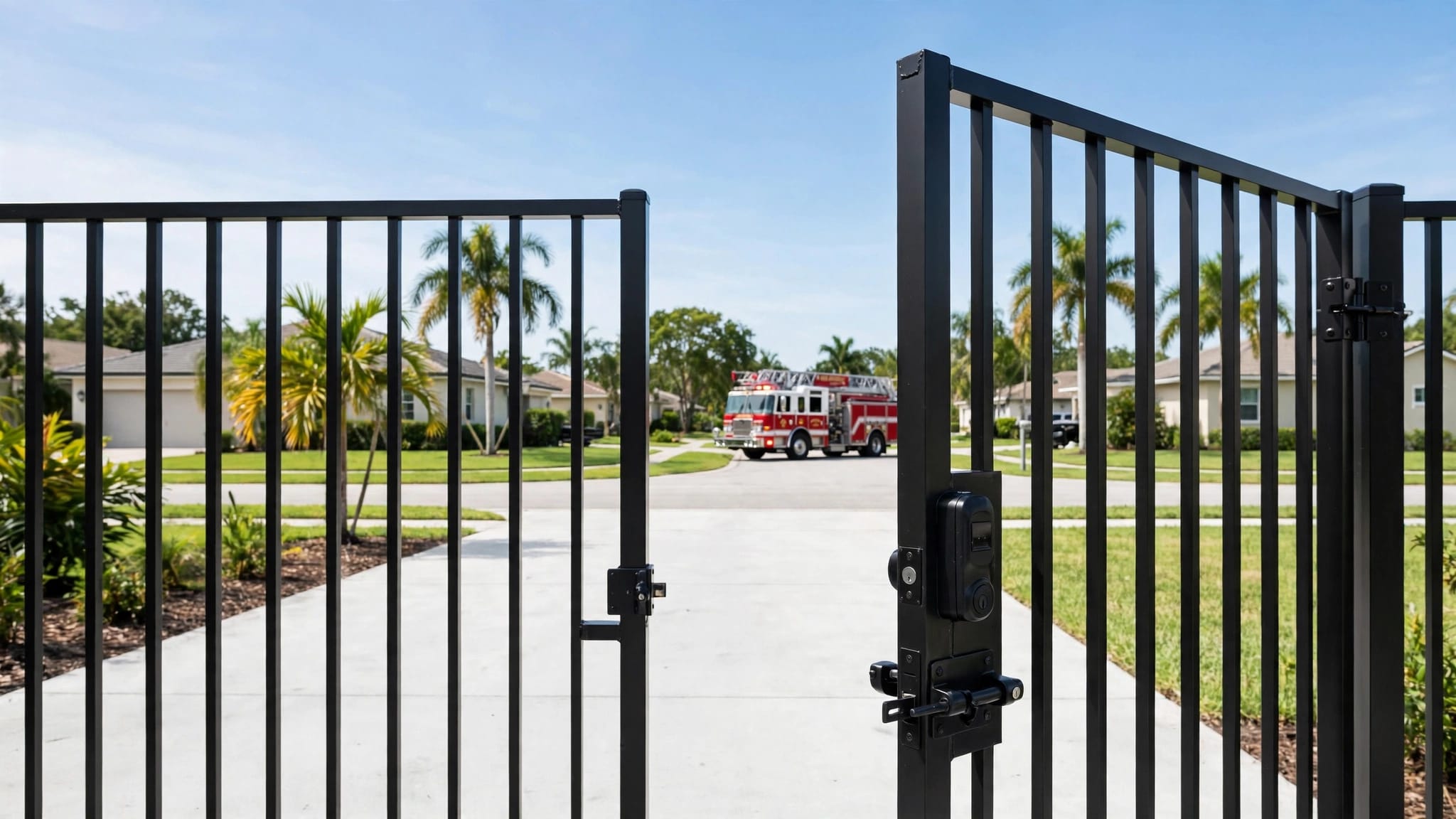
That means the easement must stay open enough for water to move and for crews to reach it. If a storm drops debris or a pipe needs repair, someone may need room for tools, trucks, or digging equipment. A fence that looks harmless on day one can become a wall on the day work starts.
If a fence blocks maintenance access, the problem usually shows up during the first big storm or repair call.
When a fence may be allowed
A fence in a drainage easement is not always forbidden. In some cases, the owner can install one if the fence does not block flow, stays within approved limits, and can be removed if work is needed. That often means no solid base, no deep concrete footings across the easement, and no layout that traps water or debris.
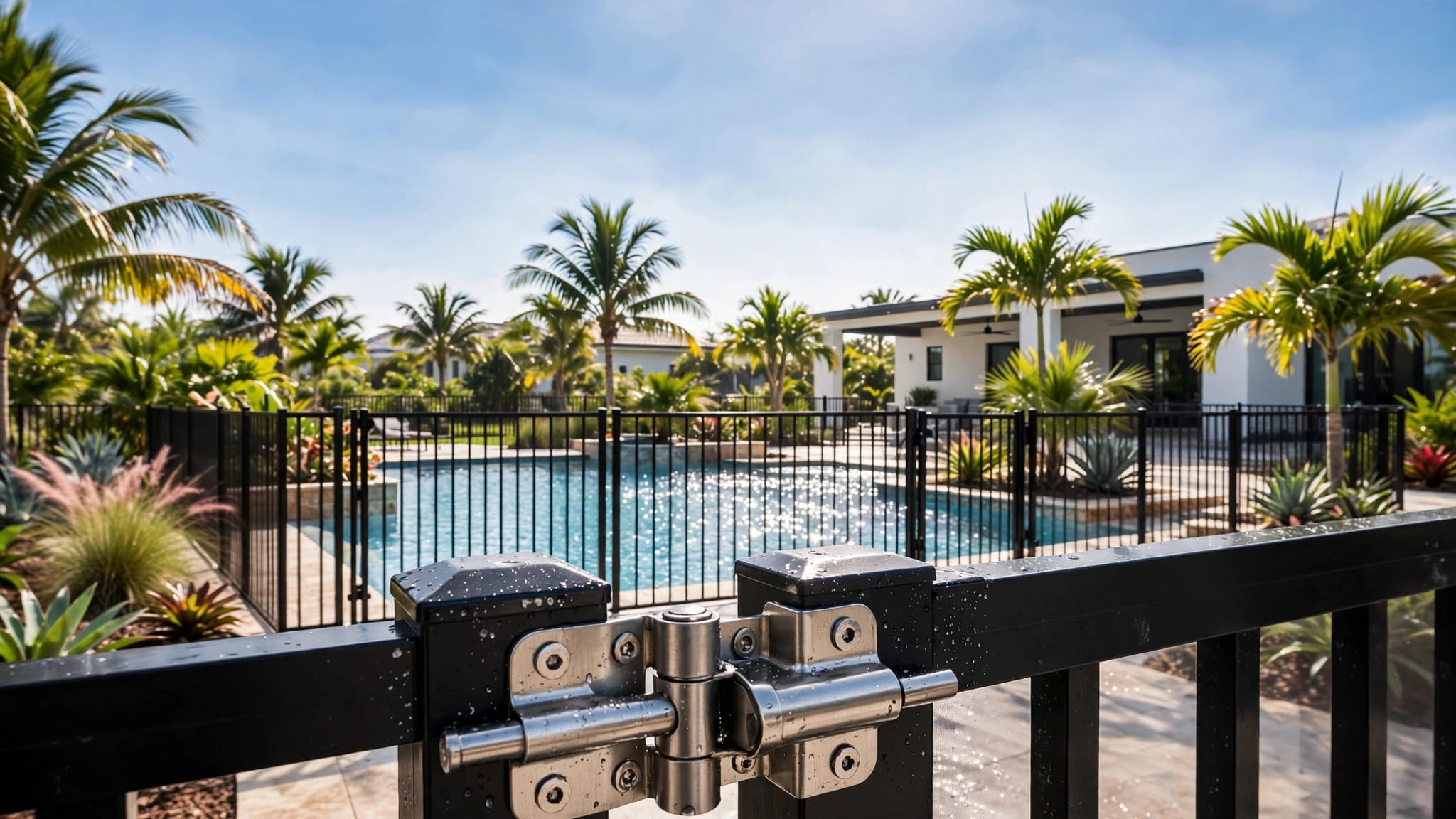
Approvals may also require a specific material or design. A removable panel, a gate, or a fence placed outside the easement line may be acceptable where a full privacy fence is not. Open styles like chain link or aluminum may work better in some cases, but only if the layout still leaves room for access.
Even when a fence is allowed, the owner may have to move or remove it later at their own cost. That risk is part of building inside an area that was set aside for drainage.
Fence styles that often cause trouble
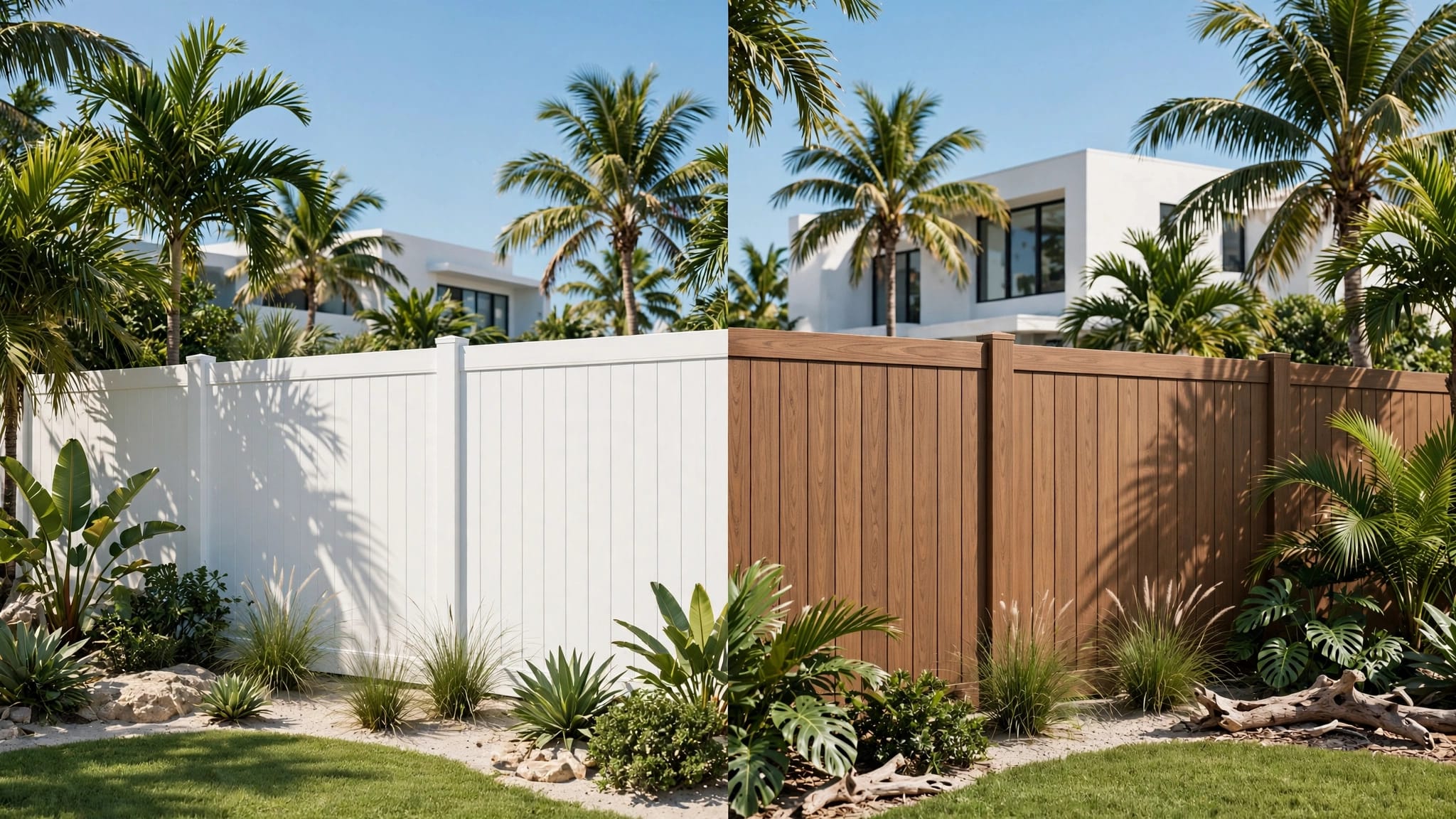
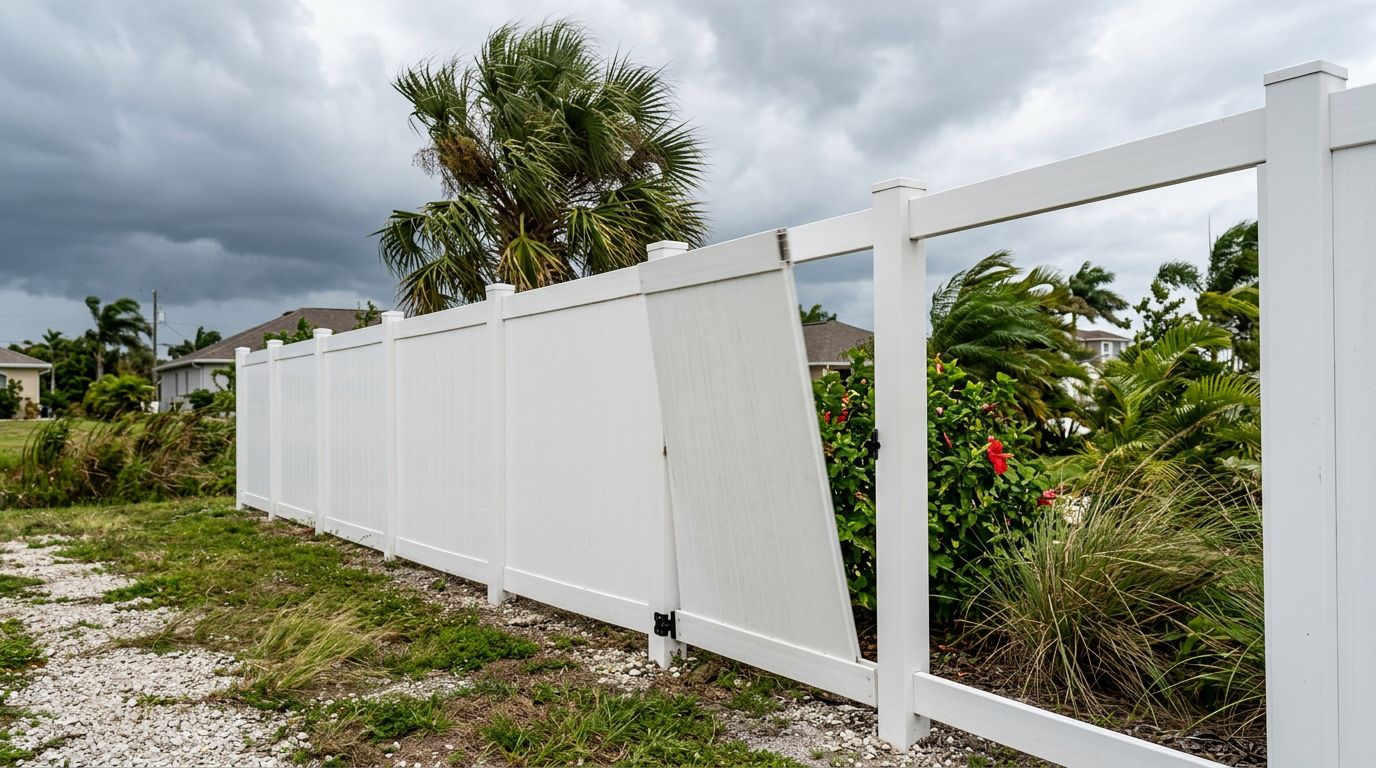
Some fence types create more headaches than others. Solid vinyl privacy fences can block access and make it harder to reach the drainage area. Masonry walls and fences with continuous concrete footings are even more likely to raise concerns, because they are harder to remove.
Tight picket designs, locked gates, and fence lines that cut across a swale can also cause problems. The issue is not only water moving under normal weather. It is also how the area works after heavy rain, when sediment, grass, and trash need to be cleared fast. If the fence turns a clear work zone into a narrow lane, approval may be denied or conditions may be added.
A fence that looks fine from the street can still fail the test if it limits access. That is why design matters as much as location.
What to check before you buy materials
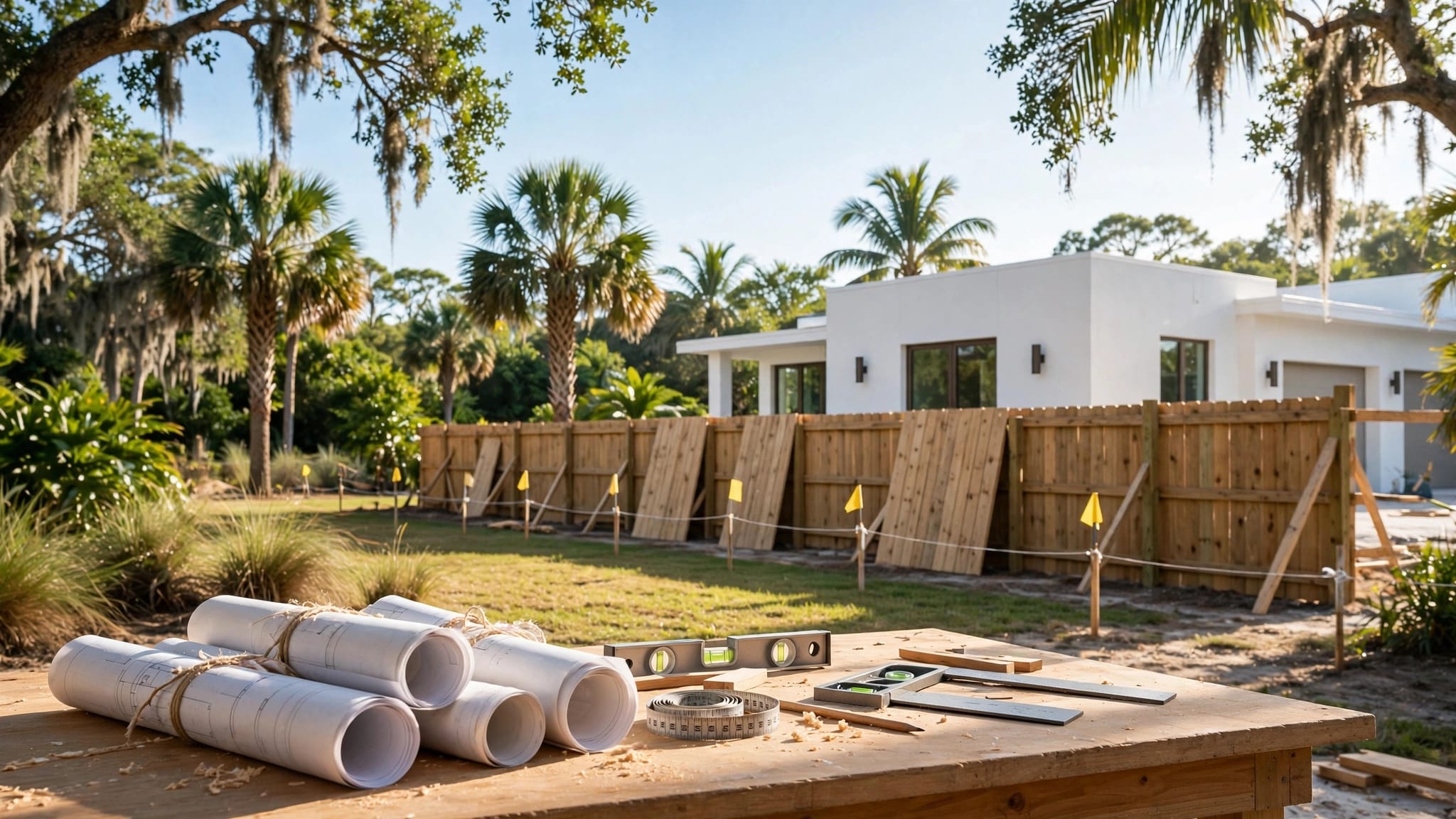
Before you order posts or panels, line up the records and the rules. Start with the survey, plat, and deed, because those documents show where the easement sits. If the drawing is hard to read, understanding easements before fence installation can help you spot what matters.
Then check the local permit office, because fence rules can change by county, city, and lot type. In some areas, a permit review will ask for a site plan, easement notes, or proof that the fence does not cross a drainage path. Lee County fence permit regulations are a good example of how placement, not just height, can trigger review.
Use this checklist before you build:
- Pull the survey, plat, and deed.
- Mark the drainage easement on the property.
- Check county or city fence rules.
- Read any HOA covenants and approval forms.
- Ask the utility or drainage authority if the easement needs written approval.
- Plan for a fence that can be removed if access is needed.
If your yard has a swale, ditch, canal edge, or drainage box nearby, stop and ask for approval before you dig. That is also a good sign that a permit may be needed. Rules vary, so treat this as general information, not legal advice.
What can happen if you build anyway
If a fence goes in without the right approval, the biggest risk is removal. The owner may have to take the fence down, fix the area, and pay for the work again. That gets expensive fast, especially if the posts were set in concrete.
There can also be delays with a home sale or refinance if the survey shows an encroachment or an unapproved improvement. HOA fines, county notices, and repair requests can follow too. A fence that saves time today can create a much larger problem later.
Conclusion
A drainage easement is not extra yard space. It is a protected corridor for water flow and access, so a fence in a drainage easement is only safe when the records and rules allow it.
Before you build, check the survey, plat, deed, local permit rules, HOA requirements, and any drainage authority standards. If the fence can be removed quickly, stays clear of the flow path, and has written approval, you are on much firmer ground.