Cape Coral Fence Gate Guide for 2026, Common Gate Widths, Hinge Types, and How to Stop Sagging (Walk Gates and Double Gates)
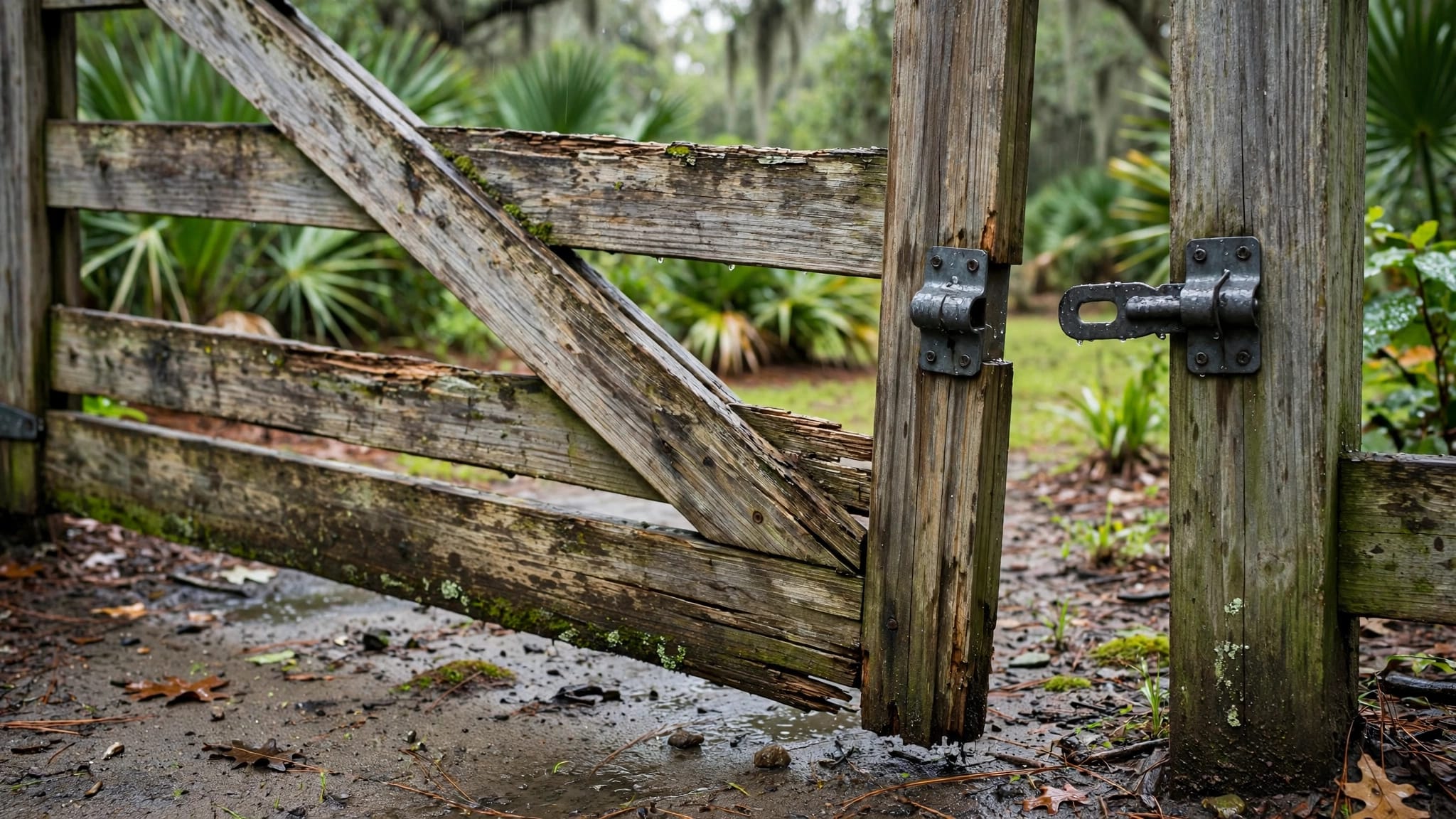
A gate is the only part of a fence that moves, so it's also the first part to complain. In Cape Coral, that "complaint" usually sounds like rubbing on pavers, a latch that won't catch, or a corner that drops after a windy week.
This Cape Coral fence gate guide for 2026 covers the sizes homeowners choose most, the hinge types that hold up better near salt air, and practical ways to prevent sagging on both walk gates and double driveway gates.
Exact requirements still depend on your fence material, gate weight, soil conditions, and local rules. Always confirm your permit set and HOA details before you order hardware.
Plan first: permits, HOA rules, and accurate measuring (before you dig)
Cape Coral is permit-driven with fencing. Start by reviewing the city's current forms and guidance at the Cape Coral Permit Document Center. The city also publishes a helpful PDF, Fence residential permit guidelines, which lists common submittal items like a site plan showing gate locations and widths.
In early 2026, Cape Coral commonly treats fences as permitted work, and the site plan details matter. The city also commonly requires fences set in from the property line (often about 12 inches), so don't assume you can build right on the line. HOA rules can be stricter than the city, so get HOA approval first when applicable.
Also, think about any special gate rules. Pool gates are the big one. If your gate is part of a pool barrier, confirm self-closing and self-latching expectations with Cape Coral pool gate rules.
Step-by-step: measuring and planning a walk gate (single gate)
- Pick the "traffic" path first. Walk the route with groceries, trash bins, and pets in mind.
- Measure your clear opening goal. For most homes, 36 inches to 42 inches is comfortable.
- Plan for gaps and grade. A typical starting target is about 1 to 2 inches of ground clearance , then adjust for drainage and mowing.
- Confirm swing direction. Make sure the gate won't hit a car, a downspout, or a pool screen.
- Mark post locations, not just gate width. Posts, hinges, and latch hardware need space.
Step-by-step: measuring and planning a double gate (two-leaf driveway gate)
- Measure the driveway opening where the gate will sit , not at the sidewalk.
- Choose equal leaves when you can. Two matching leaves usually sag less and latch cleaner.
- Plan a center stop and a drop rod. Without them, wind can "pump" the leaves and loosen hardware.
- Check for slope. If the driveway crowns or slopes, you may need more ground clearance or a re-graded spot where the leaves meet.
- Decide how you'll secure it. Manual latch, padlockable latch, or future automation (automation costs vary widely, see Angi's 2026 automatic gate cost ranges for a budgeting reference).
A gate plan that ignores slope is like installing a door when the floor is still wet concrete. It might work today, then bind forever after.
Common gate widths in Cape Coral, plus gaps, posts, and hinge types that last
Walk gate widths homeowners choose most
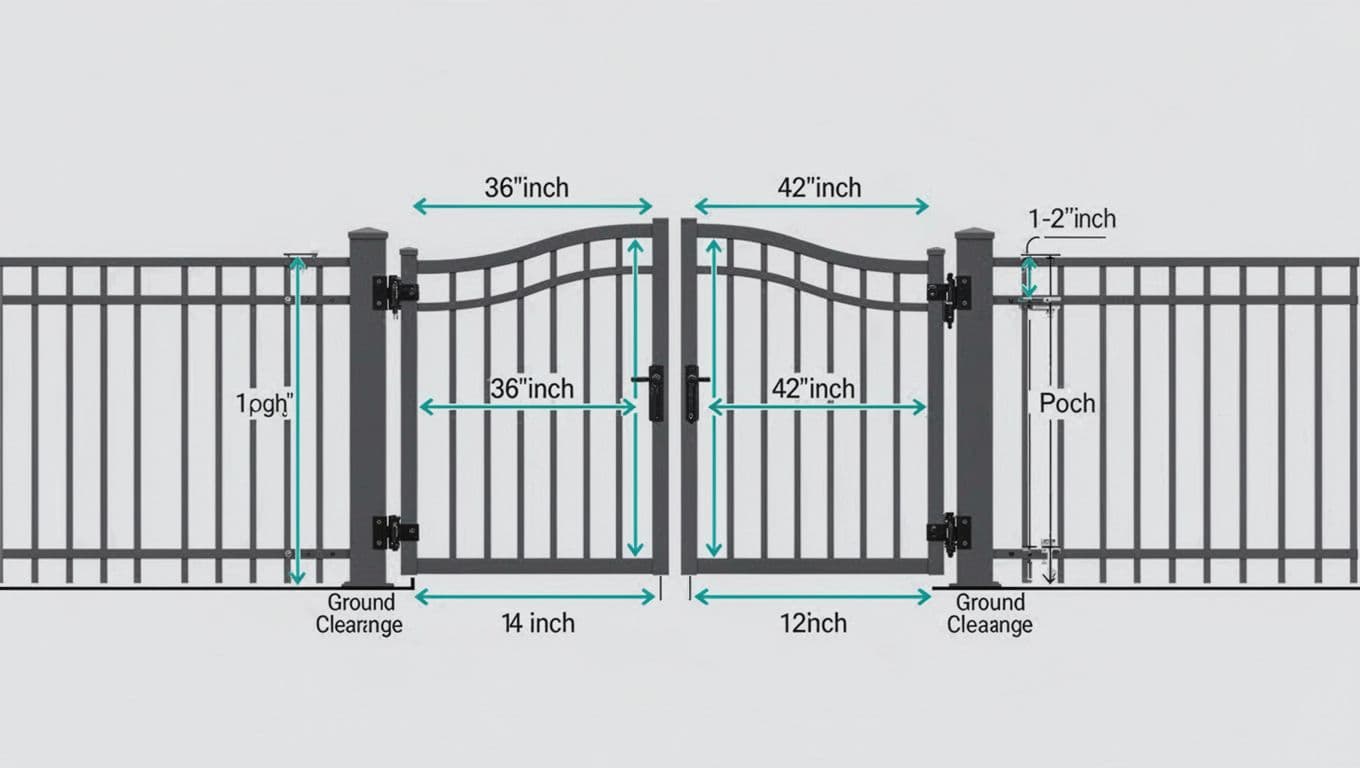
Diagram of typical walk gate posts, widths, and clearances, created with AI.
Use this as a practical sizing reference (final sizing depends on the gate frame and hardware):
| Walk gate width (typical) | Best for | Notes |
|---|---|---|
| 36 inches | Most foot traffic | Often the simplest to keep square |
| 42 inches | Coolers, strollers, small carts | More hinge stress, upgrade hardware |
| 48 inches | Wider access needs | Consider a stiffer frame, 3 hinges |
As for gaps, many installers aim for about 1/2 inch to 1 inch at the latch side and hinge side, then tune it to your latch style. In Cape Coral, keep an eye on sandy soil settling and pavers that can heave slightly.
Post sizing varies by material, but these are common starting ranges:
- Wood gates : hinge posts often 4x4 minimum , sometimes 6x6 for wider or heavier gates.
- Vinyl gates : common systems use 5x5 posts , often with an internal metal insert on hinge posts.
- Aluminum and steel gates : post diameter and wall thickness matter more than "size," especially near salt air. If you're considering metal, local experience helps, see aluminum gate installation in Cape Coral.
For general background on typical residential gate sizing, this overview of standard fence gate sizes can help you sanity-check your plan before you order.
Double gate openings that work well for driveways
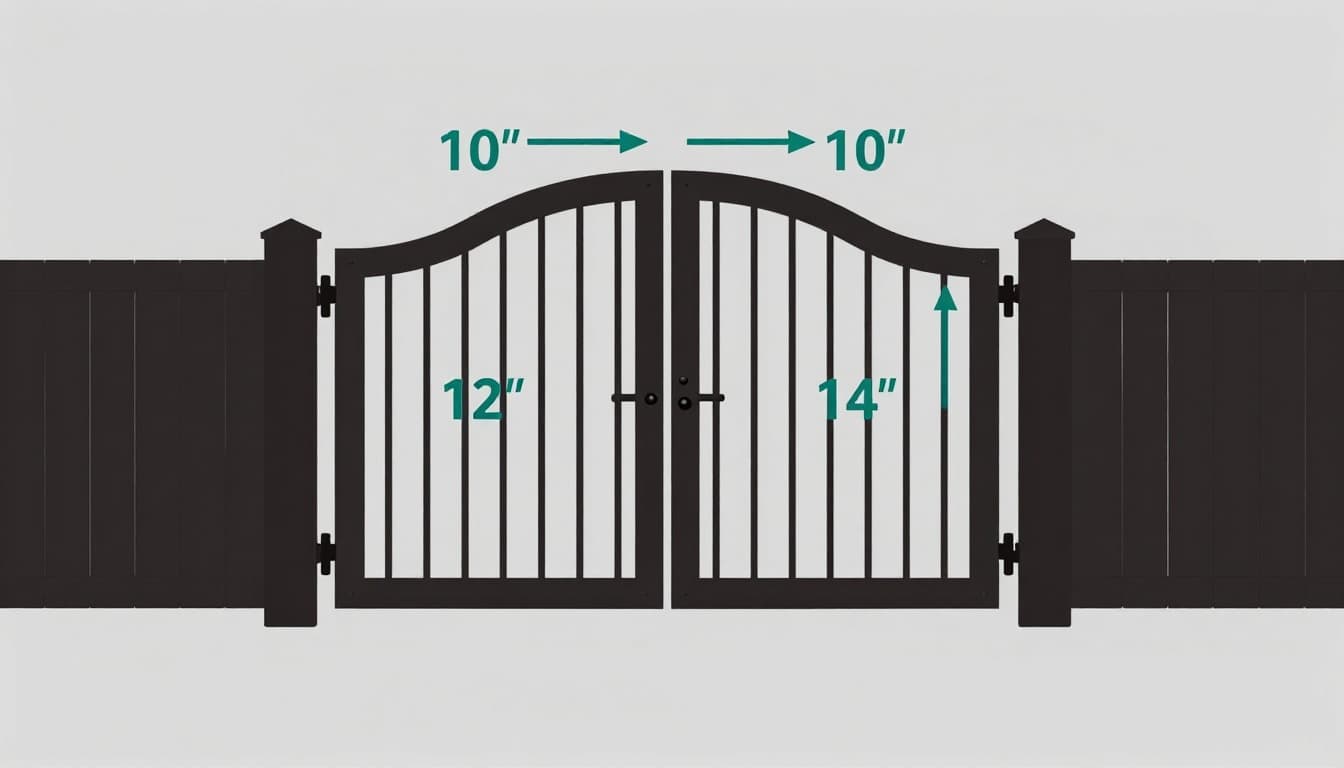
Diagram showing common double-gate openings and key hardware, created with AI.
A quick reference for common driveway openings:
| Total opening (typical) | Each leaf (approx.) | Common use |
|---|---|---|
| 10 feet | 5 feet per leaf | Compact driveways |
| 12 feet | 6 feet per leaf | Most two-car driveways |
| 14 feet | 7 feet per leaf | Wider turns, trailers |
Bigger isn't always better. As leaf width grows, sag risk rises fast. If you need a very wide opening, sometimes a different layout (or a rolling system) makes daily use easier.
Hinge types and how many you need
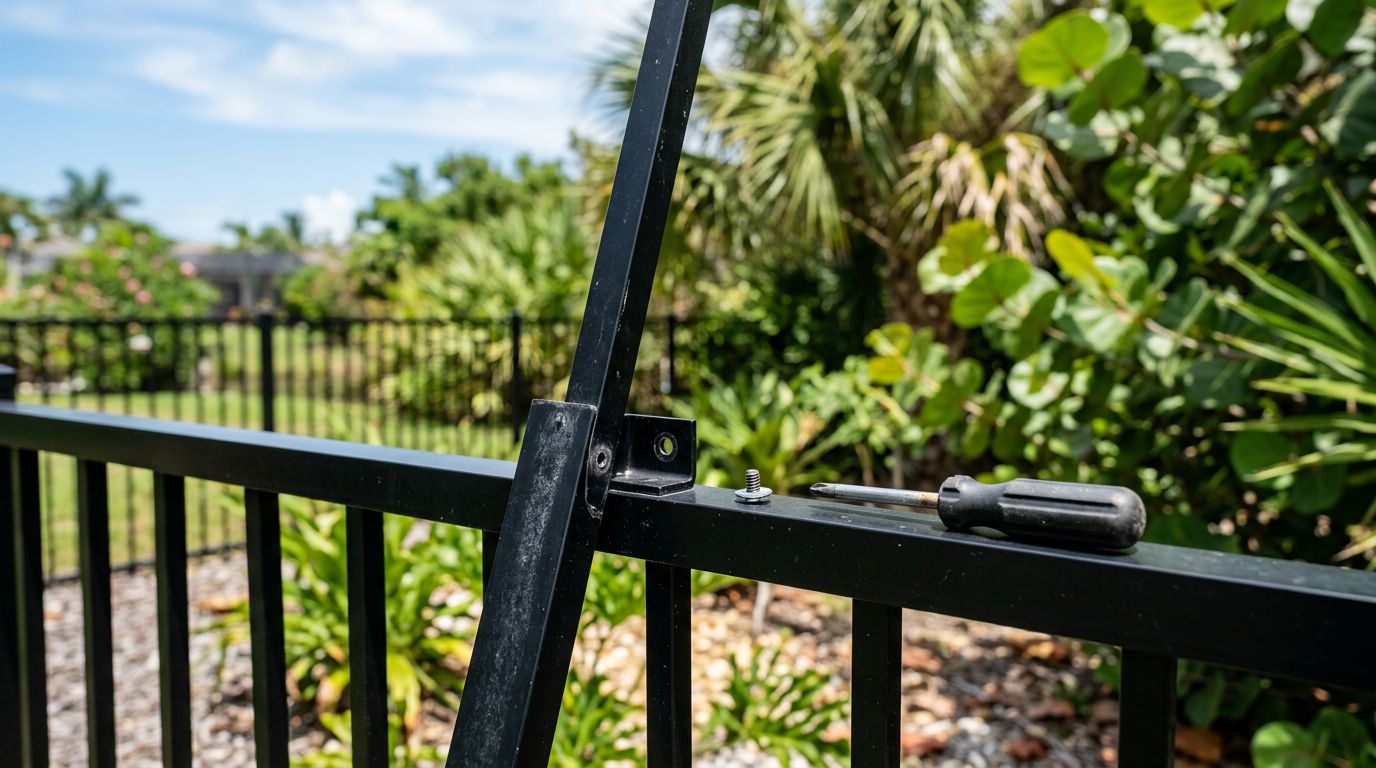
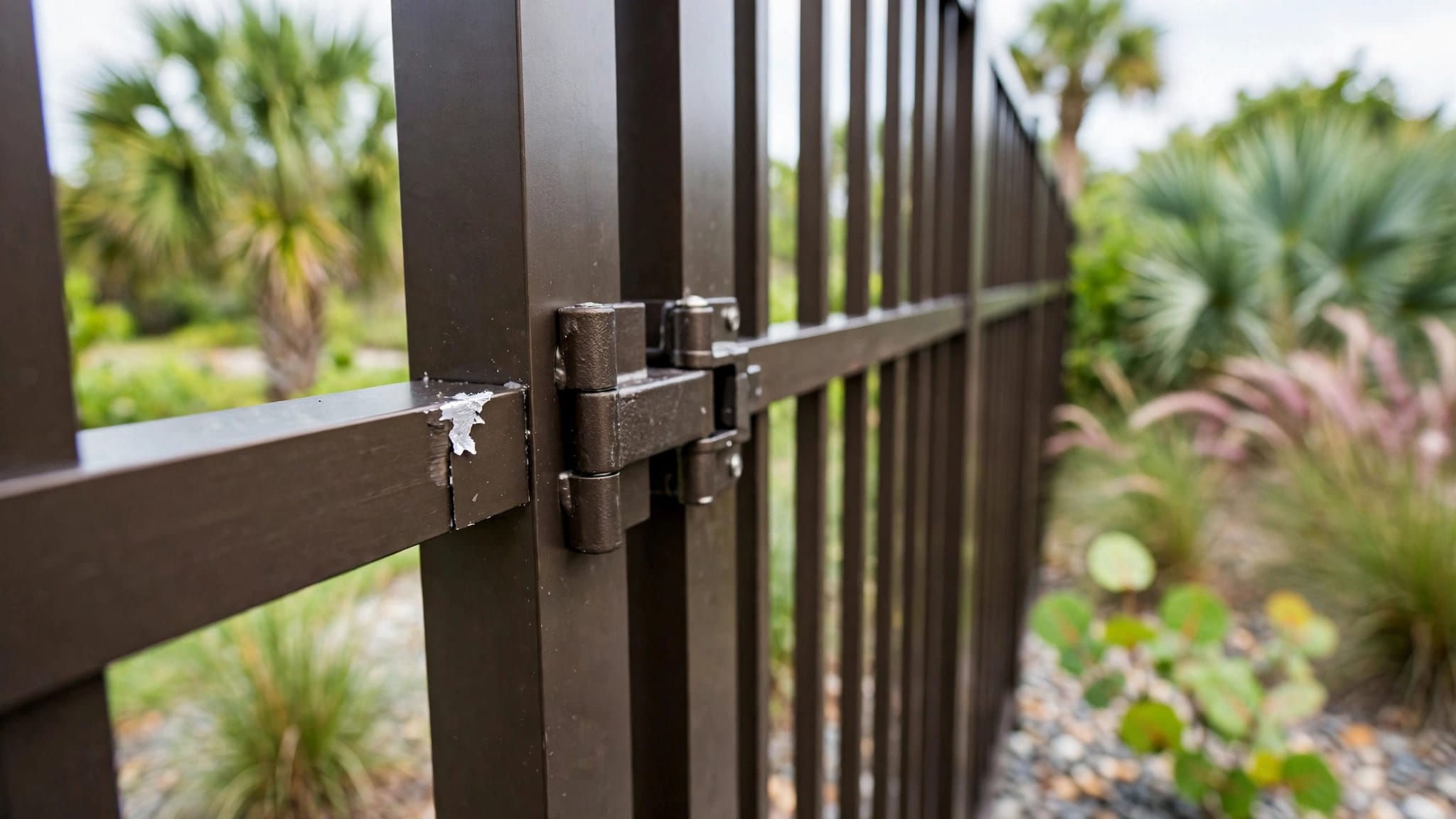
In coastal Cape Coral, corrosion resistance is just as important as strength. Many homeowners do best with stainless steel or hot-dipped galvanized hardware, plus fasteners that won't rust-stain the gate.
Here's a practical hinge guide (final selection depends on the gate's weight and frame design):
| Gate size and weight (typical) | Hinge count (range) | Hinge types that fit well |
|---|---|---|
| 36 to 42 inch walk gate, light to medium | 2 | Adjustable tension hinges, strap hinges |
| 48 inch walk gate, medium to heavy | 3 | Heavy-duty adjustable hinges, ball-bearing hinges |
| Double gate leaves 5 to 6 feet | 3 per leaf | Heavy-duty hinges plus drop rod and center stop |
| Double gate leaves 7 feet or heavy frames | 3 to 4 per leaf | Reinforced hinges, upgraded posts, bracing |
For commercial-style chain-link gate construction details, the UFGS chain-link fences and gates spec shows how seriously specs treat posts and hardware when wind loads are part of the job.
Materials and hardware that hold up better near salt air
- 316 stainless fasteners (where compatible): Great for coastal corrosion resistance.
- Hot-dipped galvanized hardware : A solid choice for many fence types.
- Coated structural screws and through-bolts : Better than basic zinc screws for long-term use.
- Drop rods (cane bolts) and a ground stop for double gates: Reduces racking and wind movement.
- Hinge-side post reinforcement (metal insert or heavier post): Often the difference between "fine" and "forever adjusting."
Avoid mixing dissimilar metals when you can. Some combinations can speed up corrosion.
How to stop gate sagging (walk gates and double gates)
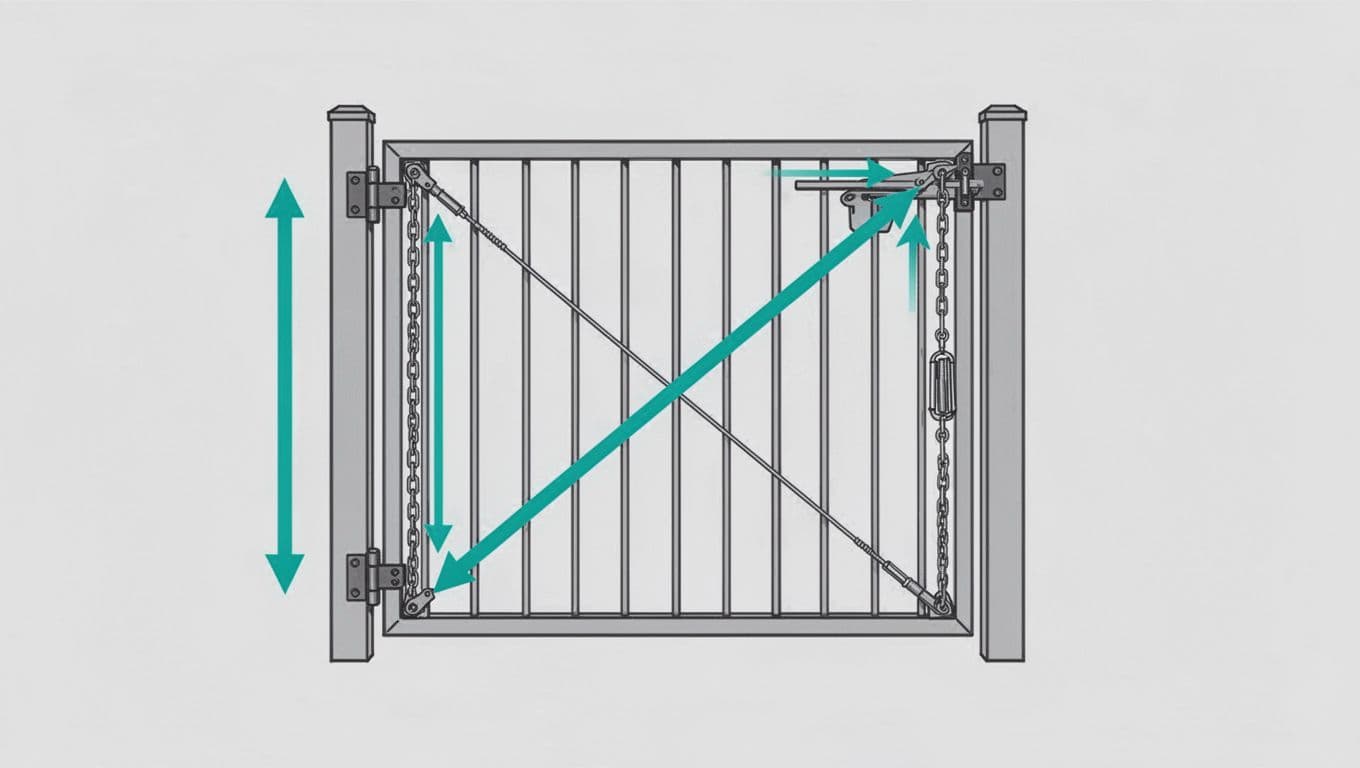
Diagram showing correct bracing direction to fight sag, created with AI.
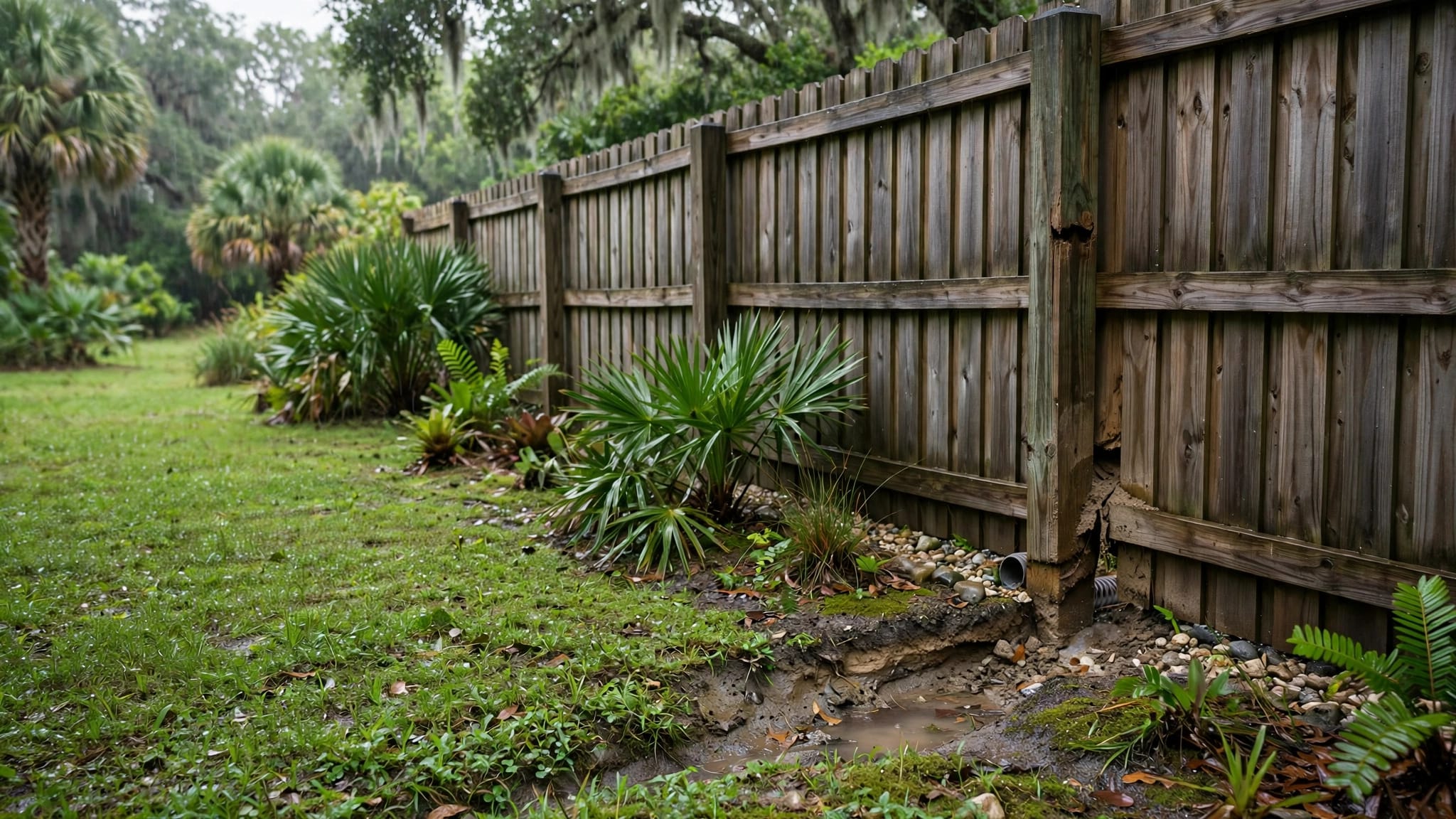
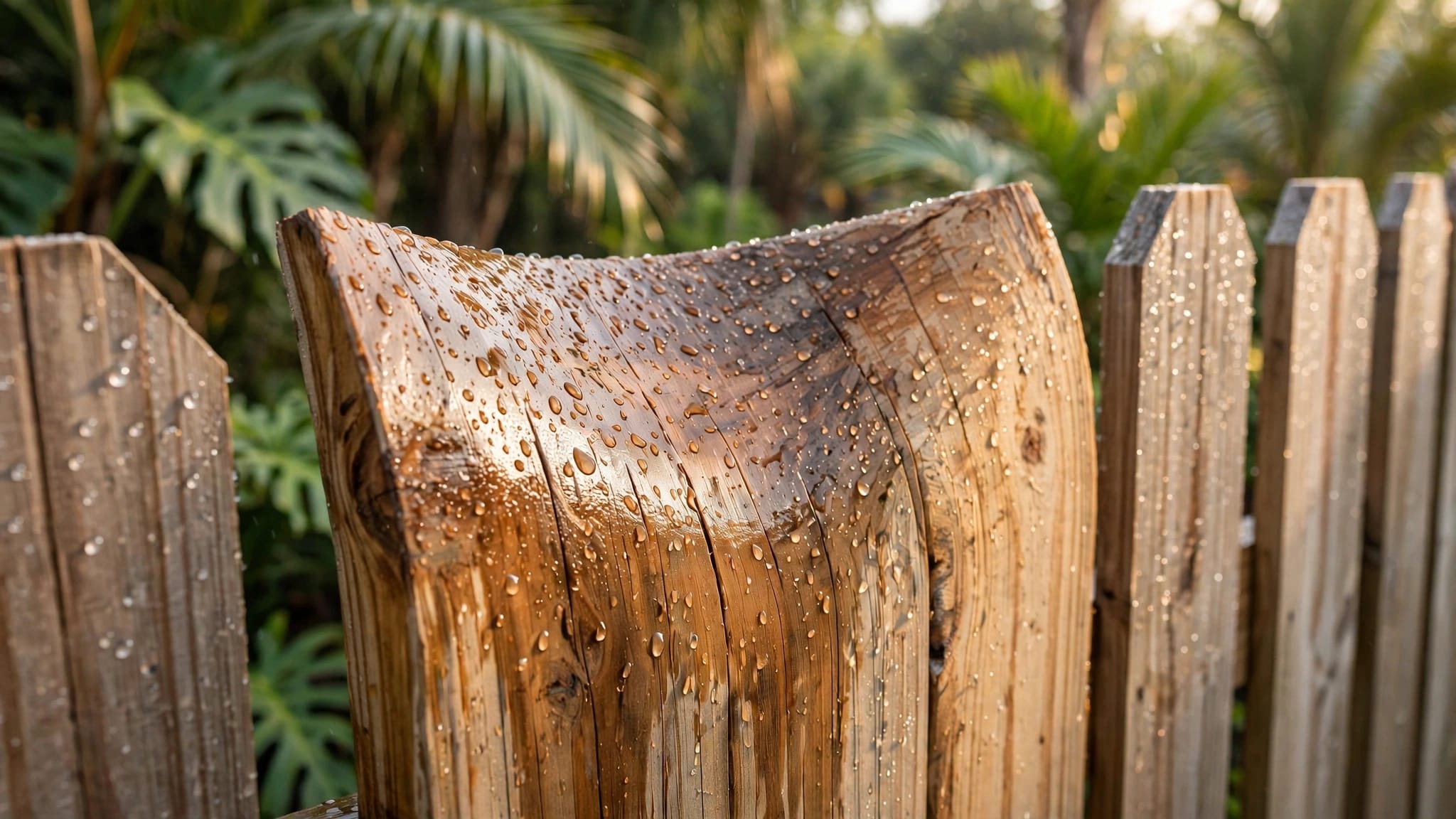
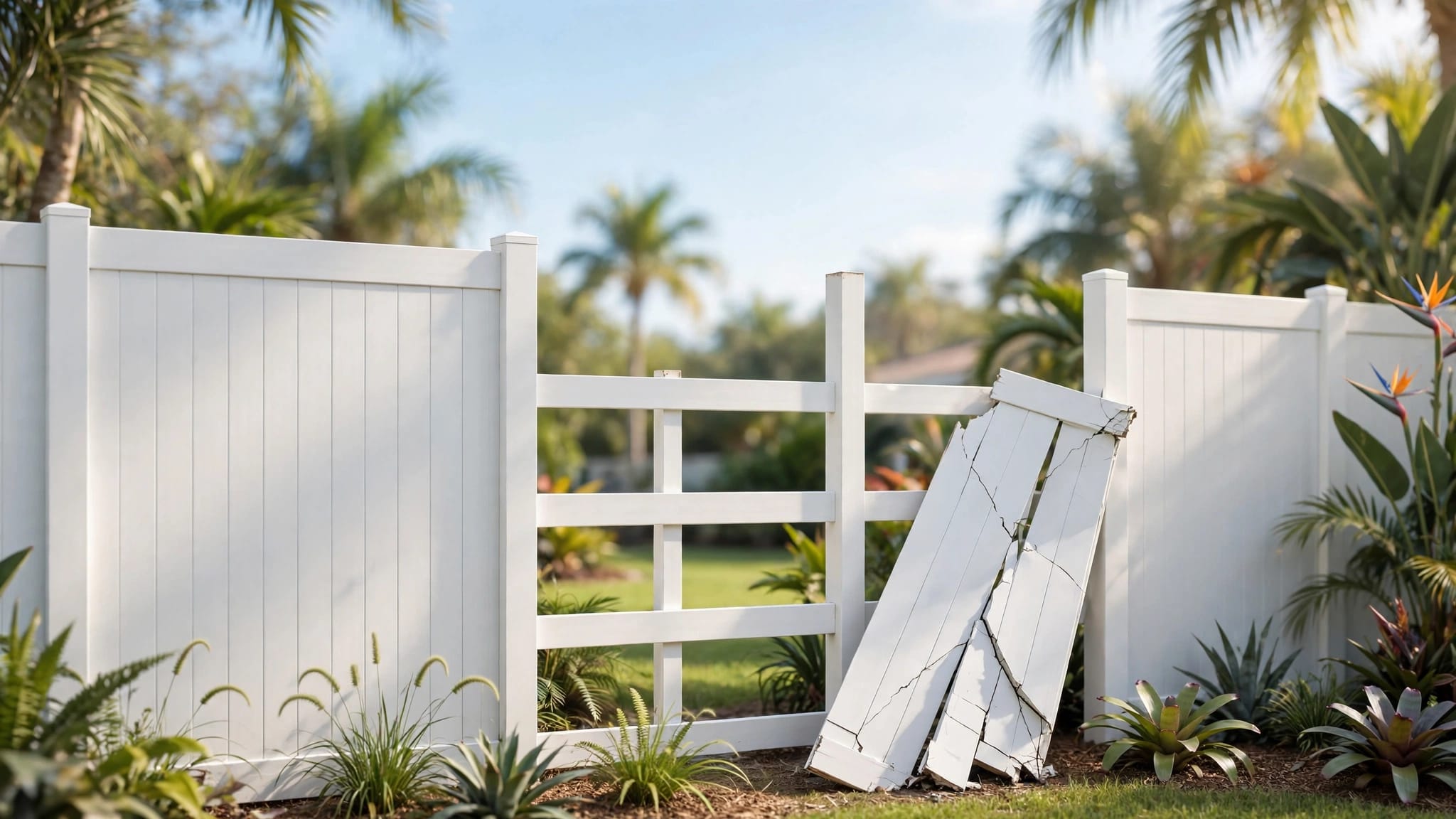
Sagging usually comes from one of three things: a hinge post that moved, hinges that loosened, or a gate frame that racked out of square. Cape Coral wind speeds up all three, especially when a gate acts like a sail.
Step-by-step: installing hinges and setting posts plumb (the "don't sag later" method)
- Set the hinge post dead plumb in both directions. Check again after you brace it.
- Use enough footing for the gate load. Depth and diameter vary by soil and permit set, but heavier gates need more concrete.
- Hang the gate level, then set your gaps. Aim for even reveals on hinge and latch sides.
- Mount hinges with through-bolts when possible. Screws alone can loosen in wind.
- Install a center stop and drop rod on double gates. Let hardware take the abuse, not the latch.
Step-by-step: correcting sag on an existing gate
- Check the post first. If the hinge post rocks, tightening hinges won't solve it.
- Tighten, then replace stripped fasteners. Upgrade to through-bolts if the gate design allows.
- Adjust hinges before you force the latch. Many adjustable hinges can lift the latch corner back up.
- Add the right brace direction. The brace should run from bottom hinge corner to top latch corner to carry load correctly.
- For double gates, add a ground stop and drop rod. A "floating" meeting point invites sag and misalignment.
If you have to lift the gate to latch it, something is moving. Fix the movement, not the latch.
When a post is failing, repairs can turn into a bigger structural job fast. That's when it makes sense to bring in a local pro for Cape Coral fence repair, especially after storms or if the gate is tied into a pool barrier.
Conclusion
A well-built Cape Coral fence gate should swing freely, latch cleanly, and stay square through wind and rain. Start with permits and measurements, choose a width that fits your daily use, then match hinges and posts to the real gate weight. Finally, stop sag before it starts with proper bracing, reinforced hinge posts, and the right hardware on double gates. If your gate already drags or won't latch, fixing it now is cheaper than replacing it later.