Chain Link Fence Repair for a Torn Section in Florida
A torn fence can give your dog an escape route before you notice how the damage happened. Successful chain link fence repair starts with checking the supporting frame , because replacing mesh won't fix a loose post or bent rail.
In Southwest Florida, salt exposure, saturated soil, and storm debris can leave damage beyond the visible opening. A small tear may need localized work, while widespread corrosion or shifted posts can require a larger repair.
Start by separating damaged mesh from structural problems, then choose a repair that addresses both.
Key Takeaways
- Inspect nearby posts, footings, rails, and connections before deciding how much mesh to replace.
- Keep people and pets away from sharp wire, leaning sections, and any opening that compromises security.
- Match replacement materials to the existing fence, and use professional help for tensioned fabric, unstable posts, or extensive damage.
Inspect the Frame Before Chain Link Fence Repair
The woven wire mesh is often called fence fabric. Although the tear attracts attention, the posts and rails determine whether a repair will hold.
Inspect in daylight after weather conditions are safe. Photograph the entire fence run before taking close-ups of individual problems.
Check posts and ground conditions
Look for leaning posts, rust near ground level, cracked concrete, and soil washed away from footings. After heavy rain, saturated ground can reduce support around an otherwise intact post.
Keep your distance from visibly unstable sections. Don't shake a leaning post to test it, because movement could bring down attached fencing.
Also inspect the posts on both sides of the tear. An impact can bend the mesh while shifting a neighboring support. If a footing has moved or a post is rusted through, address that problem before replacing fabric.
Inspect rails, fittings, and gates
Follow the top rail through the damaged area. Look for bends, separated connections, loose fittings, and places where the fabric has pulled away.
Check nearby gates for dragging, twisted frames, and latch misalignment. These problems can reveal movement beyond the torn section.
A damaged rail may need separate work. The chain link top rail repair guide covers the distinction between rail replacement and repairs to surrounding components.
Secure the Area and Document the Damage
Keep children and pets indoors or within another secure enclosure until the opening is repaired. Don't rely on loosely attached mesh to contain an animal.
If the fence protects a pool, treat the opening as an immediate safety problem. Restrict access and arrange prompt professional assessment rather than treating a temporary patch as a restored barrier.
Wear protective gloves, eye protection, and sturdy footwear when approaching damaged wire. However, protective gear doesn't make an unstable fence safe to handle.
Avoid working near downed power lines, branches resting on wires, or storm debris you can't identify. Wait until severe weather has passed before inspecting or arranging repairs.
Take clear photographs of the tear, neighboring posts, rail connections, and ground conditions. Include a wider view showing the location along the fence.
Keep installation records and earlier photographs if available. For storm damage, ask your insurer about documentation and next steps before discarding damaged materials. Coverage depends on your policy and the cause of loss.
Decide Between a Localized Repair and Section Replacement
The size of the opening matters, but the condition of surrounding wire matters just as much. A small hole in badly corroded fabric can require more work than a larger tear in otherwise sound material.
When localized work may be enough
A limited repair may be practical when damage affects a few links and the surrounding fabric remains sound. Supreme Fence of SWFL's chain-link repair services include replacing damaged links and securing posts.
The repair still needs to restore a continuous barrier without sharp projections or weak connections. Simply drawing torn edges together can distort the mesh and leave an unreliable seam.
Have the repair assessed against the fence's purpose. Pet containment and security deserve more than a patch that only improves appearance.
When replacing fabric makes more sense
Consider a larger replacement when the fabric is stretched, crushed, rusted through, or torn in several places. Repeated patches can leave multiple weak areas and an uneven fence line.
Widespread damage also warrants checking whether adjacent spans share the same deterioration. A contractor should explain which existing components remain usable.
For recurring post movement or damage across several spans, compare fence repair and replacement options before committing to another isolated fix.
Match Replacement Fabric and Hardware
Measure an undamaged section, rather than using stretched or crushed mesh as your reference. Record the fence height and take photographs of the wire pattern, finish, and connections.
Replacement fabric needs to match the existing system. Wire thickness, diamond opening size, coating, and edge style can differ between products.
For black-coated fencing, color alone doesn't establish compatibility. The underlying wire and mesh dimensions also need attention. Similarly, galvanized fabric can vary even when two rolls look alike.
Ask the supplier or contractor to identify the existing material before ordering. An intact sample or clear close-up photographs can help.
Inspect the attachment hardware too. Reusing badly corroded ties or fittings can weaken otherwise sound replacement fabric. Ask which connections need replacement and how the proposed hardware suits coastal exposure.
If a close match isn't available, discuss the appearance and practicality of replacing a broader section. A clearly explained transition is better than an unexpected mismatch after installation.
Follow a Safe Repair Plan
A homeowner can document damage, secure the area, and gather matching information. Removing and restoring tensioned fabric calls for experience, especially when posts or connections are compromised.
For professional repair, use this sequence to understand the work and review the contractor's plan:
- Confirm the full repair area. Identify every damaged component, including fabric, posts, rails, and fittings. Agree on what will remain and what will be replaced before work starts.
- Correct structural problems first. A leaning post, displaced footing, or damaged rail needs attention before replacement mesh attaches to it. If excavation is necessary, arrange utility locating through Sunshine 811 before digging.
- Remove unusable material under controlled conditions. The crew should manage the fabric's tension and sharp ends while separating damaged material. Keep household members and pets clear of the work area.
- Install compatible replacement material. Depending on the damage, the repair may involve replacing individual links or a larger fabric section. The contractor then restores the necessary connections and fabric tension for that fence system.
- Inspect the completed repair. Check the seam, attachments, lower edge, and nearby gate operation. Ask the contractor to address exposed sharp ends, loose connections, or remaining gaps before considering the job complete.
A new mesh section can still fail if it attaches to a weakened post or corroded fitting. The repair needs sound attachment points throughout the affected area.
Avoid pulling on damaged fabric with a vehicle or improvised tensioning arrangement. A slipping connection can release suddenly. Also, plastic zip ties shouldn't replace the fence's permanent attachment hardware.
Account for Southwest Florida Conditions
A lasting repair needs to address the exposure that contributed to the damage. Coastal corrosion and water around post bases deserve particular attention in Southwest Florida.
Confirm local requirements before structural work
Don't assume the same rules apply to replacing links and rebuilding a fence section. Before resetting posts, changing height, moving a gate, or relocating the fence, ask your city or county building department about the proposed scope.
Check applicable HOA requirements as well, particularly if the repair changes the fence's finish or appearance.
Tell the contractor if the fence borders an easement, drainage feature, or shared property line. These details can affect access and the repair plan. There isn't a reliable Florida-wide permit answer for every fence repair.
Reduce corrosion and repeat damage
Salt deposits and persistent moisture accelerate corrosion on exposed metal. Inspect fittings, post bases, and repaired connections regularly, especially after severe weather.
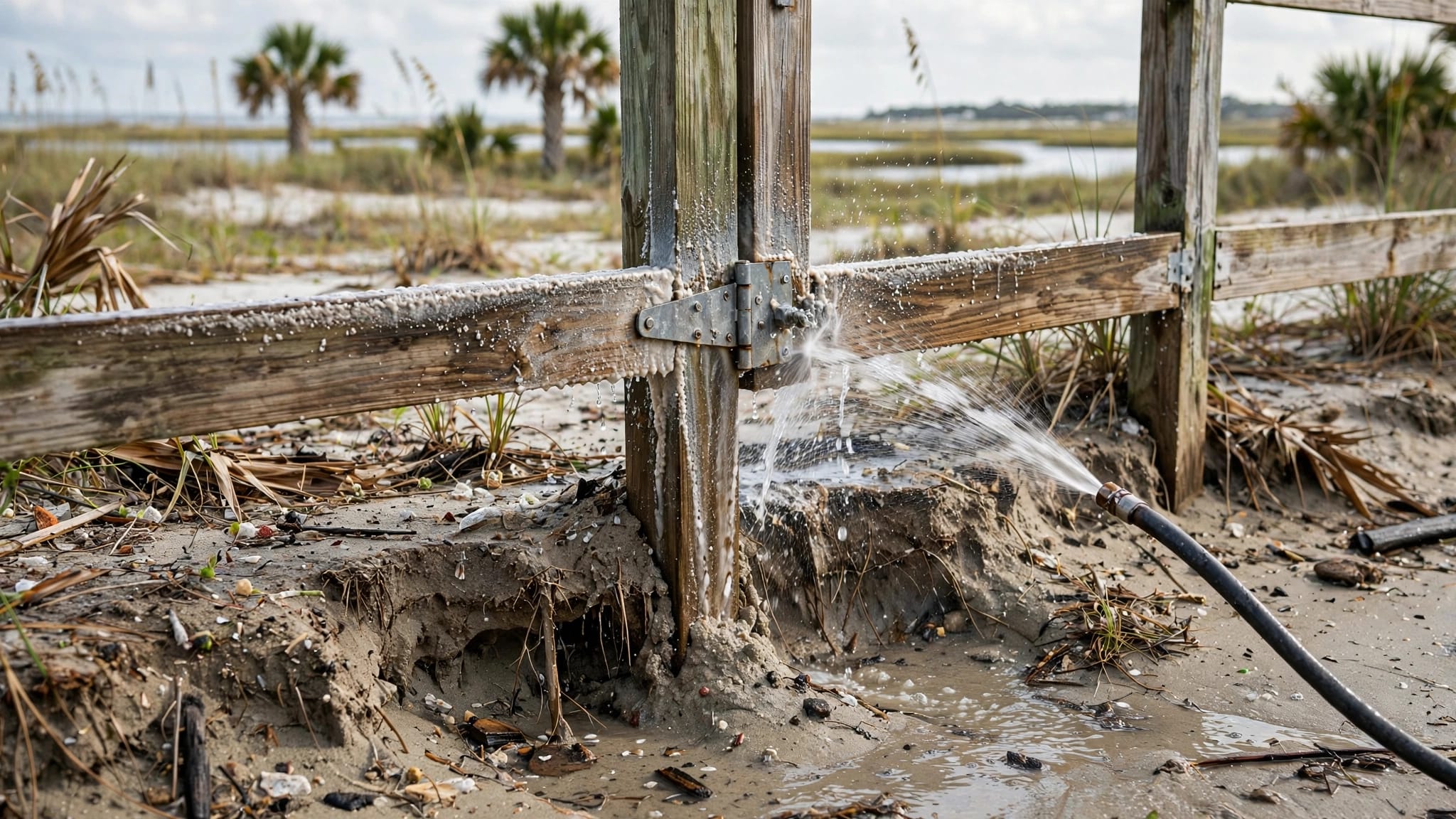
Where appropriate for the material, rinse salt deposits with fresh water and allow the fence to dry. Keep irrigation from repeatedly soaking the same connections.
Also remove vegetation or debris pressing against the fabric. After heavy rain, look for new washout around posts.
Before adding privacy slats or screens, ask whether the existing frame can accommodate the added wind load. A fabric repair doesn't automatically strengthen the fence for new accessories.
Compare Repair Estimates by Scope
There isn't one dependable price for repairing every torn section. Fabric height, finish, damage length, access, hardware condition, and structural repairs all affect the estimate.
A mesh-only repair and a project involving concrete removal or post replacement are different jobs. Compare written scopes rather than choosing solely by the lowest total.
The Cape Coral fence repair cost guide provides broader pricing context. General fence repair figures aren't a quote for your torn chain-link section.
Ask whether the estimate includes damaged-material removal, replacement fittings, post work, and cleanup. For storm damage, also ask how additional problems discovered during removal will be handled.
Supreme Fence of SWFL is a family-owned, licensed, and insured contractor based in Cape Coral. Its service area includes Lee, Charlotte, Collier, Sarasota, DeSoto, and Hendry counties.
For a job-specific assessment, request a free fence estimate or call (239) 940-5945. Share wide photographs and close-ups so the team can understand the visible damage.
Conclusion: Repair the Support as Well as the Tear
A torn opening deserves prompt attention, but the strongest repair starts with sound posts and connections . Match the replacement material and address structural damage before restoring the fabric.
Keep the area secure until the work is complete. A properly assessed repair should restore the fence's function without leaving hidden weaknesses beside the new section.
Frequently Asked Questions
Can I repair torn mesh without replacing the posts?
Possibly, if the posts and footings remain stable and the damage is limited to fabric or connections. However, a post that leans, has moved in saturated soil, or shows rust-through needs separate assessment. Reusing it without addressing the problem can undermine the mesh repair.
Does a torn section mean the entire fence needs replacement?
No. Localized damage can sometimes be repaired while retaining sound surrounding components. Broader replacement becomes worth comparing when corrosion, stretched fabric, or unstable posts affect several sections. Ask the contractor to explain why the proposed repair boundary is appropriate, rather than assuming either a small patch or full replacement is necessary.