Florida Horse Fencing for Small Acreage Properties
On a small horse property, every gate and fence corner affects how your animals move. Florida horse fencing needs to address daily contact with horses as well as humidity, heavy rain, and fast-growing vegetation.
Your priority is secure containment without avoidable injury hazards , not simply choosing a material that handles the weather. Start with your horses' behavior and property layout before comparing fence styles or contractor estimates.
Key Takeaways
- Choose the fence design around your horses, including their size, behavior, and tendency to test boundaries.
- Plan gates, drainage, and maintenance access before setting the fence line.
- Treat residential fence materials and equine containment systems as separate decisions.
- Confirm local requirements and get an itemized estimate that includes installation details, approvals, and repairs.
Start With Horse Behavior and Injury Risks
A small paddock brings horses into frequent contact with its boundaries. Feeding areas, shared fence lines, and narrow gates can concentrate that contact.
Examine openings, edges, and hardware
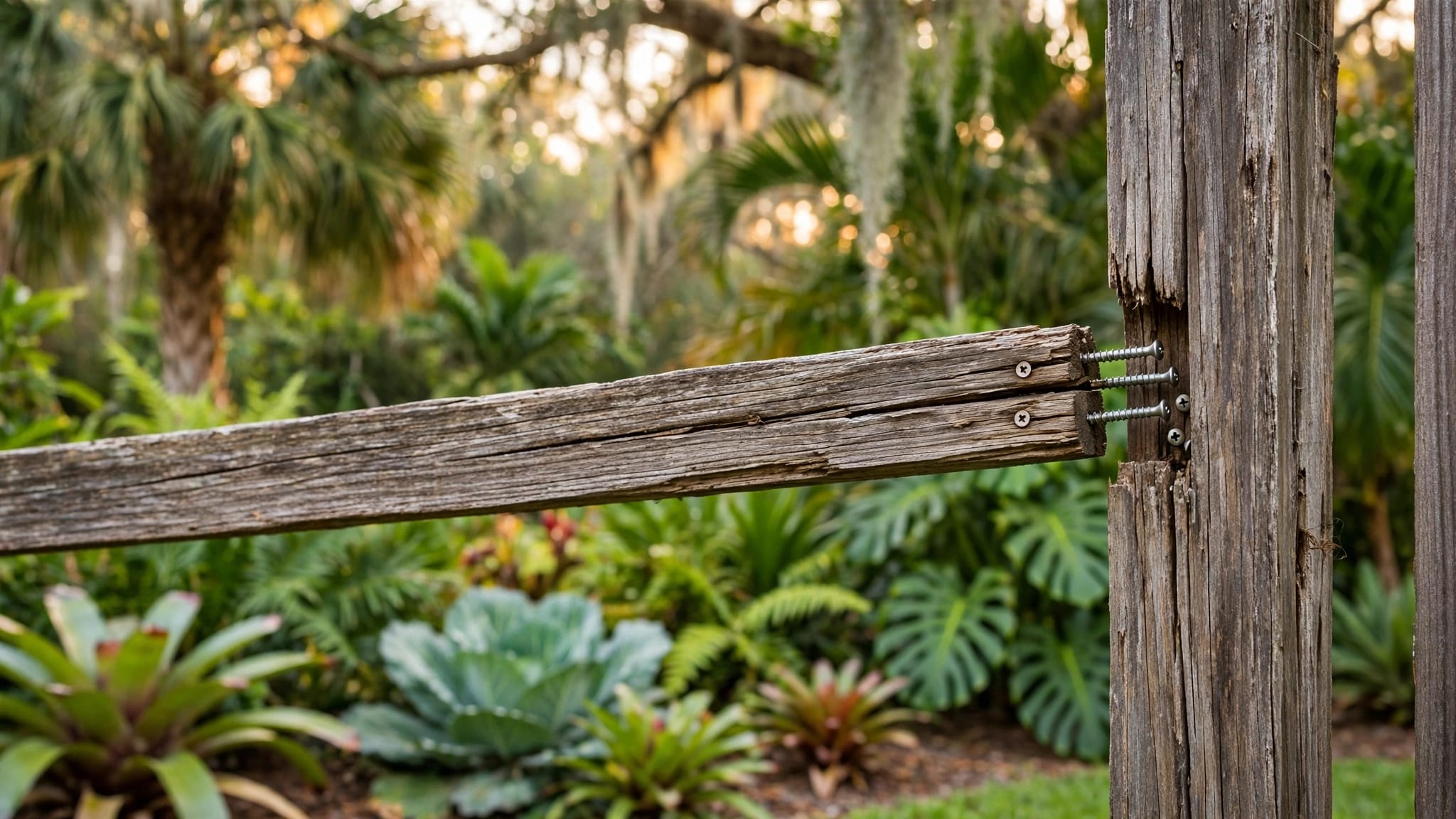
Inspect a proposed design for places where a hoof, head, or halter could catch. Loose wire, protruding fasteners, sharp edges, and broken boards need attention regardless of the material.
Avoid barbed wire in horse enclosures. Its barbs can cause serious injuries when a horse runs into it or struggles against it.
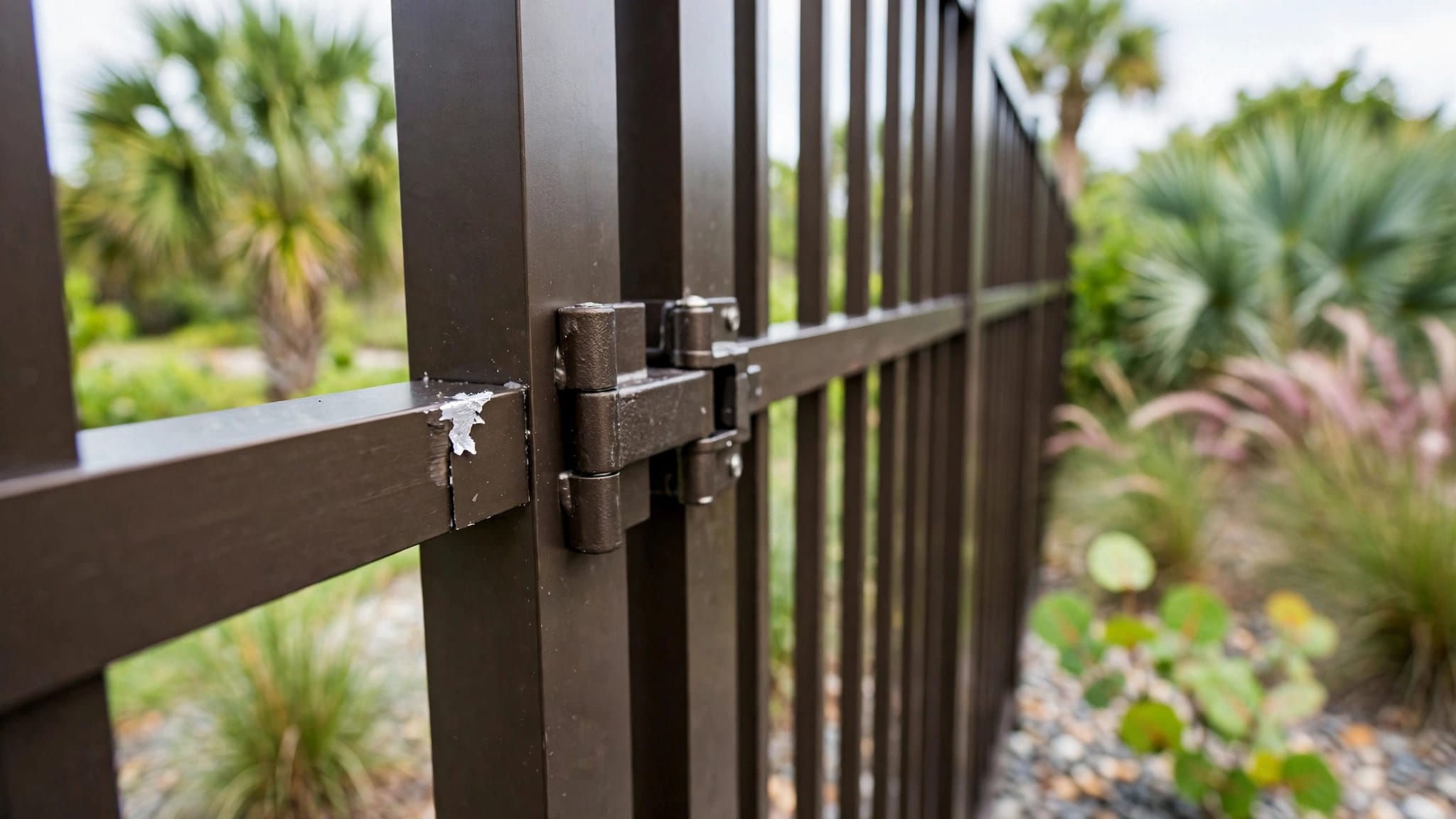
Also, ask how the contractor will finish wire ends and secure gate hardware. A neat exterior appearance doesn't tell you what a horse encounters on the paddock side.
Match the design to your horses
A quiet adult horse, a pony, and a youngster may challenge the same fence differently. Fence height, openings, and bottom clearance need a horse-specific assessment.
Visibility matters, too. Thin wire can be difficult to see, so discuss visible rails or other compatible markers with the installer.
A fence that contains one horse reliably may need changes when you introduce a smaller, younger, or more persistent animal.
Compare Florida Horse Fencing Options
When comparing fence options for Southwest Florida acreage, separate horse turnout areas from driveway, yard, and residential boundaries. The same material doesn't need to serve every purpose.
These options require different design and maintenance decisions.
| Fence option | What to evaluate for horse areas | Florida maintenance concern |
|---|---|---|
| Equine woven wire | Opening dimensions, tension, visible boundaries, and finished wire ends | Corrosion, vegetation, and loose sections |
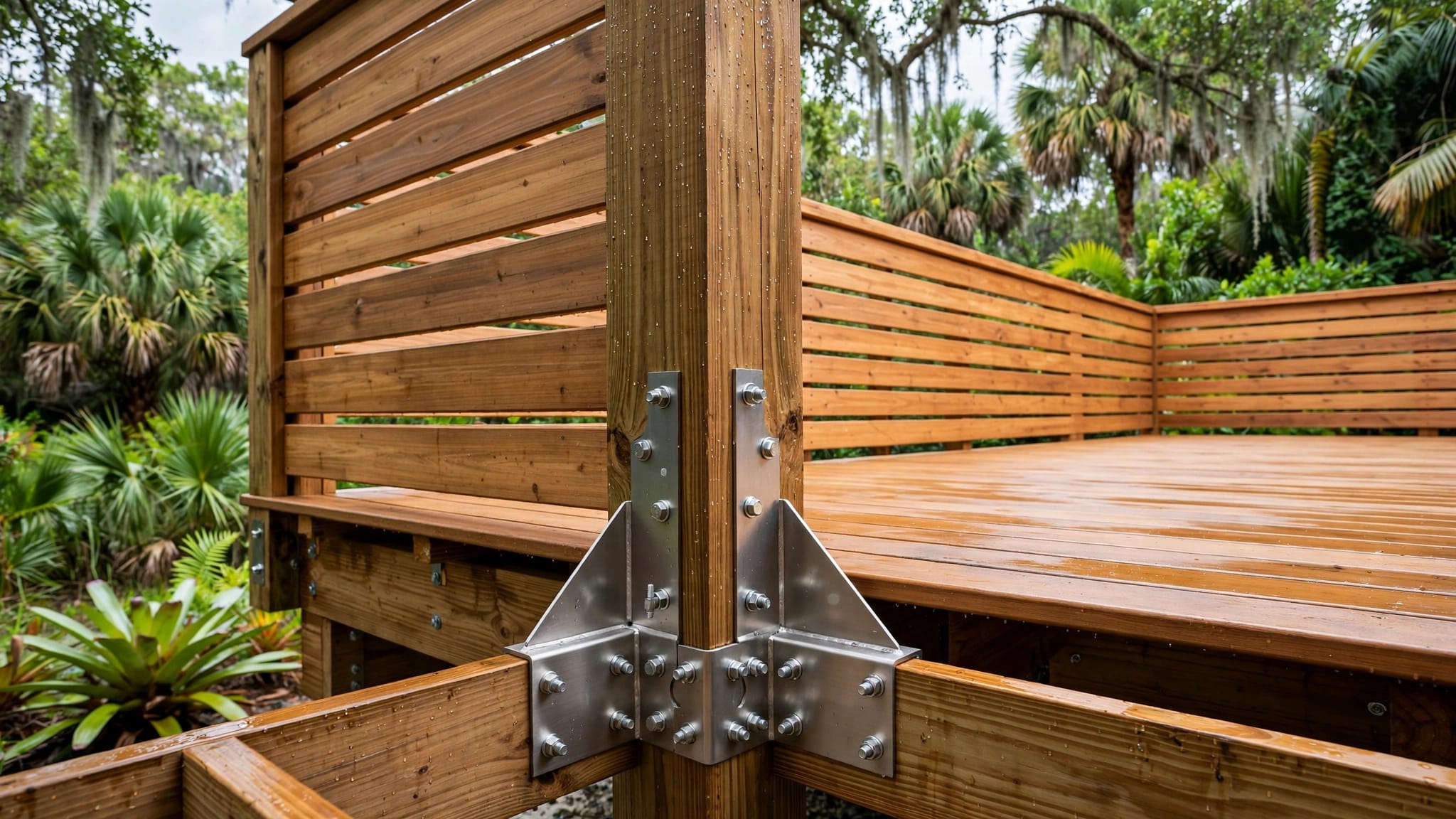
| Wood rails | Rail spacing, fasteners, strength, and chewing behavior | Moisture damage, termites, and splinters |
| Equine vinyl systems | Product purpose, rail retention, reinforcement, and impact limitations | Sun exposure, loose connections, and damaged rails |
| Electric fencing | Visibility, horse training, power supply, and system design | Vegetation contact, grounding, and outages |
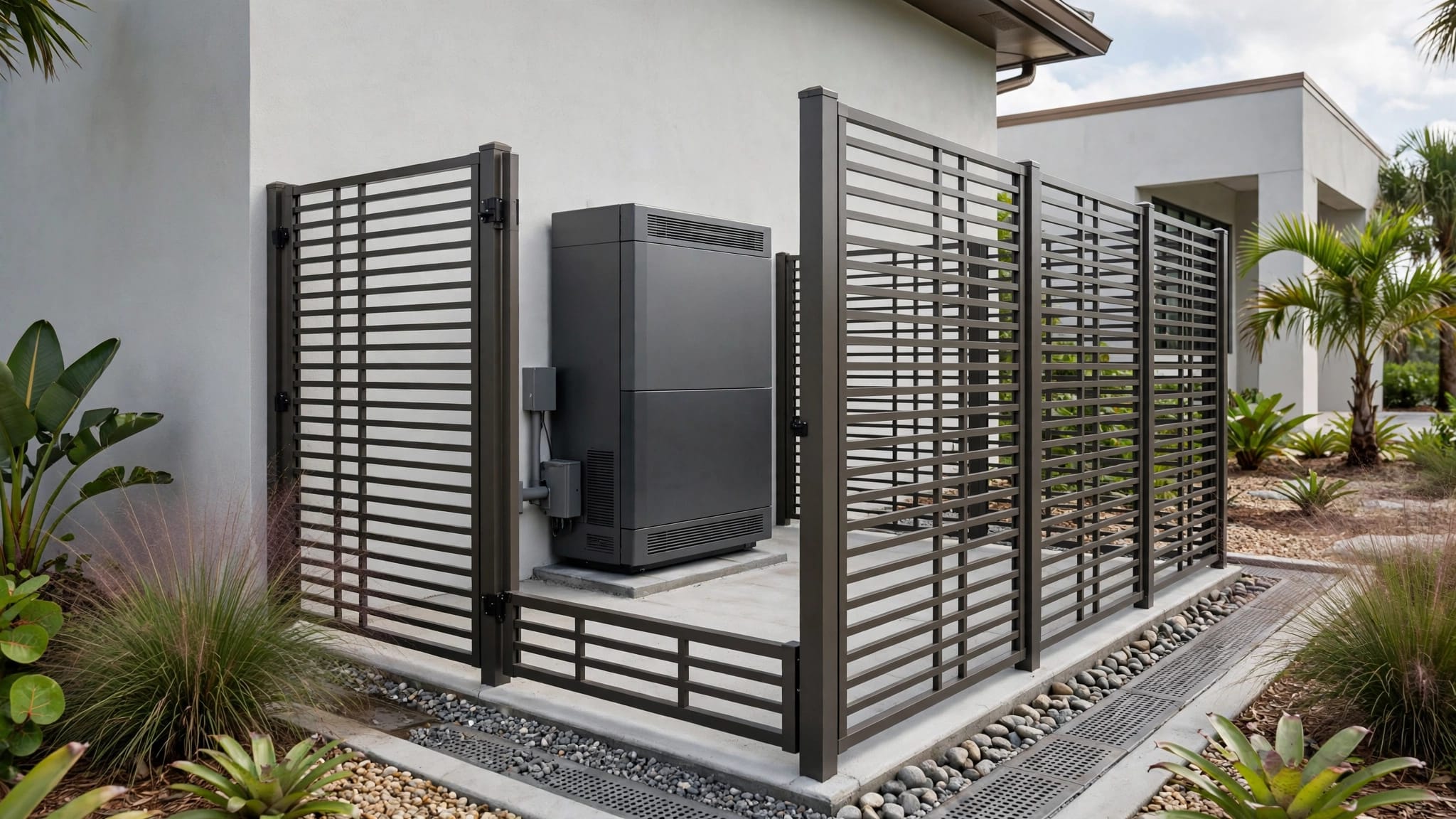
| Residential aluminum or chain link | Suitability requires separate equine review | Hardware wear, coating damage, and corrosion |
Product specifications matter more than the material name. Ordinary decorative vinyl rails shouldn't be assumed equivalent to an equine containment product.
Manufacturers sell equine woven-wire mesh with 2-by-4-inch openings. However, that dimension alone doesn't establish suitability for every horse or installation. Check the complete system, including posts, gates, wire tension, and attachment details.
Similarly, residential aluminum pickets and chain-link fencing shouldn't receive automatic approval for turnout areas. Ask for a horse-specific evaluation before selecting them.
Electric fencing requires a purpose-built livestock energizer and installation according to its instructions. Never connect fence wire directly to household current. A compatible electric offset may discourage leaning or chewing, but it requires training, monitoring, and reliable power.
Make a Small Property Easier to Manage
Limited acreage leaves less room to correct a poor layout. Mark proposed fence lines and gates before committing to construction.
Keep gates and corners out of trouble spots
Place gates where horses and handlers have room to move without crowding. Avoid making the main entrance the lowest, muddiest part of the paddock.
Rounded or less-confined layouts can reduce places where one horse corners another. Also, consider whether neighboring horses will compete along a shared fence. Separate fence lines may be appropriate where contact creates problems.
Measure your actual mower, tractor, and other equipment before choosing gate widths. Then allow space for the gate to swing without striking a trough, shelter, or parked trailer.
Protect drainage and underground systems
Map swales, roadside ditches, septic components, and easements before locating posts. A fence shouldn't obstruct drainage or maintenance access.
On uneven ground, review fencing options for sloped yards, then assess bottom gaps for your horses. Residential solutions for slope gaps may need different detailing around livestock.
Also, confirm septic locations rather than guessing. Planning fence placement near a septic system helps avoid digging into components or placing footings where they could damage the system.
Account for Southwest Florida Weather
Heat, humidity, saturated soil, and coastal salt exposure affect different parts of a fence. An open design allows airflow, but it doesn't guarantee hurricane performance.
Plan for wet soil and heavy rain
Check the site after heavy rain when possible. Standing water, soft ground, and runoff channels reveal installation challenges that a dry-weather visit can miss.
Gate posts and tensioned-wire corners need careful support because they carry concentrated loads. Ask the contractor how soil conditions affect post selection, footing design, and bracing.
Keep drainage paths open rather than filling fence gaps with a continuous curb. Also, consider whether horses will churn the ground beside a gate during wet weather. Moving the entrance may solve more than adding another repair later.
Choose materials with realistic upkeep expectations
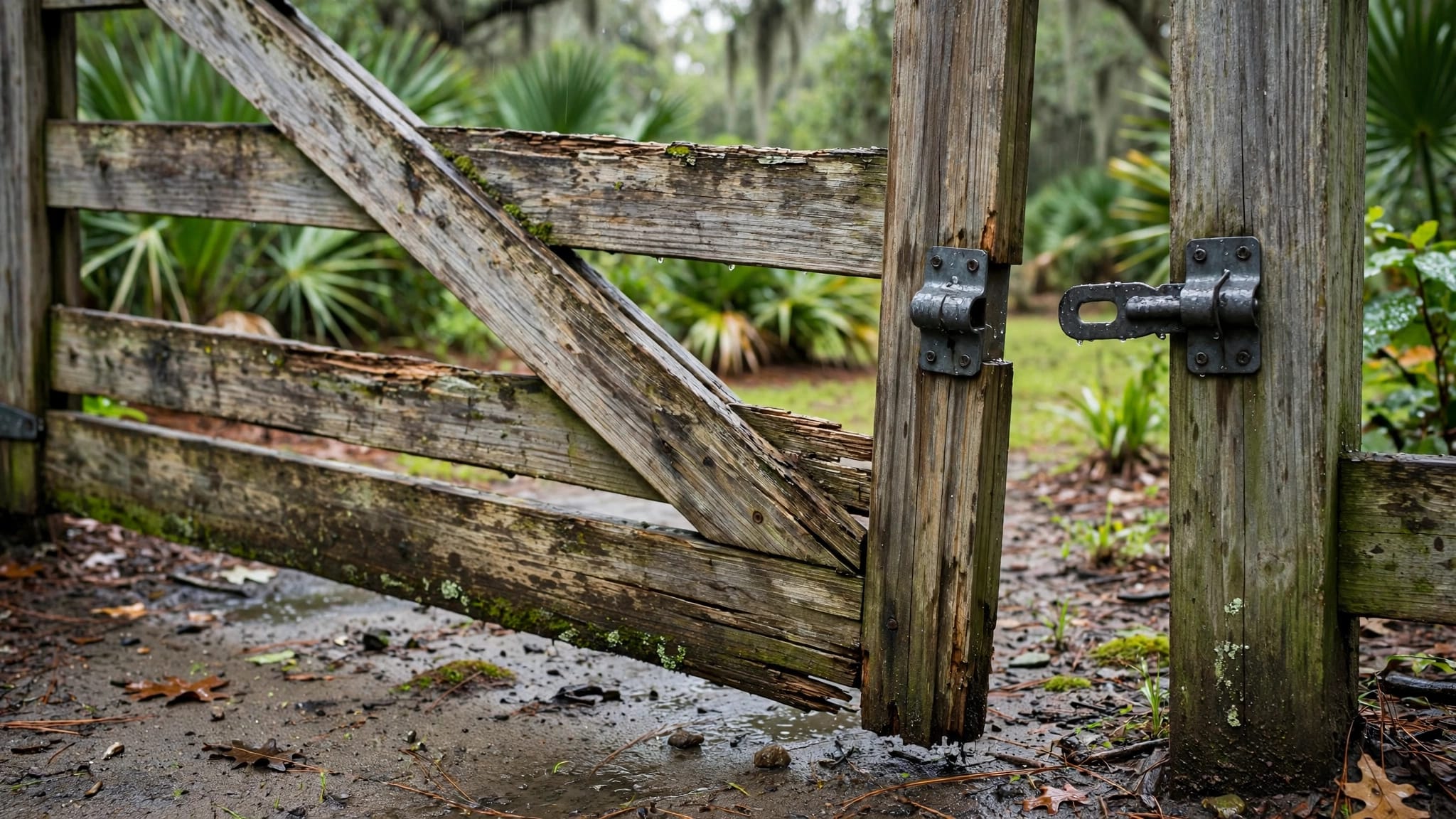
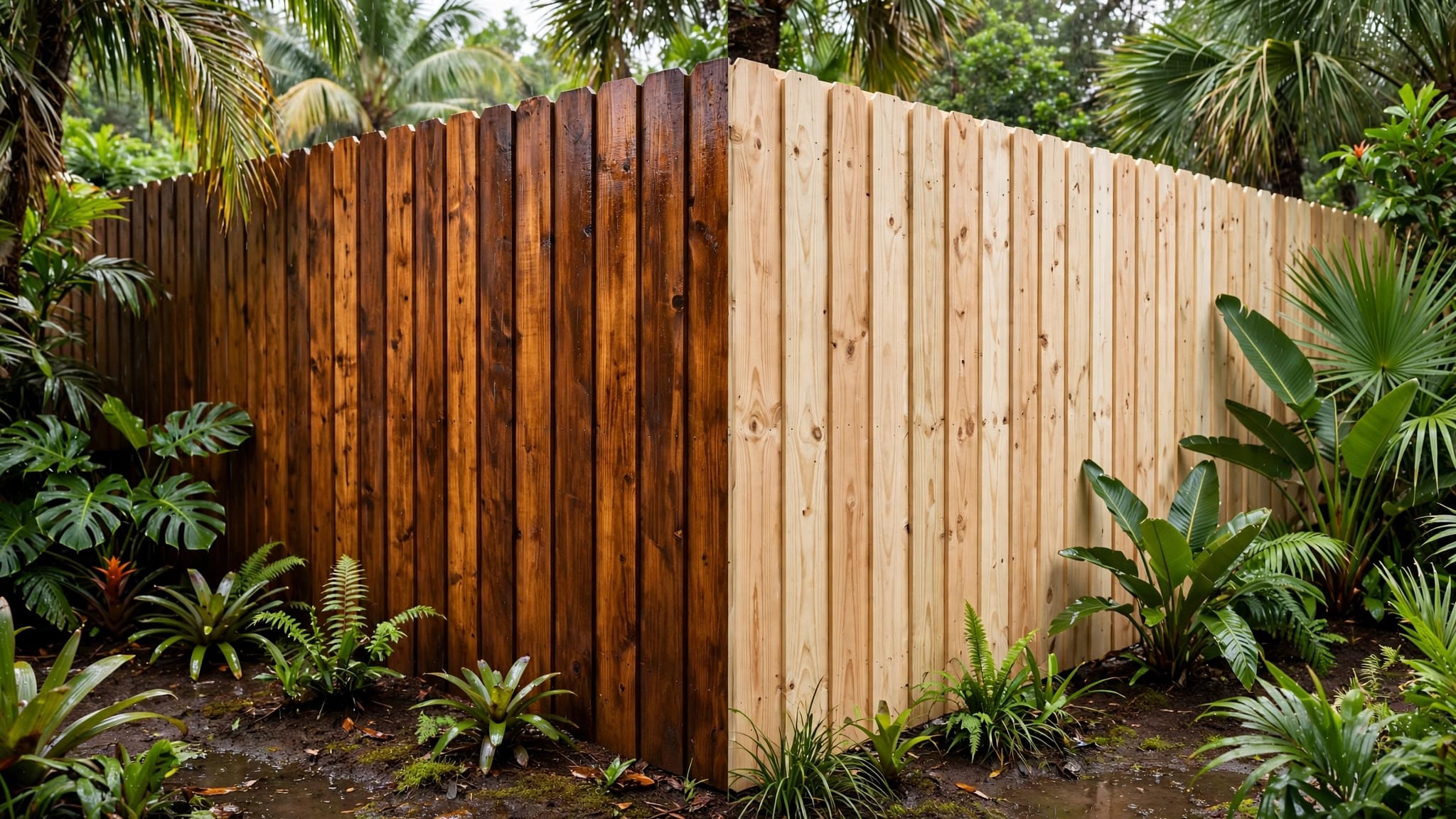
Wood needs monitoring for decay, insect damage, and exposed fasteners. Meanwhile, metal components need checks for corrosion, especially near the coast.
Vinyl and aluminum resist termite damage, although that doesn't establish their suitability for horse containment. Comparing termite-resistant fence materials can help with residential sections outside turnout areas.
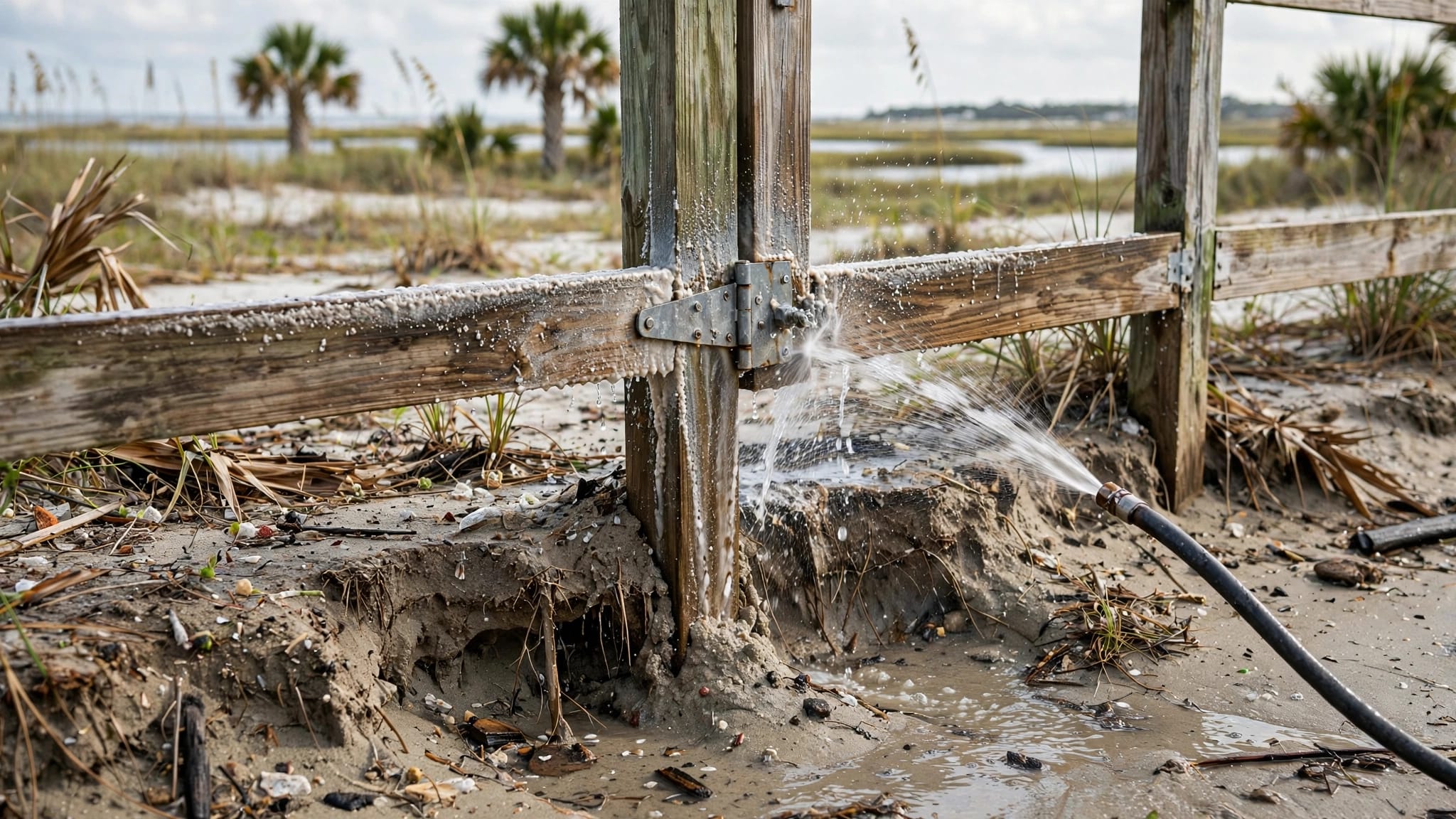
Ask about UV exposure, compatible fasteners, and replacement parts. For coastal properties, follow the manufacturer's cleaning guidance and inspect hinges, latches, and connections regularly.
Keep Vegetation and Wear Under Control
Florida vegetation can hide damaged wire and interfere with electric fencing. Leave enough access to maintain both sides of the boundary where property limits allow.
Walk the horse enclosure regularly, with additional checks after storms or unusual horse activity. Pay close attention to feeding areas and places where horses rub, lean, or chew.
A practical inspection should cover:
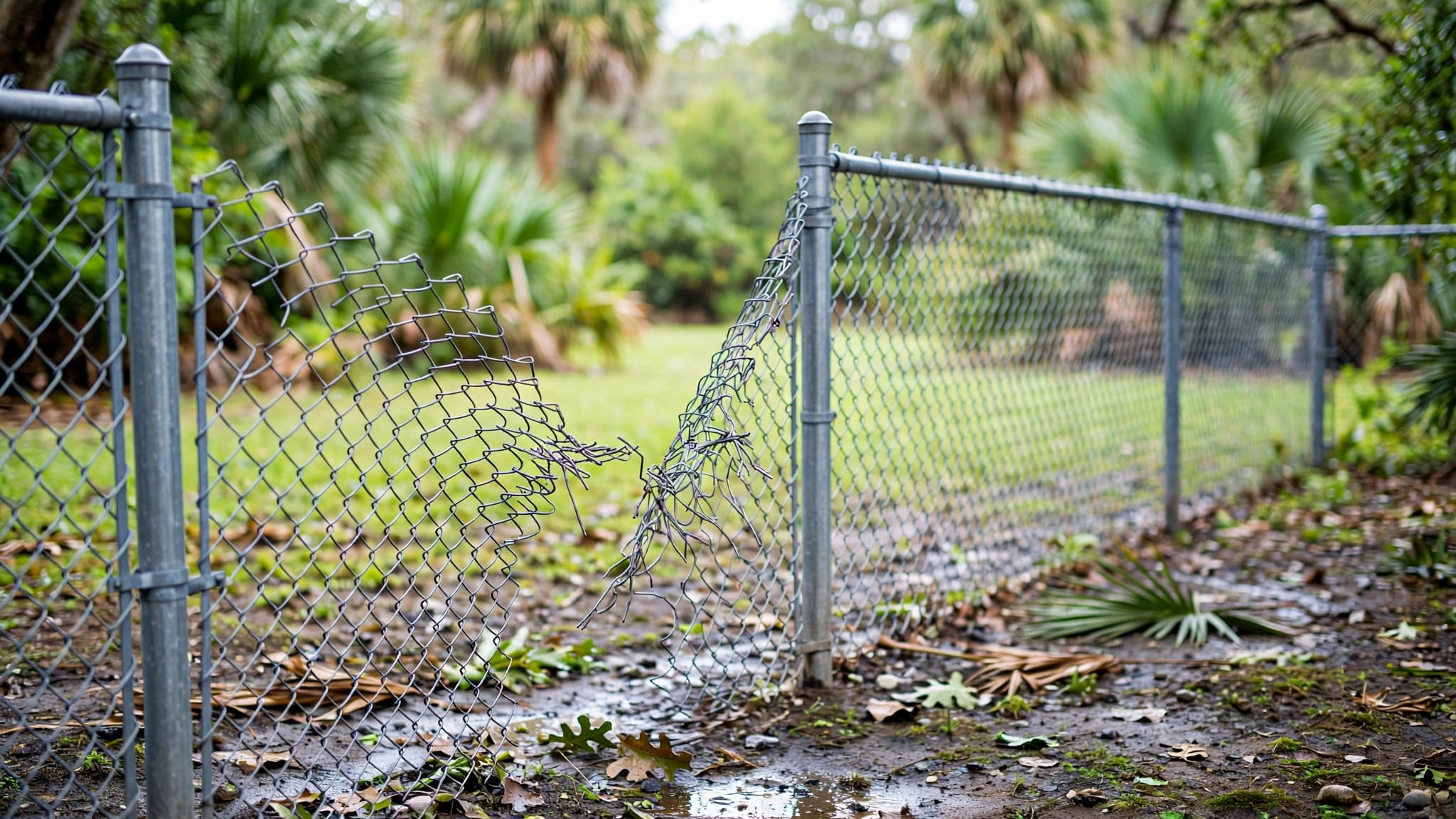
- Look for loose rails, sagging wire, damaged mesh, and exposed fasteners.
- Test gate latches and check whether posts move when the gate opens.
- Clear vegetation touching electric conductors and test the system with a suitable fence tester.
- Inspect corners and posts after heavy rain, strong wind, or falling branches.
If a section becomes damaged, move horses away until you restore containment. Temporary repairs also need an equine review, particularly when they introduce unfamiliar wire or openings.
Keep compatible spare hardware available so a missing latch or broken connector doesn't become a prolonged problem.
Check Local Rules Before Ordering Materials
Southwest Florida doesn't have one permit process or fee schedule for every fence. Requirements can vary by city, county, zoning, fence location, and intended use.
First, confirm whether your property falls within a municipality or an unincorporated county area. A Cape Coral address and an unincorporated Lee County property may follow different procedures.
Then ask the applicable building and zoning offices about permits, height limits, setbacks, inspections, and any agricultural exemptions. Don't assume an acreage property automatically qualifies for an exemption. Also, confirm that keeping horses is allowed under the property's zoning and deed restrictions.
Use a survey to identify boundaries and recorded easements. HOA approval, when required, is separate from government approval. Conservation easements may also require consent from the easement holder.
Before digging, contact Florida 811 for utility marking. Private underground lines may require separate identification.
Permit timing depends on application completeness and site conditions. Missing surveys, unclear gate details, and easement conflicts can delay review, so resolve them before scheduling installation.
Ask for a Horse-Specific Contractor Estimate
A useful estimate describes the complete installed system, not just the fence material and total length.
Ask the contractor to identify posts, rails or mesh, fasteners, gate hardware, corner bracing, and any electrical components. The proposal should also explain removal work, vegetation clearing, and repairs to disturbed areas.
Request separate pricing for gates and optional improvements. Without a defined layout, unsupported per-foot estimates can hide differences in hardware, ground conditions, and installation scope.
Also, confirm who handles permits, drawings, inspections, and review comments. Ask which approvals remain your responsibility and whether replacement components are readily available.
Supreme Fence of SWFL is based in Cape Coral and offers fence installation and repair throughout Southwest Florida. For horse properties, discuss equine requirements explicitly and ask the contractor to confirm which systems it can install.
Frequently Asked Questions
Is vinyl fencing suitable for horses?
Suitability depends on the product and complete installation. Ask whether the manufacturer identifies the system for equine containment and provides rail-retention, reinforcement, and installation requirements. Decorative residential vinyl shouldn't be treated as interchangeable with an equine system, even when both have a similar appearance.
Can electric fencing be the only boundary?
That decision requires a horse-specific assessment of behavior, training, visibility, location, and power reliability. Don't assume a portable electric setup provides adequate perimeter containment near a road. Ask an experienced equine professional to review the plan, and decide how you'll contain horses during an outage.
Do small-acreage horse fences need permits?
Possibly. Local rules and exemptions vary, so confirm the requirements for your exact address before construction. Agricultural use doesn't automatically settle the question. The fence's location, height, drainage impacts, and easements may affect approval. Keep any written exemption confirmation with your project records.
Build Around Your Horses and Your Property
A dependable small-acreage fence starts with horse-specific design , then accounts for wet ground, vegetation, and daily maintenance. Material choice matters, but gates, hardware, and placement deserve equal attention.
Before installation, confirm local requirements and review a detailed proposal with your contractor. The finished boundary should fit the horses you keep and remain practical to inspect, maintain, and repair.