How to Rinse Salt Residue From Fences After Storm Surge
A fence can look intact after storm surge while salt remains on its hinges, fasteners, and rails. Cleaning salt residue from a fence starts with safe access , followed by a gentle fresh-water rinse.
For Cape Coral and other Southwest Florida homeowners, the next concern is damage beneath the surface. Surge water can wash soil away from posts, so check the fence before turning on the hose.
Once conditions are safe, use the right tools and work downward without forcing water into joints.
Key Takeaways
- Stay out of standing or contaminated floodwater, and avoid electrical hazards anywhere near the fence.
- Use fresh water and a garden hose with a gentle spray, adjusting your technique to the fence material.
- Rinse both sides from top to bottom, including accessible hinges, brackets, and rail connections.
- Let the fence dry, then inspect its posts, coatings, hardware, and gates before returning it to normal use.
Make the Fence Line Safe Before Cleaning
Wait for safe access and check electrical hazards
Don't enter an area with standing or contaminated floodwater to reach your fence. Floodwater can contain sewage, sharp debris, chemicals, and hidden electrical hazards. Wait until the water recedes and local officials say access is safe.
Also, don't rinse near downed power lines, damaged outlets, exposed wiring, or flooded electrical equipment. Treat fallen lines as energized and contact the utility. Keep the hose away from gate motors and their electrical connections.
If the fence carries oily residue, sewage contamination, or unidentified chemicals, stop. A routine salt rinse won't make contaminated surfaces safe to handle. Seek cleanup guidance from local authorities or a qualified remediation provider.
Check stability before touching the fence
From dry, stable ground, look for leaning posts, hanging panels, cracked rails, and debris caught against the fence. Don't push a leaning section, force a crooked gate, or climb onto damaged fencing.
Take photographs before cleaning or moving anything. These can help document storm damage for your insurer and fence contractor.
For cleanup around a stable fence, wear closed-toe footwear, gloves, and eye protection. Keep children and pets away from sharp edges. Remove small, loose debris only when you can do so safely. Leave heavy branches and debris lodged in damaged sections for professional removal.
Choose Tools and Gentle Pressure for Your Fence
Start with a garden hose
Use a garden hose with an adjustable nozzle set to a gentle shower or broad spray. Gather a soft-bristle brush, a non-scratch sponge, and a bucket for any later spot washing.
Use a known fresh-water supply and follow local water-use advisories. Canal water, floodwater, and salty irrigation water can leave contamination or additional salt behind.
A pressure washer isn't the default tool for this job. Follow the fence manufacturer's instructions if considering one, because pressure limits vary by product and condition. Avoid narrow jets, turbo nozzles, and spraying upward into seams or beneath post caps.
Match your technique to the material
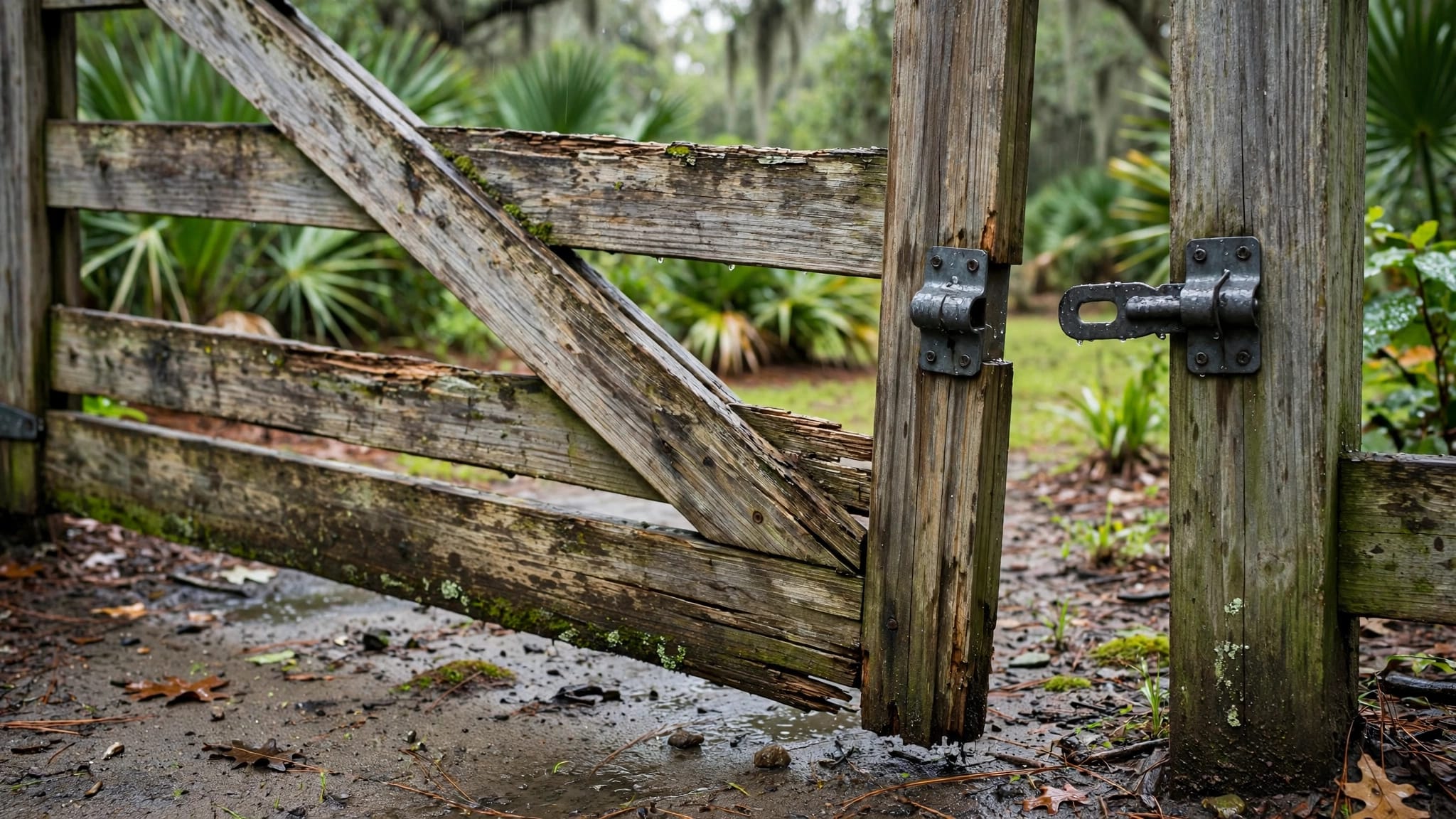
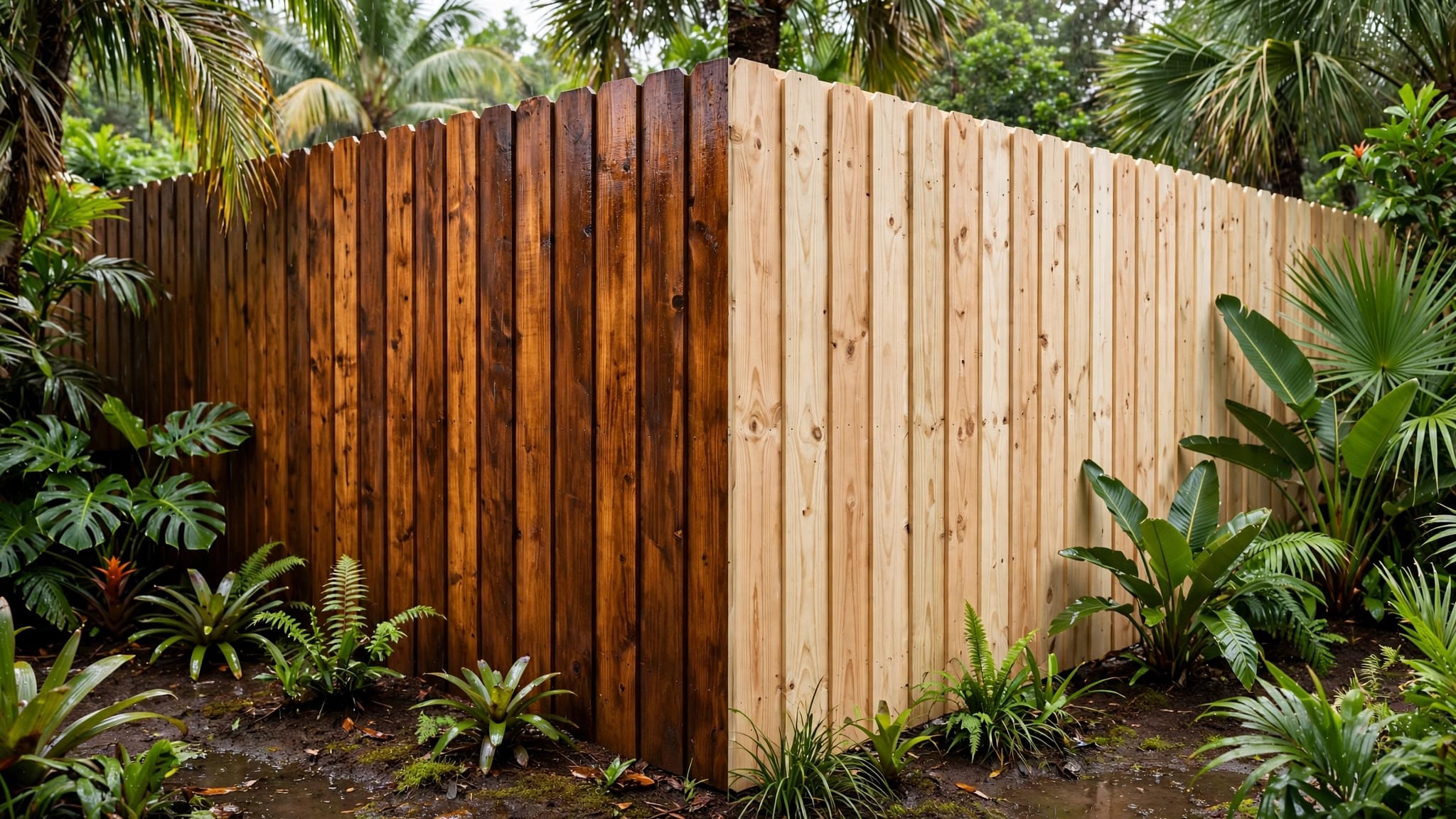
For wood , rinse gently and brush with the grain if needed. Don't blast weathered boards or soak exposed end grain with a concentrated stream. Splintering and lifted stain mean you should stop.
On vinyl and composite fencing, use a soft brush or sponge. Avoid abrasive pads, and check composite care instructions before applying cleaners.
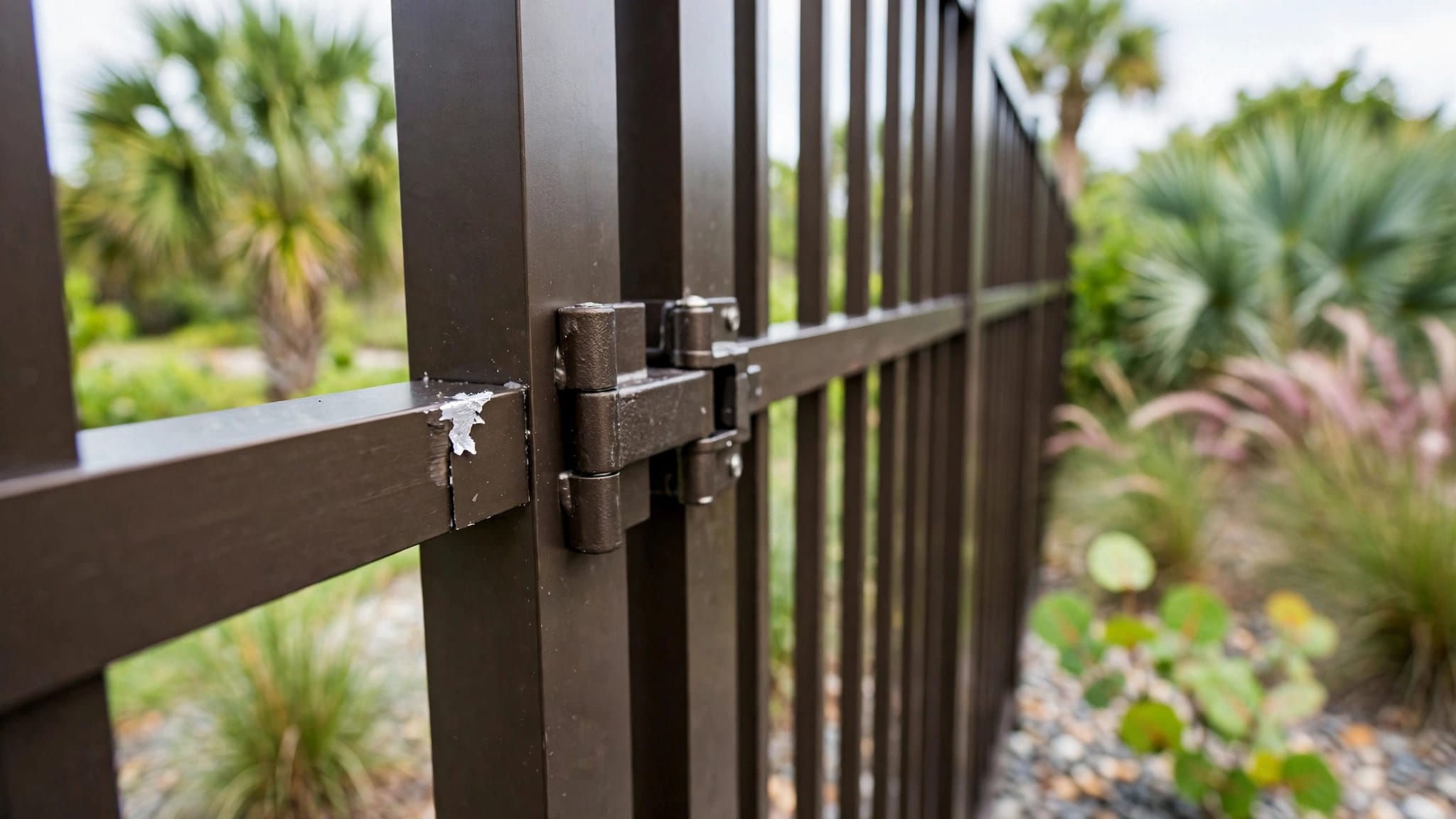
For powder-coated aluminum, painted steel, and coated chain link, protect the finish from scratches. Rinse accessible brackets, hinges, ties, and connections gently, because these areas collect debris and moisture.
Vinyl panels don't rust, but their metal hardware still needs attention. Similarly, aluminum fencing can develop corrosion at damaged coatings and connections even without orange rust on the panels.
Rinse Salt Residue With Fresh Water, Top to Bottom
Fresh water dissolves surface salt and carries it away. Work on one manageable section at a time so you can rinse thoroughly without flooding the ground around posts.
- Test a small area first. Choose an inconspicuous section and check that gentle spraying doesn't loosen paint, lift a coating, or disturb damaged parts. Stop if the surface flakes or a connection moves.
- Begin at the highest accessible surface. Rinse post caps, top rails, and upper panel edges from stable ground. Let water flow down the fence. Don't climb on fencing or stretch over unstable ground to reach the top.
- Move downward with overlapping passes. Work across the upper area, then lower the spray gradually. Give salty streaks and dried deposits additional gentle rinsing instead of increasing pressure.
- Clean both accessible sides and the hardware. Rinse hinges, latch surfaces, brackets, rail ends, and chain-link fittings. Approach joints from the side or above rather than driving water upward into openings.
- Finish the lower section carefully. Wash loose deposits off board bottoms, lower rails, and exposed post surfaces. Avoid directing a concentrated stream into soil or excavating around footings.
Rinse loose sand away before brushing, because grit can scratch finishes. Watch where runoff travels, and avoid washing debris or cleaners into canals, street gutters, or storm drains. Pause if water starts pooling around the posts.
Remove Remaining Grime Without Harsh Chemicals
Plain water is the first choice for salt removal. Salt deposits don't require bleach, and adding stronger chemicals can create unnecessary risks for coatings and landscaping.
If ordinary dirt remains, use a small amount of mild dish soap in water, provided the manufacturer permits it. Gently wash with a soft brush or non-scratch sponge, then rinse thoroughly from top to bottom.
For wood, follow the grain. On coated metal, avoid steel wool, abrasive pads, and aggressive scrubbing. These can scratch the protective finish.
The Cape Coral fence cleaning guide covers separate treatments for algae, mold, and hard-water deposits. Those stains need different decisions than salt residue.
Don't assume every white mark is salt. Hard-water scale, chalking finishes, and aluminum oxidation can also leave pale deposits. If gentle rinsing doesn't remove a mark, identify it before applying another cleaner.
Never mix bleach with ammonia or acids. Also, routine washing doesn't disinfect a fence exposed to sewage or other hazardous flood contamination.
Let the Fence Dry, Then Inspect the Damage
Allow drainage and inspect the finish
Let panels and rails air-dry. Once it's safe to touch them, wipe accessible metal hardware with a clean cloth to remove lingering surface moisture. Don't remove caps or dismantle panels to chase trapped water.
Check the dry fence for orange staining on steel parts, white deposits on aluminum, bubbling paint, or chipped powder coating. On wood, look for splitting and lifted stain. Inspect vinyl for cracks and separated connections.
Don't paint, stain, or seal a damp fence. Follow the coating manufacturer's preparation and moisture requirements before any touch-up work. Otherwise, trapped moisture can undermine the repair.
Check posts, gates, and connections
Look closely at each post base for exposed footing edges, missing soil, cracks, or a new lean. Sandy Southwest Florida ground can lose support after surge and heavy rain.
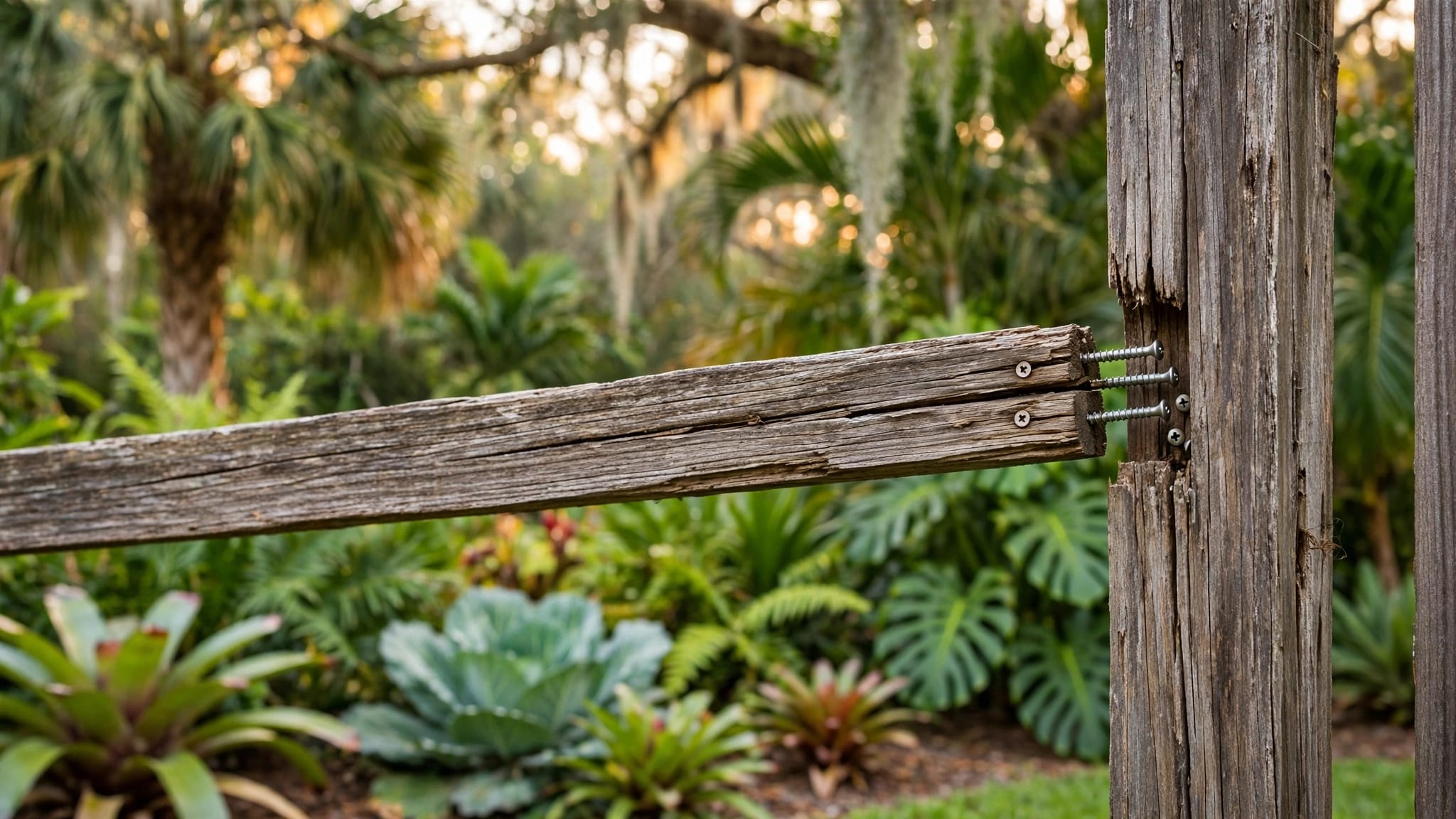
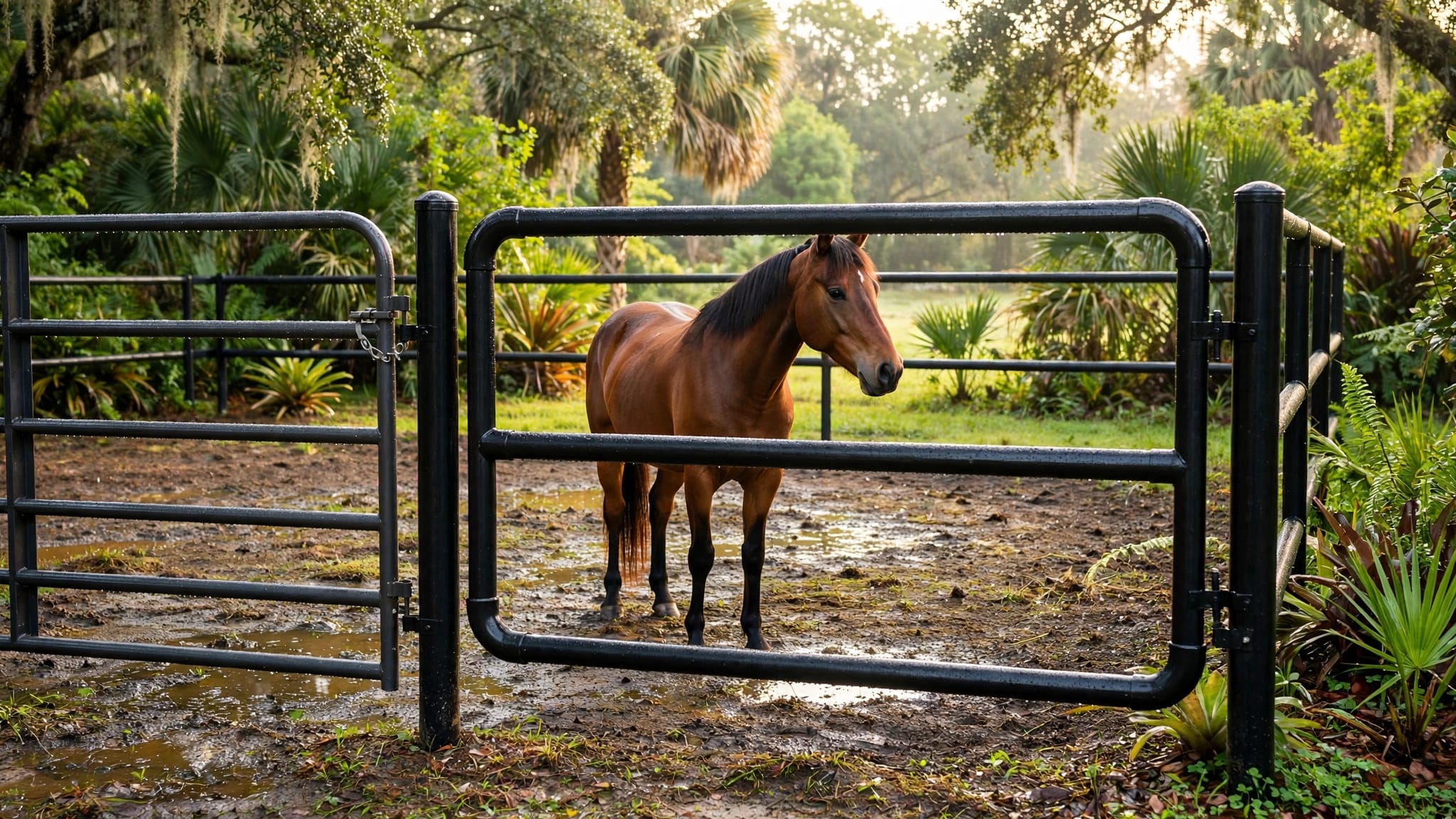
Inspect rails and fasteners for pulling or separation. Check gate alignment only if the frame and posts appear stable. Don't force a dragging gate or tighten hardware to pull a shifted post back into place.
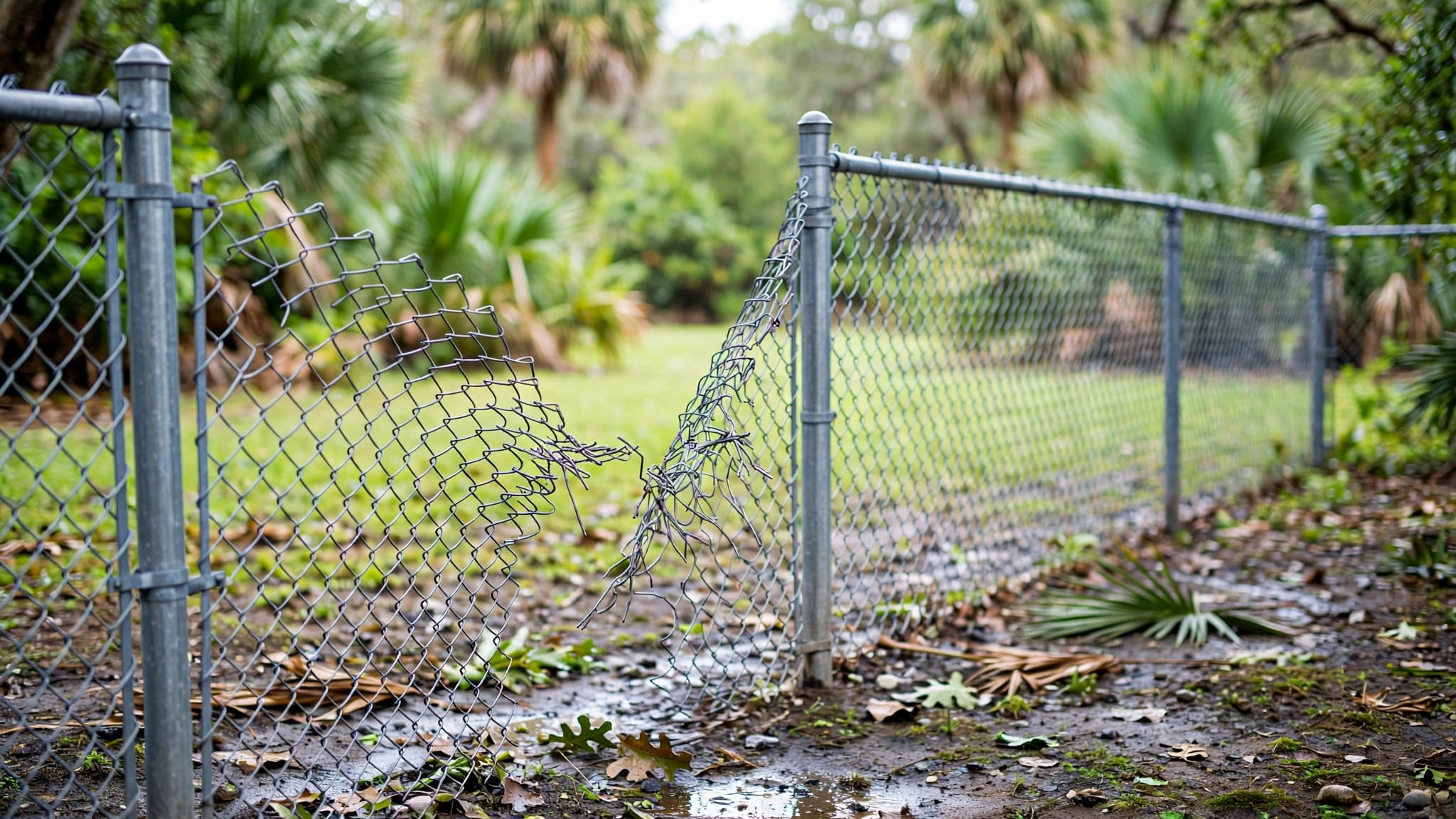
For damaged sections, hurricane fence repair in Southwest Florida covers post, panel, and gate concerns.
If the fence is a pool barrier, keep the pool inaccessible until the barrier and its self-closing, self-latching gate work properly. A clean fence still needs to perform its safety function.
Plan Follow-Up Care for Coastal Conditions
After the initial rinse, make another visual check as the surrounding ground dries. Changes in gate alignment or post position deserve attention, even when the panels still look straight.
Beachside and canal-front properties often need a monthly rinse during normal conditions. The Southwest Florida fence maintenance schedule separates routine care by material. Adjust your attention to actual salt exposure, condition, and manufacturer recommendations.
Keep sprinklers aimed away from the fence, and clear vegetation that traps moisture against rails and posts. Also, follow manufacturer instructions for lubricating gate hardware after cleaning.
If replacement hardware is necessary, choose compatible parts rather than matching appearance alone. Guidance on corrosion-resistant coastal fence hardware addresses stainless steel, protective coatings, and contact between different metals.
For a repair estimate, show the contractor your photographs and point out any washout. Ask whether the damage affects only surface components or also the posts and footings.
Frequently Asked Questions
Will rain wash all the salt off my fence?
Rain can wash some salt away, but it doesn't reliably reach sheltered hinges, brackets, rail connections, or surfaces protected by overhangs. It also won't reveal whether surge water weakened a post.
Once access is safe, inspect those protected areas and rinse them gently with fresh water. Don't judge the whole fence by a clean-looking panel. Check the accessible hardware and both sides, because wind direction and nearby landscaping can leave one side more exposed than the other.
How soon should I rinse after storm surge?
Safety determines when you can start. Don't enter standing floodwater or work around contaminated residue, electrical hazards, or unstable fencing to meet a cleaning deadline.
When access is safe, fresh water is available, and the fence is stable, begin with a gentle rinse. If the area remains hazardous, postpone cleaning and arrange the appropriate assessment. Salt removal matters, but it doesn't justify exposure to flood contamination or electricity. There isn't one rinse deadline that fits every property's storm conditions.
A Clean Fence Still Needs a Stability Check
A gentle fresh-water rinse removes surface salt without unnecessary wear on your fence's finish. However, post stability and working gates matter just as much after storm surge.
Let the fence dry, inspect its connections, and leave leaning sections or washed-out footings to a qualified fence contractor. The job is complete when the fence is clean enough to assess and safe to use.