Fence Installation On Concrete Slabs For Southwest Florida Homes
A fence that looks great on day one can still fail later if it's attached wrong. That's why concrete slab fence installation needs its own playbook in Southwest Florida.
Pool decks, lanais, driveways, and side-yard slabs are common in Lee, Collier, Charlotte, and Sarasota counties. They're also tough environments for fences because wind loads are high, rain hits hard, and salt air never takes a day off. If the posts wobble, the slab cracks, or the fasteners rust, the whole fence becomes a repair project.
Below is a practical, safety-first guide to mounting a fence to concrete the right way, including which anchoring method fits your slab, plus a clear install sequence that holds up through storm season.
Why slab-mounted fences fail in Southwest Florida (and how to prevent it)
A slab seems like the perfect base, until you treat it like a footing. Most residential slabs weren't poured for fence loads. They were poured for foot traffic, patios, or light vehicles. Add a tall privacy fence, then add gusty summer storms, and the slab edge starts acting like a weak seam.
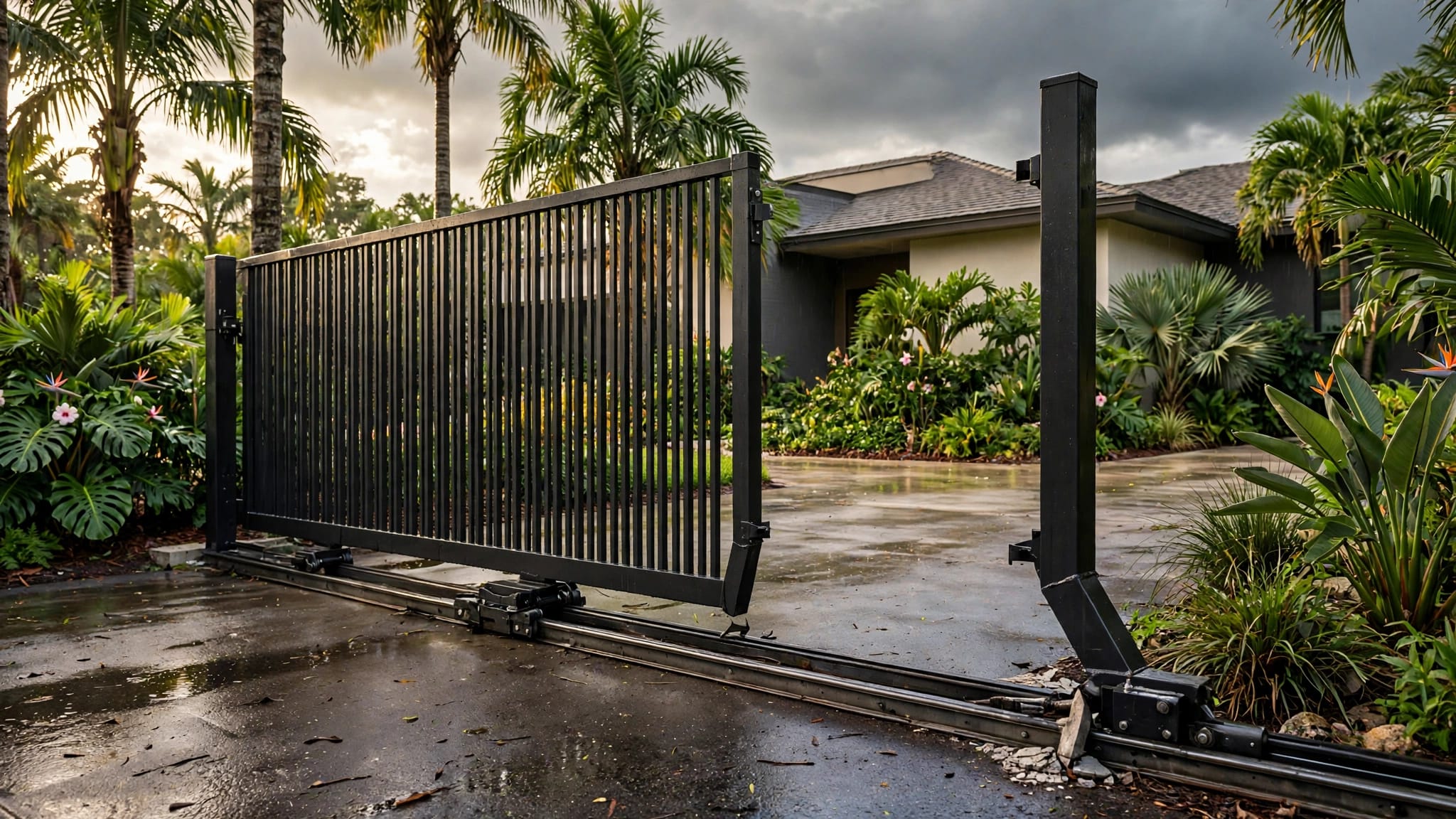
Wind is the big multiplier. In Southwest Florida, a fence is basically a sail. Solid panels catch more wind than open pickets, so anchoring has to match the fence style and height. If you're considering an open, storm-friendly option for a pool or backyard, many homeowners choose aluminum systems for strength and low upkeep. A good starting point is learning about a metal fence installer Cape Coral and the styles that fit coastal conditions.
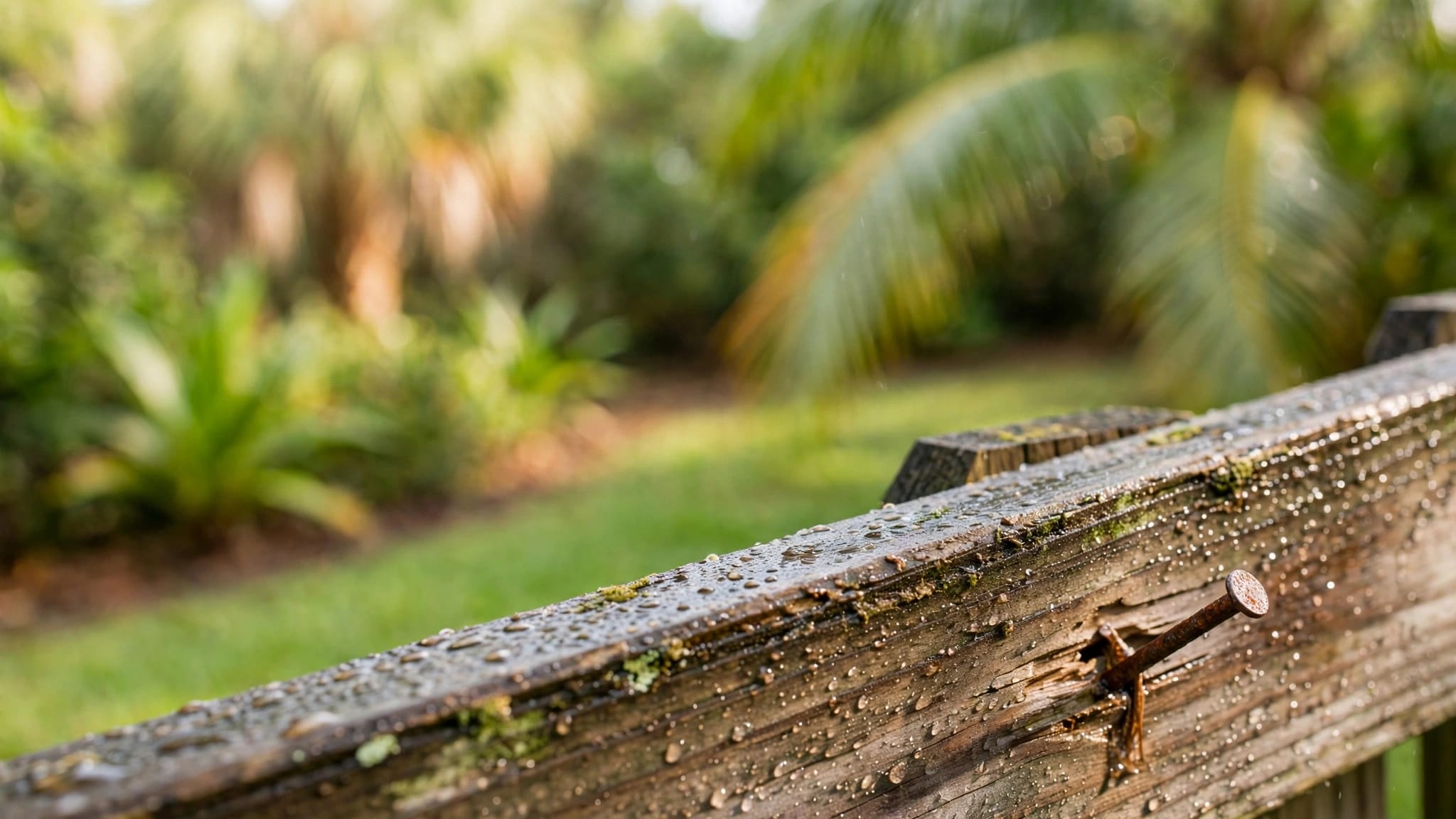
Moisture matters too. Water sneaks into tiny gaps around post bases. Then it sits, heats up, and keeps the hardware wet. Near the coast, salt speeds up corrosion fast. That's why stainless steel (often 316 near salt exposure) or hot-dip galvanized anchors and bolts are worth it. Zinc-plated indoor hardware won't last outdoors here.
Cracks and slab edges are another common trouble spot. Drilling too close to the slab edge can split concrete, especially on older patios. Think of the slab edge like the crust of a cookie, it crumbles first if you press on it.
A slab-mounted fence is only as strong as the concrete under the base plate, and the fasteners holding it down.
Choosing the right anchoring method for your slab
There isn't one best way to mount every fence to concrete. The best method depends on slab thickness, condition, and fence height. It also depends on where the post lands, especially near control joints or slab edges.
Before you buy hardware, take five minutes to answer three questions:
- How thick is the slab where each post will sit?
- Is the slab cracked, spalled, or hollow sounding?
- Is this a low, open fence or a tall, solid privacy fence?
Here's a quick decision table to guide the mounting approach.
| Slab condition and fence plan | Best-fit mounting approach | Why it works in SWFL |
|---|---|---|
| Thick, sound slab, open fence (aluminum pickets) | Surface-mount post base with wedge or sleeve anchors | Simple, strong, and easy to inspect over time |
| Thick, sound slab, tall or solid panels | Epoxy-set threaded rod with rated base plate | Better pull-out strength for higher wind loads |
| Slab is thin, unknown, or near slab edge | Add new concrete pier/footing tied to slab, then set post | Avoids edge blowout and reduces crack risk |
| Slab is cracked or deteriorated | Replace section, or install new footings beside slab | Anchors don't hold well in bad concrete |
| Post lands near a control joint | Shift layout, or bridge with proper engineering | Joints move, and movement loosens anchors |
| Pool deck application with gates | Use corrosion-resistant hardware, confirm latch and swing | Gates get daily use, hardware must not bind or rust |
When homeowners want more privacy, they often lean toward vinyl panels. Vinyl can work well on slabs, but the post anchoring has to match the wind load and panel style. If you're weighing privacy vs airflow, see the pros and cons of a vinyl privacy fence in Cape Coral.
One more caution: don't assume "bigger anchor" fixes everything. If the slab is thin or weak, a stronger anchor can crack it faster.
If the slab can't safely carry the load, the right fix is a footing, not a tougher bolt.
Step-by-step: how to anchor a fence to concrete (the safe, durable way)
This is the basic workflow pros follow for concrete slab fence installation that's built to last. The exact hardware and spacing should match your fence system and site conditions, but the sequence stays similar.
- Confirm layout and property lines. Mark post centers, gate openings, and hinge sides. Also check easements and HOA rules before drilling anything.
- Check slab thickness and condition at post points. If you can access an edge, measure it. If not, use a small test hole where a base plate will cover it. Stop if you hit voids or severely weak concrete.
- Pick corrosion-resistant hardware upfront. Use stainless or hot-dip galvanized anchors, bolts, washers, and nuts. Match metals when possible to reduce corrosion.
- Position the post base and mark holes. Keep holes away from slab edges and avoid drilling right on control joints.
- Drill with the correct bit and depth. Use a hammer drill with a masonry bit sized to the anchor. Depth matters, so follow the anchor manufacturer's spec.
- Clean the holes thoroughly. Blow out dust, brush, then blow again. Dust left in the hole reduces holding power, especially for epoxy anchors.
- Set anchors correctly. For wedge and sleeve anchors, tighten to spec so you don't crush the concrete. For epoxy-set rod, inject epoxy properly and allow full cure time before loading.
- Plumb posts and snug hardware in stages. Get posts straight first, then tighten evenly. Rushing this step creates a leaning fence that only gets worse.
- Seal around base plates when needed. A light bead of exterior sealant can reduce water entry on flat patio installs. Don't trap water where it can't drain.
- Install panels and gates, then test movement. Gates should swing freely and latch smoothly without slamming. If the fence is for a pool area, hardware details matter even more. Review Cape Coral pool fence rules 2026 and confirm what your city and inspector require.
Permits and inspections vary by municipality and county, and rules can change. In Southwest Florida, many fence projects still require permits, even for replacements. Always check with your local building department and your HOA before installation.
Cost drivers homeowners should expect
Prices vary widely, but the same factors move most estimates:
- Linear footage and fence height
- Fence material (open aluminum vs solid vinyl vs wood)
- Number of gates and gate width (double drives cost more)
- Slab drilling time, anchor type (mechanical vs epoxy), and access
- Slab condition (sound slab vs cracked slab that needs new piers)
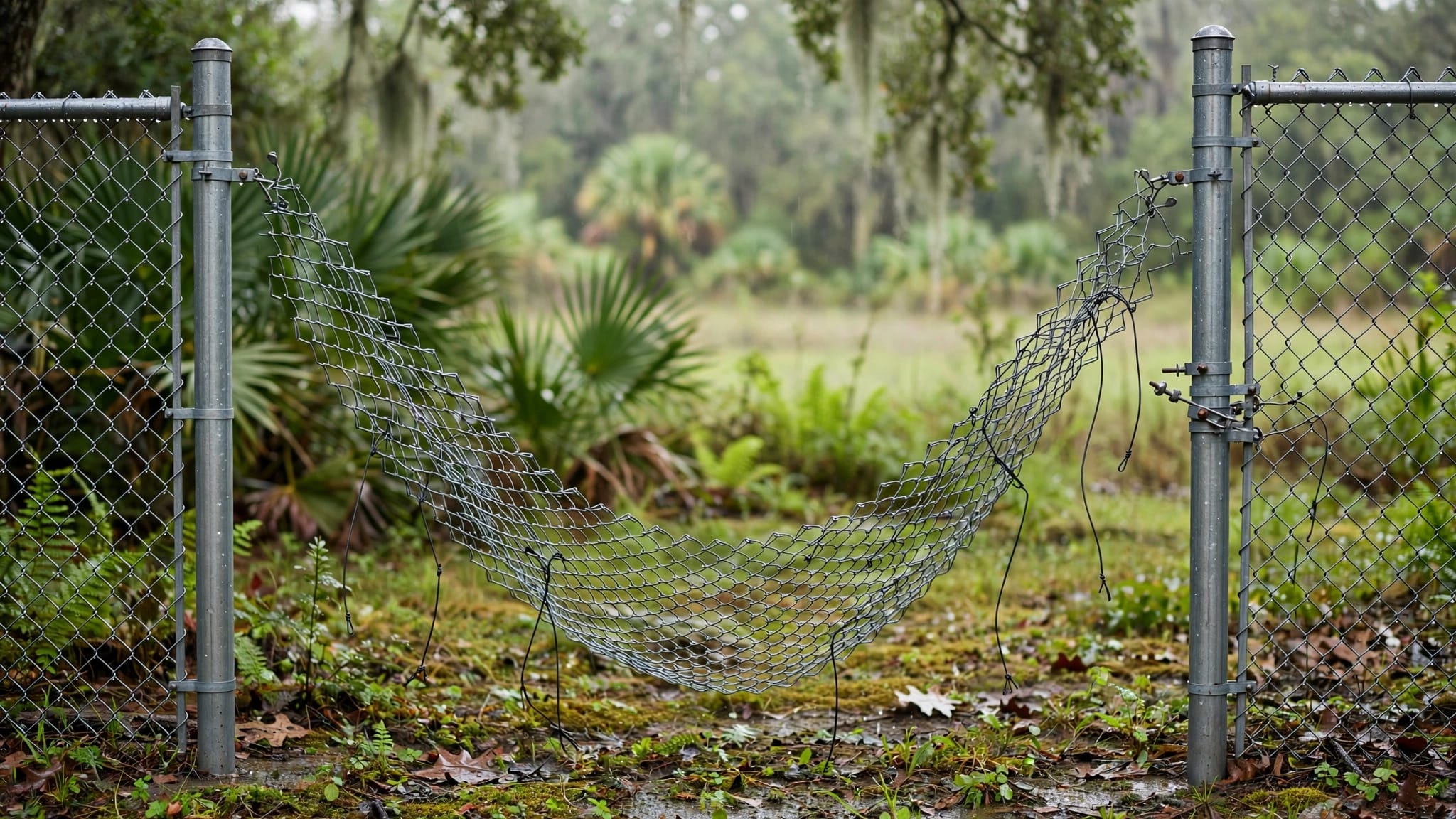
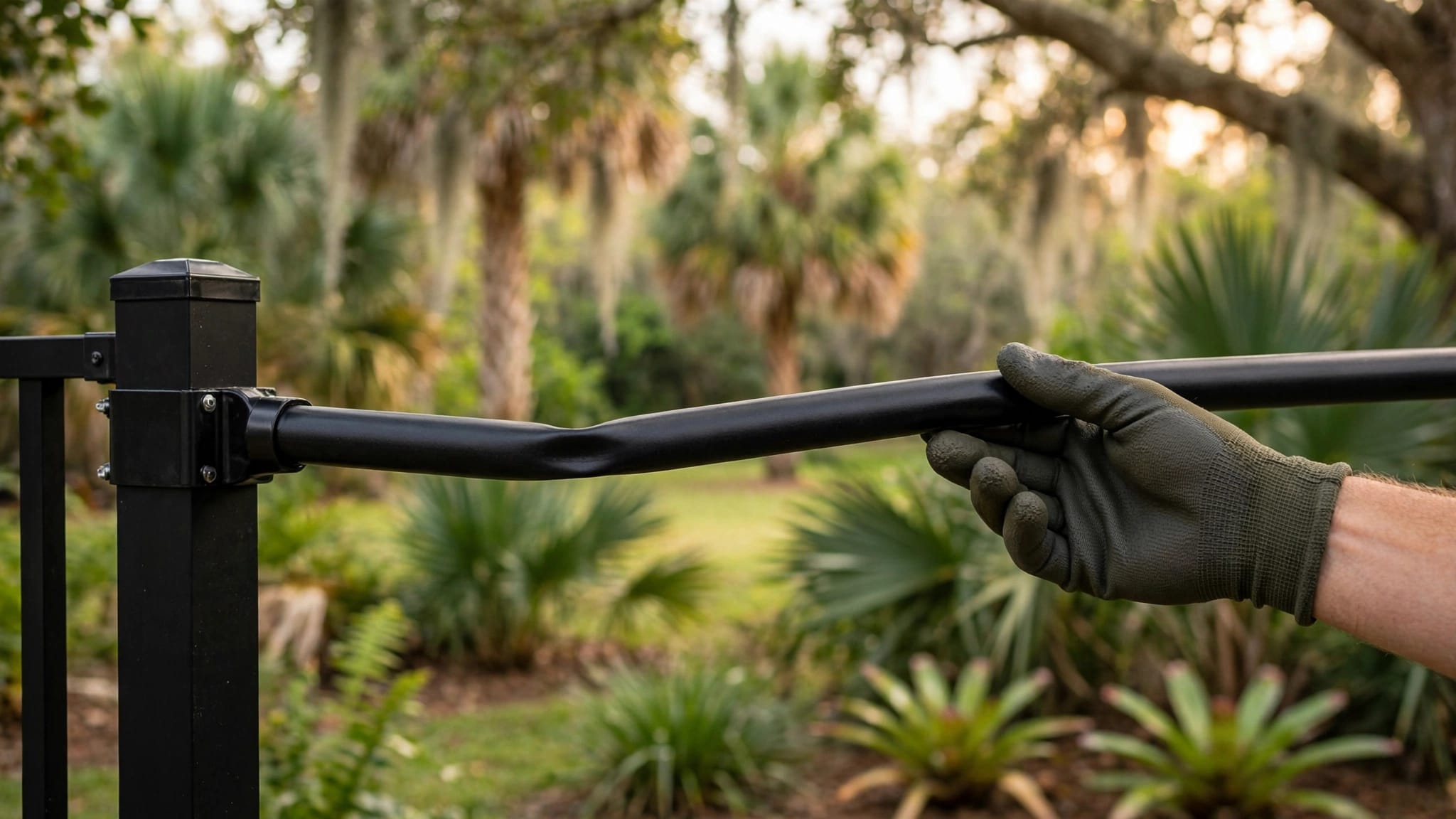
If a storm bends sections or loosens posts later, repairs should address the anchor system, not just the panel. For warning signs and fixes, see fence repair Cape Coral.
Quick checklist for hiring a fence contractor
- License and insurance : Ask for proof, and confirm it's current.
- Permit handling : Confirm who pulls permits and schedules inspections.
- Hardware spec : Require stainless or hot-dip galvanized fasteners near the coast.
- Wind and gate plan : Ask how they'll reduce sag and handle wind loads.
- Warranty in writing : Get terms for labor, materials, and gate hardware.
Conclusion
A slab-mounted fence can be rock solid, but only if the anchoring matches the concrete and the wind. Start by judging the slab honestly, then choose fasteners that won't rust out in salt air. Most importantly, don't force anchors into weak concrete, build proper footings when the slab can't carry the load.
If you want a fence that stays straight through storm season, focus on anchoring first, then style.