Charlotte County Fence Permit Guide For 2026 Homeowners
A fence feels simple until the permit counter asks for a site plan, a survey, and proof you're not building in an easement. In 2026, the safest assumption is this: you'll need a Charlotte County fence permit before anyone sets posts, even for a "basic" backyard fence.
This guide explains how the county process usually works, what documents you'll be asked for, and the gotchas that cause delays. Since rules can vary by jurisdiction (Punta Gorda vs unincorporated Charlotte County, for example), you'll also see where to double-check before you order materials.
First, confirm who has jurisdiction (county vs city vs HOA)
In Charlotte County, "my address is in Port Charlotte" doesn't always tell you who approves your fence. Permits and zoning reviews can depend on whether you're in unincorporated Charlotte County, inside a city boundary (like Punta Gorda), or in a special overlay area. On top of that, HOAs can be stricter than local government.
Start with three quick checks:
1) Your property's jurisdiction
- Unincorporated Charlotte County typically routes fences through the county's Community Development and zoning review process.
- City limits (like Punta Gorda) may have their own fence rules, application portal, and inspection steps.
- Englewood can be tricky because "Englewood" spans areas that may involve different agencies, depending on the exact parcel.
2) Your zoning district Charlotte County's own guidance points homeowners to call zoning for height and location limits by district (verify current for 2026). This matters because a 6-foot privacy fence may be fine in one area, but need changes in another.
3) HOA and deed restrictions Even with a permit, an HOA can still enforce style rules (color, "good side" direction, approved materials, and gate location). Get HOA approval in writing before you pay for a fence package.
If you remember one thing: don't guess the line . A fence placed a foot into an easement can become an expensive redo.
When a permit is usually required in Charlotte County (verify current)
Based on current county guidance as of March 2026, most residential fences need a permit, with a narrow exception for certain small enclosures (for example, a short screen around trash cans or equipment with limited panels and one gate, behind the front edge of the home, verify current). Pool safety barriers often fall under a different permit type than a standard fence.
Also, masonry fencing is often treated more like a wall, which can change the permit type and review details (verify current).
What Charlotte County typically asks for in a fence permit application
Think of your fence permit packet like a recipe. If you miss one ingredient, the county can't "cook" the approval. The good news is the ingredients are usually predictable.
Here's the core submittal list homeowners should plan around (verify current requirements for 2026 updates):
| Item | Why they want it | Common homeowner mistake |
|---|---|---|
| Boundary survey or scaled site plan | Confirms the fence line, setbacks, and easements | Using a property appraiser map as a "survey" |
| Fence layout details | Shows location, length, height, and gates | Not showing gates, corners, or street sides |
| Permit application forms | Starts the official review | Leaving blanks for value, contractor, or zoning info |
| Notice of Commencement (if required) | State construction notice for higher-value work | Forgetting it when project cost is over the threshold (verify current, commonly cited at $5,000) |
A practical tip: if your survey is old, faded, or doesn't match what you see on the ground, budget for an updated one. A good installer can build a great fence, but they can't "fix" a bad boundary assumption.
Heights, "front yard" limits, and waterfront constraints (verify current)
Charlotte County's published guidance commonly references rules that surprise new homeowners:
- Height limits : Many residential fences are commonly limited to around 6 feet (verify current). Some features like posts or finials may be allowed to extend higher (verify current).
- Front yard restrictions : Shorter fences may be treated differently than tall privacy fences. In some cases, an opaque fence around 3 feet or a see-through fence around 4 feet may avoid certain front yard setback limits (verify current).
- Waterfront rules : Lots near canals, seawalls, or high water lines can have tighter height limits close to the water (verify current), because sightlines and shoreline conditions matter.
Because these limits vary by zoning and lot type, confirm them before you choose a style. A solid privacy fence and an open picket fence can trigger different review comments.
A simple step-by-step process (so you don't lose weeks)
Fence projects rarely get delayed by the actual digging. They get delayed by paperwork timing and missing details. Here's a clean order that usually reduces rework.
Step 1: Mark utilities before any layout work
Call 811 before digging or augering holes. Even if you think you know where everything runs, Florida yards hide surprises. Utility strikes can also stop your job mid-install.
Step 2: Decide who pulls the permit (owner-builder vs contractor)
Charlotte County allows owner-builder permits in certain cases (verify current), but there are limits and responsibilities. If you hire a contractor, ask one direct question: "Will you pull the permit in your company name?" Get that answer in writing.
Also confirm licensing and insurance. A fence is a structure, not a decoration.
Step 3: Build a site plan that matches reality
Your site plan should show:
- Property lines and easements (as shown on the survey)
- Fence line location with distances (so reviewers don't have to guess)
- Gate locations and widths
- Street sides and corner conditions (visibility areas can matter)
If your lot is a corner lot, treat it like two "fronts" until zoning confirms otherwise. Corner visibility rules are a common reason for redesign.
Step 4: Submit, pay, and track timing (fees are "verify current")
County fees can change, and fee schedules don't always match what neighbors paid last year. As of current guidance, homeowners may see a zoning fee and other building-related fees calculated from project value (all verify current for 2026).
Also watch the clock after approval. Charlotte County guidance commonly notes permits can void if work doesn't start within a set window (often cited around 180 days , verify current).
Plan for the permit first, then schedule installation. Otherwise, you risk paying for delivery and labor while waiting for approval.
Step 5: Plan for inspection and "good side out"
Inspections vary by scope and permit conditions (verify current). Still, one rule pops up often: the finished side of the fence must face outward, toward neighbors or the street, with posts on the inside (unless the fence looks the same on both sides, verify current). This is easy to mess up on side yards and corner lots.
Common permit problems in Port Charlotte, Punta Gorda, and beyond
Most fence permit issues aren't dramatic. They're small details that snowball.
Easements are the silent fence killer
Utility and drainage easements can run along side and rear property lines. Even if you "own" the yard, you may not be allowed to block access or build inside certain easements without additional approval (verify current). When in doubt, confirm with zoning before you set the fence on the line.
Pool barriers are a different animal
If the fence will serve as a pool safety barrier, expect stricter gate hardware rules (self-closing, self-latching, swing direction, and opening limits, verify current). If you want a plain-English baseline for pool gate details that inspectors focus on across Southwest Florida, review pool barrier height and latch requirements(then confirm the exact Charlotte County and city requirements for your permit type).
Neighbor issues: avoid the handshake agreement trap
A fence near a boundary line can turn into a dispute fast, especially during replacements after storm season. A quick written agreement beats assumptions every time. For a practical overview of how cost sharing usually works in Florida, see Florida shared fence law basics.
Material choice affects approval risk and long-term repairs
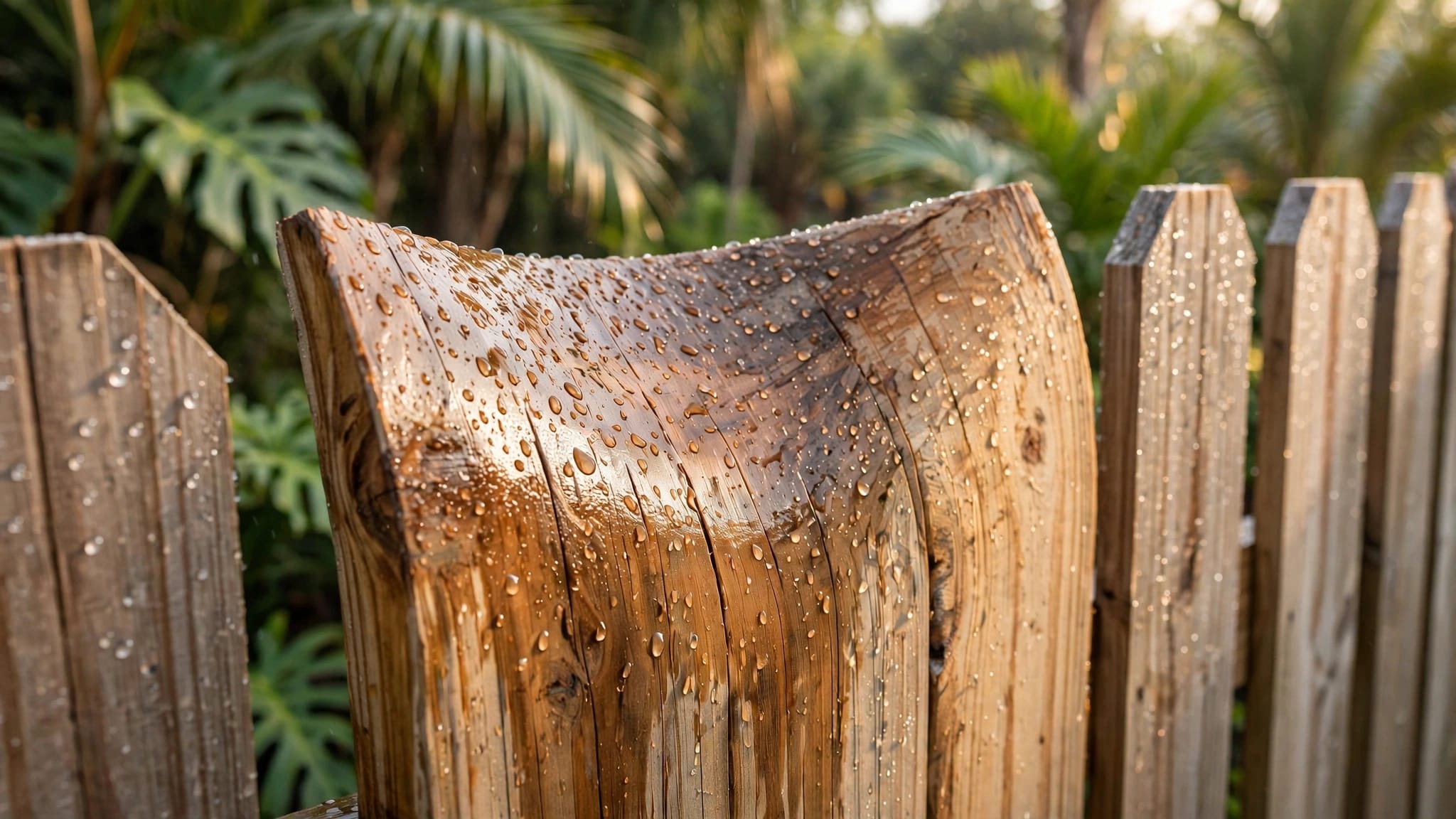
Charlotte County sun, rain, and salt air (near the water) can punish hardware and posts. Even when the permit is approved, a fence that warps or rusts early becomes a repeat expense. If you're considering wood, it helps to understand realistic maintenance cycles in our climate, see wood fence lifespan in Southwest Florida.
Conclusion
A Charlotte County fence permit is mostly about proof: proof of where your fence goes, proof it respects setbacks and easements, and proof it matches the rules for your zoning and lot type. Confirm jurisdiction first, build a clear site plan, and verify current heights, fees, and inspection steps with the local building department before you order materials. Do that, and your fence becomes what it should be in 2026, a clean upgrade, not a paperwork problem.