Saltwater Pool Fence Materials for Southwest Florida Homes
A saltwater pool can turn ordinary fence hardware into the first part that fails. Splash, humidity, summer rain, and coastal air all work on gates, fasteners, posts, and finishes.
The right saltwater pool fence protects the pool area without creating years of repairs. In Southwest Florida, aluminum and vinyl usually lead the conversation, but the best choice also depends on your yard, privacy needs, wind exposure, and local rules. Start with safety requirements, then match the material to the site.
Saltwater Pool Fence Requirements: Safety Comes First
A pool barrier has one job that outranks appearance: limiting unsupervised access to the water. Material matters, yet fence height, opening size, gate operation, and installation quality matter just as much.
Florida pool-barrier rules and local amendments can differ by city, county, property type, and project scope. Before installation, verify current pool-barrier and building-code requirements with your local building department, HOA, and contractor.
A pool barrier needs more than a tall fence
Many pool barriers require a minimum height of about 48 inches. However, the finished measurement, bottom clearance, spacing between pickets, and permitted openings must meet the rules that apply to your property.
A fence with wide horizontal rails can create a climbing hazard. Likewise, gaps near a gate or under a panel can defeat an otherwise sturdy enclosure. Vertical pickets, limited openings, and a clean transition around pool equipment usually create a safer layout.
If your home, screen enclosure, or property fence forms part of the barrier, each access point needs careful review. A pool fence should create a complete boundary rather than leave a convenient shortcut around one side.
Gates deserve the closest inspection
Every gate should close and latch on its own. The latch needs placement that makes it difficult for a small child to reach or operate from outside the enclosure.
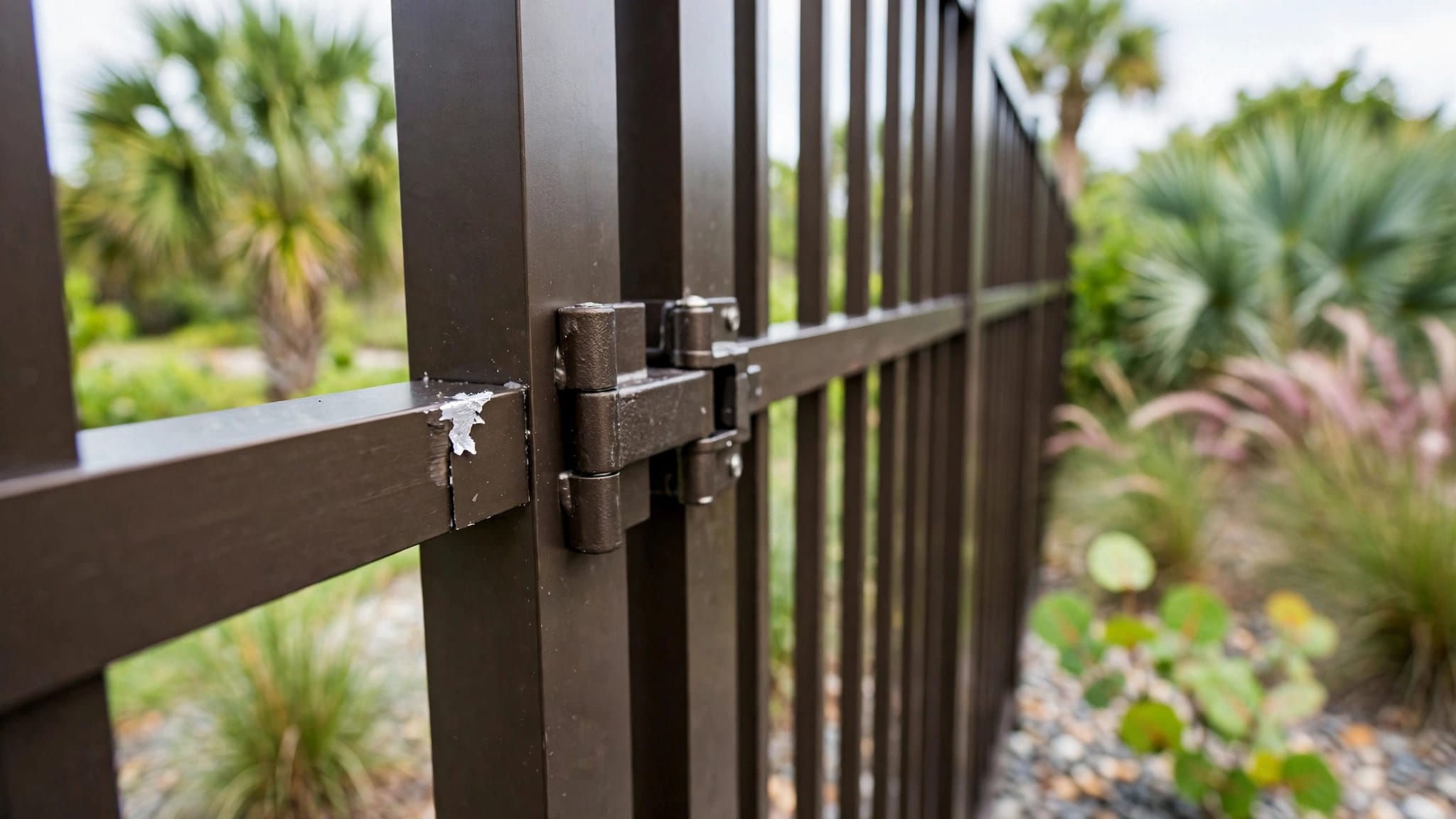
Saltwater pool equipment creates a damp environment around gate hardware. Therefore, ask for corrosion-resistant hinges, latch components, fasteners, and reinforced gate framing. A heavy gate that drags after one wet season is a daily safety problem.
A pool gate can look closed while its latch barely catches. Test it by opening it fully, releasing it, and confirming that it closes and latches every time.
Powder-Coated Aluminum Is a Strong Poolside Choice
For many Southwest Florida homes, powder-coated aluminum is the most practical saltwater pool fence material. It provides a rigid barrier while keeping the pool deck, landscaping, and canal views open.
Aluminum doesn't rust like steel. It also doesn't rot, splinter, or attract termites. Black, bronze, and white finishes fit many home styles, while the open picket design lets air pass through during stormy weather.
Open pickets reduce wind pressure
Solid fencing catches more wind. Near a pool, canal, or exposed backyard, that force transfers into posts, rails, and gate hinges. Aluminum pickets allow gusts to move through the fence, which reduces the sail effect.
That open profile also makes it easier to watch children in the pool from the patio or house. Privacy is limited, though, so aluminum works best when safety, sightlines, and low upkeep matter more than screening.
A detailed Cape Coral fence material comparison can help homeowners weigh aluminum against vinyl, wood, and composite options for local conditions.
Hardware determines long-term performance
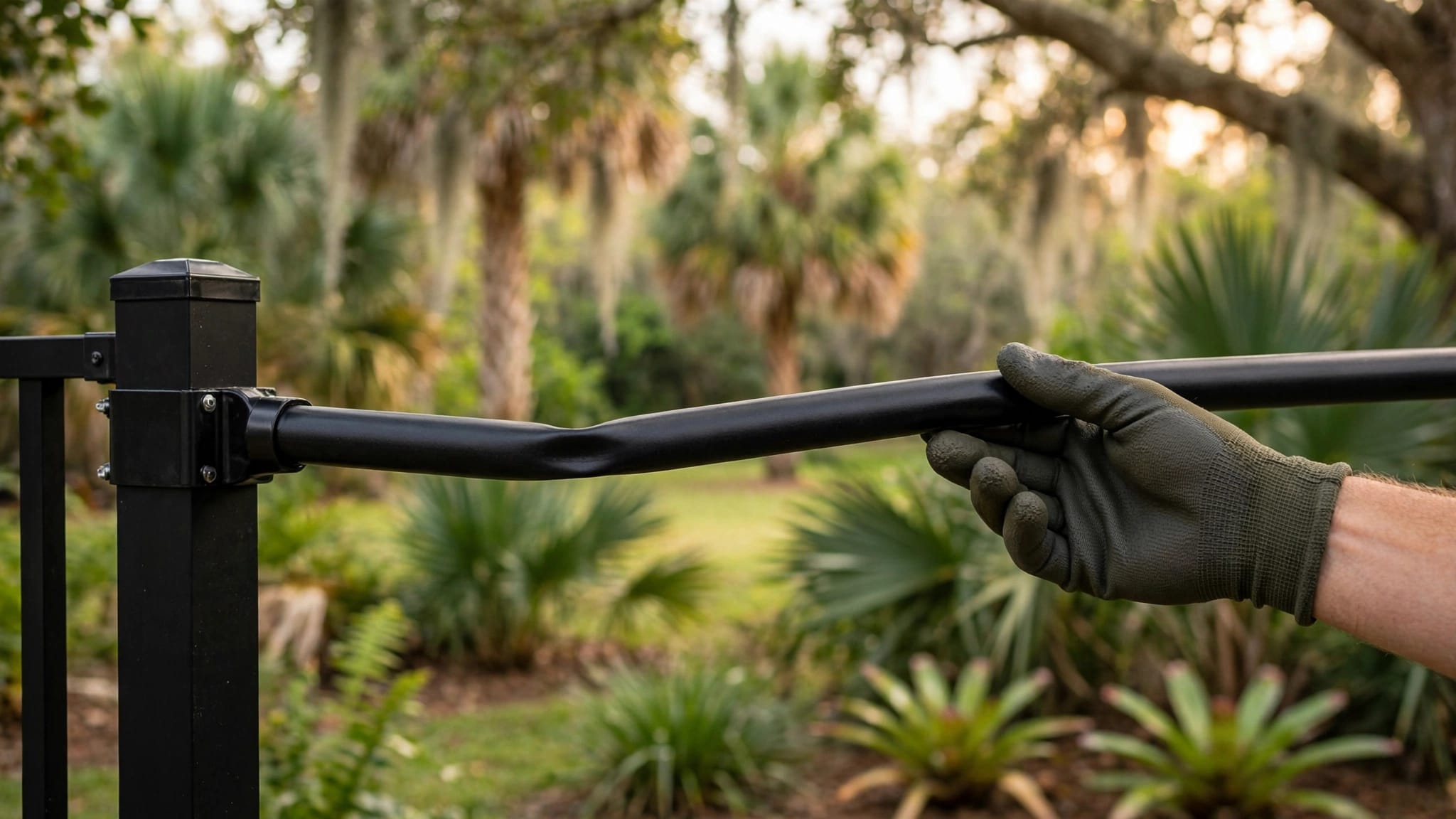
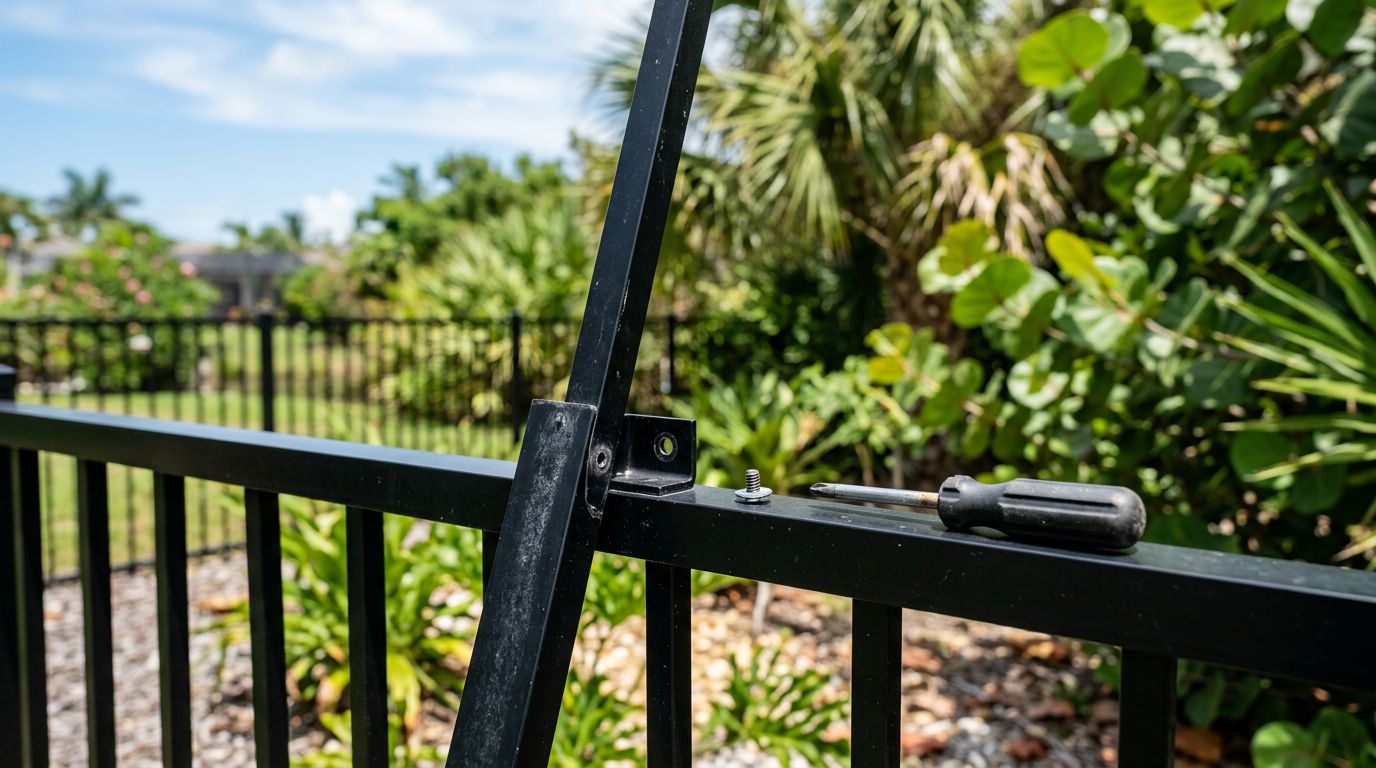
Even a quality aluminum panel can develop problems if its hardware isn't suited to salt and moisture. Ask about stainless steel or other corrosion-resistant fasteners, sturdy hinge assemblies, and reinforced gate frames.
Rinse the fence and gate hardware periodically, especially after heavy pool use or a windy week near salt air. Also inspect the latch, hinges, and post caps at least once a year. Small adjustments are easier than replacing a gate assembly.
Vinyl Offers Privacy Without Rot or Termites
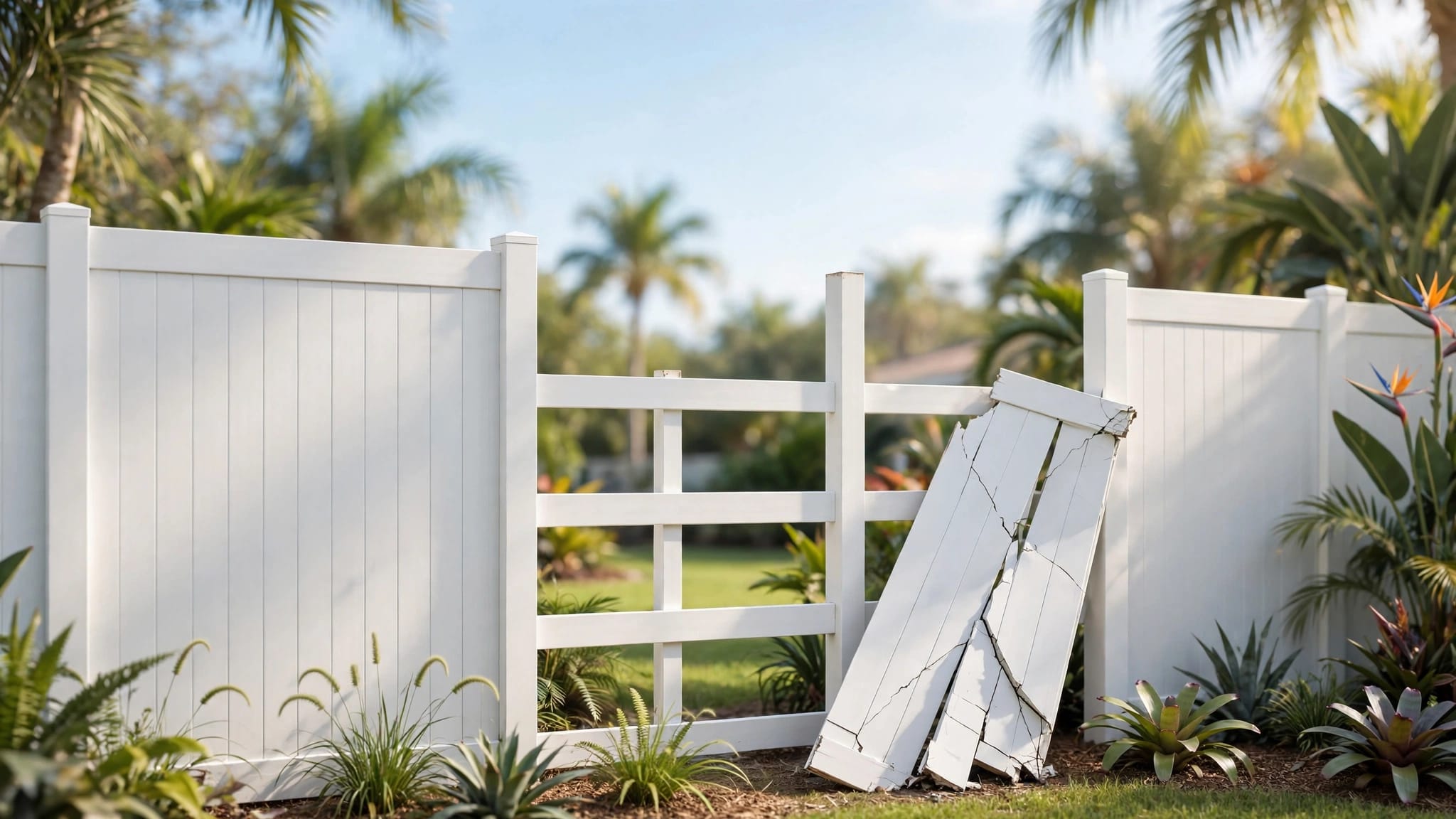
Vinyl fencing is a smart option when the pool area needs more privacy. It won't rot in wet conditions, and termites don't treat it as food. A quick rinse and mild soap usually handle pollen, mildew, and splash marks.
White vinyl remains common, although tan, gray, and darker colors may suit a modern backyard. Keep in mind that dark surfaces can become hot in direct Florida sun.
Choose a wind-aware vinyl design
A solid six-foot privacy panel catches substantial wind. That doesn't rule it out, but it does mean the post depth, spacing, internal reinforcement, and gate design need to fit the exposure of the yard.
Semi-private vinyl, spaced picket styles, or a privacy fence set closer to the house can reduce wind pressure. On an open lot, a contractor may recommend a different layout than the same fence on a sheltered inland property.
A saltwater pool fence made from vinyl can meet barrier needs when its height, openings, gates, and installation meet local requirements. Still, do not assume a standard backyard privacy fence automatically qualifies as a pool barrier.
Watch the gate frame and panel quality
Vinyl panels themselves handle moisture well, but gates need stronger internal support. Without reinforcement, wide vinyl gates can sag, scrape the ground, or stop latching correctly.
Ask what supports the gate frame and how the posts are anchored. Lower-grade vinyl can also fade, chalk, or flex in intense heat. A thicker, well-supported system costs more upfront, yet it often avoids early repairs.
Mesh and Chain Link Fit Specific Poolside Needs
Removable mesh and chain link offer useful alternatives, but they solve different problems. Neither material should be selected only because it costs less than aluminum or vinyl.
The right choice depends on whether you need a dedicated child-safety layer, a permanent property boundary, pet containment, or a temporary barrier during a particular stage of family life.
Removable mesh adds an inner layer of protection
Removable mesh fencing commonly sits close to the pool's edge. It can create a second barrier between the patio and water, which is helpful for families with young children or frequent visitors.
Mesh is light, see-through, and can be removed when adults want an open deck for a gathering. However, it requires secure mounting points and a self-closing, self-latching gate. It also needs regular inspection because stretched mesh, loose sleeves, or worn latches affect performance.
Homeowners deciding between permanent metal panels and removable protection can review mesh and aluminum pool fence differences before choosing a layout.
Chain link is practical, but it has limits
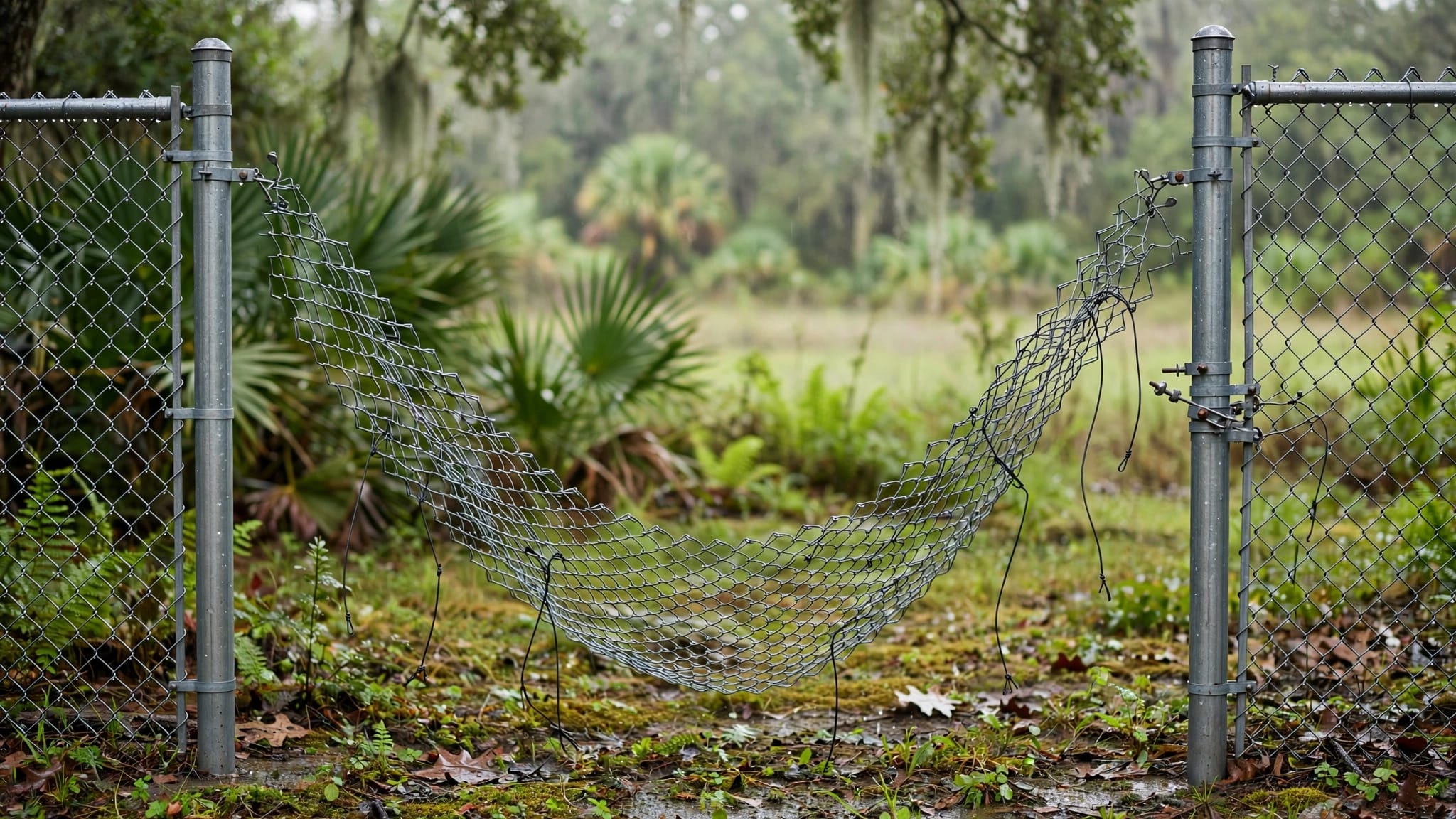
Black vinyl-coated chain link is affordable, wind-friendly, and useful for larger yards or dog areas. Its open weave drains well and doesn't block breezes. It can also blend into landscaping better than bright galvanized metal.
Still, chain link offers little privacy and may be easier to climb than vertical aluminum pickets. Pool-barrier rules can also limit mesh openings and other design details. Confirm that the proposed height, fabric, gates, and placement meet current local requirements before treating chain link as a pool enclosure.
Privacy slats change the appearance, but they also add wind load. Near a saltwater pool or waterfront yard, open chain link usually performs better than a fully filled system.
Wood, Composite, and Steel Need a Closer Look
Wood, composite, and steel can work around pools, but each has tradeoffs that deserve an honest look. They may fit a home's style, yet Southwest Florida heat, moisture, insects, and salt can increase maintenance or shorten service life.
Wood brings warmth, but needs regular care
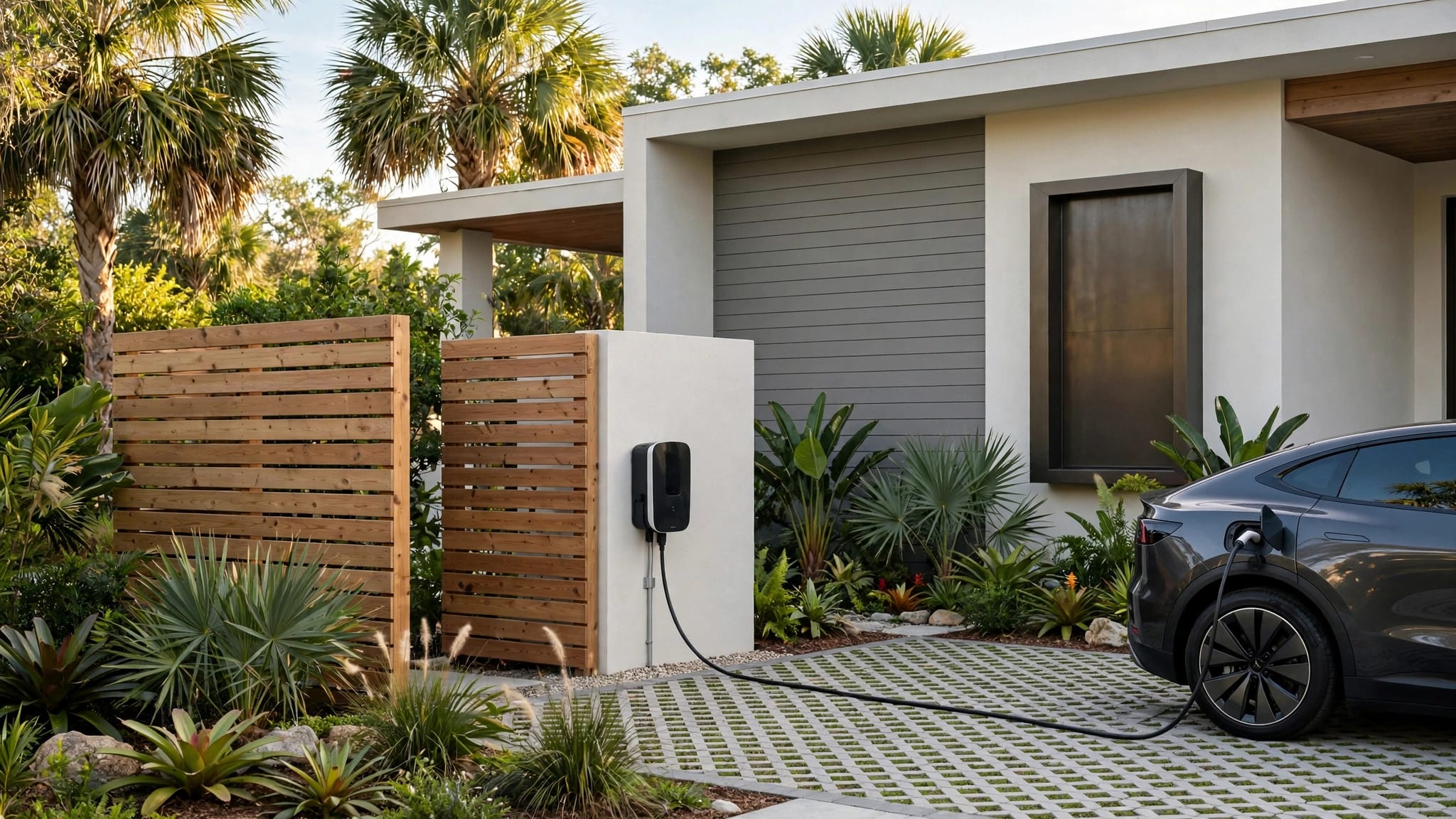
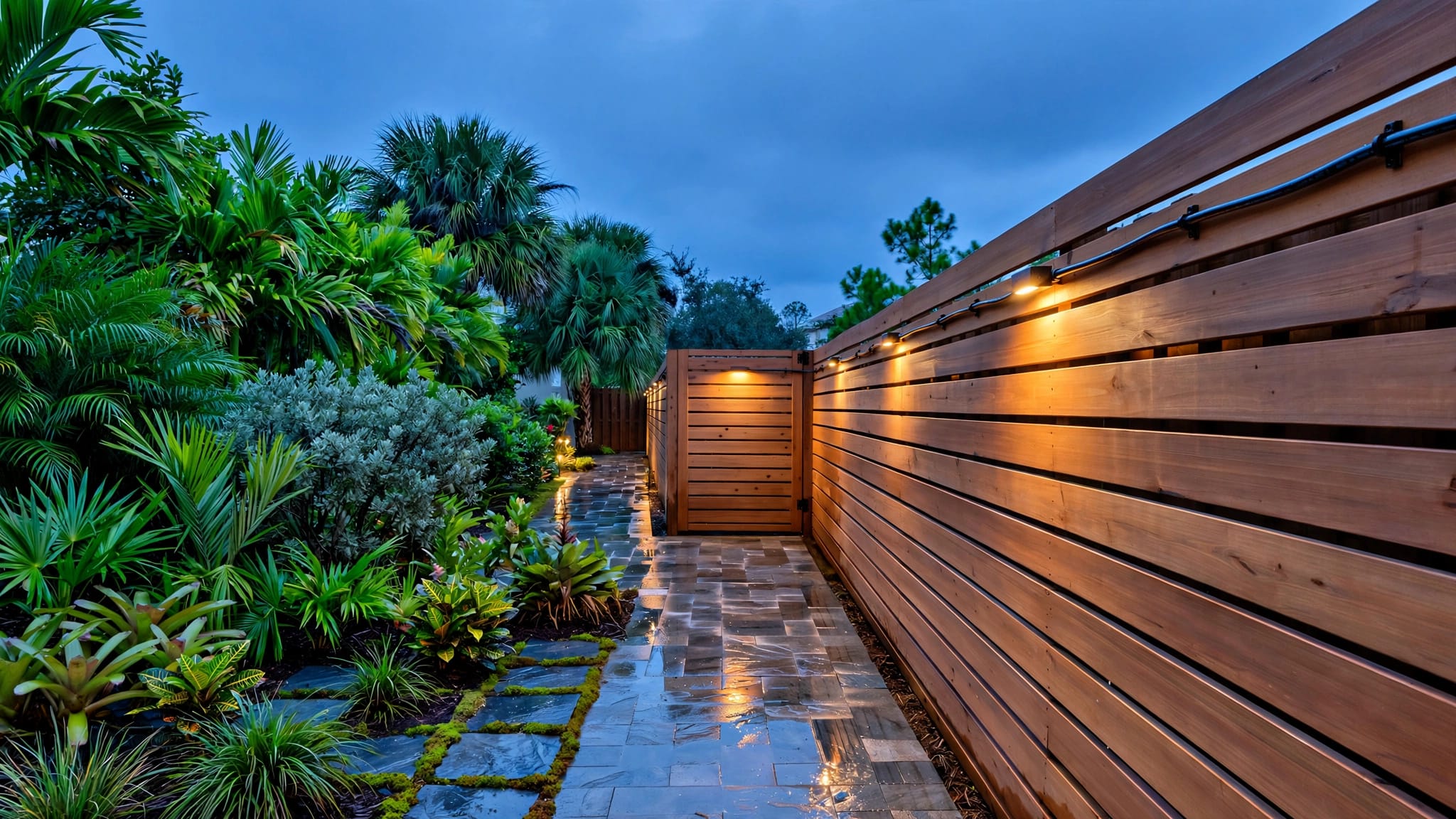
A wood fence can create a classic, private backyard. Pressure-treated lumber is a better starting point than untreated pine, and sealing or staining helps slow water and UV damage.
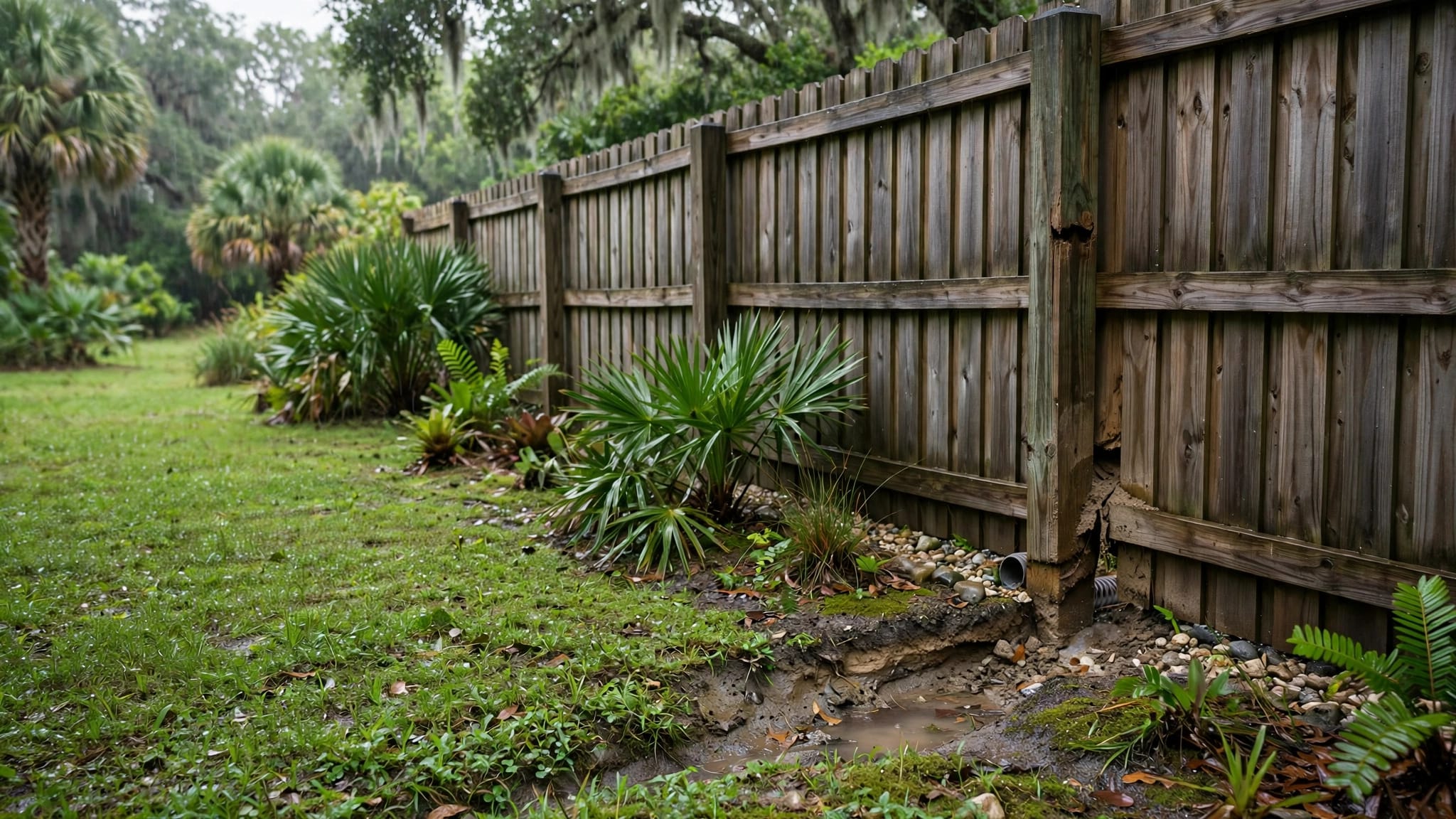
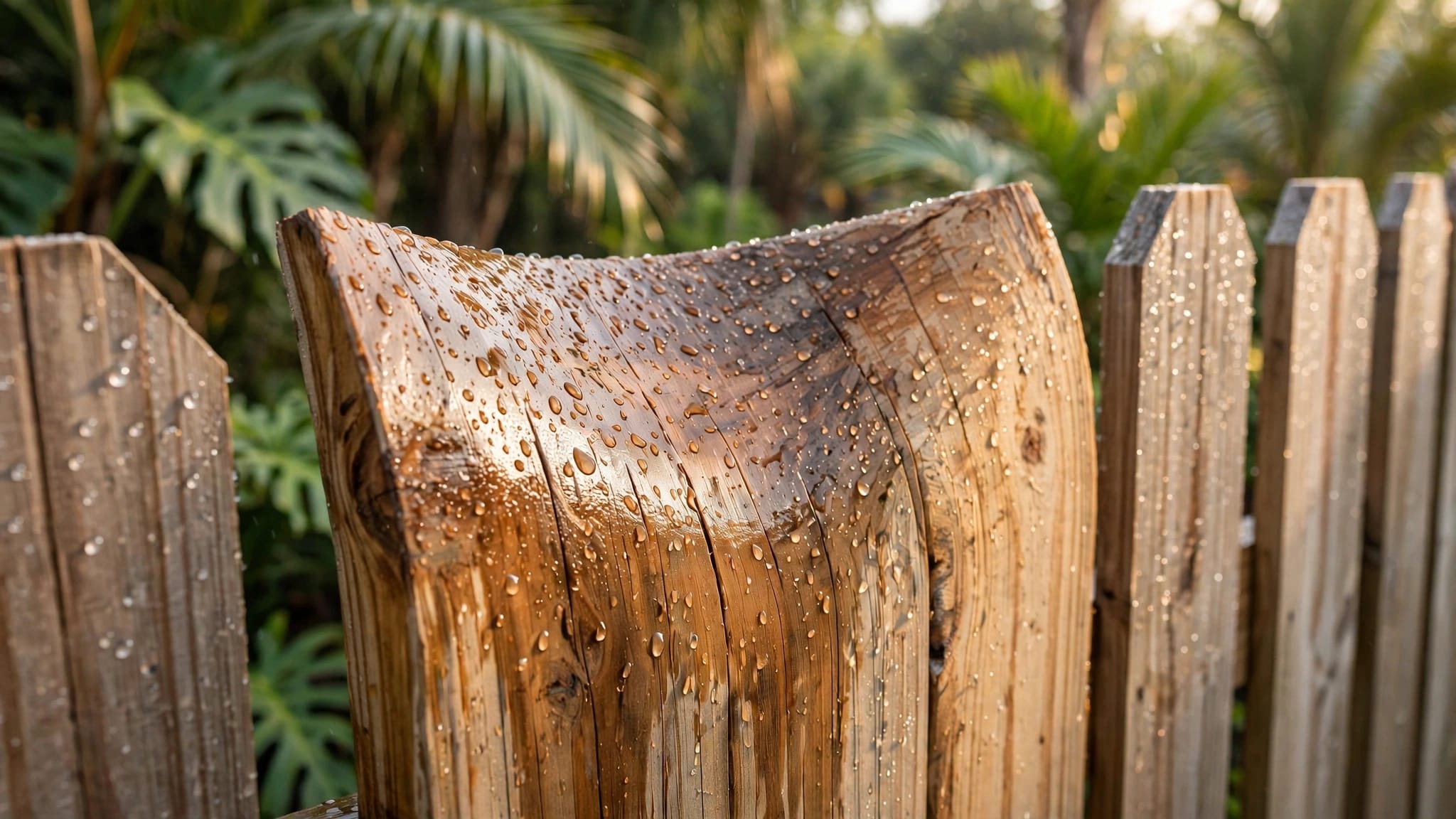
However, wood can warp, split, fade, mildew, and eventually decay. Pool splash and wet soil at the base of pickets add to the workload. Termites also remain a concern.
Wood may suit a sheltered area away from the pool, especially when natural character is the priority. For a pool barrier, inspect every board, rail, fastener, and gate often. A cracked picket or loose latch needs prompt repair.
Composite and steel have different weak points
Composite fencing provides a wood-like appearance without routine staining. It resists rot and insects better than wood, although it costs more and can feel heavy or hot in strong sun. A solid composite design also needs a wind-ready post system.
Ornamental steel and wrought-iron-style fencing look refined around pools. Yet steel requires an intact protective coating. Once the finish chips, moisture can reach the metal and rust can spread, especially near salt air.
For most saltwater pool fence projects, aluminum gives a similar open appearance with less corrosion concern. Steel can still fit covered patios or lower-exposure locations when you are prepared to monitor the finish.
Your Yard Can Override Your First Material Choice
The same fence can perform differently on a canal lot, concrete deck, narrow side yard, or open corner property. Before choosing color or style, look at the survey, setbacks, easements, drainage patterns, utilities, pool equipment, and access routes.
Canal lots call for open designs
Cape Coral waterfront properties may face additional placement and visibility rules. In many cases, fencing above three feet within the rear 20 feet near a waterway must use an open-mesh style. A solid privacy fence may not work near the seawall, even if it fits elsewhere in the backyard.
Aluminum is often a good fit because it preserves canal views and lets wind through. Some properties use a hybrid design, with privacy panels closer to the home and open fencing near the water when local rules allow it.
For more site-specific considerations, review these guidelines for canal-front fencing in Cape Coral.
Concrete and sandy soil affect installation
Pool decks often require fencing on concrete slabs. That can mean core-drilled posts, surface-mounted posts, or a layout that moves the fence off the deck into soil. The best method depends on slab thickness, reinforcement, drainage, and the fence system.
Sandy soil creates a separate challenge. Posts and gate footings need a design that resists movement during rain, wind, and repeated gate use. Corner posts, end posts, and gate posts carry more stress than a straight fence run.
Before signing a proposal, confirm who handles permits, utility locating, demolition, disposal, and inspections. Fence installation on concrete slabs requires planning that goes beyond choosing a panel style.
Choose the Fence That Stays Safe After the First Storm
The best saltwater pool fence combines a compliant barrier design with materials that match your property. Powder-coated aluminum is often the strongest all-around choice for open views and low upkeep. Vinyl works well when privacy matters, while mesh and chain link fill more specialized roles.
A dependable pool fence should still close, latch, and stand straight after sun, rain, splash, and wind. Verify local pool-barrier and building-code requirements before installation, then choose a contractor who treats the gate, hardware, posts, and permit details as part of the safety system.