Florida Fence Permits for New Homes: 2026 Steps
A new home can be nearly complete before a planned backyard fence runs into its first problem, an overlooked easement, HOA restriction, or wrong permit office. Florida fence permits are not handled through one statewide process, so the right answer depends on your address and fence design.
For Southwest Florida homeowners, the safest path is to confirm the rules before ordering materials or scheduling post holes. A clean plan protects your closing timeline, budget, and finished yard.
Start With the Agency That Controls Your Address
Your mailing address does not always identify the permit authority. A home with a Cape Coral address may fall under the City of Cape Coral, while an address outside city limits may be under Lee County. The same distinction applies around Punta Gorda, Naples, Fort Myers, Sarasota, and other growing areas.
First, verify whether the lot sits inside a municipality or in unincorporated county territory. Then contact that building or planning department before a contractor begins work. The office may route a fence through building permits, zoning review, or both.
Cape Coral's Permitting Services Division publishes separate guidance for residential fences that are not pool barriers. Lee County's Department of Community Development also states that a residential fence or wall permit is required for installation or replacement in unincorporated areas.
For a local starting point, use this Cape Coral fence permit checklist before finalizing a layout.
City limits, county lines, and new subdivisions
New construction neighborhoods often cross jurisdictional lines. Developers may use one community name for marketing, yet nearby phases can sit under different local governments.
Ask the permitting office: "Does this address fall within your jurisdiction for a residential fence?" Also ask if the project needs a building permit, zoning clearance, an inspection, or a combination of those steps.
For homes in Sarasota, Charlotte, Collier, DeSoto, Hendry, or Manatee counties, confirm requirements with the applicable local department. Permit triggers, height limits, street-side setbacks, and inspection procedures can differ by county, city, zoning district, and lot conditions.
Florida Fence Permits: State Rules and Local Rules
Florida does not use one universal permit rule for every ordinary residential fence. Local governments usually set the details that affect a typical privacy, aluminum, wood, vinyl, or chain-link fence. Those details include allowable height, material, yard location, visibility near streets, and permit process.
That means a fence approved in one neighborhood may need a different plan a few miles away. Never assume a permit exemption in another Florida jurisdiction applies to your home.
Pool barriers follow statewide safety requirements
A fence that encloses a residential pool is different from a standard yard fence. Florida Statutes Section 515.29 requires a residential pool barrier that is at least 4 feet high on the outside. It also addresses openings, climbable conditions, and gate operation.
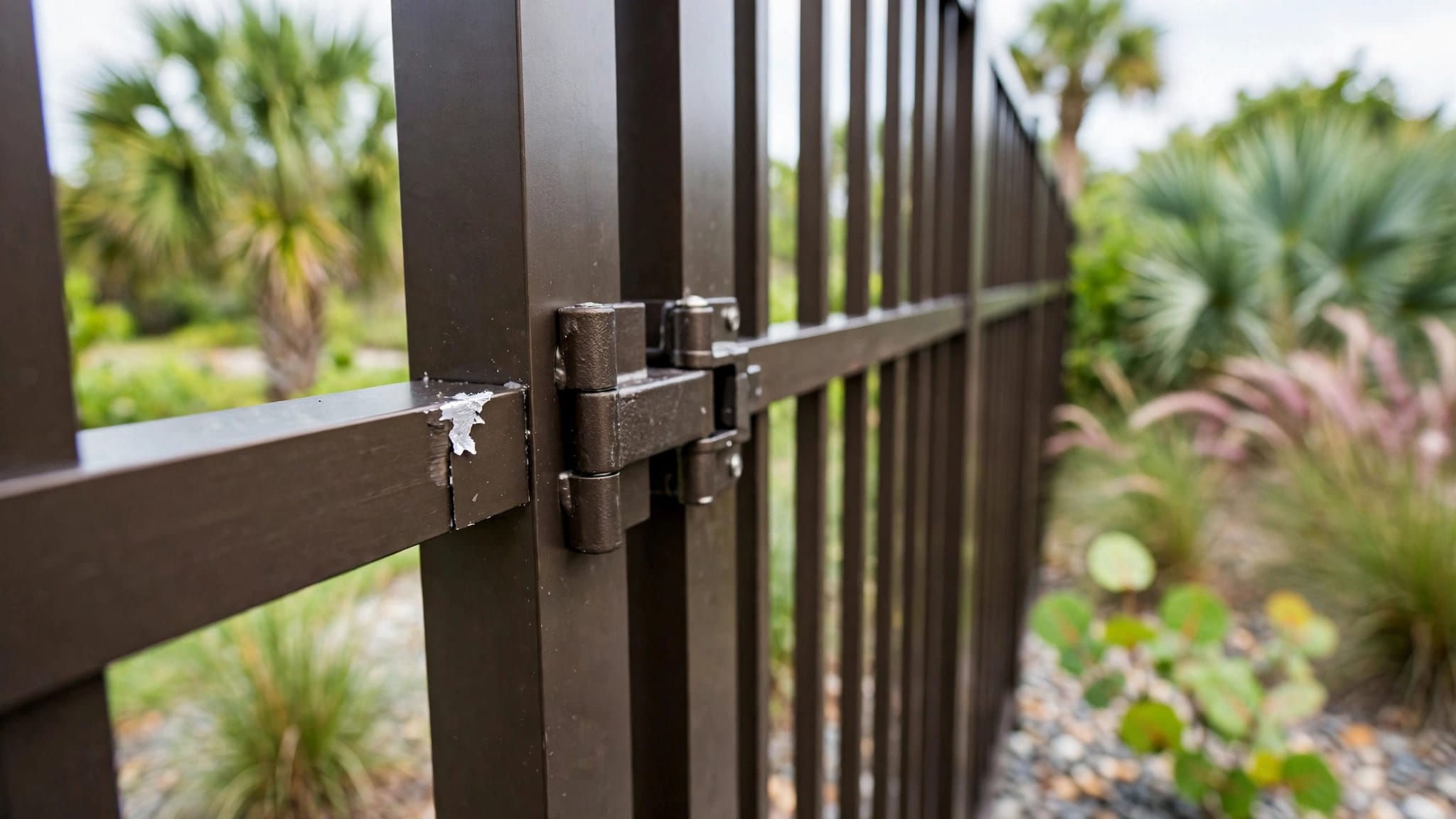
Pool-barrier gates must open outward, away from the pool area. They must also be self-closing and self-latching, with the release mechanism on the pool side. Local officials may add permit and inspection requirements beyond the state barrier standard.
Cape Coral's published non-pool fence guideline does not apply to pool barriers. Tell the contractor and permitting office if any part of the proposed fence will function as pool protection.
A privacy fence can surround a pool, but it becomes a safety barrier when it controls access to the water.
Ordinary fences still face zoning limits
Local zoning often treats front yards, side yards, rear yards, canal edges, and corner lots differently. Cape Coral's residential guidance lists a 6-foot maximum height for typical residential fencing, with up to 8 feet where a residential property abuts commercial property.
Those figures do not apply statewide. For example, another jurisdiction may limit a front-yard fence to a shorter height or require an open design near a driveway. Get written confirmation for your exact lot rather than relying on a neighbor's fence.
Gather Documents Before You Apply
A permit reviewer needs enough detail to see where the fence will sit and what will be built. Collecting documents early prevents last-minute redraws after your contractor has prepared an estimate.
Cape Coral's current residential non-pool fence materials call for a site plan and a Burrowing Owl/Gopher Tortoise Affidavit. Depending on the property, the city may also request manufacturer information, open-mesh calculations, environmental documents, or a Notice of Commencement.
Build a complete site plan
Your site plan should be clear enough that someone who has never visited the lot can understand the proposal. Include the home, property boundaries, streets, fence runs, total height, gates, pools, driveways, canals, swales, and visible easements.
Lee County's fence application requires applicants to show adjacent street or waterbody rights-of-way or easements. It also asks for fence height, length, and gate locations. That level of detail is a good standard for any Southwest Florida submittal.
Bring these items together before applying:
- A recent survey, plat, or other reliable boundary document.
- A scaled site plan that shows the proposed fence line and gate swings.
- Fence details covering material, color, height, style, and linear footage.
- Your contractor's license and insurance information, if the contractor pulls the permit.
- HOA or architectural-review approval when the community requires it.
- Any written utility, drainage, seawall, or easement-holder approval tied to the layout.
A permit can approve a proposed layout, but it does not settle a private boundary disagreement. If property corners are unclear, contact a licensed surveyor before installation.
Treat HOA approval as a separate requirement
An HOA approval letter is not a substitute for a municipal or county permit. Likewise, a local permit does not force an HOA to accept an unapproved color, height, gate placement, or material.
Review your declaration of covenants, architectural guidelines, plat documents, and builder restrictions. Many new communities regulate fence style more tightly than local code. A solid 6-foot vinyl fence may meet a local height rule but still conflict with a community's open-fence or color requirement.
Reviewing Cape Coral HOA fence rules can help homeowners spot common approval issues before they order materials.
Put the Fence Line Where It Belongs
Most expensive fence corrections come from placement, not the fence panels themselves. An old fence, a grass edge, or a neighbor's landscaping does not prove the legal boundary.
Use the survey as your starting point. Mark property corners, recorded easements, road rights-of-way, drainage areas, and canal or seawall features before the crew sets any posts.
Corner lots need a second look
A corner lot has more than one street-facing edge. Local code may treat the side that faces a street like a front-yard area, which can limit fence height or require better driver visibility.
Driveway exits and intersections may also have sight-triangle restrictions. A solid privacy fence that blocks a driver's view can trigger a correction even when the same fence works in a rear yard.
Cape Coral homeowners can review fence setbacks for front yards and corner lots before committing to a design. Still, the City should confirm the current rule for the parcel and permit set.
Easements, swales, and canal lots can change the design
An easement is part of your property, but another party has legal access rights there. Utility and drainage easements often run along lot edges, precisely where owners want a perimeter fence.
Posts, solid panels, locked gates, and concrete footings can interfere with maintenance access or water flow. In some cases, a utility or drainage provider may require written permission, a removable section, a wider access gate, or relocation. The owner may also bear the cost if the fence must be removed later for repairs.
Canal-front lots deserve added care. Cape Coral rules can require open-mesh fencing in portions of waterfront rear yards. Seawall access, drainage, right-of-way limits, and HOA rules can also affect the final location. An aluminum section near the water may work better than a solid privacy run when local requirements call for visibility or access.
Choose a Contractor and Define Responsibilities
A new construction fence involves more than material selection. Decide early who will prepare the plans, submit the application, pay fees, respond to corrections, schedule inspections, and close the permit.
Cape Coral states that its residential fence permit applicants must be properly licensed contractors or eligible owner-builders. The city also lists specific contractor license categories for fence installation. Ask any installer to explain their licensing, insurance, and permit role in writing.
Questions to ask before signing
A detailed proposal protects both homeowner and contractor. It should identify the approved fence material, height, color, gate locations, finished-side direction where required, and exclusions.
Ask these questions before the work is scheduled:
- Which local office has jurisdiction over this new home?
- Who pulls the permit, and whose name will appear on it?
- What documents do you need from me before submission?
- Does the layout touch an easement, swale, canal, utility route, or septic area?
- Will the fence act as a pool barrier?
- Does the price include revisions if the reviewer requires a layout change?
- Who schedules the final inspection and provides the closed permit record?
For unincorporated addresses, compare the proposal with these Lee County fence permit rules. The correct local process matters as much as the fence material.
Protect Utilities and Prepare for Inspection
Approval does not make digging risk-free. Before excavation, contact Sunshine 811 and allow time for utility markings. Peoples Gas advises calling at least two full business days before digging, and fence post holes are included in the work that needs a locate request.
Marked lines show an approximate path, not guaranteed depth. Use extra care around the marked area, and remember that private irrigation, landscape lighting, pool lines, septic components, and customer-owned gas piping may not be included in a standard utility locate.
Build to the approved plan
Keep a copy of the approved site plan and permit at the project site. The installed fence should match its listed location, height, material, gate design, and any special conditions.
Inspectors may look at post stability, fence height, gate operation, clearance below panels, approved placement, and pool-barrier hardware. A mismatch can leave the permit open until the correction is complete.
Before requesting the final visit, walk the fence line with the approved plan in hand. This Cape Coral fence final inspection checklist highlights practical issues that can delay approval.
Keep final documents with your home records. They can help during resale, insurance discussions, warranty work, or future fence replacement.
A Well-Planned Fence Starts Before the Posts
Florida fence permits for new construction homes come down to location, documents, and local confirmation. Pool barriers follow statewide safety rules, while most ordinary fence details remain under city or county control.
A survey, a clear site plan, HOA approval, utility marking, and a properly assigned permit process prevent the common surprises. Confirm the rules for your exact address before building , because a fence that fits the yard still has to fit the records and local code.
This article provides general information, not legal advice.