How to Plan a Fence Around a Pool Equipment Pad
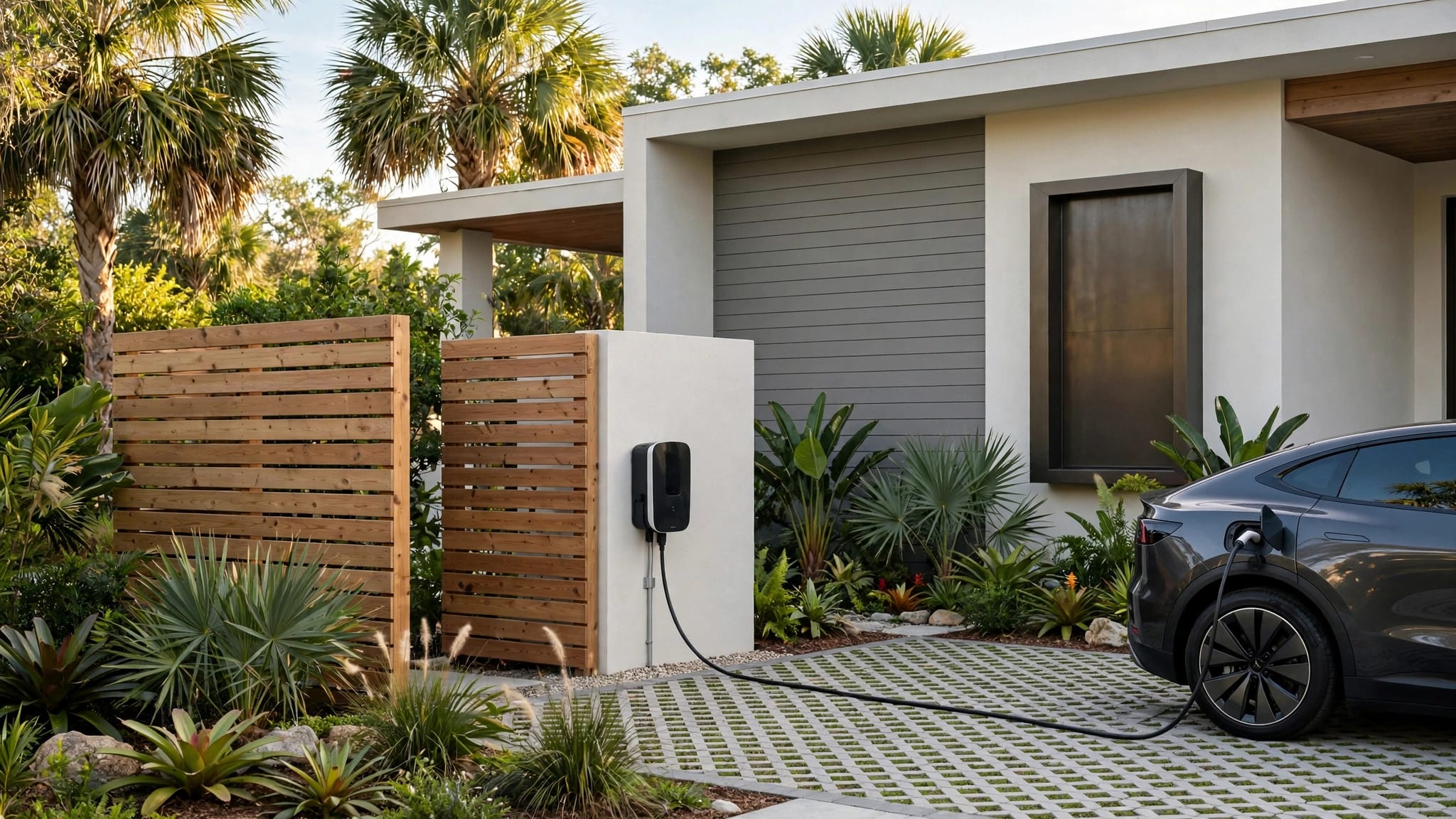
A pool pump, heater, filter, and electrical controls need protection, but they also need room to breathe and be serviced. A well-planned pool equipment pad fence hides the mechanical area without turning a routine repair into a costly fence removal.
For Southwest Florida homeowners, the right layout also has to handle hard rain, humid summers, salt air, strong winds, and pool-barrier safety rules. Start with the pad's actual equipment and clearances, then build the fence plan around them.
Key Takeaways for a Pool Equipment Pad Fence
- Keep the fence far enough from equipment for manufacturer-required airflow, access panels, and future replacement work.
- Check whether the pad sits near a required pool barrier, because equipment and stored items can become climb aids.
- Use a wide, practical gate instead of relying on removable panels or squeezing technicians through a narrow opening.
- Plan drainage before posts go in, especially around swales, pavers, electrical equipment, and low areas.
- Choose open aluminum for airflow and visibility, or vinyl panels when screening matters more.
- Confirm local pool, building, electrical, HOA, and equipment-manufacturer requirements before construction begins.
Start With Pool Barrier Safety Rules
A fence around pool equipment is not automatically a pool barrier. However, its location can affect the barrier that protects the pool, especially when the equipment pad sits beside the pool enclosure or perimeter fence.
Florida Statutes Section 515.29 requires residential pool barriers to be at least 4 feet high. The barrier must resist climbing and prevent a young child from crawling under or passing through openings. A nearby pump housing, heater, storage box, planter, or fence rail can change how an inspector views the layout.
Keep equipment from becoming a climb aid
Don't place the equipment pad or its fence where it creates an easy route over a pool barrier. Florida's law addresses permanent structures and equipment that could help a child climb into the pool area.
That concern extends beyond the pump itself. Avoid placing coolers, patio furniture, grills, storage bins, ladders, or large planters beside a pool fence. After landscaping or a pool renovation, walk the fence line again because a new object can create a foothold.
A pool barrier can meet its required height and still create a safety issue if nearby equipment provides an easy step over it.
For a closer look at local barrier layouts, gates, and common climbing concerns, review these Cape Coral pool fence requirements.
Plan gates as part of the safety system
If the equipment fence also forms part of the pool barrier, the gate needs more than a sturdy latch. Florida pool-barrier gates must open away from the pool, close on their own, and latch automatically. The release must be on the pool side and out of a young child's reach.
A service gate should not interrupt the pool barrier's swing direction or create a gap along a corner. Include the proposed gate, hinge side, latch, and swing arc on the first layout. Changing those details after installation can mean replacing hardware or moving posts.
Map the Equipment Pad Before Picking a Fence
Measure the existing equipment, not only the concrete pad. Record the height and footprint of the pump, filter, heater, control panel, plumbing valves, and any future equipment you expect to add.
Also mark pool plumbing, electrical conduit, irrigation lines, low-voltage lighting, gas lines, and drainage features. Private utilities often do not appear in a standard utility locate, so identify them before digging.
Check each manufacturer's instructions
Manufacturer clearances vary by model. A fence layout that works around one pump may block another pump's motor removal or control-panel access.
Pentair's SUPERFLO VS manual calls for a well-ventilated location, at least 3 inches of rear clearance for motor removal, and drainage that protects the electrical compartment. Pentair IntelliFlo VSF and IntelliPro VSF models call for at least 3 inches at the sides and rear, plus 6 inches of vertical clearance.
Heaters usually need far more open space. Hayward's HeatPro manual calls for 2 feet of clearance around the unit and 6 feet above it. It also warns against locations below decks, porches, or eaves where discharged air can recirculate.
Draw the full work area, not only the footprint
Technicians need room to open a pump lid, lift a filter tank component, turn valves, remove a motor, and use hand tools. A replacement heater or filter may also need to come through the gate on a dolly.
Mark service doors and removable panels before choosing a fence line. If the heater's fan exhaust faces the proposed fence, move the fence rather than trying to solve the problem with a small opening.
Leave a direct path from the driveway or side yard whenever possible. A fence should screen equipment, not turn maintenance into a trip through the pool deck or home.
Protect Airflow and Control Noise
A solid enclosure may hide equipment well, yet it can trap heat and restrict the air a pump or heater needs. Heat buildup can shorten equipment life and may conflict with the manufacturer's installation directions.
Noise matters too, particularly when a pad sits near a bedroom window, neighboring patio, or property line. The best answer is usually a balanced design that blocks direct sound paths without boxing in the machinery.
Use fence placement for ventilation
Open-top fencing, spaced pickets, louvers designed for outdoor use, or an aluminum panel layout can improve air movement. Still, an open design does not replace the clearance requirements in the equipment manual.
Keep the top of a privacy fence below any required open-air zone around a heat pump. Never cap the enclosure with a roof, fabric cover, or solid overhead panel unless the equipment manufacturer permits that setup.
Avoid attaching tarps to the fence during storms or construction. Wind can pull hard on panels and posts, while a tarp can also block airflow around the equipment.
Reduce sound without enclosing the equipment
Place the fence between the equipment and the area where people spend time. A partial screen on the noise-facing side can help break the line of sight to the pump motor without wrapping every side tightly.
Variable-speed pumps often run more quietly at lower speeds than single-speed models, although the correct operating settings depend on the pool system. Loose equipment lids, vibrating pipes, worn bearings, and rattling panels can create more noise than the fence can block.
Rubber isolation pads, secure plumbing supports, and proper equipment maintenance may help. Have a pool professional diagnose unusual pump noise before spending money on a taller enclosure.
Leave Room for Drainage and Service Access
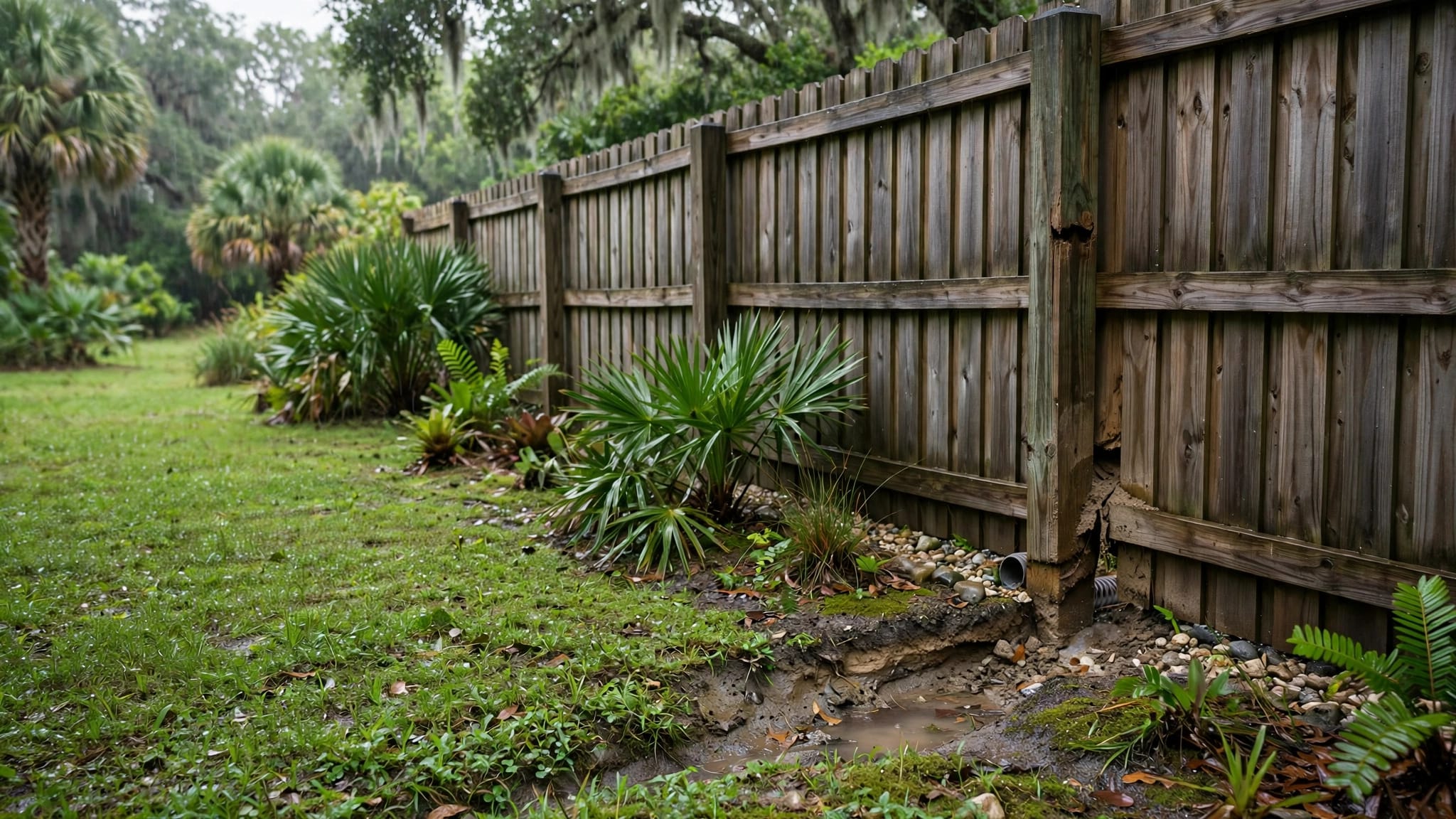
Southwest Florida rain can expose a weak equipment-pad layout in one afternoon. Water should drain away from electrical components, fence posts, the home, and neighboring property.
Don't use fence panels to block a swale, ditch, drain inlet, or planned runoff route. Check the area after a heavy rain before finalizing the post locations.
Keep water away from electrical components
Pentair's SUPERFLO VS guidance calls for drainage around the electrical compartment. That detail matters when a fence creates a pocket where roof runoff or pool-deck water collects.
Don't raise the grade around the pad with leftover concrete, paver base, or landscape soil. That material can redirect water toward the house or leave posts sitting in saturated ground. If runoff reaches the equipment pad, correct the drainage path first.
Where fence posts meet pavers, drains, or coping, an installer should plan the placement carefully. Drilling first and checking slopes later can damage finished surfaces and create pooling around the new work.
Size the gate for real maintenance work
A 36-inch gate may work for a person, but it may not fit a large filter tank, heat pump, or replacement pump on a hand truck. Measure the widest equipment item and ask the pool company what access they need for service.
A wider double gate can make sense for a large pad, provided it closes securely and fits the approved layout. In some yards, a removable fence section may offer occasional access. It should not replace a required pool-barrier section unless the local reviewer approves it.
Keep hoses, carts, and tools off gate rails. Even a strong gate can sag when it carries weight it was never designed to hold.
Choose Materials That Suit the Pad Area
Fence material should match the pad's job. Some homeowners mainly want to hide pumps and plumbing from the patio. Others need to soften noise, protect equipment from pets, or create a cleaner view from the street.
Around pools and coastal properties, wet conditions and corrosion-resistant hardware deserve as much attention as the panel style.
Aluminum keeps the equipment area open
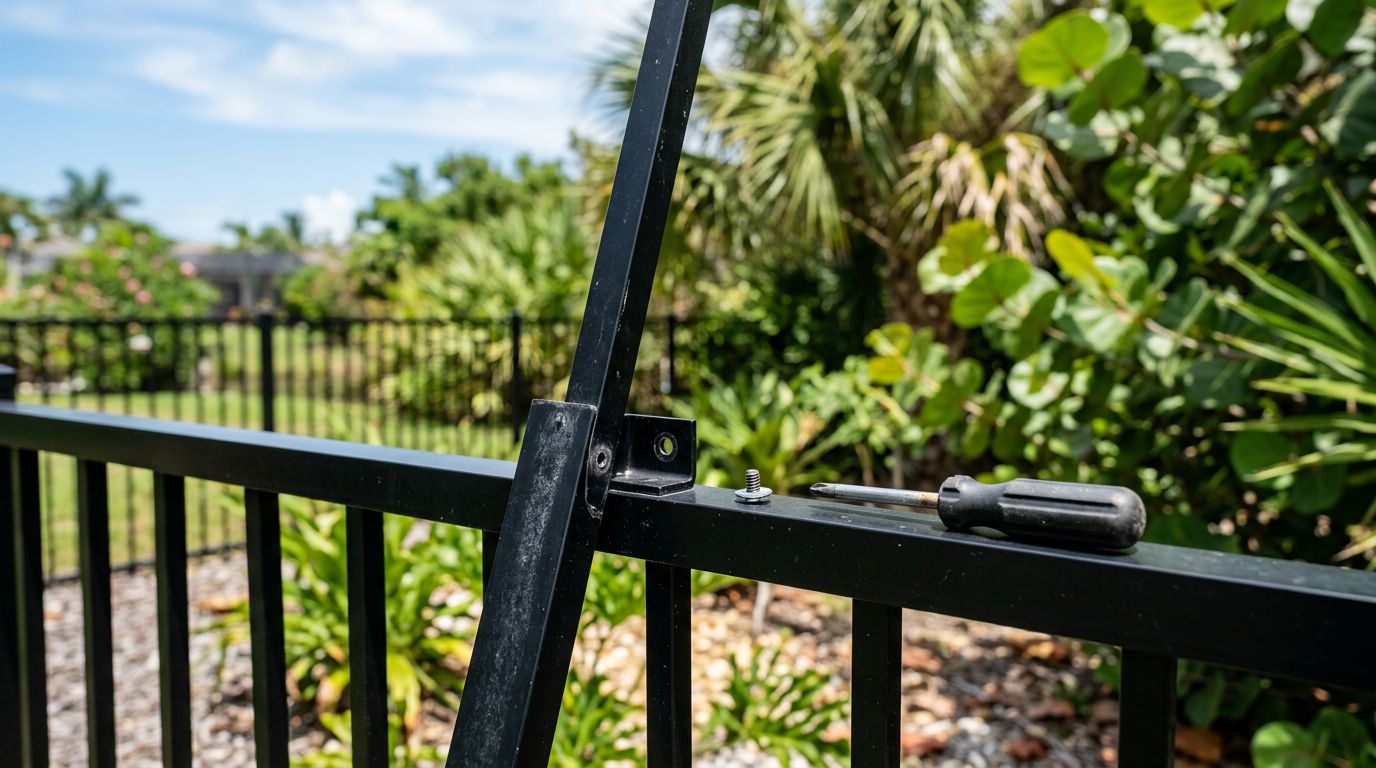
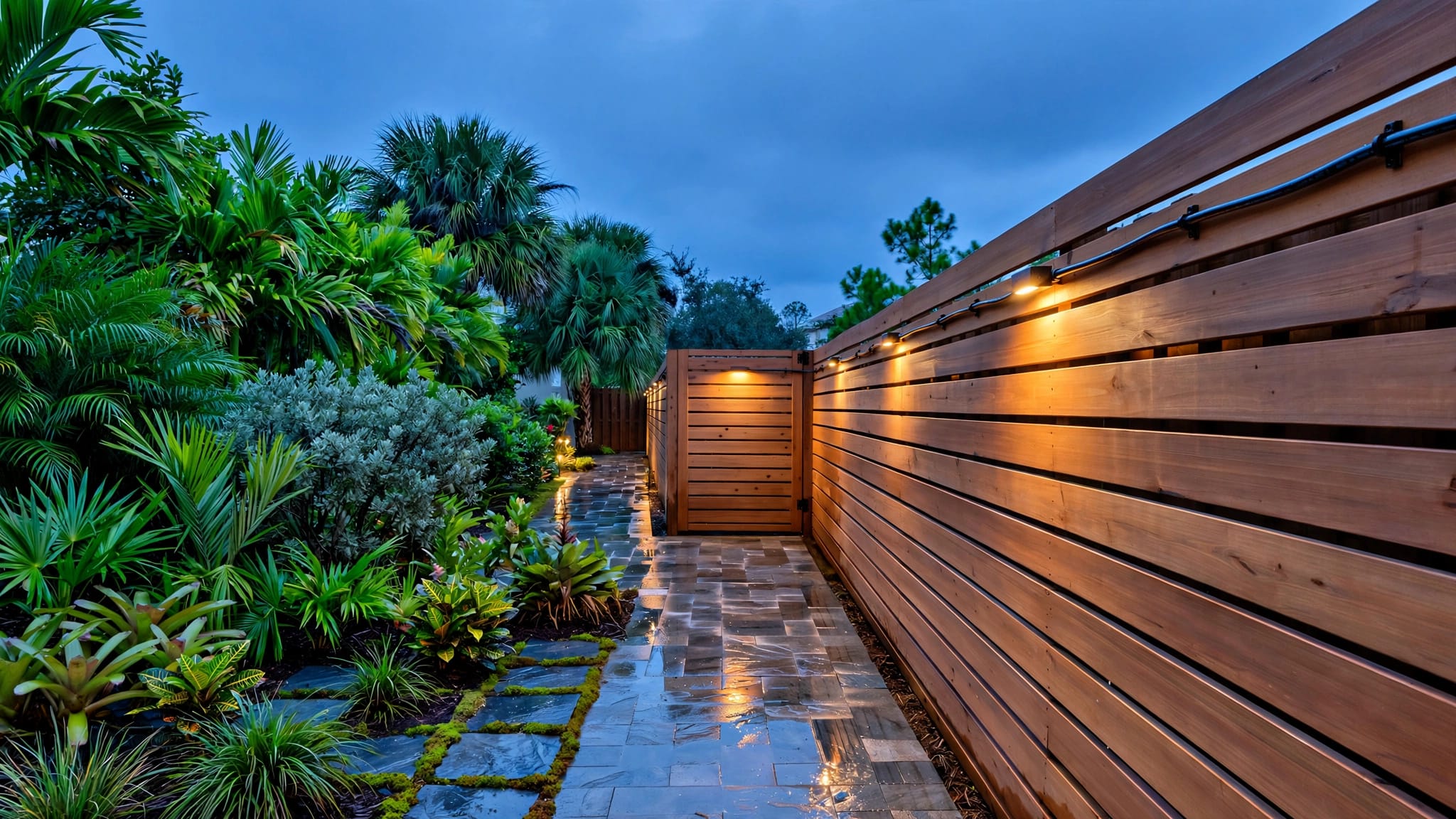
Aluminum fencing works well where airflow, visibility, and low maintenance matter. Its open pickets let heat escape and make it easier to spot a leak, loose fitting, or pest activity without opening a gate.
Powder-coated aluminum also handles wet conditions better than ordinary steel. Black and bronze finishes often disappear against landscaping, while lighter colors can coordinate with a home's trim.
Aluminum offers limited privacy, so it may not fully hide filters, pipes, and equipment controls. Adding shrubs outside the required service and ventilation zone can provide a softer view without closing in the pad.
Vinyl provides a cleaner privacy screen
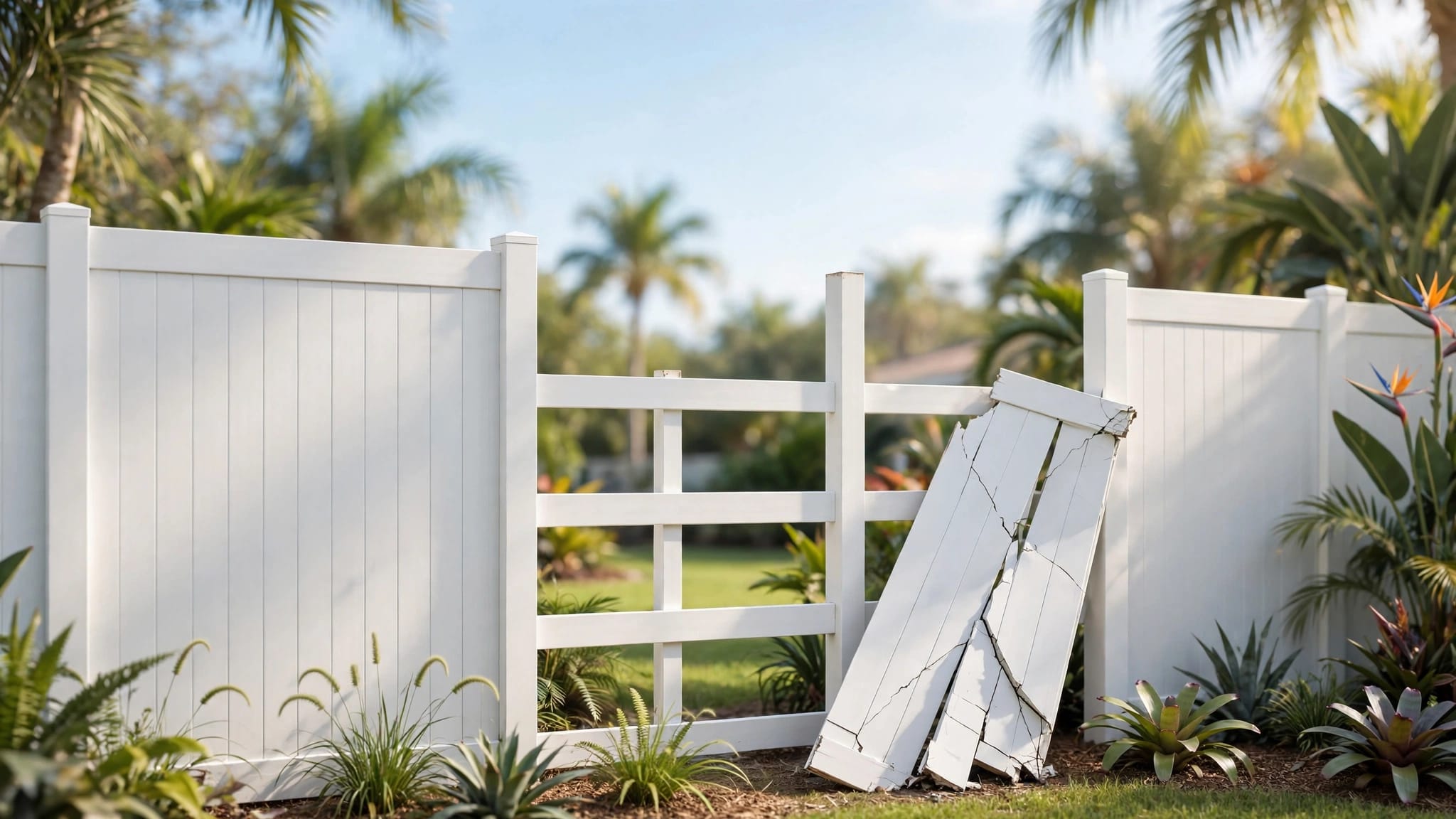
Vinyl panels can block views of equipment and help reduce direct sound. They resist rot and termite damage, which makes them practical in humid Florida yards.
However, solid panels catch more wind and reduce airflow. A vinyl equipment fence needs careful placement, especially near a heat pump or gas heater. Choose sturdy posts, quality hardware, and a layout that does not interfere with equipment clearances.
For a broader look at materials that hold up near humid, coastal pool areas, see saltwater pool fence materials in Southwest Florida.
Confirm Local Requirements Before Construction
Pool, building, electrical, zoning, and HOA requirements can overlap. They vary by jurisdiction, permit set, equipment type, and lot conditions, so don't treat a neighbor's fence as proof that your plan will pass review.
Cape Coral has a fence-installation permitting notice effective December 13, 2025. Collier County's wall and fence permit checklist also calls for pool fence specifications when applicable. Other Southwest Florida communities may use different drawings, setbacks, or approval steps.
Bring the right information to the first review
Start with a current survey, equipment model numbers, pool plan, fence height, material choice, and proposed gate locations. Include easements, drainage swales, septic access, canals, and utility routes on the site plan.
If your yard is in a city, confirm which department has authority before applying. A property in unincorporated Lee, Charlotte, Sarasota, Manatee, DeSoto, Hendry, or Collier County may follow a different process than a nearby municipal address.
Ask about the details that affect the layout
Confirm whether your project needs a permit, zoning review, pool-barrier review, electrical permit, or HOA approval. Ask whether the proposed fence could affect equipment servicing, drainage, easements, or required pool access.
If a screen enclosure surrounds the pool, verify whether a separate barrier is still required. A screen cage helps with insects and debris, but its doors and mesh do not automatically meet every pool-safety requirement. Review pool fence requirements with a screen enclosure before treating the screen as your only layer of protection.
Frequently Asked Questions
How far should a fence be from pool equipment?
There is no single Florida setback for every pool equipment fence. Use the clearance instructions for your exact pump, heater, filter, and control equipment, then leave enough room for a technician to work and remove components.
Heat pumps often require much more open space than pumps. Check the manual before ordering fence materials or setting post locations.
Can a solid vinyl fence go around a pool heater?
It can, but only when the heater manufacturer allows the required side, top, and exhaust clearances. A solid fence placed too close can restrict airflow and cause hot discharge air to recirculate.
Keep the fence layout open enough for ventilation and service. The equipment manual has priority over a preferred fence style.
Does an equipment-pad gate need to self-close?
A gate that forms part of the pool barrier must meet applicable self-closing and self-latching requirements. A separate equipment-only gate may have different rules, but it should still close securely and keep children and pets away from equipment.
Check the final gate plan with the local building department if the pad sits near the pool enclosure.
A Fence Plan That Works After Installation
The best pool equipment pad fence protects the view without blocking the system that keeps the pool running. Start with equipment manuals and pool-barrier rules, then account for airflow, drainage, gate width, service paths, and local approvals.
A fence that looks good on installation day should also work after summer rain, a heater repair, and years of regular pool maintenance. Smart spacing and a practical gate layout make that possible.