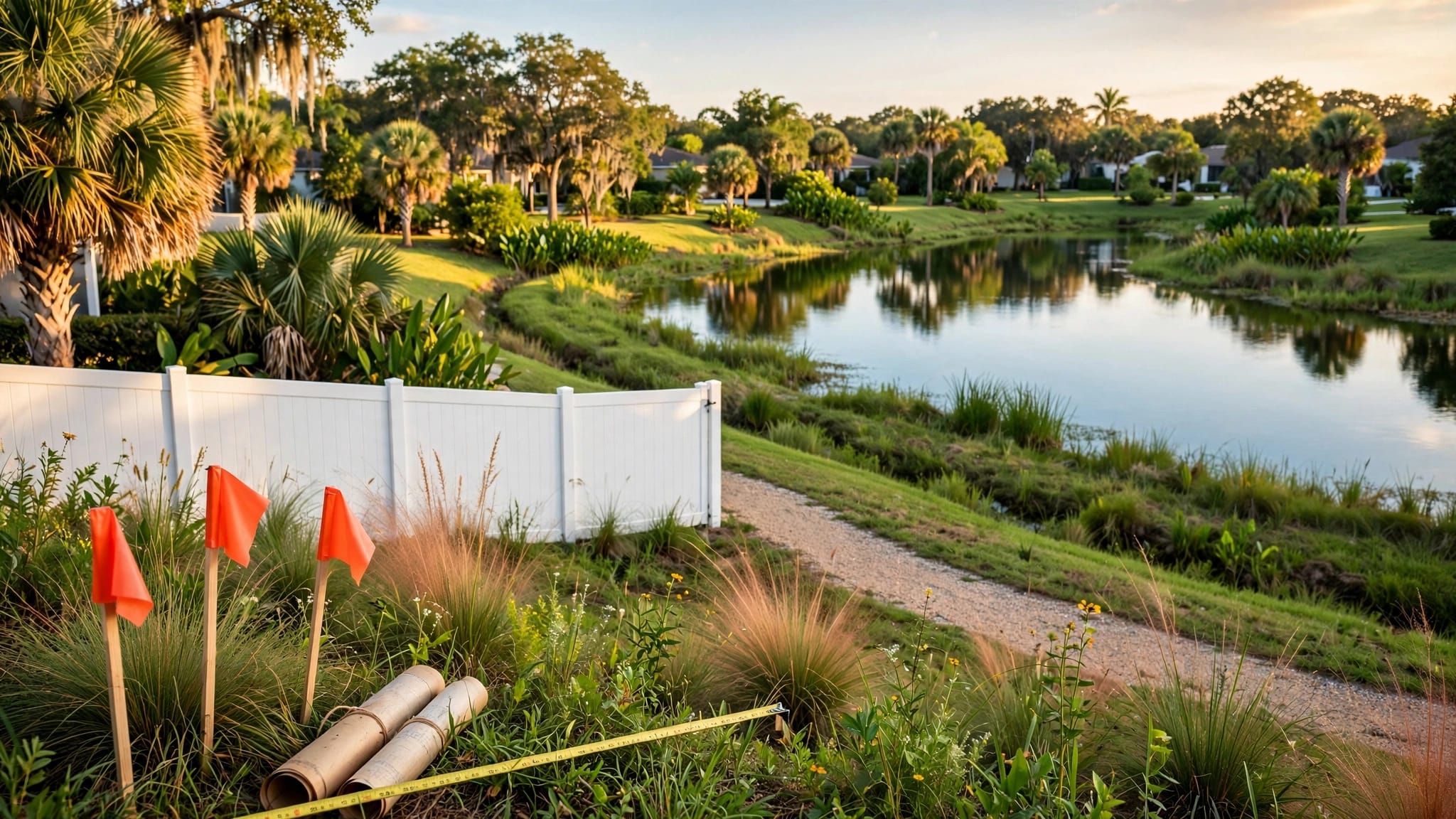
Florida Outdoor Kitchen Fence Planning Guide
An outdoor kitchen changes how your backyard works, especially when the grill sits near a pool, lanai, property line, or canal. A Florida outdoor kitchen fence must provide privacy and separation without blocking access, trapping heat, or creating a wind problem.
Southwest Florida homeowners also need to account for salt air, heavy rain, saturated soil, local permits, and pool safety rules. Plan the fence line around the entire outdoor living area first, then choose materials, gates, and screening that fit the site.
Start With the Site and Property Rules
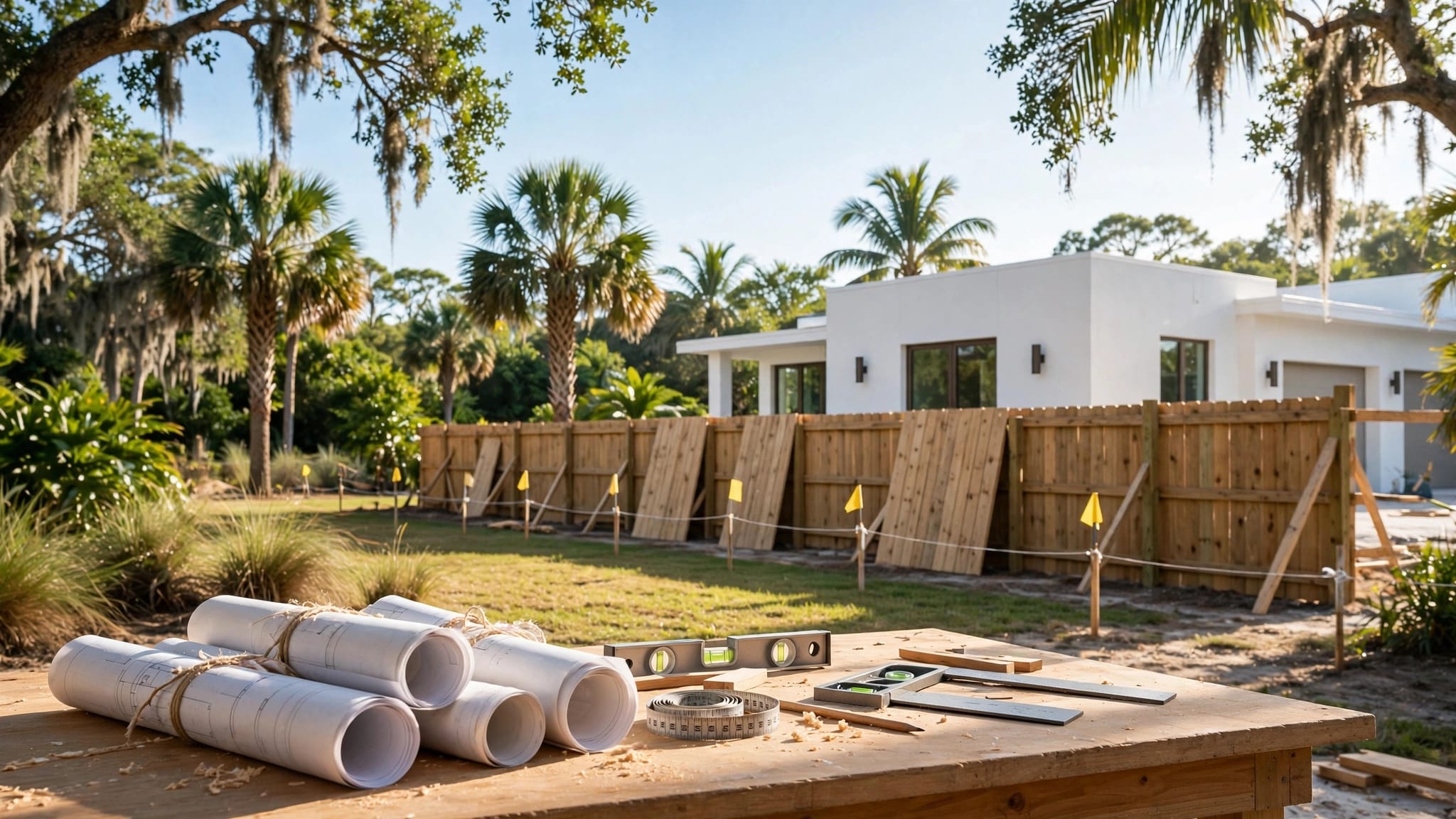
The most attractive fence plan can become expensive if it crosses an easement, blocks drainage, or sits in the wrong jurisdiction. Begin with the property survey, the outdoor kitchen footprint, and the locations of utilities, pool equipment, irrigation, and gates.
Check the survey, drainage, and HOA rules
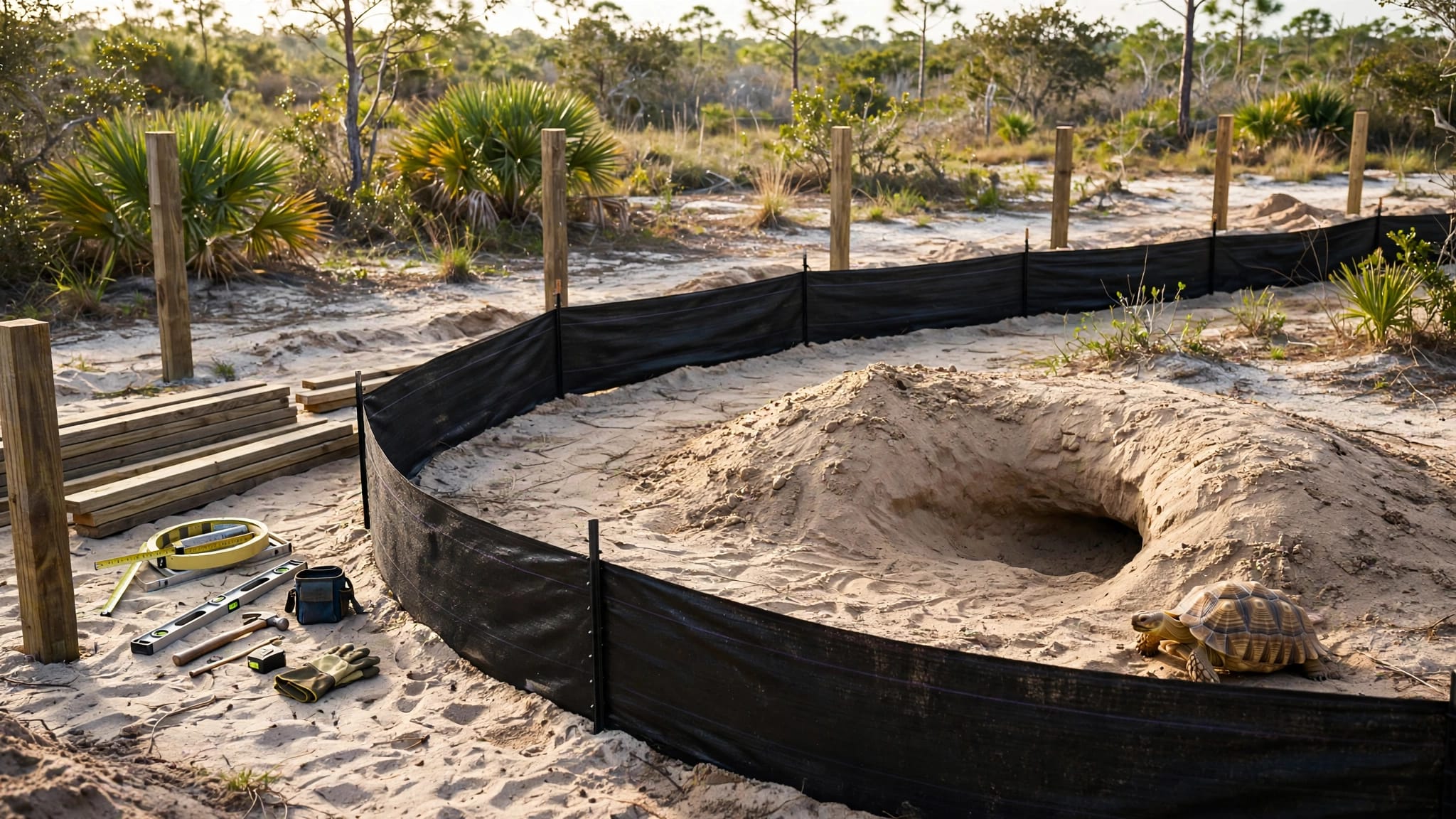
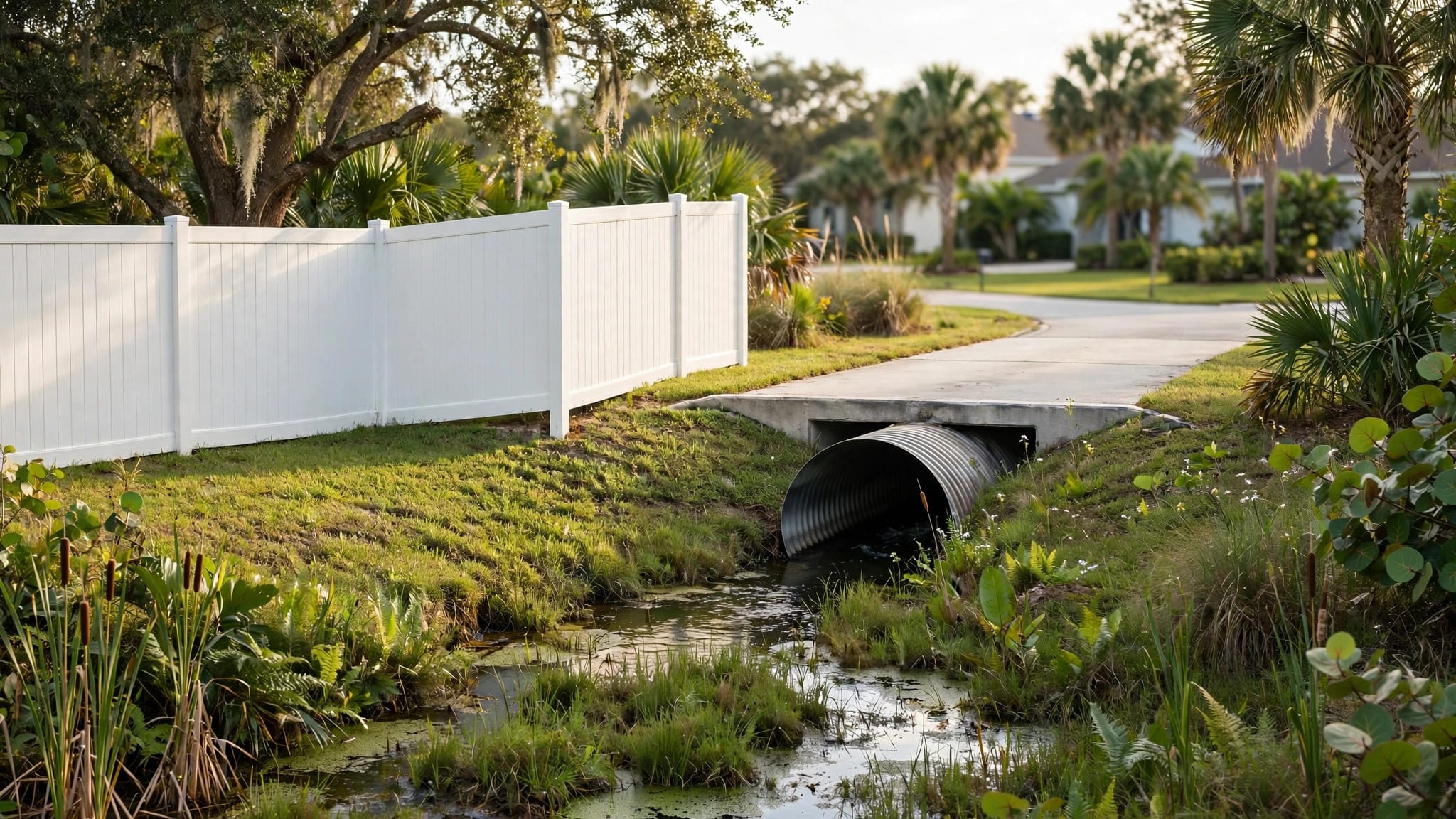
Mark the proposed kitchen, grill, seating area, pool, equipment pad, retaining walls, and property lines. Retention ponds, swales, drainage routes, and utility easements deserve extra attention in Southwest Florida. A fence may need to stay outside an access area, or its design may need to preserve drainage and maintenance access.
HOA rules can also control height, color, material, and placement. The county or city may allow a design that your neighborhood association does not. Review both sets of requirements before ordering materials.
A shared property line requires a careful conversation with the adjoining owner. Confirm the fence location rather than assuming an existing line is correct. Replacing an old fence doesn't automatically prove that it was installed in the proper location.
Identify the permitting authority
A Cape Coral mailing address may fall under the City of Cape Coral, while a nearby property may fall under unincorporated Lee County. Similar differences apply in Charlotte, Collier, Sarasota, Manatee, Hendry, and DeSoto counties.
Permit requirements can vary by city, county, fence height, location, and whether the fence is part of a pool barrier. Review the applicable Florida fence permit steps for new homes before installation. Homeowners in unincorporated Lee County can also check the current Lee County fence permit rules.
Decide Whether the Fence Is Also the Pool Barrier
A fence beside a pool has a different job when it forms part of the required safety barrier. Decorative screening around an outdoor kitchen doesn't automatically meet pool safety requirements.
Florida Statutes Section 515.29 generally requires a residential pool barrier to be at least 4 feet high on the outside. The barrier must also limit openings, prevent climbing, and use a compliant gate. Confirm the current requirements with the local permitting office before finalizing the layout.
Plan height, openings, and bottom clearance
Pool barrier guidance commonly uses a 4-inch sphere test for openings. The test applies to spaces between pickets, below rails, around gates, and beneath the barrier. Guidance also commonly limits the clearance beneath the barrier to 2 inches, although the exact site conditions and applicable code should be confirmed locally.
Measure the barrier from the outside face, particularly when the pool deck, lawn, or grade changes around the fence. A section that looks high from the patio may not measure high enough from the other side.
If the kitchen fence only screens the grill and doesn't enclose the pool, it may follow different rules. Still, keep the two systems coordinated so a later pool inspection doesn't reveal a gap in the barrier.
Choose safe gate hardware
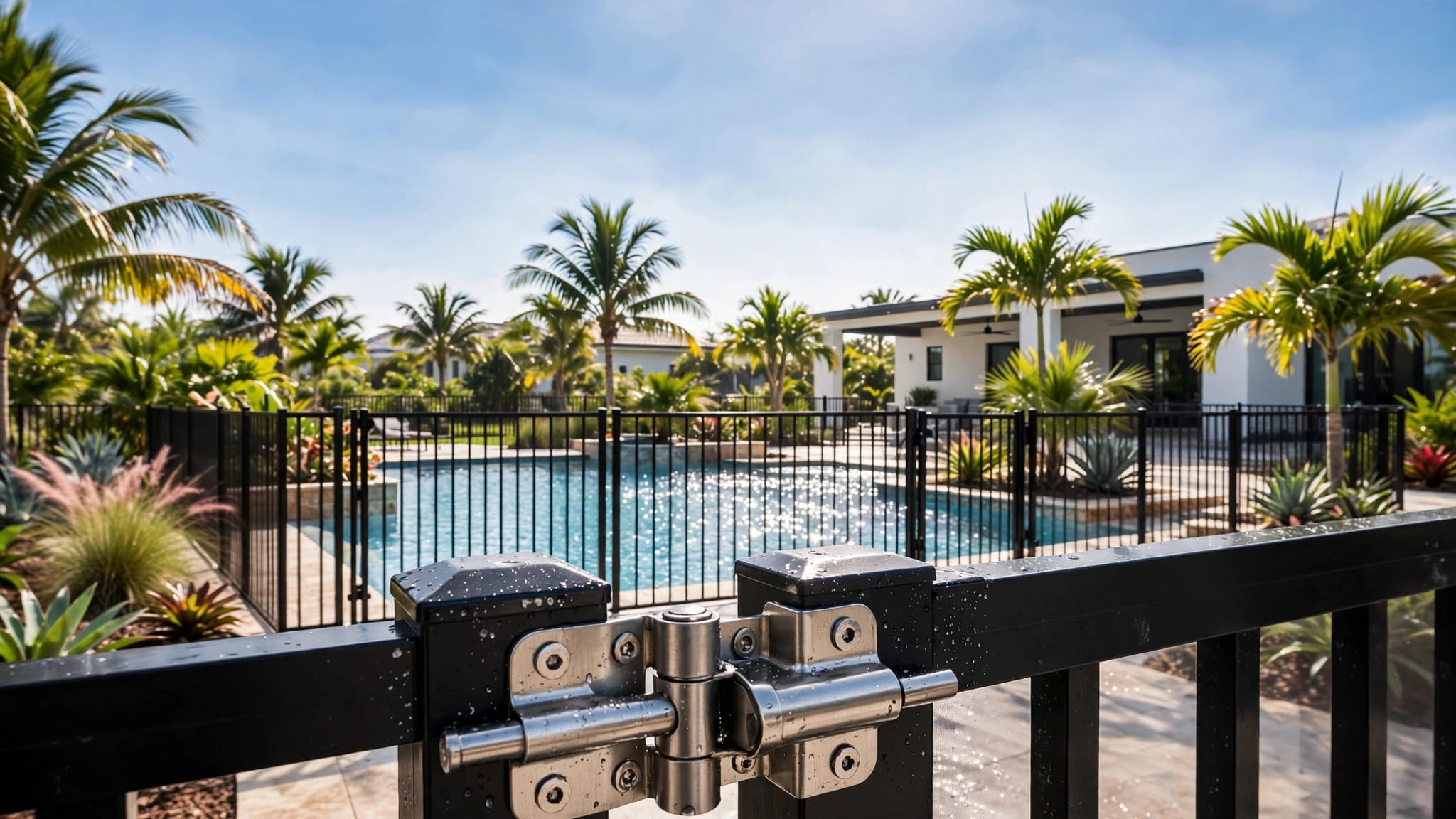
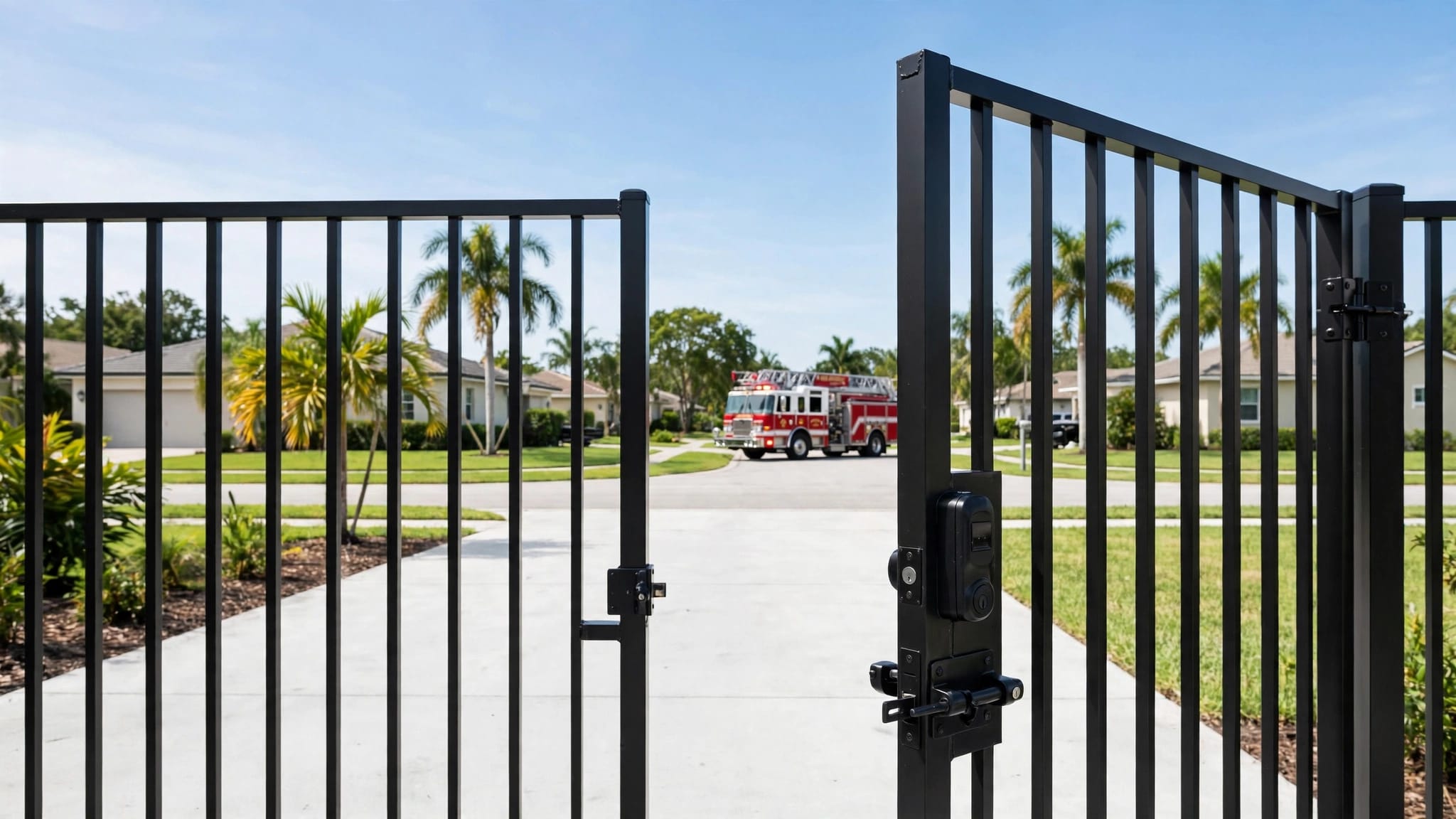
Pool gates commonly need to swing outward, away from the pool, and close and latch automatically. The latch must remain out of reach of small children under the applicable requirements.
Avoid placing a grill, countertop, planter, storage box, or furniture where it could help a child climb over the barrier. A fence that meets the height requirement can still create a problem if nearby objects provide easy footholds.
A fence can protect privacy around an outdoor kitchen, but it can only function as a pool barrier when every applicable safety detail meets code.
Keep the Fence Safe Around the Grill
Heat and combustible materials need careful spacing. A privacy panel that works well beside a seating area may be unsafe when installed directly behind a grill.
Protect combustible fencing from cooking heat
Florida fuel-gas guidance identifies 30 inches of vertical clearance above a cooking top when combustible material is present. A 24-inch clearance may apply only with the required protective hood or cabinet arrangement. Follow the appliance manufacturer's instructions and have the installation reviewed when gas or built-in equipment is involved.
Wood, vinyl, and some composite products are combustible or heat-sensitive. Aluminum is noncombustible, but it still needs proper spacing around appliance vents and hot surfaces. Never use a fence panel to replace the clearance, shielding, or ventilation required for the grill.
Keep the fence away from burner openings, exhaust outlets, propane equipment, and service panels. Leave enough room to open appliance doors and remove tanks without moving the fence.
Coordinate utility and structure permits
Outdoor kitchen work may involve more than fence construction. New gas piping, electrical circuits, plumbing, concrete structures, roofs, and other covered features can trigger separate permit reviews.
Ask the contractor or local building department which parts of the project require approval. This matters when the fence connects to a lanai, pergola, screen enclosure, masonry counter, or roofed cooking area.
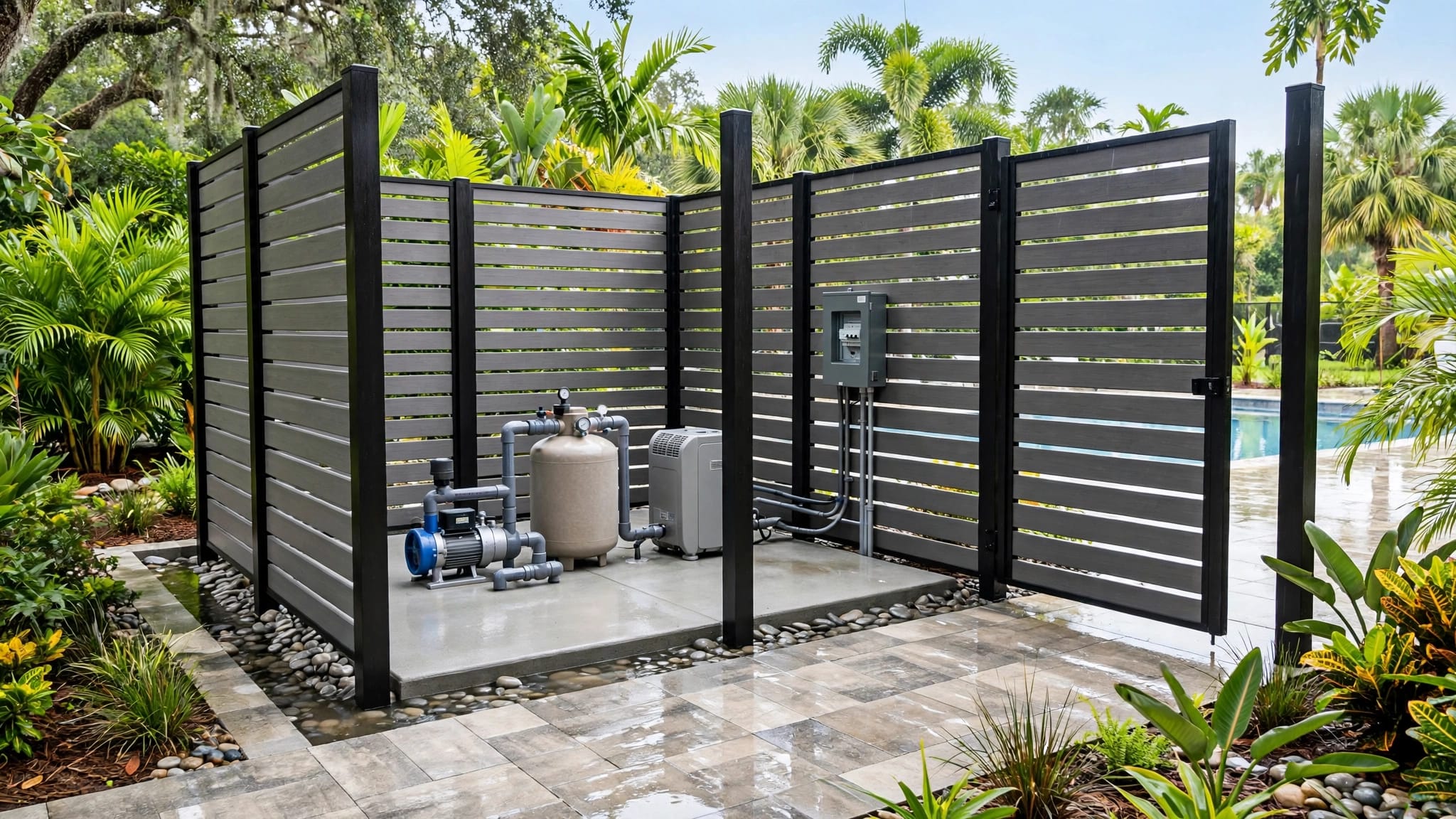
A fence should also leave service access to pumps, heaters, electrical disconnects, gas shutoffs, and irrigation controls. For a cleaner way to screen equipment, review these options for fencing around a pool equipment pad.
Compare Fence Materials for Florida Conditions
Material selection depends on your exposure, privacy goal, budget, maintenance tolerance, and the fence's relationship to the pool and kitchen. There is no single material that fits every Southwest Florida backyard.
| Material | Strengths | Planning concerns |
|---|---|---|
| Aluminum | Low maintenance, open airflow, good visibility | Less privacy unless slats or screens are added |
| Vinyl | Moisture resistance, privacy, no painting | Solid panels can increase wind pressure |
| Wood | Warm appearance, flexible custom designs | Requires sealing and checks for rot and insects |
| Composite | Wood-style appearance, reduced routine maintenance | Post support and heat exposure still matter |
| Chain link | Airflow, practical pet control, lower visual weight | Limited privacy without added screening |
Aluminum and vinyl suit many coastal yards
Aluminum works well when you want visibility around a pool or canal. It doesn't rot, splinter, or attract termites, and a quality finish can reduce routine maintenance. Rinse coastal fencing periodically and inspect fasteners, hinges, and posts for corrosion.
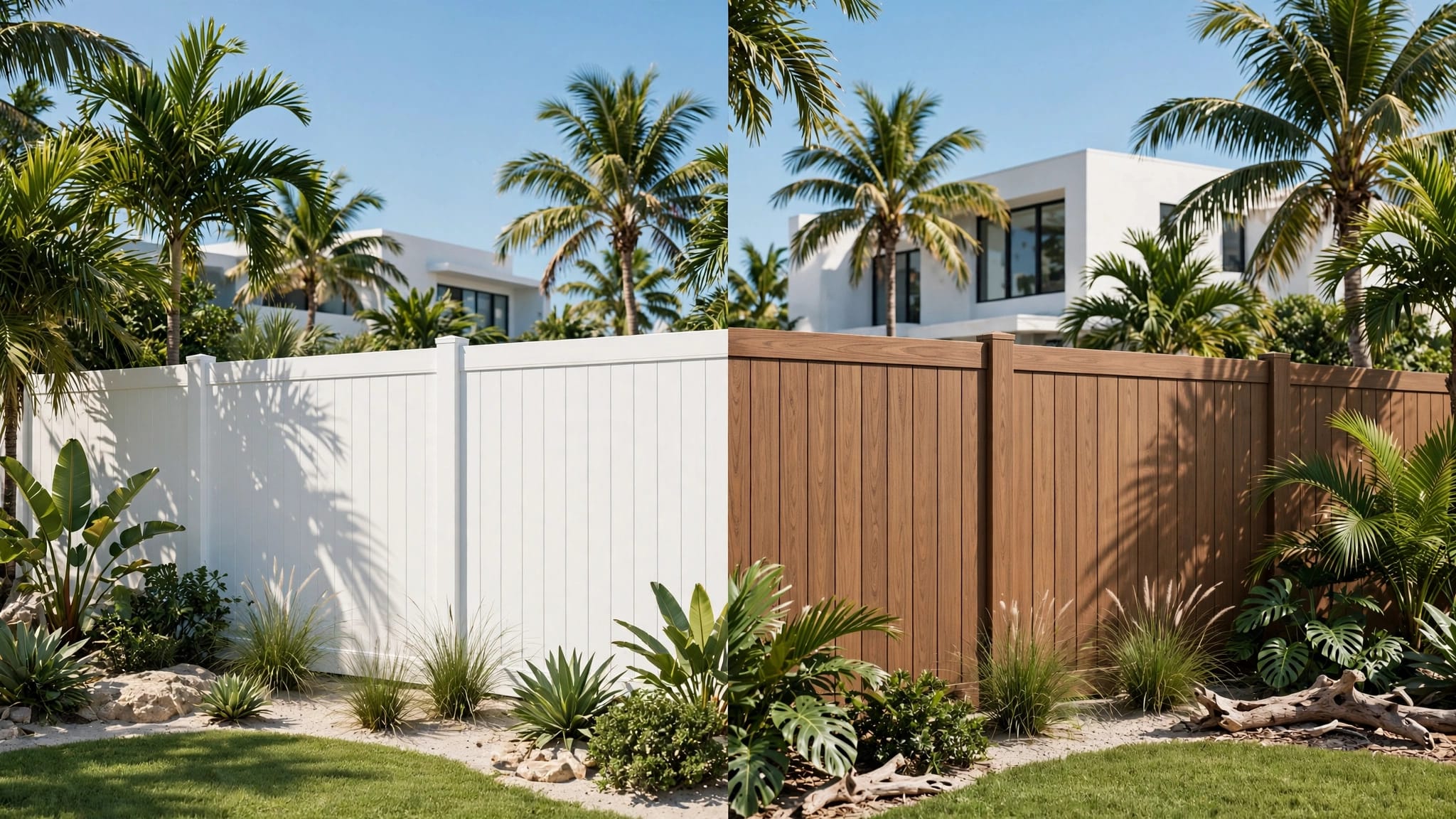
Vinyl provides more privacy around a cooking and seating area. It resists moisture, rot, and termites, but solid sections can receive more wind pressure than open designs. A semi-private pattern may offer a better balance between screening and airflow.
For a closer comparison of coastal exposure and pool areas, review these saltwater pool fence materials.
Wood, composite, and chain link have different tradeoffs
Wood creates a natural look and adapts well to custom screens. In Florida humidity, however, it needs regular sealing and inspection. Watch for swelling, soft posts, insect damage, and fasteners that loosen over time.
Composite can provide a wood-style appearance with less routine maintenance. It still needs proper post support, suitable spacing, and a layout that handles heat and wind. Don't assume a heavy panel system is automatically stronger in wet or soft soil.
Chain link allows air to pass through and can work well for pets, service areas, or larger yards. Privacy fabric and slats add screening, but they also increase wind load. Match the screening choice to the exposure instead of adding it after installation.
Plan for Wind, Salt Air, and Wet Soil
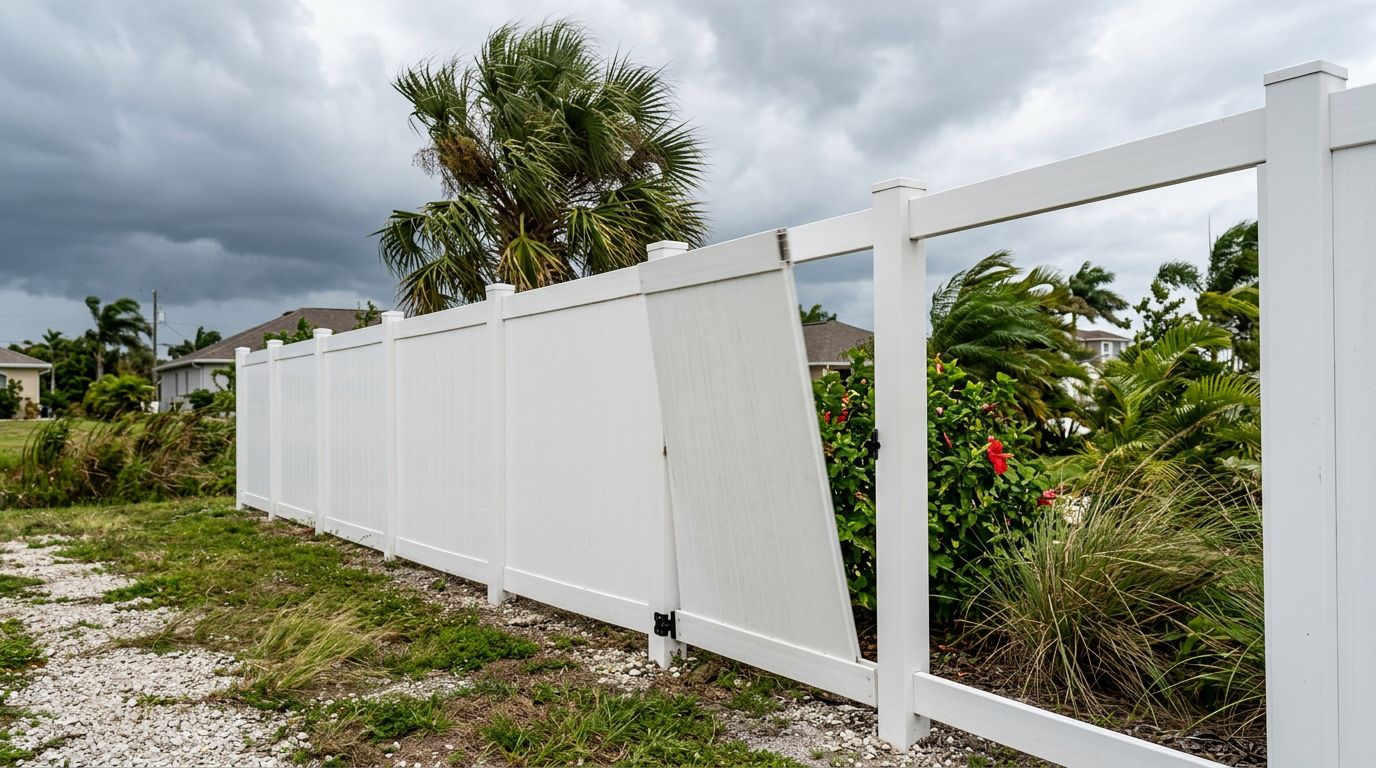
Southwest Florida fences face summer thunderstorms, hurricanes, salt air, intense sun, and saturated ground. Those conditions affect the entire system, including posts, footings, gates, screws, brackets, and panel connections.
Balance privacy with airflow
Solid privacy fencing can give the kitchen a comfortable separation from neighbors. However, a continuous wall catches more wind than a spaced or open design. Consider semi-private vinyl, slatted aluminum, spaced wood, or selective screening where full enclosure isn't necessary.
Open fence designs also make it easier to inspect the yard, spot standing water, and maintain areas near a canal or retention pond. If flooding is a concern, compare fence materials for flood-prone yards before choosing a solid barrier.
Treat gates and hardware as structural components
Gates move more than fixed panels. A wide kitchen access gate may need stronger posts, reliable hinges, and a latch that remains easy to operate after heavy rain. A pool gate needs its required self-closing and self-latching hardware.
Use corrosion-resistant fasteners and inspect screws, brackets, hinges, and post bases. Salt air can damage small metal components before the larger fence looks worn. Proper post depth, stable footings, and finished-grade planning matter more than a thick panel alone.
Use a Practical Layout Checklist
Before installation, walk the proposed fence line at several times of day. Check grill smoke, afternoon sun, prevailing breeze, pool access, and views from the house.
Confirm that the plan:
- Keeps required space around the grill, vents, gas connections, and electrical components.
- Preserves access to pool equipment, shutoffs, gates, and service areas.
- Avoids easements, drainage paths, swales, retention ponds, and utility conflicts.
- Uses a compliant barrier when the fence surrounds or protects a pool.
- Accounts for changes in grade, pavers, concrete, landscaping, and irrigation.
- Places gates where furniture, appliances, and guests won't block them.
- Uses a material and design suitable for wind, salt air, humidity, and wet soil.
Take photos before construction and save the survey, approved plans, appliance manuals, and permit records. After installation, inspect the fence before storm season and after major storms. A loose gate, leaning post, cracked footing, or rusted connection needs attention before the next weather event.
Key Takeaways for a Florida Outdoor Kitchen Fence
The best Florida outdoor kitchen fence begins with site planning, not material selection. Confirm property lines, drainage, easements, HOA rules, and the responsible permitting authority before installation.
Keep grills away from combustible fencing and follow appliance clearance requirements. If the fence forms part of a pool barrier, plan around the 4-foot height rule, opening limits, bottom clearance, climb resistance, and self-closing gate requirements.
For many Southwest Florida yards, aluminum and vinyl offer practical low-maintenance options. Open or semi-private designs usually create less wind pressure than solid panels, while strong posts, suitable footings, and corrosion-resistant hardware help the system handle local conditions.
FAQ About Outdoor Kitchen Fence Planning
Can a fence beside an outdoor kitchen be used as a pool barrier?
It can, but only when the complete fence and gate system meets the applicable pool barrier requirements. Height, openings, bottom clearance, climb resistance, gate swing, self-closing hardware, and latch placement all matter. Confirm the design with the local building department before construction.
How far should a fence be from an outdoor grill?
The required distance depends on the grill, fuel type, manufacturer's instructions, and whether the nearby fence material is combustible. Florida fuel-gas guidance identifies 30 inches above a cooking top where combustible material is present. A different 24-inch clearance may require a qualifying protective hood or cabinet arrangement.
Which fence material works best near a Florida pool and kitchen?
Aluminum is often a practical choice for open airflow, visibility, and low maintenance. Vinyl can provide more privacy and resists moisture, rot, and termites. Wood and composite can work when their maintenance and support requirements fit the property. Salt exposure, wind, flooding, privacy, and local rules should guide the final choice.
Does an outdoor kitchen fence always require a permit?
No single statewide answer applies to every fence project. The fence location, height, municipality, pool connection, and project features affect the review. Gas piping, electrical work, plumbing, and covered structures may create additional permit requirements. Check with the city or county that governs the property.
Build the Fence Around How You Use the Yard
An outdoor kitchen fence should separate cooking, swimming, entertaining, and service areas without making the yard harder to use. Start with safety clearances and property rules, then select a design that handles wind, salt, rain, and maintenance.
When the layout fits the site, the fence does more than add privacy. It protects access, supports pool safety, and gives your Southwest Florida backyard a durable structure for everyday use.