Vinyl vs Composite Panels for Florida Privacy Fences
A privacy fence has to do more than block a neighbor's view. In Southwest Florida, your choice between vinyl vs composite panels also affects heat movement, wind pressure, upkeep, and long-term cost.
Vinyl is usually easier to clean and offers a crisp, uniform appearance. Composite costs more in many cases, but it provides a richer wood-like look with strong resistance to moisture and insects. The right choice depends on your lot, privacy needs, budget, and exposure to sun, wind, and salt air.
Vinyl vs composite panels: the short decision
Both materials can work well for residential privacy fencing in Cape Coral and surrounding communities. Neither material is automatically right for every property, however. Solid panels create more wind load than open designs, and installation quality affects how either fence performs.
When vinyl is the better fit
Choose vinyl when you want strong privacy with little routine maintenance. Quality vinyl fencing does not rot, rust, or attract termites. Most dirt and mildew can be handled with a hose, mild soap, and occasional cleaning.
Vinyl also gives you a clean appearance that fits many Florida homes. White remains common, but other colors and textures can create a more custom look. The material works especially well for backyards, side yards, and areas where you want to hide equipment or outdoor storage.
The main tradeoff is structural. Full vinyl privacy panels catch more wind, and lower-grade products can flex, sag, or appear wavy across long spans. Strong posts, suitable spacing, and proper concrete work matter.
When composite earns its higher price
Composite fencing suits homeowners who want the appearance of wood without regular staining or sealing. Many composite products combine recycled wood fibers with durable polymers. The result can look more substantial than standard vinyl while resisting moisture and insects.
Composite panels can be a strong choice for modern homes, premium landscapes, and homeowners who care about appearance on both sides of the fence. They also work well when privacy is a top priority and the budget allows for heavier support.
A composite fence is not maintenance-free. It still needs washing, and darker surfaces may feel warmer in direct Florida sun. Composite is also heavier than vinyl, so the posts, framing, and footings must match the system.
For a broader look at local options, review this Cape Coral fence material comparison.
Start with privacy, airflow, and wind exposure
Privacy goals should guide the panel design before you choose the material. A six-foot solid fence may block the most direct views, but it also catches more wind than a slatted or partially open layout.
Solid panels block views but catch more wind
A long, uninterrupted fence run behaves differently from a short section with breaks. Gusts place pressure on the panels, rails, posts, gates, and connections. Open lots, corner properties, canal-front homes, and yards with little surrounding shelter face greater exposure.
That doesn't rule out solid vinyl or composite. It means the structure needs to match the site. Shorter sections, stronger posts, reinforced gates, and careful corner details can help manage the load.
Your contractor should also review property lines, drainage, easements, and any community rules before installation. A fence that looks good in a sample yard may need a different layout on an exposed Cape Coral lot.
Semi-private layouts often work better
A vented top, lattice section, spaced slats, or shorter return wall can preserve privacy while allowing air to move. These designs often make more sense when your yard receives strong crosswinds or sits close to open water.
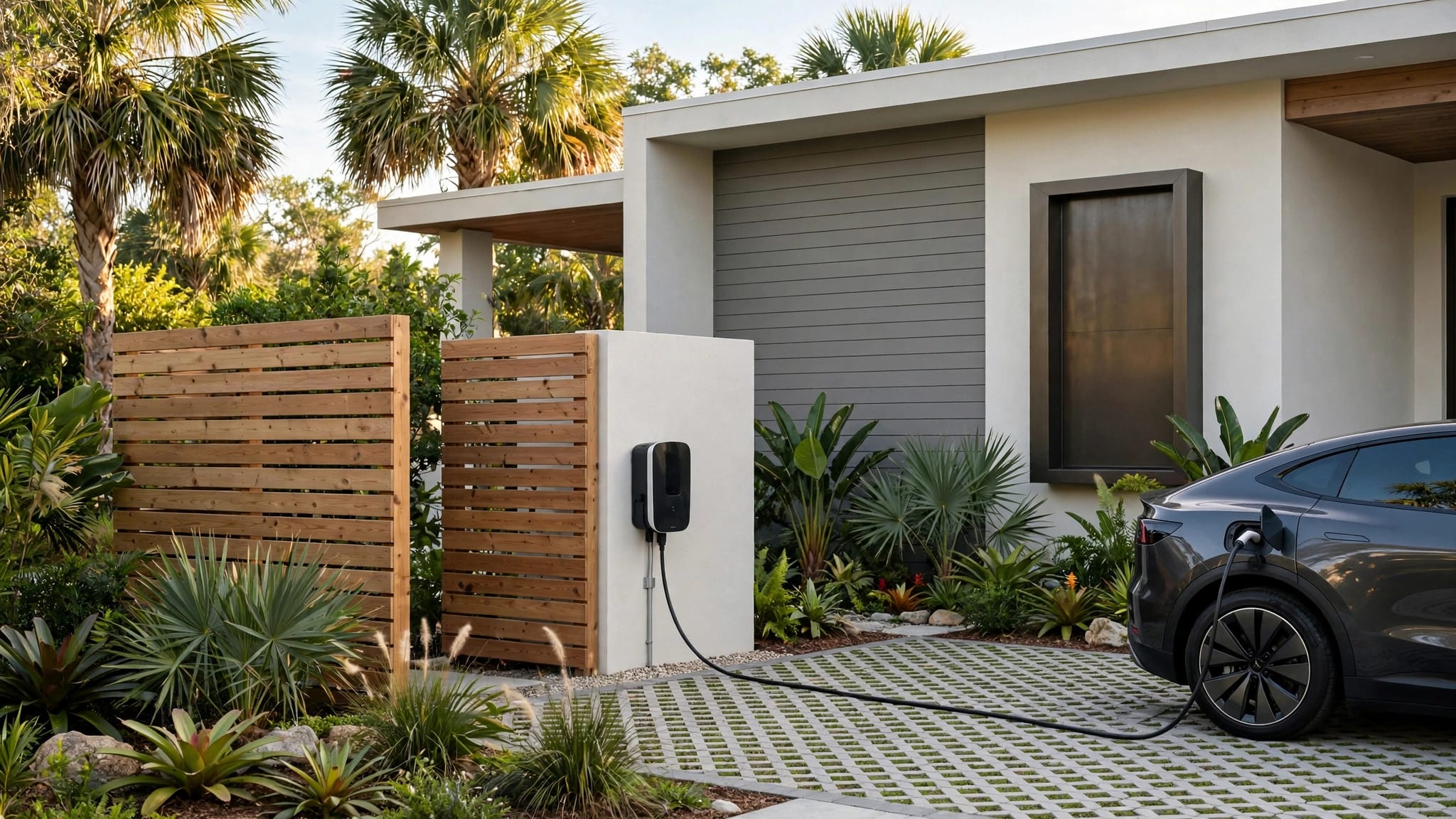
For example, a solid lower section with a lattice top can block views near a patio without creating one continuous wall. Slatted composite panels can create a modern appearance while reducing the visual weight of a full privacy fence.
Explore these Florida-friendly privacy fence designs when airflow and privacy both matter. The best design often blocks the views you care about without closing off the entire yard.
How Southwest Florida heat affects each material
Heat, humidity, heavy rain, and salt air affect every fence material. Vinyl and composite avoid several problems associated with wood, but they still require a climate-appropriate design.
Vinyl needs room to move
Vinyl expands and contracts as temperatures change. That movement is normal, but the fence must allow the components to shift as the manufacturer intends. Tight spacing, incorrect fasteners, or poor rail engagement can create problems later.
The installer should follow the product's requirements for panel spacing, post alignment, rails, and connections. Long runs may also require careful planning because movement can become more noticeable across a large span.
Read about vinyl fence heat expansion in Florida before selecting a system. The details matter more than choosing a vinyl color.
Composite needs strong support
Composite does not have the same heat movement profile as vinyl, but its weight changes the installation requirements. Heavy panels place more demand on posts and framing, especially when the fence is tall or fully private.
Direct sun can also make composite surfaces warmer to the touch. That may matter if the fence borders a pool deck, seating area, or frequently used walkway. Lighter colors and designs with some spacing can reduce the sense of heat.
A professional composite fence installation in Cape Coral should account for the product's weight, panel dimensions, support system, and site exposure.
Compare maintenance, appearance, and daily use
Vinyl is usually the easier material for busy homeowners and seasonal residents. It doesn't need painting, staining, or sealing. A periodic rinse removes dust, pollen, and surface debris. Mildew may require soap and gentle scrubbing, especially in shaded areas.
Composite also avoids the regular sealing associated with wood. However, its textured surface can hold more dirt than a smooth vinyl panel. Washing remains simple, but the fence may need more attention to keep its original appearance.
Appearance is often the deciding factor. Vinyl has a smooth, consistent finish that looks neat and bright. Composite offers more texture and variation, which can complement stone, pavers, natural landscaping, or a contemporary home.
Use this comparison as a quick guide:
| Factor | Vinyl privacy panels | Composite privacy panels |
|---|---|---|
| Privacy | Strong with solid panels | Strong with solid or slatted designs |
| Routine care | Hose and wash as needed | Wash as needed, no regular staining |
| Appearance | Clean, uniform finish | Wood-like texture and style |
| Moisture and insects | Resists rot and termites | Resists moisture and insects |
| Heat consideration | Allows for product movement | Can feel warmer and needs strong support |
| Typical service life | About 20 to 30 years for quality systems | About 20 to 35 years, depending on grade and exposure |
| Cost planning | Varies by style and construction | Roughly $45 low, $65 typical, and $90 high per linear foot in one local planning range |
The price figures for composite are planning estimates, not a guaranteed quote. Brand, framing, panel style, access, gates, terrain, and installation details can change the final cost.
Cost and expected lifespan
Initial price should be only one part of the decision. A cheaper fence may become more expensive if it needs frequent repairs, replacement panels, or hardware upgrades.
Composite privacy systems often carry a higher upfront cost because the material is heavier and the support structure may be more substantial. You may decide that the wood-like appearance justifies the added expense, especially on a highly visible property.
Vinyl can provide strong value when you want privacy and low upkeep without a premium finish. Its expected life is commonly placed around 20 to 30 years for quality installations. Product quality, sun exposure, wind, and installation all affect that range.
Composite lifespan estimates commonly fall between 20 and 35 years. Coastal locations near the Gulf or canals may trend closer to 20 to 25 years, while premium capped products in favorable settings can last 35 years or more.
Review this guide to composite fence lifespan in Southwest Florida before comparing warranties or long-term value. Neither material should be judged by its advertised lifespan alone.
Installation details matter as much as material
The panels are visible, but the posts and connections carry much of the structural demand. A well-selected material can still perform poorly if the installation ignores soil, drainage, wind, or gate use.
Posts and footings carry the load
Cape Coral and other Southwest Florida communities can have sandy soil, saturated ground, and open exposure. Solid privacy panels place more force on posts than open pickets. Composite adds weight that must be supported correctly.
Post embedment, concrete work, corner construction, and gate posts deserve careful attention. The exact requirements depend on the fence system and site conditions, so a universal post depth should not replace a site-specific plan.
This Cape Coral fence post depth guide covers the local factors that affect post installation. Open lots and tall privacy fences may need a stronger layout than a sheltered side yard.
Gates, corners, and hardware deserve extra attention
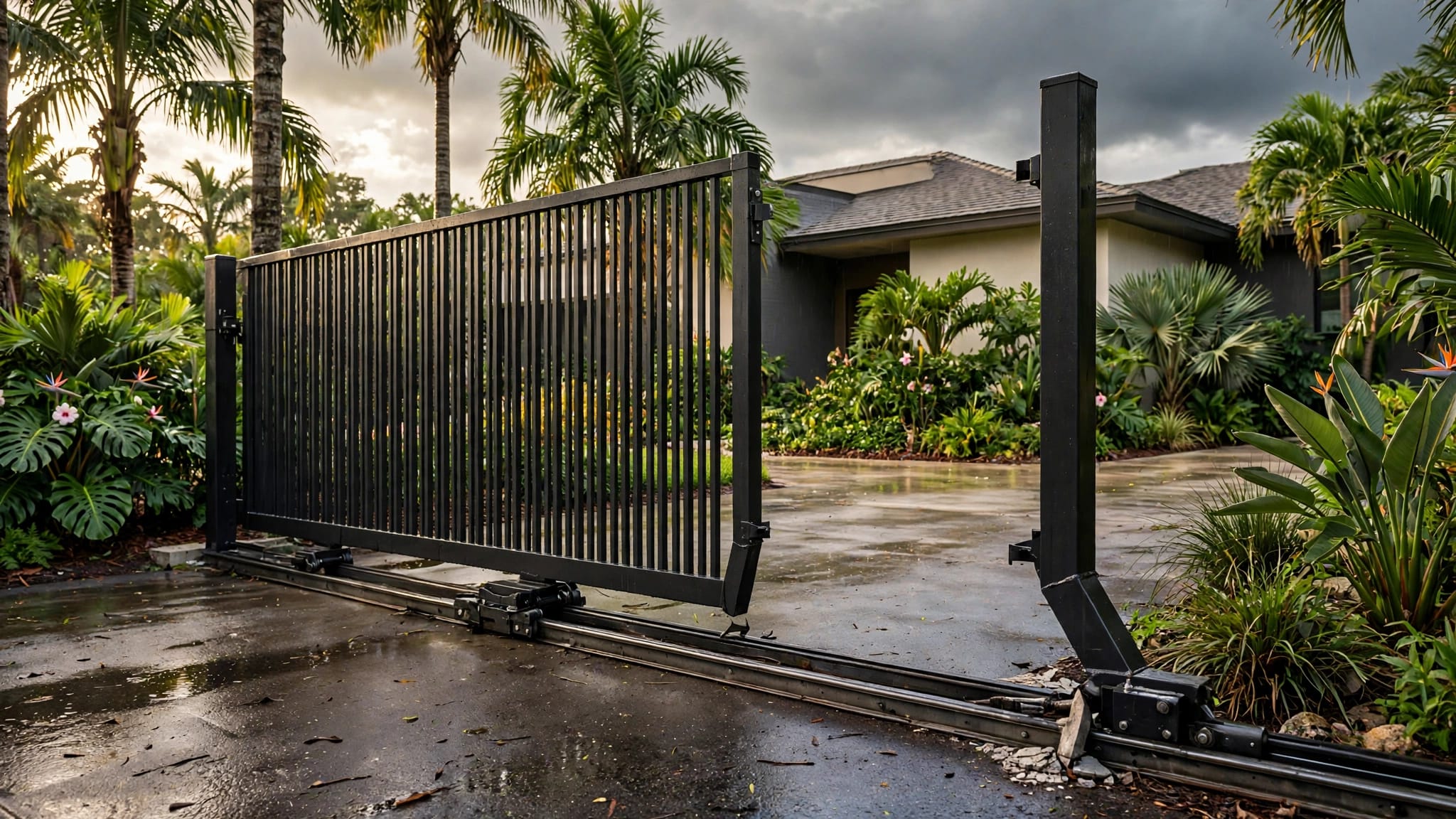
Gates move often and concentrate stress around hinges, latches, and posts. Composite gates may need heavier support because of their weight. Vinyl gates require proper alignment so the panels and hardware don't place excess pressure on the posts.
Corners also deserve more than standard line-post treatment. Wind forces change direction at corners, ends, and transitions. Corrosion-resistant hardware is especially important near salt air, canals, and coastal properties.
Ask how the proposed system handles gate support, panel attachment, fasteners, and repairs. The construction method can matter as much as the material. You can also compare routed versus bracketed vinyl fence systems when selecting a vinyl product.
Match the panel to your property
Vinyl usually fits best when your priorities are privacy, easy cleaning, and a consistent appearance. It works well for homeowners who want a practical barrier around a backyard or side yard.
Composite makes more sense when appearance carries greater weight and your budget supports a heavier system. Its wood-like finish can suit upscale landscaping, modern architecture, and properties where both sides of the fence are visible.
Your lot may also call for a mixed design. A solid panel can screen a patio, while a slatted or vented section protects airflow along an open side. A shorter privacy return can shield a pool or seating area without enclosing the entire property.
Before choosing, consider:
- How much direct wind reaches the fence line?
- Does the property sit near a canal, the Gulf, or open land?
- Will sprinklers or drainage keep the soil wet?
- Do you prefer a smooth finish or wood-like texture?
- Can the gate and posts support the selected panel system?
- Does your HOA regulate height, color, or fence style?
Key Takeaways
- Vinyl is a practical choice for low-maintenance privacy and a clean, uniform appearance.
- Composite offers a richer wood-like look and avoids regular staining or sealing.
- Solid panels create more wind load, so the layout and support system matter.
- Semi-private, slatted, and vented designs can provide privacy while allowing airflow.
- Quality vinyl commonly lasts about 20 to 30 years, while composite often lasts 20 to 35 years.
- Local exposure, installation quality, material grade, and care affect both materials.
- A site-specific quote is more useful than comparing material prices alone.
FAQ
Is vinyl or composite better for Florida privacy fencing?
Vinyl is usually better for homeowners who want easier upkeep and a lower-maintenance appearance. Composite is often better for homeowners who prefer a wood-like finish and accept a higher upfront cost.
Which material handles moisture and termites better?
Both materials resist common moisture and termite problems better than wood. Vinyl does not rot or feed termites. Composite combines wood fibers with polymers and is designed to resist moisture and insects, but its support system still needs protection from poor drainage and standing water.
Are solid privacy panels a good idea in Southwest Florida?
They can work, but they create more wind pressure than open designs. A vented top, lattice section, or spaced layout may be safer for exposed lots, corner properties, and canal-front homes. The posts, footings, gates, and connections must match the design.
Does composite fencing require maintenance?
Composite fencing needs less care than wood, but it isn't maintenance-free. Plan to wash the panels when dirt, mildew, or pollen builds up. You won't usually need routine staining or sealing.
Should I choose a solid vinyl fence for a windy yard?
A solid vinyl fence may still work if the system and installation suit the site. Ask the contractor about panel length, post spacing, embedment, gate support, and the manufacturer's requirements. A semi-private design may provide a better balance of screening and airflow.
Choose the material that fits the site
The better choice in the vinyl vs composite panels comparison depends on more than color or curb appeal. Vinyl offers simple care and reliable privacy, while composite brings a warmer, wood-like appearance with a higher cost and greater structural demand.
Start with wind exposure, drainage, sunlight, and the amount of privacy you actually need. When the panel design and installation match the property, either material can provide a durable privacy solution for a Southwest Florida home.