Florida Culvert Rules That Affect Fence and Driveway Projects
A fence line can look simple until it meets a roadside ditch, swale, or driveway pipe. In Southwest Florida, Florida culvert rules often come into play before the first fence post goes in the ground.
The key point is that Florida does not use one statewide fence setback or driveway culvert size for every property. Your requirements depend on the road owner, the right-of-way, drainage easements, flood conditions, and local engineering standards.
A quick review of the property and the responsible agency can prevent a fence relocation, blocked drainage, or a costly driveway repair.
Florida culvert rules begin with state law and local authority
Florida law establishes important definitions, but it does not hand homeowners one universal culvert chart. The practical rules usually come from the agency that owns or maintains the road and drainage system.
Florida Statute 334.03 defines a transportation right-of-way broadly. It can include the roadbed, ditches, drains, culverts, slopes, and other features needed for travel. In other words, the grassy strip near the street may be part of the public road system even when you mow it.
State law defines the right-of-way
A public right-of-way may be owned outright or held through an easement by the state, county, or municipality. Therefore, a fence, driveway extension, pipe replacement, or grading change in that area can require approval from the road authority.
The property line on a survey does not always match the edge of pavement. A roadside ditch, swale, sidewalk area, or utility corridor may sit between your lot line and the street.
That distinction matters because a homeowner cannot treat every visible lawn area as private buildable space.
State statutes do not set one pipe size
No statewide rule establishes one culvert diameter for every Florida driveway. Pipe size, material, length, elevation, end treatment, and cover depend on the drainage design for that road.
FDOT's drainage guidance and standard plans address roadway drainage design, including structures such as precast concrete box culverts. However, those documents do not create a universal residential driveway-pipe rule.
A driveway pipe that works on one street can restrict drainage on another street if the ditch grade, rainfall runoff, or downstream pipe system is different.
For that reason, never buy a pipe based only on a neighbor's installation.
Identify who controls the road before altering drainage
The agency with authority over the road usually controls the driveway connection and the drainage feature beside it. That agency may be FDOT, a county, a city, a private community, or a special district.
Road ownership is the first question to answer before planning fence placement near a culvert.
State, county, city, and private roads follow different processes
A driveway connecting to a state highway generally falls under FDOT requirements. A county-maintained road often requires review by county public works, roads, engineering, or a right-of-way office.
Within city limits, the city may issue the driveway, drainage, and fence approvals. Cape Coral, for example, has extensive roadside swales that affect where water flows and where posts can go. Review these Cape Coral drainage swale fence rules before treating a front swale as ordinary yard space.
Private roads can add another layer. An HOA, community development district, or private road owner may control access and drainage even when the county or city handles other permits.
Ask for the road classification in writing
When you contact the agency, provide the property address and ask whether the road is state, county, municipal, or private. Then ask whether the proposed work falls in a public right-of-way.
Get clear answers to these points before ordering materials:
- Whether a driveway or right-of-way permit is required for pipe installation or replacement.
- Whether the agency has a drainage plan, pipe specification, or approved driveway detail for the location.
- Whether the fence must stay behind the right-of-way line or outside a designated clear-vision area.
- Whether temporary access is needed for crews, inspections, or drainage maintenance.
Written direction is easier to follow than a verbal assumption made at the counter or over the phone.
Drainage easements can limit where a fence belongs
A drainage easement is a legal right that allows a government entity, utility, association, or other holder to access and maintain drainage facilities. It may include a swale, ditch, pipe, inlet, canal bank, or drainage corridor.
The easement can cross the side yard or backyard, not only the front of the lot. As a result, a fence that looks safely inside your boundary can still interfere with required access.
Read the survey, plat, and recorded easements
Start with a current boundary survey. Look for labeled drainage, utility, access, or maintenance easements. The recorded plat and title documents may show additional restrictions.
Fence posts can obstruct mowing, pipe repair, ditch regrading, or equipment access. In some cases, the easement holder may allow a fence with conditions. In others, it may require an opening, removable panel, wider gate, or a different alignment.
A homeowner may still bear the cost to remove and reinstall an approved fence if drainage crews need access later. Learn more about fences in drainage easements before setting posts near a marked corridor.
Floodplain rules add another review
A property in a mapped floodplain may need floodplain review when work changes drainage patterns, adds fill, alters a ditch, or affects stormwater storage. The fence itself may have limited impact, but the driveway pipe and grading around it can change how water moves.
Low-lying lots in Lee, Collier, Charlotte, Sarasota, Manatee, Hendry, and DeSoto counties often have drainage conditions that differ block by block. Therefore, countywide assumptions are risky.
Keep the natural drainage route open. Water that cannot cross the driveway or move along a swale may pool in your yard or flow toward a neighbor.
Driveway culvert approvals protect the whole drainage route
A culvert is more than a tube under a driveway. It connects the ditch or swale on one side to the drainage path on the other. If the pipe is too small, too high, crushed, clogged, or installed at the wrong slope, it can create standing water far beyond the driveway.
This is why Florida culvert rules are usually permit-based and site-specific.
Pipe size follows engineering conditions
The responsible public works or engineering department may specify the required pipe diameter, material, length, invert elevation, and driveway width. It may also require headwalls, mitered ends, flared end sections, riprap, or other erosion protection.
Several conditions affect that decision:
- A shallow roadside swale may need a different pipe than a deep drainage ditch.
- A culvert may connect to a larger downstream system with a fixed elevation.
- A collector road can have more demanding drainage and safety needs than a quiet local street.
- Sandy soils, tidal influence, flood zones, and heavy seasonal rainfall can affect the design.
Do not raise a driveway with fill or cover an existing pipe without approval. Even a small elevation change can reduce capacity or send runoff into the wrong area.
Road safety requirements are separate from yard drainage
FDOT uses detailed standards for culverts and roadside protection on state-controlled projects. For example, FDOT roadside-safety guidance discusses guardrail and fill depth in locations where a barrier is required. Those criteria do not mean every residential driveway needs the same barrier or cover.
Instead, the permit issuer sets the requirements for your location. A county road engineer may focus on ditch flow, driveway sight distance, road shoulder stability, and maintenance access. A city may also review curb cuts, sidewalks, utilities, and swale grades.
If the pipe is damaged, contact the road authority before replacing it. The old pipe's size is not proof that it still meets current conditions.
Fence placement near a driveway needs practical clearance
A fence can create problems even when it stays outside the public right-of-way. Gates, posts, opaque panels, and landscaping can block sightlines near a driveway or street corner.
Visibility matters most where vehicles enter a busy road, where a sidewalk crosses the driveway, or where the lot sits at an intersection.
Keep gates away from drainage features
Plan the gate so it does not swing over a ditch, rub against a culvert end, or force vehicles to stop in the road while it opens. A sliding gate may fit some properties, although its track and posts still need room outside drainage areas and easements.
Fence panels should also avoid blocking access to pipe ends. Workers need to inspect and clear culverts when debris builds up after storms.
For properties in unincorporated areas, review the current Lee County fence permit rules alongside road and drainage requirements. Fence approval and driveway approval can be separate processes.
Match the fence layout to water flow
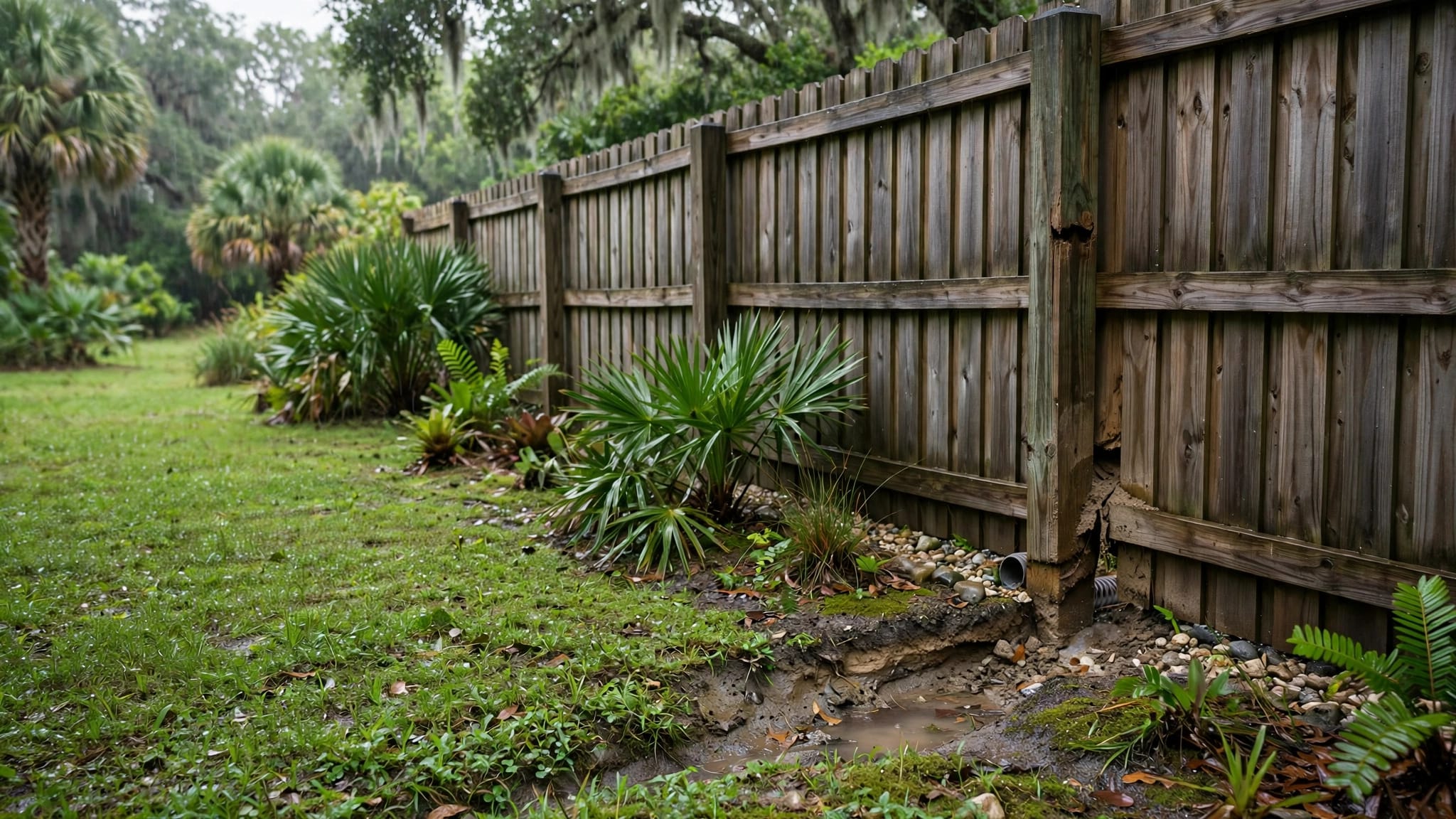
Avoid using fence boards, bottom rails, landscape timbers, or added soil to dam a swale. Leave the intended drainage channel clear, especially between the driveway pipe and the roadside ditch.
On a sloped yard, a stepped fence may create low pockets where water collects. A qualified installer can adjust panel layout, post locations, and gate placement without pushing construction into an easement or right-of-way.
Call 811 before digging. Utility lines often run near roadway corridors, and marked lines help the crew avoid dangerous and expensive damage.
Common mistakes that cause avoidable rework
Many drainage problems begin with reasonable assumptions that do not match the property records or permit conditions. A few early checks can save weeks of delay.
Mistakes to avoid before installation
Do not assume the ditch belongs to you because it borders your lawn. Do not assume a culvert can be replaced with the same diameter without agency approval. Also, do not rely on satellite images to identify property lines or easements.
Avoid placing fence posts directly beside pipe ends. Heavy rain can erode soil around the culvert, weaken a post, and make pipe maintenance harder.
Homeowners also run into trouble when they request a fence permit but fail to mention a drainage swale, drainage easement, driveway expansion, or planned pipe replacement. Give permitting staff the complete scope of work.
A fence contractor can help spot layout concerns, but the county, city, road authority, or easement holder makes the final call on its facilities.
A careful plan keeps drainage and fencing working together
Florida culvert rules protect the road, the drainage route, and nearby properties. They also protect you from installing a fence or driveway feature that later needs removal.
Confirm the road owner, review the survey, identify easements, and contact the proper public works, engineering, permitting, or roads department before construction begins. A well-placed fence leaves room for water, maintenance access, and safe driveway use.