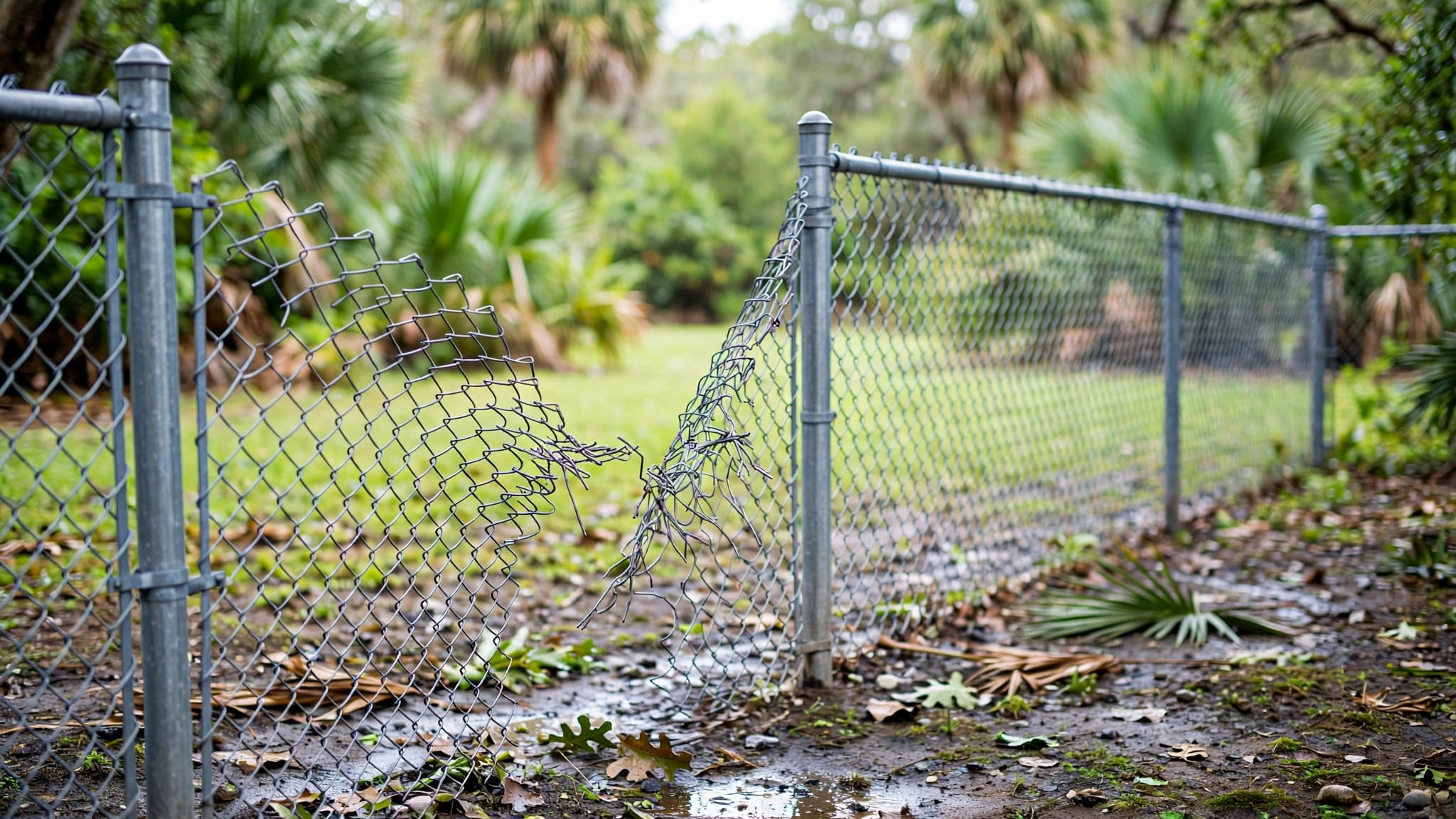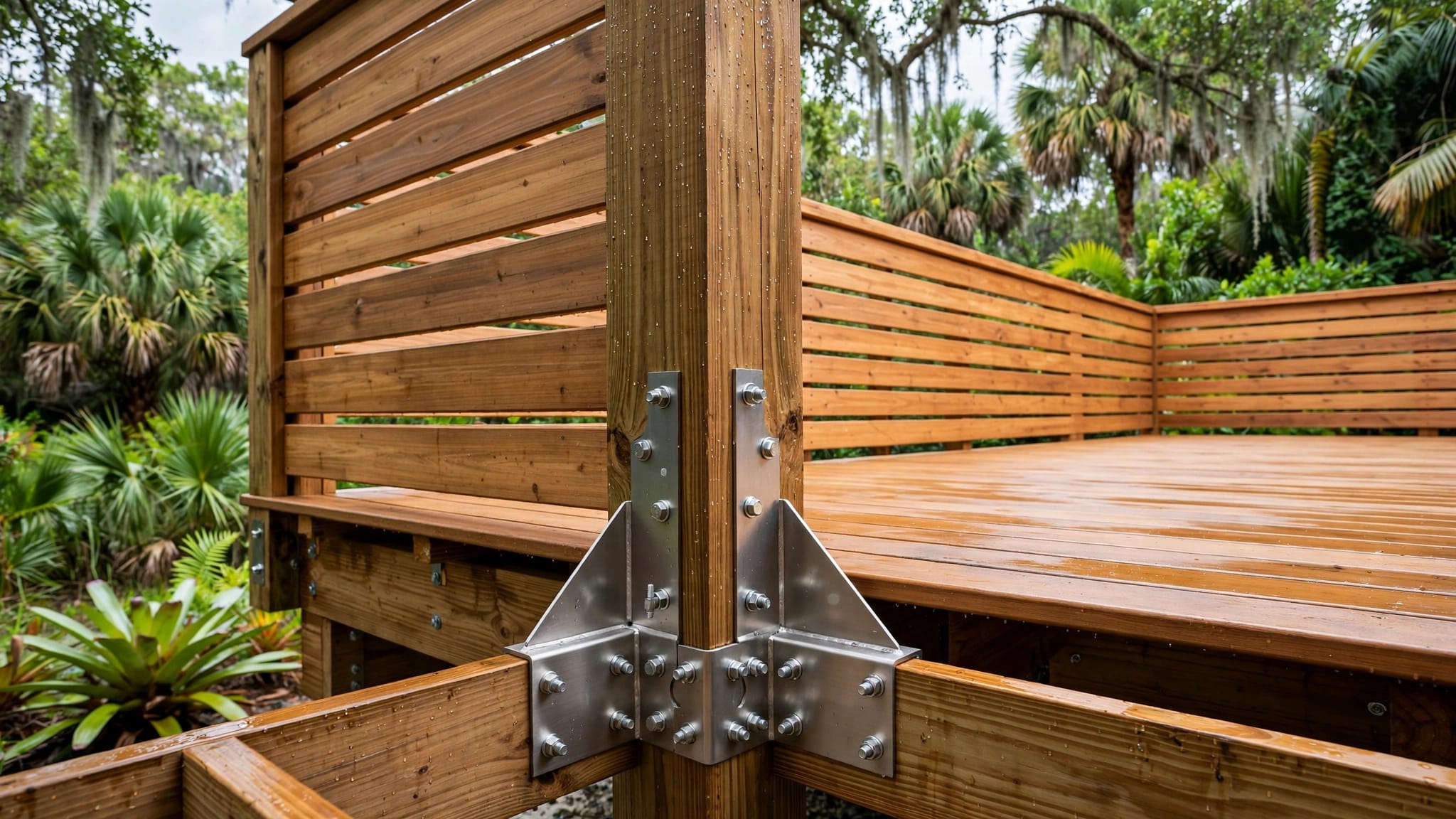
Florida Fence Rules for Flag Lots and Narrow Lots
A fence that fits a standard suburban yard may create problems on a flag lot or narrow lot. The access strip, easements, drainage areas, and limited building width can leave only a small area for posts and gates.
For 2026, Florida fence rules depend on more than the state statute. Your city or county may control height, setbacks, corner visibility, permits, and waterfront restrictions. Your deed, survey, recorded plat, and HOA documents may add more limits. Start with the lot documents and local jurisdiction before choosing a fence layout.
Florida fence rules start with state law and local codes
Florida Statutes section 588.01 contains a general fence construction provision. Under its stated terms, fences or enclosures must be substantially constructed and not less than five feet high, with requirements for the lower two feet. That statute doesn't answer every residential zoning question.
A local code may limit a fence to three or four feet in a front setback, even when a taller fence might otherwise be allowed elsewhere on the property. It may also restrict fence placement near roads, driveways, canals, or property corners.
Identify the agency with authority
The correct rules depend on whether your property sits inside a city or in an unincorporated county area. Cape Coral has city regulations, while unincorporated Lee County follows county requirements. Naples and unincorporated Collier County also have separate jurisdictions.
The same pattern applies across Southwest Florida. Charlotte, Sarasota, Manatee, Hendry, and DeSoto counties each need separate confirmation. A rule from Cape Coral or Collier County shouldn't be treated as a statewide standard.
Check private restrictions too
Government approval doesn't cancel a private restriction. An HOA may limit fence height, color, material, location, or gate design. Your deed or declaration may also control shared access areas.
Review these documents before ordering materials. A fence can meet zoning rules and still violate an HOA covenant or an access agreement.
Lot shape changes where a fence can go
A flag lot usually has a narrow connection to the public road and a wider section behind another property. That narrow connection is often called the access stem or neck. It may be owned by you, shared with another owner, or affected by a recorded access easement.
A narrow lot has a different problem. Even when the boundary is clear, side setbacks, utility areas, drainage features, and the home's footprint can leave little usable width. A fence placed only a few inches incorrectly can reduce driveway clearance or block required access.
Keep the fence on the correct boundary
A fence should not cross the property line. That includes posts, concrete footings, caps, and gate hardware. Whether a fence may sit directly on the boundary depends on local code, the recorded documents, and any agreement with the adjoining owner.
Don't use the curb, sidewalk, hedge, or existing neighbor fence as your boundary reference. The right-of-way may extend behind the curb, and an older fence may not follow the legal line.
A current survey can show property corners, bearings, rights-of-way, and easements. You can review Florida property line documents before planning the fence. If pins are missing or the boundary is disputed, a Florida-licensed surveyor should locate the line.
Plan around limited buildable width
Measure the usable width at the narrowest point, not only the width near the house. Include the fence panels, posts, gates, latch hardware, and any space needed to open the gate.
On a flag lot, placing fences along both sides of the access stem can make the driveway feel much tighter. It may also interfere with a neighbor's access rights or leave insufficient room for maintenance vehicles.
A good plan identifies the legal access route first. The fence line comes afterward. If the buildable area is too narrow for a standard panel, the contractor may need a custom-width section or a different gate arrangement.
Shared driveways and access easements need special care
A shared driveway creates more than a design question. It creates a continuing right of access that may belong to another property owner. The recorded easement language controls the permitted use, width, maintenance duties, and possible restrictions.
Don't fence across an access route
A fence across a shared driveway can block a neighbor, delivery vehicle, emergency response, or future maintenance work. Even a gate may cause problems if the other user doesn't have access, a key, a code, or enough room to turn.
Check the plat and deed for the easement's location and width. Then compare those documents with the driveway that exists today. The pavement may cover only part of the legal easement, or the driveway may have shifted over time.
A fence can sometimes run beside an access easement, but that doesn't make every placement acceptable. Local zoning may require a setback from the right-of-way or easement, and the easement holder may have rights that affect future repairs.
Place gates for real daily use
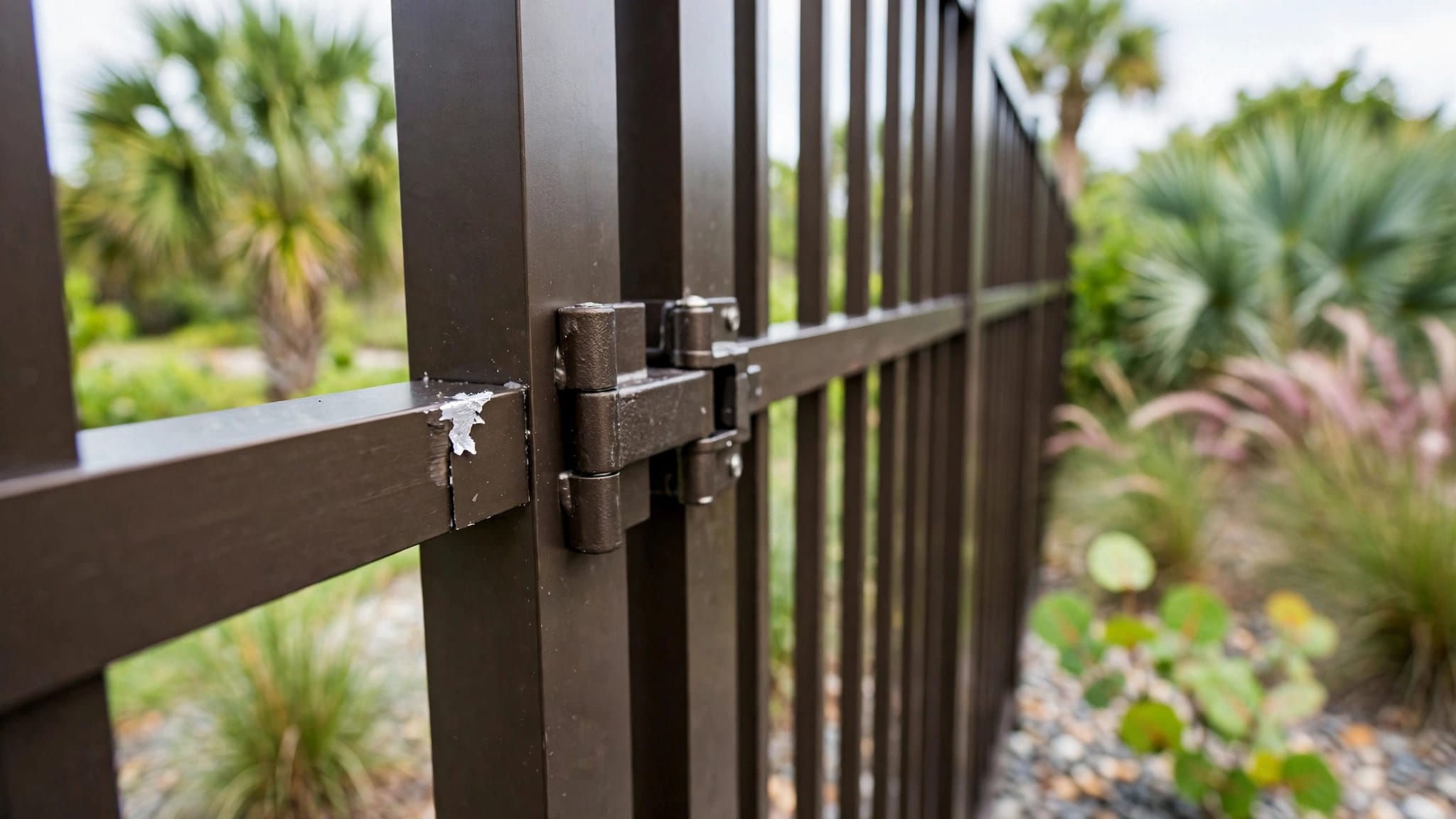
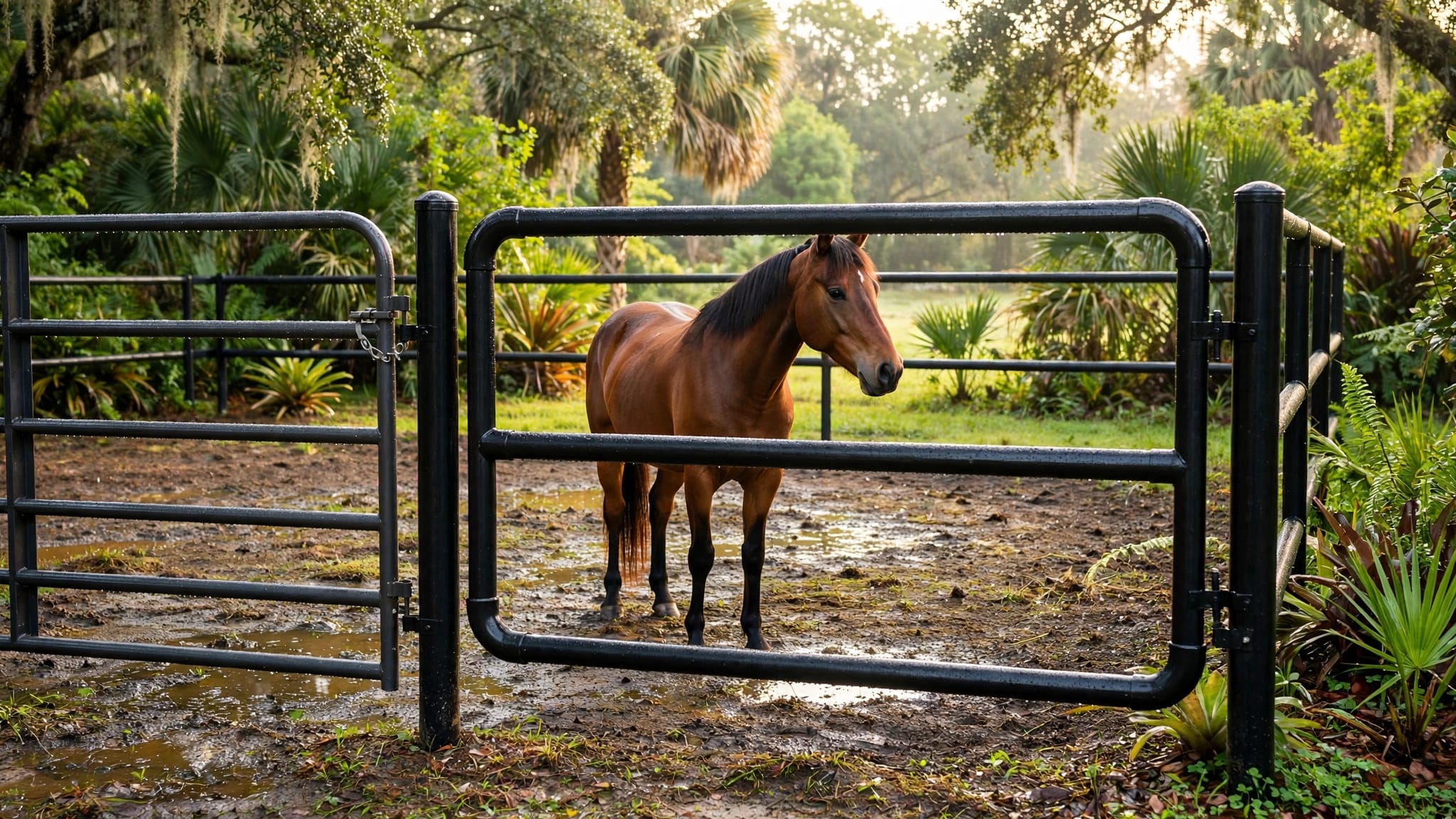
A gate at the neck of a flag lot needs careful planning. The opening should provide practical vehicle clearance without forcing cars to swing into landscaping, another parcel, or the road.
Gate swings matter on narrow lots. A gate that opens into the shared driveway can reduce usable width, while a gate that swings toward the street may create a visibility or right-of-way issue. If multiple owners use the drive, obtain written approval before changing access or adding a lock.
Corner visibility and fence height are local questions
Corner lots and flag-lot entrances often have visibility restrictions. A fence that blocks a driver's view of approaching traffic can violate a sight triangle rule, even when it sits inside your property boundary.
The same concern can apply at the point where a flag-lot stem meets the road. The home may sit far from the street, but the access entrance still needs clear visibility for vehicles and pedestrians.
Sight triangles can limit a legal property line
Many local codes restrict solid fences near street corners and driveway entrances. Height, opacity, landscaping, and the distance from the intersection can all matter.
Don't assume that an open design automatically solves the problem. Some codes measure the full fence height, while others set visibility requirements for the entire area. A gate, hedge, mailbox, or masonry column may also affect the review.
Southwest Florida examples differ
Cape Coral's Land Development Code section 5.2.7 prohibits residential fences within a visibility triangle. The city's residential guidance generally allows fences up to six feet, with an eight-foot allowance when the property abuts commercial property. Those figures don't apply automatically in unincorporated Lee County.
Unincorporated Lee County guidance generally limits fences in residential street setback areas to three feet. An open-mesh fence may reach four feet if it doesn't interfere with vehicle visibility. Along a secondary street right-of-way or easement, a fence may reach six feet when it meets the required five-foot setback or falls outside the easement width, whichever is greater. Side and rear yard limits are generally six feet.
Collier County Land Development Code section 5.03.02 has its own corner-lot provisions. For corner lots of one acre or less, a fence within ten feet of the longest lot-line frontage may be limited to four feet. A fence at least ten feet from that frontage may reach six feet. Naples city rules are separate and commonly distinguish three-foot front setback fences from six-foot side and rear setback fences.
On a narrow or flag lot, the usable fence area can be smaller than the parcel itself because private land may also contain access, drainage, utility, or visibility restrictions.
Drainage, utilities, and waterfront areas affect the layout
Southwest Florida properties often include drainage swales, canal edges, utility corridors, and stormwater facilities. These features may occupy private land while still giving another party the right to enter or use the area.
Treat easements as active areas
A recorded easement doesn't usually change ownership, but it can limit what you build there. Utility, drainage, access, conservation, and public right-of-way easements can require future entry.
Lee County guidance warns against placing fences in public rights-of-way and recorded easements such as drainage, access, utility, and conservation easements. Other jurisdictions may have different procedures, including special approvals or agreements, so ask the local office before planning a fence inside an easement.
Keep posts out of drainage swales unless the approved plan allows them. A solid fence can change the flow of stormwater and push water toward a neighbor or the home. Utility companies and drainage agencies may also require removal if they need access.
Waterfront lots may have extra limits
Cape Coral has special rules for some waterfront fencing. In the rear 20 feet of a property that abuts a waterway, fencing above three feet must be open mesh. The city also restricts fences that block canal or waterway views from adjoining lots.
A narrow canal lot may therefore need an open aluminum or chain-link design instead of a solid privacy fence along the water. The exact setback and visibility rule depends on the property and current city code.
Gather the right documents before installation
A contractor can price a project more accurately when the lot documents and access conditions are available. The documents also help prevent a fence line that must move after permitting or construction begins.
Prepare these items first
- Confirm whether the property is inside a city or in an unincorporated county area.
- Locate the latest deed, boundary survey, recorded plat, and easement documents.
- Check HOA rules for fence height, material, color, location, and approval.
- Note every driveway, gate, drainage feature, utility area, canal, corner, and adjacent street.
- Ask the local building or zoning department whether a permit, site plan, survey, or easement disclosure is required.
A survey isn't required statewide for every fence permit, but local offices may request one. The permit office may accept a sketch in one jurisdiction and require a certified survey in another.
Confirm the permit before buying materials
Unincorporated Lee County generally requires a permit to install or replace a residential fence, along with information about easements and encumbrances. Review the current Lee County fence permits before scheduling work.
Unincorporated Collier County also generally requires a building permit for residential fence installation, replacement, and repair. The Collier County permit guide can help homeowners prepare, but city properties such as Naples follow their own offices and codes.
Your site plan should show the property lines, house, driveway, street, proposed fence, gates, fence height, and known easements. If the plan leaves out the flag-lot stem or shared driveway, the reviewer may not see the access issue until late in the process.
Local requirements can change by city, county, zoning district, and lot type. Confirm the current rules with your local zoning or building department, and review your deed, survey, recorded plat, and HOA documents before installation.
Conclusion
Florida fence rules become harder to apply when a lot has a narrow access stem, shared driveway, corner exposure, or limited buildable width. The safest layout starts with the legal boundary, then accounts for easements, sight areas, drainage, utilities, and local height limits.
A fence contractor can help measure the proposed line and prepare the project, but the property owner should confirm the documents and jurisdiction before work begins. On a difficult lot, the right fence is the one that fits the property without blocking the rights and access that already exist.