How to Build a Trash Bin Enclosure That Stays Accessible
A fence can hide your trash cans, but poor placement can make collection day frustrating. A well-planned trash bin enclosure keeps containers out of sight while giving residents and collection crews a clear path.
The right trash bin enclosure should match your actual bins, driveway, sidewalk, and local pickup routine. Start with the collection route, then choose between a movable screen and a permanent structure.
Start With the Collection Route
Collection day should guide the design. Before installing posts or panels, watch how your bins move from storage to the pickup point. Consider whether you roll them to the curb, place them beside a driveway, or use a service that collects them from a designated area.
Keep the enclosure outside the path of vehicles, pedestrians, mail carriers, and utility workers. It should also stay clear of gates, drainage areas, air-conditioning equipment, and any spot where water collects after heavy rain.
Measure the collection path
Measure the actual width and depth of each cart, including the wheels and handles. Then plan enough working room for someone to pull the bin out without twisting it sideways or lifting it over a panel.
If you store multiple carts together, test the route with every bin in place. A narrow opening may work for one container but become difficult when two carts sit side by side. Also check whether the lid can open fully inside the enclosure.
Collection practices vary by neighborhood and provider. Some crews expect carts at the street, while others use equipment that needs clear access from a driveway or alley. Design around the service you receive instead of copying a setup from another property.
Leave room around containers
Avoid pushing bins tightly against the fence. Extra space lets you move the cart, clean the enclosure, and reach the handles. It also reduces the chance that a lid will catch on the gate or wall.
The opening should allow the largest cart to pass without scraping posts, hinges, or landscaping. If you plan to replace your bins later, leave enough flexibility for a slightly different cart size.
Choose the Right Trash Bin Enclosure Design
Most homeowners choose either a movable screen or a permanent enclosure. Both options can conceal containers, but they work differently when access, wind, and future changes matter.
Movable screens offer flexible access
A movable screen can include one or more freestanding panels placed around the bins. You can shift it when the driveway needs cleaning, landscaping changes, or a collection crew needs a wider route.
This option works well when you rent, expect to remodel, or don't want permanent posts in the ground. The screen still needs stability, especially during Southwest Florida storms. Use a weighted base or an approved anchoring method that keeps panels steady without making them difficult to move.
A two-sided screen may hide bins from the street while keeping the front open for easy removal. A three-sided layout provides more coverage, but it needs careful placement so the cart doesn't become trapped.
Permanent enclosures provide a finished look
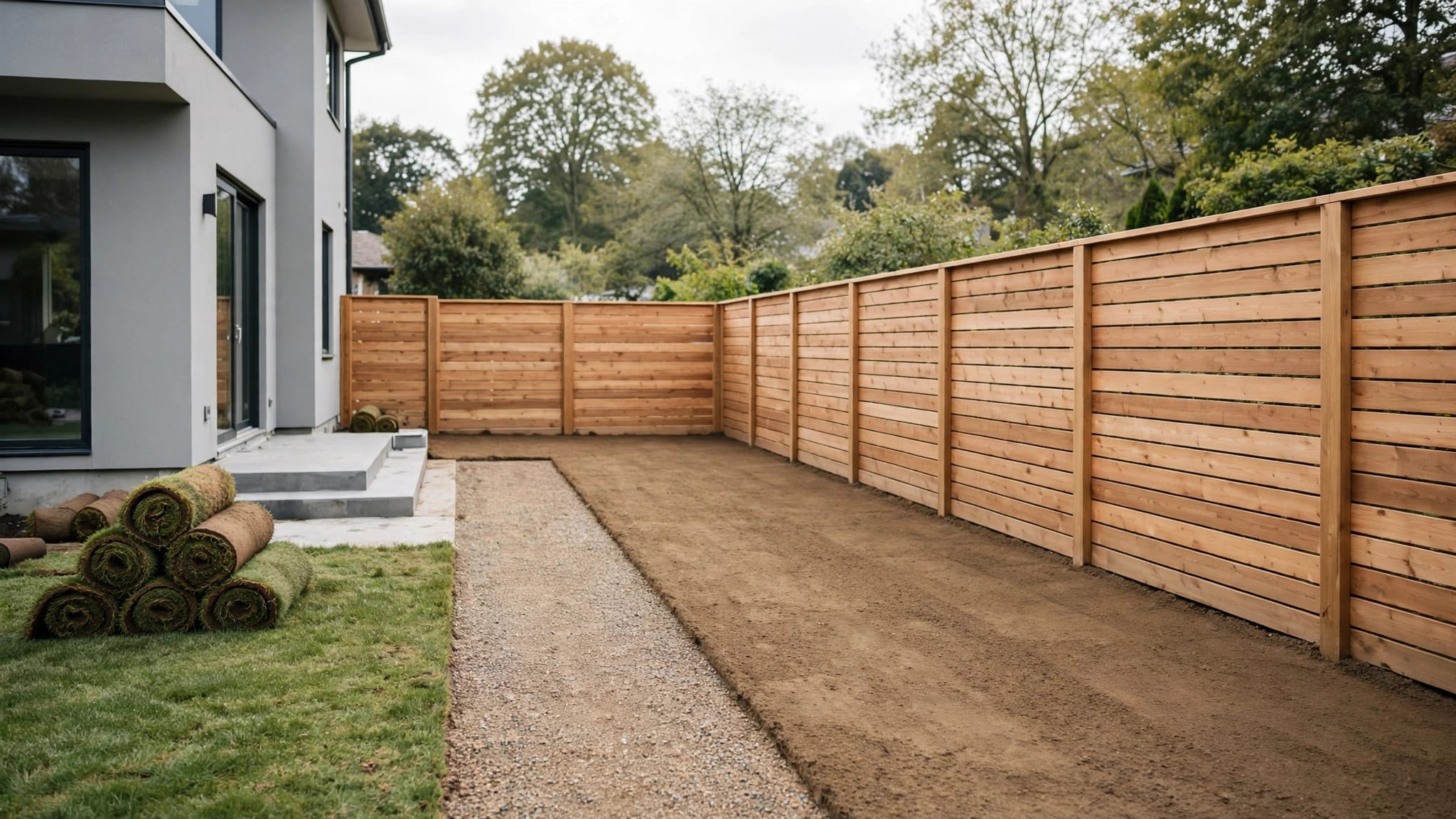
A permanent structure uses anchored posts, fixed panels, and a gate. It can match an existing fence and create a cleaner appearance beside a driveway or side yard.
Plan the gate around the cart's full travel path. The bin should roll straight out or make a simple turn. Avoid designs that require someone to pull the cart backward through a tight corner.
A permanent enclosure also needs a practical base. A hard, level surface makes carts easier to move, while a surface with proper drainage helps prevent standing water and muddy wheels.
Match the Materials to Southwest Florida
Your material choice affects privacy, airflow, cleaning, and long-term maintenance. The enclosure doesn't have to match every fence on the property, but a coordinated style usually looks more intentional.
Balance privacy with airflow
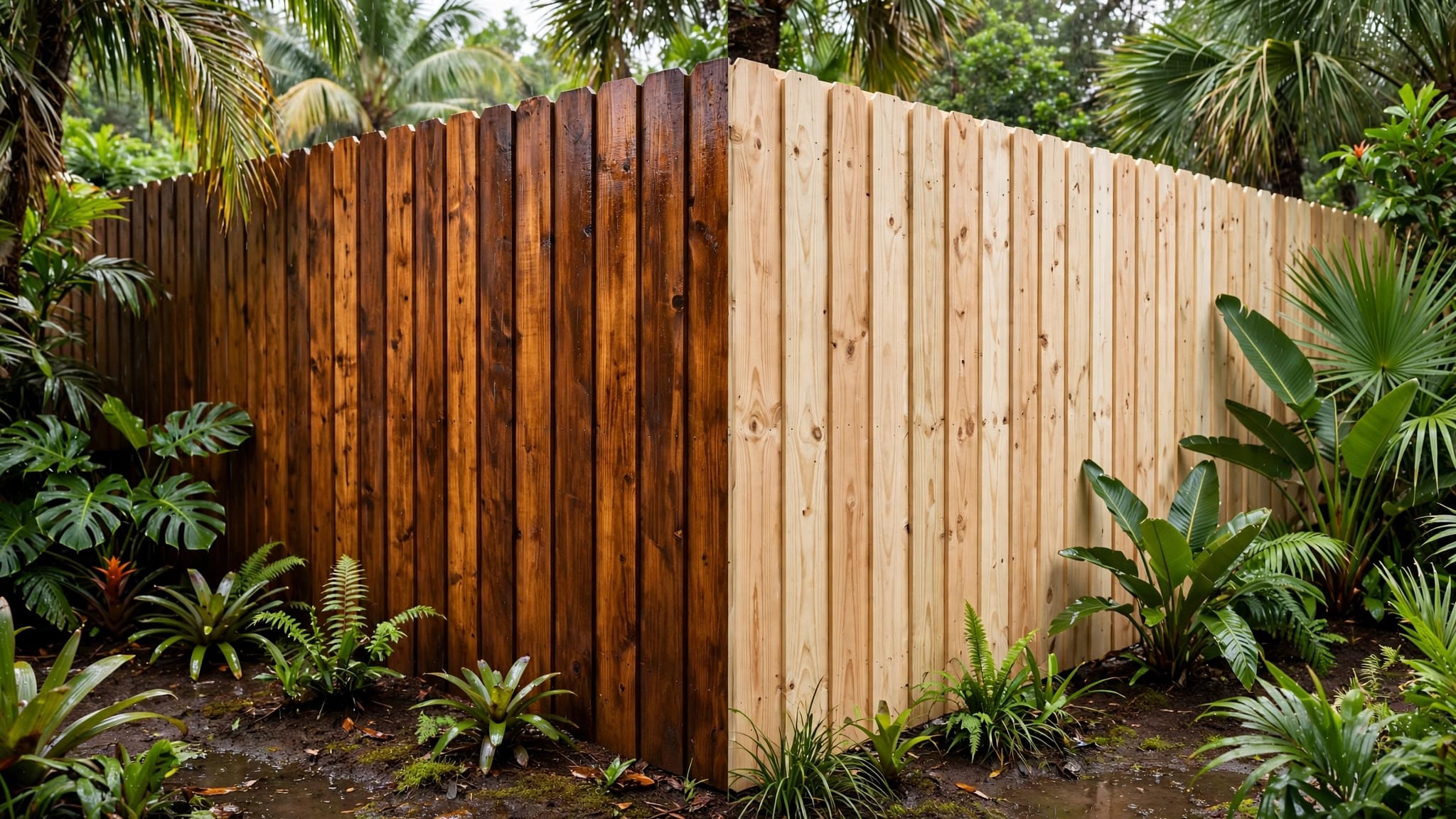
Solid vinyl or wood panels conceal bins well and can hide mismatched containers from nearby windows. However, a fully closed box may hold odors and moisture, especially when wet organic material sits inside.
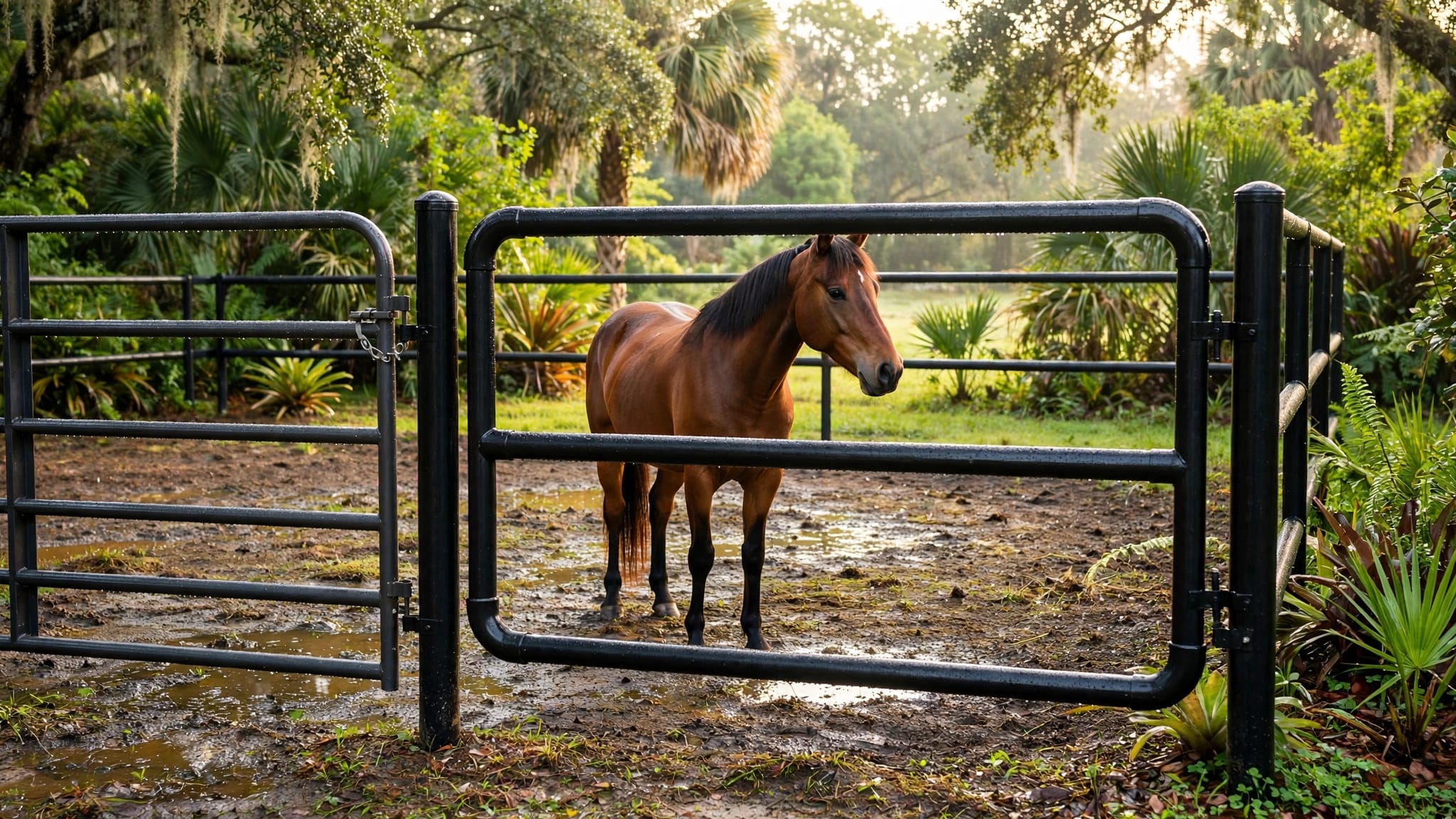
An open aluminum design allows more airflow and keeps the enclosure visually lighter. Decorative gaps can also make it easier to see whether a cart is full or whether the gate is open. If privacy matters most, use solid panels on the street-facing side and more open sections on the less visible sides.
Composite materials can provide a low-maintenance appearance, while wood allows custom sizing and easy style changes. Choose based on the existing fence, the amount of shade, and how often you want to clean or maintain the screen.
Use durable hardware
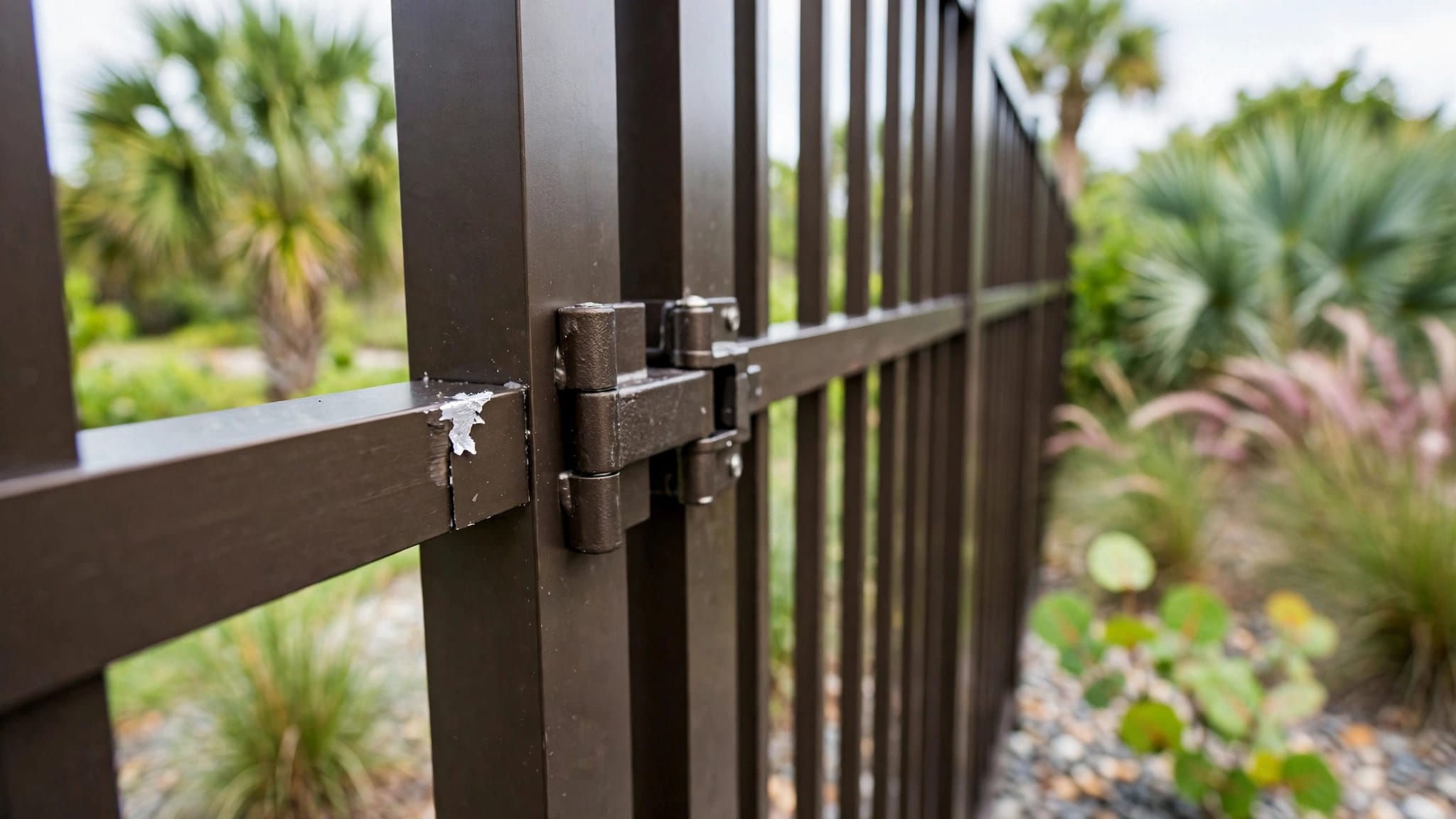
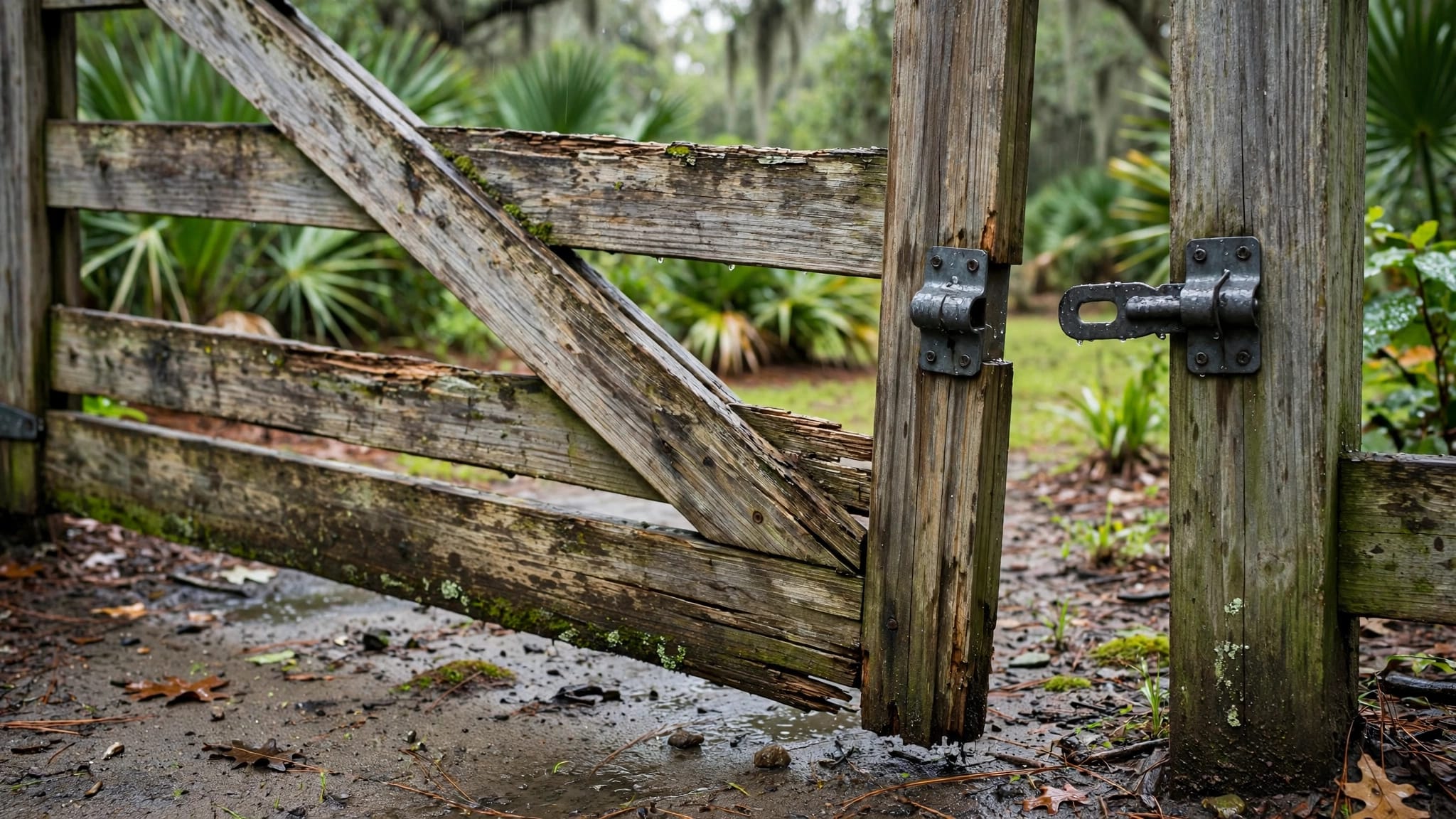
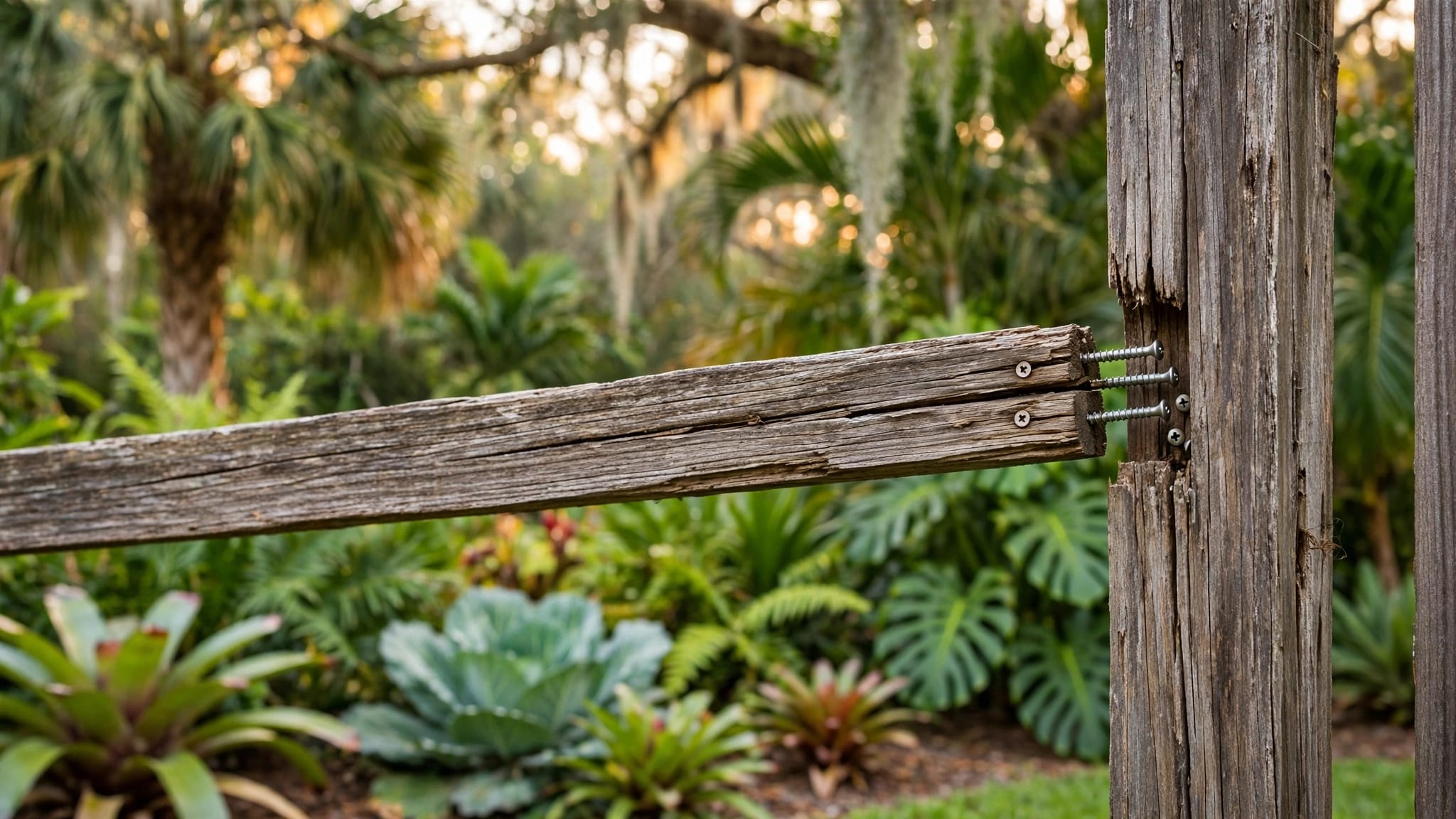
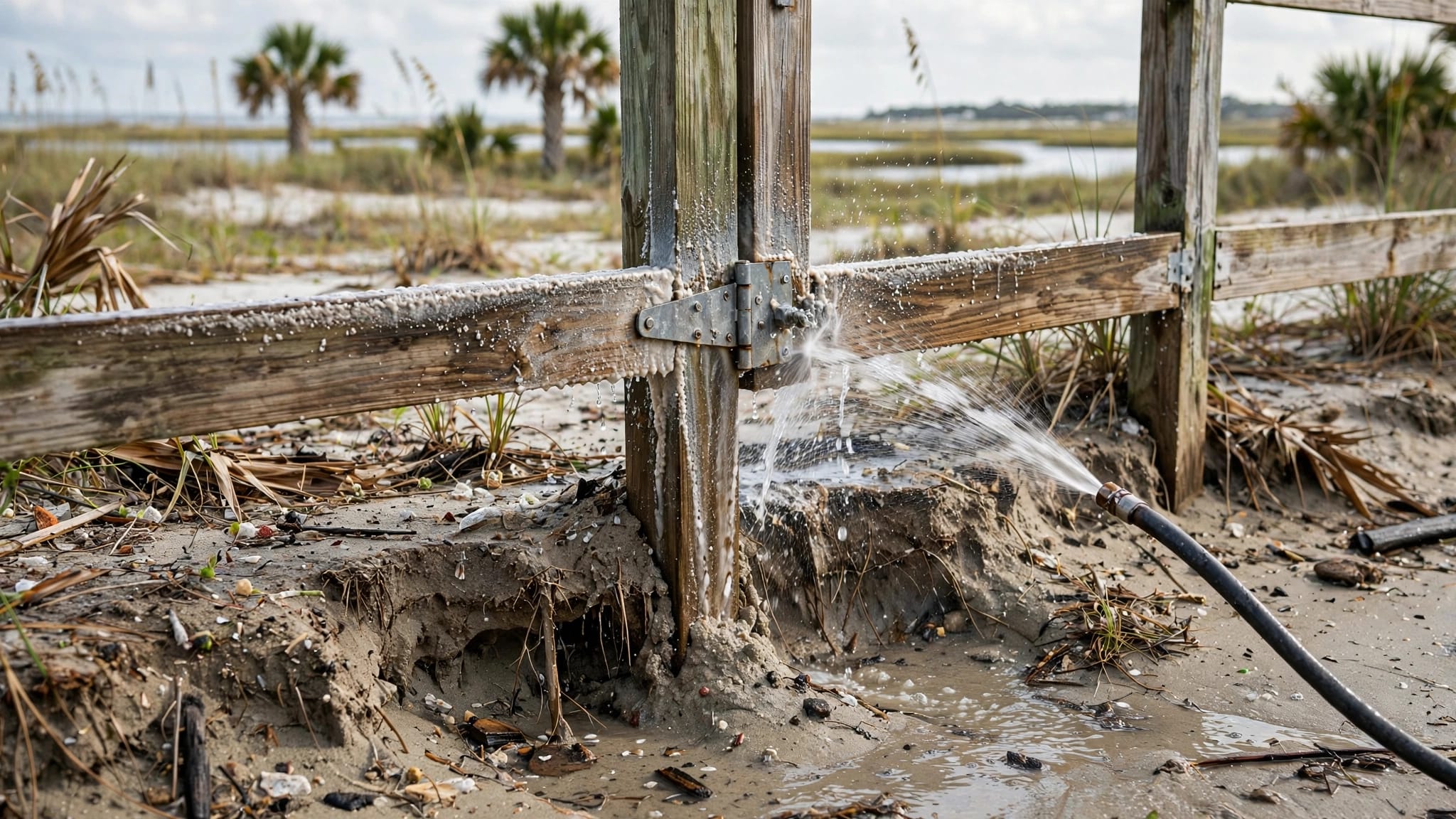
Outdoor hardware faces rain, humidity, heat, and salt air in many Southwest Florida locations. Use corrosion-resistant hinges, latches, screws, and brackets that fit the selected material.
The gate should open smoothly and latch securely without requiring excessive force. A latch positioned at a comfortable height makes daily use easier. Keep hardware away from spots where it can catch a bin handle or interfere with the lid.
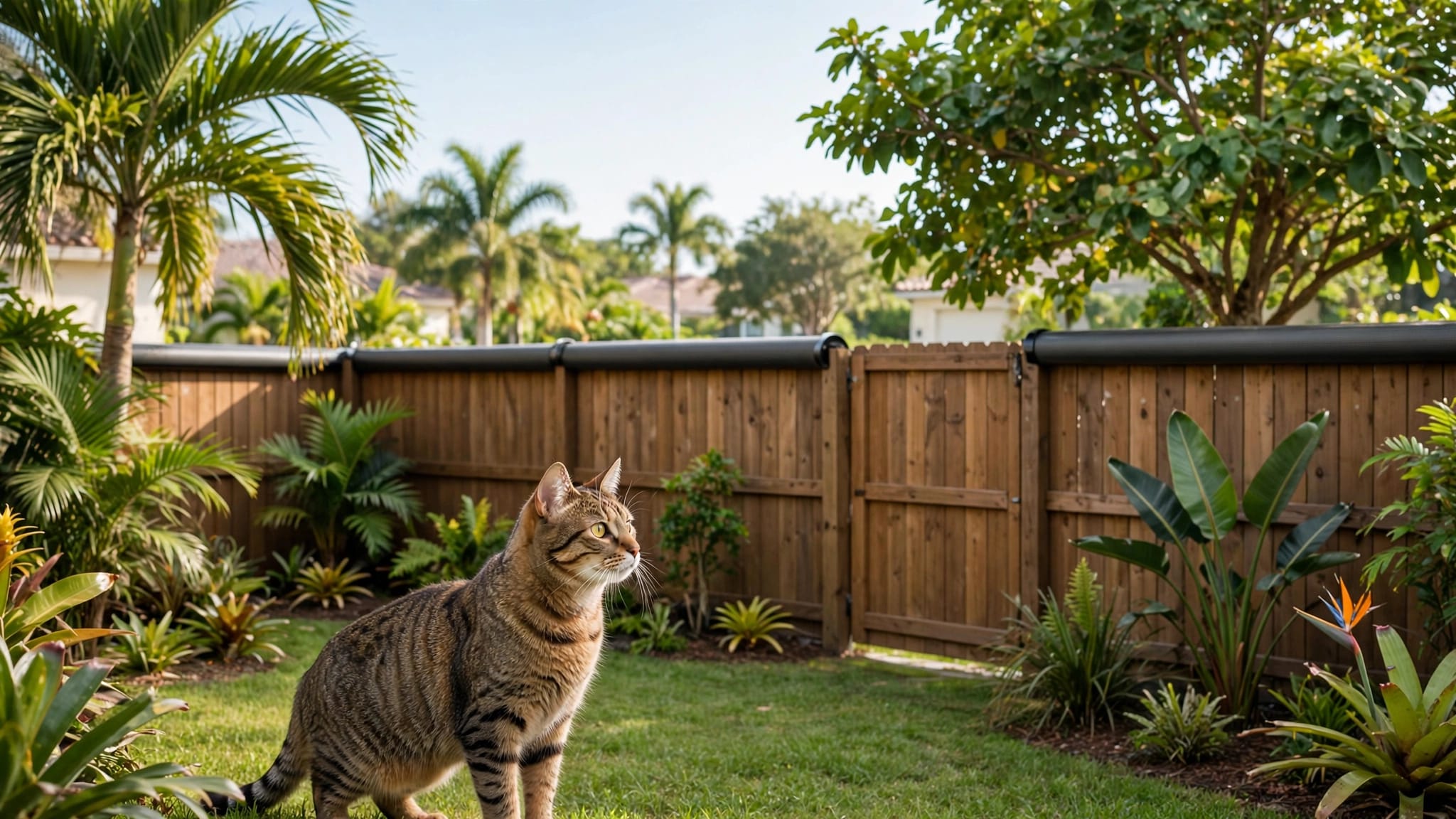
Leave enough clearance below the panels for normal drainage, but don't create a large gap that lets pets or pests get beneath the enclosure. The exact gap depends on the surface, grade, and design.
Plan the Gate Around Collection Day
A good enclosure disappears from view when closed but becomes easy to use when the bins need to leave. Test the gate before finalizing the layout.
Place and size the gate carefully
Put the gate on the side that gives the shortest, straightest route to the collection point. Don't place it where the open gate blocks a sidewalk, driveway, road edge, or access to a utility box.
A pedestrian-size gate may work for a single cart if the route is straight. Larger carts, multiple bins, or a tight turn may require a wider opening. Measure the actual route rather than selecting a gate based on appearance alone.
When possible, have the gate swing inward so it doesn't extend into a walking area. The final swing must still leave enough interior room for the bins and comply with local requirements.
Keep collection instructions visible
Some properties use different pickup days for trash, recycling, or yard waste. Store bins so each one can be identified and removed without moving the others.
On collection day, place carts at the required pickup location with handles and wheels facing the direction that makes removal easiest. Don't leave bags, hoses, planters, or vehicles across the route.
Check Placement and Permit Requirements
A small screen may have different requirements than a full fence, but you shouldn't assume every trash enclosure is exempt from permits. Rules can vary by city, county, zoning district, easement, HOA, and the enclosure's height and construction.
Charlotte County guidance includes a narrow exception for certain small garbage-container enclosures with three panels or fewer and one gate. Placement behind the front edge of the home and avoidance of easements also matter. These conditions aren't universal regulations across Southwest Florida, so check the rules for your property before installation. The Charlotte County fence permit requirements provide a useful starting point.
Mark property lines, easements, sidewalks, drainage features, and utility access before choosing the final location. If the enclosure connects to an existing fence, confirm that the new gate won't interfere with the main yard gate or required access.
A Practical Trash Bin Enclosure Starts With Access
The best enclosure hides containers without making them difficult to roll, clean, or collect. Measure your bins, plan the full travel route, and leave working room around the gate and lids.
Movable screens provide flexibility, while permanent vinyl, wood, aluminum, or composite structures offer a more integrated appearance. When the design fits your property and local requirements, collection day becomes a simple part of the routine instead of a daily obstacle.