Florida Mobile Home Fences: 2026 Rules for Homeowners
Planning for Florida mobile home fences in 2026 can look straightforward until the permit office, park manager, or property survey raises a different issue. Florida doesn't give every mobile-home lot one statewide fence height or permit rule. Ordinary fencing usually depends on the city or county, while pool barriers follow a statewide safety baseline.
Your lot may also have a lease, HOA documents, deed restrictions, utility easements, or drainage requirements. Before ordering materials, confirm the rules with the local building or zoning department, park management or HOA, and a current property survey. This guide covers the main issues that can prevent permit delays, boundary disputes, and costly changes.
What Florida mobile home fences must follow in 2026
Florida mobile home fences generally follow the same local zoning and permit rules as other residential fences. The sources reviewed for 2026 don't show a separate statewide fence-height standard that applies only because a home is mobile or manufactured.
The land arrangement often matters more than the home type. A homeowner who owns the lot may deal mainly with city or county rules. Someone in a mobile home park may need approval from the landowner or park manager before applying for a local permit.
Ordinary fences rely on local rules
Local governments usually control ordinary fence height, placement, setbacks, corner-lot visibility, and permit requirements. Rules can differ between Cape Coral, Fort Myers, Naples, unincorporated Collier County, and Charlotte County.
The Florida Building Code may also affect construction details, but it doesn't create one simple fence rule for every residential lot. Local zoning staff can tell you whether your project needs a building permit, zoning review, or both.
Pool barriers have a statewide safety baseline
Florida Statutes section 515.29 requires a residential swimming pool barrier to be at least 4 feet high , measured on the outside of the barrier. The barrier must prevent a child from crawling underneath, squeezing through openings, or climbing over it.
A fence, wall, dwelling wall, or qualifying aboveground pool structure may serve as the barrier. The design must block access to the pool, and permanent objects can't sit beside it in a way that creates an easy climbing route.
A four-foot fence is only the starting point for a pool barrier. Openings, gate hardware, latch height, and placement also affect compliance.
Local guidance commonly addresses self-closing and self-latching gates, mesh openings, and the location of the latch. A regular yard fence may not meet these pool safety requirements without changes.
When does a mobile-home fence need a permit?
Permit requirements depend on the local jurisdiction, fence type, location, and whether the fence is part of a pool barrier. A 2026 permit exemption based on project value may apply to certain single-family residential work under $7,500, but homeowners shouldn't assume every mobile-home fence qualifies.
The exemption language and local procedures matter. A low-cost fence can still face zoning restrictions, easement problems, park approval requirements, or a separate pool-barrier permit.
Ordinary fence permits vary by jurisdiction
In unincorporated Collier County, local guidance generally treats installing, replacing, or repairing a fence as permit work, regardless of material or project size. The county may request a survey or plat, site plan, fence height, material details, and gate information. Review the Collier County residential fence rules before scheduling construction.
Cape Coral and other cities may handle regular fence projects differently. A city employee can confirm whether your application goes through building services, zoning, or another review process.
The permit office may also ask for details about a corner lot, waterfront property, right-of-way, drainage area, or fence facing a street. These issues can matter even when the fence is short.
Pool-barrier permits receive separate treatment
Pool barriers often require a permit even where an ordinary yard fence might qualify for an exemption. Cape Coral announced that, effective March 1, 2026, it would require a separate permit for pool safety barriers, including fences and screen enclosures, rather than processing a prepaid barrier permit with the pool permit.
Cape Coral's residential barrier submittal can include a site plan, manufacturer specifications, hinge and latch specifications, and other project documents. Some applications may also require wildlife affidavits or open-mesh calculations.
Ask the building department whether your existing yard fence can form part of the pool barrier. If it can, the entire barrier line may need to meet the pool code, including sections that were originally built for privacy or pets.
Mobile home park and HOA approval can add rules
A city or county permit is only one approval. If your manufactured home sits in a leased community, the park may control fences through the lot lease, community handbook, architectural rules, or a separate approval form.
Park documents may address whether fences are allowed, the maximum height, approved colors, materials, finished side, gate location, maintenance, and the distance from roads or neighboring lots. Some communities also require the park to approve the contractor or inspect the work.
Ask park management before planning the layout
Request the current fence policy in writing. A rule from a neighbor's older installation may no longer be current, and another lot may have a different lease or site plan.
Give management a simple drawing that shows the lot, home, driveway, proposed fence, gates, and pool if one exists. Ask whether the fence can sit on the lot line or must stay inside it.
If the park owns the land, you may not have authority to place a fence in a shared access strip, utility area, or drainage easement. Park approval can address those concerns before you spend money on materials.
HOA approval and permits are separate
An HOA can reject a design that meets local code. A building department can also deny or delay a project that has HOA approval. Keep both approvals in your project file.
Review the HOA and local fence permit requirements for issues such as street-facing fences, colors, finished panels, corner lots, and product information.
Never treat a verbal statement from a board member or park employee as final approval. Written confirmation gives you a clear record if management changes later.
Surveys, property lines, and easements matter
Fence disputes often begin with an incorrect assumption about the boundary. The edge of a driveway, an old fence, or a tax map doesn't prove where your property line sits.
A permit application may show a proposed fence location, but the local government generally doesn't decide private ownership disputes for you. The person who owns the mobile home may also have different rights from the owner of the land.
Use a current survey before marking posts
Review your survey, deed, title documents, and park lot map. If you can't find a reliable survey, hire a licensed land surveyor to locate the boundary and visible monuments.
A property appraiser's parcel map can help identify a parcel, but it isn't a substitute for a boundary survey. Missing pins, unusual lot shapes, shared driveways, and waterfront edges deserve extra care.
Show the survey to the fence contractor before receiving a final layout. The proposed line should identify gates, corners, setbacks, easements, and any portion that borders a road or common area.
A permit doesn't settle a boundary dispute
A permit approves proposed construction under local code. It doesn't prove that the fence sits on your property.
Utility, drainage, access, road, and conservation easements can limit where you build. A fence placed inside an easement may later need to move, even if the application was approved.
If a neighbor disputes the line, pause the project. A written neighbor agreement may help with communication, but it can't override an easement, lease restriction, or local setback. Property-law questions belong with a qualified Florida attorney.
Height, front yards, and corner lots
Many Florida communities use a pattern of shorter street-facing fences and taller side or rear fences. A common local example is about 4 feet in a front yard and up to 6 feet in side or rear areas, but that isn't a statewide rule.
The permitted height may also depend on whether the fence is solid, open, decorative, chain link, or part of a pool barrier. Measure it using the method required by the local code, especially when the ground slopes.
Yard location can change the allowed height
In Fort Myers, 2026 city guidance commonly treats front-yard fencing more strictly than side and rear fencing. Chain link can also face restrictions near streets or in front yards. Review the Fort Myers fence permit guide for local placement issues.
Cape Coral, Naples, and county jurisdictions may use different definitions for front yards and setbacks. A fence beside your home may still count as street-facing fencing if your lot has an unusual orientation.
Park site plans can add another setback even when the city would allow the fence closer to the line. Get the local measurement requirements before choosing a 6-foot privacy design.
Corner lots need a sight-line review
Corner lots receive extra attention because fences can obstruct drivers' views. A local zoning department may require a clear sight triangle or reduce the allowed height near the intersection.
Don't assume that the side facing the second street is a rear or side yard. Submit the layout before installation, and show both street frontages, sidewalks, driveways, and the proposed gate.
For Port Charlotte and nearby areas, start with the Port Charlotte residential fence requirements, then confirm whether Charlotte County or another local authority controls your parcel.
Choosing materials for a Florida mobile-home lot
Florida law doesn't appear to ban a particular fence material just because the home is mobile or manufactured. Your park, HOA, zoning district, or permit reviewer may still limit the available choices.
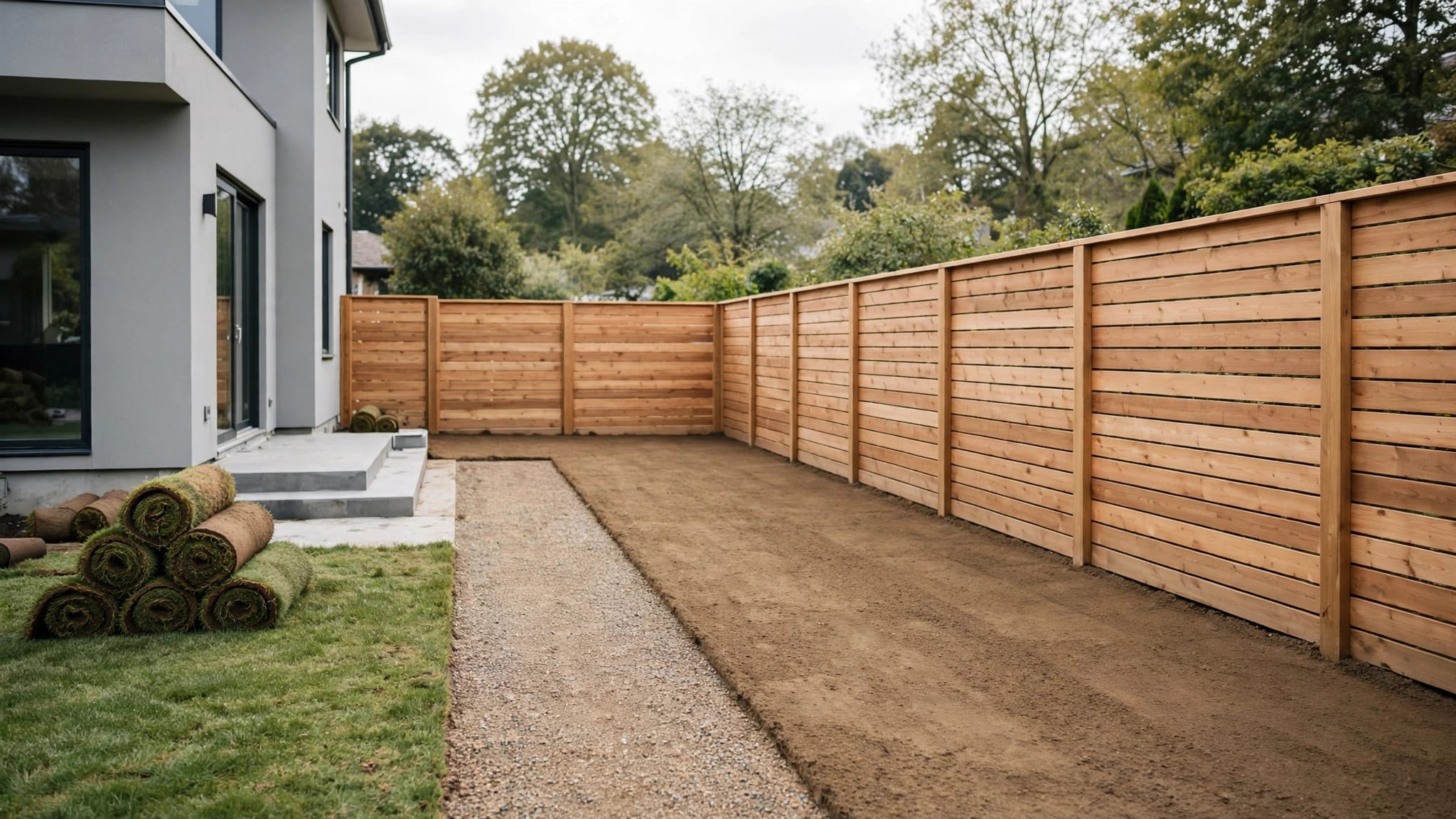
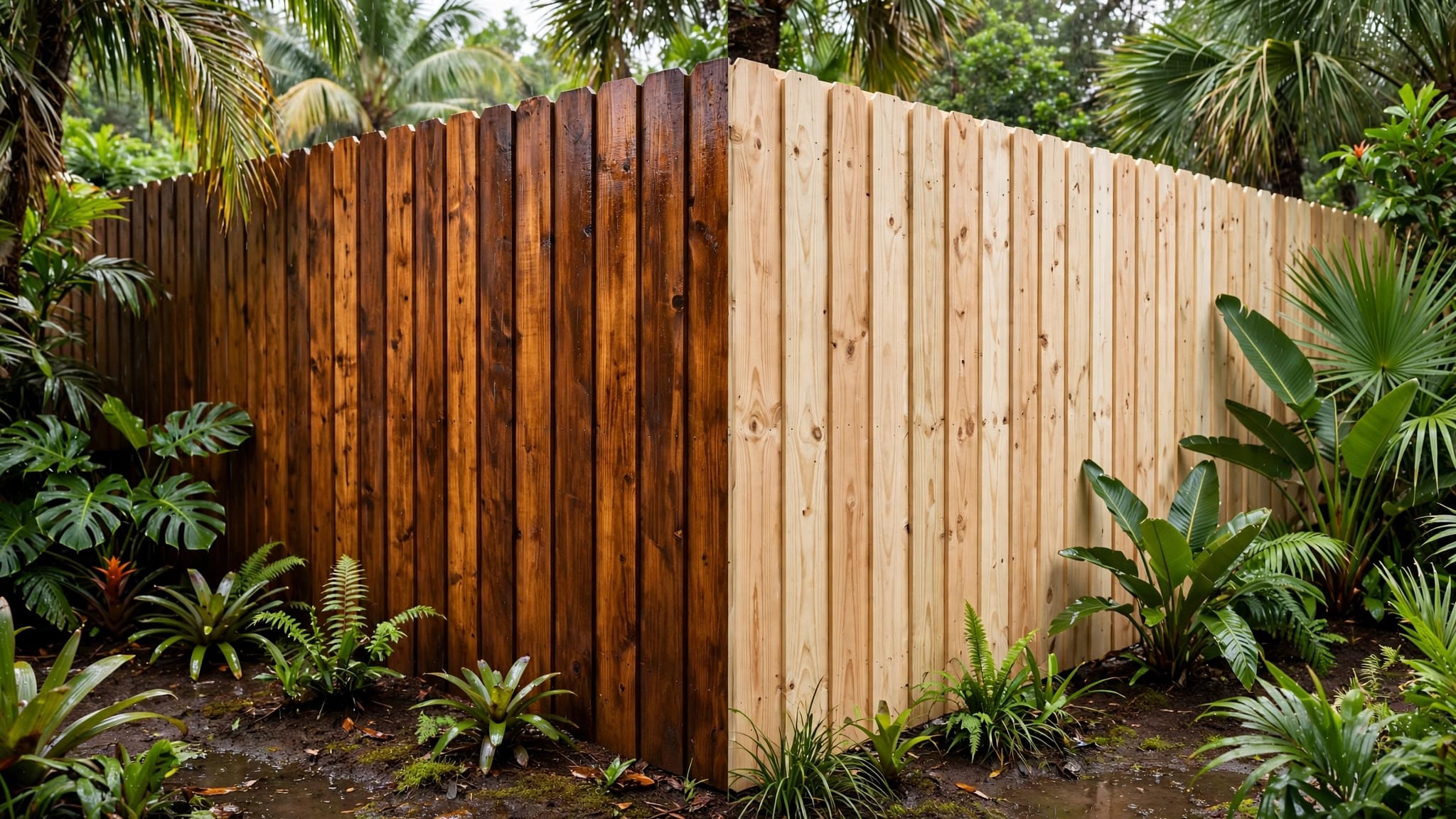
Vinyl offers a clean privacy option with little routine painting. Wood allows flexible styles and repairs, but it needs regular care in Florida's wet climate. Aluminum provides an open look that can suit street-facing areas, while chain link may work for pets or budget-focused enclosures where local rules allow it.
Match the material to the location
A solid privacy fence may face different front-yard or visibility rules than an open aluminum design. Chain link can also be restricted in some street-facing locations, even when it is allowed in a rear yard.
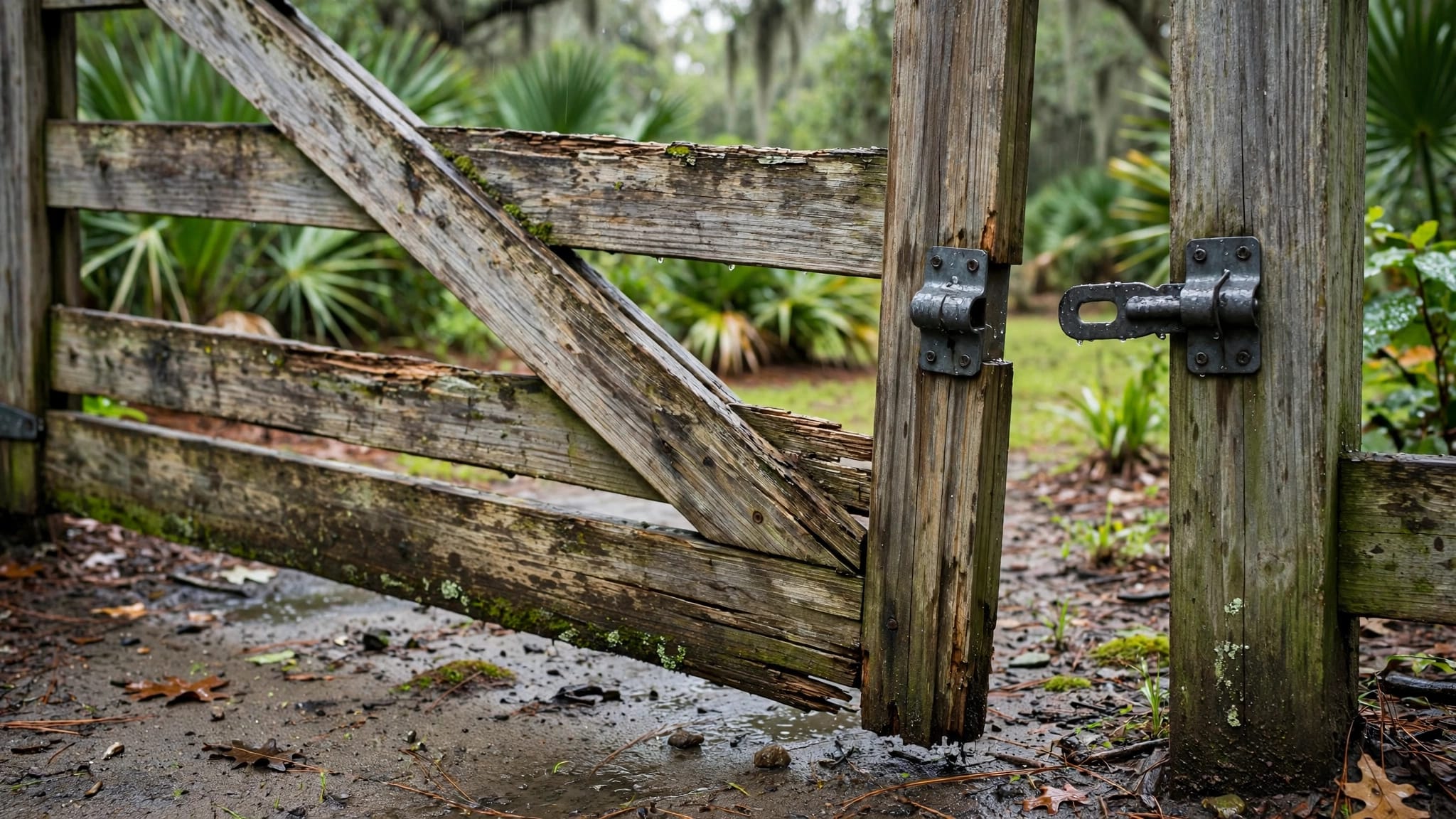
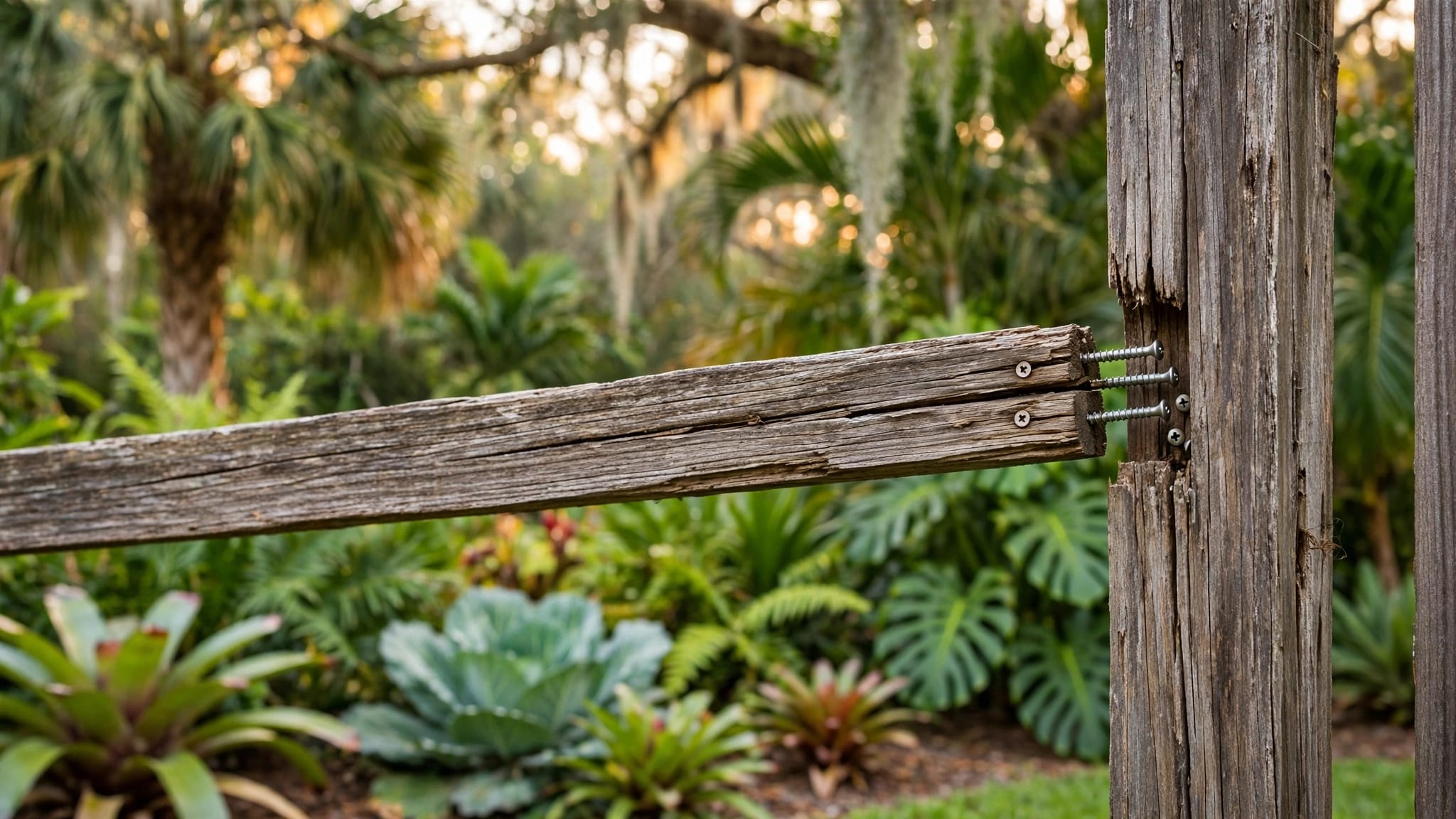
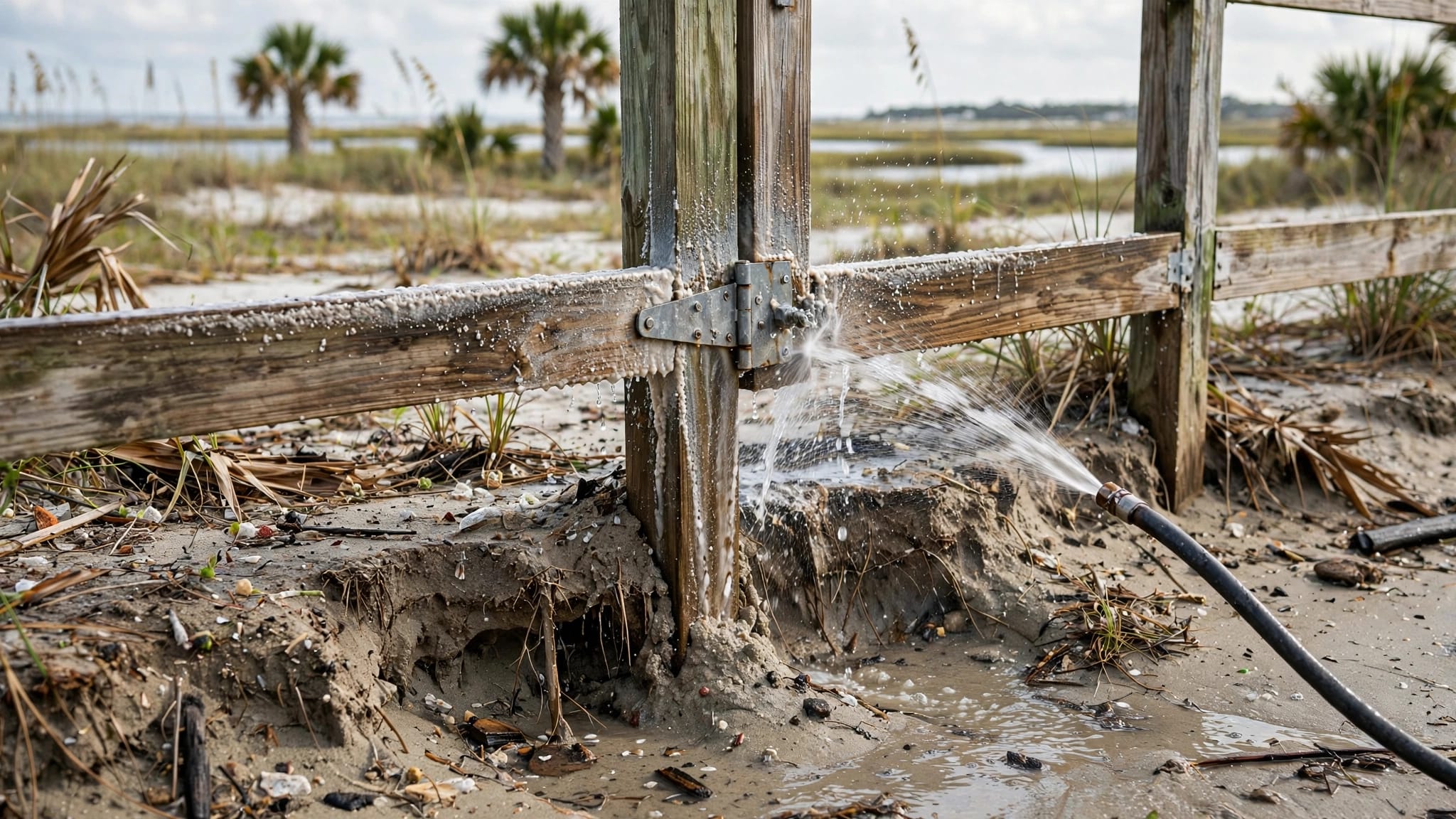
Coastal exposure, heavy rain, irrigation, and standing water can affect hardware and post life. Ask for corrosion-resistant hardware where appropriate, and confirm that the footing design matches the product specifications and local requirements.
A contractor should also check whether the fence could interfere with drainage swales, utility access, air-conditioning equipment, or park maintenance routes.
Gates require special attention
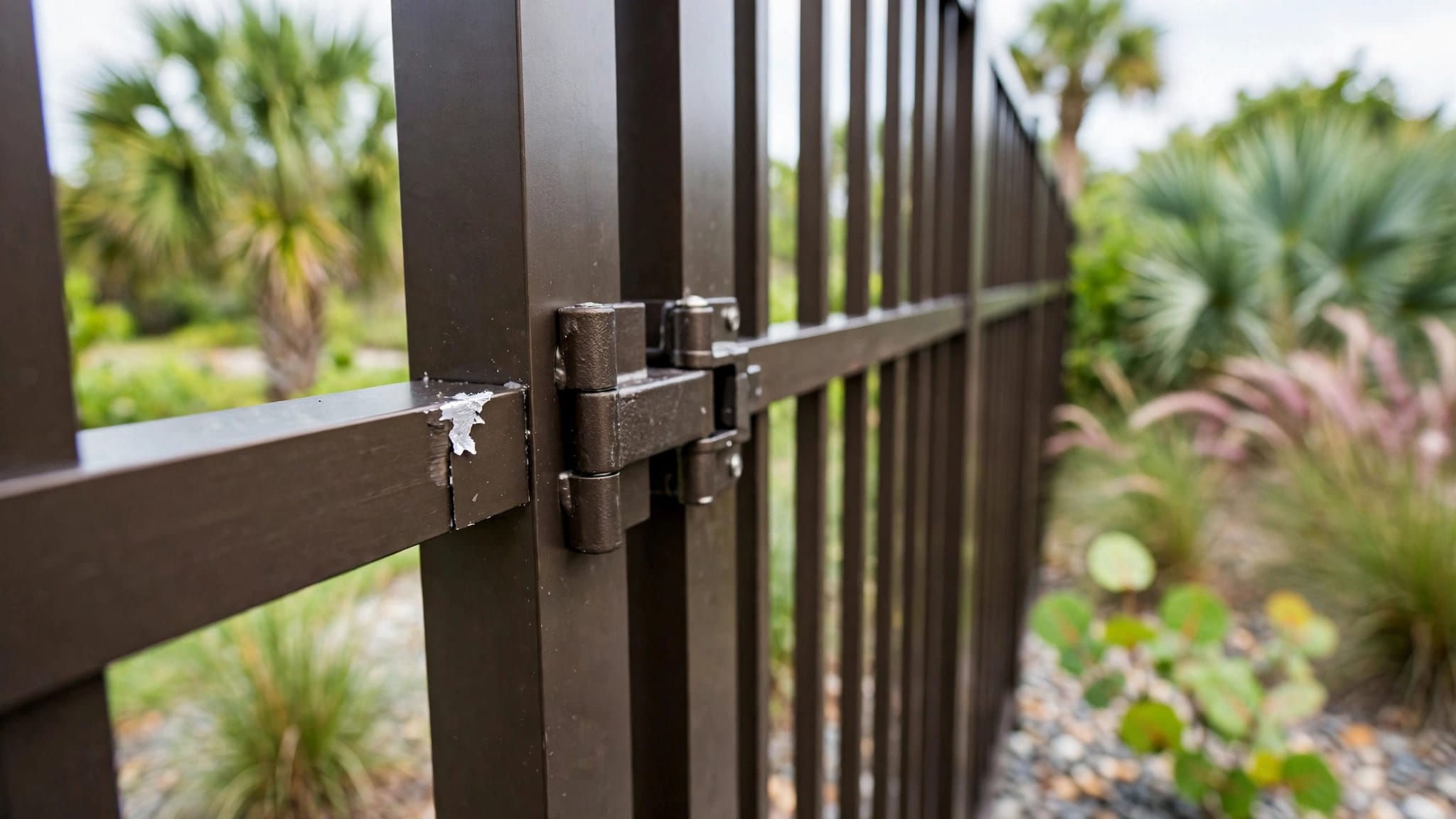
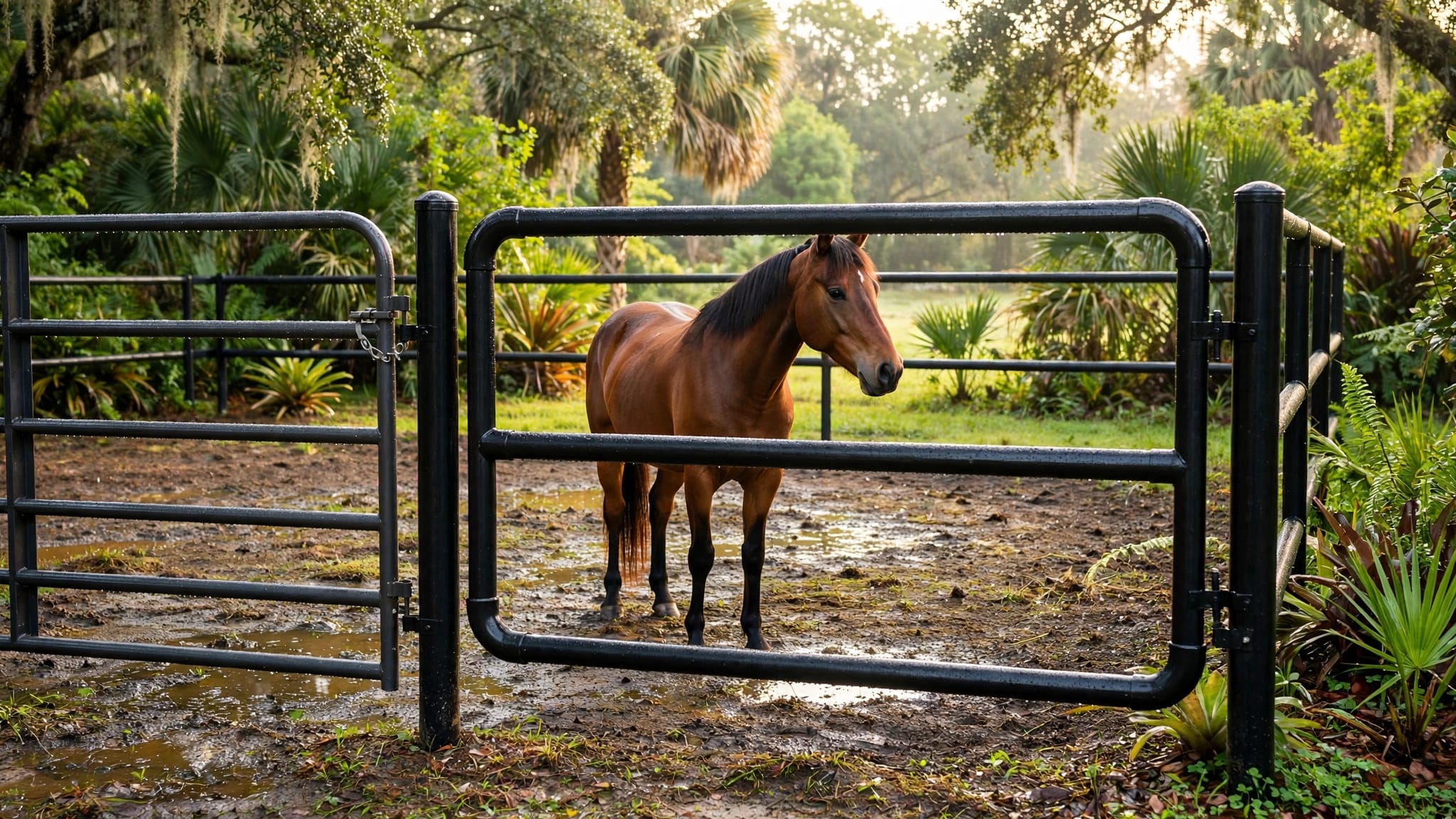
An ordinary yard gate must fit the approved layout and clear the driveway, sidewalk, and property line. A pool-barrier gate has stricter requirements, including self-closing and self-latching hardware under the applicable safety rules.
Cape Coral's 2026 barrier process asks for hinge and latch specifications. Local guidance commonly places the pool-side latch at least 54 inches above the bottom of the gate, although the exact review requirements depend on the barrier design.
Don't order a standard gate for a pool enclosure and assume the installer can adjust it later. Include the gate style, swing direction, latch, and clearances in the first plan.
A practical approval process before construction
A careful approval process can prevent most fence problems before the first post hole is dug.
Before you request a final quote
- Confirm the governing jurisdiction by checking whether the lot sits inside a city, unincorporated county area, or mobile home park with separate rules.
- Collect your survey, deed or title documents, lot lease, HOA rules, park handbook, and any existing pool or site plans.
- Ask the local building or zoning department whether the project needs a permit, zoning review, pool-barrier permit, or documentation under a current exemption.
- Give the contractor the survey and written community rules. Request a layout that shows height, material, gates, setbacks, easements, and street-facing sections.
Before construction begins
Obtain written park or HOA approval before buying panels. Apply for any required local permit before installation, and keep the approved plans available on site.
Call Sunshine 811 before digging so underground utility lines can be located. Have the installer confirm the post locations after the survey and approvals are complete.
After construction, save the permit, inspection record, product specifications, community approval, survey, and contractor agreement. These documents can help if you sell the home, replace a damaged section, or face a later question about the fence line.
Conclusion
Florida mobile home fences don't follow one universal 2026 rule. Ordinary fences depend on local zoning, permits, lot documents, and community policies, while pool barriers must meet Florida's 4-foot safety baseline plus local gate and opening requirements.
The safest sequence is straightforward: check the jurisdiction, read the lease or HOA rules, review a current survey, confirm permit requirements, and get written approvals before construction. With those details settled, your fence can provide privacy, security, or pool protection without creating a boundary or compliance problem later.