Accessible Fence Gates for Wheelchairs and Scooters in Florida
One tight turn or raised gate track can stop a wheelchair or mobility scooter before it reaches the patio, dock, or pool deck. The best accessible fence gates are planned around the entire approach, not only the gate panel.
In Florida, the right design depends on the property type, local rules, and whether the gate is part of a regulated pool barrier. Start with practical measurements and code questions before choosing material or hardware.
How Accessible Fence Gates Should Be Planned
A usable gate needs enough space for the mobility device, a firm approach, and hardware that the user can operate without excessive force. A wide opening alone won't solve problems caused by a steep grade or an awkward swing.
Measure the clear opening
Florida accessibility provisions use a 32-inch minimum clear opening for many accessible doorways and gates. Clear opening means the usable space at the narrowest point after accounting for posts, hinges, stops, latch hardware, and the gate's position.
A gate leaf advertised as 36 inches wide may provide less than 36 inches of passage after installation. For many residential projects, specifying about 36 inches of actual clear space gives a wheelchair or scooter more room to enter without scraping the frame. Larger scooters may need additional space, especially when the gate sits at an angle to the walkway.
Ask the contractor to write the finished clear opening into the proposal. Gate width alone doesn't tell you how much room you'll have.
Plan the approach and landing
The area before and after the gate should give the user room to line up, stop, reach the latch, and pass through. A wheelchair user shouldn't need to reverse into a fence just to pull the gate open.
Use a firm, stable surface near the opening. Concrete, pavers set evenly, or another smooth walking surface is usually easier than loose gravel, soft grass, or uneven shell. Keep the approach as level as the property and drainage plan allow, while avoiding a raised lip that catches small front wheels.
The swing also matters. A gate that opens into a narrow walkway can block the route or force a scooter into landscaping. If the property has limited room, a sliding pedestrian gate may work better, but its track and side clearance need careful planning.
Choose the Gate Style Around Daily Access
The best gate style depends on how people use the property. A backyard entry, pool enclosure, side yard, and driveway each create different access needs.
Single pedestrian gates for everyday entry
A single-swing pedestrian gate is often the simplest choice for a side yard or backyard path. It has fewer moving parts than a double gate, and the user can operate one leaf without coordinating two panels.
Choose a handle and latch that work with one hand and don't require a tight grip or twisting motion. Lever-style hardware is often easier than a small round knob. The exact hardware still depends on the fence style, security needs, and whether the gate is part of a pool barrier.
A self-closing mechanism can add resistance. That feature is necessary in some regulated locations, especially pool enclosures, but it may make an ordinary yard gate harder to use. Ask the installer to test the closing force with the wheelchair or scooter that will use the gate.
Double gates and sliding gates for scooters
Double gates create a wider opening for large mobility scooters, lawn equipment, and occasional deliveries. However, the center meeting point can introduce a raised bolt, uneven gap, or other obstruction. Use flush hardware where possible, and make sure both leaves stay aligned.
For frequent scooter access, one wider single gate may be easier than a double gate. The user doesn't have to open two panels or manage a center latch.
Sliding gates avoid a swing arc, which helps on narrow walkways. Still, a bottom track across the passage can create a bump or trip point. Side space is also necessary for the gate to move fully open. A contractor should review the wall, fence line, utility locations, and turning area before recommending this style.
Vehicle gates should not be the default solution for pedestrian access. Driveway openings may require a longer route, automatic equipment, or interaction with moving vehicles. A separate pedestrian gate is usually safer and easier to use when the property layout allows it.
Florida Accessibility Rules Depend on the Property
Accessibility measurements don't apply to every Florida residential fence in the same way. A private backyard gate isn't automatically treated like an entrance at a public facility.
The Florida Building Code, federal accessibility rules, local amendments, property use, and the scope of construction can all affect the answer. General design advice shouldn't replace a review by the local building department.
Private homes and managed properties
A typical single-family home may not have the same accessibility obligations as a public accommodation. Even so, homeowners often choose accessible fence gates because a family member, guest, caregiver, or future resident uses a wheelchair or mobility scooter.
Property managers need to look more closely at shared routes. A gate leading to a common pool, clubhouse, shared sidewalk, or multifamily amenity may fall under different requirements than a gate serving one private backyard.
For an accessible route in a regulated setting, common Florida code benchmarks include:
- A 36-inch minimum clear width for much of the accessible route.
- A 32-inch minimum clear opening at the narrowest point of a doorway or gate.
- A threshold no higher than 1/2 inch for many exterior doors.
- Operable hardware positioned between 34 and 48 inches above the finished floor or ground.
These figures are useful when discussing a project with a contractor, but they aren't universal legal requirements for every home fence.
Put the details in the plan
A good fence plan should show the gate location, clear opening, swing direction, surface grade, latch position, and relationship to sidewalks or structures. If the gate is near a pool, the plan should also show barrier height, openings, self-closing hardware, and latch details.
Tell the contractor who will use the gate and what device they operate. A compact manual wheelchair, power chair, and mobility scooter can require different approach space. Measurements made before installation reduce the chance of discovering a clearance problem after the posts are set.
Pool Gates Need a Separate Safety Plan
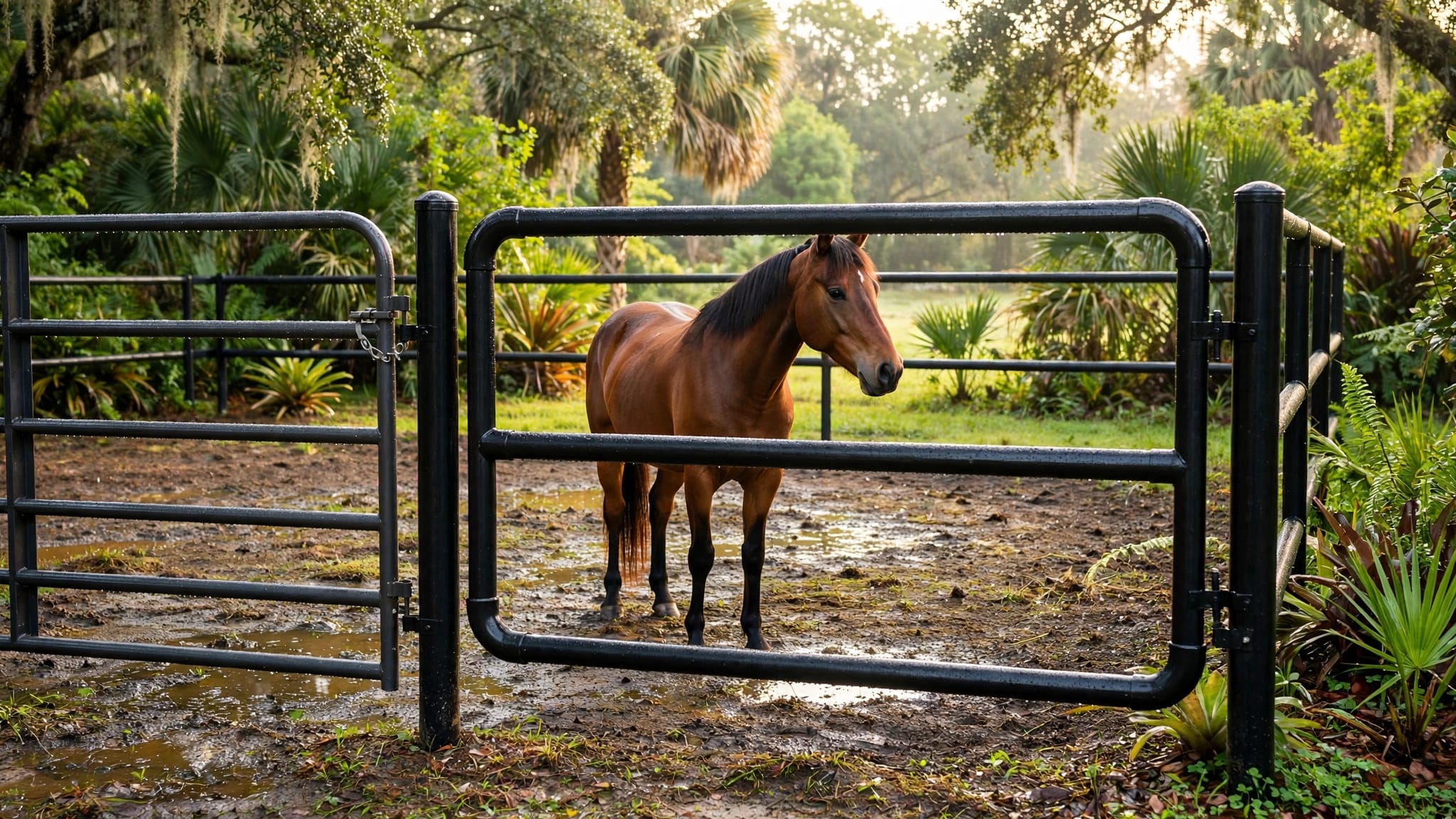
Pool enclosures are the clearest example of why accessibility and code compliance must be considered together. A pool gate has child-safety requirements that may conflict with ordinary convenience features.
Florida pool barrier rules
Florida Statutes Section 515.29 provides a statewide baseline for residential swimming pool barriers. A barrier generally must be at least 4 feet high on the outside , and a gate providing access to the pool must open outward, away from the water.
Pool gates also need a self-closing and self-latching locking device. The latch release must be positioned or protected so a young child can't reach it from outside the barrier. Florida guidance commonly references a 54-inch latch height when the release isn't otherwise protected.
Pool barriers also need openings and components that don't provide an easy climbing route. Decorative rails, horizontal members, nearby furniture, and wide gaps can create problems even when the gate looks attractive.
A screened pool enclosure doesn't automatically answer every barrier question. Homeowners should check whether a screened pool needs a separate fence and confirm the current requirements with the authority reviewing the permit.
Balance mobility access with child safety
A pool gate can have a wide clear opening and a level approach while still using child-resistant hardware. However, lowering a latch or changing the swing direction for convenience can make the barrier noncompliant.
A 36-inch opening doesn't make a pool gate compliant by itself. The barrier height, swing, latch, self-closing action, openings, and surrounding features also matter.
The gate should close and latch reliably without slamming. Adjustable hinges and closers can help the installer set appropriate operation, but the final hardware must still meet pool-barrier rules. Test the completed gate with the intended mobility device, then have the building department or pool-barrier inspector review the installation when required.
For Cape Coral projects, this guide to Cape Coral pool fence rules for 2026 covers common concerns around height, gate swing, latches, and self-closing operation. Local requirements can differ in other cities and counties.
Select Materials That Fit Southwest Florida
Southwest Florida gates face intense sun, humidity, heavy rain, salt air near the coast, and wind exposure. Those conditions affect both the gate panel and the hardware that keeps it aligned.
Aluminum and vinyl options
Powder-coated aluminum is a common choice for accessible fence gates because it resists rot and rust better than unprotected steel. Its lighter weight can also make a properly sized gate easier to operate. Open aluminum styles provide visibility around a pool or walkway, while decorative designs can add privacy without fully blocking airflow.
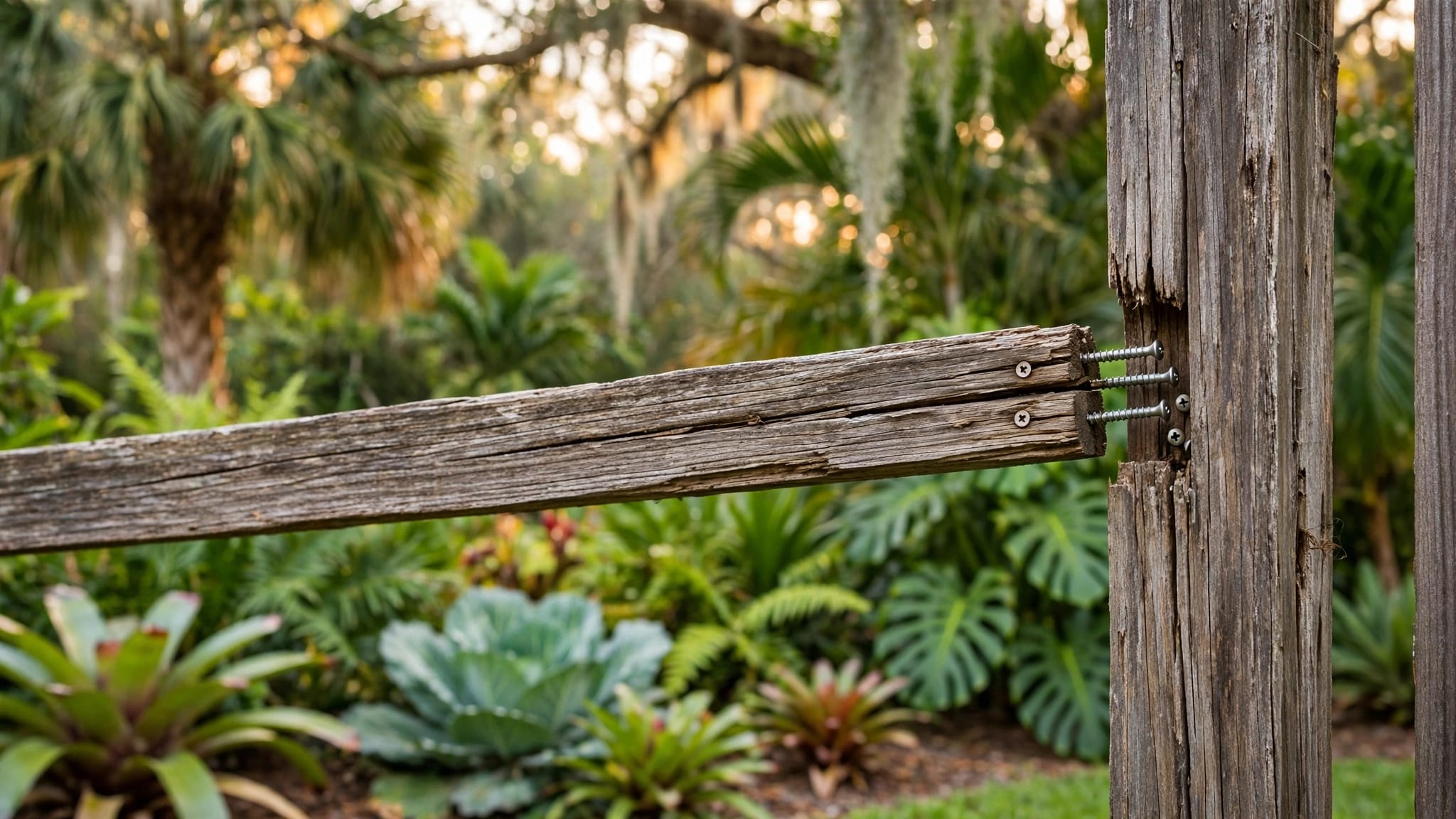
Wide aluminum gates still need strong posts and properly sized hinges. A light panel doesn't help if the post shifts or the hinges sag.
Vinyl works well for homeowners who want privacy and low routine maintenance. It doesn't rust, but wide or heavy panels need reinforced posts and reliable hardware. Heat, wind, and repeated use can affect alignment, so the frame and hinge system matter as much as the vinyl panel.
Wood, chain link, and gate hardware
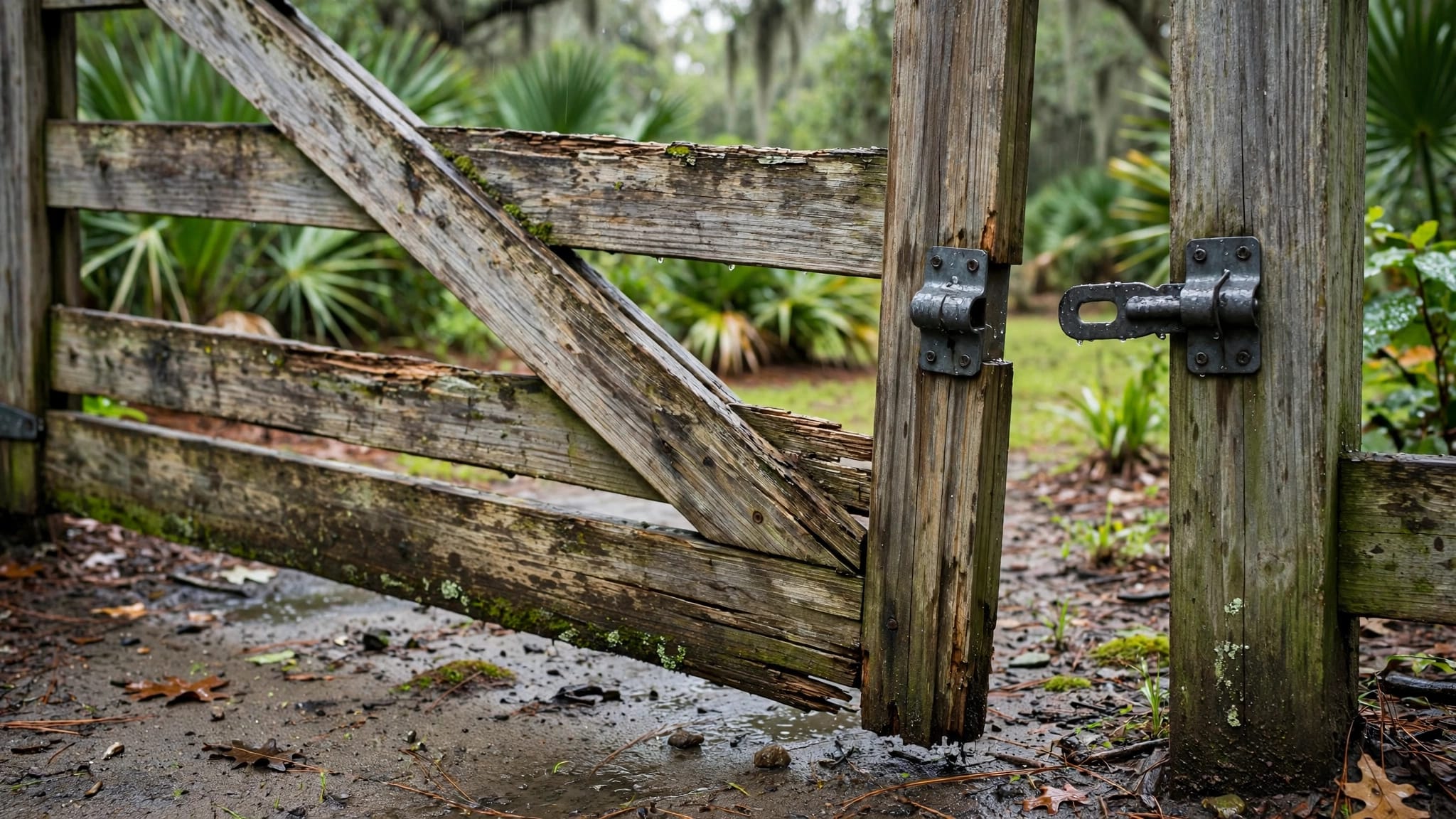
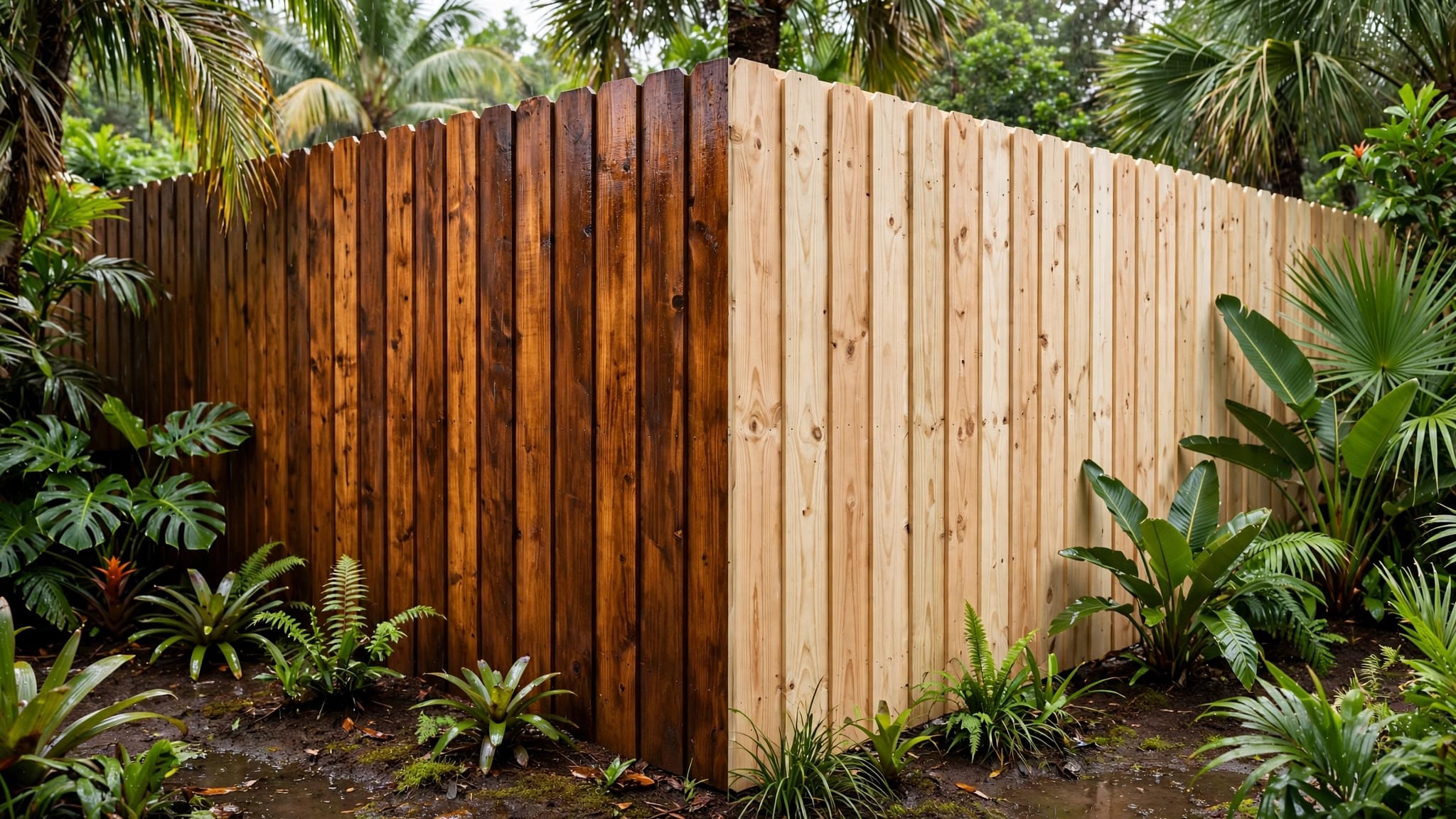
Wood provides flexible styling and can match existing fences, but moisture changes can affect its weight and alignment. A heavy wood gate may require more effort to open, particularly after rain or when hinges begin to bind.
Chain link is functional and often lightweight, though it offers less privacy. It can work well for side yards, utility areas, and service access when the surrounding route is smooth.
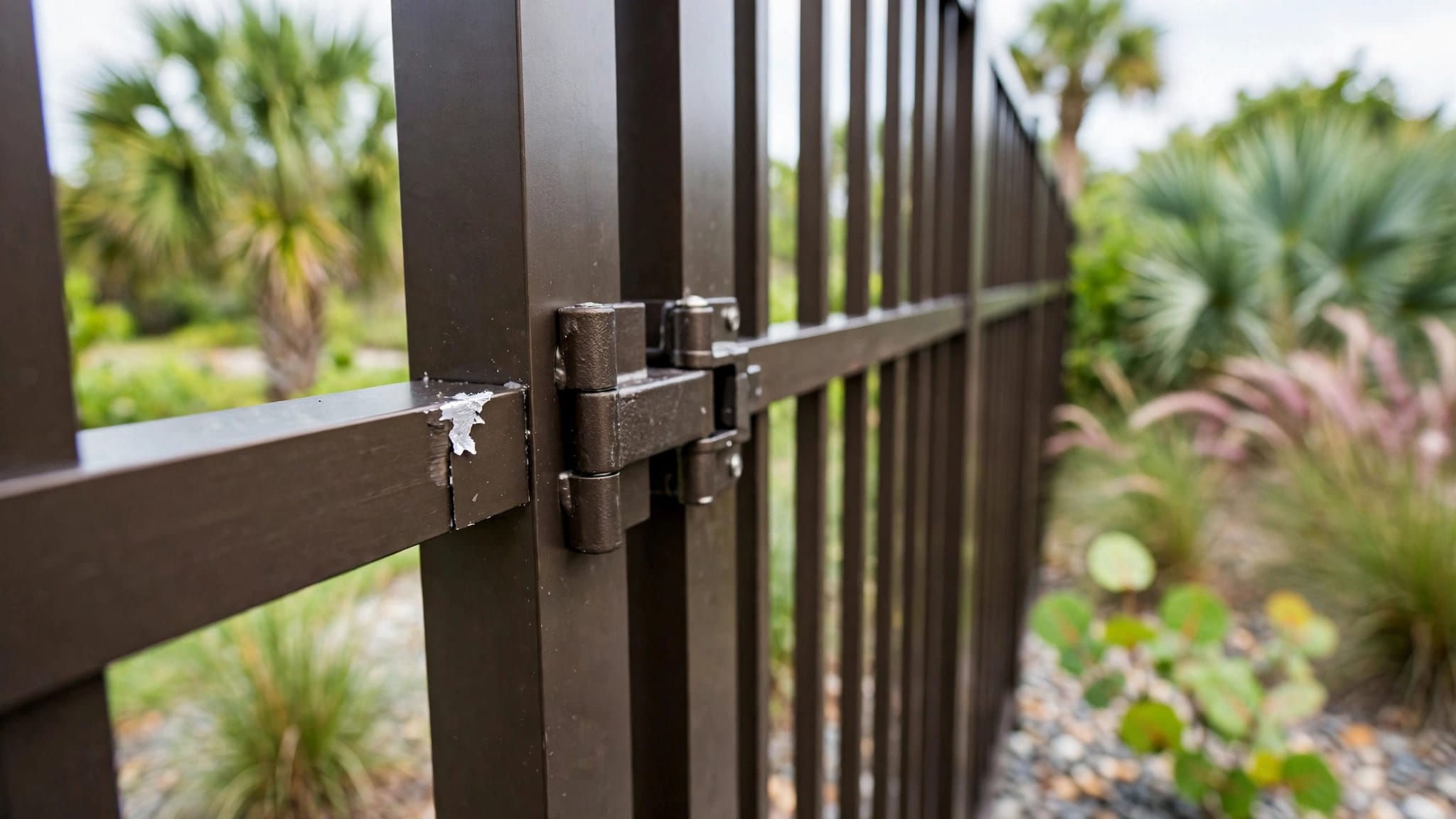
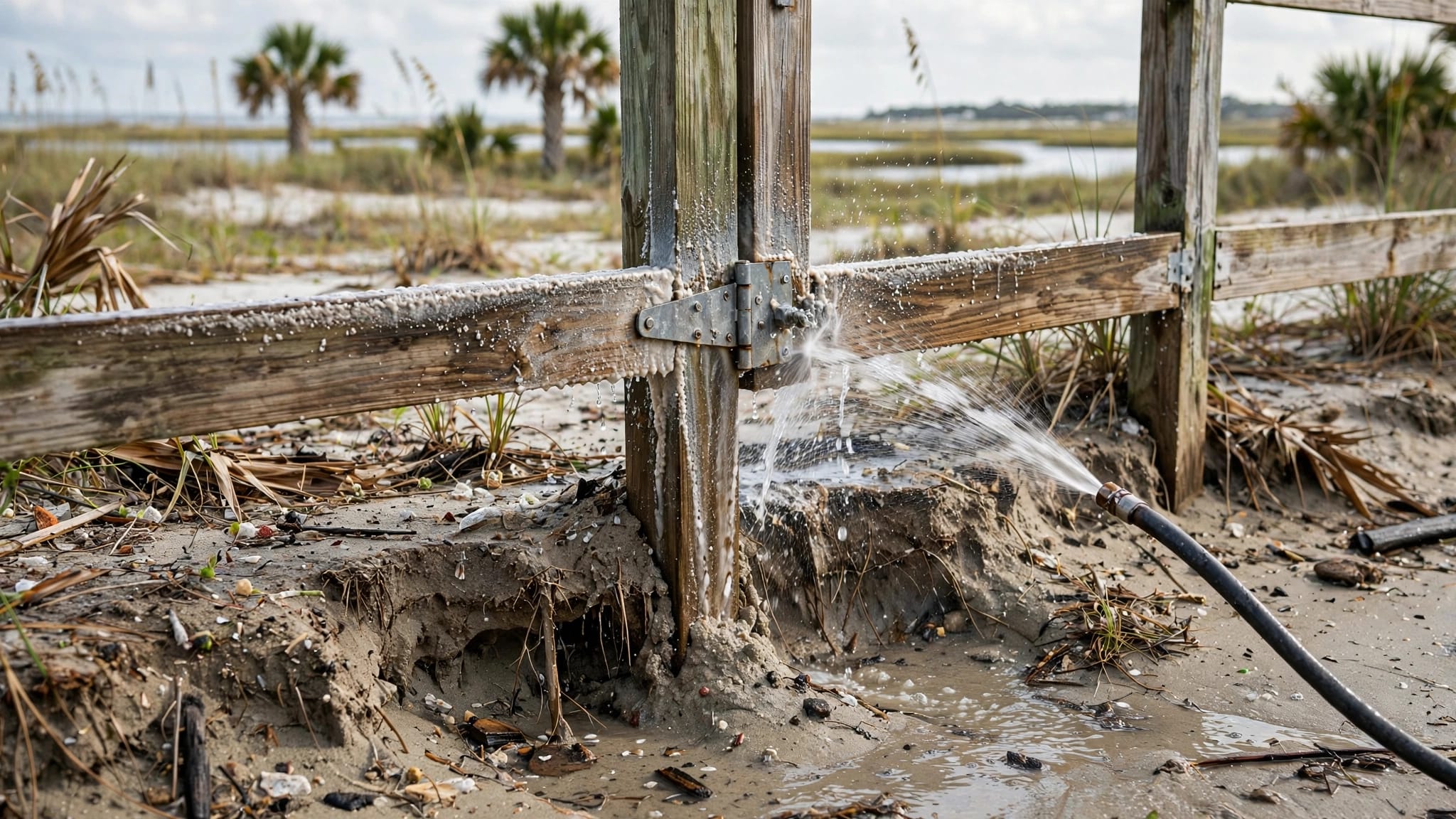
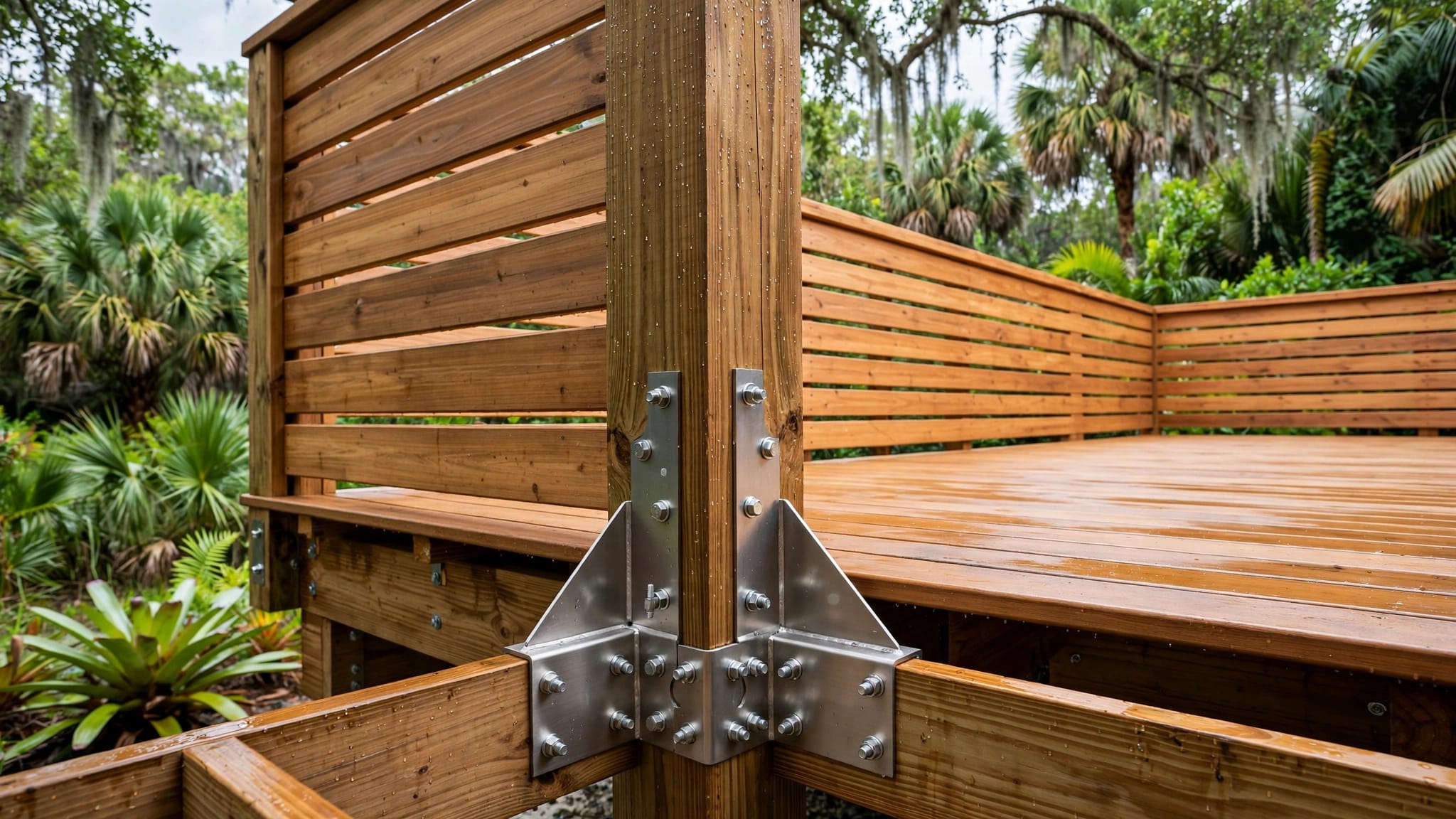
Hardware deserves as much attention as the fence material. Use corrosion-resistant hinges, fasteners, springs, and latches suited to Florida conditions. Stainless steel hardware can be a useful choice near salt air, while high-quality coated hardware may fit other budgets and locations.
Ask how the installer will handle drainage, post depth, wind exposure, and future hinge adjustment. A gate that is easy to use on installation day should remain aligned through normal weather and maintenance.
Plan the Project With Local Rules in Mind
Fence and gate requirements vary across Florida. The city or county may regulate height, placement, setbacks, easements, right-of-way areas, pool barriers, and permits.
Confirm permits and property rules
A new fence with a gate, a replacement gate, a pool enclosure, an automatic gate, or a driveway gate may receive different permit treatment. HOA or condominium rules can add design restrictions even when the local building department allows the project.
Cape Coral homeowners can review this Cape Coral fence permit checklist before finalizing the layout. Homeowners in Collier County can also review current Collier County fence permit requirements.
Permit information changes, and neighboring jurisdictions may use different procedures. Verify the current requirements with the relevant city or county building department, especially when the gate is part of a regulated pool barrier or sits near an easement.
Use a practical site checklist
Before requesting an estimate, gather the details that affect the gate:
- Measure the wheelchair or mobility scooter width, including mirrors, armrests, or controls that extend beyond the seat.
- Identify the main route and decide whether the user approaches straight on or at an angle.
- Note slopes, drainage channels, steps, pavers, loose gravel, landscaping, and other obstacles.
- Decide whether the gate needs to swing, slide, self-close, or remain open during regular use.
- Ask for the finished clear opening, threshold detail, latch location, and swing direction in writing.
- Confirm who handles permits, inspections, utility checks, and HOA approval.
A local fence contractor can measure the site and point out conflicts before installation begins. The final choice should match the user's equipment, the fence purpose, the Florida climate, and the rules for that property.
Conclusion
Accessible fence gates work best when the entire route is usable. Start with the finished clear opening, then review the approach surface, turning space, swing, latch, closing force, posts, and hardware.
Private residential gates and regulated commercial routes may follow different accessibility rules. Pool gates have additional child-safety requirements, including outward swing, self-closing action, self-latching hardware, and a 48-inch barrier baseline. When those rules apply, confirm the design with the local building department before work begins.
A well-planned gate removes an everyday obstacle without creating a permit or safety problem. For Florida properties, careful measurements and climate-ready hardware are the foundation of reliable access.