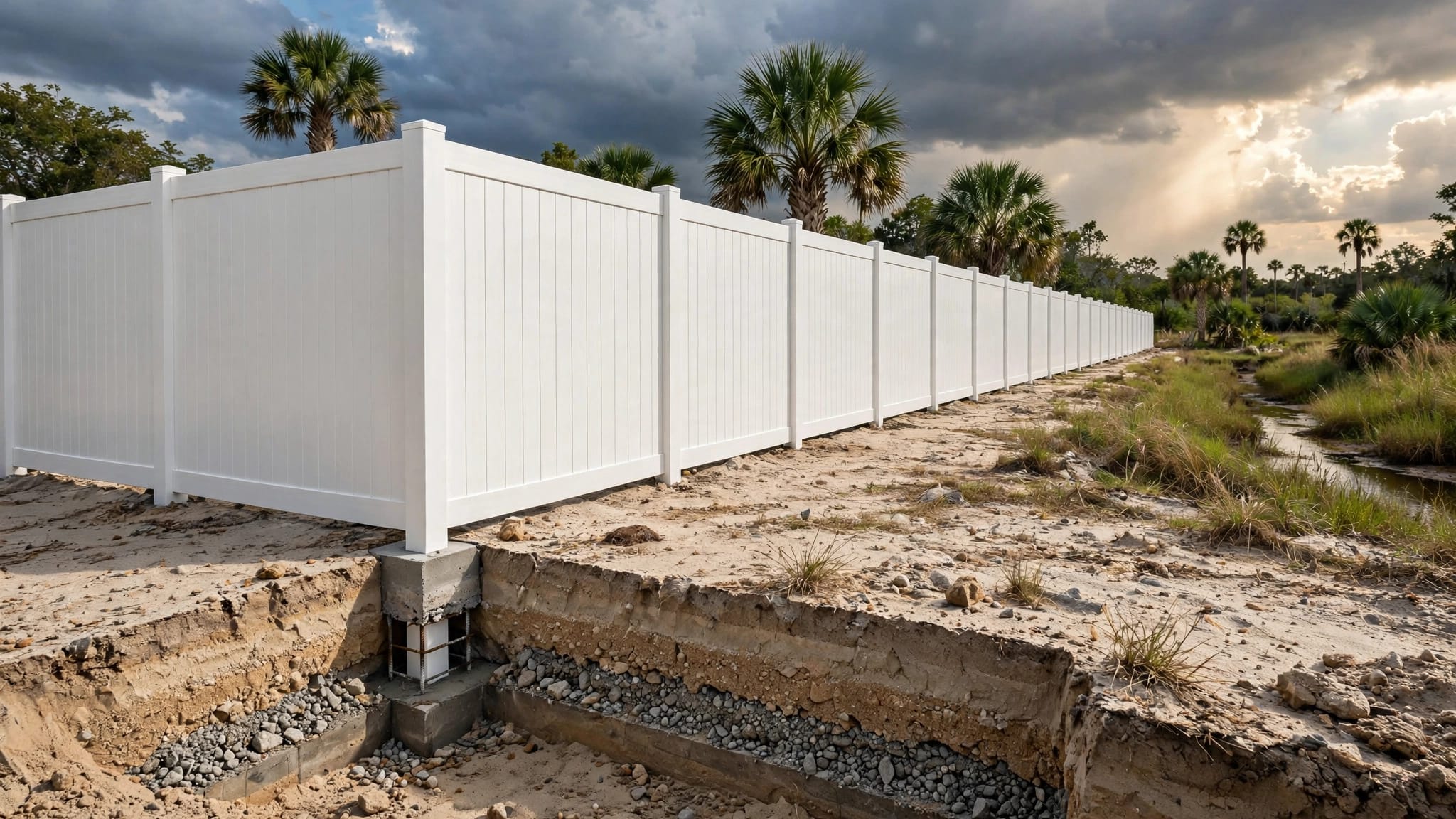
South Venice Fence Permit Guide for 2026 Homeowners
A new fence looks simple until the permit question lands on your lap. In South Venice, that question depends on your parcel, flood zone, HOA, and where the fence sits on the lot.
That means the same backyard design can sail through one street and stall on another. Before you spend on posts and panels, check the current South Venice fence permit rules for 2026 and confirm them with the local permitting office.
Start with the office that reviews your address, then move through the documents and site details.
Who reviews a South Venice fence permit?
Your permit office depends on your exact address. Some South Venice properties fall inside the City of Venice, while others sit in unincorporated Sarasota County. The neighborhood name alone does not decide it.
That matters because each office can ask for different forms, drawing details, and review steps. Flood zones add another layer. HOA rules do too.
South Venice also has many low-lying lots and canal-adjacent areas, so flood hazard review can change what looks like a simple fence job. A project that seems routine on paper may still need full review.
A new Florida law set to begin July 1, 2026, may exempt some non-structural fence projects under $7,500. That does not help if the property is in a flood hazard area, if an HOA requires approval, or if the fence is for a pool.
Your address matters more than the neighborhood name. The permit office decides based on the parcel, not the street sign.
Before you buy materials, confirm three things. First, who reviews the permit. Second, whether the lot is in a flood zone. Third, whether the HOA has written fence rules. A quick call now can save a week of back-and-forth later.
When a fence permit is likely needed in 2026
Not every fence project gets treated the same way. The table below shows common South Venice situations and the usual permit question that comes with each one.
| Situation | Likely permit result | What to verify first |
|---|---|---|
| New fence in a flood hazard area | A permit is likely required | Flood zone status and local review office |
| Pool fence | Permit and inspection are likely required | Pool barrier rules and gate hardware |
| Project over $7,500 after July 1, 2026 | A permit may still be needed | Whether your property qualifies for any state exemption |
| Replacement in the exact same spot, same height, same material | A permit may not be needed | Whether the city or county treats it as a true replacement |
| Fence near an easement or utility line | Review can slow down or change | Survey, easement map, and utility marks |
The big lesson is simple. A neighbor's fence experience does not guarantee the same answer for your lot. Two homes on the same block can have different flood maps, easements, or HOA rules.
Height still matters too. Backyard fences are often limited to around 6 feet, while front yard fences are often limited to 3 to 4 feet. Those are common limits, not a promise. Always confirm the current height rules before you order panels or schedule installation.
If you are replacing an old fence, pay close attention to the details. Moving the line, changing the height, or switching materials can turn a repair into a new permit application.
The paperwork that speeds up approval
Good paperwork keeps the process moving. A clean application is easier to review, and it gives the office less reason to send it back.
Start with your property details. Then gather the items the reviewer needs to see on one page.
- Confirm the correct jurisdiction.
- Check flood zone status and HOA rules.
- Pull your survey or plat map.
- Mark the fence line, height, material, gates, and setbacks on the drawing.
- Note easements and known utility locations.
- Submit the application, pay the fee, and wait for written approval before work starts.
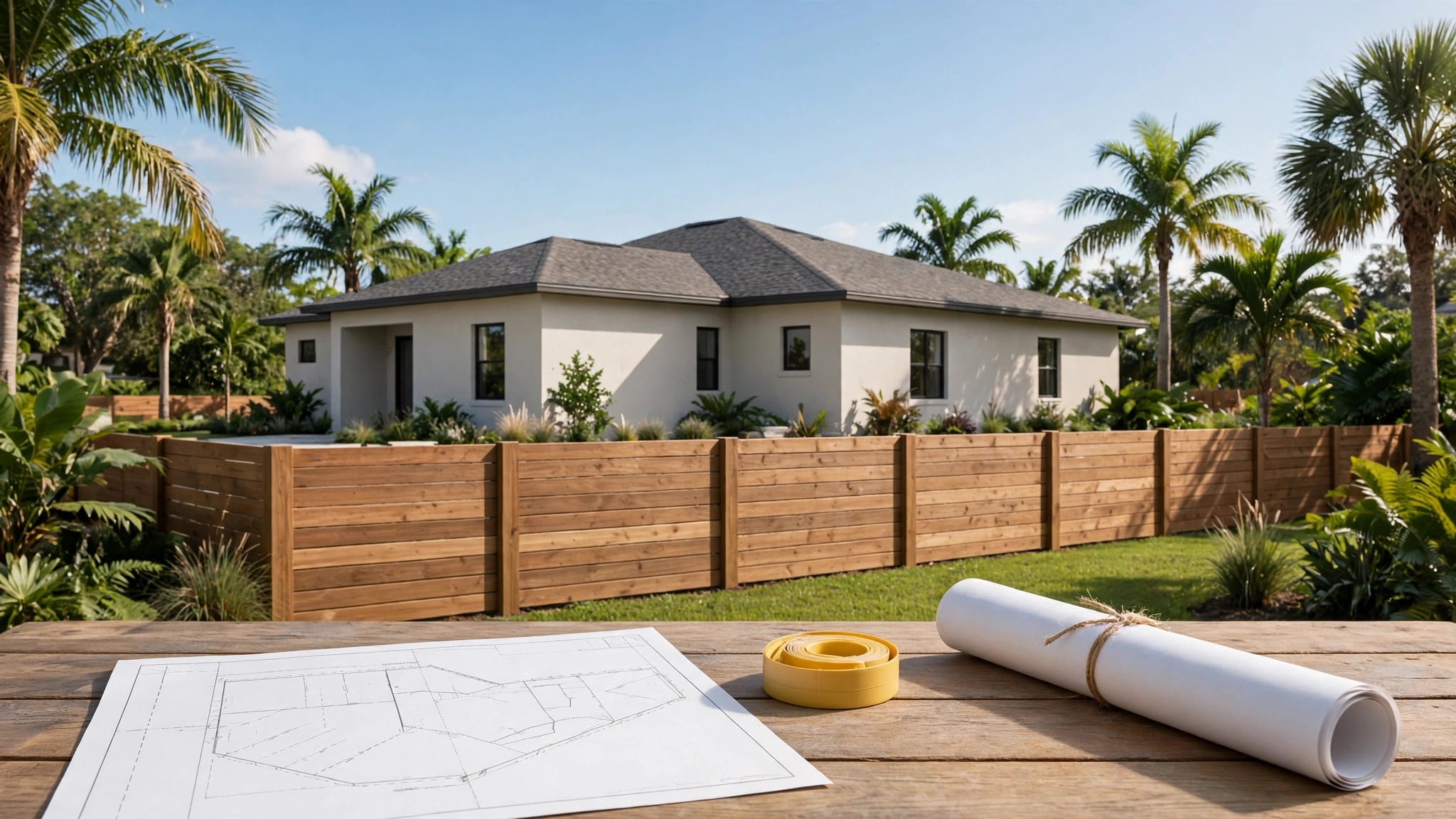
For most homeowners, the site plan is the part that gets kicked back first. A clear residential fence site plan guide can help you show the fence line, property edges, and clearances in the format reviewers expect.
Keep these items together before you apply:
- A recent survey or plat, if your office asks for one.
- Fence height, material, and color.
- Gate locations and swing direction.
- HOA approval, if your community requires it.
- Photos of the old fence, if you are replacing one.
- The name and contact info for the contractor, if needed.
Fees vary by office and project type, so do not guess. If you want a broader look at filing costs across the region, see 2026 Southwest Florida fence permit costs. The exact amount for your address can still change based on jurisdiction and permit scope.
Common delays that slow fence permits
Most permit delays come from small mistakes, not big ones. The reviewer is matching your plan to the parcel, so even a tiny mismatch can send the file back.
Missing surveys cause trouble fast. So do plans that place the fence too close to a boundary line without showing the setback. If your lot has an easement, the office may want proof that the fence stays out of it.
Utility conflicts cause another round of questions. A buried line, meter, or drainage feature can affect where posts go. It is better to spot that before the crew arrives.
These are the most common hold-ups:
- The application went to the wrong office.
- The site plan does not match the survey.
- HOA approval is missing.
- The fence height on the drawing does not match the order.
- The project starts before written approval arrives.
- The fence crosses an easement or utility corridor.
A replacement fence can also get delayed when the homeowner calls it "same as before" but the plan shows a different height, different material, or a shifted line. Review staff usually treat those as separate changes.
One more common issue is assuming the new state exemption applies without checking flood zone status. In South Venice, that step matters a lot. If the parcel sits in a flood hazard area, the permit shortcut may not apply at all.
Conclusion
A South Venice fence permit starts with the parcel, not the fence style. Once you know who reviews your address, the rest becomes easier to handle.
Check the jurisdiction, flood zone, HOA rules, easements, and site plan details before you buy materials. That early review can keep a simple fence job from turning into a stop-and-start project.
If the lot details are unclear, get them confirmed in writing before the first hole is dug.