Florida Fence Clearance Rules Near Hydrants and Utility Boxes
A fence beside a fire hydrant or utility box can create a permit problem, a maintenance dispute, or a serious access issue. Florida fence clearance rules depend on the authority reviewing your project, the utility that owns the equipment, and the exact location of your lot.
Florida does not use one statewide measurement for every hydrant, meter box, transformer, or utility enclosure. Fire departments and utility providers may apply different clearance, visibility, easement, and access requirements.
Before you set a post, check the site documents and confirm the rules with the right local officials. The details below can help you prepare for that conversation.
What Florida fence clearance rules actually cover
Fence clearance is about more than the distance between a post and a piece of equipment. Officials may review whether firefighters can reach a hydrant, whether a utility crew can open a meter box, and whether the fence blocks a public easement.
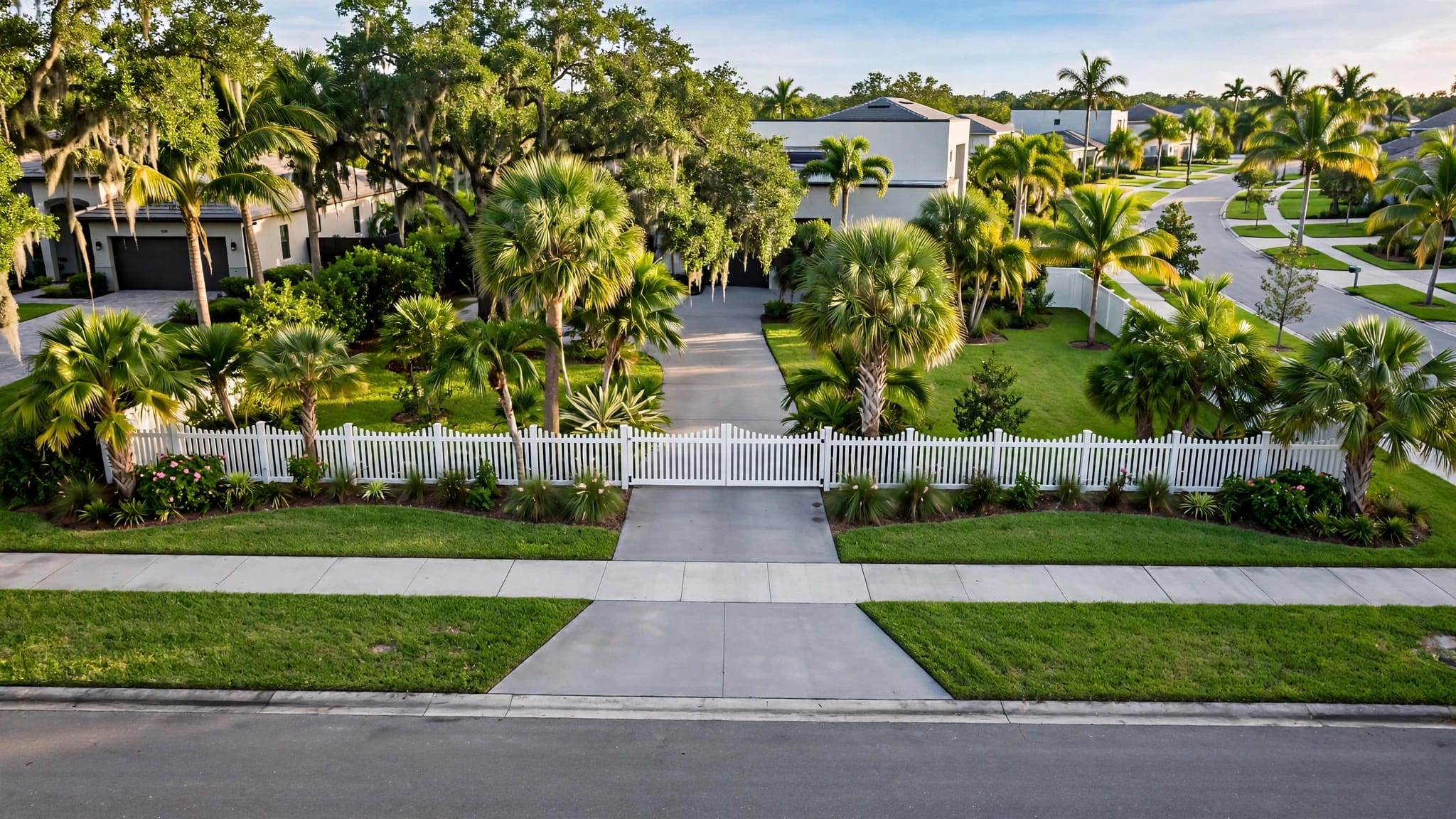
The fence itself also matters. A solid vinyl or wood fence may restrict visibility more than a chain-link or open aluminum design. Gates can create another problem if they narrow the route or remain locked during an emergency.
The statewide starting point
The Florida Fire Prevention Code uses NFPA 1 as a starting point for fire access. Materials based on that standard commonly cite 36 inches of clear space around the circumference of a fire hydrant .
That number is a baseline, not a universal answer for every Florida property. Local fire marshals may require clear visibility from the street, a wider working area, or an unobstructed route to a fire department connection.
NFPA guidance also references 60 inches of clear space in front of connections larger than 2 1/2 inches . The applicable fire official decides how the rule applies to the equipment at your address.
Why local approval controls
The authority having jurisdiction, often called the AHJ, may be a city fire marshal, county fire marshal, fire district, or another designated official. That office can interpret the adopted fire code for local streets, hydrant locations, access roads, and site conditions.
A building department may approve the fence permit while a fire department or utility still objects to the layout. A fence can pass one review and still block access required by another agency.
If you live in Cape Coral, review the city's current process and submittal requirements before work begins. This 2026 Cape Coral fence permit requirements guide can help you organize documents before contacting the city.
Fire hydrant clearance in Southwest Florida
Hydrant rules show why a single statewide number can mislead homeowners. Southwest Florida counties use the Florida Fire Prevention Code as a foundation, but local documents add their own access and visibility requirements.
Lee and Charlotte County examples
Lee County Utilities guidance says fire hydrants must remain visible from the road. It also says vegetation should not be placed within 3 feet of a hydrant and that clearance must remain around hydrants and meter boxes.
Although that guidance discusses vegetation, a fence can create the same access problem. A tall privacy fence may hide the hydrant from the street or prevent firefighters from reaching its connections. A gate positioned nearby may also reduce the usable working area.
Charlotte County fire prevention materials cite 36 inches of clear space around fire hydrants . The county also requires an approved, unobstructed path to fire department inlet connections. Homeowners in Punta Gorda and other Charlotte County communities should confirm whether their specific hydrant or connection has additional site requirements.
Collier County and other local jurisdictions
Collier County fire prevention materials cite a larger NFPA-based clearance arrangement, with 7.5 feet in front and to the sides and 4 feet to the rear . The same material states that the AHJ may reduce those dimensions in certain cases.
That differs from the 36-inch guidance posted by Charlotte County and other Florida agencies. It doesn't mean one county is wrong. It means the local fire official's interpretation and the equipment's location matter.
Sarasota, Hendry, and DeSoto homeowners should ask the local building department and fire official for the current requirement at their address. A general internet measurement may not account for a private fire district, a narrow access road, a hydrant connection, or an easement.
When a hydrant sits close to your proposed fence, treat the surrounding area as fire-access space. Don't place posts, screening panels, landscaping, storage, or a locked gate there until the AHJ confirms the layout.
Utility box access is a separate fence concern
Utility boxes don't follow one statewide Florida fence clearance measurement. The required space depends on the equipment, the company that owns it, the recorded easement, and the work needed to service it.
Identify every box before planning the fence
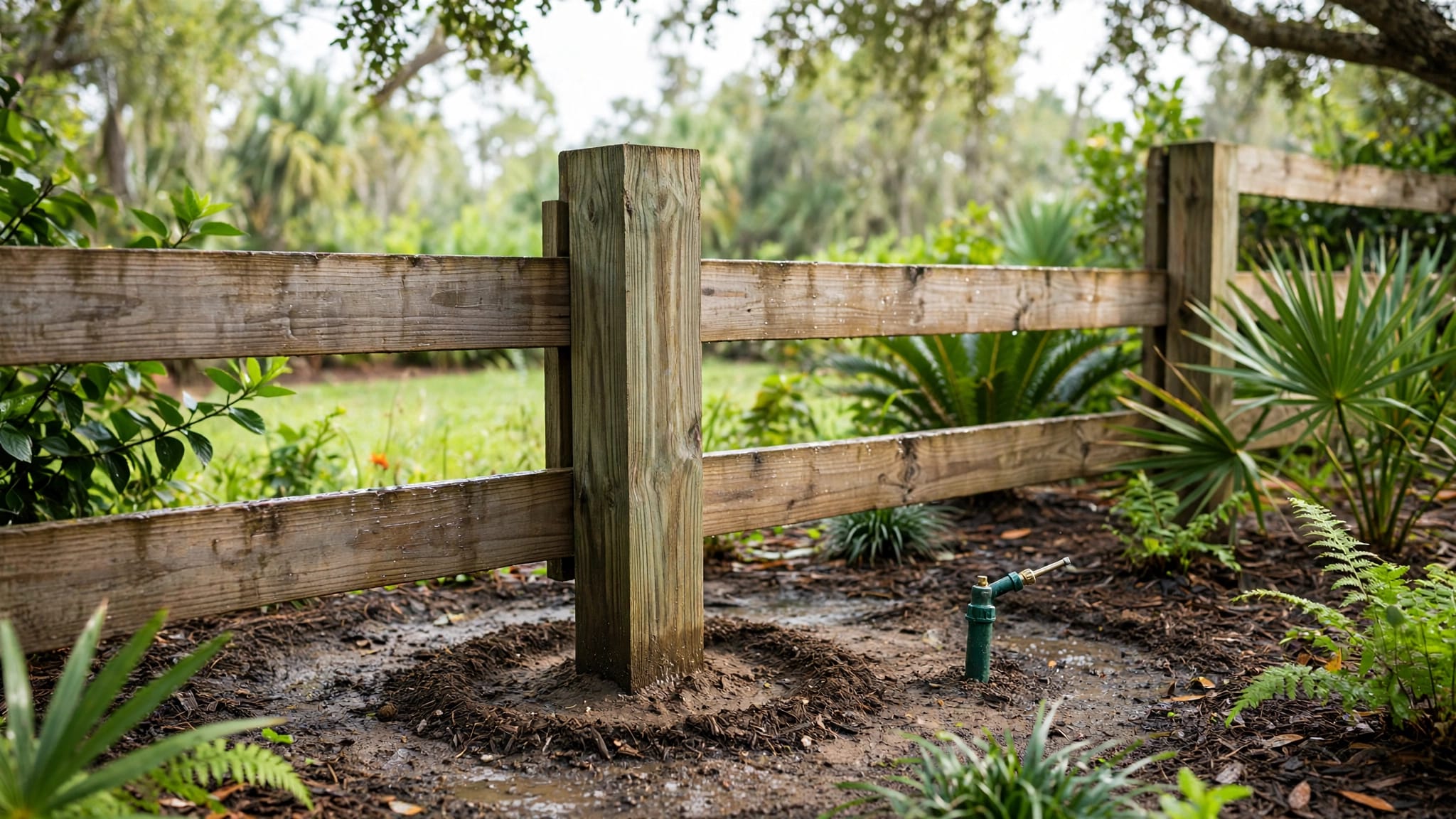
Walk the proposed fence line and mark more than the obvious water meter. Look for electrical equipment, communication boxes, irrigation controls, backflow devices, transformer areas, and other utility enclosures.
A utility box may sit inside your yard while remaining in a public utility easement. The property owner may maintain the grass around it, but the utility may still need access with tools, vehicles, or replacement equipment.
Lee County Utilities guidance addresses clearance around meter boxes as well as fire hydrants. However, it doesn't publish one universal meter-box dimension for every fence project. The serving utility can provide the requirement for its equipment.
Don't assume a removable fence panel or unlocked gate automatically solves the problem. Ask whether the utility accepts that arrangement, where the opening must sit, and whether the crew needs a clear path beyond the box itself.
Easements can change the entire layout
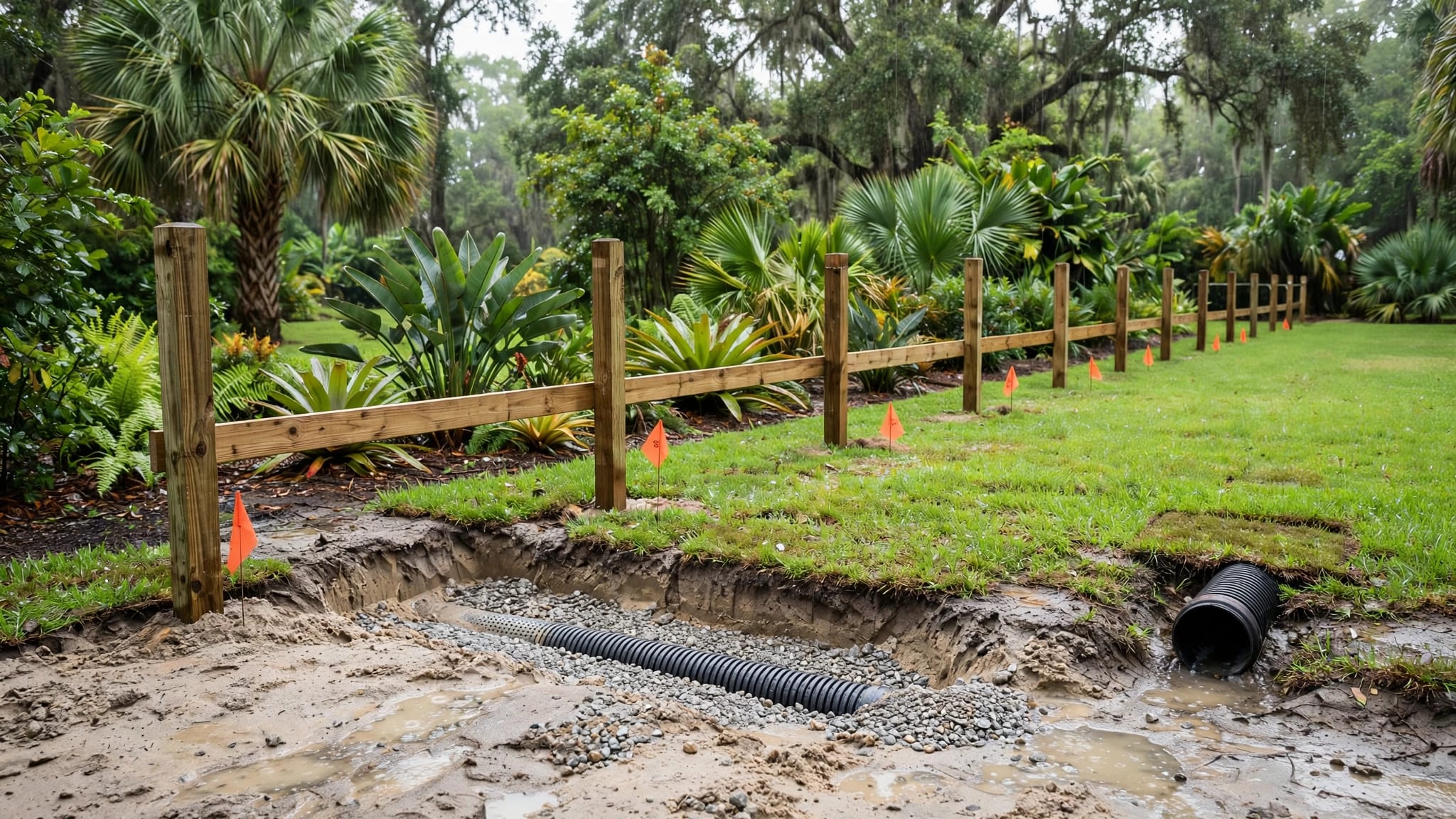
Your survey, recorded plat, deed, and permit plan may show a utility or drainage easement that affects the fence line. An easement can give a utility or government agency access rights even when the area appears to be part of your private yard.
A fence inside an easement may be allowed in some circumstances, but the utility or local government may later remove it to perform work. They may not restore the fence in the same style or at your preferred location.
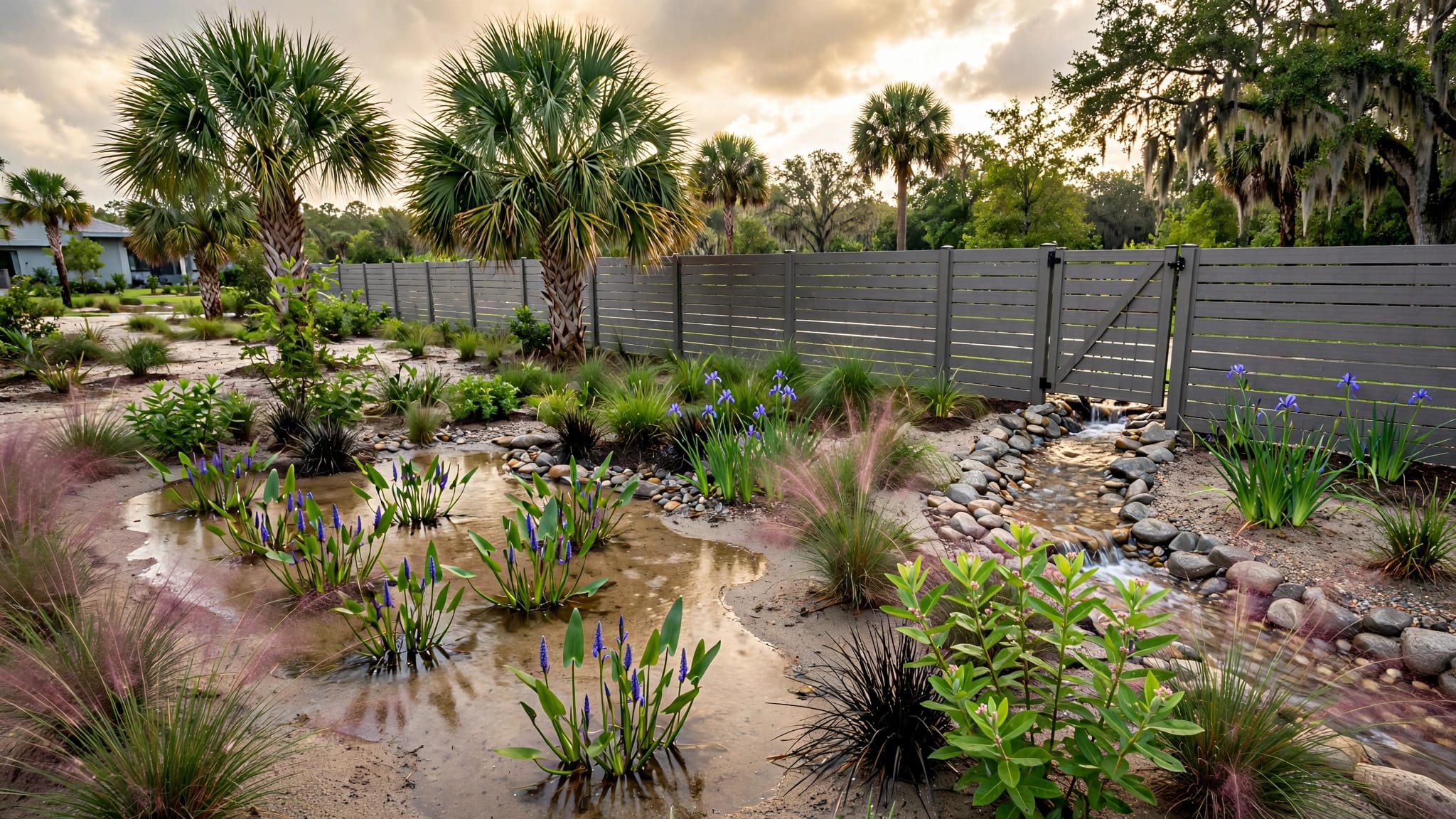
Read more about Florida utility easement fence rules before approving a layout. In Cape Coral, drainage swales can create another access concern, so review these Cape Coral drainage swale fence rules when a fence crosses or borders a swale.
How to check Florida fence clearance before you build
A careful review before installation costs less than moving a completed fence. Use this sequence for a new fence, replacement, or layout change.
- Pull your survey and recorded plat. Mark property lines, utility easements, drainage easements, rights-of-way, and any access areas shown on those documents. A neighbor's fence or an old spray-painted line isn't proof of the correct boundary.
- Photograph and identify each obstruction. Take clear photos of hydrants, meter boxes, electrical equipment, drainage structures, and nearby gates. Record the equipment's location in relation to the proposed fence line.
- Contact the local authorities. Ask the city or county building department about the fence permit. Then contact the fire marshal or fire district about hydrant and fire department connection access. Give them your address and a simple site sketch.
- Call the serving utility. Ask which company owns each box or enclosure. Request its current fence, access, and easement requirements in writing when possible. Different equipment on the same property may belong to different providers.
- Submit the layout before digging. Show fence panels, posts, gates, hydrants, boxes, easements, and access paths on the plan. If the project is in Cape Coral, arrange the utility locate before excavation and review this guide on how to call 811 before digging fence posts.
Sunshine 811 helps locate participating underground utilities, but an 811 ticket doesn't approve your fence location. It also doesn't replace a survey, easement review, fire clearance confirmation, or utility approval.
Fence design choices can protect access
Once officials identify the required clear areas, adjust the design instead of trying to work around the equipment after installation.
Keep gates and panels out of working areas
Place gates where they don't narrow the route to a hydrant or utility box. A gate that swings into a clear zone can create an obstruction even when the fence posts sit outside it.
For some utility boxes, the provider may accept a wider gate or removable panel. Get approval before choosing that option, and don't rely on a lock that emergency or utility crews can't open.
Open fencing can improve visibility, but it doesn't eliminate clearance requirements. Chain-link and aluminum panels still contain posts, rails, and gates that can restrict access.
Plan for future maintenance
Utility crews may need room to replace a meter, open a panel, flush a line, or repair equipment. Firefighters may need space to attach hoses or operate a hydrant connection.
A fence that leaves only enough room for normal yard use may fail when a large tool, replacement part, or emergency vehicle is needed. Keep the approved access area clear of shrubs, mulch, decorative rock, planters, and stored items.
Ask your contractor to mark the clearance zone on the site plan before ordering materials. That step makes it easier to compare the approved layout with the fence line during installation.
A low fence can still obstruct a hydrant or utility box if it blocks visibility, limits hand access, or prevents a gate from opening fully.
Common mistakes Southwest Florida homeowners make
Many fence clearance problems begin with assumptions that seem reasonable but don't match local requirements.
- Copying a neighbor's fence location without checking the neighbor's permit, easements, or utility approvals.
- Measuring from the property line instead of measuring around the hydrant or equipment.
- Treating a utility box as a private landscaping feature because it sits inside the yard.
- Calling 811 but skipping the survey and utility-owner review.
- Installing first and asking the fire marshal to approve the fence afterward.
- Assuming a locked gate is acceptable because the gate is close to the street.
- Using a privacy screen to hide a hydrant, meter, or electrical enclosure.
A professional fence contractor can help identify obvious conflicts and prepare a workable layout. However, the contractor can't replace approval from the local AHJ, building department, or utility owner.
Conclusion
Florida fence clearance rules near hydrants and utility boxes are local and equipment-specific. The 36-inch hydrant guideline applies in many Florida jurisdictions, while Collier County materials cite larger dimensions and allow the AHJ to adjust them. Utility boxes don't have one statewide measurement, so the serving provider must confirm access needs.
Check your survey, plat, easements, permit requirements, fire-access rules, and utility approvals before digging. This article provides general information and doesn't replace confirmation from local officials or utility providers. When the fence layout respects access from the beginning, you can avoid costly changes after installation.