Do You Need a Land Survey for a Fence Permit in Florida?
You do not need a land survey for every fence permit in Florida, but many cities and counties want proof of where the fence will sit. The rules depend on your local building department, not one statewide standard.
That matters because a fence can look simple and still cause trouble. A few feet off your line can mean a failed permit, a neighbor dispute, or a costly move after installation. A current survey is often the safest way to confirm property lines before you build.
The short answer for Florida homeowners
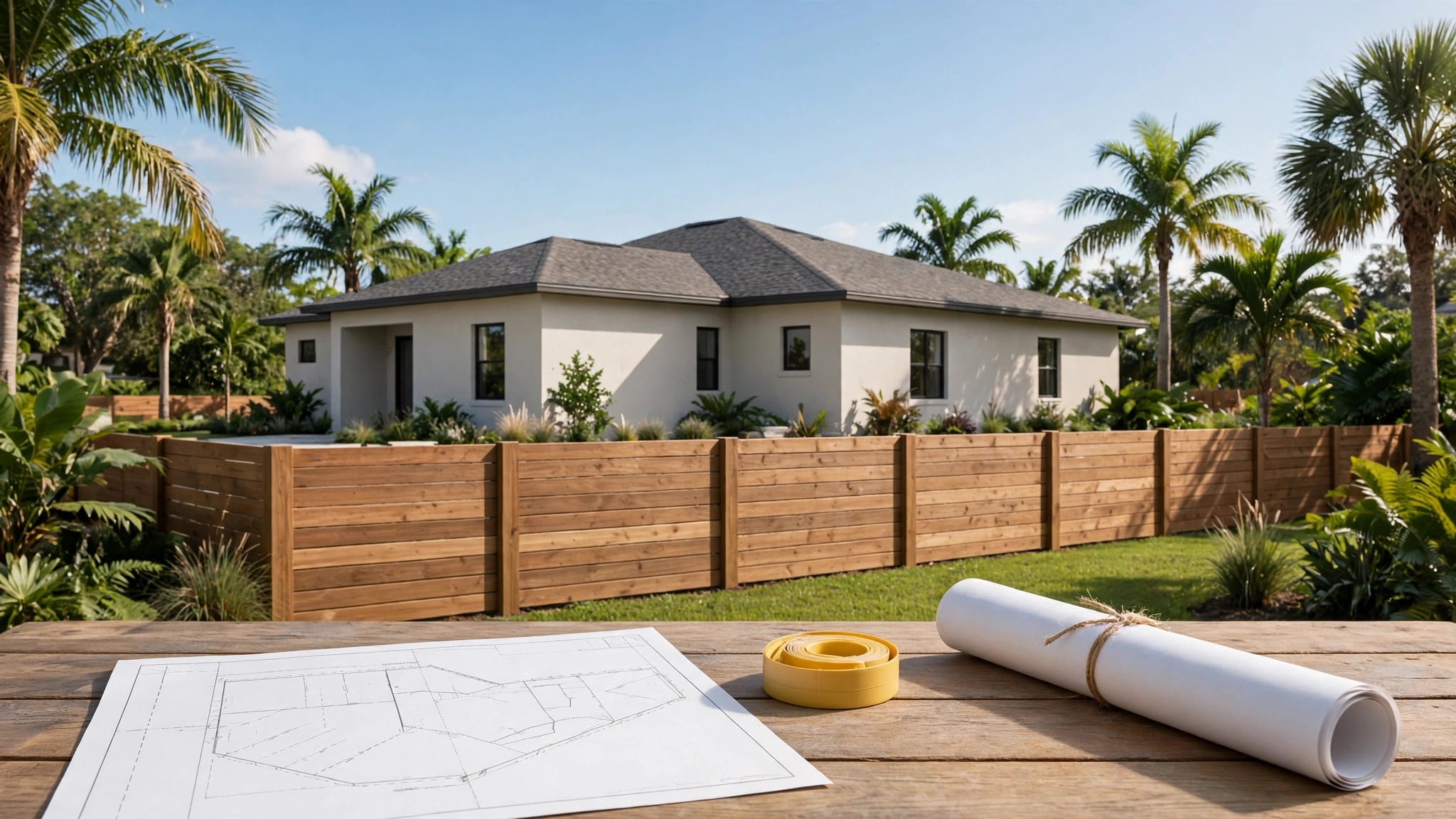
The direct answer is this: a survey is not always required statewide, but local permit offices often want one or another site document . Some places want a certified survey. Others accept a sketch, site plan, or plot plan that shows the fence location, lot lines, setbacks, and nearby easements.
That means the question is not just "Do I need a survey?" The better question is, "What does my city or county require for a fence permit?" In Florida, that answer can change by municipality, zoning district, and even lot type. A corner lot, canal lot, or property with an easement may face extra review.
If you are in Southwest Florida, it helps to check local rules before you buy materials or set posts. For Cape Coral homeowners, the Cape Coral fence permit checklist is a useful place to compare the documents reviewers often ask for.
Why local building departments matter more than one statewide rule
Fence permits are handled at the local level, so one county may accept a simple site sketch while another wants a full survey. That is why a friend's experience in another Florida city may not match yours. Even within the same county, permit reviewers may ask for extra detail if your yard has unusual boundaries.
This is also where small mistakes turn into big delays. A fence that crosses a utility easement, sits too close to a right-of-way, or lands inside a setback zone can get flagged fast. The permit office may ask you to revise the plan, and that can push the project back.
If your fence will sit near a property line, easement, or corner, a survey is usually cheaper than a dispute.
In Southwest Florida, these details matter even more because many neighborhoods have tight lots, drainage easements, or HOA rules. If your fence contractor knows the local process, that saves time. A good place to start is choosing a fence contractor in Southwest Florida, especially if you want help sorting out permit steps before installation.
When a survey is smart even if the permit office does not demand one
Some homeowners wait for the permit office to ask for a survey. That can work, but it is not always the safest plan. A survey is worth getting when the fence location matters, and it matters more often than people think.
A survey makes sense if:
- You do not have a recent survey from closing or a past project.
- Your lot lines are unclear , especially in older neighborhoods.
- Your neighbor questions the fence location before work starts.
- Your property has an easement for drainage, utilities, or access.
- You own a corner lot or waterfront lot , where boundary issues are more common.
- Your HOA wants proof that the fence stays on your property.
If any of those apply, the survey gives you a clean reference point. It also helps your installer place the fence correctly the first time. For homeowners worried about where a line really sits, avoiding fence placement mistakes in Cape Coral is a helpful reminder of how small measurement errors can become expensive.
What your fence permit application may ask for
Permit offices usually want enough detail to show that the fence belongs where you plan to put it. The exact paperwork changes by city or county, but these are common items.
| Document or plan | What it shows | Why it matters |
|---|---|---|
| Boundary survey | Property lines, improvements, and often easements | Best proof of where the fence can go |
| Site plan or sketch | Proposed fence location and dimensions | Helps reviewers check setbacks and placement |
| Closing survey copy | Earlier survey from your purchase records | Good starting point if it is still current |
| HOA approval letter | Community design rules | Some neighborhoods require approval before permits |
| Utility or easement info | Underground lines or access areas | Reduces the risk of building in the wrong spot |
The main takeaway is simple. The more complex the lot, the more helpful a survey becomes. If your city asks for a site plan instead, a survey still makes that plan easier to draw correctly. It also gives your contractor a clear reference during layout.
How to check your property line before you build
Before you apply for a fence permit, take a few minutes to gather the right papers. That small step can save you days of back-and-forth later.
- Find the survey from your closing documents.
Many homeowners already have one in their paperwork. Look for a boundary survey, title packet, or closing folder. - Check the date and condition of the survey.
A survey from years ago may still help, but it may not show new additions, trees, sheds, or easement changes. - Look for setbacks and easements.
Your fence may need to stay a certain distance from the road, drainage area, or utility space. - Confirm whether the lot is in an HOA.
HOA rules can be stricter than city rules. They may control fence height, style, and placement. - Call the local permitting office.
Ask what they want for a fence permit in your exact address. Do not guess. The answer can change from one town to the next. - Order a new survey if anything looks uncertain.
If the old survey is missing, unclear, or out of date, a new one gives you the cleanest path forward.
If you are in Cape Coral and want a local example of what reviewers look for, the residential fence permit checklist for Cape Coral shows the kind of details that often come up during approval.
What if you already have a survey from closing?
That survey may be enough, but do not assume it is perfect for today's permit. First, check whether it shows the full parcel, existing structures, and any easements. Next, compare it with the fence layout you want.
If the survey is clear and current, your permit office may accept it with a site plan. If it is hard to read or missing key details, you may need a new boundary survey or an updated drawing from a surveyor. In some cases, a simple copy from closing is all you need. In others, it is only a starting point.
The key is to read the document before you spend money on materials. A fence kit is easier to return than a fence placed on the wrong side of a line.
How a local fence contractor can help
A good fence contractor does more than set posts. They can help you interpret the permit checklist, point out likely problem areas, and tell you when a survey is the smarter choice. That is useful if you are trying to balance cost, speed, and code compliance.
For Southwest Florida homeowners, this is especially helpful on corner lots, irregular parcels, and properties with older boundary records. A contractor who works in your area will also know when to pause and ask for more documentation before the job starts. That can keep the permit process from stalling halfway through.
If you are comparing installers, look for someone who talks plainly about permits, setbacks, and property lines. A little patience at the start usually prevents bigger headaches later. It also helps you choose the right fence style for the lot, whether that is vinyl, wood, chain link, aluminum, or another metal option.
Conclusion
A fence permit in Florida does not always require a land survey, but local rules control the process, and those rules can change from one city or county to another. That is why the safest move is to check with your permitting office before you build.
If your lot lines, setbacks, easements, or HOA rules are unclear, a current survey is often the best protection. It gives you a solid map, helps your contractor set the fence correctly, and lowers the chance of a costly mistake.