Shell Rock Fence Posts: Southwest Florida Installation Guide
A fence can look straight on installation day and still lean after the first hard rain or windstorm. In many local yards, shell rock fence posts need more planning than posts set in loose sand.
Shell rock can stop a post-hole digger cold, push an auger off line, and make every hole a little different. A durable fence starts with a safe layout, the right equipment, and a footing that matches both the ground and the fence above it.
Why Shell Rock Fence Posts Need a Different Approach
Southwest Florida soil can change quickly across one yard. You may find sand near the surface, then hit a packed layer of shell, limestone fragments, or cemented rock several inches down. On another lot, shell rock may begin close to grade and extend through the required post depth.
Unlike ordinary soil, shell rock doesn't always give way evenly. A post hole can become lopsided as a hand digger follows softer pockets around hard material. That irregular shape makes it harder to keep a post centered and plumb.
Shell rock is hard, uneven, and often unpredictable
Loose sand falls away easily and can be reshaped with a shovel. Shell rock can contain sharp fragments and dense sections that resist a standard clamshell digger. A rotary auger may chatter, skip sideways, or stop when it reaches a harder shelf.
Rock also changes how water moves around a fence footing. Rain may drain quickly through loose shell, while a dense layer can hold water above it. The installer needs to inspect the bottom of each hole rather than assume every post will have the same conditions.
Know the warning signs before the full layout
A test hole near a planned corner or gate can reveal a lot. Hard scraping sounds, white shell fragments, slow excavation, and an auger that won't maintain depth all point to shell rock.
Don't force a post into a shallow hole because digging gets difficult. A short footing may look secure at first, but fence loads build over time. Wind, gate movement, wet ground, and settling will expose the weak point.
A hard layer does not replace proper embedment. The post still needs adequate depth, solid support, and a plumb position.
Plan the Fence Line Before Breaking Ground
Good preparation prevents expensive corrections. Before marking post centers, confirm the property boundary, review local permit requirements, and account for easements, drainage swales, pool equipment, irrigation, and gate swings.
A fence installed inside the wrong line can create a dispute even if the posts are perfectly set. If pins aren't visible or a boundary seems uncertain, use a current survey or speak with a licensed surveyor before construction.
Mark corners, gates, and changes in elevation first
Set the corners and gate openings before marking line posts. Corners, ends, and gates carry more force than ordinary line posts, so their locations control the entire layout.
Stretch a mason's line between corner stakes. Then mark post centers according to the fence system's specifications. Many residential layouts use spacing around 6 to 8 feet, but panel width, slope, and wind exposure should set the final measurement.
For a smoother installation day, clear movable furniture, toys, potted plants, and loose yard items ahead of time. This guide to preparing your yard for fence installation also helps homeowners identify access issues before equipment arrives.
Request utility locates before digging
Call 811 or submit a locate request before any post hole, even in a familiar backyard. Florida utility markings identify many public underground lines, but they don't guarantee the location of private irrigation, landscape lighting, propane lines, or customer-owned wiring.
Wait for the locate response and respect the marked areas. Hand-dig carefully where required, and never use a powered auger directly over a marked utility path. If you uncover an unknown wire, pipe, or conduit, stop digging and identify it before proceeding.
Irrigation lines are common near property edges, while pool pumps, sheds, docks, and landscape features often have private utilities that don't appear on a standard locate ticket.
Choose Equipment That Can Handle Shell Rock
A post-hole digger works well in loose material, but it can become frustrating and unsafe in compacted shell rock. The tool should match the ground conditions, hole size, and number of posts.
For a single repair post in lightly packed shell, hand tools may be enough. A full fence run with dense rock often calls for mechanical equipment and an installer who can adjust when the planned hole meets an obstacle.
Hand tools suit shallow or isolated work
A digging bar, clamshell post-hole digger, shovel, and heavy-duty steel rake can remove loose shell and clean out a small hole. Wear safety glasses, work gloves, boots, and hearing protection if striking rock with a bar.
Take small bites rather than swinging wildly. Shell fragments can fly, and repeated impacts can fatigue the tool handle or the person using it. Check depth and plumb often because hand-dug holes tend to drift.
Powered augers and rock tools save time on long runs
A hydraulic auger on a skid steer or mini-excavator can handle larger projects, though even that equipment may need a rock-rated bit or tooth configuration. In dense limestone, installers may use a breaker, rock bar, or other excavation method to reach a stable depth.
Mechanical digging also requires room to operate safely. Narrow side yards, septic systems, mature roots, overhead lines, and soft ground can limit equipment access.
Professional help is a sensible choice when the fence includes tall privacy panels, long runs, gates, uneven grades, or consistently hard rock. A qualified installer can modify the footing plan without compromising alignment or structural support. Homeowners comparing bids can use this guide on choosing a Southwest Florida fence contractor to ask better questions about depth, footings, and materials.
Set Shell Rock Fence Posts to the Right Depth
Post depth depends on fence height, material, local conditions, wind exposure, and the post's job in the layout. A lightweight open-picket fence doesn't load a footing like a 6-foot privacy fence. Gate and corner posts need more support because they carry concentrated force.
For many residential installations in Southwest Florida, 36 inches is a common minimum starting point. Taller privacy fences and exposed sites often need holes closer to 42 or 48 inches deep. The final specification should fit the fence system and local rules.
Depth and diameter work together
A deep but narrow hole can limit the footing's resistance to side loads. A wide but shallow hole can still allow the post to pivot. Use the post manufacturer's instructions and the fence design to determine a suitable diameter.
As a practical reference, Southwest Florida fence post depth guidance outlines typical residential ranges for sandy conditions. Shell rock may require a different excavation method, but it doesn't justify reducing the designed embedment depth.
Measure each hole from the finished grade line, not from an uneven mound of excavated material. If the yard slopes, establish the intended fence elevation first. Otherwise, posts can end up at inconsistent heights even when every hole measures the same from the ground.
Use drainage-conscious footing materials
Water is part of every Southwest Florida fence installation. A compacted layer of clean crushed stone at the bottom can help drainage and provide a firmer bearing surface where conditions allow. It should support the post rather than become a loose pocket beneath it.
Concrete footings are common for privacy fences, terminals, corners, and gate posts. Place concrete around a braced, plumb post and keep the top crowned slightly away from the post so surface water sheds outward. Don't bury wood directly in standing water or leave a bowl-shaped concrete top that collects rain.
The choice between concrete and compacted stone depends on soil, fence type, and exposure. These Southwest Florida fence footing options explain where each approach tends to fit.
Keep Every Post Plumb, Straight, and Braced
A fence line is only as accurate as its reference points. Once a corner shifts, every panel and gate opening after it can become harder to fit. String lines, levels, braces, and repeated measurements may feel slow, but correcting a leaning post after concrete cures takes far longer.
Set terminal posts first. These include corners, ends, and gate posts. Let their placement guide the line posts rather than trying to straighten the whole run at the end.
Brace posts until the footing can carry the load
Use temporary braces on two sides of a post. Check plumb in both directions with a level, then recheck after adding concrete or compacted material. A post can move when material lands on one side of the hole.
For dry-packed stone, add material in small lifts and tamp each lift firmly. For concrete, avoid pushing the post around while filling. Check the string line before moving to the next location.
Measure diagonals on rectangular fence areas to confirm the corners are square. At a gate opening, measure the clear distance at the top and bottom. A gate frame needs room to swing and latch without rubbing after the ground settles.
Wind loads shape the entire post layout
A solid vinyl or wood privacy fence catches much more wind than aluminum pickets or chain link. Long solid runs act as broad surfaces in gusts, so they need a footing plan that matches the load.
Post spacing, stronger terminal posts, rail reinforcement, and gate bracing all matter. Read more about fence spacing for Florida wind resistance before deciding that every run should use the same spacing.
Don't overlook the first and last posts in a run. Those posts often take the pull from stretched rails, fence sections, or chain-link fabric. Gates add repeated motion, so undersized gate posts can sag even when nearby line posts stay straight.
Select Materials That Hold Up Near the Coast
Shell rock affects the excavation, while Southwest Florida's heat, rain, humidity, and salt exposure affect the materials. Choose posts, fasteners, hinges, and hardware as a complete system.
Pressure-treated wood rated for ground contact is the minimum for buried wood posts. Even then, drainage and proper installation affect service life. Vinyl systems may use internal metal reinforcement for added stiffness, especially on privacy runs and gates.
Corrosion resistance belongs in every connection
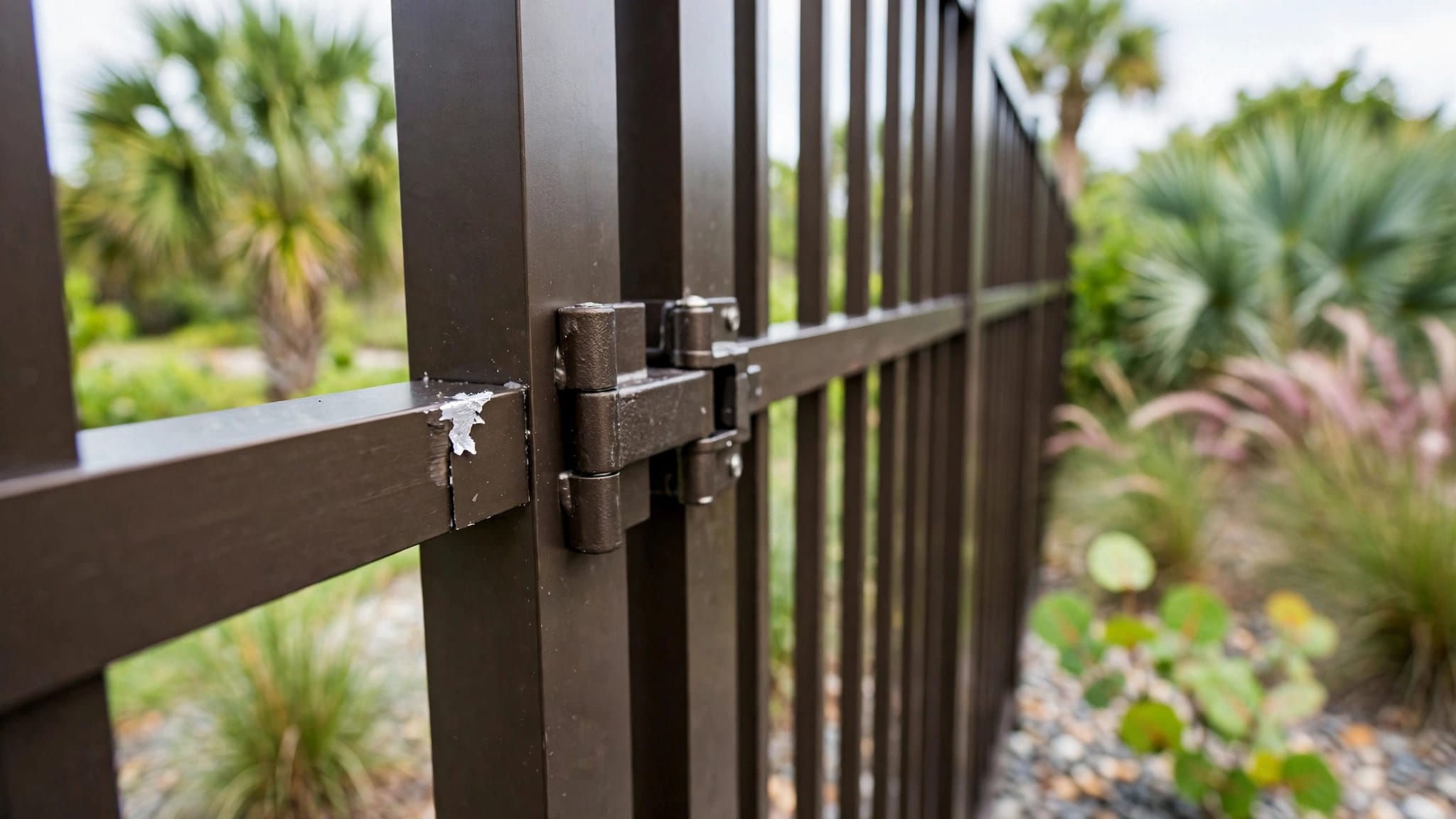
Galvanized steel can work well, but coatings and hardware quality matter. Near saltwater or canals, use stainless steel or manufacturer-approved corrosion-resistant screws, hinges, brackets, and fasteners.
Avoid mixing metals that can react in wet conditions unless the manufacturer approves the connection. Scratches and cut edges on coated metal also deserve attention because they can become early corrosion points.
Aluminum fencing resists rust, but its posts still need adequate footings and anchors. Chain link allows wind to pass through, yet terminal and gate posts still need stronger support than line posts.
Finish With a Fence Built for Local Ground
Installing shell rock fence posts takes patience because every hole can reveal a different condition. Safe utility practices, accurate layout, proper depth, reliable drainage, and wind-aware bracing turn difficult ground into a stable foundation.
A fence should remain straight after summer rain, routine gate use, and seasonal wind. Strong posts beneath the surface make that long-term performance possible.