Can a Sliding Gate Work on a Sloped Driveway?
Yes, a sliding gate can work on a sloped driveway if there's enough room for the gate to travel and the installation accounts for the grade. The gate needs a clear, stable path across the opening and along the fence line.
A sliding design can be useful when a rising driveway makes a swing gate scrape. However, the direction of the slope matters, so start by looking at how the ground changes around the entrance.
How the Slope Affects a Sliding Gate
A driveway can slope toward the street, across the entrance, or in both directions. Those differences affect the gate's bottom clearance and the space needed to open it.
A slope across the opening
When one side of the driveway is higher than the other, a level gate may sit close to the pavement at the high side and leave a larger gap at the low side. A raised center, or crown, can create a clearance problem.
The gate must clear the highest point without leaving an unacceptable opening beneath the rest of the gate. Depending on the site, a custom bottom edge or limited regrading may help.
A slope along the gate's path
The ground beside the driveway matters too. As the gate opens, it needs room to travel along the fence line without hitting rising soil, landscaping, walls, or other obstacles.
A contractor can assess the full route, including where the gate rests when open. Our guide to gate clearance and sizing covers other ways uneven ground affects driveway gates.
Track-Mounted vs. Cantilever Sliding Gates
Both systems move sideways, but they support the gate differently. The right choice depends on the ground conditions and the room beside your driveway.
Track-mounted gates
A track-mounted gate rolls on wheels along a ground track across the entrance. The track needs a stable foundation and a suitable alignment so the gate can move without binding or scraping.
For a sloped site, installation may involve preparing a level path and adjusting the surrounding surface. Sand, leaves, and storm debris can collect in the track, while pooling water makes the area harder to maintain. A raised track can also create a bump for people crossing the entrance.
Cantilever gates
A cantilever gate rides on rollers supported beside the opening. It doesn't need a track across the driveway, which can be useful where runoff, sand, or uneven pavement would interfere with ground-mounted wheels.
The trade-off is space. A cantilever gate needs a counterbalance section beyond the opening and room for that section to travel. Its posts, rollers, and footings must support the gate's weight, so the design needs to match the opening and site conditions.
Plan the Gate Around Drainage and Weather
Southwest Florida's heavy rain and sandy soil make the area around the gate as important as the gate itself.
Keep water moving
Avoid placing the gate where water repeatedly pools or where runoff carries sediment across its path. For a tracked system, drainage and routine cleaning help keep the wheels moving freely.
Posts and footings also need stable support. Erosion or softened soil can affect alignment, so grading work should preserve the flow through nearby swales and drainage routes rather than blocking it.
Choose a frame and hardware for the site
An open-picket design exposes less surface area to wind than a solid privacy gate. Solid panels may provide more privacy, but they need a frame and supports designed for the added wind load.
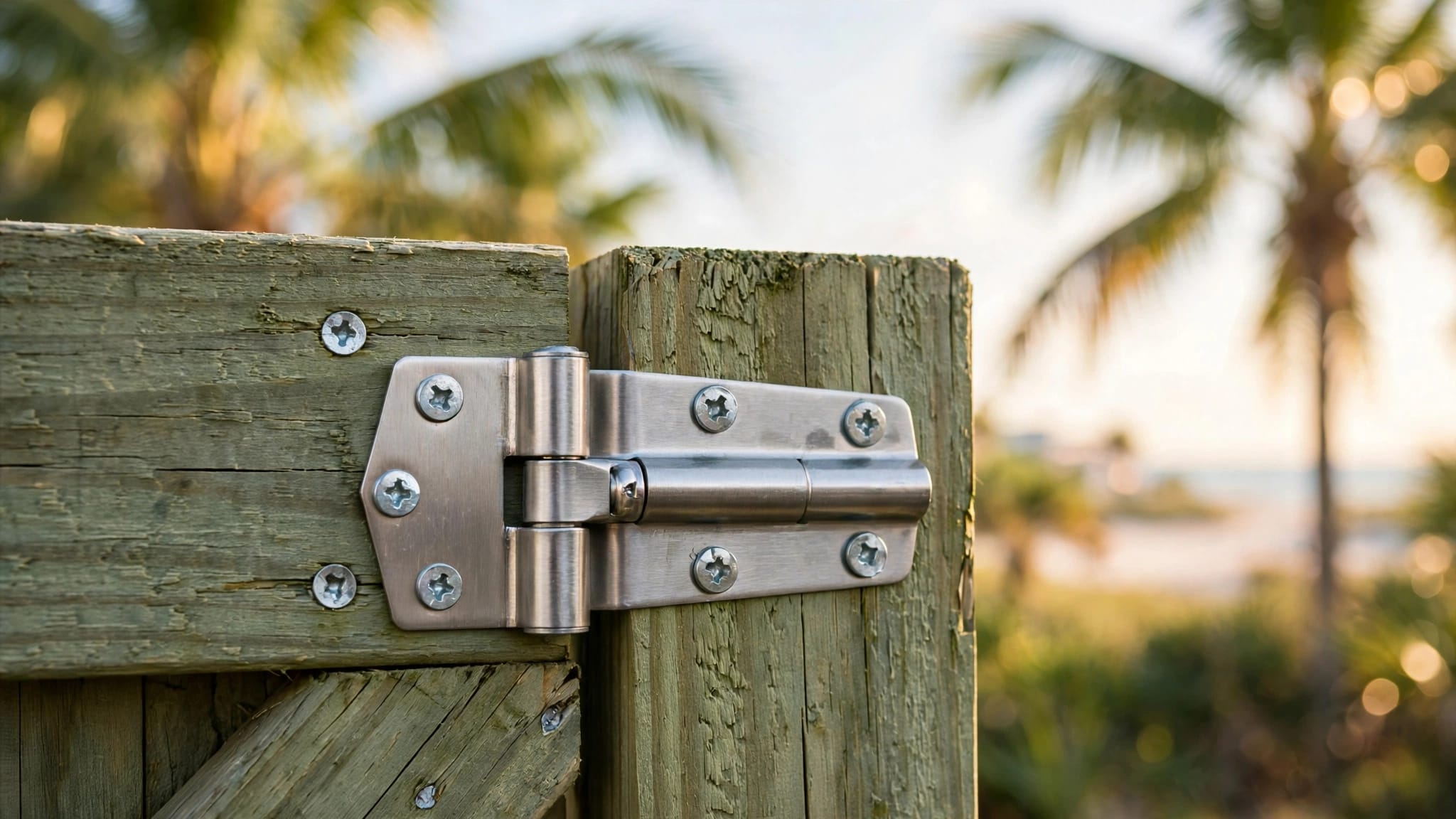
Coastal air also affects fasteners and moving parts. Our guide to corrosion-resistant gate hardware explains how compatible materials and protective finishes help reduce wear.
Automation and Safety on Sloped Driveways
A motor doesn't fix a gate that drags or binds. The gate should move freely along its intended path before an operator is added.
Match the operator to the gate
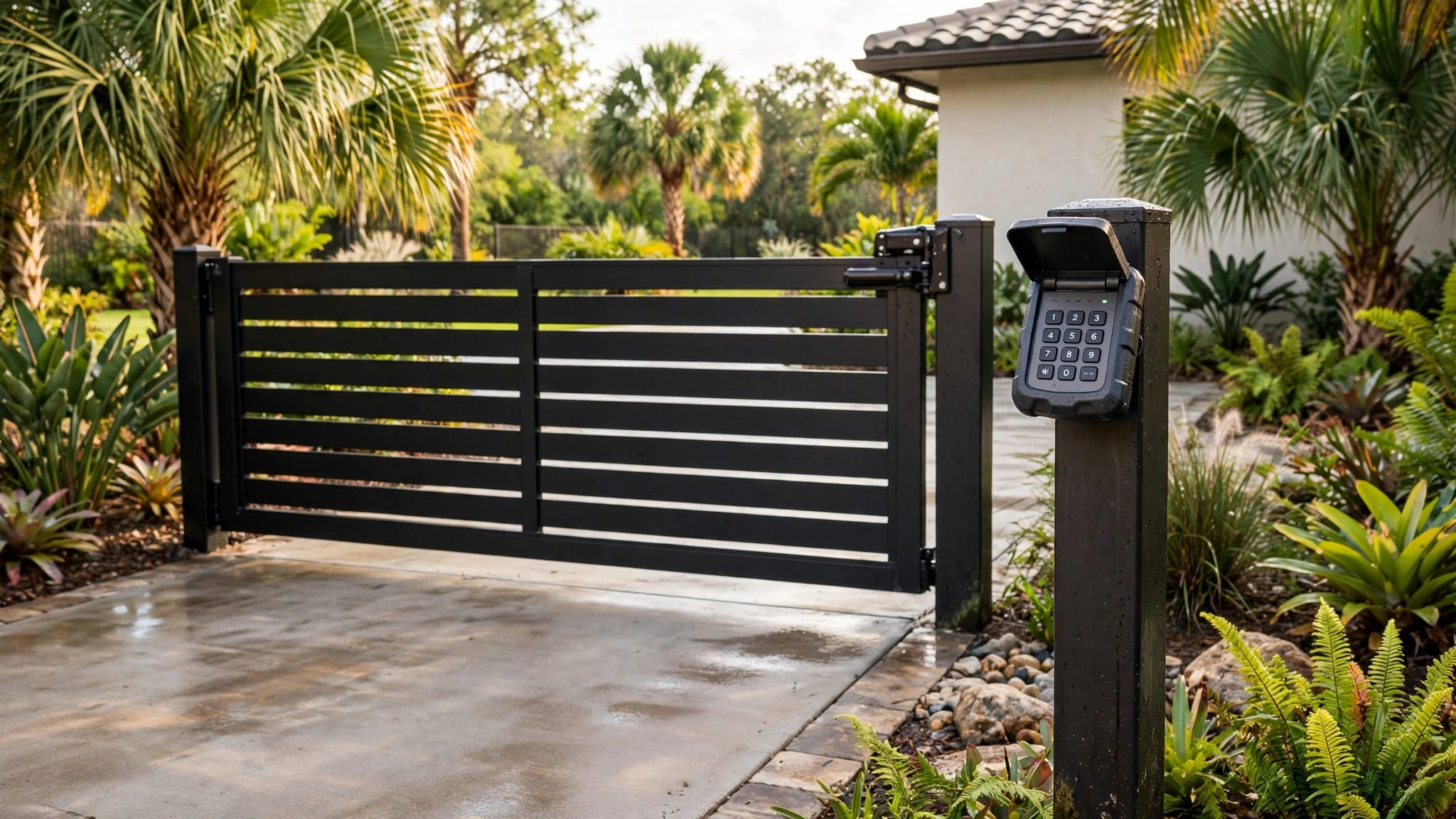
The operator must suit the gate's weight, dimensions, and travel. Its installation also needs an appropriate power supply and a way to release the gate for manual operation during an outage.
Battery backup may be useful where power interruptions are a concern. If the gate stops or shows visible damage, keep people clear and arrange professional service rather than forcing it.
Protect people near moving parts
Automatic gates can create pinch and entrapment hazards near posts, rollers, and the moving gate. Choose a UL 325-compliant operator and have a qualified installer provide monitored entrapment protection appropriate to the installation, such as photo-eyes and edge sensors.
A separate pedestrian gate can keep people out of the vehicle gate's travel area. Never bypass a safety device to keep an automatic gate operating.
Alternatives When a Sliding Gate Won't Fit
A sliding gate may be unsuitable if a wall, property boundary, or narrow side yard leaves too little room for it to open. In that case, moving the entrance to a flatter location may make another layout possible.
A single or double swing gate is another option if there's enough clear space for the leaves to open. On a rising driveway, shorter leaves or adjusted geometry may reduce scraping, though the swing still needs to stay clear of vehicles and walkways. Our comparison of sliding and swing driveway gates can help you weigh the space each design needs.
Choose a Gate That Fits the Whole Site
A sloped driveway doesn't rule out a sliding gate. The decision depends on the gate's full travel path , the clearance beneath it, and the space available beside the opening.
At Supreme Fence of SWFL, we offer fence installation, repairs, and free estimates. A site assessment can help identify a gate layout that fits your driveway and drainage.