How to Replace a Broken Composite Fence Board in Florida
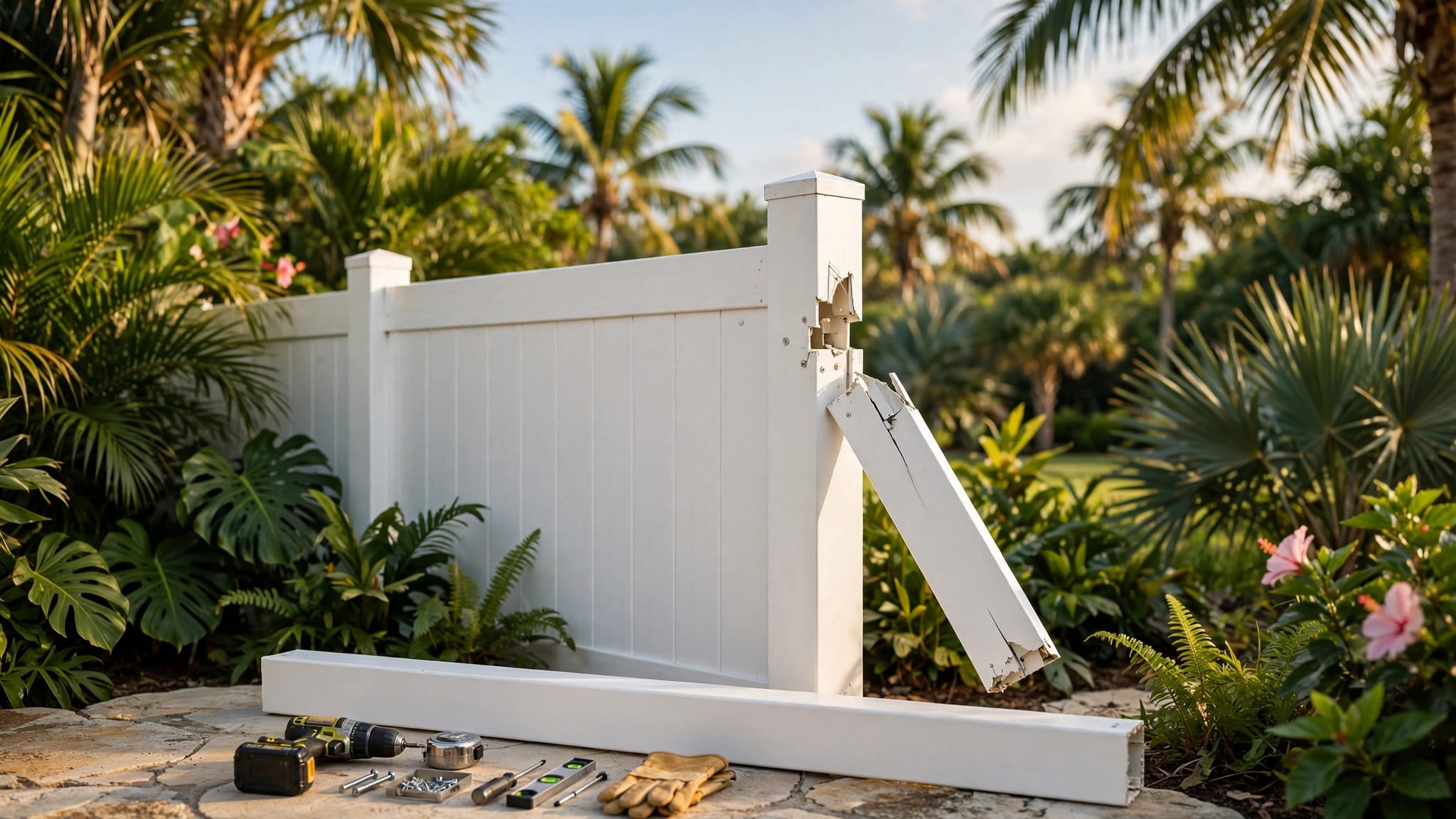
A composite fence board replacement can be a localized repair when the surrounding fence is sound and a compatible board is available. The key is to identify the fence system before removing anything, because composite panels don't all connect the same way.
In Southwest Florida, heat, humidity, and storms can expose problems beyond the broken board. Start with a close look at the whole section so you don't overlook a damaged rail or shifting post.
Assess the damage before replacing a board
A single cracked or broken board doesn't automatically mean you need a new fence. First, look at the section on both sides of the damage and decide whether the problem is isolated.
Look beyond the broken piece
Note where the board broke and whether anything struck it. A fallen branch or other impact can damage neighboring boards without leaving an obvious mark from the street.
Look at both faces of the panel. Watch for changes in alignment, loose connections, and damage around the board's edges. If the fence rattles in a breeze, note where the movement comes from rather than assuming the broken board caused it.
Check the supporting structure
Look along the rails and posts for movement or visible damage. Also inspect the post bases for soil washout after heavy rain. A board repair won't correct a leaning post or restore a rail that no longer supports the panel properly.
If the fence encloses a pool, keep children and pets away from the opening while the barrier is incomplete. Don't leave a damaged section open longer than necessary.
Identify your composite fence system
The replacement needs to fit the way your fence was designed. A board that resembles the original may still have a different profile or connection.
Find the manufacturer and model
Start with any installation paperwork, leftover packaging, or records from when the fence was installed. A manufacturer name or product marking on a board or another component may also help identify the system.
Take clear photos of the full panel, the damaged area, and the places where the board meets the surrounding structure. These photos give a fence contractor a starting point if you need help finding a match.
If you have a spare board left from the original installation, keep it nearby for comparison. It may be the easiest way to establish the color and profile.
Understand how the panel is assembled
Some composite fences use boards arranged horizontally, while others use vertical boards within a framed panel. The visible face doesn't always reveal how the pieces connect.
Look at an intact section before you begin. Note the board orientation and how the surrounding pieces fit together. The goal is to understand what must remain supported during the repair, without forcing parts that aren't meant to move independently.
If the assembly is unclear, a professional can assess it before removal. That can prevent damage to boards you intended to keep.
Find a compatible replacement board
Matching a composite board involves more than choosing a similar shade. Its profile and finish need to work with the existing panel.
Compare the profile and finish
Compare the replacement with an intact board from the same fence system. Pay attention to the shape of its edges and the appearance of its surface. A part designed for another system may not connect correctly even when it looks similar from a distance.
Avoid substituting a different fence material to fill the opening. A wood or vinyl piece may have a different appearance and connection design, leaving the panel with an inconsistent repair.
If the original product is no longer available, a contractor can assess whether a compatible part exists or whether the repair requires a larger section.
Allow for a color difference
Florida sun can change the appearance of exposed fencing over time. A new board may look different beside older boards, even if it's the original color.
Compare a sample against the existing fence in daylight. Look at it from the yard and from the side you see most often. If appearance matters across a prominent section, discuss that difference before choosing between a single-board repair and a broader replacement.
Remove the damaged board carefully
Once you have a compatible replacement and understand the assembly, prepare the area around the panel. Keep people and pets away while you work, and give yourself room on both sides of the fence.
Document the existing arrangement
Photograph the section before taking it apart. Capture how the surrounding boards and rails sit, along with any connection points that may be disturbed during the repair.
Those images provide a reference when the panel goes back together. Keep any reusable components organized so they return to their original positions.
Follow the fence system's removal instructions where available. If the damaged board is part of an interlocking assembly, surrounding pieces may need attention before it can come free. Don't force it out against the neighboring boards.
Protect the rest of the panel
Keep the surrounding section supported throughout removal. A composite board can have sharp broken edges, so handle the damaged material carefully and keep loose pieces off the ground.
Stop if the panel shifts unexpectedly or the board won't come free without stressing the frame. Continuing can turn a small repair into damage across a larger section. Once the board is out, look at the area it occupied before fitting the replacement.
Fit and secure the new board
Place the replacement in the same orientation as the original and follow the assembly instructions for that fence system. The board should fit without forcing neighboring parts out of position.
Restore the original connections
Return the surrounding components to their proper positions and secure the board using the system's intended connections. Use compatible hardware where replacement parts are needed.
Avoid improvised alterations to make an unsuitable board fit. Changes to the panel can leave it looking uneven or affect how it performs in wind. If the replacement doesn't fit naturally, stop and reassess the match before proceeding.
Look at the finished panel
Stand back and compare the repaired section with the panels on either side. The board should follow the same orientation and alignment as its neighbors, and the surrounding pieces should sit as they did before removal.
Look at the repair from both sides of the fence. That makes it easier to spot a displaced component or an attachment that wasn't returned to its original position. A neat-looking face is only part of the job; the connections behind it matter too.
Check adjacent boards, rails, and posts
The work isn't finished when the new board is in place. Inspect the rest of the section again, especially if the original damage followed a storm or an impact.
Inspect neighboring boards and connections
Look at the boards immediately above, below, or beside the replacement, depending on your fence layout. They may have shifted when the damaged piece broke or while the section was being taken apart.
Look for loose parts and changes in alignment. If a neighboring board has damage of its own, address it rather than relying on the new board to hold the section together.
Know when a rail or section needs repair
A rail that is visibly damaged or no longer holds its intended position needs attention beyond a board swap. The same applies when a post has shifted or several parts of the panel have moved.
Broader damage can require rail, post, or section repair before a replacement board will fit properly. Our guide to when to repair or replace a Cape Coral fence covers signs that a larger project may make more sense.
Account for Southwest Florida weather
Composite fencing can offer moisture resistance and a wood-like appearance, but the complete fence still faces sun, rain, and wind. Posts, rails, and connections need attention along with the boards.
Sun, heat, and humidity
Direct sun can make a fence surface hot and create a visible difference between exposed boards and sheltered areas. Compare replacement colors in the location where they'll be installed rather than relying on an indoor view.
Humidity and frequent rain can also leave dirt and organic debris on a fence. Keep the panel clean and clear away material that collects against it. Avoid covering damage with paint or another finish as a substitute for repair.
Storms and saturated ground
After a storm, inspect more than the board that caught your eye. Windblown debris may strike several parts of a panel, while heavy rain can wash soil away from a post base.
Wait until conditions are safe before approaching storm damage. Stay away from downed power lines and unstable sections, and keep others clear of the area. Our guide to hurricane fence repair in Southwest Florida covers a wider post-storm assessment.
For maintenance before severe weather, review our hurricane season fence preparation tips.
When to hire a fence contractor
A homeowner may be comfortable handling a straightforward board repair when the system is identifiable and the surrounding section is sound. Professional help makes sense when the panel's assembly is unclear, the matching part is difficult to find, or damage extends beyond one board.
A contractor can assess the posts and rails as well as the visible break. That's especially useful after a storm, when movement in one section may extend into the next. It also helps when a fence needs to remain a dependable enclosure for pets or a pool area.
At Supreme Fence of SWFL, we offer fence repair services in Cape Coral and serve homeowners across Southwest Florida. We also offer free estimates, so you can discuss the scope of the damage before deciding how to proceed.
Give the repair a sound foundation
The best starting point for a composite fence board replacement is the surrounding structure. A compatible board can restore the panel's appearance, but it needs sound support and the right connections.
Take time to identify the system and inspect the full section. If the damage extends to a rail or post, address that larger repair before treating the job as a single-board fix.