Steel vs Wood Fence Posts for Florida Wood Fences
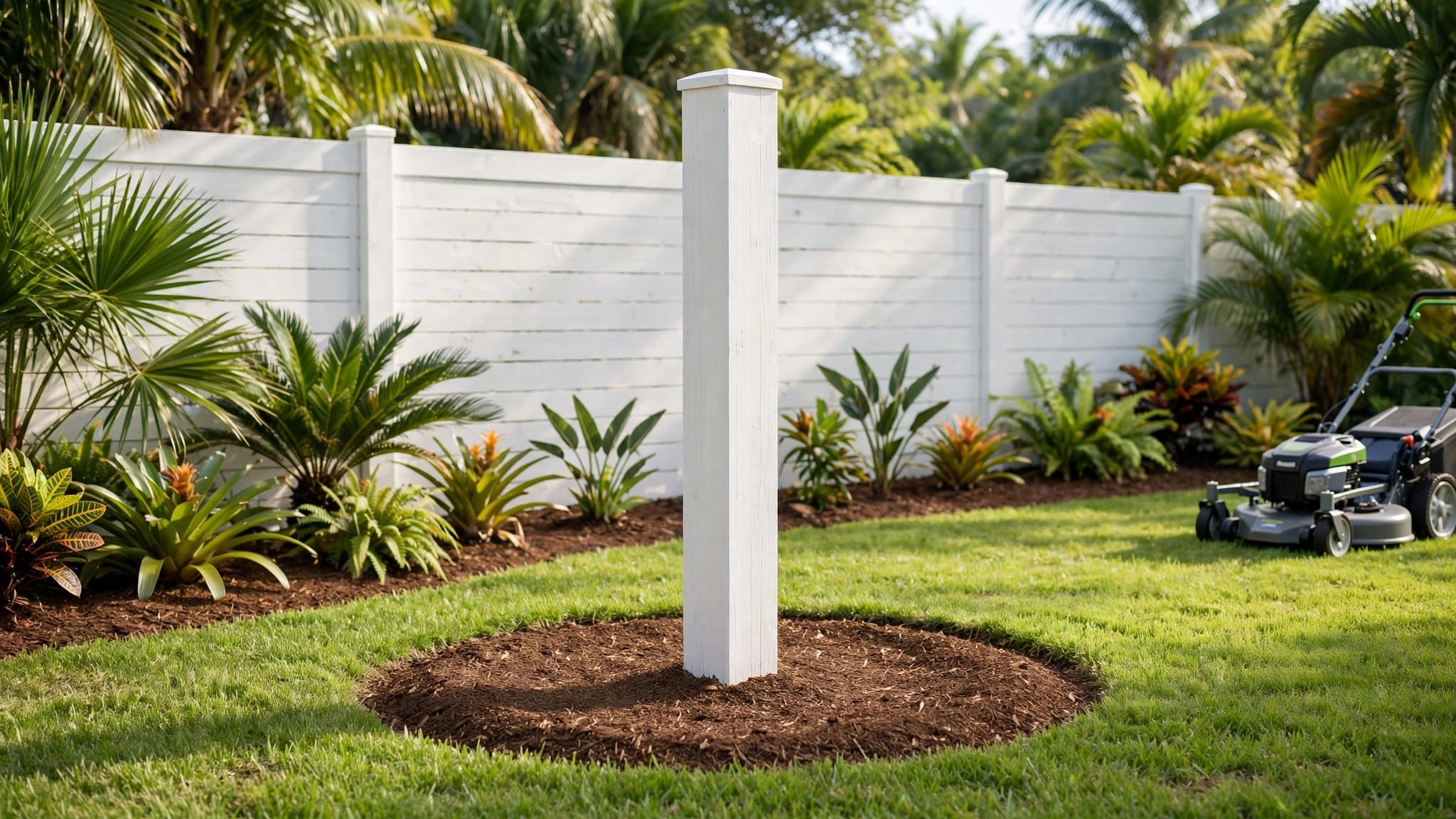
When comparing steel vs wood fence posts, the right choice depends on your yard and the upkeep you're willing to handle. Wood posts suit a traditional fence design, while steel posts offer a different way to support the same wood rails and boards.
In Southwest Florida, both options need attention to wind, wet ground, and hardware . Here's how to weigh those conditions before choosing a post system.
Steel vs Wood Fence Posts at a Glance
The post material is only one part of a wood fence. Rails, boards, fasteners, footings, and gates all affect how the finished fence performs.
| Consideration | Wood posts | Steel posts |
|---|---|---|
| Appearance | Blends with wood rails and boards | May remain visible or be concealed by the design |
| Moisture concerns | Look for decay and damage near ground level | Look for corrosion, especially in wet or salty areas |
| Termites | Wood components can be affected by termite activity | Steel does not provide food for termites |
| Connections | Wood rails attach to wood posts | Wood rails typically attach using compatible brackets |
| Maintenance | Inspect for soft spots, splits, and movement | Inspect for corrosion, damage, and loose connections |
The practical choice is the one that fits the full fence design and your property's exposure. Neither post material makes the wood boards maintenance-free.
Humidity, Rain, and Termites Affect Wood Fences
Southwest Florida fences spend much of their lives outdoors in heat and humidity. Rain can leave soil and fence components damp, while irrigation may repeatedly wet the same stretch of fence.
Watch the Ground Line
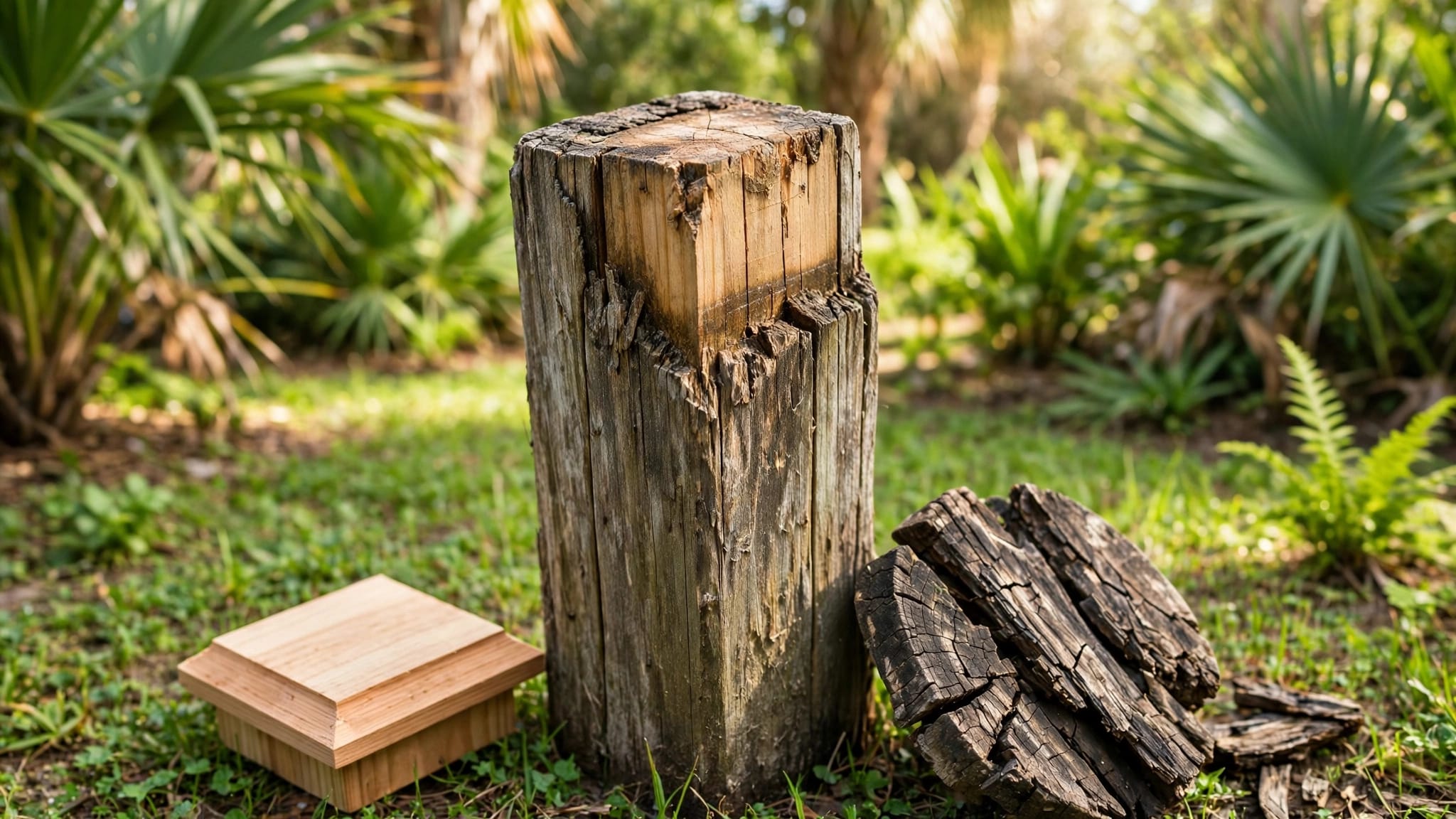
The point where a wood post meets the ground deserves close attention. Decay can develop where moisture collects, and part of the damage may be below the surface. A post that looks sound higher up can still have a weak base.
Splitting can also occur as wood takes on and loses moisture. A surface crack doesn't automatically mean a post has failed, but a deep split near the base or a loose post deserves a closer look.
Look Beyond the Posts
Termites can affect other wood parts of the fence, including rails and boards. Steel posts don't change that. If you notice damaged wood, mud tubes, or small piles of pellets, have the affected area assessed rather than assuming the issue is limited to one post.
Keeping soil and debris away from wood fence components also makes the fence easier to inspect. Leaves or grass piled against the bottom can hide a developing problem.
Salt Air Changes the Conversation for Steel
Coastal conditions add another concern: corrosion. On an exposed property near the Gulf, salt carried through the air can settle on posts and hardware. Wet conditions around canals and yards can also affect connections.
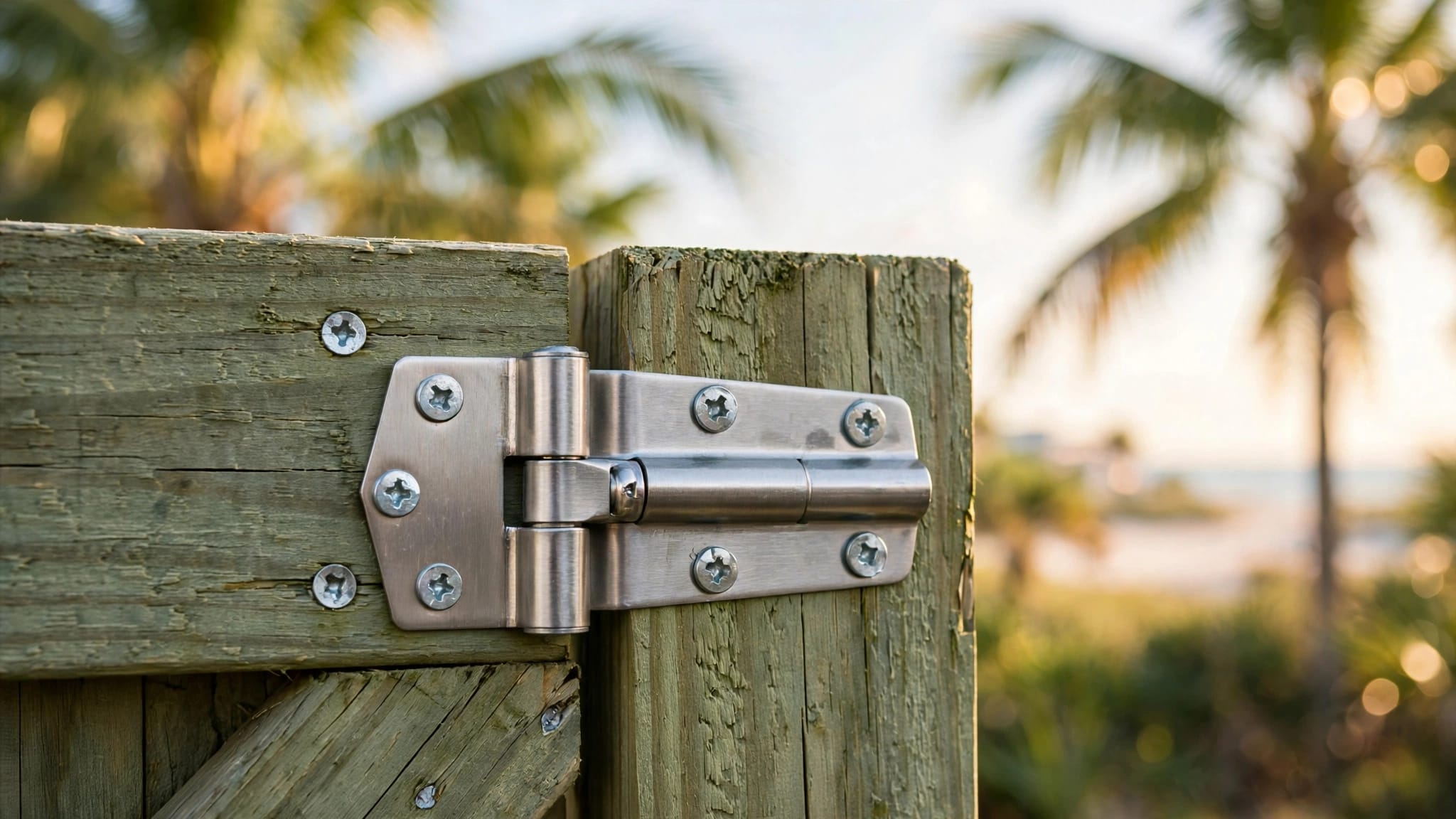
The fasteners matter as much as the post material. Screws, brackets, and gate hinges all connect parts that need to stay secure. Near saltwater or canals, stainless steel or manufacturer-approved corrosion-resistant hardware is a practical choice.
Pay attention to compatibility between metals, too. Different metals can react when they're in contact in wet conditions, so connections should use compatible components.
Scratches and cut edges on coated metal deserve attention because they can become early corrosion points. During an inspection, look around brackets and the base of each post, where dirt or moisture may hide damage.
Wind Resistance Depends on the Whole Fence
A wood privacy fence presents a broad surface to the wind. During a strong gust, that force travels through the boards and rails into the posts and their footings.
The material alone doesn't tell you how well the fence will handle those forces. Post size, spacing, connections, soil, and the fence layout all matter. A tall, solid fence on an open lot places different demands on its supports than a shorter fence with gaps between boards.
Consider Panel Design
Solid panels offer more privacy, but they also present more surface area to the wind. A design with spaces between boards allows more air to pass through, although it also reduces privacy.
The choice doesn't have to apply identically to every side of the property. Your layout may need more screening near a patio and a more open design along an exposed boundary.
Give Gates and Corners Attention
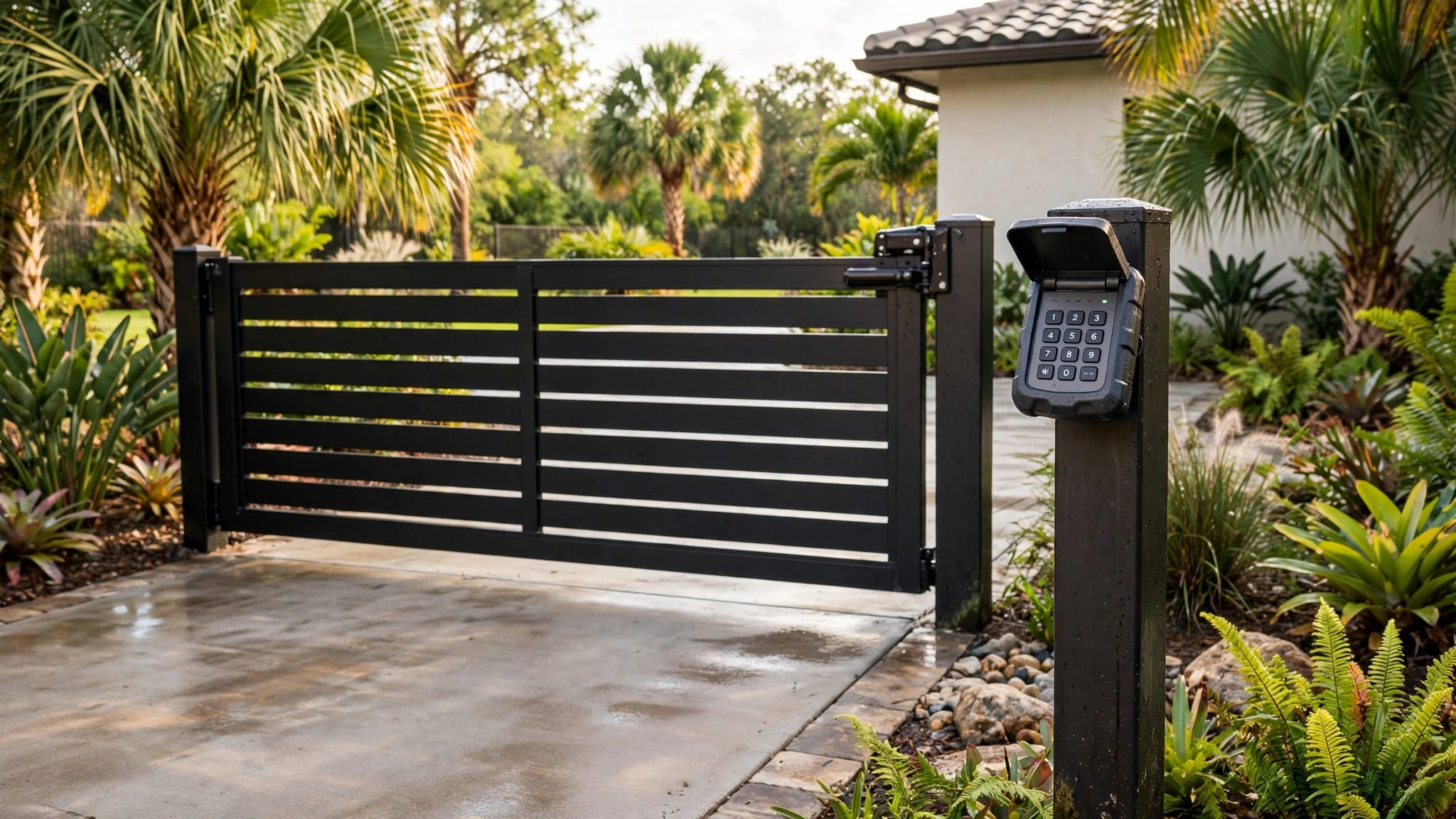
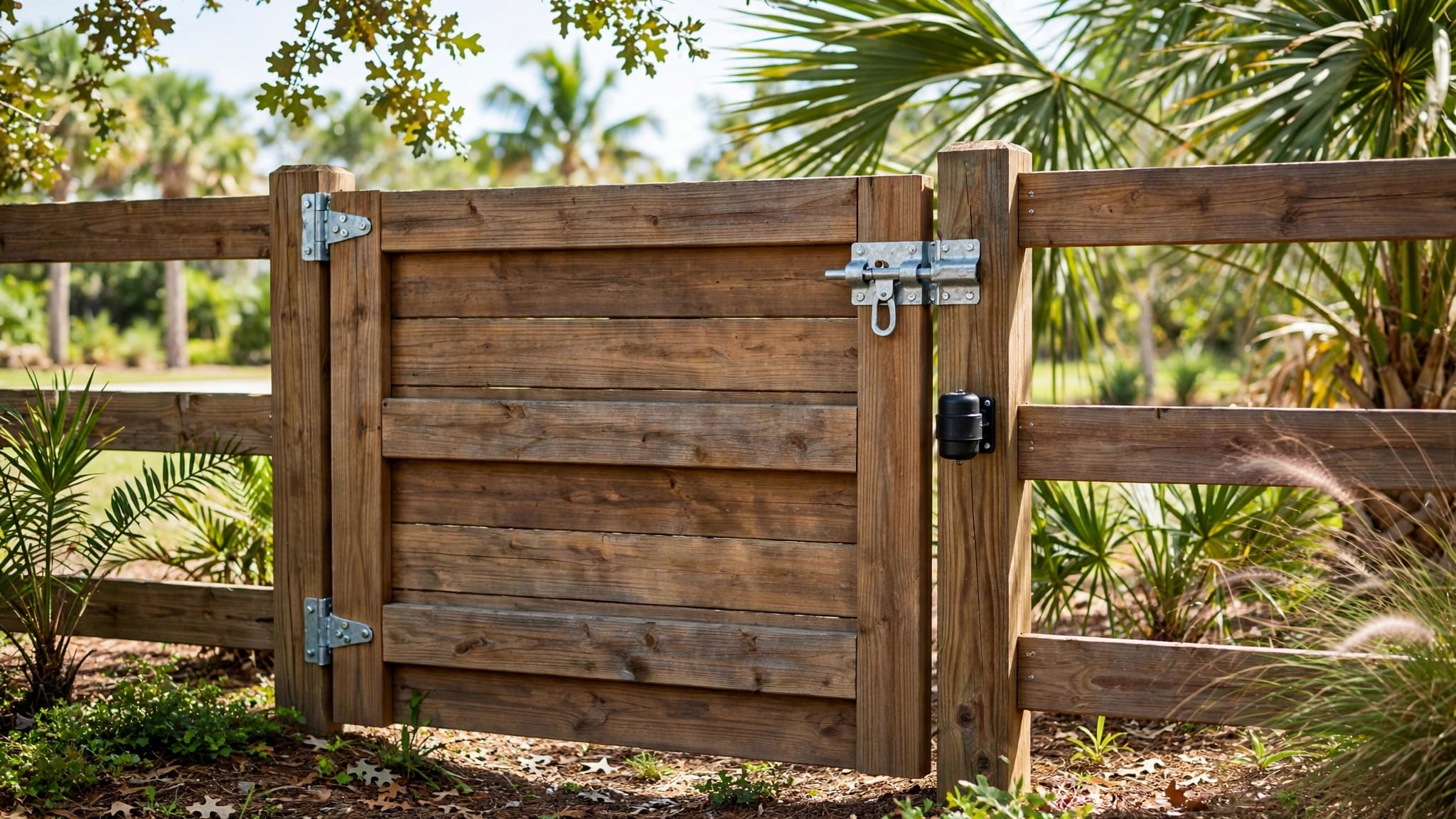
Gate posts carry the weight and repeated movement of a gate. Corners and ends also need support suited to the forces on those sections. A gate that starts to sag or drag may point to a problem with the hinges, post, or footing.
Our guide to checking fence posts, footings, and gates covers signs that distinguish structural concerns from cosmetic wear.
Installation Must Fit the Ground
Southwest Florida yards don't all have the same soil. An installer may encounter loose sand, shell rock, damp ground, or a mix along one fence line. Each condition can affect excavation and the footing plan.
There isn't one post spacing or hole depth that suits every wood fence. Fence height, panel style, soil, and wind exposure all influence the design. A gate may need a different support arrangement than a straight run of fence.
Plan Around the Site
Before digging, the fence layout needs to account for buried utilities and irrigation lines. Property boundaries and drainage features also affect where a fence can go. A straight line on a plan can cross a sprinkler pipe or a low area that regularly collects water.
Shell rock presents its own challenge because it can make holes harder to excavate and keep aligned. Our guide to installing fence posts in shell rock soil explains how local ground conditions affect the work.
Look at the Connections
Wood posts and steel posts connect to wood rails differently. With a steel-post design, the brackets become part of the structural system, so their placement and compatibility matter.
The finished fence should have secure connections throughout, including at the ends of rails and around gates. Loose hardware can lead to movement and rattling even when the posts themselves remain upright.
Appearance Matters on Both Sides of the Fence
Wood posts give the fence a consistent material throughout. That can appeal to homeowners who like a traditional wood appearance, especially where posts are visible above or between fence sections.
Steel posts create a different look. Depending on the design, they may be visible on one side, partly hidden behind boards, or concealed with wood. Concealing a post changes the finished appearance, but the design should still allow attention to the post and its connections.
Consider the view from inside your yard as well as the view from outside. Gate framing, post placement, and board orientation all affect what you'll see day to day.
Maintenance Goes Beyond the Post
A fence with steel posts still has wood boards and rails exposed to Florida weather. Likewise, a fence with wood posts has hardware and connections that need attention. Plan for the whole fence rather than treating the post choice as the entire maintenance decision.
During a walk along the fence line, look for leaning posts, loose boards, damaged brackets, and gates that no longer close smoothly. Pay particular attention to the base of posts and areas that stay wet after rain or irrigation.
After a storm, look for movement in the fence and changes around the footings. A panel that rattles or a gate that drags can be an early sign that a connection needs work.
If damage is limited to one area, a full replacement may not be necessary. Our fence repair services in Cape Coral include work on wood fence damage and metal fence sections.
Comparing Upfront Cost and Long-Term Value
A useful fence estimate covers more than the price of individual posts. It accounts for the full length of the fence, the wood panels, gates, hardware, footings, labor, and site conditions.
For a fair comparison, both proposals should describe the same fence height, layout, and gate arrangement. Otherwise, a price difference may come from changes to the design rather than the post material.
Long-term value includes the work the fence may need after installation. That can mean repairing loose connections, replacing damaged wood, or addressing a problem near a post base. The right choice also depends on how much time you want to spend inspecting and maintaining the fence.
Seasonal residents may place extra value on a design that's easy to monitor while they're away. If low upkeep is a major priority, our comparison of low-maintenance fence options for Southwest Florida includes alternatives to wood as well.
Choosing Posts for Your Southwest Florida Property
Start with the conditions your fence will face. A sheltered inland yard, an open property, and a coastal lot may all call for different design decisions.
For Coastal or Canal-Side Homes
Give corrosion and connection details plenty of attention. A wood fence with steel posts needs hardware suited to its exposure, including at gates and rail brackets. On a wood-post fence, hinges and fasteners still need to withstand the same surroundings.
Also consider how easily you can inspect the fence. A fully concealed connection may create a clean look, but accessible hardware is easier to examine.
For Budget and Appearance
If a traditional all-wood look matters most, wood posts may fit the design you want. If you prefer steel posts beneath the wood fence, decide whether you want them visible before settling on the layout.
For either option, compare complete estimates rather than post prices alone. That puts gates, hardware, and installation on the same footing as the material choice.
Choose the Fence as a Complete System
Steel and wood posts bring different concerns to a Florida wood fence. The best fit for your property depends on site exposure, appearance, and maintenance , along with the design of the entire fence.
At Supreme Fence of SWFL, we offer free estimates for fence installation. We can discuss your wood fence layout and the conditions it needs to handle.